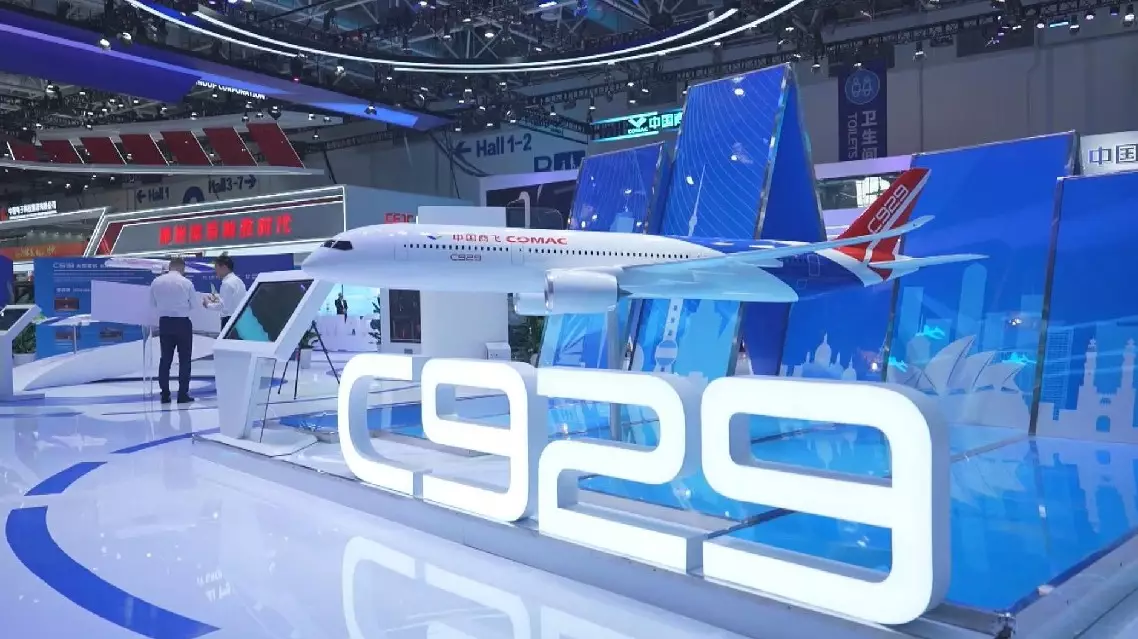
A user framework agreement for the C929 passenger aircraft, China's first jet-type long-range wide-body aircraft independently developed in accordance with international airworthiness standards, was signed on Tuesday.
The agreement between the Commercial Aircraft Corporation of China (COMAC) and Air China was signed at the ongoing 15th China International Aviation and Aerospace Exhibition, also known as Airshow China, which made Air China the first intended user of this aircraft type.
The baseline version of the C929 accommodates 280 seats with a range of 12,000 kilometers, effectively meeting the global demand for international and regional air passenger transport.
This is a fresh move for China, a massive civil aviation market with great potential, to enhance its competitiveness in the global aviation market.
"This is the first time that we have been able to deeply participate from the initial design stage [of the aircraft]. We now have the largest wide-body aircraft fleet in the civil aviation industry and a rich network of international routes, so our experience in wide-body aircraft fleet and international route operation can be used on [the development of] C929, which actually served as a great reference for the design, research, manufacturing and development of the aircraft," said Zhang Wen, manager of the planning and development department of Air China.
In addition to the C929 agreement, COMAC also rebranded the ARJ21, China's homegrown regional jetliner, as the C909. Thus, COMAC has aligned the name convention for its three commercial aircrafts as C909, C919 and C929.
"This is an inevitable result of the scale development of regional jetliners and large passenger aircraft. Through the rebranding of the C909, we can make it easier for the public and the customers to identify our aircraft, which is also more conducive to our brand promotion," said Yang Yang, deputy director of COMAC marketing committee.
According to COMAC, the performance, crew operating experience and cabin comfort of the C909 have been continuously improved. Now the aircraft can achieve a variety of cabin layouts and can well adapt to the operation on routes to China’s border areas and overseas regions like Southeast Asia and Africa.
The C919, China's self-developed large passenger aircraft, completed its first commercial flight in May 2023, marking its official entry into the civil aviation market. As of late September this year, COMAC had delivered nine C919 aircraft to three leading Chinese airlines. With itself-developed trunk jetliner, China aims to secure a share of the global civil aviation market, which Boeing and Airbus currently dominate.
According to a market forecast released by COMAC in late 2022, over the 2022-2024 period, China's civil aviation market will receive 9,284 new passenger jets, including 6,288 single-aisle jetliners.
Launched in 1996, Airshow China is the only international aerospace trade show approved by the Chinese central government, with support from Chinese aerospace industries. The show takes place biennially in Zhuhai City, south China's Guangdong Province, featuring displays of actual products, trade talks, technological exchanges, and flying displays.
China's homegrown wide-body C929 aircraft gets first intended user

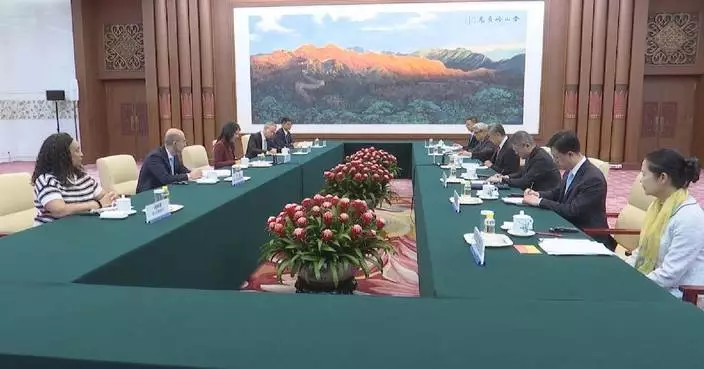
The China-Cambodia-Thailand foreign ministers' meeting was held in Yuxi City, southwest China's Yunnan Province on Monday.
After the trilateral meeting, a press communique was issued, which made it clear from five aspects that Cambodia and Thailand will further enhance communication, deepen understanding, and gradually consolidate the ceasefire situation, restore mutual exchanges, rebuild political mutual trust, achieve a turnaround in relations, and maintain regional peace.
Wang Yi, Chinese Foreign Minister and a member of the Political Bureau of the Communist Party of China Central Committee, said that upholding the spirit of the Global Security Initiative proposed by President Xi Jinping, China has actively mediated between Cambodia and Thailand since the outbreak of their border conflict.
Chinese leaders have maintained friendly communication with Cambodian and Thai leaders, with multiple phone calls made among foreign ministers, and the Chinese special envoy has made four shuttle-diplomacy trips to Cambodia and Thailand, heeding views from both sides and learning about their respective legitimate concerns, and working to find a way to resolve differences through dialog and negotiation.
With the concerted efforts of all parties, the Cambodian and Thai armies reached a ceasefire agreement a few days ago, which is gratifying to China, Wang said.
Wang noted that it was just time to hold the trilateral meeting, which followed several bilateral meetings, especially the in-depth face-to-face exchanges between the foreign and defense ministries of Cambodia and Thailand, during which both sides demonstrated positive and open attitude, their commitment to de-escalating tensions, and their willingness to improve bilateral relations on the basis of a ceasefire.
The trilateral discussions were beneficial and constructive, with important consensus reached, Wang said.
The three sides have agreed that Cambodia and Thailand should look forward and move forward together and avoid the resumption of fighting; should maintain communication in implementing the ceasefire agreement, and remain confident and engage in equal dialog to gradually advance bilateral relations; and should rebuild mutual trust, Wang said.
Noting Cambodia and Thailand are eternal neighbors with a long history of friendly exchanges, Wang expressed hope that the trilateral meeting could heal the wounds caused by the conflict, remove the estrangement between the two countries, and truly achieve reconciliation, which meets the interests of the Cambodian and Thai people, as well as the common wish of all parties.
China will always be a promoter of the development of Cambodia-Thailand relations, Wang said, pledging all necessary assistance and support in ceasefire monitoring, humanitarian assistance, and demining cooperation.
China looks forward to and believes that Cambodia-Thailand relations will return to the right track at an early date, Wang said.
Cambodian and Thai foreign ministers thanked China for providing the dialog platform, expressing high appreciation for China's constructive role in resolving the conflict, easing tensions, and promoting dialog.
Both sides emphasized the preciousness of peace and expressed their willingness to actively implement the ceasefire agreement, make good use of dialog mechanisms at all levels, jointly manage and resolve disputes, and jointly safeguard peace and tranquility in the border areas between the two countries.
China-Cambodia-Thailand foreign ministers' meeting held in Yunnan