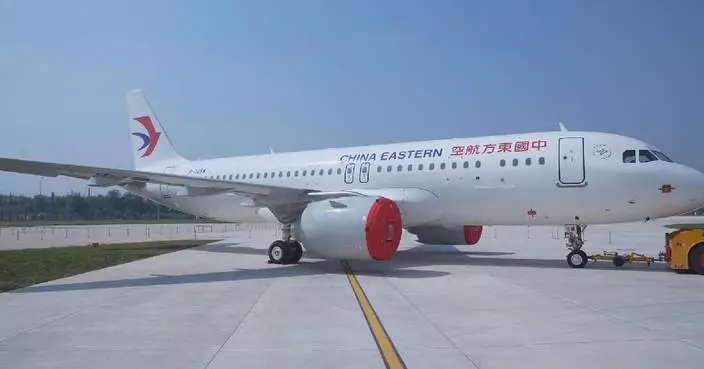
China's domestically developed aircraft engines are capturing the limelight at the ongoing 15th China International Aviation and Aerospace Exhibition in the southern coastal city of Zhuhai, wowing visitors with their cutting-edge technologies and energy-efficient designs.
The exhibition kicked off in Zhuhai City of Guangdong Province on Tuesday, showcasing the latest in aircraft, spacecraft, and weaponry, along with impressive aerial performances.
Among the attention-grabbing exhibits, a number of innovative aircraft engines are demonstrating China's gains in this competitive and fast-evolving industry, spanning the gamut from fighter jet engines to those for civilian aircraft.
As an important aviation enterprise, Aero Engine Corporation of China, or AECC, is engaged in the development, production and maintenance of aircraft engines, gas turbines, and more. Its turbojet engines, turbofans, and turbo-shafts have been widely installed in various types of military and civilian aircraft.
The company's star product, the AEF1200, debuted at the event, catching eyes with its sheer size. It is the country's first self-developed high bypass ratio dual rotor turbofan engine, a highly efficient type of jet engine that uses two sets of rotating blades to compress air, with most of the air bypassing the engine core to create thrust more quietly and with better fuel efficiency. This design will help China's large airplanes fly farther on less fuel while keeping engine noise down.
AECC also displayed new engines designed for helicopters and drones, which are expected to be increasingly important in coming years.
"Our AES100 engine is an advanced turbo-shaft engine independently developed by AECC in response to the national call for the development of the low-altitude economy, which is energy-saving and environmentally friendly. It is equipped with a very useful health-monitoring system. So, its stability and reliability can also be assured. The AEP100 is a 900-kilowatt turboprop engine developed by us using a turboshaft engine. It can also be used in drones, business jets, and trainer aircraft," said Liu Jie, a staff member at AECC.
Since its launch, the event, also known as Airshow China, has been one of the top five airshows worldwide. This year, nearly 900 enterprises from 47 countries and regions are participating, with 149 of them global attendees.
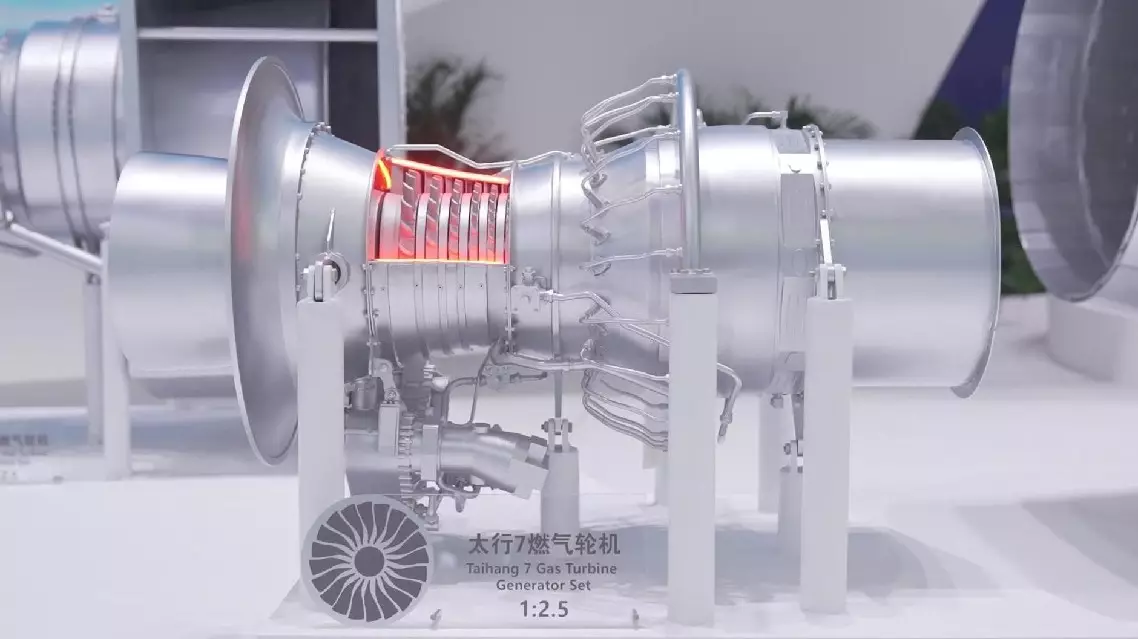
China's high-tech, energy-efficient aircraft engines showcased at Zhuhai Airshow
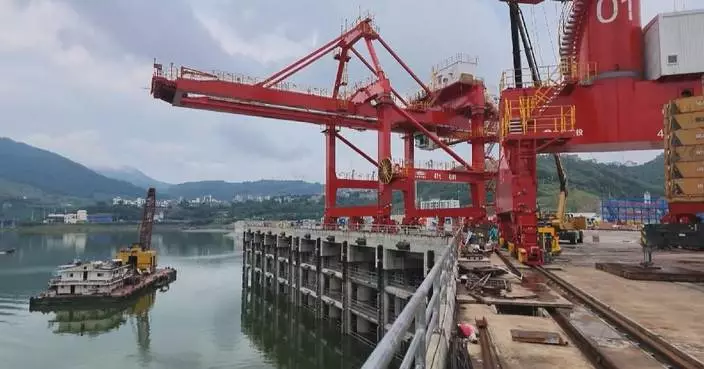
With the Pinglu Canal in the Guangxi Zhuang Autonomous Region officially open to shipping, Yangpu Port in south China's Hainan Province will fully leverage the policy and geographical advantages of the Hainan Free Trade Port (FTP) to accelerate its development into an international shipping hub, further connecting the New International Land-Sea Trade Corridor with global markets.
The canal stretches along the New International Land-Sea Trade Corridor, a strategic trade route connecting China's inland regions with ASEAN and other global markets. It is the first river-to-sea canal project planned and coordinated at the national level since the founding of the People's Republic of China in 1949.
Located in the northwest of the island province, Yangpu Port is the deep-water port closest to the main international shipping routes in the Beibu Gulf, and is also one of the maritime outlets of the New International Land-Sea Trade Corridor.
The opening of the Pinglu Canal to navigation has opened up a new sea-river intermodal transport corridor for goods entering and leaving the southwestern region, and has also brought new opportunities to some enterprises.
At a petrochemical enterprise in Danzhou City, robotic arms are bagging and packaging chemical products on a conveyor belt, and these goods will be shipped to southwest China's Guizhou Province and other places.
Most of this enterprise's customers in the Chinese mainland are concentrated in the southwestern Chinese provinces of Yunnan, Sichuan and Guizhou. At present, the enterprise is adjusting its future shipping plans in response to the logistics changes brought by the opening of the Pinglu Canal to navigation.
"We plan to shift about 70 percent of our goods to this new sea-river intermodal transport corridor, and overall logistics costs are expected to drop by 30 to 40 percent. Next year we also plan to build another plant in Hainan, which will allow us to take advantage of the free trade port's policies, import raw materials from places like Indonesia, and after processing, sell the products to the southwestern region or re-export them. This is expected to add about 200,000 tons of production capacity," said Wei Jianqiang, head of Hainan Oxiranchem Co., Ltd.
Behind the enterprises' expansion of production and the busier flow of goods, there is also the upgraded service support made possible by the opening of the Pinglu Canal to navigation. In this regard, the relevant authorities have also made full preparations.
"After the Pinglu Canal opens to navigation, we will strengthen safeguard measures in areas such as facilitating the entry and exit of container ships on fixed routes, credit-based regulation, and cross-regional coordination," said Jiang Yufeng, head of the Xiaochantan Maritime Patrol and Law Enforcement Brigade, Yangpu Maritime Safety Administration.
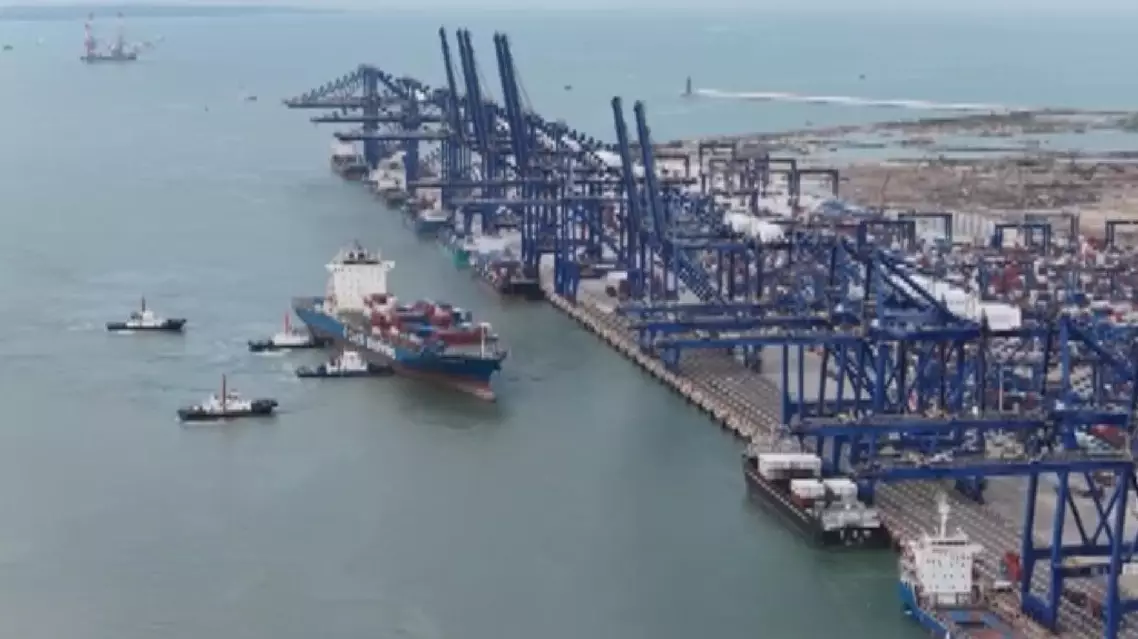
Pinglu Canal underscores growing role of Yangpu Port as int'l shipping hub