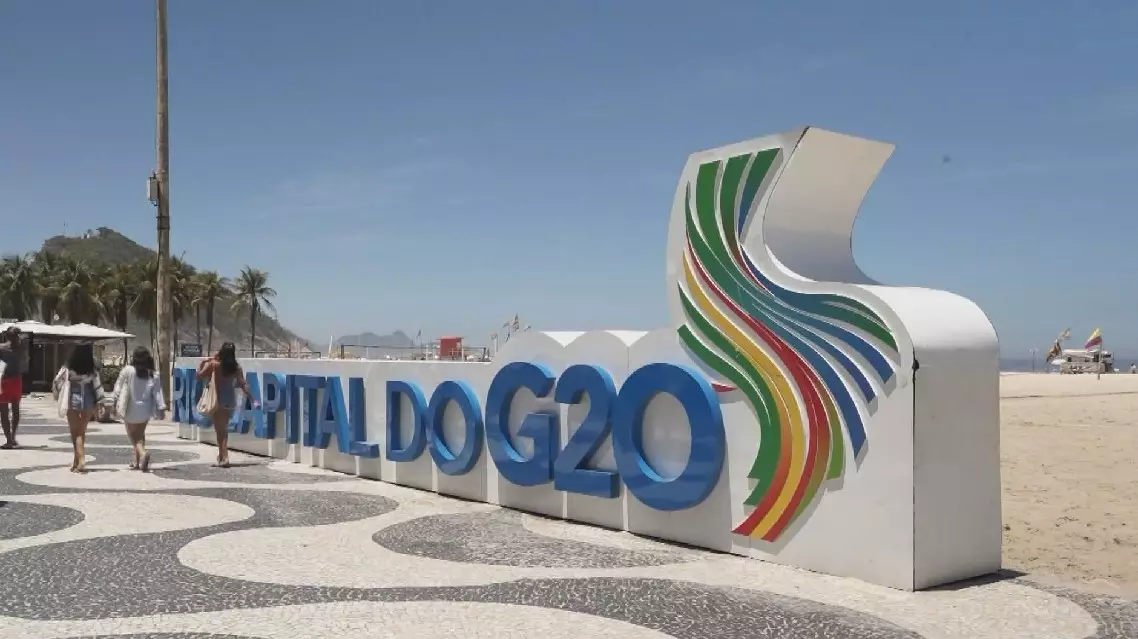
Global South countries, as a grouping of emerging markets and developing countries, are poised to exert a stronger influence within the Group of 20 (G20), backed by robust growth rates and increasing economic clout, as highlighted by experts ahead of the 19th G20 Summit in Rio de Janeiro, Brazil.
Wang Lei, deputy director of the Institute of World Economics and Politics at the Chinese Academy of Social Sciences (CASS) and a member of Think 20, a think tank for the G20, said global trade and economic data point to the increasing strength and influence of the Global South within the G20, a crucial international platform for global economic cooperation.
"According to the recently released IMF report, even for this year and for the coming years, the developing countries' general growth pace will be much higher than the developed countries in general," Wang said.
Experts noted that many of these Global South countries possess abundant natural resources and a skilled workforce. However, they grapple with significant challenges such as social inequality and poverty, necessitating urgent financial support.
"Of course, emerging markets are becoming more confident for G20 as you would expect, and with the increasing economic clout that they also have, and we do see rising tensions particularly along the geopolitical lines, we also see the first signs of fragmentation of trade. So, what we really need is a multinational cooperation," said Ralph Ossa, chief economist at the World Trade Organization (WTO).
Between 2022 and 2025, the G20 summit is hosted in Indonesia, India, Brazil, and South Africa. Therefore, experts suggest that the series of G20 presidencies held by emerging economies has further bolstered the advancement of the Global South agenda within the G20.
"On the one hand, the Global South will put forward, will introduce more new vehicles in terms of multilateral governance, at same time it's also very important to further reform international mechanism," Wang said.
The 19th G20 Summit is set to take place from Nov. 18 to 19. Under the Brazilian Presidency in the summit, there are three priorities: fighting inequality, promoting social inclusion and fighting hunger; combating climate change, promoting energy transition and sustainable development; and reforming global governance institutions. All will involve practical discussions and collaboration among involved countries and organizations.
Global South countries gain growing influence in G20: expert
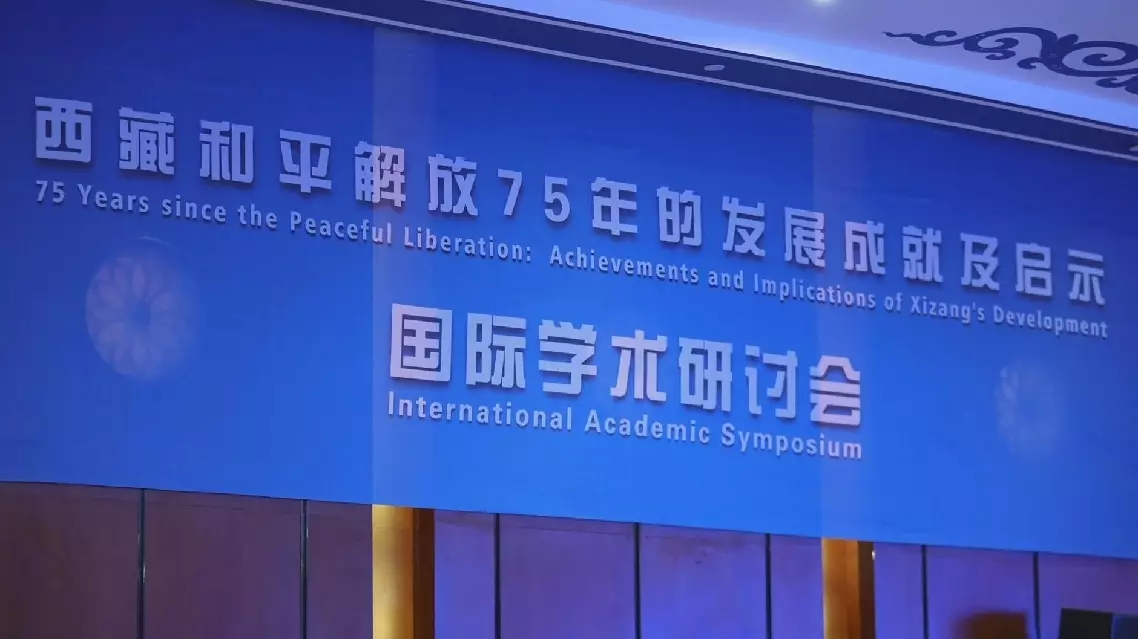
An international academic symposium was held on Saturday at the Xizang Museum in Lhasa, capital of southwest China's Xizang Autonomous Region, to mark the 75th anniversary of the peaceful liberation of the region.
Perched on the Roof of the World, the Xizang Museum is the first modern museum on the plateau.
On the 75th anniversary of Xizang's peaceful liberation, it welcomed a group of international scholars to reflect on the region's transformation and future.
Greening efforts on the highest region on Earth have seen major strides.
Forest coverage has risen from less than 1 percent in 1951 to 12.5 percent today.
"Even here you see around the mountains of Lhasa here, the massive large-scale plantation. There is a big lesson to learn now to other parts of the world and other countries also to come. This is the conservation. We should move this way," said Krishna Prasad Oli, former Nepali ambassador to China. Nestled in the Himalayas is not just Xizang's natural beauty, but its unique culture.
Over the past few decades, the central government has invested billions of yuan in the region's heritage protection.
"In general there are so many rumors that are just not true. For example, there are rumors in our media that China suppresses the Tibetan language. A very simple thing is on the street that you see signs and two languages everywhere (in Mandarin and in Tibetan). Even in Austria and the minority areas, there are big discussions if we should write something in minority languages. But in China it is not a problem. So China's handling this is far better than Austria," said Georg, Vavra, an Austrian historian.
The most ambitious and costly undertaking on the plateau since its liberation has been building modern infrastructure.
Today, Xizang boasts a network of roads and railways that continues to expand.
"It just so happens that yesterday I traveled by train from Nyingchi to Lhasa. The UK is a country of 60 million people and has been struggling and failing for 17 years to build 150 kilometers of high speed rail. Now if you consider Xizang with a population of 4 or 5 million, they could never undertake a project of that scale, and that is what China is trying to do. China is the only country in the world that has a genuine interest in the prosperity and the development of Xizang," said David Ferguson, a Scottish commentator.
Beyond traditional industries, emerging sectors are also taking root in China's western frontier.
"In the 75 years since its peaceful liberation, Xizang has built its scientific and technological capabilities from the ground up. It has become a driving force behind the region's economic and social progress," said Nyima Tashi, a professor with the School of Information Science and Technology under Xizang University.
Int'l scholars gather in Xizang to review regional development over past 75 years