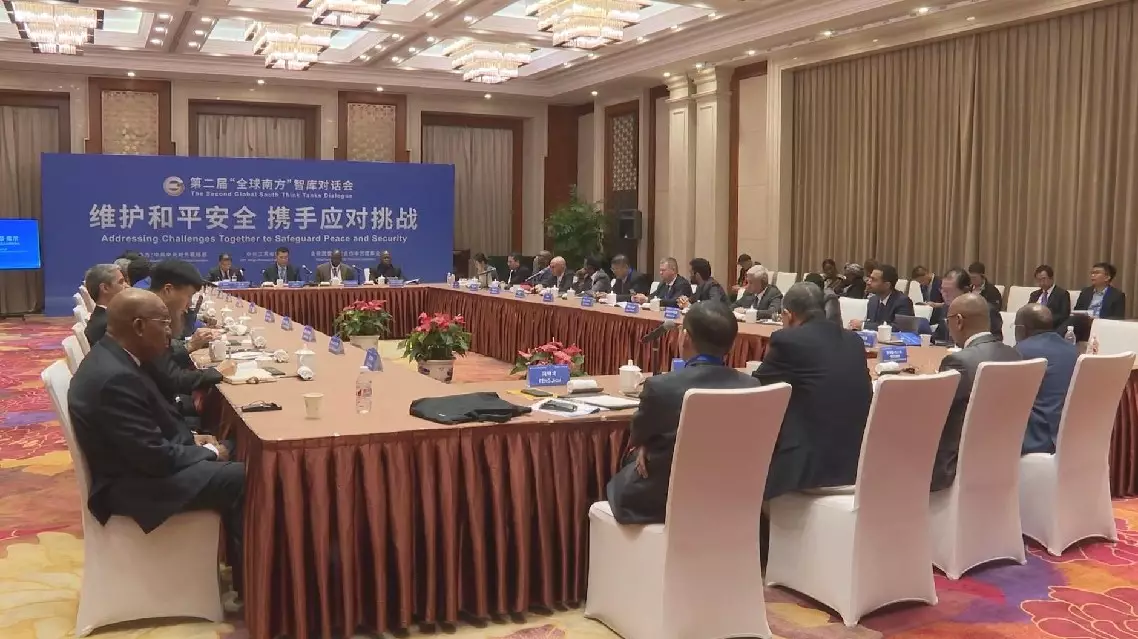
Global South countries aspire to be more active participants in shaping the global agenda rather than being observers, said attendees at the second Global South Think Tanks Dialog, scheduled to open on Thursday in Nanjing City in east China's Jiangsu province.
Themed "Global South: Equality, Openness, and Cooperation," the event gathers representatives from think tanks from around 100 countries and regions, along with delegates from Chinese universities and research centers.
Ahead of the event's opening, panel discussions were already underway for experts and scholars to share their insights on the shift in the international order, among other issues.
"We are not going to be an observer, but we want to be active in the global agenda. And that's the beauty of the idea of the Global South. Our weakness is because we have not put our house in order. The Western countries or other countries, they will come with their agenda. But if you don't have policies - the right policy of how can we deliver security and safeguard peace to our countries, we become a subject of an external agenda. And that's why this meeting is very important to consolidate how we own the way we delivered security to the citizen," said Luka Biong Deng Kuol, former Minister of Presidential Affairs of South Sudan.
"It's a good thing for us together. I thank China for organizing this because I think it was high time. We are from different regions. We are all experiencing different things. I was in the peace and security forum, and we see that peace and security, it's even in climate change, socioeconomic issues, wars, multiple and multifaceted. So I believe that getting together, having this alliance is beneficial for all of us, and we can never achieve peace and security alone," said Joelle Perreau, vice chancellor of the University of Seychelles.
While the rise of the Global South is reshaping the global political and economic landscape, these countries continue to face significant challenges in economic growth, security, and governance, according to other experts.
"I think the Global South has now a greater opportunity to play a role on the world stage, given that we see the emergence of a more multilateral world where the dominance of the West is admittedly waning. I think that the Global South is now smelling an opportunity to align a bit more with the emerging powers to try and counter the disproportionate influence of the Global North," said Frederick Golooba-Mutebi, a research coordinator of Never Again Rwanda - a human rights and peacebuilding organization.
"This has been an amazing experience, I think, for everyone here. It's also like a big opportunity to make change, to know each other, and to be aware of what are really our problems, our challenges, and what we can do together and to solve them," said Mariet Espinal, director of communication at the Center for Studies of China in Dominica.
Global South countries aspire to be more active in global agenda: experts