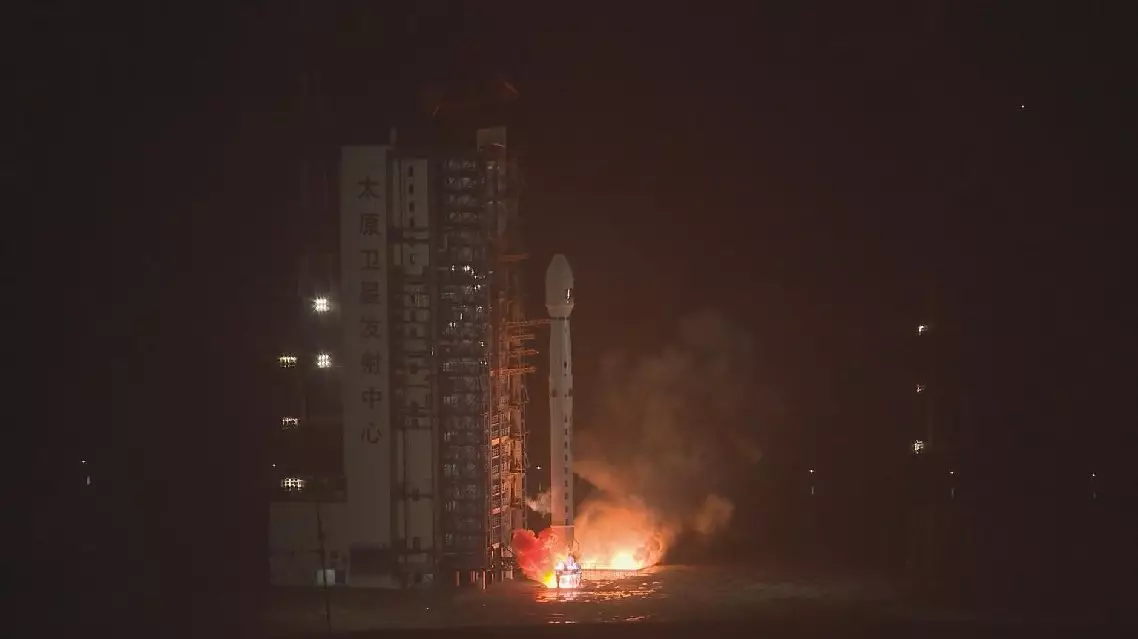
China launched an ocean-salinity detection satellite into space from the Taiyuan Satellite Launch Center in north China's Shanxi Province on Thursday.
Carried by a Long March-4B Y53 carrier rocket, the satellite was launched at 6:42 a.m. (Beijing Time) and has successfully entered its preset orbit.
The satellite will fill the gap in China's high-precision global ocean-salinity detection capabilities, improve data collection on ocean dynamics and environmental factors, and boost the accuracy of China's marine forecasting products, according to the China National Space Administration (CNSA).
As part of China's civilian space infrastructure, the satellite, also known as Ocean-4 01, aims to support marine environmental and ecological forecasting, water-cycle monitoring, short-term climate prediction, data collection, among others, according to the CNSA.
China launches ocean-salinity detection satellite into space
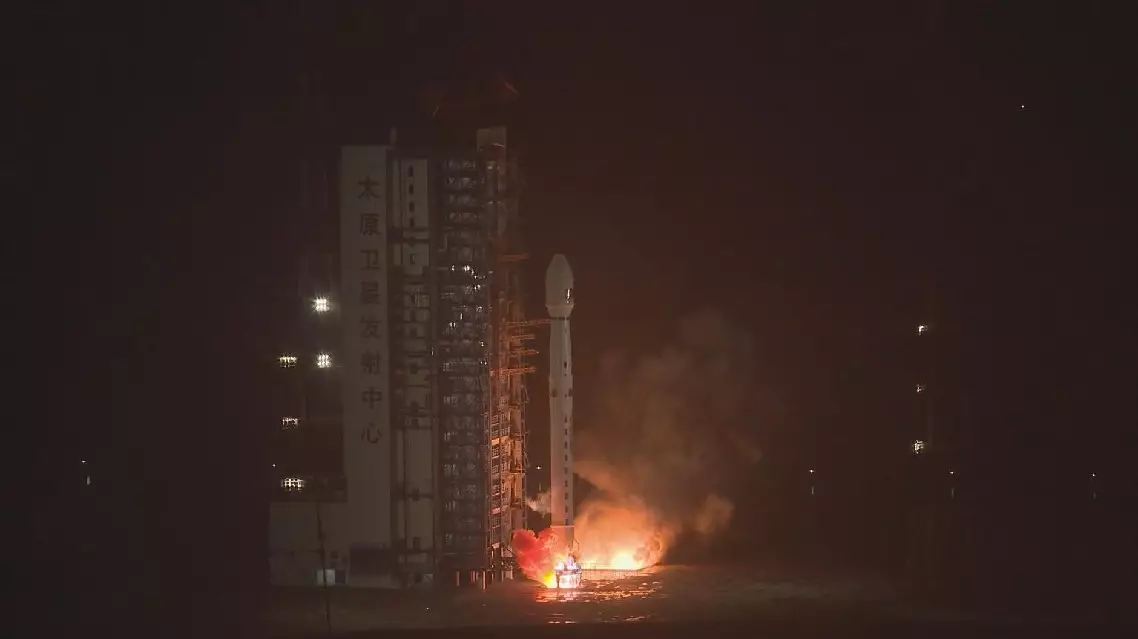
China launches ocean-salinity detection satellite into space
Chinese Premier Li Qiang on Wednesday called for a comprehensive push in the technological innovation, industrial growth and application of artificial intelligence (AI) to foster new quality productive forces and promote high-quality development.
Li made the remarks while presiding over a State Council group study session focused on AI development.
China must understand AI development trends accurately, Li said, encouraging breakthroughs across the entire chain, and for broad implementation in diverse scenarios to unlock the potential of the technology in an improved manner.
Li urged efforts to map out forward-looking strategies for new technologies and pathways, push for large-scale and commercial applications, better coordinate key resources ranging from data to computing power and electricity supply, expand international technology exchange, and strengthen AI governance with improvements to laws, policy frameworks, application standards and ethical guidelines.
Additionally, China should build an open and inclusive environment, and cultivate a larger multi-skilled talent pool, Li said.
Zhou Bowen, head of the Shanghai Artificial Intelligence Laboratory, delivered a briefing at the session. Vice premiers Ding Xuexiang and Zhang Guoqing, along with State Councilor Wu Zhenglong, also participated in the discussions.
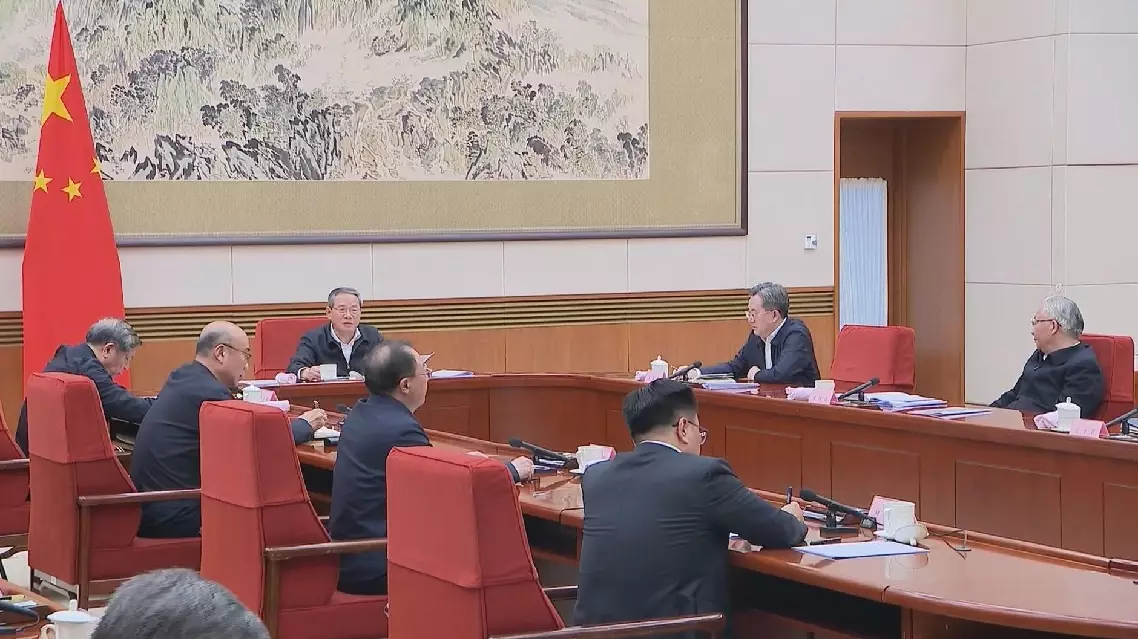
Chinese premier calls for comprehensive push in AI innovation, application