China's cutting-edge airplanes proved a big draw at the ongoing 15th China International Aviation and Aerospace Exhibition in the southern Chinese city of Zhuhai on Saturday, leaving spectators in awe with their breathtaking stunt flights.
The J-35A, China's new medium-sized stealth fighter jet which made its debut at the airshow, also known as Airshow China, together with another China's domestically-developed stealth fighter jet J-20 wowed spectators with thrilling aerobatic performances.
The J-20, also called the Mighty Dragon, is the country's fifth-generation medium and long-range fighter jet. It is a twinjet all-weather stealth aircraft developed for China's Air Force.
The Red Falcon Aerobatic Team also amazed visitors with their air stunts at the event.
The Red Falcon Aerobatic Team was formed by the Chinese People's Liberation Army Air Force in 2011. It consists of jet-powered Nanchang JL-8 trainers.
The event is the largest air show in the country. Held from Nov 12 to 17 in Zhuhai City, Guangdong Province, the event showcases an impressive lineup of military hardware while offering a glimpse into the latest achievements in the modernization of the Chinese military.
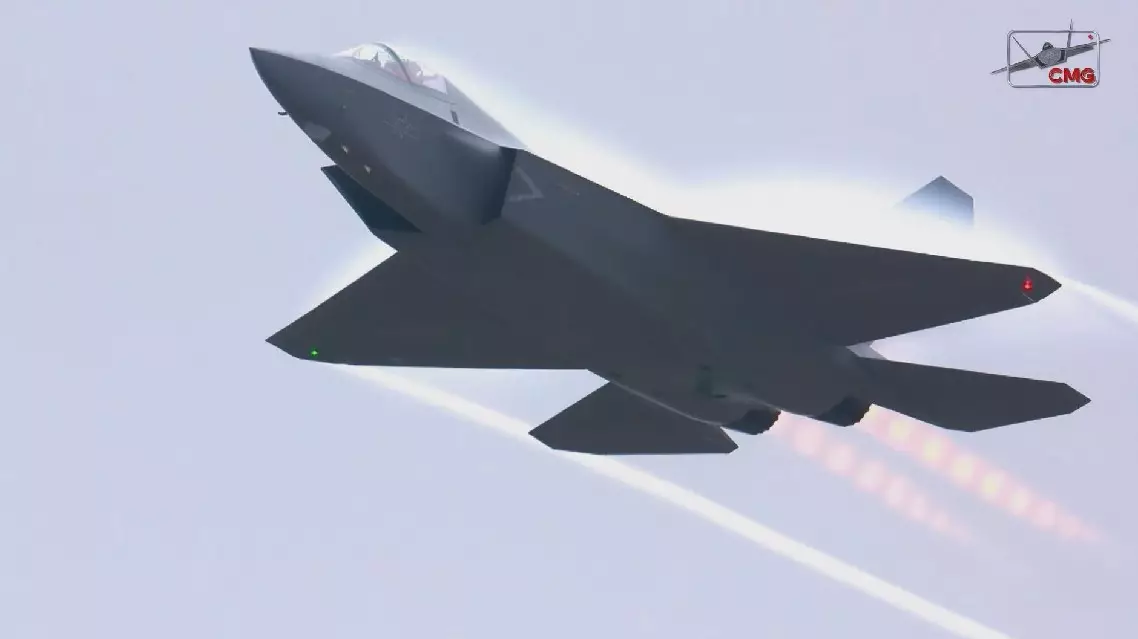
China's advanced fighter jets stun spectators at Zhuhai Airshow

Japan's attempt to possess nuclear weapons is highly dangerous and could lead itself into war, Japan's historical researcher Masahiko Yamabe said on Monday in Tokyo.
"Japan's adherence to its current Three Non-Nuclear Principles is a fundamental requirement for the trust other countries place in Japan. However, the current administration is jeopardizing this. That is dangerous and the government should halt this trend," said Yamabe.
Last month, the Japanese media quoted government sources as saying that as the Japanese government gears up to revise the country's key national security documents by the end of 2026, Prime Minister Sanae Takaichi is considering reviewing the third of the Three Non-Nuclear Principles, which prohibits nuclear weapons from entering Japan's territory, raising strong doubts and concerns at home.
Last week, a Japanese official responsible for security policy talked to the press corps at the Prime Minister's Office about the idea that "Japan should possess nuclear weapons."
The remarks, after being disclosed, have sparked criticism within Japan.
As an expert who has been studying the war history exhibits in "peace" museums across Japan since the 1980s, Yamabe said that the core content addressing Japan's responsibility for initiating war has nearly vanished in its museums.
That shift is a typical manifestation of the rise of Japan's historical revisionism, he noted.
Yamabe said the Japanese government's accelerated increase in defense spending could lead Japan step by step towards war.
"I believe we should not accelerate the increase in defense spending. I do not think increasing the defense budget is for the sake of peace. It seems more like strengthening defense capabilities to enable Japan to wage war. This signifies a change in Japan's fundamental stance towards war, which it ought to maintain. This is a significant issue. Such actions could lead Japan step by step into war. I believe this is dangerous," he said.
Japan has accelerated its military expansion at an unprecedented scale and intensity in recent years. Defense spending has increased for 13 consecutive years, making Japan's defense budget the second largest among Western nations.
Yamabe said peace memorial halls in many parts of Japan have been quietly changing in recent years, with much of the content showcasing Japan's history of aggression and revealing the truth of the war being intentionally weakened, reduced, or even deleted.
"The Osaka International Peace Center once meticulously displayed content related to Japan's acts of aggression. However, these exhibits came under attack and were ultimately discontinued around 1990. Since then, the focus was shifted to the display of the damage from air raids on places like Osaka. After all, Japan was originally the aggressor in the war. Setting aside this fact and emphasizing only the harm Japan suffered is problematic," he said.
Japan's attempt to possess nuclear weapons could lead itself into war: historical researcher