The 15th China International Aviation and Aerospace Exhibition has fully showcased China's technological capabilities and commitment to innovation, while concurrently reflecting the nation's openness and transparency in the military sphere, said a military expert.
The event, also known as Airshow China or Zhuhai Airshow, kicked off on Tuesday in Zhuhai, a coastal city of south China's Guangdong Province.
At this year’s air show, the Equipment Development Department of the Central Military Commission established a dedicated zone for information release, which covers four key areas: achievements in equipment, policy introductions, military trade systems, and a forum for military equipment.
The department’s efforts have helped foster international cooperation and the exchange of military technologies, and provided a platform and channels for supporting social forces to collaborate in weapons and equipment construction. This, in turn, demonstrates China's transparency by sharing its progress both domestically and internationally, said military expert Li Li.
"The Zhuhai Airshow is an excellent window and platform for showcasing military defense capabilities. It showcases the latest developments in aerospace from various countries, especially from China. It also demonstrates that Chinese military is a force for peace and defense," said Li.
This year's airshow features an expanded exhibition space with 13 zones, covering 120,000 square meters and attracting 1,022 exhibitors from 47 countries and regions, representing a 104 percent increase compared to last session.
One of the key highlights of this year’s exhibition is China’s advancements in aerospace engine, a critical area where the country has made significant strides. Once a bottleneck in China’s equipment development, aerospace engines have now become a symbol of the nation’s technological prowess.
"Aerospace engines are a key component of any country's large-scale industry, and for China, this posed a significant challenge. Today, China is a leading producer and exporter of aerospace engines, underscoring the country's prominent role in the global aerospace industry," said Li.

China showcases technological strength, military openness at Zhuhai Airshow
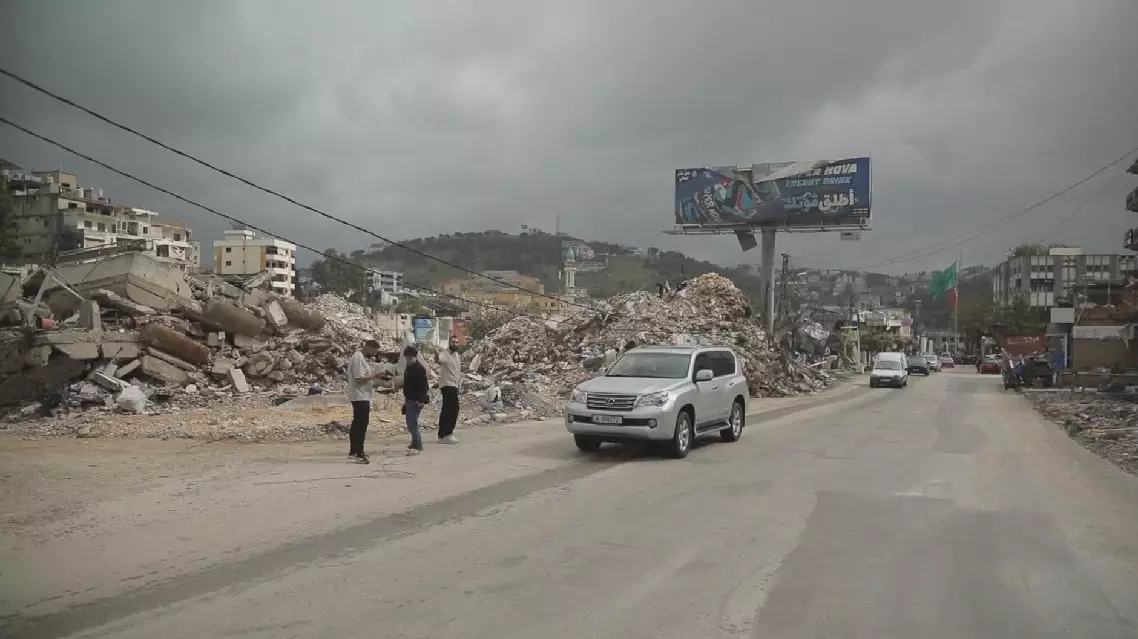
Displaced people from southern Lebanon are returning to their homes as a 10-day ceasefire between Israel and Lebanon took effect, while it seems a tremendous task to rebuild ruined homes.
Nearly 38,000 Lebanese homes have been destroyed or damaged since early March in the conflict between Israel and Hezbollah.
Besides the southern district of Beirut, Nabateih is not an exception to Israel's heavy bombardment north of the Litani River. People there have been suffering during the war. As the ceasefire came into effect, it seems they will continue to suffer as they rebuild the city.
Fifty percent of all the damaged buildings in Lebanon in this latest conflict are in Nabatieh Province. It stretches from the Israeli border to north of the Litani River, where its capital, Nabatieh, is located.
Fadl Hodroj is fixing a security grille damaged by an Israeli bomb.
"Israel was very aggressive. They bombed a lot of residential buildings. They strike buildings with enough force to damage the entire surroundings, an entire district, or the markets. In all villages, you will find the same kind of destruction. No one else does this except for Israel; their main goal is to harm the people and destroy their livelihood. They think they will force us out of the south, but we will stand strong and rebuild it again and again. In the end, this land is ours," said Fadl Hodroj, a repairman.
Fadl's comments resonate in the streets of this quiet city, which once had a population of 90,000. Although there is a ceasefire, few have returned. Ibrahim Sarhan is one of them.
"The house was a mess, with scattered aluminum and glass. But overall, as long as the building is standing, we thank God. A home is not the walls, but the memories -- images that move with you from one room to the other. A young boy who was just two years old, now he’s 30, 40 or 50. Then his kids now roam between the same walls. This is a family house, just like any other family in the south, it contains warmth. Also, the neighbors stand next to each other during the hard times and help one another," said Ibrahim Sarhan, a Nabatieh resident.
Sarhan texted his mother a picture of her favorite chair and table on the balcony, where she had her morning coffee. He didn't show her these visuals of his best friend spraying two containers of air freshener.
They couldn't dare open the fridge because of the intense smell of rotten meat and poultry, so they threw it away.
"The fridge was always loaded with food because we could have a sudden visit from another family. We would start cooking on the spot and prepare you a hot meal without wasting time running to the store for ingredients. Now, it's all rotten and gone bad. God willing, we will get a new fridge soon," Sarhan said.
More than 7,000 buildings have been either demolished or heavily damaged there, making Nabateih second to Beirut in terms of destruction.
More than a million people have been displaced. The few who still live here are wondering and waiting to see if the 10-day temporary truce will continue.
Displaced Lebanese return home for reconstruction