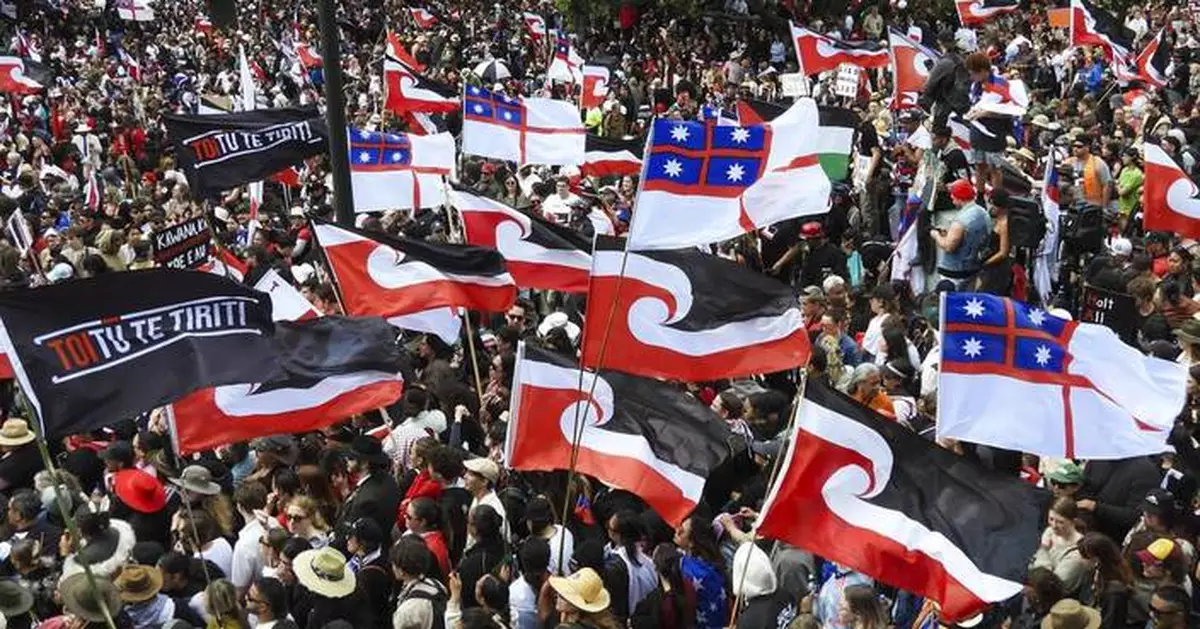
WELLINGTON, New Zealand (AP) — As tens of thousands crowded the streets in New Zealand’s capital, Wellington, on Tuesday, the throng of people, flags aloft, had the air of a festival or a parade rather than a protest.
They were marching to oppose a law that would reshape the county’s founding treaty between Indigenous Māori and the British Crown. But for many, it was also a celebration of a resurging Indigenous language and identity that colonization had once almost destroyed.
Click to Gallery
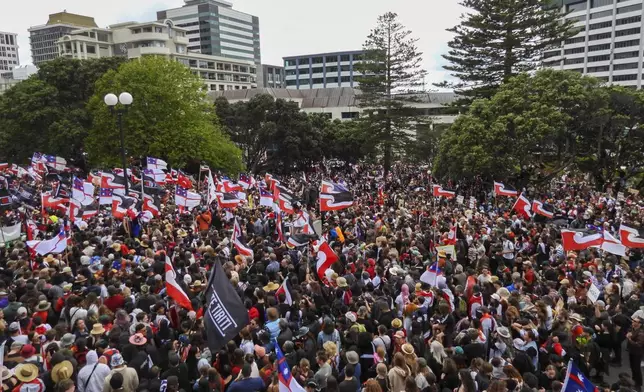
Thousands of people gather outside New Zealand's parliament to protest a proposed law that would redefine the country's founding agreement between Indigenous Māori and the British Crown, in Wellington Tuesday, Nov. 19, 2024. (AP Photo/Charlotte McLay-Graham)
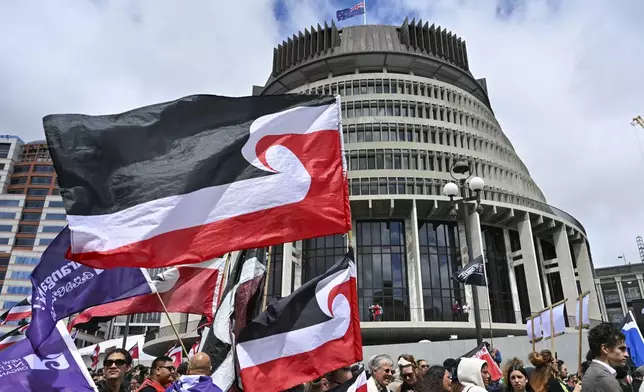
Thousands of people gather outside New Zealand's parliament to protest a proposed law that would redefine the country's founding agreement between Indigenous Māori and the British Crown, in Wellington Tuesday, Nov. 19, 2024. (AP Photo/Mark Tantrum)
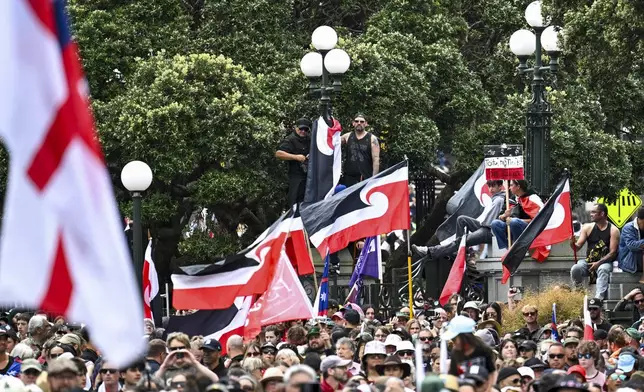
Thousands of people gather outside New Zealand's parliament to protest a proposed law that would redefine the country's founding agreement between Indigenous Māori and the British Crown, in Wellington Tuesday, Nov. 19, 2024. (AP Photo/Mark Tantrum)
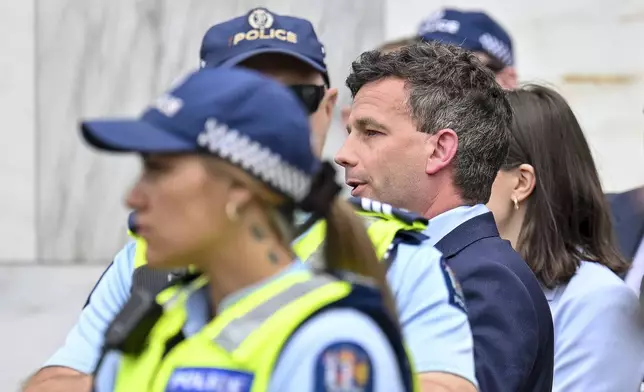
ACT Party leader David Seymour, center, looks on as thousands of people gather outside New Zealand's parliament to protest a proposed law that would redefine the country's founding agreement between Indigenous Māori and the British Crown, in Wellington Tuesday, Nov. 19, 2024. (AP Photo/Mark Tantrum)
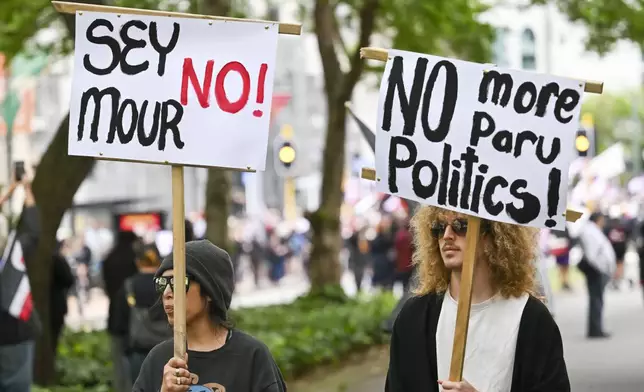
Protesters march carrying placards to New Zealand's parliament to demonstrate against a proposed law that would redefine the country's founding agreement between Indigenous Māori and the British Crown, in Wellington, New Zealand, Tuesday, Nov. 19, 2024. (AP Photo/Mark Tantrum)
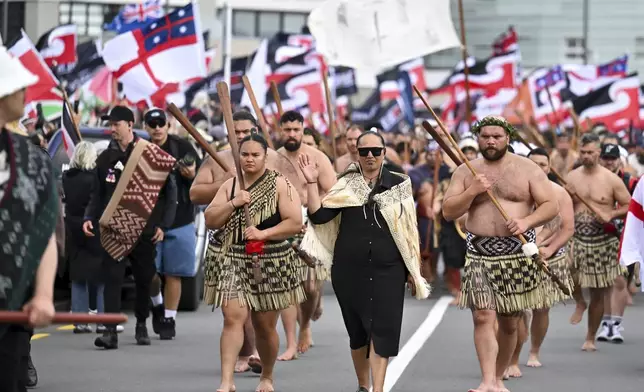
Indigenous Māori people walk through the streets of Wellington, New Zealand to protest against a proposed law that would redefine the country's founding agreement between Indigenous Māori and the British Crown, Tuesday, Nov. 19, 2024. (AP Photo/Mark Tantrum)

Indigenous Māori reacts outside New Zealand's parliament to protest against a proposed law that would redefine the country's founding agreement between Indigenous Māori and the British Crown, in Wellington, New Zealand, Tuesday, Nov. 19, 2024. (AP Photo/Mark Tantrum)

A protester reacts outside New Zealand's parliament during a demonstration against a proposed law that would redefine the country's founding agreement between Indigenous Māori and the British Crown, in Wellington Tuesday, Nov. 19, 2024. (AP Photo/Mark Tantrum)
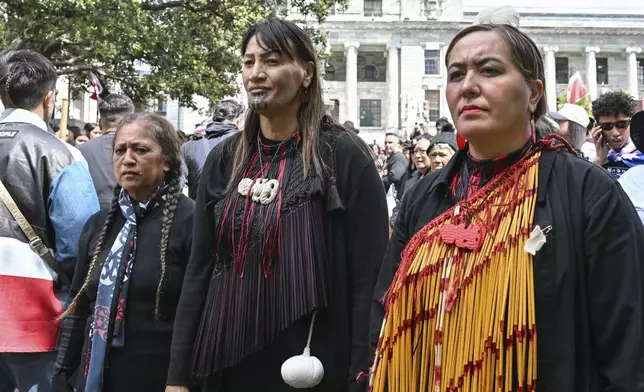
Members of Te Āti Awa, join thousands of people gathered outside New Zealand's parliament to protest a proposed law that would redefine the country's founding agreement between Indigenous Māori and the British Crown, in Wellington Tuesday, Nov. 19, 2024. (AP Photo/Mark Tantrum)
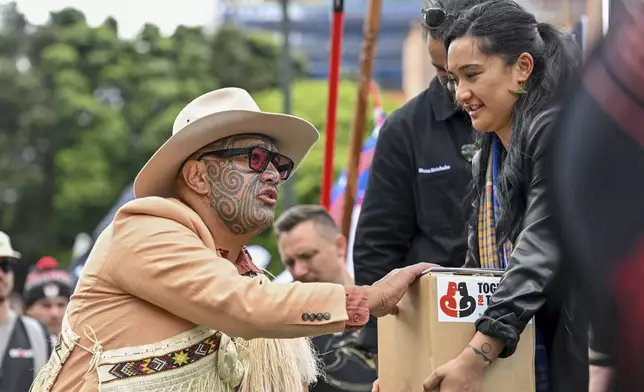
A petition is delivered to Member of Parliament Rawiri Waititi, left, outside New Zealand's parliament during a protest against a proposed law that would redefine the country's founding agreement between Indigenous Māori and the British Crown, in Wellington Tuesday, Nov. 19, 2024. (AP Photo/Mark Tantrum)
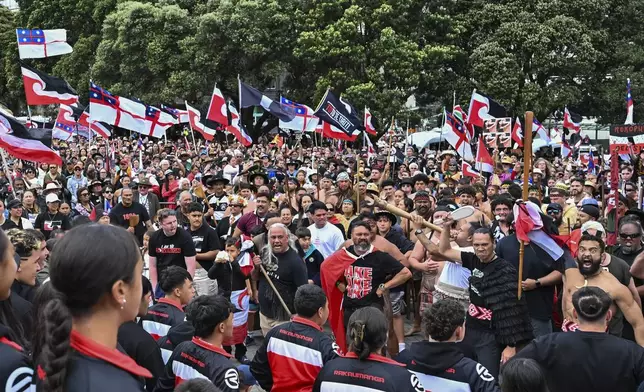
Thousands of people gather outside New Zealand's parliament to protest a proposed law that would redefine the country's founding agreement between Indigenous Māori and the British Crown, in Wellington Tuesday, Nov. 19, 2024. (AP Photo/Mark Tantrum)
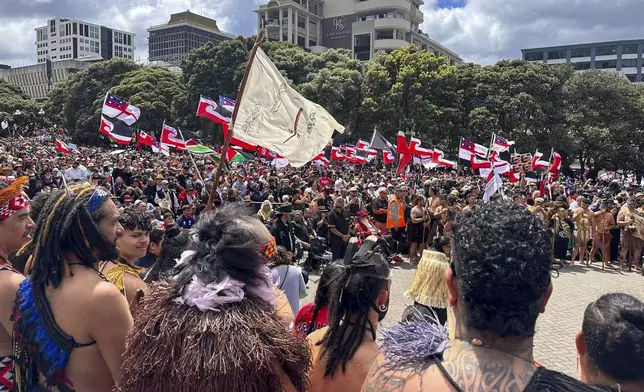
Indigenous Māori gather outside Parliament in Wellington, New Zealand, Tuesday, Nov. 19, 2024. (AP Photo/Mark Tantrum)
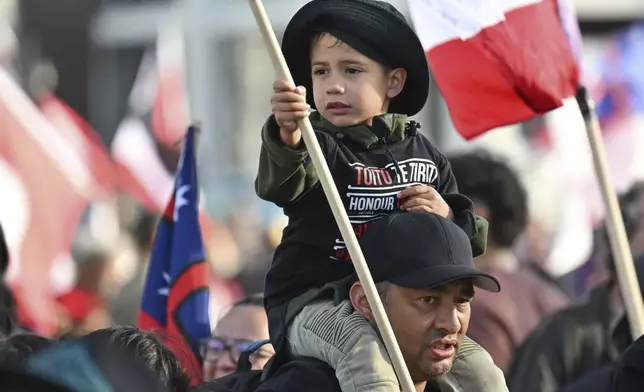
A man carries a child on his shoulders outside New Zealand's parliament during a protest against a proposed law that would redefine the country's founding agreement between Indigenous Māori and the British Crown, in Wellington Tuesday, Nov. 19, 2024. (AP Photo/Mark Tantrum)
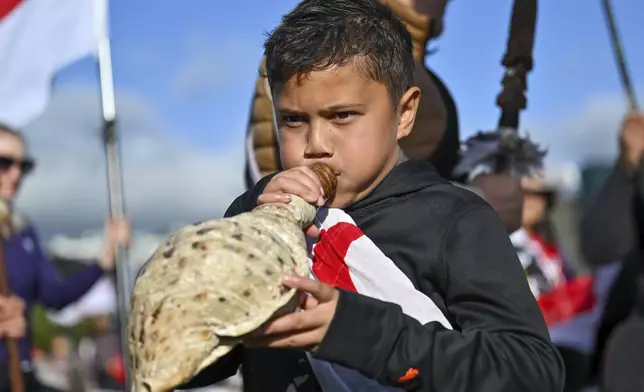
Te Haukūnui Hokianga plays a conch shell ahead of a protest at New Zealand's parliament against a proposed law that would redefine the country's founding agreement between Indigenous Māori and the British Crown, in Wellington, New Zealand, Tuesday, Nov. 19, 2024. (AP Photo/Mark Tantrum)
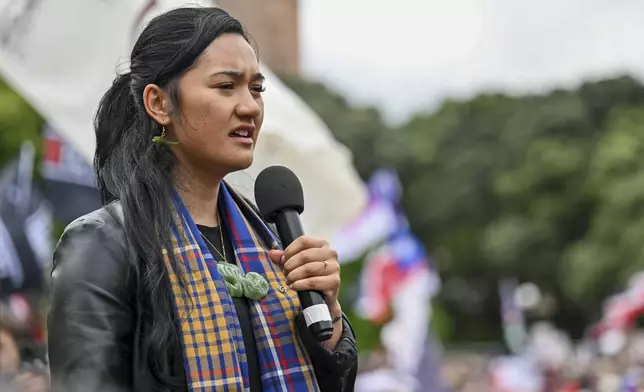
Hana-Rāwhiti Maipi-Clarke speaks to the thousands of people gathered outside New Zealand's parliament to protest a proposed law that would redefine the country's founding agreement between Indigenous Māori and the British Crown, in Wellington Tuesday, Nov. 19, 2024. (AP Photo/Mark Tantrum)
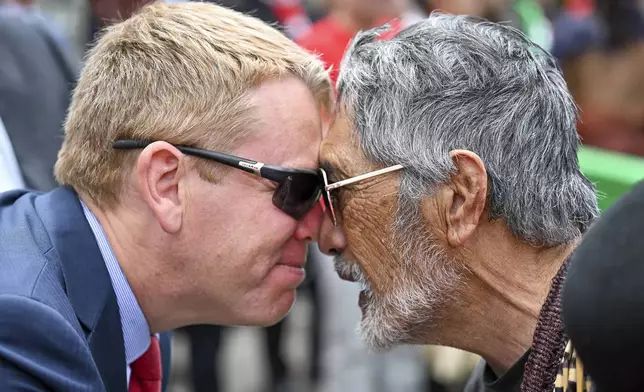
New Zealand's opposition leader Chris Hipkins, left, does a hongi with Hare Arapere as people gathered outside New Zealand's parliament to protest a proposed law that would redefine the country's founding agreement between Indigenous Māori and the British Crown, in Wellington Tuesday, Nov. 19, 2024. (AP Photo/Mark Tantrum)
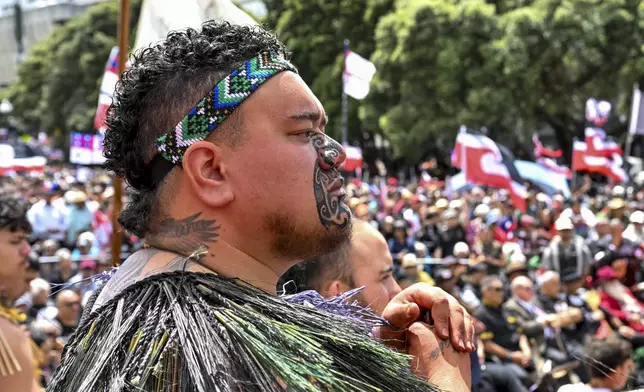
Thousands of people gather outside New Zealand's parliament to protest a proposed law that would redefine the country's founding agreement between Indigenous Māori and the British Crown, in Wellington Tuesday, Nov. 19, 2024. (AP Photo/Mark Tantrum)
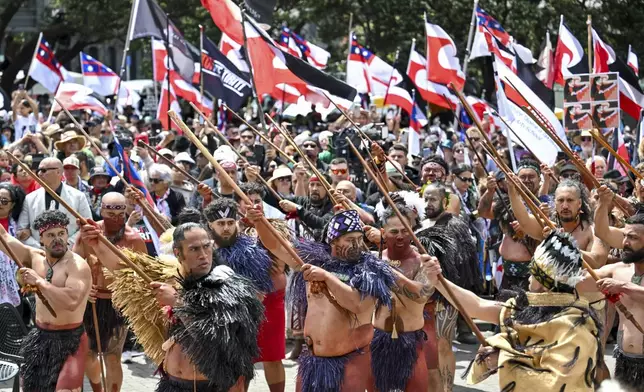
Indigenous Māori people protest outside Parliament against a proposed law that would redefine the country's founding agreement between Indigenous Māori and the British Crown, in Wellington, New Zealand, Tuesday, Nov. 19, 2024. (AP Photo/Mark Tantrum)
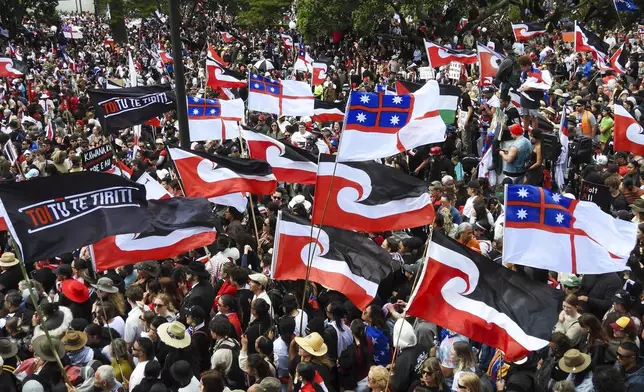
Thousands of people gather outside New Zealand's parliament to protest a proposed law that would redefine the country's founding agreement between Indigenous Māori and the British Crown, in Wellington Tuesday, Nov. 19, 2024. (AP Photo/Charlotte McLay-Graham)
“Just fighting for the rights that our tūpuna, our ancestors, fought for,” Shanell Bob said as she waited for the march to begin. “We’re fighting for our tamariki, for our mokopuna, so they can have what we haven’t been able to have,” she added, using the Māori words for children and grandchildren.
What was likely the country’s largest-ever protest in support of Māori rights — a subject that has preoccupied modern New Zealand for much of its young history — followed a long tradition of peaceful cross-country marches that have marked turning points in the nation's story.
“We’re going for a walk!” one organizer proclaimed from the stage as crowds gathered at the opposite end of the city from the nation’s Parliament. People had traveled from across the nation over the past nine days.
For many, the turnout reflected growing solidarity on Indigenous rights from non-Māori. At bus stops during the usual morning commute, people of all ages and races waited with Māori sovereignty flags. Some local schools said they would not register students as absent. The city’s mayor joined the protest.
The bill that marchers are opposing is unpopular and unlikely to become law. But opposition to it has been widespread, which marchers said indicated rising knowledge of the Treaty of Waitangi’s promises to Māori among New Zealanders — and a small but vocal backlash from those who are angered by the attempts of courts and lawmakers to keep them.
Māori marching for their rights is not new. But the crowds were larger than at treaty marches before and the mood was changed, Indigenous people said.
“It’s different to when I was a child,” Bob said. “We’re stronger now, our tamariki are stronger now, they know who they are, they’re proud of who they are.”
As the marchers moved through the streets of Wellington with ringing Māori haka — rhythmic chants — and waiata, or songs, thousands more holding signs lined the pavement in support.
Some placards bore jokes or insults about the lawmakers responsible for the bill, which would change the meaning of the principles of the 1840 Treaty of Waitangi and prevent them from applying only to Māori — whose chiefs signed the document when New Zealand was colonized.
But others read “proud to be Māori” or acknowledged the bearer’s heritage as a non-Māori person endorsing the protest. Some denounced the widespread expropriation of Māori land during colonization, one of the main grievances arising from the treaty.
“The treaty is a document that lets us be here in Aotearoa so holding it up and respecting it is really important,” said Ben Ogilvie, who is of Pākehā or New Zealand European descent, using the Māori name for the country. “I hate what this government is doing to tear it down.”
Police estimated that 42,000 people tried to crowd into Parliament’s grounds, with some spilling into the surrounding streets. People crammed themselves onto the children's slide on the lawn for a vantage point; others perched in trees. The tone was almost joyful; as people waited to leave the cramped area, some struck up Māori songs that most New Zealanders learn at school.
A sea of Māori sovereignty flags in red, black and white stretched down the lawn and into the streets. But marchers bore Samoan, Tongan, Indigenous Australian, U.S., Palestinian and Israeli flags, too. At Parliament, speeches from political leaders drew attention to the reason for the protest — a proposed law that would change the meaning of words in the country’s founding treaty, cement them in law and extend them to everyone.
Its author, libertarian lawmaker David Seymour — who is Māori — says the process of redress for decades of Crown breaches of its treaty with Māori has created special treatment for Indigenous people, which he opposes.
The bill’s detractors say it would spell constitutional upheaval, dilute Indigenous rights, and that it has provoked divisive rhetoric about Māori — who are still disadvantaged on almost every social and economic metric, despite attempts by the courts and lawmakers in recent decades to rectify inequities caused in large part by breaches of the treaty.
It is not expected to ever become law, but Seymour made a political deal that saw it shepherded through a first vote last Thursday. In a statement Tuesday, he said the public could now make submissions on the bill, which he hopes will experience a swell of support.
Seymour briefly walked out onto Parliament’s forecourt to observe the protest, although he was not among the lawmakers invited to speak. Some in the crowd booed him.
The protest was “a long time coming,” said Papa Heta, one of the marchers, who said Māori sought acknowledgement and respect.
“We hope that we can unite with our Pākehā friends, Europeans," he added. "Unfortunately, there are those that make decisions that put us in a difficult place.”
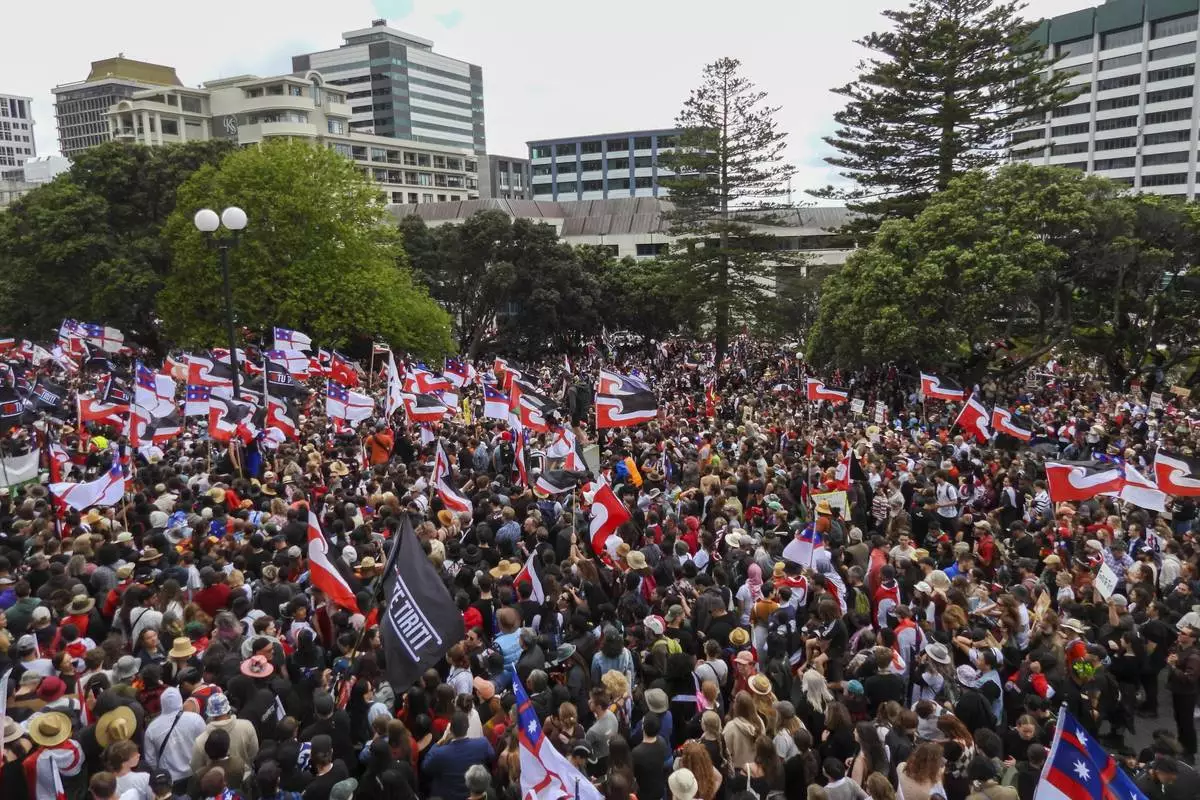
Thousands of people gather outside New Zealand's parliament to protest a proposed law that would redefine the country's founding agreement between Indigenous Māori and the British Crown, in Wellington Tuesday, Nov. 19, 2024. (AP Photo/Charlotte McLay-Graham)
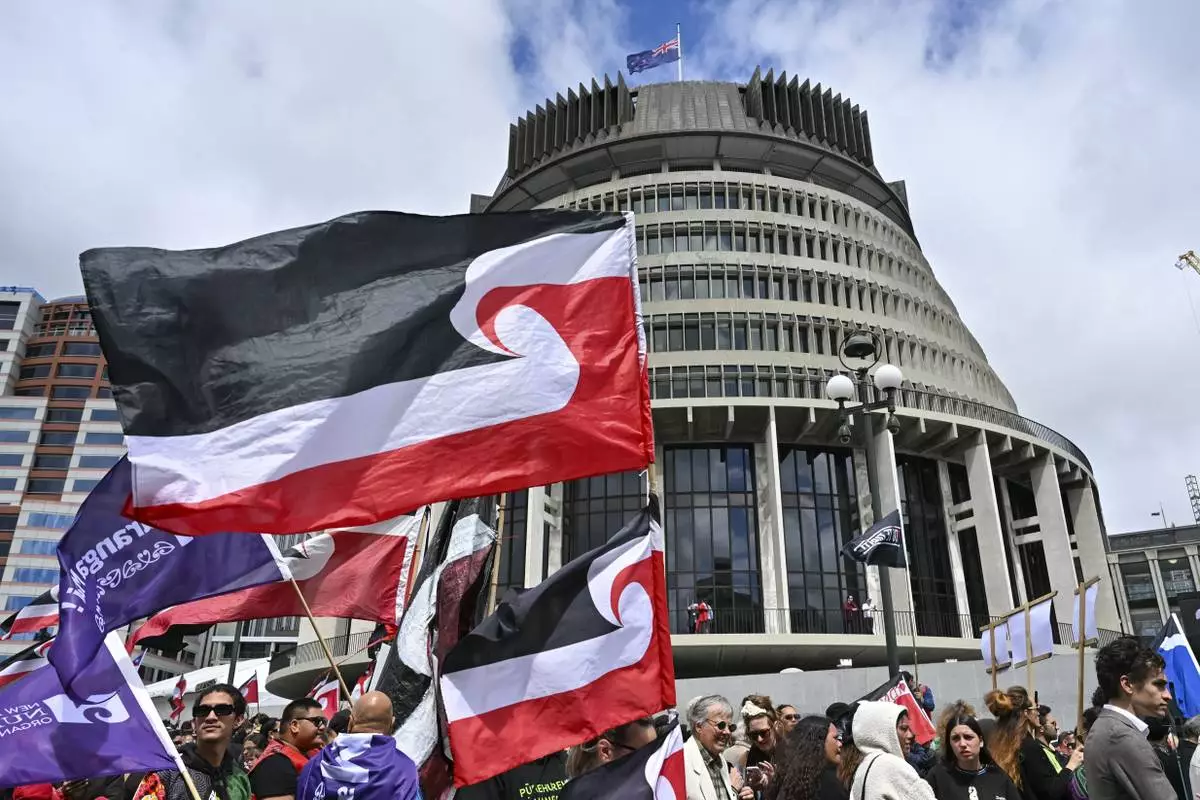
Thousands of people gather outside New Zealand's parliament to protest a proposed law that would redefine the country's founding agreement between Indigenous Māori and the British Crown, in Wellington Tuesday, Nov. 19, 2024. (AP Photo/Mark Tantrum)
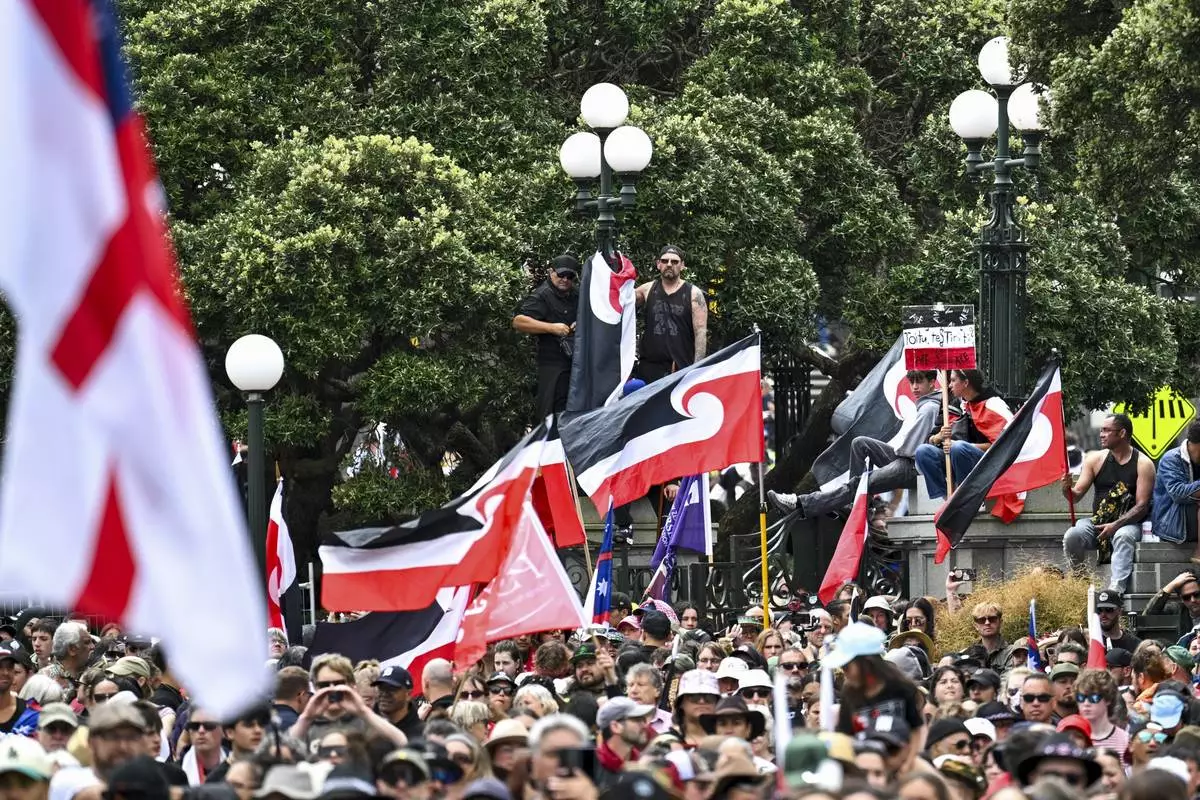
Thousands of people gather outside New Zealand's parliament to protest a proposed law that would redefine the country's founding agreement between Indigenous Māori and the British Crown, in Wellington Tuesday, Nov. 19, 2024. (AP Photo/Mark Tantrum)
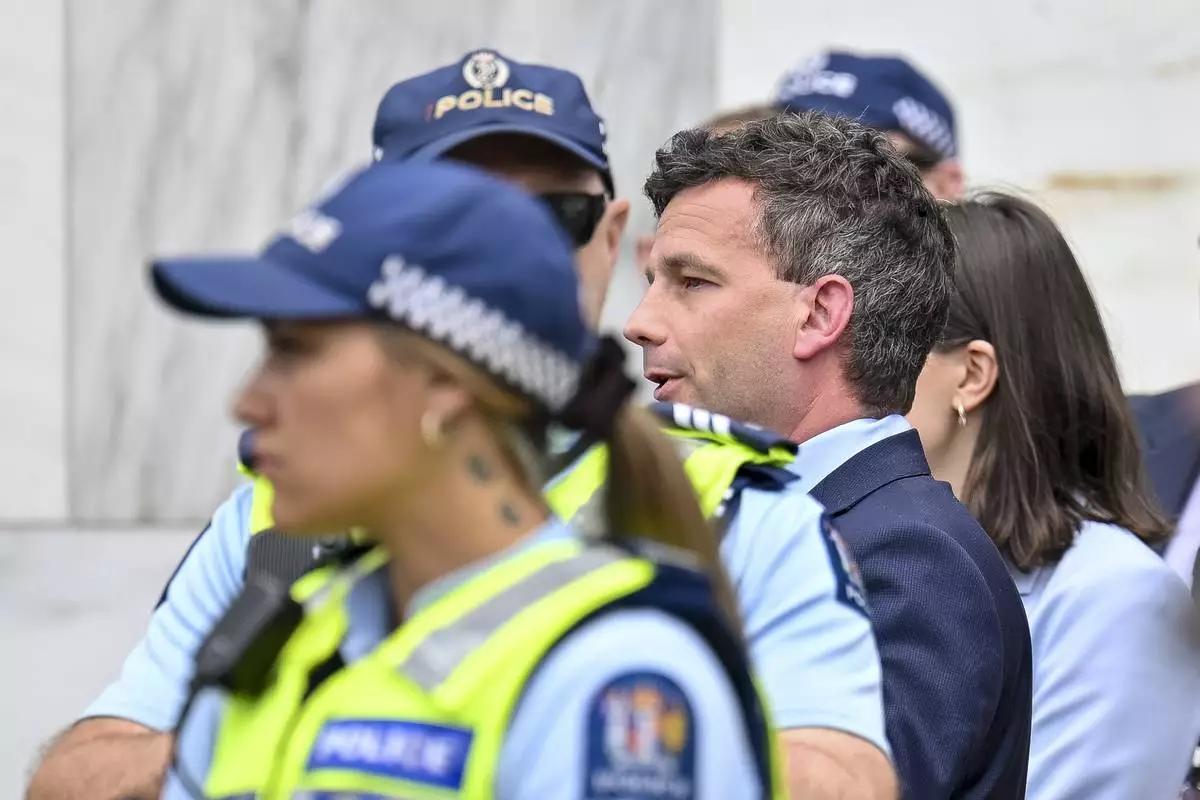
ACT Party leader David Seymour, center, looks on as thousands of people gather outside New Zealand's parliament to protest a proposed law that would redefine the country's founding agreement between Indigenous Māori and the British Crown, in Wellington Tuesday, Nov. 19, 2024. (AP Photo/Mark Tantrum)
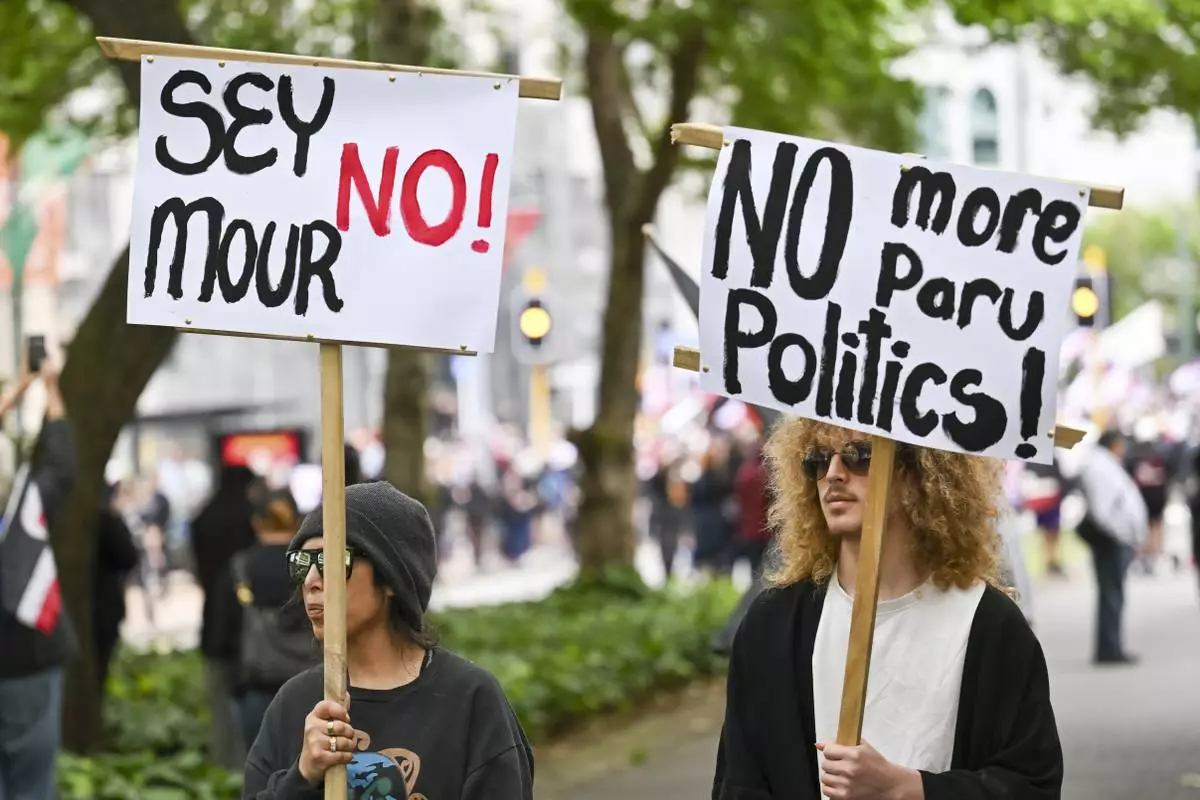
Protesters march carrying placards to New Zealand's parliament to demonstrate against a proposed law that would redefine the country's founding agreement between Indigenous Māori and the British Crown, in Wellington, New Zealand, Tuesday, Nov. 19, 2024. (AP Photo/Mark Tantrum)
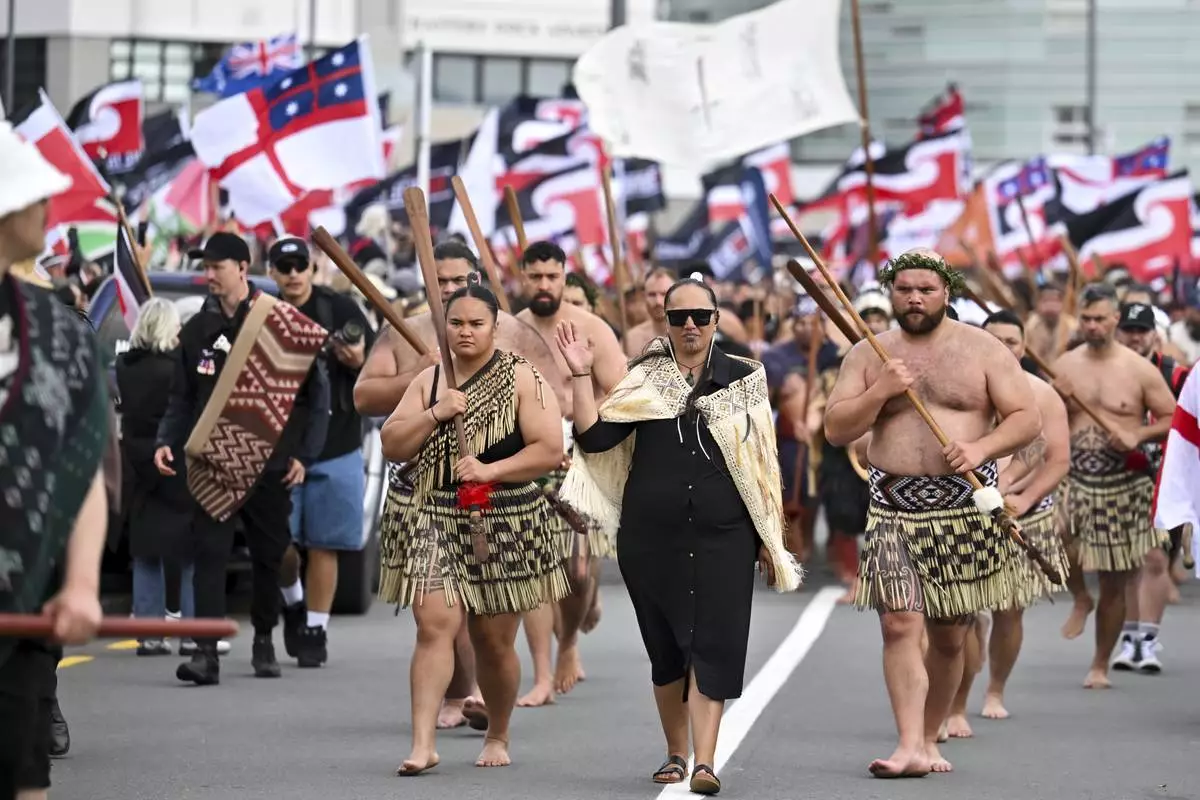
Indigenous Māori people walk through the streets of Wellington, New Zealand to protest against a proposed law that would redefine the country's founding agreement between Indigenous Māori and the British Crown, Tuesday, Nov. 19, 2024. (AP Photo/Mark Tantrum)

Indigenous Māori reacts outside New Zealand's parliament to protest against a proposed law that would redefine the country's founding agreement between Indigenous Māori and the British Crown, in Wellington, New Zealand, Tuesday, Nov. 19, 2024. (AP Photo/Mark Tantrum)

A protester reacts outside New Zealand's parliament during a demonstration against a proposed law that would redefine the country's founding agreement between Indigenous Māori and the British Crown, in Wellington Tuesday, Nov. 19, 2024. (AP Photo/Mark Tantrum)
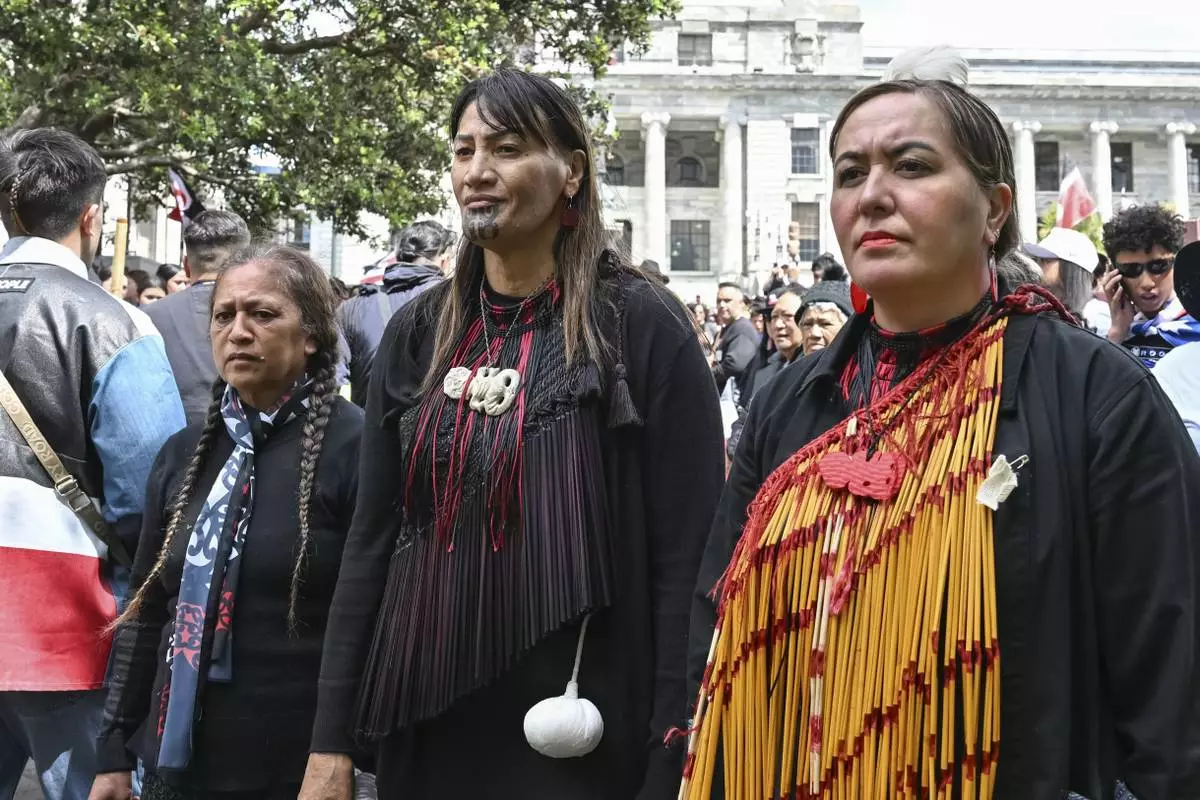
Members of Te Āti Awa, join thousands of people gathered outside New Zealand's parliament to protest a proposed law that would redefine the country's founding agreement between Indigenous Māori and the British Crown, in Wellington Tuesday, Nov. 19, 2024. (AP Photo/Mark Tantrum)
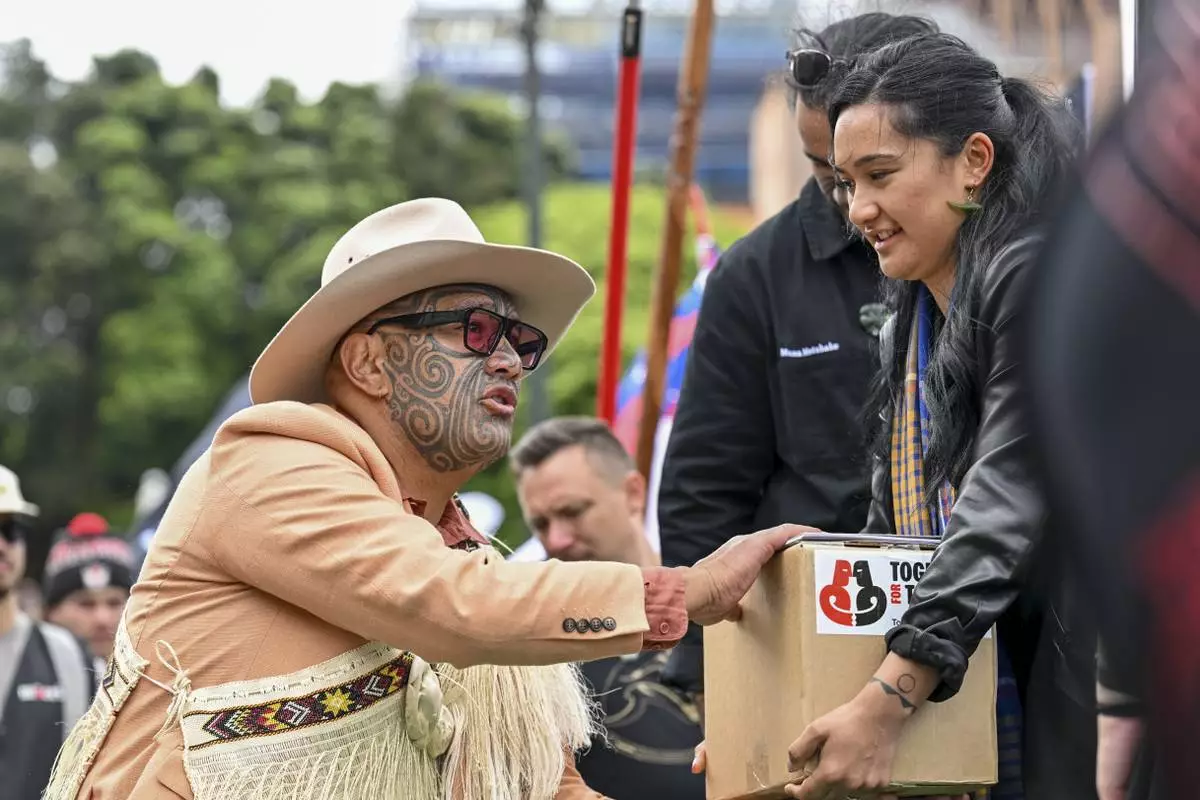
A petition is delivered to Member of Parliament Rawiri Waititi, left, outside New Zealand's parliament during a protest against a proposed law that would redefine the country's founding agreement between Indigenous Māori and the British Crown, in Wellington Tuesday, Nov. 19, 2024. (AP Photo/Mark Tantrum)
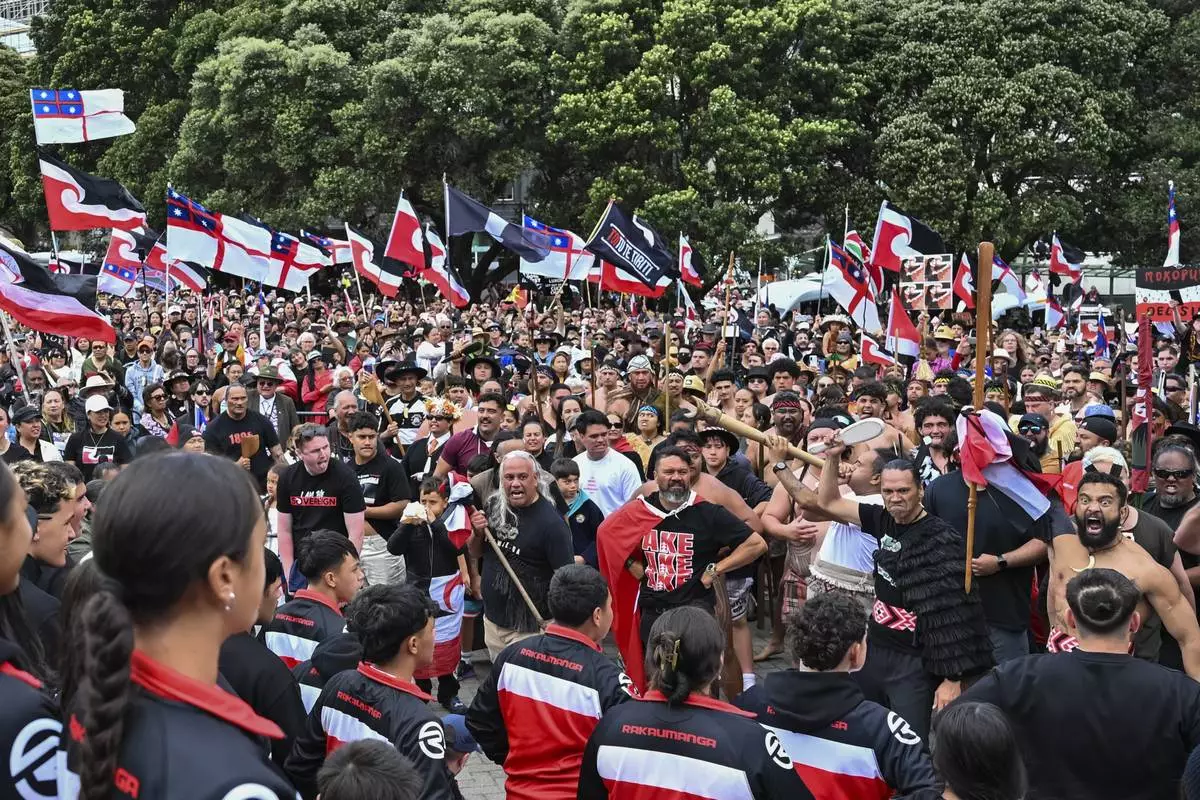
Thousands of people gather outside New Zealand's parliament to protest a proposed law that would redefine the country's founding agreement between Indigenous Māori and the British Crown, in Wellington Tuesday, Nov. 19, 2024. (AP Photo/Mark Tantrum)
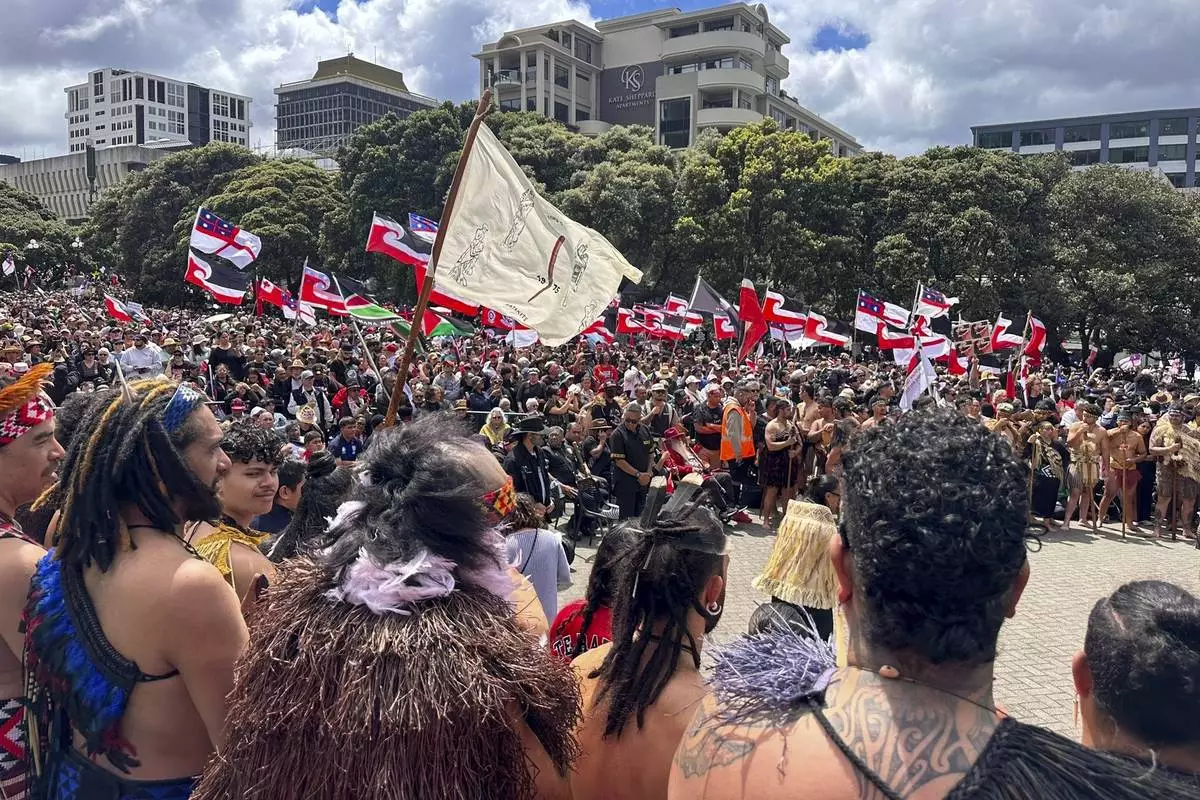
Indigenous Māori gather outside Parliament in Wellington, New Zealand, Tuesday, Nov. 19, 2024. (AP Photo/Mark Tantrum)

A man carries a child on his shoulders outside New Zealand's parliament during a protest against a proposed law that would redefine the country's founding agreement between Indigenous Māori and the British Crown, in Wellington Tuesday, Nov. 19, 2024. (AP Photo/Mark Tantrum)
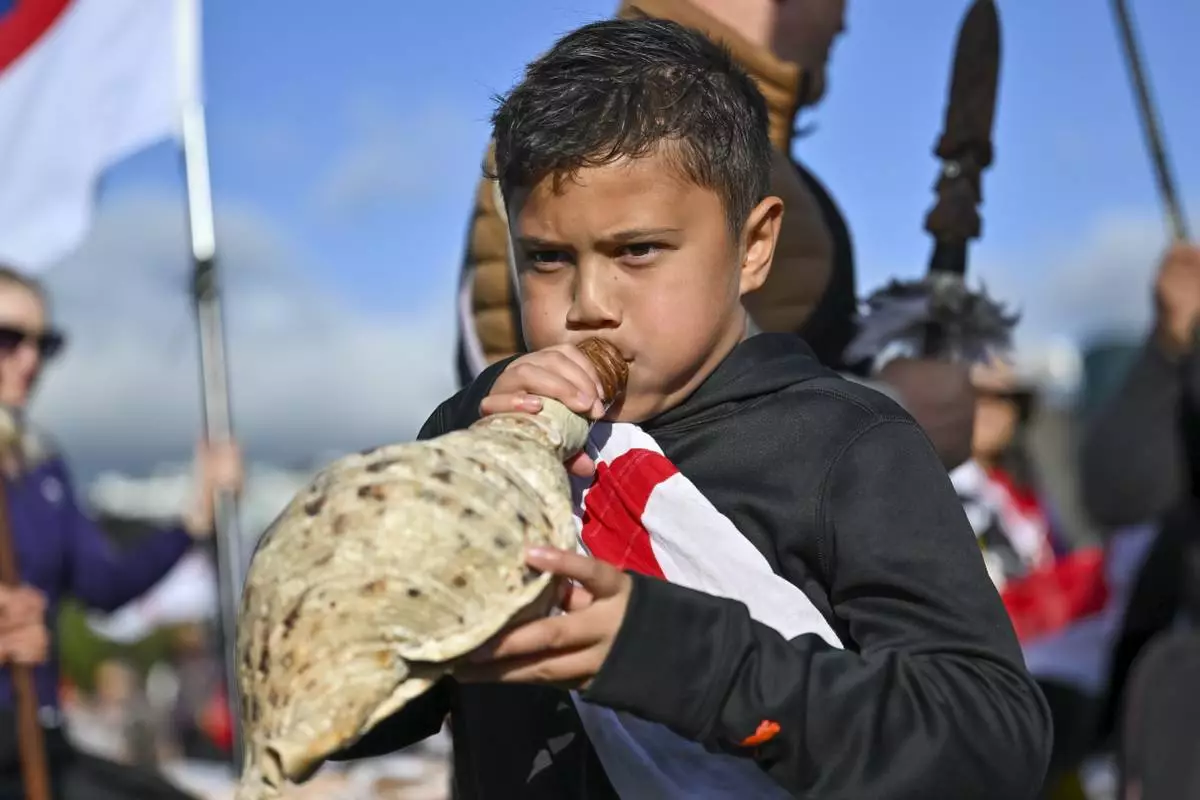
Te Haukūnui Hokianga plays a conch shell ahead of a protest at New Zealand's parliament against a proposed law that would redefine the country's founding agreement between Indigenous Māori and the British Crown, in Wellington, New Zealand, Tuesday, Nov. 19, 2024. (AP Photo/Mark Tantrum)

Hana-Rāwhiti Maipi-Clarke speaks to the thousands of people gathered outside New Zealand's parliament to protest a proposed law that would redefine the country's founding agreement between Indigenous Māori and the British Crown, in Wellington Tuesday, Nov. 19, 2024. (AP Photo/Mark Tantrum)
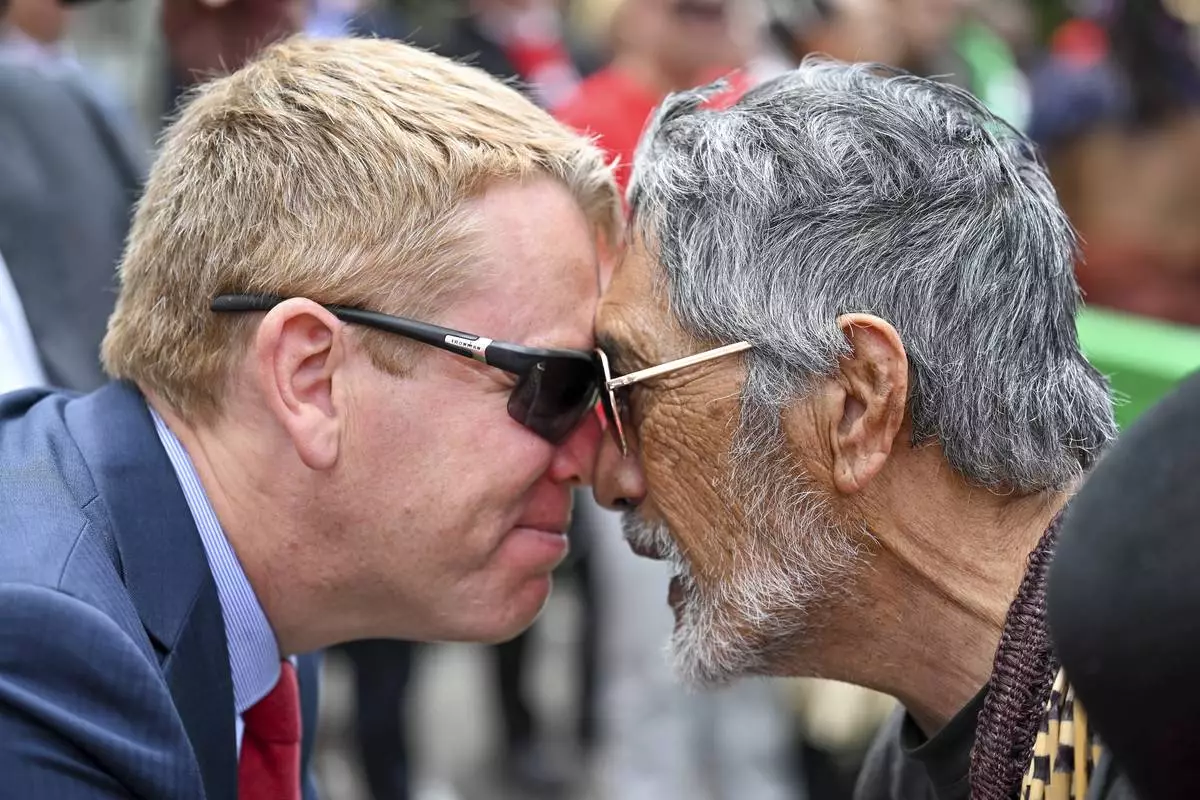
New Zealand's opposition leader Chris Hipkins, left, does a hongi with Hare Arapere as people gathered outside New Zealand's parliament to protest a proposed law that would redefine the country's founding agreement between Indigenous Māori and the British Crown, in Wellington Tuesday, Nov. 19, 2024. (AP Photo/Mark Tantrum)
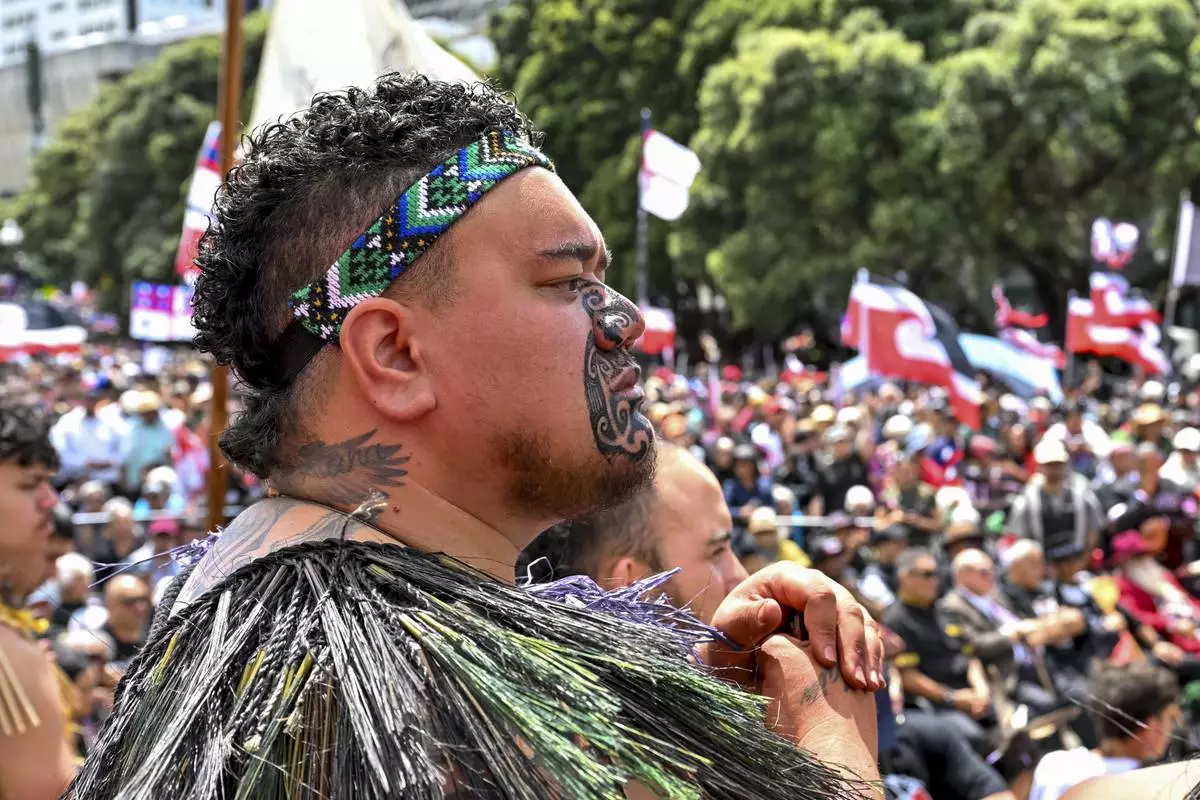
Thousands of people gather outside New Zealand's parliament to protest a proposed law that would redefine the country's founding agreement between Indigenous Māori and the British Crown, in Wellington Tuesday, Nov. 19, 2024. (AP Photo/Mark Tantrum)
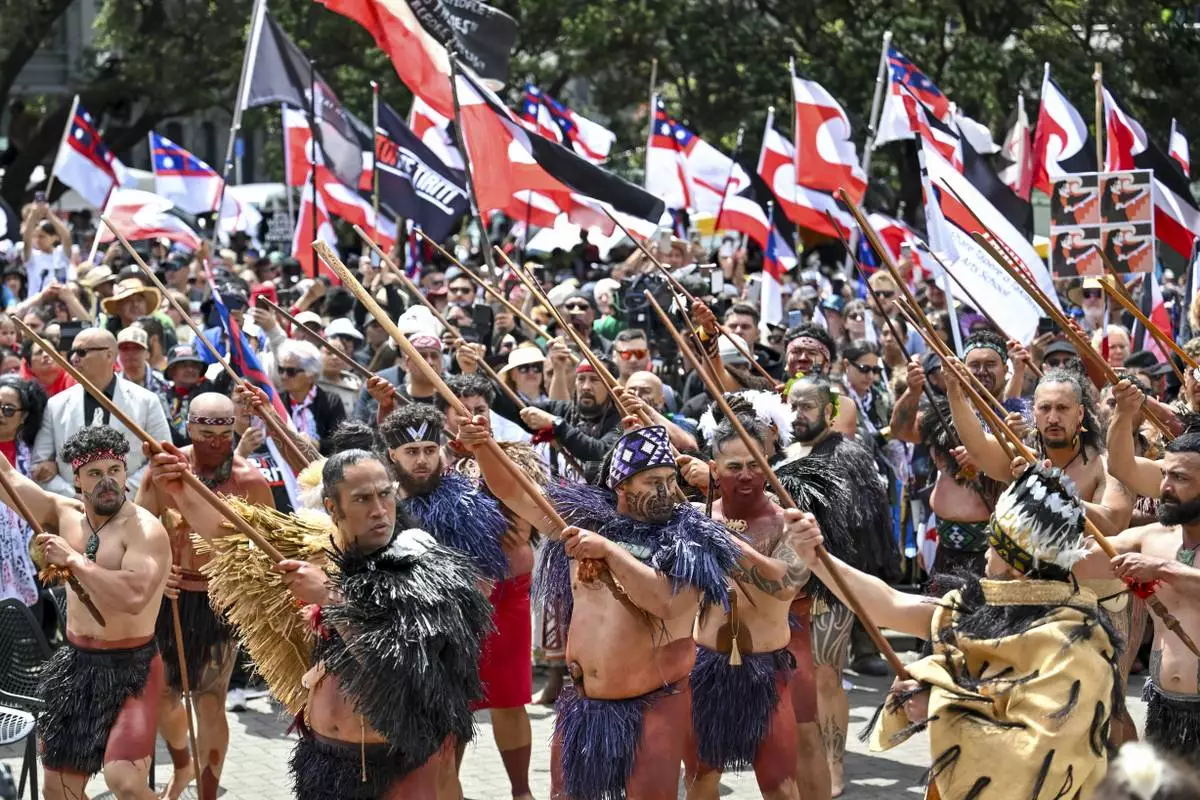
Indigenous Māori people protest outside Parliament against a proposed law that would redefine the country's founding agreement between Indigenous Māori and the British Crown, in Wellington, New Zealand, Tuesday, Nov. 19, 2024. (AP Photo/Mark Tantrum)
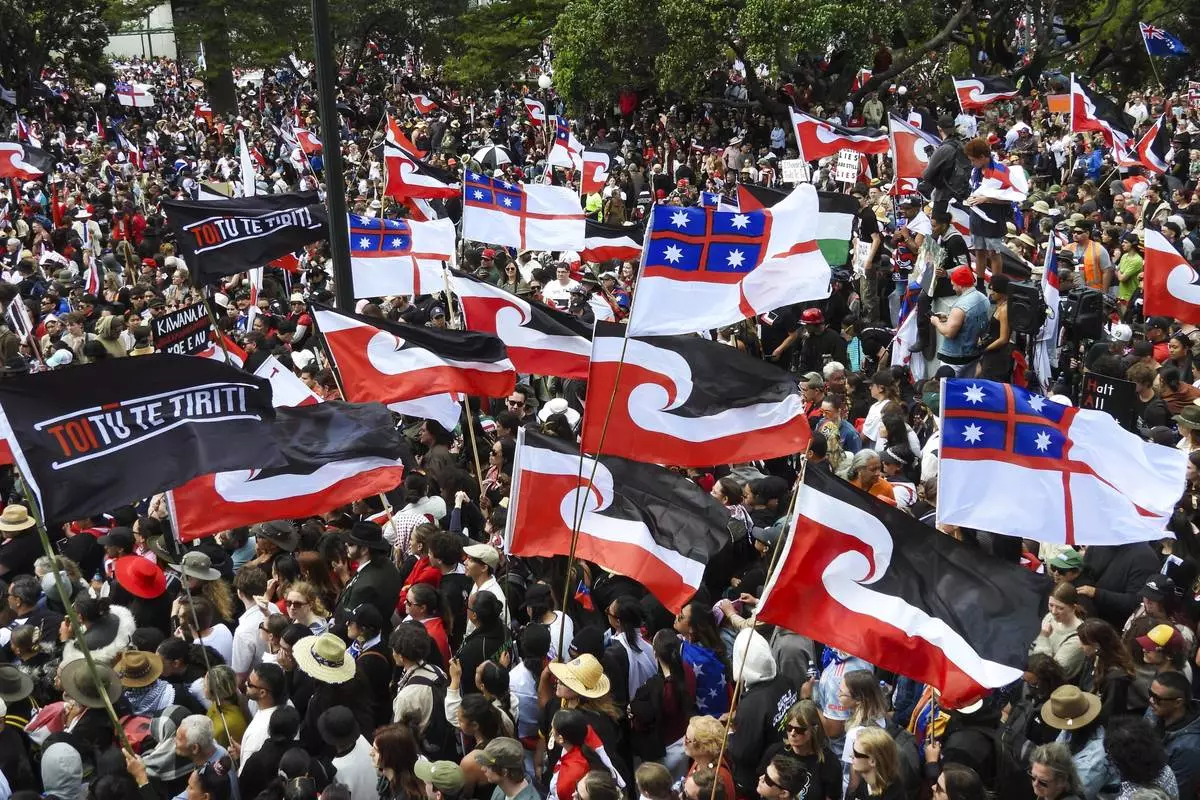
Thousands of people gather outside New Zealand's parliament to protest a proposed law that would redefine the country's founding agreement between Indigenous Māori and the British Crown, in Wellington Tuesday, Nov. 19, 2024. (AP Photo/Charlotte McLay-Graham)