Skip to Content Facebook Feature Image

Real Estate policies boost housing market in south China

China

China

China

Real Estate policies boost housing market in south China

2024-11-19 16:32 Last Updated At:17:07

Recent government policies in China aimed at stabilizing the real estate market have had a noticeable impact on cities like south China's Shenzhen and Guangzhou.

In late September, Shenzhen introduced measures to further optimize the steady and healthy development of its real estate market. As a result, the city reported a significant uptick in housing transactions, with about 8,300 second-hand homes signed in October - the highest in 45 months.

According to the Shenzhen Housing and Construction Bureau, from Nov 1 to 17, the total number of first-hand residential units sold exceeded 6,640, a 7-percent increase over the same period in October. Second-hand residential online transactions also surged, with about 4,090 units sold, marking a 51 percent month-on-month rise.

On Nov 13, the Ministry of Finance and other departments announced new tax policies to support the real estate market. The updated regulations expand deed tax incentives, raising the eligibility threshold for a 1-percent tax rate from 90 square meters to 140 square meters.

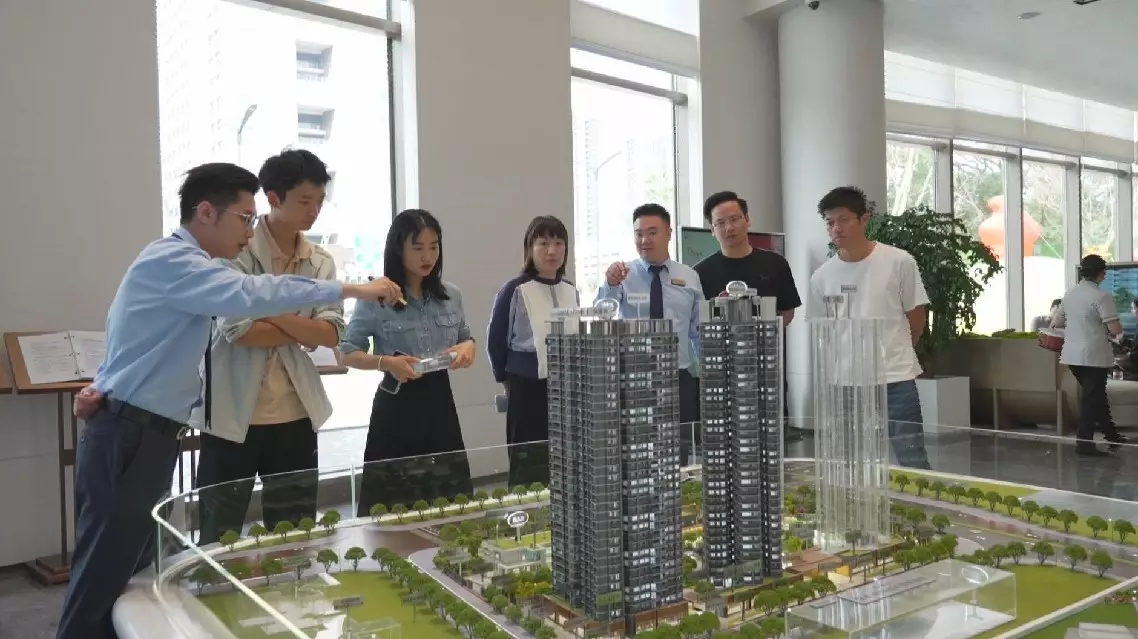
Chu Weiwei, a real estate agent in a central Shenzhen office, highlighted the positive impact of the tax reduction on buyers, especially those whose properties exceed the previous size limit. For instance, a buyer of a 100-square-meter home priced at 80,000 yuan (11,060 U.S. dollars) per square meter in Nanshan District could save 40,000 yuan (5,530 U.S. dollars) in transaction taxes. For families purchasing a second home, savings could amount to 160,000 yuan (22,120 U.S. dollars).

"This is a great stimulus for our customers. For example, I have customers who have been with me for almost four years and recently closed the deal," Chu said.

The rise in second-hand home transactions extends beyond central areas. Following the easing of purchase restrictions in non-core regions, the number of buyers from outside Shenzhen has grown significantly.

"Among the visitors to our property, both for viewings and transactions, over 10 percent are non-local residents. Many of them are from nearby places like Dongguan City, while some from Fujian and Hubei Provinces," said Zuo Panpan, a representative from a local real estate firm.

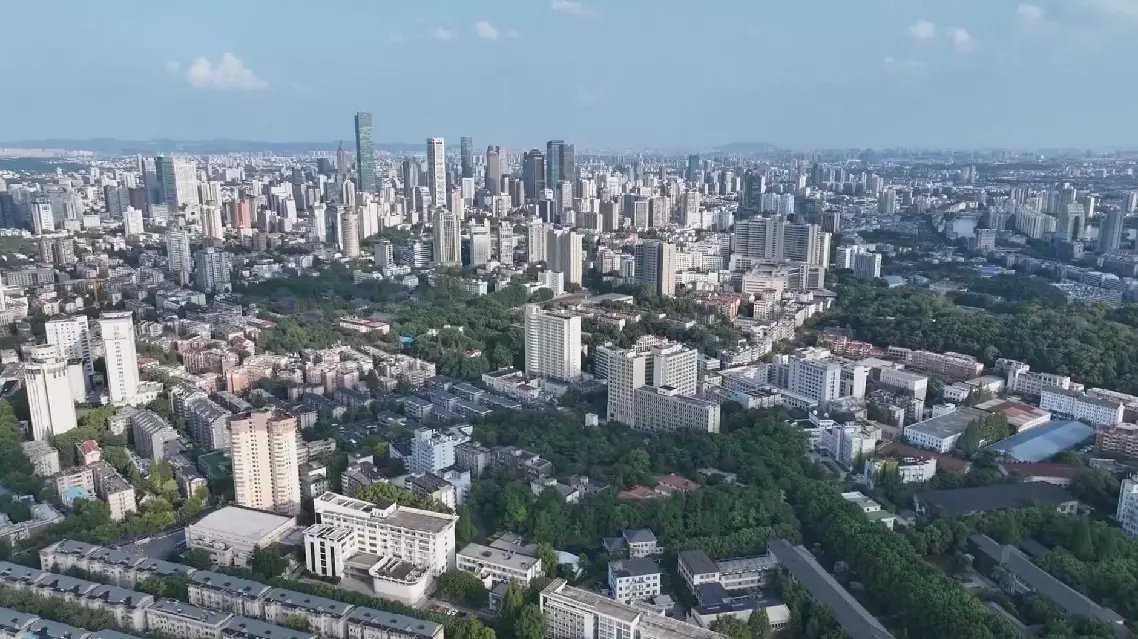
Meanwhile, in Guangzhou City, the local Development and Reform Commission recently released a draft for public consultation that aims to simplify the household registration process. The proposed revisions seek to lower barriers and broaden access for residents.

The draft significantly relaxes residency requirements for talent, eliminating age and social security restrictions. It also extends the age limits for doctoral, master's, and bachelor's degree holders by five years.

Additionally, Guangzhou is introducing a differentiated residency policy in several districts, including Baiyun and Huangpu. Individuals who own legal property and have paid social insurance in the city for over a year will be eligible to apply for household registration.

These policy changes are expected to bring increased demand for housing, particularly in urban areas.
Real Estate policies boost housing market in south China
Real Estate policies boost housing market in south China
Institutional opening-up, a key topic at this year's two sessions and in the 15th Five-Year Plan, is fundamentally about establishing long-term effectiveness through systematic, nationwide efforts rather than fragmented, short-term actions, said a deputy to the 14th National People's Congress (NPC) on Friday in Beijing.

The "two sessions", a major event in China's political calendar, refer to the annual meetings of China's top legislature, the National People's Congress (NPC), and the top political advisory body, the National Committee of the Chinese People's Political Consultative Conference (CPPCC).

Peng Shou, also an academician of Chinese Academy of Engineering, explained that by developing comprehensive pilot frameworks in free trade zones like Shanghai and the Hainan Free Trade Port, China is transforming fragmented policies into cohesive systems, such as addressing processing VAT to boost high-tech industries; and exploring the expansion of models like negative lists and digital infrastructure to create a more transparent and predictable environment for global partners.

"I believe that a system is about long-term effectiveness, it's not a short-term move, and not fragmented. It's not about handling isolated cases, but about involving everyone, the whole society," said Peng.

China has built a series of comprehensive testing grounds for institutional openness.

With 22 free trade zones covering the entire country, a full-scale pilot framework has been established. Especially in free trade zones like Shanghai and the Hainan Free Trade Port, China has launched over 110 innovative, integrated pilot measures.

"Turning previous fragmented small policies into a systematic framework is key. For example, the issue of processing and value-added tax is well addressed. By incorporating processing technologies and adding value, it drives the development of high-tech industries," said Peng.

Such models could also be promoted in other regions.

Peng also said that the Hainan Free Trade Port's special customs operations can be used as a great example.

"We may apply this negative list model to some cities or development zones. Additionally, we can focus on digital infrastructure, using AI and digital technology as a foundation in cities like Beijing and Shanghai," he said.

At its core, institutional opening-up is not just about aligning with global standards; it's about creating a more open, transparent, and predictable environment that attracts global partners, according to Peng.

By embracing this new model, China is not only enhancing its position in the global market but also reshaping its own economic future, he added.

NPC deputy emphasizes long-term, systematic impact of institutional opening-up strategies

NPC deputy emphasizes long-term, systematic impact of institutional opening-up strategies

Recommended Articles