LONDON--(BUSINESS WIRE)--Nov 20, 2024--
Tantalising Black Friday deals and the rise of TikTok shop are luring consumers into a world of online purchases but new research reveals that many are playing into the hands of savvy scammers on social media, leaving live event fans paying the price without any protection.
This press release features multimedia. View the full release here: https://www.businesswire.com/news/home/20241120592972/en/
According to new research revealed by Get Safe Online, the UK’s leading online safety advice resource, over half of consumers consider social media a ‘safe space’ for buying or selling live event tickets or feel neutral about it, even though the platforms offer zero protection or recourse when issues arise. Among fans surveyed, 42% had bought tickets on social media, with one in eight falling victim to scams.
The UK is seeing a new era of live events like never before, with demand for major shows sky high. Research revealed the scarcity of tickets is driving fans to take risks, with over a quarter (27%) admitting that “desperation to go to an event” led them to buy through social media. This was highlighted during the Oasis ticket sale, where millions of fans were funnelled into a single online queue on a primary ticket platform overwhelmed by demand.
Thousands of disappointed fans unable to secure tickets turned to social media and unverified sites where many fell victim to scams. According to Lloyds bank, 1 Oasis ticket scam victims lost an average £346 each, with 90% of scams occurring on social media. This highlights the urgent need for alternative, safe and regulated platforms that protect fans from fraud. Indeed, the majority of consumers (79%) agreed that having a secure, regulated secondary marketplace is essential to keeping ticket-buying safe. Of those who had bought tickets on social media, 17% had a negative experience, citing feeling intimidated, being caught in a phishing scam, encountering fake tickets, multiple sales of the same ticket, or sellers disappearing with the money.
Tony Neate, CEO of Get Safe Online, said, ‘We are witnessing a perfect storm: heightened fan passion, limited ticket supply, a single primary seller, a chaotic and pressurised on-sale primary ticketing process — all of which create an environment for fraudsters to operate with alarming success. Fans urgently need safe alternatives with robust consumer protections. Increasing competition also opens the market, giving fans more choices about where and how they purchase tickets safely. It is essential that consumers are fully aware of the risks associated with purchasing tickets on social media and have access to multiple platforms and regulated marketplaces where they are protected by a guarantee.”
The research reveals that Londoners are at particular risk of ticket scams on social media: 76% express trust or neutrality toward buying tickets on these platforms — well above the national average of 54%. This misplaced confidence comes at a cost, with 21% of Londoners reporting they’ve unknowingly purchased fake tickets on social media platforms.
Younger consumers are also more vulnerable according to the research, with 55% of 18-34-year olds admitting they’d buy tickets on social media, often making impulsive purchases that lead to the highest financial losses.
One fan, Carly J, who was scammed on Facebook shared the deception she encountered: “Finding tickets for Fred Again felt like an impossible task after they first sold out. I thought I’d had a lucky break when I found a pair on Facebook Marketplace for £100. But after I paid, the seller vanished and deactivated their account. I felt completely powerless and foolish. I reached out to Facebook for help but got no response. The experience has really opened my eyes to how vulnerable we are on social media where there is no protection or anything you can do to get your money back.”
It’s clear that the current ticketing system could better meet consumer needs and expectations. Fans want flexibility and choice - including the option to buy tickets closer to the event date or outside the restricted window of the on-sale. The more industry competition and optionality for fans, the better the services and offerings.
With live events increasingly taking centre stage in people’s lives, it is critical the industry works together now more than ever to protect fans.
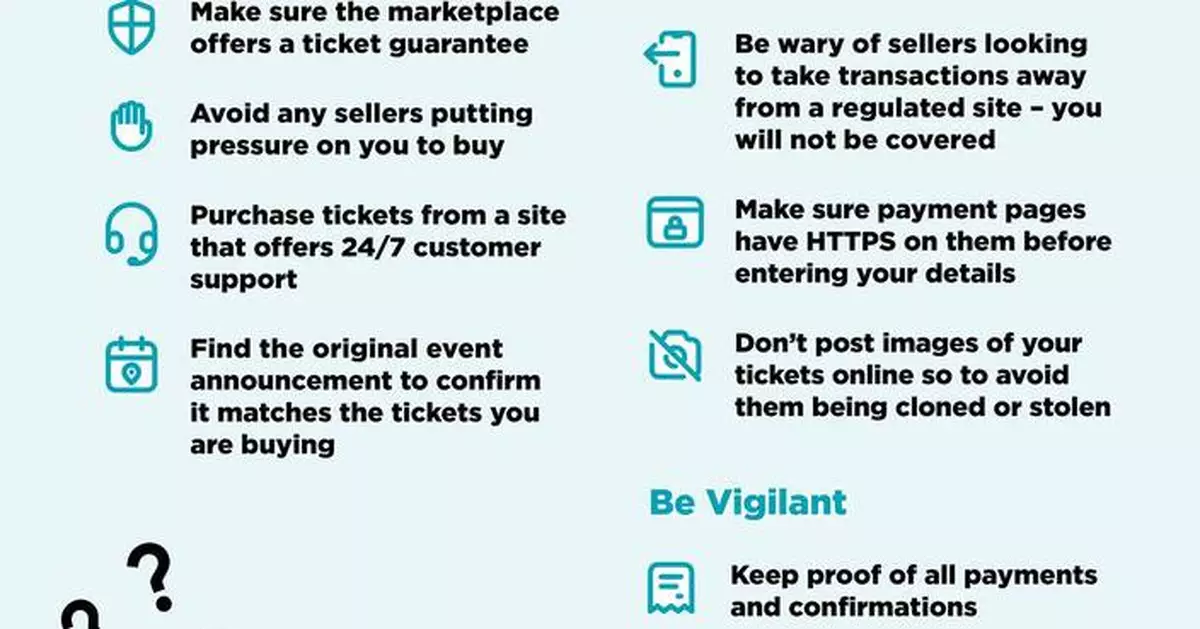
For further information on buying tickets safely online visit: Buying Tickets - Get Safe Online.
ABOUT GET SAFE ONLINE
Get Safe Online is an authoritative and widely respected international resource designed to help individuals and small businesses stay safe, secure and confident when using the internet. The information and advice provided is designed to be impartial, practical and easy to follow by all of its target audiences. Get Safe Online has established a network of websites and local representations in 26 countries around the world, funded by the UK’s Foreign, Commonwealth & Development Office. Get Safe Online was established in 2006 and is a not-for-profit organisation. www.getsafeonline.org.
Survey conducted by Opinium with 2,000 respondents. Figures correlated through spending between April 2023 and March 2024.
If you become the victim of a scam, contact Action Fraud on 0300 123 2040 or at www.actionfraud.police.uk.
1 Research from Lloyd’s bank showing money lost to Oasis scams
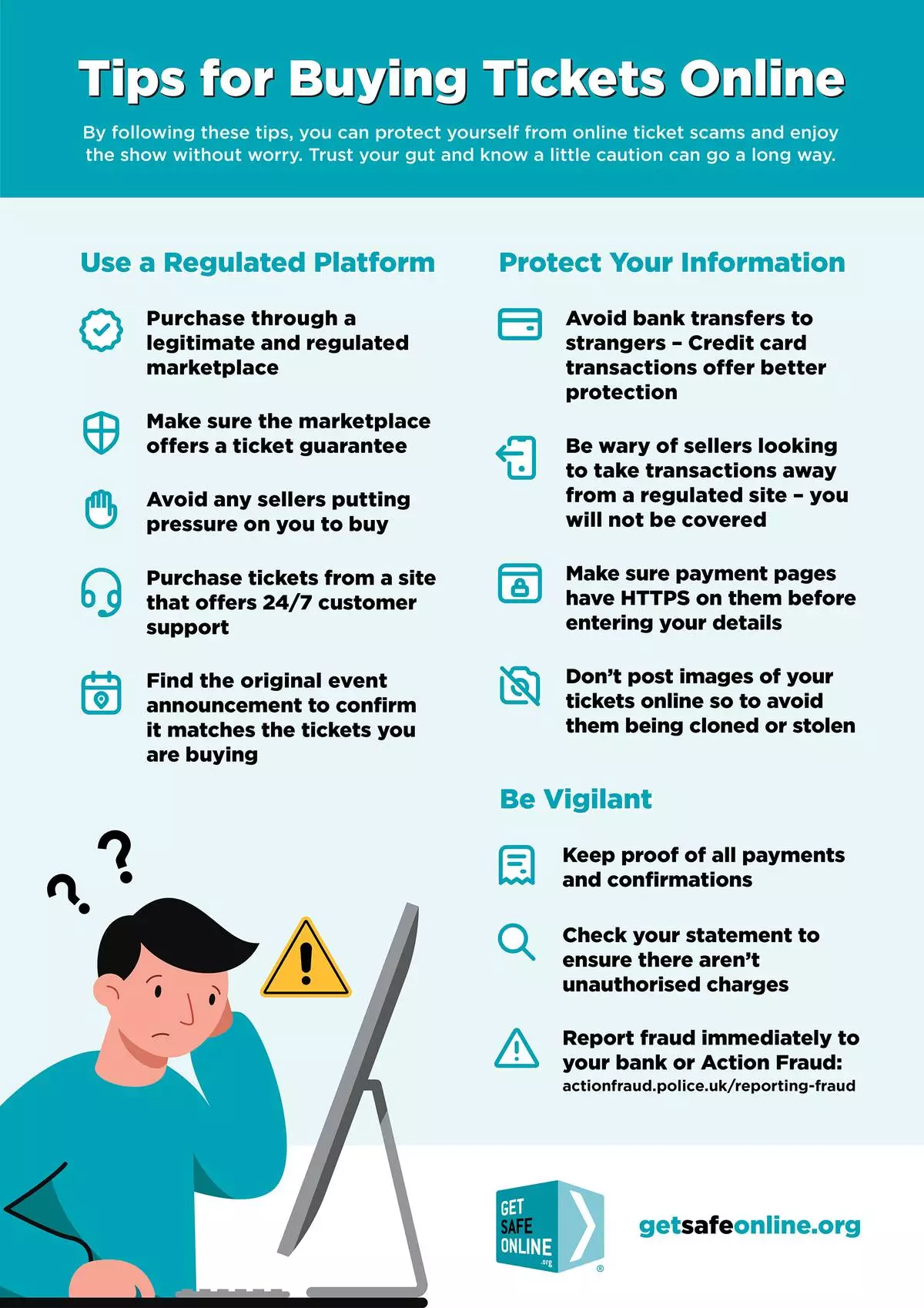
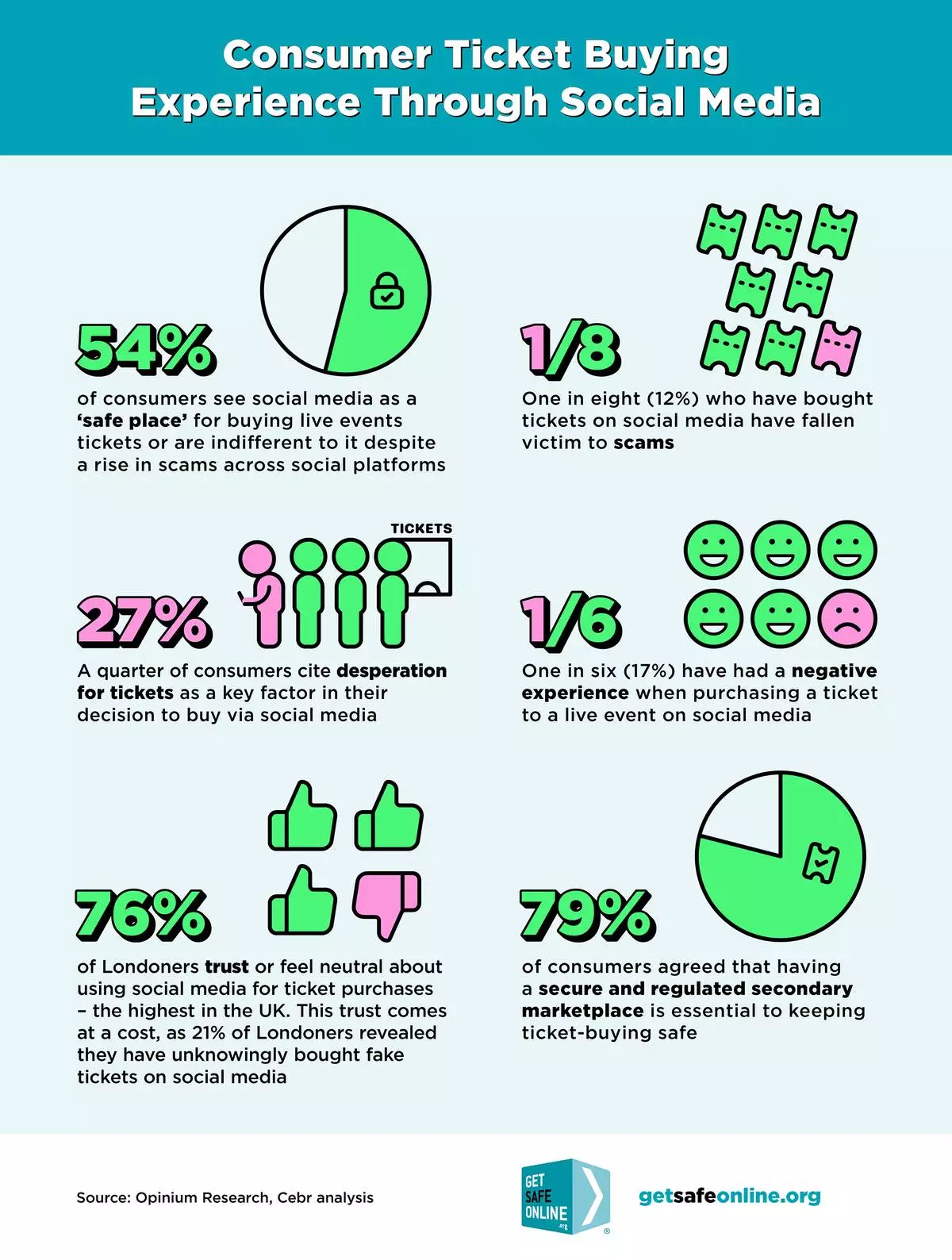
Consumers Sleepwalking Into Scams: Alarming Rise in Social Media Ticket Scams as Buyers Ignore the Risks (Graphic: Business Wire)
Consumers Sleepwalking Into Scams: Alarming Rise in Social Media Ticket Scams as Buyers Ignore the Risks (Graphic: Business Wire)