Weeks after the end of a historic term, Supreme Court Justices Elena Kagan and Amy Coney Barrett are making a rare appearance before Congress, and facing wide-ranging questions as the high court seeks millions of dollars to beef up security amid a rise in threats to the judiciary.
Down the street, U.S. President Donald Trump welcomed new Iraqi Prime Minister Ali al-Zaidi to the White House after strongly backing the political novice’s bid for office. Iraq has been under pressure to disarm Iran-backed militias that attacked U.S. bases and diplomatic facilities after the U.S. and Israel instigated the Iran war.
The U.S. launched more strikes on Iran early Tuesday after Trump vowed to blockade Iranian ports and charge 20% of their cargo for ships transiting the Strait of Hormuz. Later Tuesday, he said he was backing away from the tolls and pursuing another arrangement following discussions with Gulf allies.
And in Maine, protesters are raising unanswered questions about the ninth fatal shooting by Immigration and Customs Enforcement agents since Trump's immigration crackdown began.
The Latest:
The president suggested he wasn’t interested in continuing negotiations immediately with Iran because “they lie.”
He also said the last contact he had with negotiators was an hour ago.
Trump said U.S. forces had been careful not to harm Iran’s civilian population with strikes up until now, but he warned Iran: “You better make a deal, or you’re not going to have anything left.”
He didn’t rule out using U.S. ground forces to ensure that his key objectives are met, especially when it comes to removing Iran’s enriched uranium.
“Sometimes you need a ground campaign,” Trump said, though he also suggested that “other people might do it for us” without elaborating.
In an interview with the Fox News Channel, the president said the U.S. plans to launch at least two more days of strikes against Iran and that such attacks will continue “until I say it’s enough.”
He likened Iran to “a great boxer.”
“You think you have them beat, then they’ll come back and give you a shot,” Trump said.
The president said U.S. forces would “hit them very hard tonight, very hard tomorrow night” and begin targeting power plants and bridges as soon as next week unless Iran comes to the table and negotiates — a threat for escalated bombing that the president has made for months.
The Republican chair of the House Homeland Security Committee has requested a bipartisan briefing for next week from the Department of Homeland Security to discuss ICE’s use of force policies and the deployment of body cameras.
Rep. Andrew Garbarino, who represents a congressional district on New York’s Long Island, said Homeland Security hadn’t yet responded to the request.
“You had two shootings this week. I don’t think anybody wants that. I know for a fact, Secretary Mullin doesn’t want that,” Garbarino said.
The White House has established a cybersecurity clearinghouse to help identify and quickly fix vulnerabilities in software that artificial intelligence models have detected.
The clearinghouse is named “GOLD EAGLE” and was developed as part of a June 2 executive order signed by Trump to provide oversight for rapidly evolving AI technologies.
After AI models such as Anthropic’s Mythos exposed weaknesses in classified government computer systems, the administration has sought to find ways to protect against the risk cyberattacks and intrusions made possible by AI.
The Trump administration has stressed that the U.S. is leading in the AI race, though the claim comes with the caveat that there is no apparent finish line to cross.
National Cyber Director Sean Cairncross said the clearinghouse was officially launched on July 2 by the departments of Treasury, Defense and Homeland Security in consultation with the White House.
Kagan says that when she joined the court in 2010, the need for security was vastly different. She drove herself to work, and security personnel only came along for high-profile speeches.
That started to change after the death of Justice Antonin Scalia in 2016, and the need ramped up after the leak of the opinion overturning Roe v. Wade in 2022.
Today, each justice has a security team of four to eight people, and they’re having to work overtime to provide the level of security needed, raising fears of burnout, Barrett said.
She said the move and others are aimed at controlling leaks of internal deliberations.
She said the court has long required confidentiality agreements, but recently upgraded to nondisclosure agreements with carveouts for whistleblowers.
The documents serve as an “additional check” on inappropriate or illegal information sharing.
They come after the 2022 leak of the draft opinion overturning abortion as a constitutional right, a major breach for the nation’s highest court.
The new NDA requirement was previously reported by the New York Times.
Republican Sen. Susan Collins said rhetoric from public figures attacking judges is “appalling.”
The Maine senator said officials on both sides of the aisle have gone after the judiciary. Collins, who is up for reelection this year, pointed to examples of criticism of the conservative-majority court from the left.
Democratic Sen. Jack Reed, meanwhile, highlighted Trump’s targeting of justices who ruled against him and struck down his wide-ranging tariffs.
Administration officials issued the order after two deadly shootings in little over a week, a person familiar with the matter told the AP.
The order Tuesday came a day after an ICE officer shot and killed a Colombian man in Maine, renewing criticism of the agency’s tactics during enforcement operations. The suspension is not absolute and there’s room for exceptions when executing a criminal warrant or working with partner agencies, according to a person who spoke on condition of anonymity to discuss sensitive law enforcement operations.
The Department of Homeland Security said an ICE officer, “fearing for public safety,” shot and killed the man Monday in the city of Biddeford.
Zohran Mamdani made the demand in a post Tuesday on X in response to the fatal shooting of a man in Biddeford, Maine.
“ICE is killing our neighbors,” Mamdani wrote. “ICE cannot be reformed. Abolish ICE.”
In a scathing post on X, Gustavo Petro of Colombia described the fatal shooting of a Colombian citizen in Biddeford as a targeted killing “at the hands of the U.S. government.”
Petro, who has openly quarreled with Trump, called on him to provide Colombia with an explanation for the killing. He accused ICE officers of shooting the Colombian national “for believing him to be an inferior being without rights.”
Petro, who will leave office in less than a month, said he expects Colombia’s foreign service to pursue legal action against those responsible for the shooting.
Abelardo de la Espriella, Colombia’s Trump-backed president-elect, has not commented publicly on the case.
Prime Minister al-Zaidi noted that it’s “my first visit to the United States of America” and it’s “not just like any visit.”
He said from the Oval Office that the visit is about announcing an “economic partnership” with the United States. Al-Zaidi said all remaining U.S. forces will be out of Iraq come Sept. 30 “while U.S. companies will be inside Iraq” and investing in the country.
He also thanked Trump for extending a “warm welcome,” which included a last-minute offer of lunch.
“I have no idea what we’re going to be eating, but it will be fine,” Trump said before ending the joint press availability.
Prime Minister al-Zaidi noted that it’s “my first visit to the United States of America” and it’s “not just like any visit.”
He said from the Oval Office that the visit is about announcing an “economic partnership” with the United States. Al-Zaidi said all remaining U.S. forces will be out of Iraq come Sept. 30 “while U.S. companies will be inside Iraq” and investing in the country.
He also thanked Trump for extending a “warm welcome,” which included a last-minute offer of lunch.
“I have no idea what we’re going to be eating, but it will be fine,” Trump said before ending the joint press availability.
Asked for a sneak peek of his scheduled national address, the president said it will be “really, really big news” but added he’d “rather save it.”
“It doesn’t get bigger, because without free and fair elections you don’t have a country,” Trump told reporters in the Oval Office on Tuesday. “We’ll be discussing other things, too. But it’s going to be a very big announcement.”
The Republican president has said little else about the address, which he announced on social media on Monday. His post said only that he will be “making a Speech to the Nation on Thursday evening” at 9 p.m. Eastern.
Asked about it on Monday, Trump quickly pivoted to discussing what he called a “busy news day,” talking about the death of Sen. Lindsey Graham and other topics.
The president blamed his predecessor, Democrat Joe Biden, for the rate of inflation having spiked to three-year high just last month. Biden, Trump said, “could create inflation like anybody.”
But Trump cheered a report Tuesday showing that prices dropped 0.4% from May to June, the largest monthly drop in four year and way down from a year-over-year gain of 4.2% in May.
Trump added of inflation, “It’s not my fault. We are putting it to sleep.”
“The report was incredible. Inflation is way down,” Trump said, before urging voters, “Remember that for the midterms.”
“Nobody else could do it,” Trump said.
Trump said he doesn’t know why the FBI is looking into Graham’s death.
The president said the late South Carolina senator had “a problem” and that what ultimately took his life “is actually something that’s very hard to detect.”
A preliminary medical examiner’s report said Graham had a tear in his aorta.
Trump said he’s watched medical reports about Graham’s case and had White House doctors explain to him what happened. “And this is something that is very almost undetectable,” Trump said, adding that there’s not much that can be done about a torn aorta.
“So I don’t see a lot of evil there. I know there’s all sorts of conspiracy theories going along, and I don’t think the FBI, I think the FBI is wasting their time if they’re doing it,” Trump said of an investigation.
The president explained his thinking in backing away from a 20% toll on cargo passing through the Strait of Hormuz, saying he was called by “kings and emirs” and other leaders who suggested an alternate arrangement.
“They said we’d love to do it a different way. We’d love to invest in the United States with billions and billions of dollars,” Trump told reporters in the Oval Office on Tuesday.
Trump said he prefers that arrangement to the tolls he previously said the U.S. would impose. “I like that actually, because I don’t think anybody should be able to charge a fee for the strait,” Trump said.
Trump said he and Prime Minister Ali al-Zaidi had a “great meeting” in the Oval Office and will now have lunch together because of their “tremendous chemistry.” Lunch wasn’t on the original schedule.
“We’re going to do it on the fly,” Trump told reporters about the meal.
Trump heaped praise on al-Zaidi in front of reporters, calling him a “great fan of America.”
“He’s a great leader. I think he’s going to be there for a long period of time,” Trump said, emphasizing “long.”
“He’s changed that country so much, especially toward their thinking about the United States,” the president said.
Trump also commented on the prime minister’s youth and looks.
“He’s young and he’s handsome, which I don’t like. I’m not happy about that,” Trump joked.
All nine justices agreed to the code in 2023 amid a storm of criticism over undisclosed trips and gifts from wealthy benefactors to some justices.
Kagan and Barrett both said the court is taking the code seriously, but Kagan also supported creating a way to enforce it. The liberal-leaning justice acknowledged it could be tricky since any enforcement would have to come from the judicial branch and the Supreme Court sits at its head.
Barrett, who is part of the court’s conservative majority, said she wasn’t so sure. There are significant questions over who would do the enforcing and how, and it’s not clear whether there is a way to address them effectively, she said.
The relatively quick process of deciding emergency docket cases centers on whether the petitioner will eventually win, and how they could be legally harmed if the court doesn’t step in, Barrett said.
The justices declined to talk about specific cases, including suits where the court sided with the Trump administration and allowed cuts to the federal workforce to proceed.
The court often begins by considering the case from the petitioner’s point of view, Barrett said, though Kagan pointed out the court can also consider how the other side might be affected if the court intervenes.
Kagan and Barrett address the rise in appeals on the Supreme Court’s emergency docket.
While the court can’t control how many are filed, Kagan points out that some high-profile decisions may have encouraged attorneys to file more appeals. Those appeals are decided without full briefing or arguments, Kagan said, and “we should consider those downsides.”
Trump was waiting outside the entrance to the West Wing to greet the prime minister when he arrived. They shook hands and exchanged small talk before entering the White House with their arms around each other’s backs.
“Love Iraq,” Trump replied to a reporter’s question about his message to the people of Iraq.
Kagan said threats against the Supreme Court increased after the leak of a draft of the opinion that later overturned the Roe v. Wade abortion decision, and have continued to grow since then.
In 2022, shortly after the leak, a would-be assassin was arrested near the home of Justice Brett Kavanaugh with weapons and zip ties. Chief Justice John Roberts has condemned the threats to all U.S. judges, saying during a speech in March that criticism of judicial opinions is understandable, but personally directed hostility is “dangerous, and it’s got to stop.”
Supreme Court Justice Amy Coney Barrett said Tuesday that a sharp increase in threats targeting her and other justices has increasingly encroached on their personal and family lives.
During a rare appearance before Congress, Barrett said she had to wear a bulletproof vest home a few years ago, something she struggled to explain to her 12-year-old son.
“I didn’t expect that performing this service would put me in the position of explaining to my children what a bulletproof vest was, why I had to wear one,” she said. The hearing marks the first time justices have testified before Congress since 2019.
▶ Read more
Federal Reserve Chair Kevin Warsh’s written testimony to Congress says the Fed will make high inflation “a thing of the past,” but provides no signal about the central bank’s next steps.
Fed policymakers “have no tolerance for persistently elevated inflation,” Warsh will say when he testifies Tuesday before a House committee. “And we share a resolute commitment to restoring price stability.”
Yet about half of the 19 members of the Fed’s interest rate-setting committee expect they will have to raise the central bank’s key rate by the end of the year to defeat inflation, while nearly half have penciled in no change or even a rate cut. Warsh faces a stiff challenge in reconciling the divided committee while navigating a rapidly-changing economic outlook.
▶ Read more
Senate Majority Leader John Thune said Lindsey Graham’s sister, Darline Graham, will be sworn in Tuesday afternoon as his temporary replacement after his unexpected death over the weekend, and will serve out the rest of his term ending in January.
Graham earned a master's degree in rehabilitation counseling and has worked as an optician and at various state agencies. She’ll be the first woman to represent South Carolina in the Senate.
“It is such an honor,” she said, as dozens of Graham staffers and campaign advisers stood behind her during a statehouse news conference. “Lindsey has always been there for me. And now, I will be there for him.”
▶ Read more
Al-Zaidi has been under pressure to disarm a network of Iran-backed militias operating in the country, some of which launched attacks on U.S. bases and diplomatic facilities after the U.S. and Israel launched their war against Iran.
Renad Mansour, director of the Iraq Initiative at the Chatham House think tank, expects that “the U.S. will put significant pressure on al-Zaidi” to move ahead with disarmament “and Zaidi will respond by saying, ‘But I need support — intelligence support, technical support, armed support.’”
“There is a scenario in which, if the Iraqi government starts going after these groups, they will also go after the government,” Mansour said. “And this is a scenario that I think that the Iraqi government is apprehensive about.”
Reaction has been swift and severe to the issue of subpoenas to five New York Times journalists who reported on security questions involving Trump’s new Qatari-gifted Air Force One.
“The subpoenas are an extraordinary escalation in President Trump’s efforts to threaten and intimidate independent news organizations and have a chilling effect on the work of journalists across the country,” said Jodie Ginsberg, CEO of the Committee to Protect Journalists.
The White House Correspondents Association holds its rescheduled dinner celebrating the First Amendment in less than two weeks, with Trump planning to attend. The first was scuttled when a shooter opened fire in what prosecutors say was an attempt to kill the president.
“The WHCA condemns any act of intimidation against journalists, including attempts to pressure them into revealing sources,” said a statement from the group’s president, Weijia Jiang.
▶ Read more
Security is central to the court’s budget request of $228 million — roughly 10% more than the last fiscal year.
Nearly $15 million of that would go to expanding personal protection for justices, with six more agents for each.
Another $2 million would fund more Supreme Court police officers and an off-site residential security post to speed emergency responses.
The U.S. Marshals Service reported 564 threats to the hundreds of federal judges around the country during the last fiscal year, and justices have not been immune: Barrett’s security detail had to defuse a fake 911 call at her house, and her sister was the victim of a bomb threat. A would-be assassin was arrested near the home of Justice Brett Kavanaugh.
Chief Justice John Roberts has condemned the threats, saying it’s “dangerous, and it’s got to stop.”
The White House will have reasons to rejoice in the June release of the consumer price index, as prices fell 0.4% on a monthly basis in large part because of tumbling oil prices tied to the now deteriorated ceasefire with Iran.
But prices still rose 3.5% over the past 12 months, well above the Federal Reserve’s inflation target of 2%.
And the monthly decline could be short-lived, with oil prices jumping again as fighting intensifies in the Middle East.
Prices for the global benchmark of Brent crude oil have risen nearly 8% in the past five days of trading to about $81 a barrel on Tuesday, a sign that inflation could soon pick up again as the American public begins to focus on the November midterm elections.
The U.S. military’s Central Command said it struck several areas in Iran, targeting “coastal defense systems, missile and drone sites and maritime capabilities.” Iran acknowledged the strikes, but provided no immediate casualty or damage assessments.
“These strikes will continue imposing a heavy cost on Iranian forces and degrade their ability to attack innocent civilians and commercial shipping in the Strait of Hormuz,” the U.S. military said.
Moments after the military announced the new strikes, Trump called it “another major attack” and said the U.S. was “putting the blockade back.”
Iran responded with attacks targeting Bahrain, Jordan and three tankers that traveled through the strait.
U.S. Central Command said on social media that it “will enforce the blockade against vessels transiting to or from Iranian ports and coastal areas” beginning Tuesday at 4 p.m. EDT, and will “support traffic flow through regional waters for all vessels not violating the blockade.”
A notice to mariners released Monday by the U.S. military warned of using force if ships don’t comply. It also said the military will let through humanitarian shipments.
The statement follows Trump declaring that the U.S. would be reinstating the naval blockade and charging a 20% toll on eligible cargo.
“We’re protecting a very rich portion of the world,” Trump said. “We’re spending money. And so, what we’ve done is, we are going to be reimbursed for protection.”
Capt. Tim Hawkins, a spokesman for U.S. Central Command, would not say whether the military would be collecting tolls, and referred questions to the White House.
The president posted on social media that he would be “making a Speech to the Nation” at 9 p.m. EDT on Thursday.
Trump appeared to refer to himself in the third person in the post.
He did not disclose the details of his planned speech, but the announcement comes after he said he would block Iran-related ships from traveling through the Strait of Hormuz and that the U.S. would charge a 20% fee on all cargo going through the waterway.
Asked in an interview with Hugh Hewitt what his Thursday address will be about, Trump made it sound like nothing out of the ordinary.
“It’s just going to be a speech like a lot of my speeches,” he said, without offering any more detail.
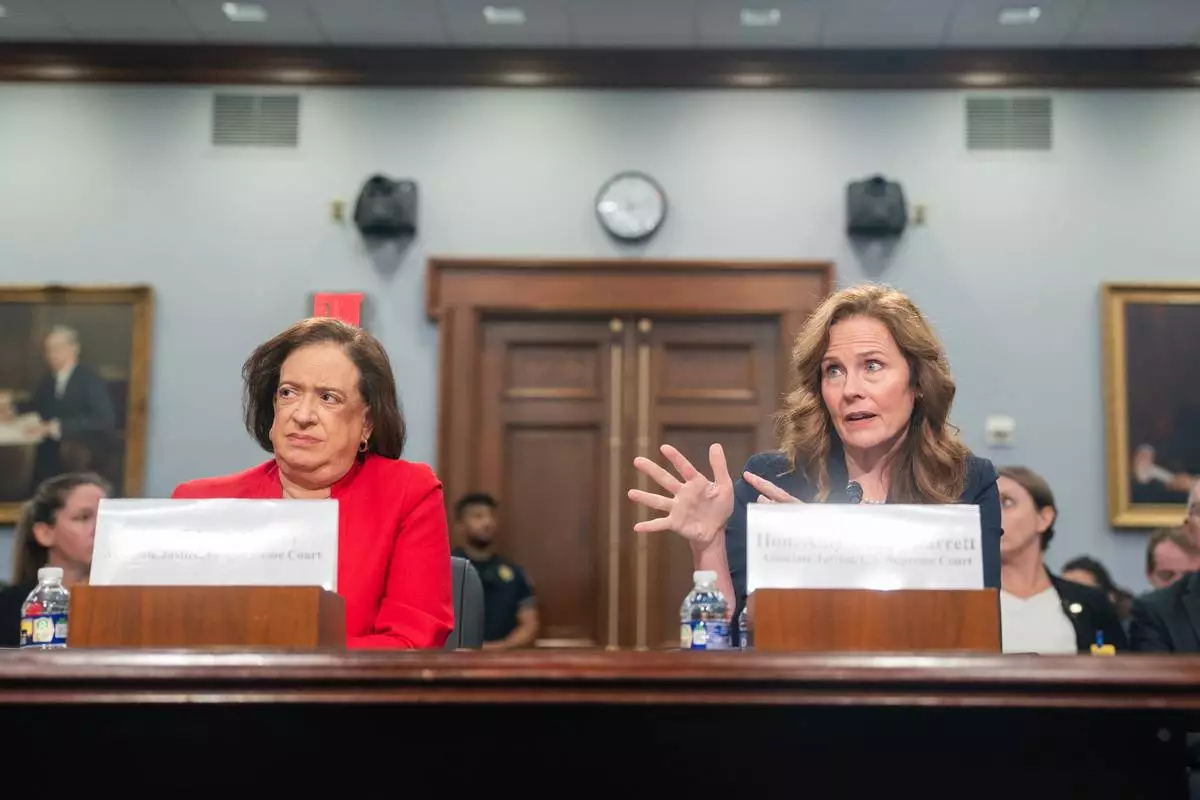
Supreme Court Justices Amy Coney Barrett, right, and Elena Kagan testify during a House Appropriations subcommittee hearing, Tuesday, July 14, 2026, on Capitol Hill in Washington. (AP Photo/Nathan Howard)
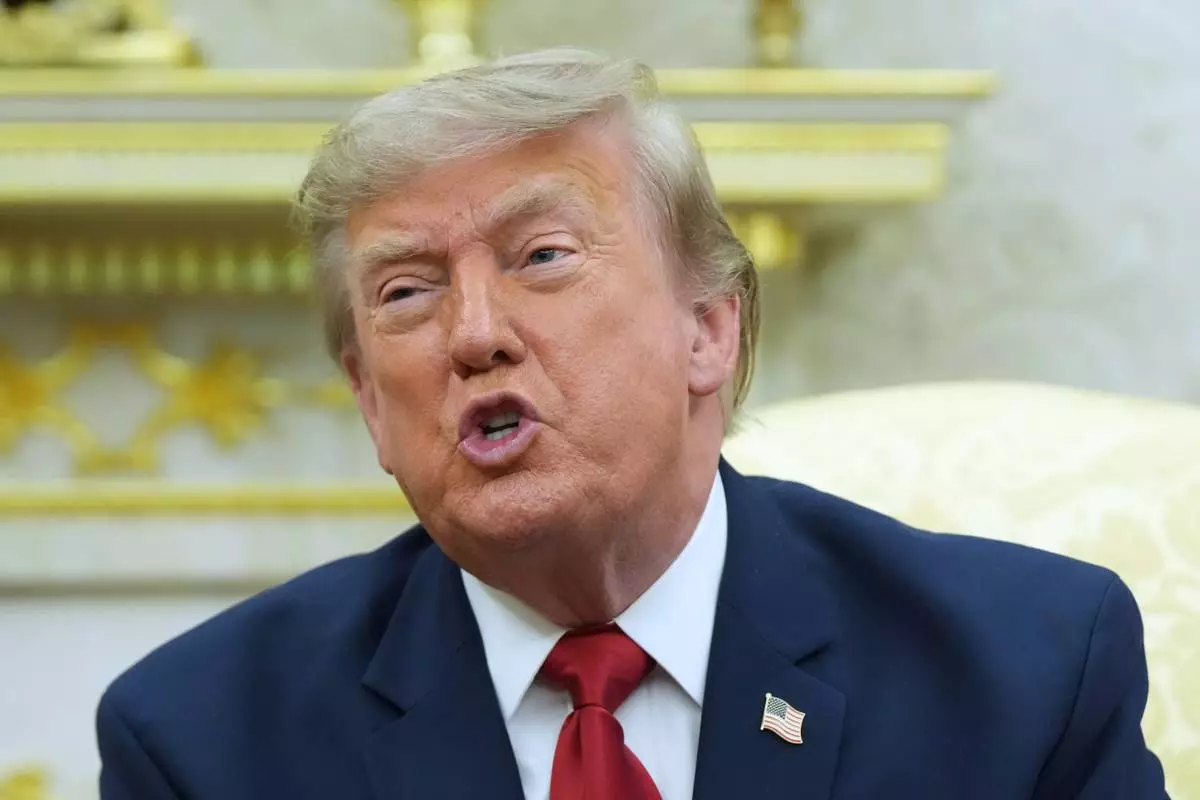
President Donald Trump speaks as he meets with Iraq's Prime Minister Ali al-Zaidi in the Oval Office of the White House, Tuesday, July 14, 2026, in Washington. (AP Photo/Julia Demaree Nikhinson)
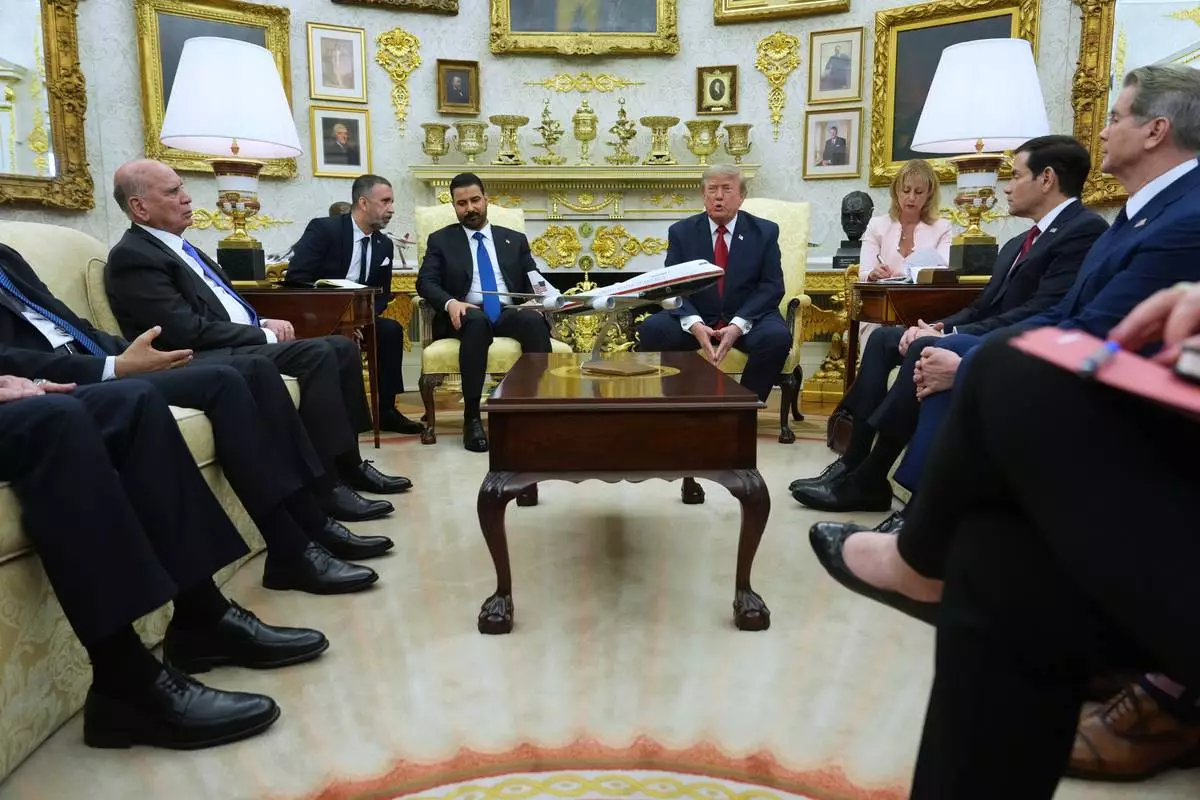
President Donald Trump meets with Iraq's Prime Minister Ali al-Zaidi in the Oval Office of the White House, Tuesday, July 14, 2026, in Washington. (AP Photo/Julia Demaree Nikhinson)
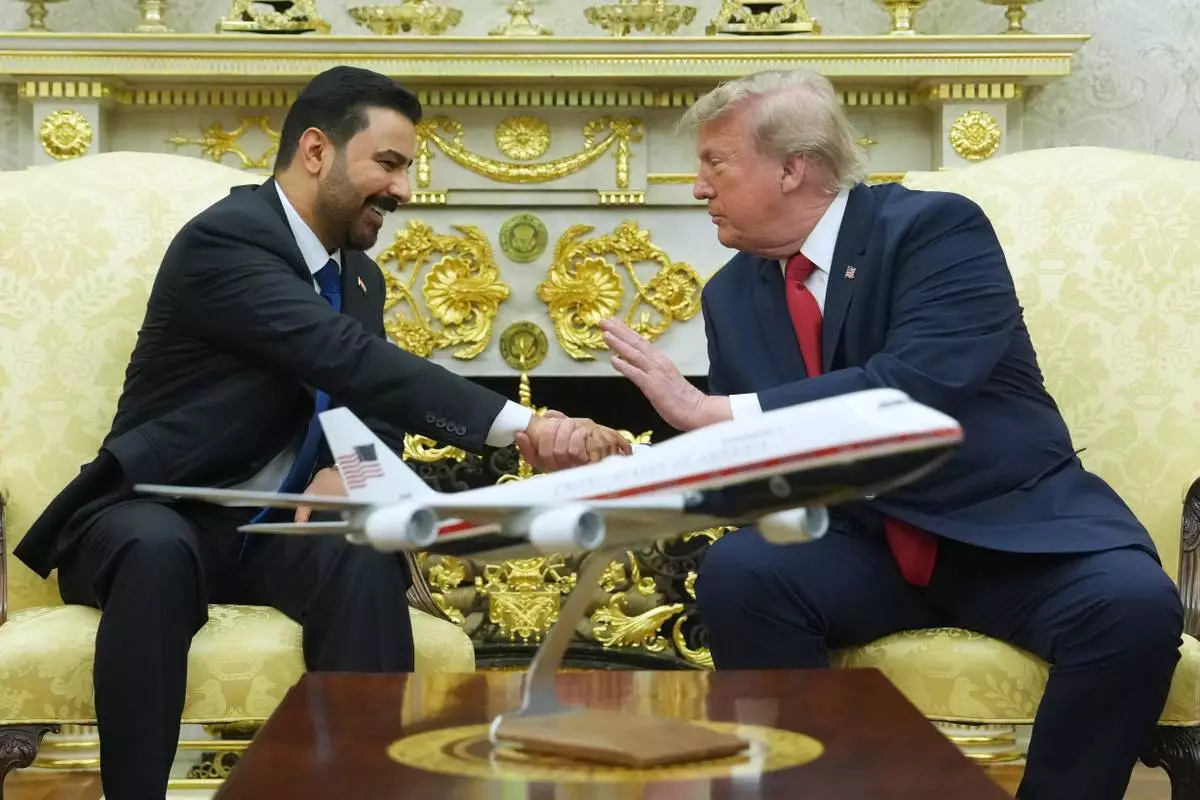
President Donald Trump meets with Iraq's Prime Minister Ali al-Zaidi in the Oval Office of the White House, Tuesday, July 14, 2026, in Washington. (AP Photo/Julia Demaree Nikhinson)
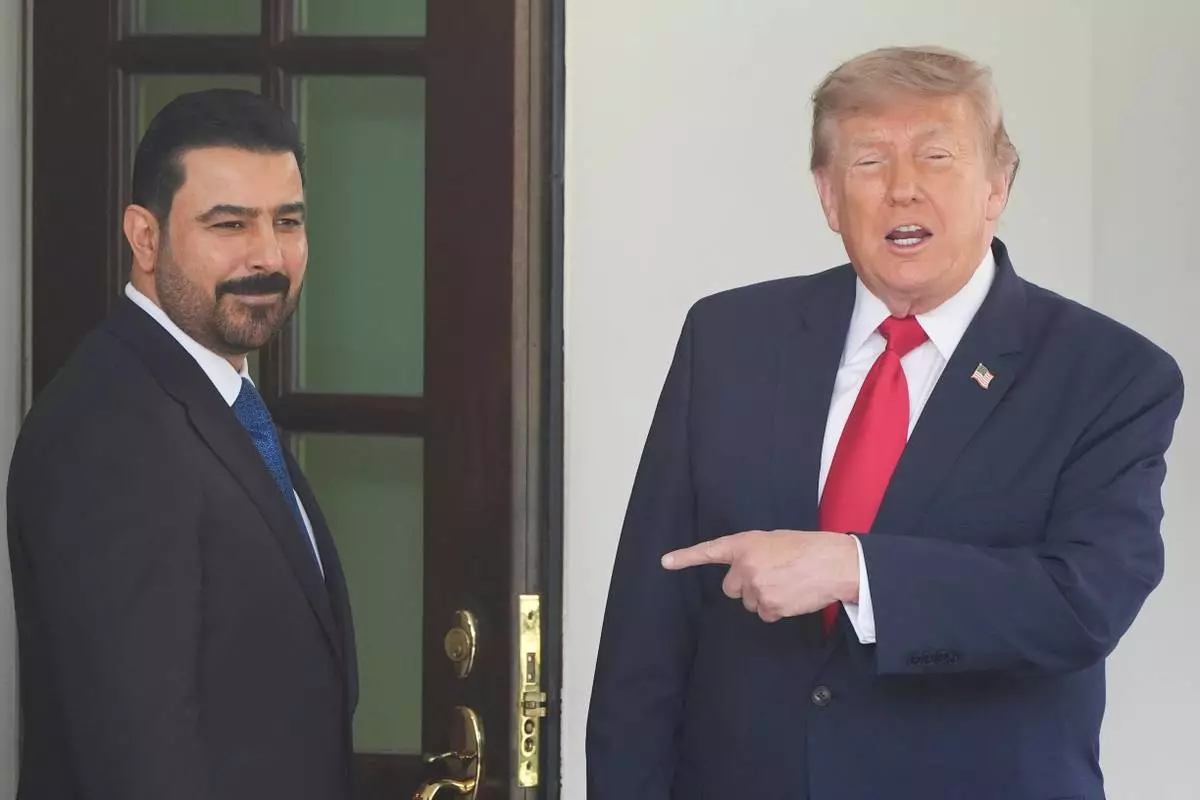
President Donald Trump, gestures as he greets Iraq's Prime Minister Ali al-Zaidi at the White House, Tuesday, July 14, 2026, in Washington.(AP Photo/Alex Brandon)
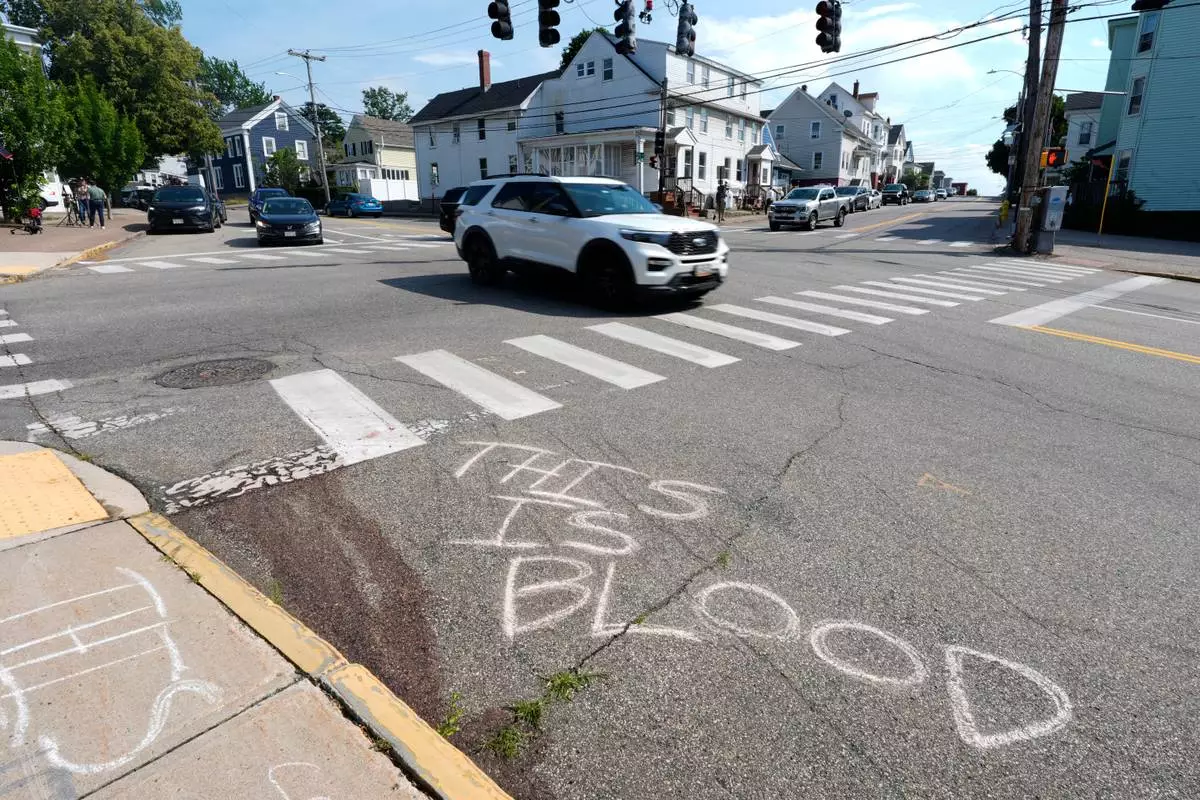
Blood is seen on the pavement near the scene of a shooting involving U.S. Immigration and Customs Enforcement, Monday, July 13, 2026 in Biddeford, Maine. (AP Photo/Robert F. Bukaty)
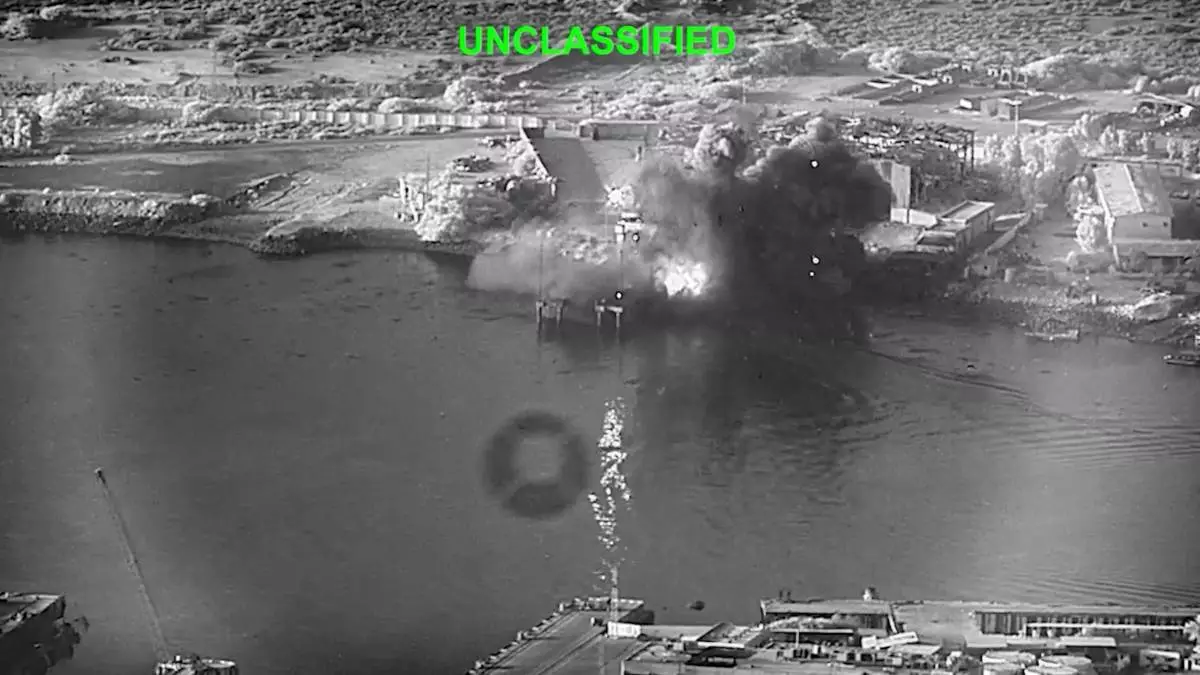
This image from video released by U.S. Central Command, shows an explosion at Bandar Abbas Naval Base, Iran, as three Corsair unmanned surface vessels, also called one-way attack surface drones, fired by the U.S. military, hit the port July 12, 2026. (U.S. Central Command via AP)
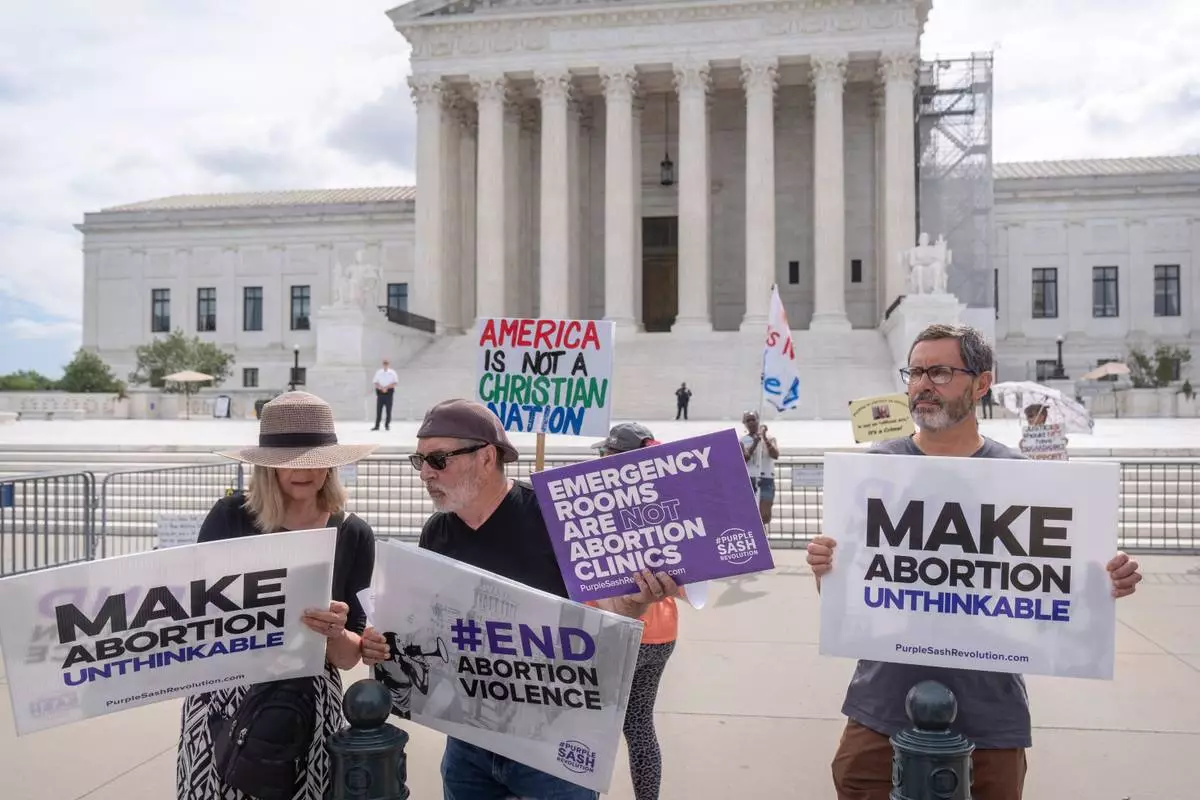
FILE - Katie Mahoney, left, and Rev. Patrick Mahoney, chief strategy officer for Stanton Healthcare, an Idaho-based pregnancy center that does not provide abortions, read the text of a Supreme Court decision outside the Supreme Court, June 27, 2024, in Washington. (AP Photo/Mark Schiefelbein, File)
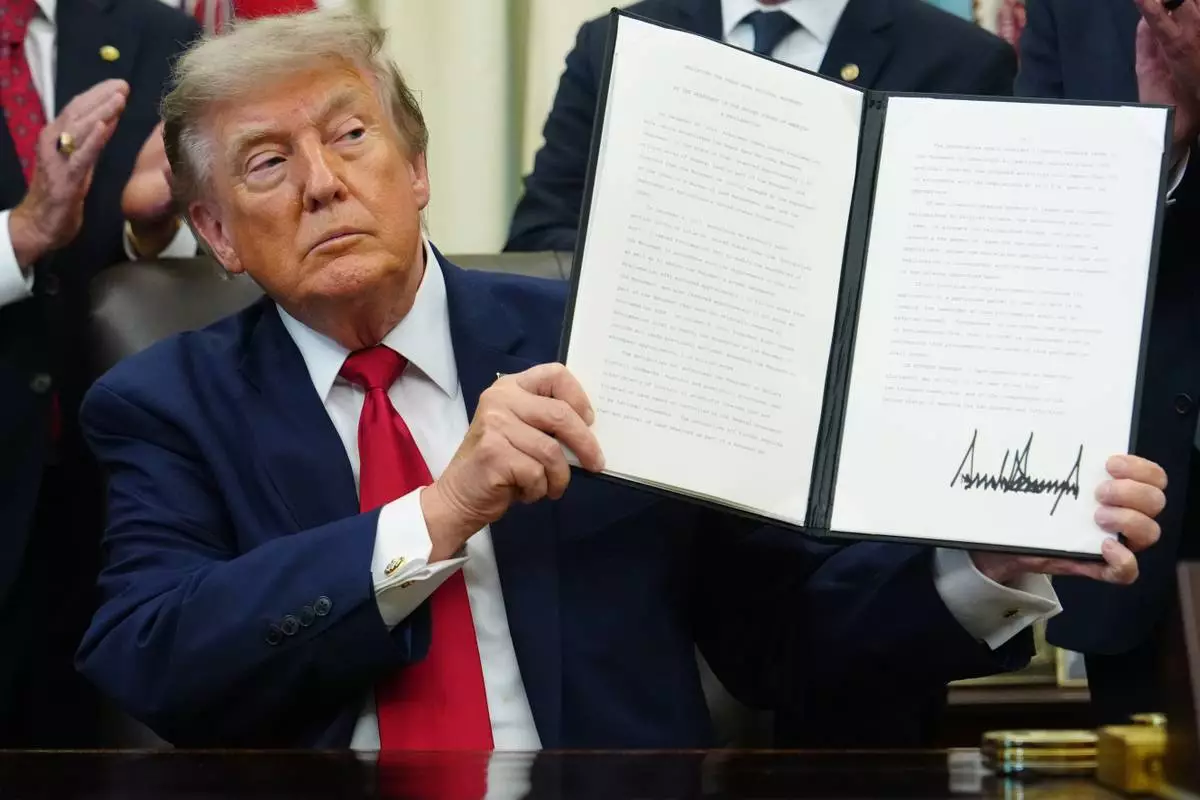
President Donald Trump holds a signed executive order modifying the Bears Ears National Monument in the Oval Office of the White House, Monday, July 13, 2026, in Washington. (AP Photo/Julia Demaree Nikhinson)