NEW YORK (AP) — Moving to stabilize an administration roiled by investigations, resignations and his own indictment, New York City Mayor Eric Adams on Wednesday appointed sanitation chief Jessica Tisch as police commissioner. A city government stalwart and ex-NYPD official, she'll be just the second woman in the high-profile, high-pressure post.
The move comes at a critical time for the nation’s largest police department, shoring up its leadership after a tumultuous stretch punctuated by former commissioner Edward Caban's exit in September amid a federal investigation. Days later, his interim replacement, Thomas Donlon, disclosed that he, too, had been searched by the FBI.
Tisch, 43, the Harvard-educated scion of a wealthy New York family, has worked for the city for 16 years, holding leadership roles in several agencies. As sanitation commissioner, she became TikTok famous when she declared in 2022, “The rats don’t run the city, we do.”
“I need someone that’s going to take the police department into the next century,” Adams said, praising Tisch as a “visionary” and lauding her track record of improving city operations.
Tisch said she believes “very deeply in the nobility of the police and the profession of policing” and is “looking forward to coming home.”
Tisch's first job in city government was in the NYPD’s counterterrorism bureau. As planning and policy director, she helped shape post-9/11 security infrastructure, deploying mobile radiation detectors and helping develop a digital information-sharing tool with instant access to surveillance cameras and license-plate readers.
As deputy commissioner for information technology, she spearheaded use of body-worn cameras and smartphones, transformed 911 dispatching, introduced a gunshot-detection system and worked with the city’s transit agency to make police radios work in the subway.
“Once I started, I never wanted to stop,” Tisch told a Harvard alumni publication last year.
Tisch’s tenure has transcended three mayors: Michael Bloomberg, Bill de Blasio and Adams.
In 2019, after more than a decade at the NYPD, de Blasio appointed her to run the city's technology agency. When the COVID-19 pandemic hit the following year, she had a key role in the city’s response, managing the digital infrastructure that facilitated a rapid shift to remote work, learning and online services.
As Sanitation Commissioner since 2022, Tisch led what the department calls a “Trash Revolution” aimed at improving cleanliness, reducing stench and eliminating rats. The city finally started requiring trash bags be placed in bins for pickup — something other cities had done for years.
Before Wednesday's announcement, Tisch was testifying at a City Council hearing on the bin requirements — her last act as Sanitation Commissioner. About 90 minutes in, she said she had a “hard stop” and had to leave without giving any indication of the new job.
Tisch’s family wealth has led to criticism that she’s a nepo baby — or, rather, a nepo appointee.
Adams pushed back on that, saying Wednesday that Tisch “does not have to be in city government. She’s here because of the love of the city.”
Tisch's father, James S. Tisch, is president and CEO of Loews Corporation, the conglomerate that owns Loews Hotels and CNA Financial. Her mother, Merryl Tisch, is former chancellor of the state Board of Regents, which supervises education.
Her late grandfather, Laurence Tisch, once led CBS. Her cousins are co-owners of the NFL’s Giants. The family has given millions of dollars to cultural and academic institutions and is the namesake of New York University’s Tisch School of the Arts.
Her husband, Daniel Levine, is a venture capitalist. They have two sons.
Closer to her new job, her uncle Andrew Tisch and cousin Alexander Tisch, are on the board of the New York City Police Foundation, a nonprofit that funds some NYPD work, including stationing counterterrorism officers in more than dozen cities worldwide, and the Crime Stoppers tip reward program.
Tisch told the Harvard Law Bulletin that it was a friend that led her to public service.
She graduated in 2008 with law and Master of Business Administration degrees, but the “financial crisis was hitting, and I thought it’d be difficult to find a job,” Tisch told the publication in 2019.
“A friend said: ‘Why don’t you go work at the NYPD? I know someone there.’ I said, ‘I can’t even imagine what someone like me would do at the Police Department,’” Tisch said.
David Cohen, then deputy commissioner of counterterrorism, suggested Tisch work for him — leading to her first job as planning and policy director.
Tisch recalled telling him: “I don’t know. Counterterrorism sounds really scary. I’m more into ‘Law & Order’ kind of stuff.”
But, she said, Cohen told her: “Trust me, this will be right for you.”
As deputy commissioner of information technology from 2014 to 2019, she helped modernize the department while navigating — and pushing back at — criticism of her decision to equip officers with smartphones using the unpopular Windows Phone operating system.
After the New York Post derided the decision in 2017 as a costly boondoggle, Tisch explained in a blog post that she chose the phones because they integrated with existing department technology, enabling faster emergency responses while putting vital data at officers' fingertips. At the time, she wrote, the project was 45% under budget and the phones and their iPhone replacements were provided at no cost.
Tisch ran into trouble again when she loaned an ex-NYPD colleague $75,000 for law school and later forgave the debt after that person was rehired, transferred to her supervision and given a pay increase. The city’s Conflicts of Interest Board fined her $2,000.
Now she’s taking charge of a department in yet more chaos.
Adams’ first commissioner, Keechant Sewell, made history as the first woman in the post but resigned last year, just 18 months into her tenure, amid speculation that he was undermining her authority.
Under her replacement, Caban, the NYPD tacked more lenient in disciplining officers and more aggressive in taking on criticism. Some top deputies posted social media screeds targeting critics and reporters, or castigated them in person or on the phone. The department even ditched its longtime slogan — “Courtesy, Professionalism, Respect” — for one focused on crimefighting and public safety.
__
Associated Press reporter Philip Marcelo contributed to this report.
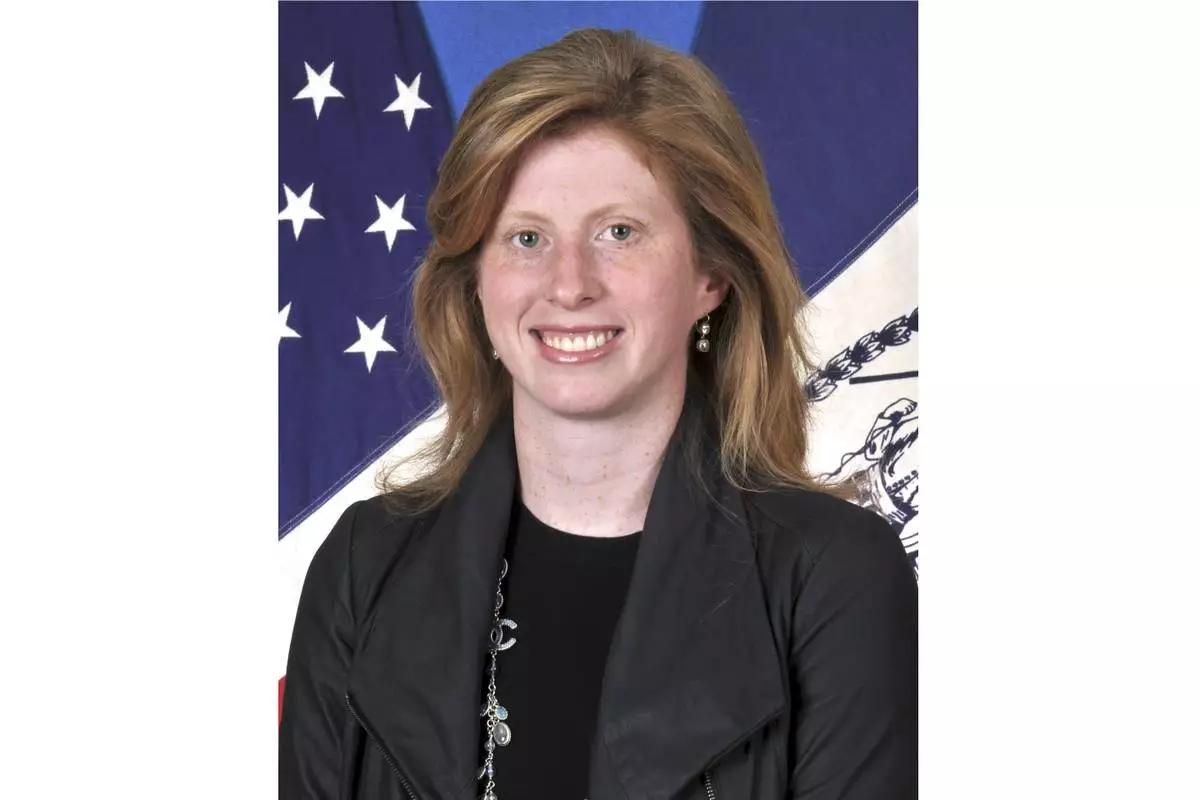
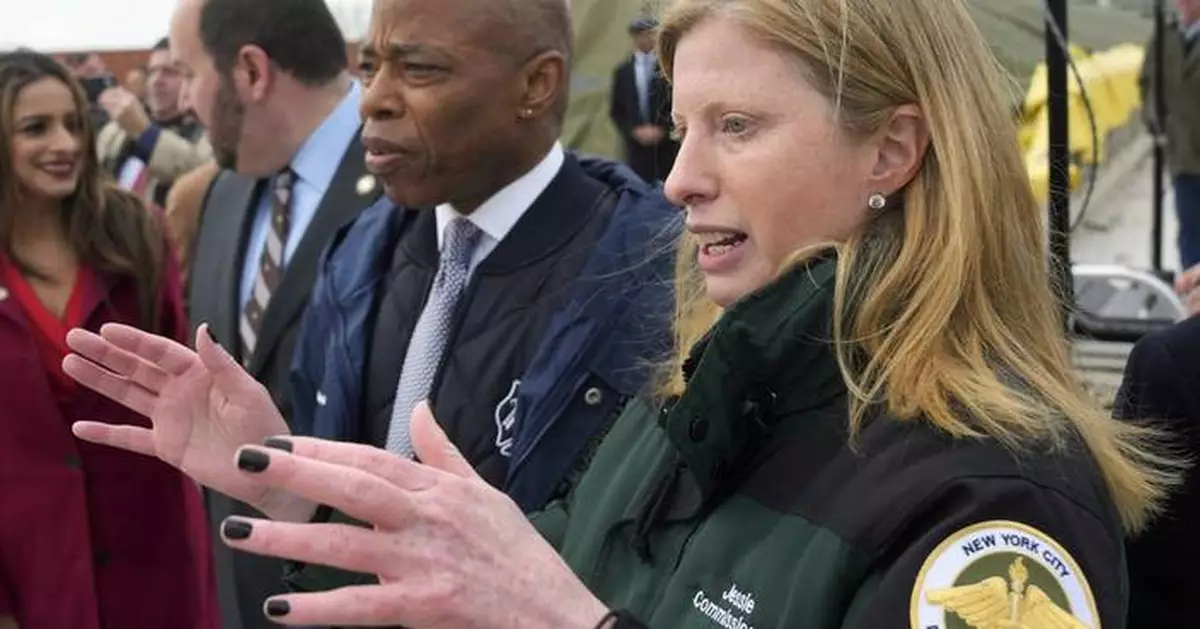
This image provided by the New York City Department of Sanitation shows Jessica Tisch who has been appointed New York City Police Commissioner, Wednesday, Nov. 20, 2024, by New York Mayor Eric Adams. (New York City Department of Sanitation via AP)
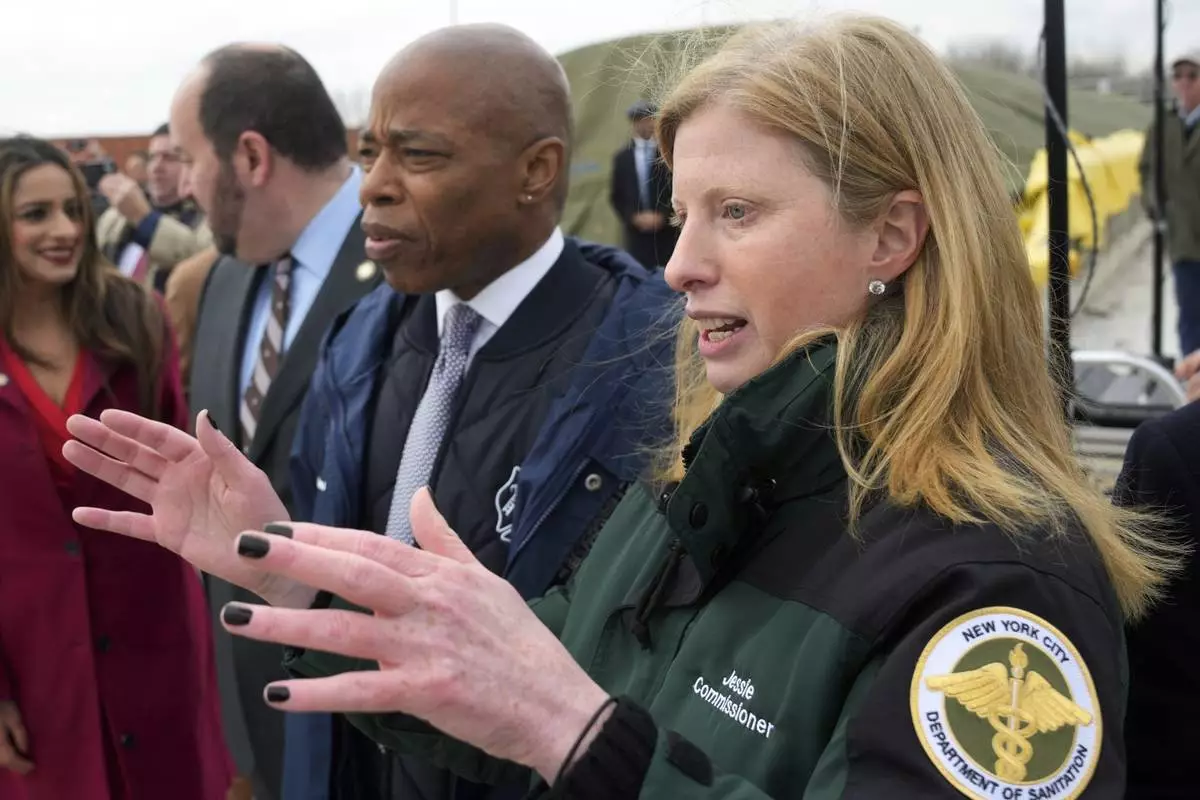
This image provided by the Office of the New York Mayor shows New York Mayor Eric Adams, second from right, and New York City Department of Sanitation Commissioner Jessica Tisch, right, during a major expansion of capacity at the Staten Island Compost Facility, Jan. 4, 2024. (Michael Appleton/Mayoral Photography Office via AP)
BOGOTÁ, Colombia (AP) — Colombians milled into voting stations on Sunday in the first round of the South American nation’s presidential election, choosing between candidates with radically diverging visions for the future of peace in a country haunted by decades of armed conflict.
The vote, seen as a referendum on outgoing President Gustavo Petro’s policies, comes 10 years after Colombia signed an historic peace pact with guerrillas of the Revolutionary Armed Forces of Colombia, or FARC.
That agreement offered hope to break the nation out of a vicious cycle of fighting between rebel groups and the government but violence has roared back since then, coming to a head in the lead-up to the presidential vote. Criminal groups have increasingly launched drone strikes, armed attacks have plagued the race and last June, 39-year-old politician and presidential hopeful Miguel Uribe Turbay was fatally shot at a political rally.
In a country where the fight for peace has long been a part of the political ethos, the question of how to address the conflict is once again dividing the country.
The vote is slated to send a message to Latin America at a time voters are increasingly ditching leaders that pitched progressive policies, like providing opportunities to youths and rooting out corruption, to solve security ails, turning instead to heavy-handed security crackdowns like El Salvador's. It also comes as the Trump administration is placing renewed pressure on the region.
“Today's election isn't just important for us, it's important for all of Latin America,” said Juan Acevedo, a 62-year-old sociologist walking out of a voting station in Colombia's capital on Sunday morning. “Whoever wins here will suggest to the region if progressive policies will continue or if things are going to return to the right.”
There are 11 candidates running for president, but the election has basically turned into a three-horse race.
Senator and peace-builder Ivan Cepeda — a Petro ally — has led the polls and promises to carry on with Petro's “total peace” initiative to negotiate with the country’s remaining rebel groups and sign peace agreements with them in an effort to resolve the persistent crisis.
While the peace plan has largely failed as criminals have taken advantage of ceasefires with the government, Cepeda and Petro have maintained strong support among many because of progressive policies pushed forward under Petro, such as boosting the minimum wage.
Running against Cepeda are Abelardo de la Espriella and Paloma Valencia, who have vowed to come down on armed groups with a heavier hand.
De la Espriella — a bombastic lawyer known as “The Tiger” — has particularly gained traction among voters in recent weeks for pitching himself as an outsider keen on emulating the heavy-handed tactics used in El Salvador’s war on gangs, which sharply reduced gang violence but fueled accusations of human rights abuses.
Valencia is considered the political protege of Colombia's former president and strongman Álvaro Uribe, who governed from 2002 to 2010 with strong support from the United States and whose government beat back FARC rebels in an offensive that took a massive civilian toll.
Both de la Espriella and Valencia have touted their affinity for U.S. President Donald Trump even as he has taken a more aggressive stance toward Latin America than any U.S. president in decades and has pressured nations like Colombia, Ecuador and Mexico to more forcefully crack down on criminal groups.
If no candidate wins at least 50% of the vote — something extremely rare in Colombia — the two top vote-getters will face a runoff in June.
Maria Eugenia, a 57-year-old seamstress who was stitching a pair of jeans on Friday in downtown Bogotá, Colombia's capital, said she welcomed an all-out offensive on an expanding slate of criminal groups, regardless of the human cost.
While she approved of Petro’s pushes to improve the country's medical infrastructure, she said she was voting for de la Espriella because violence in rural areas of the country has gotten out of hand. She said negotiating peace pacts was simply “rewarding” armed groups.
“Of course, whenever you come down with a heavy hand, there’s always going to be debate,” she said. “But some people are going to have to fall to clean up what needs to be cleaned.”
Others, like Acevedo, the sociologist strolling out of a polling station on Sunday with packs of other voters, said a security crackdown like the one promoted by de la Espriella would only be returning to past military campaigns that he said only reinforced Colombia's cycle of violence.
He said he planned to vote for Cepeda, adding that while the government hasn't done a perfect job — failing to pass ambitious reforms and follow through on promises to reduce violence — it was better to continue pushing forward with their political coalition's efforts to take a different approach in addressing the country's violence.
He added that his main critique of Petro's administration was the power grabs made by criminal groups as they negotiated with the government. He said he hoped that if Cepeda won, he would strike a better balance between negotiating peace and maintaining control over those groups.
“We're a country that has lived through 60 years of conflict,” Acevedo said. “The danger here is that we return to the times where everyone is saying that the only way to solve our problems is with bullets and more war.”
Follow AP’s coverage of Latin America and the Caribbean at https://apnews.com/hub/latin-america
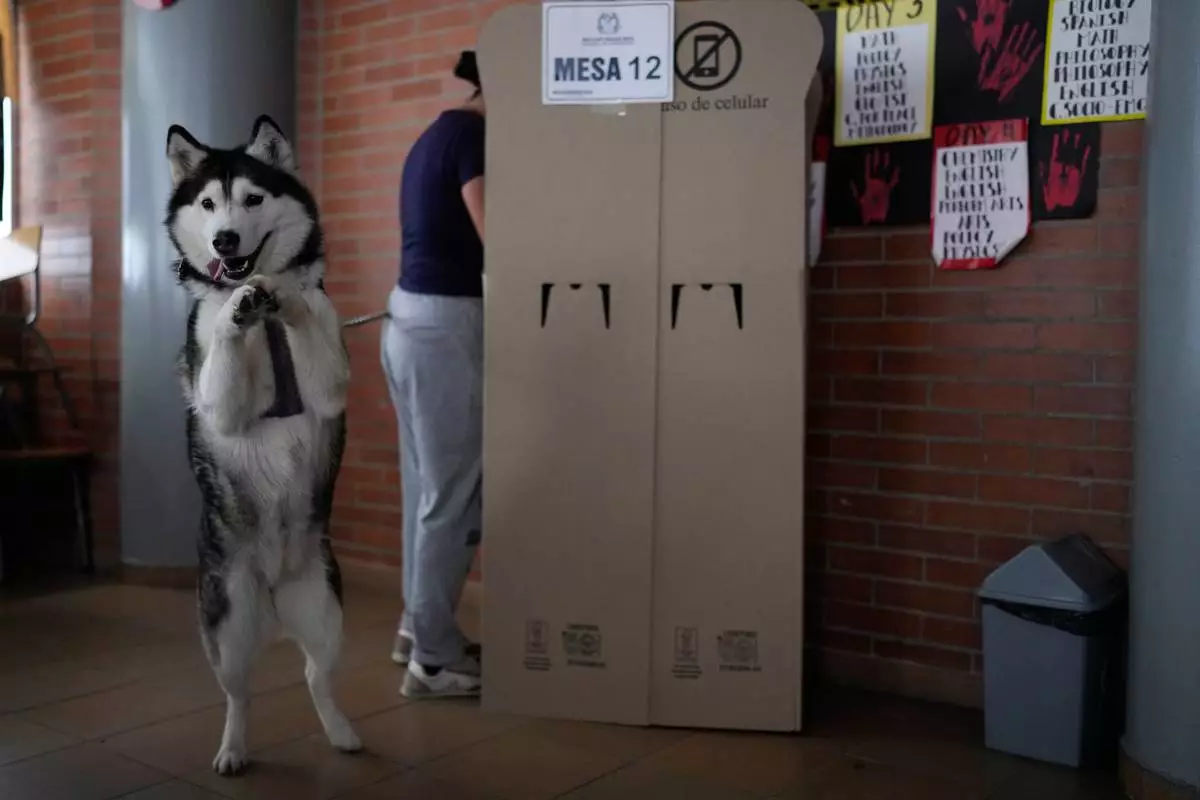
A voter marks a ballot during the presidential election in Bogota, Colombia, Sunday, May 31, 2026. (AP Photo/Matias Delacroix)
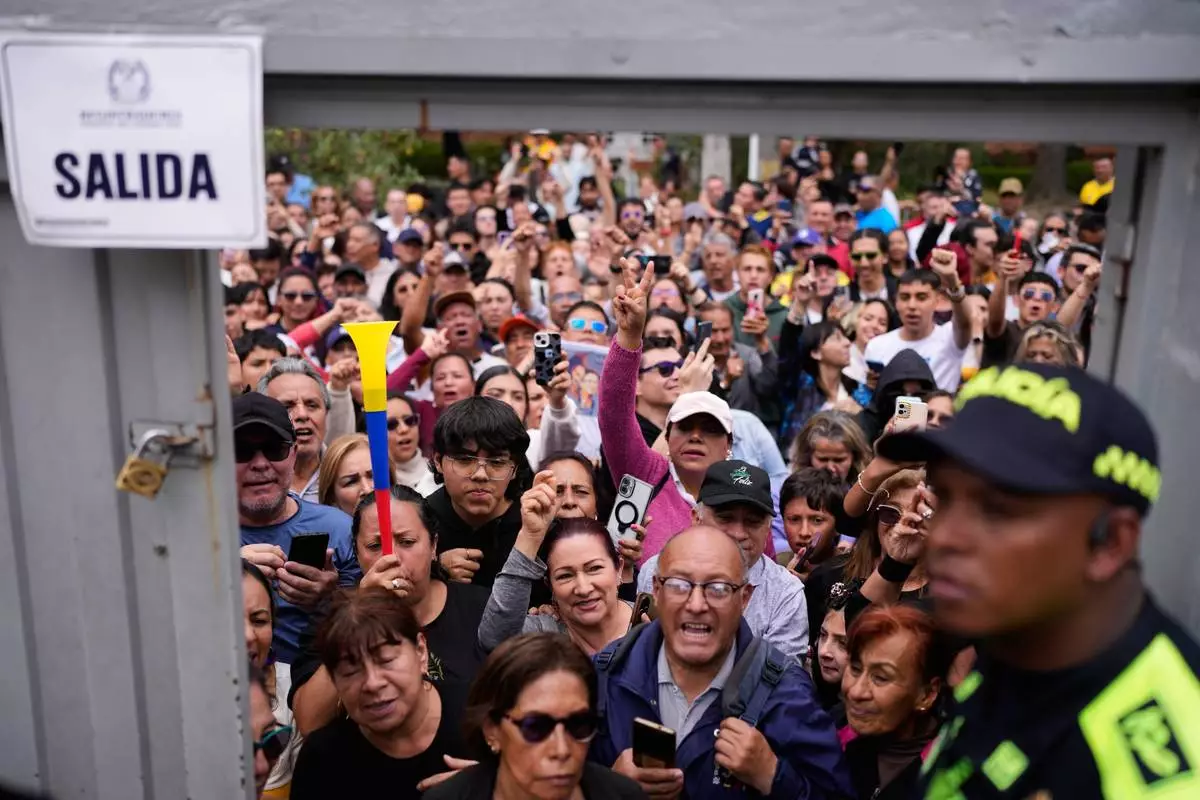
Supporters of presidential candidate Ivan Cepeda of the ruling Historic Pact coalition gather outside the polling station where he voted during the presidential election in Bogota, Colombia, Sunday, May 31, 2026. (AP Photo/Matias Delacroix)
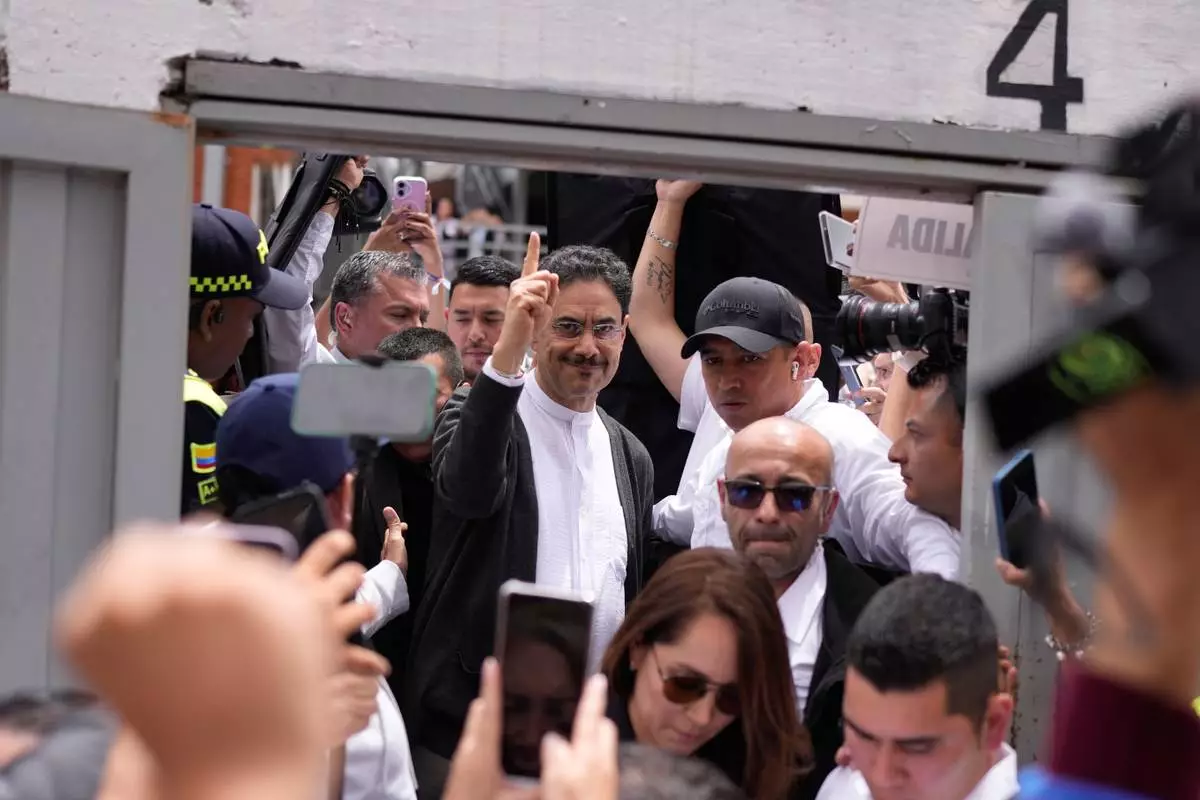
Presidential candidate Ivan Cepeda of the ruling Historic Pact coalition gestures to supporters after voting during the presidential election in Bogota, Colombia, Sunday, May 31, 2026. (AP Photo/Matias Delacroix)
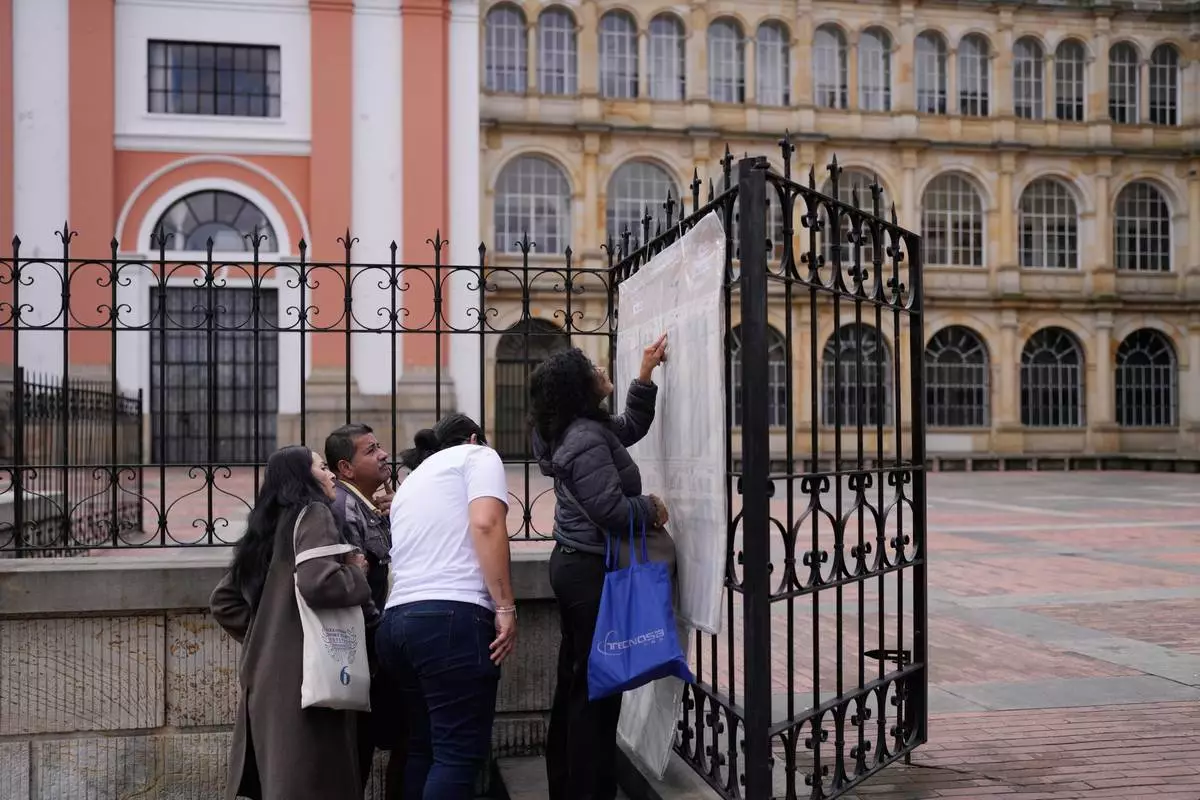
Voters check polling information during the presidential election in Bogota, Colombia, Sunday, May 31, 2026. (AP Photo/Matias Delacroix)

President Gustavo Petro shows a ballot during the presidential election in Bogota, Colombia, Sunday, May 31, 2026. (AP Photo/Matias Delacroix)
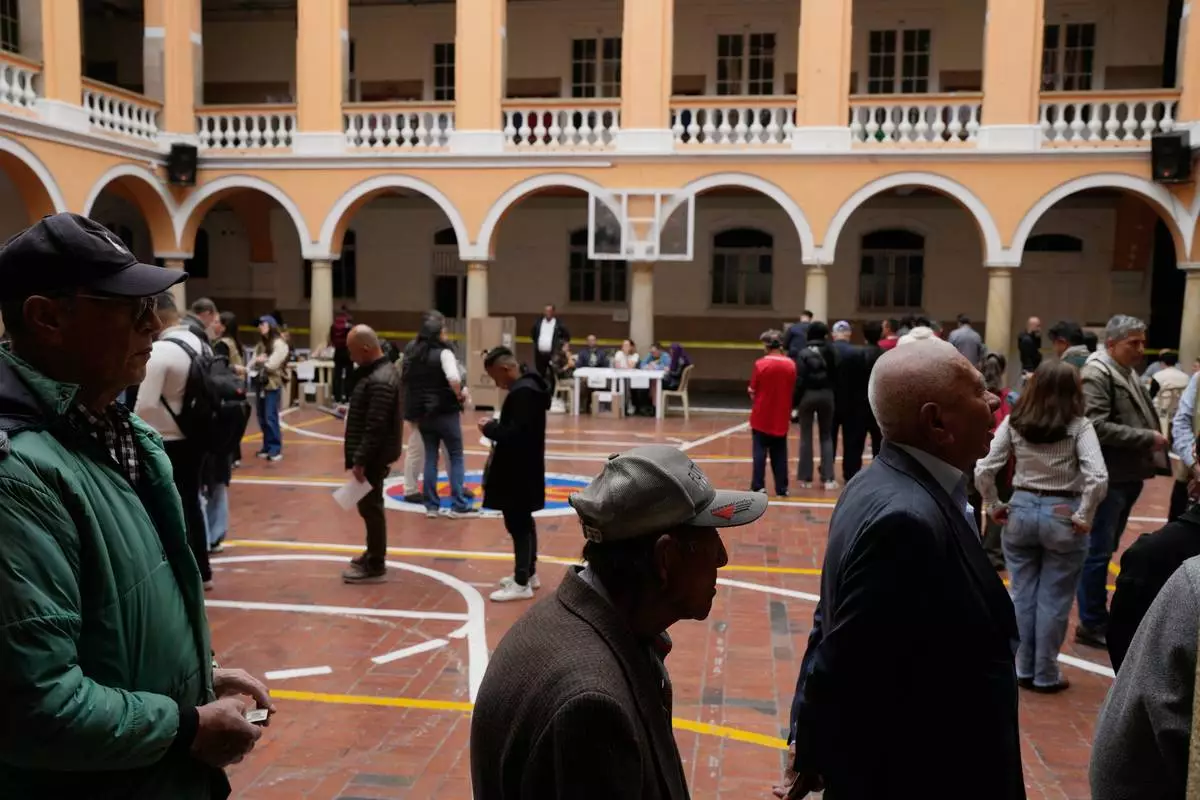
Voters line up at a polling station during the presidential election in Bogota, Colombia, Sunday, May 31, 2026. (AP Photo/Matias Delacroix)
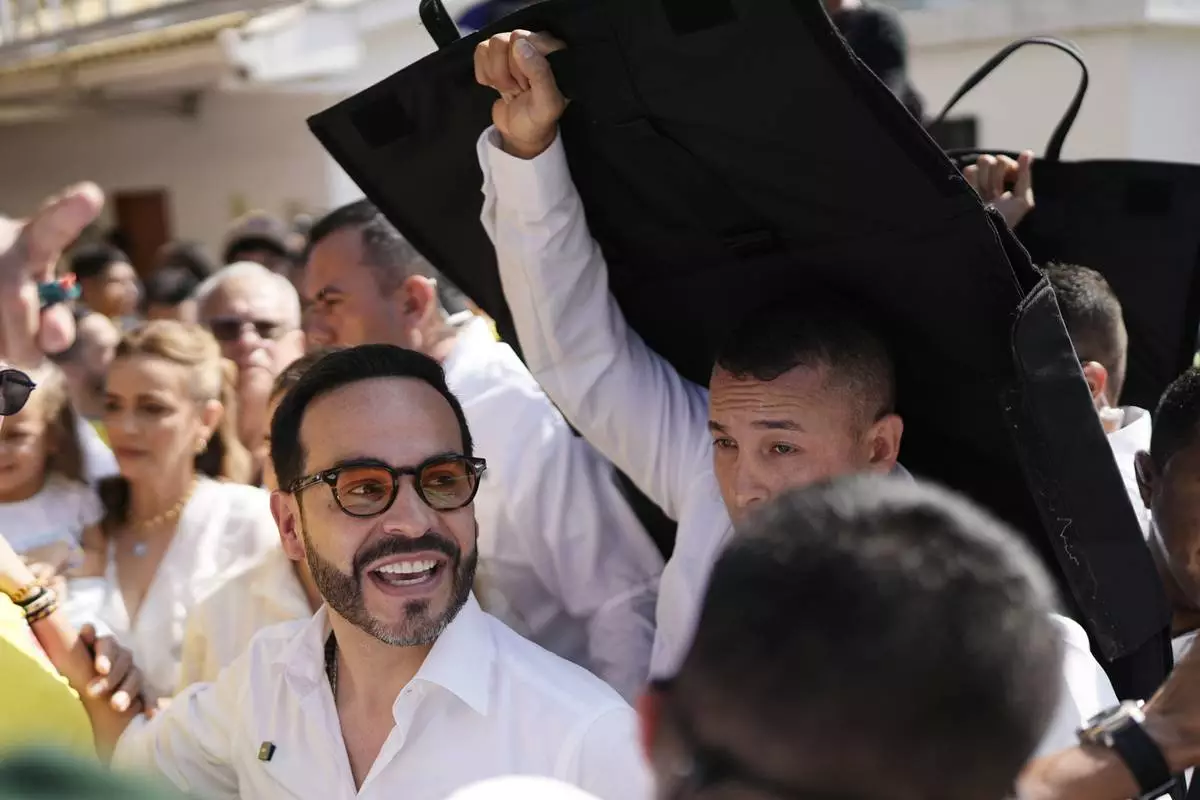
Presidential candidate Abelardo de la Espriella of the Defenders of the Motherland movement depart a polling station after voting during the presidential election in Barranquilla, Colombia, Sunday, May 31, 2026. (AP Photo/Ivan Valencia)
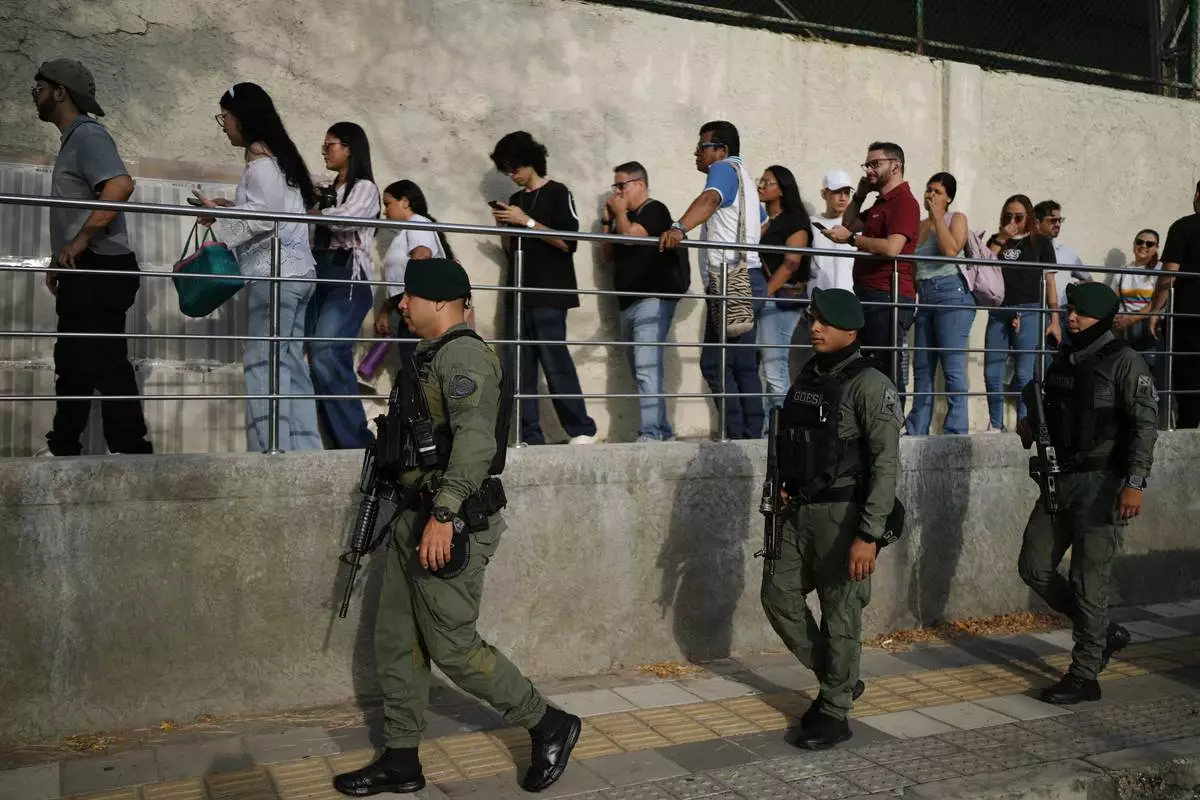
Soldiers patrol as voters arrive at a polling station during the presidential election in Barranquilla, Colombia, Sunday, May 31, 2026. (AP Photo/Ivan Valencia)
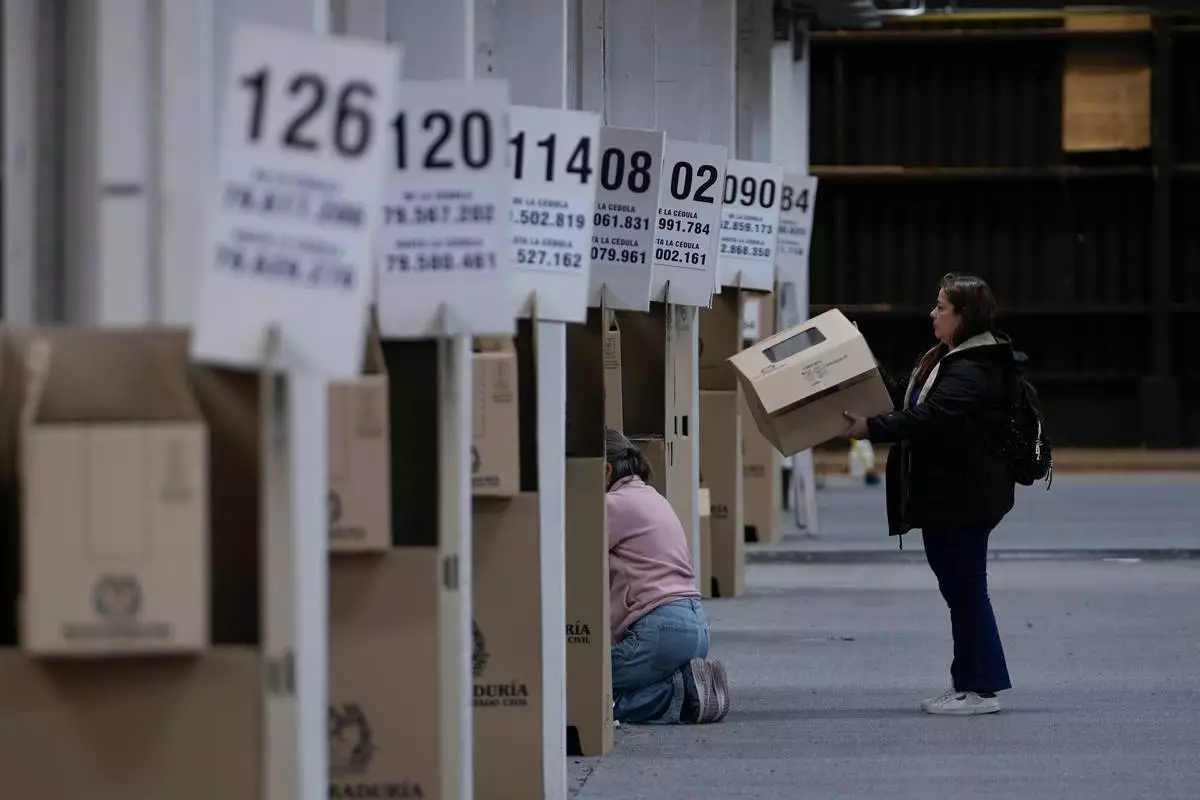
Electoral workers set up a voting center in preparation for Sunday's presidential election in Bogota, Colombia, Friday, May 29, 2026. (AP Photo/Matias Delacroix)
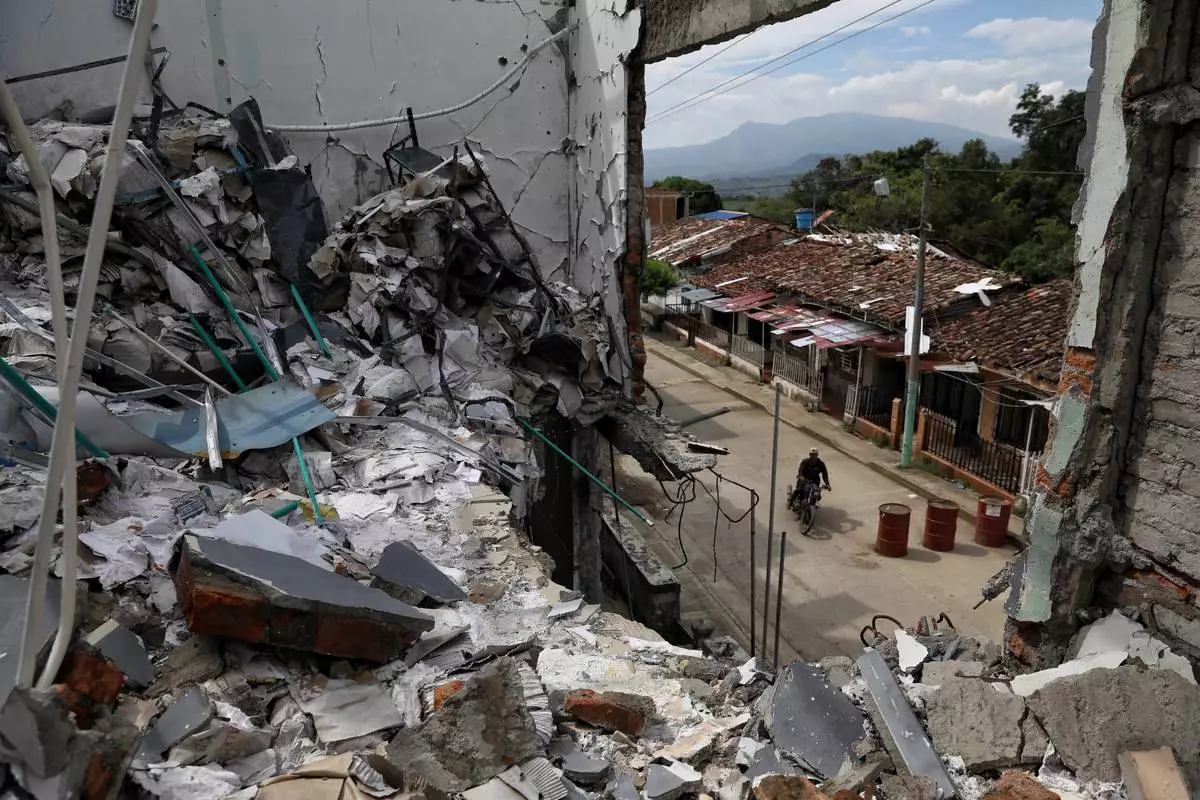
A man rides his motorcycle past the ruins of homes destroyed five months earlier in an attack by dissidents of the former Revolutionary Armed Forces of Colombia, or FARC, in Buenos Aires, Cauca, Colombia, Wednesday, May 20, 2026.(AP Photo/Santiago Saldarriaga)
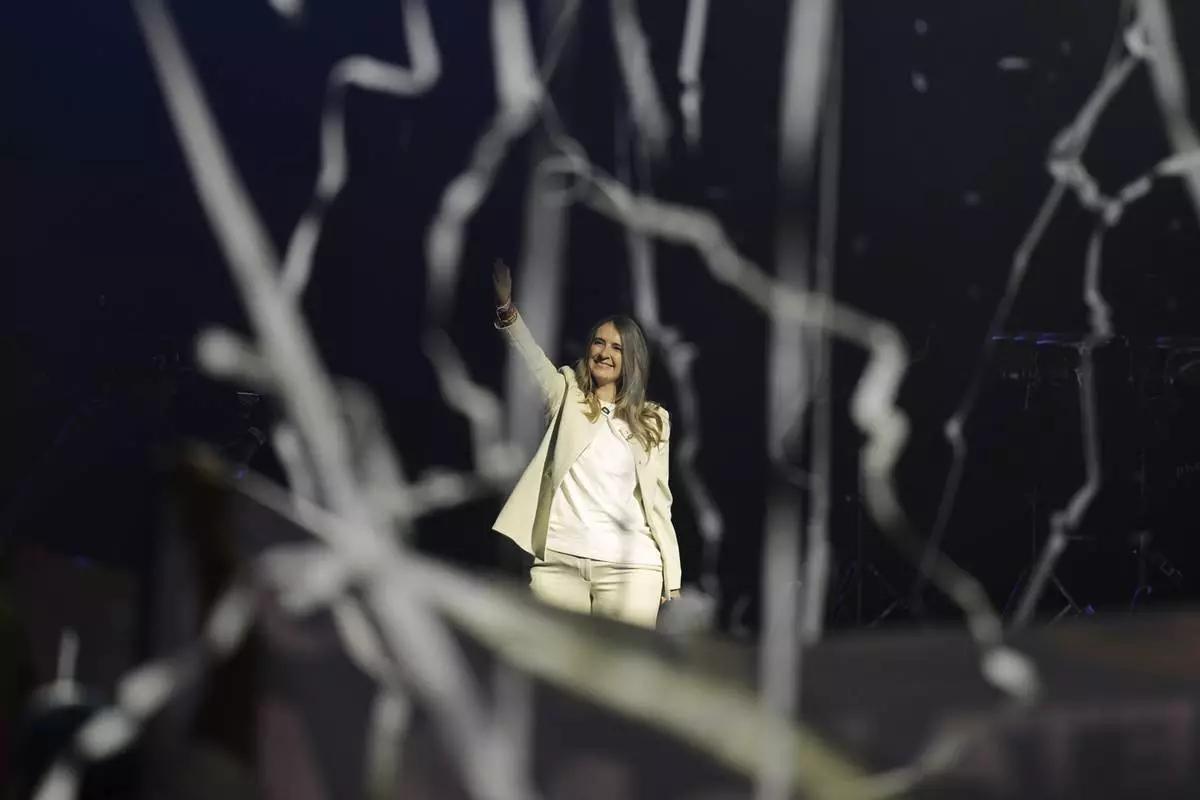
Presidential candidate Sen. Paloma Valencia of the Democratic Center party waves supporters during a campaign rally in Bogota, Colombia, Sunday, May 24, 2026. (AP Photo/Ivan Valencia)
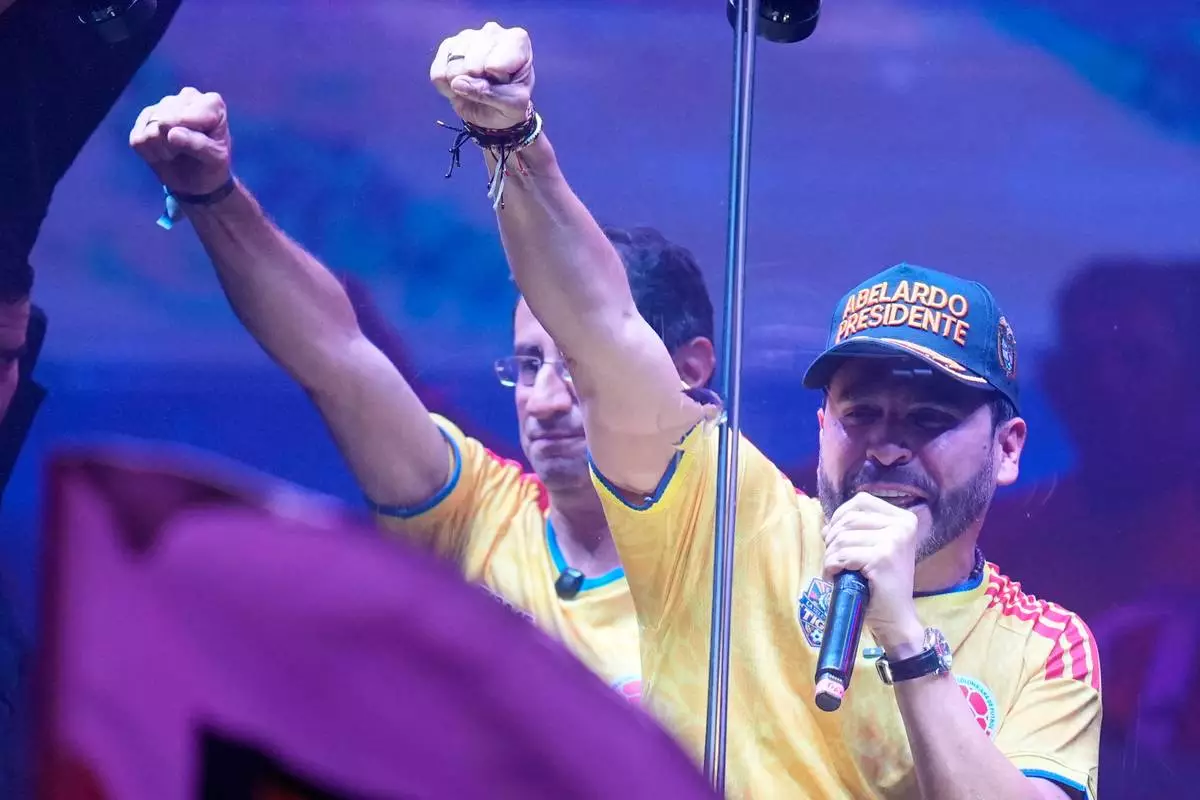
Presidential candidate Abelardo de la Espriella of the Defenders of the Motherland movement and his running mate Jose Manuel Restrepo, left, raise their fit from behind a bullet proof booth during a campaign rally in Barranquilla, Colombia, Saturday, May 23, 2026. (AP Photo/Fernando Vergara)
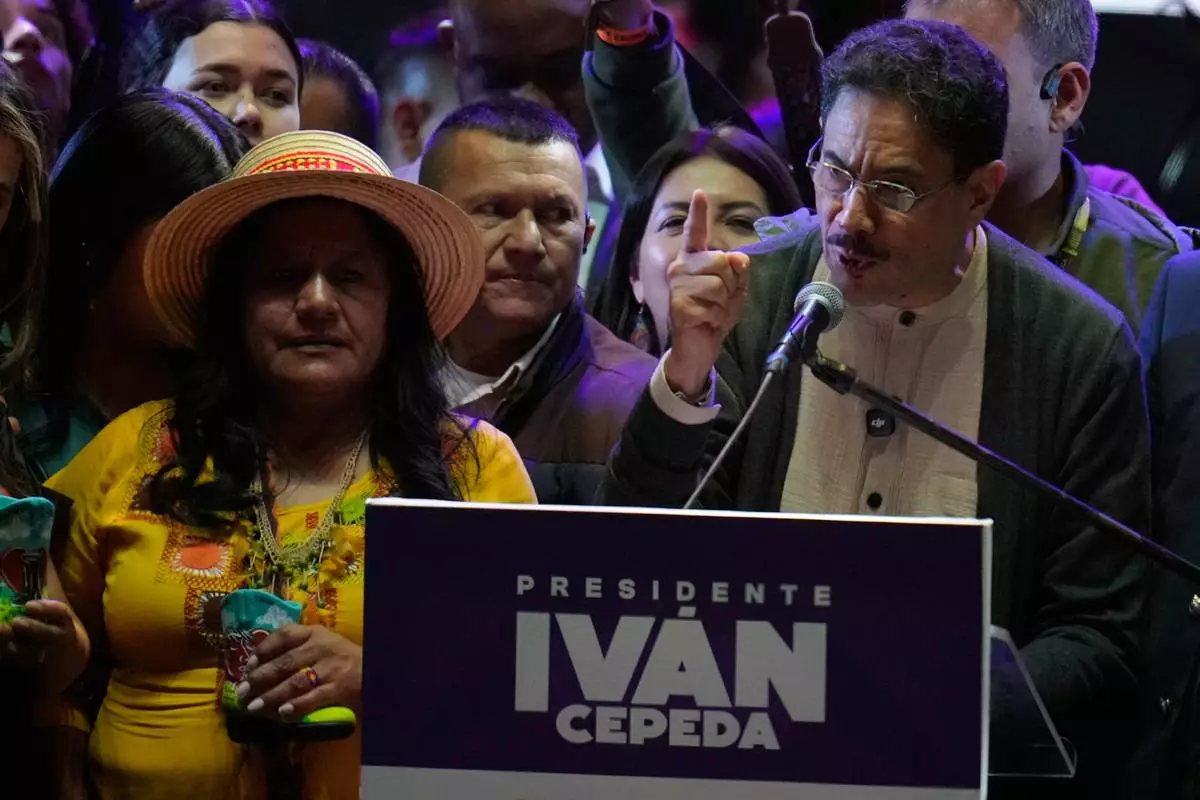
Sen. Ivan Cepeda, presidential candidate of the ruling Historic Pact coalition, speaks to supporters during a campaign rally in Bogota, Colombia, Friday, May 22, 2026. (AP Photo/Fernando Vergara)