PARIS (AP) — When Jean-Charles de Castelbajac watched as Notre Dame cathedral burned in April 2019, he felt compelled to act somehow.
Returning home, the French fashion designer began sketching ideas, imagining the monument’s reconstruction.
Click to Gallery
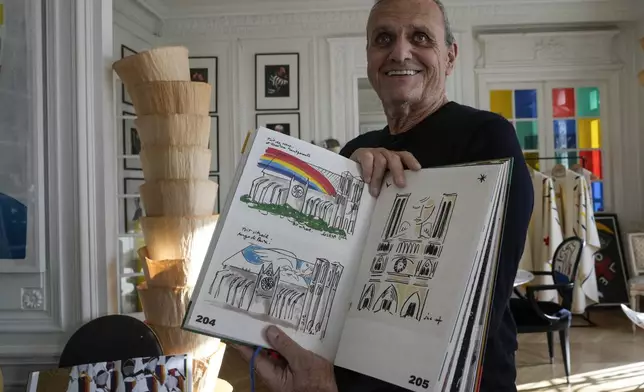
Designer Jean-Charles de Castelbajac displays his book with drawings of the Notre-Dame Cathedral during an interview with the Associated Press, Wednesday, Nov. 20, 2024 in Paris. (AP Photo/Michel Euler)
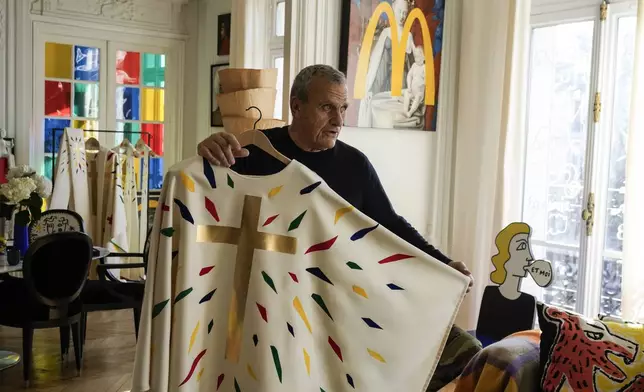
Designer Jean-Charles de Castelbajac displays a liturgical vestment for priests and to be worn at the reopening of Paris' Notre-Dame Cathedral in December, Wednesday, Nov. 20, 2024 in Paris. (AP Photo/Michel Euler)
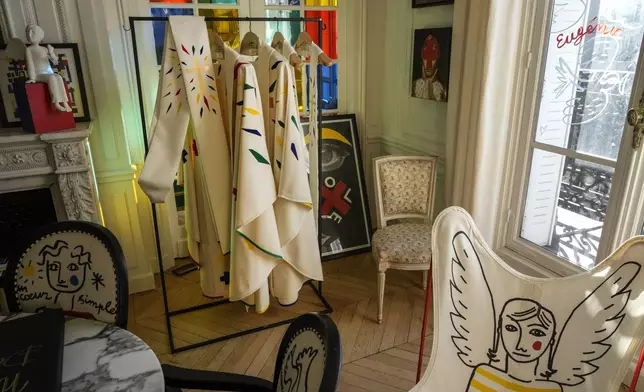
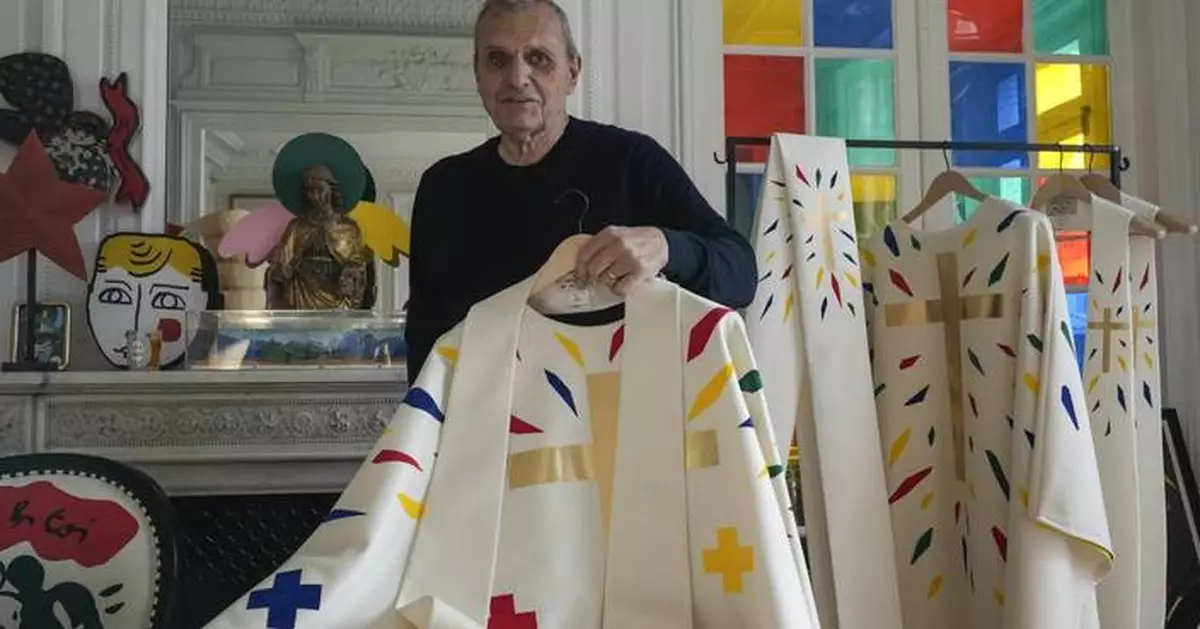
Liturgical vestments for bishops and priests designed by Jean-Charles de Castelbajac and to be worn at the reopening of Paris' Notre Dame Cathedral in December hang, Wednesday, Nov. 20, 2024 in Paris. (AP Photo/Michel Euler)
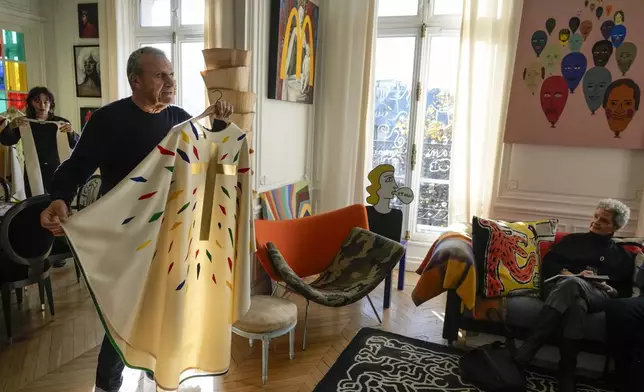
Designer Jean-Charles de Castelbajac displays a liturgical vestment for priests to be worn at the reopening of Paris' Notre-Dame cathedral in December, Wednesday, Nov. 20, 2024 in Paris. (AP Photo/Michel Euler)
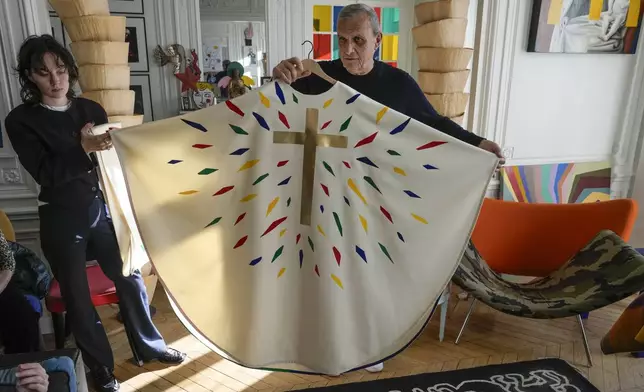
Designer Jean-Charles de Castelbajac displays a liturgical vestment for priests and to be worn at the reopening of Paris' Notre-Dame Cathedral in December, Wednesday, Nov. 20, 2024 in Paris. (AP Photo/Michel Euler)
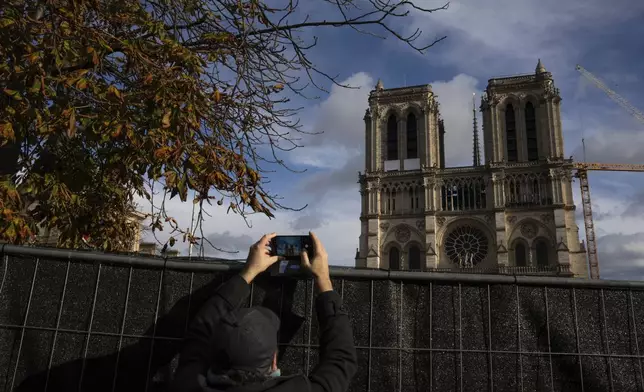
A visitor takes photographs of Notre-Dame cathedral in Paris, Wednesday, Nov. 20, 2024. (AP Photo/Louise Delmotte)
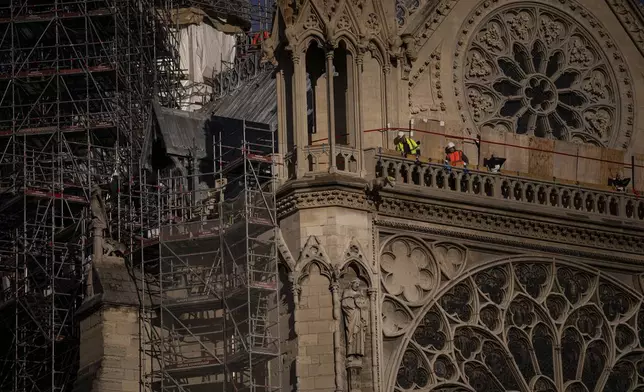
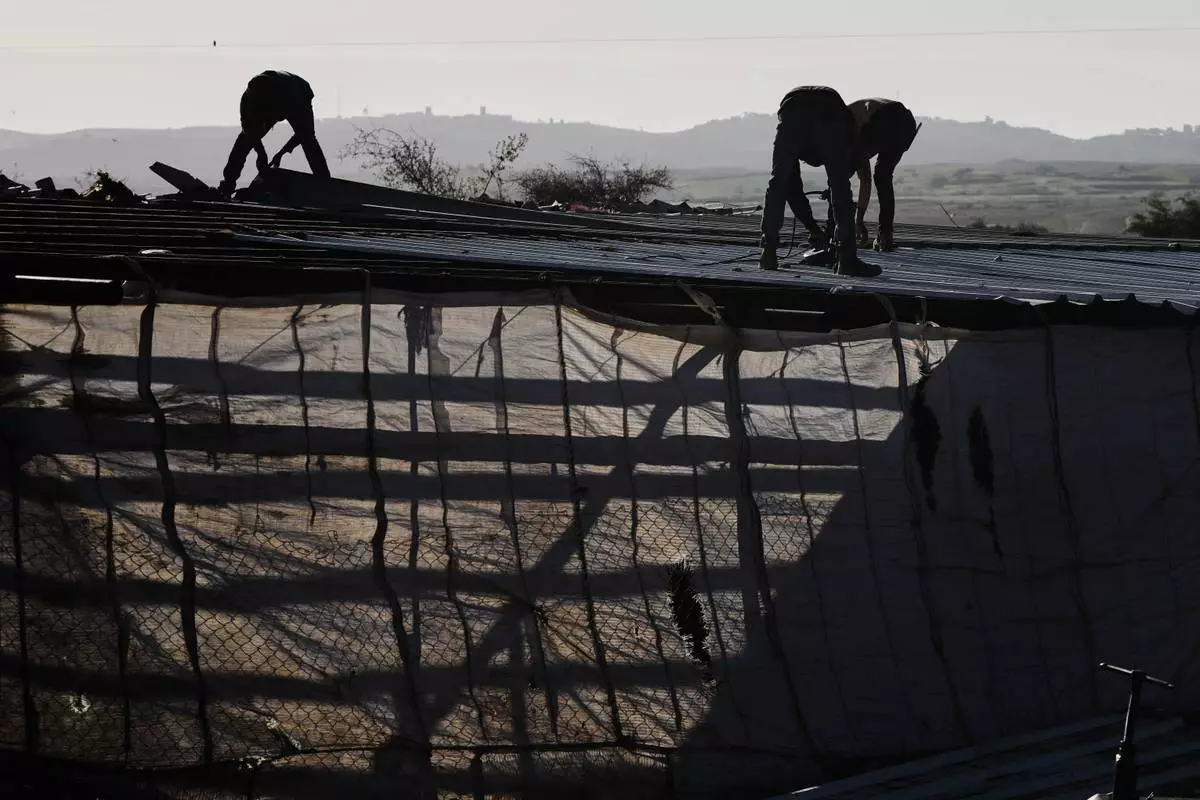
Workers stand on Notre-Dame cathedral in Paris, Wednesday, Nov. 20, 2024. (AP Photo/Louise Delmotte)
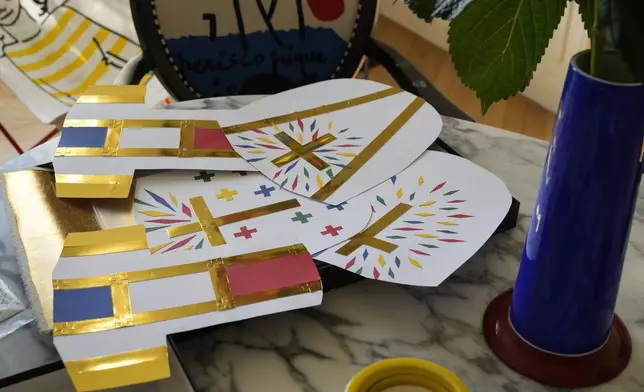
Sketches for liturgical vestments designed by Jean-Charles de Castelbajac for the reopening of Paris' Notre-Dame cathedral in December, are pictured during an interview with the Associated Press, Wednesday, Nov. 20, 2024 in Paris. (AP Photo/Michel Euler)
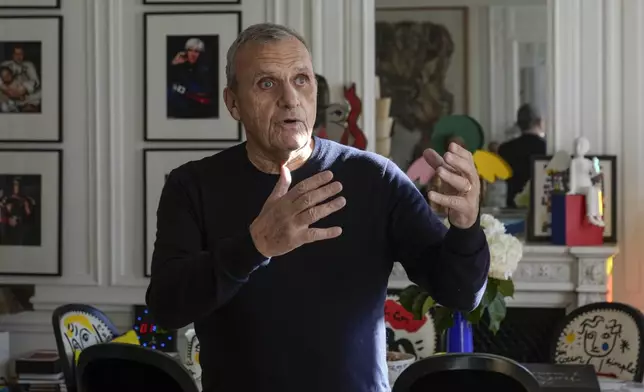
Designer Jean-Charles de Castelbajac gestures as he speaks during an interview with the Associated Press Wednesday, Nov. 20, 2024 in Paris. (AP Photo/Michel Euler)
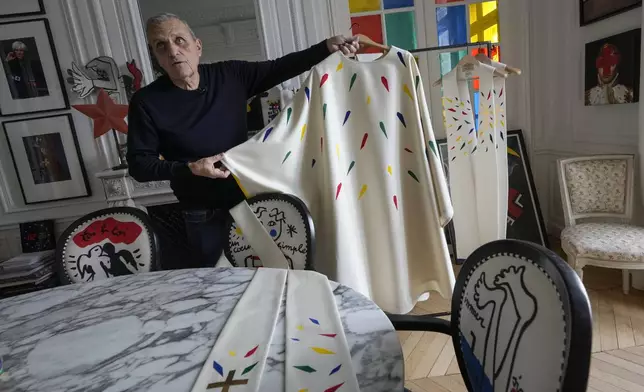
Designer Jean-Charles de Castelbajac displays a liturgical vestment for priests to be worn at the reopening of Paris' Notre-Dame cathedral in December, Wednesday, Nov. 20, 2024 in Paris. (AP Photo/Michel Euler)
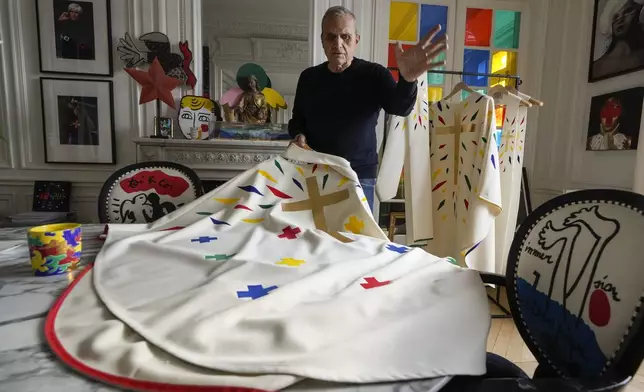
Designer Jean-Charles de Castelbajac displays a liturgical vestment for bishops to be worn at the reopening of Paris' Notre Dame Cathedral in December during an interview with the Associated Press Wednesday, Nov. 20, 2024 in Paris. (AP Photo/Michel Euler)
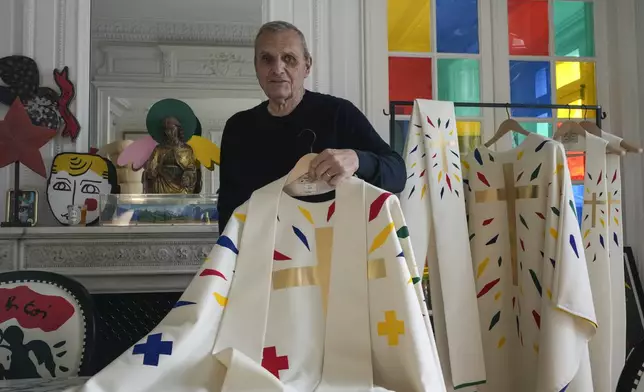
Designer Jean-Charles de Castelbajac displays a liturgical vestment for bishops to be worn at the reopening of Paris' Notre-Dame Cathedral in December, Wednesday, Nov. 20, 2024 in Paris. (AP Photo/Michel Euler)
So, when the Paris Archbishop’s emissary approached him to design the liturgical garments for the cathedral's reopening next month, Castelbajac — a believer with personal roots with the church — felt the moment transcended mere coincidence.
“It’s bigger than a job. It’s a bit mysterious … mysterious,” Castelbajac said, his eyes brimming with wonder as he previewed some of the 2,000 colorful pieces for 700 celebrants at his Paris home. “It's a calling. To be called like that is synchronicity.”
This duty, as he calls it, led to a collection of work crafted in collaboration with the esteemed artisans of 19M studio. The garments, often in thick off-white Scottish wool gabardine, blend his signature eye-popping pop-art aesthetic with a reverence for the cathedral’s centuries-old legacy with medieval touches.
The unorthodox designs are fun, modern — and perhaps shockingly minimalist.
They undoubtedly break with the richly embellished styles associated with the cathedral's near-900-year-old liturgical garb. At their center is a large gold cross, accented by debris fragments of vivid color-blocked red, blue, yellow, and green velvet.
“It’s something that is exploded that reconstructs itself,” Castelbajac said, likening the dissipated shards coming together to the cathedral’s own rebirth.
The commission was not subject to an open call. Instead, Castelbajac was handpicked by the Catholic leadership, due to his history of designing for the church.
In 1997, he created the rainbow-colored robes worn by Pope John Paul II for World Youth Day in Paris, garments later enshrined in Notre Dame’s treasury as a relic. That connection carried a special weight during the fire.
“As I watched the fire, I was thinking, ‘Are the relics burning? Are the relics safe?’ So my link was not just material. It’s really a strong spiritual link,” he said.
For Castelbajac, 74, the memory of those two hours in 2019 spent watching the fire with his wife amid people praying on their knees still evokes both grief and determination.
“It was not Notre Dame burning. It was hope burning. It was spirituality burning. It was such an intense moment … I was thinking, what can I do?” he said.
The vestments, which will be worn in liturgies permanently — forever, as Castelbajac put it — carry a sense of continuity with his past work. The designs are a variation on the pontiff’s robes, infused with Castelbajac’s signature aesthetic: bright, almost childlike hues that evoke optimism.
Castelbajac’s fascination with color began as a child in a military boarding school in Normandy, an experience he recalled as stifling and gray. “It was the absolute loneliness. It was colorless,” he said.
For the young boy, color became a lifeline.
“Color was like my teddy bear, my transitional element in a world of conflict. Each morning, there was the stained glass in the church and the coats of arms in the refectory that filled my world with primary colors,” he explained.
This obsession would define his career, earning him a reputation as a provocateur in the fashion world.
Castelbajac’s creations have dressed pop culture royalty for decades: Madonna in her teddy bear coat, Beyoncé in sequins, Rihanna in a Donald Duck costume. Collaborating with Andy Warhol, Keith Haring, and Jean-Michel Basquiat, he fused art and fashion into a playground of exuberance.
While his designs have graced runways and music icons, Castelbajac’s work for Notre Dame strikes a different, more personal chord.
The playful vestments might raise eyebrows among traditional Catholics, but he has no doubt about the faith Notre Dame’s leadership placed in him. “Maybe I have the trust of the archbishop,” he mused, reflecting on the “carte blanche” he said he received for his designs.
This combination produced a modern-looking body of work that reflects the unity, hope, and rebirth symbolized by Notre Dame itself—just like the phoenix-like rooster gleaming like fire atop the newly constructed spire.
When the cathedral reopens on the weekend of Dec. 7-8, Castelbajac hopes the vestments will be viewed by the world as a testament to renewal and the “power of color” to heal and inspire.
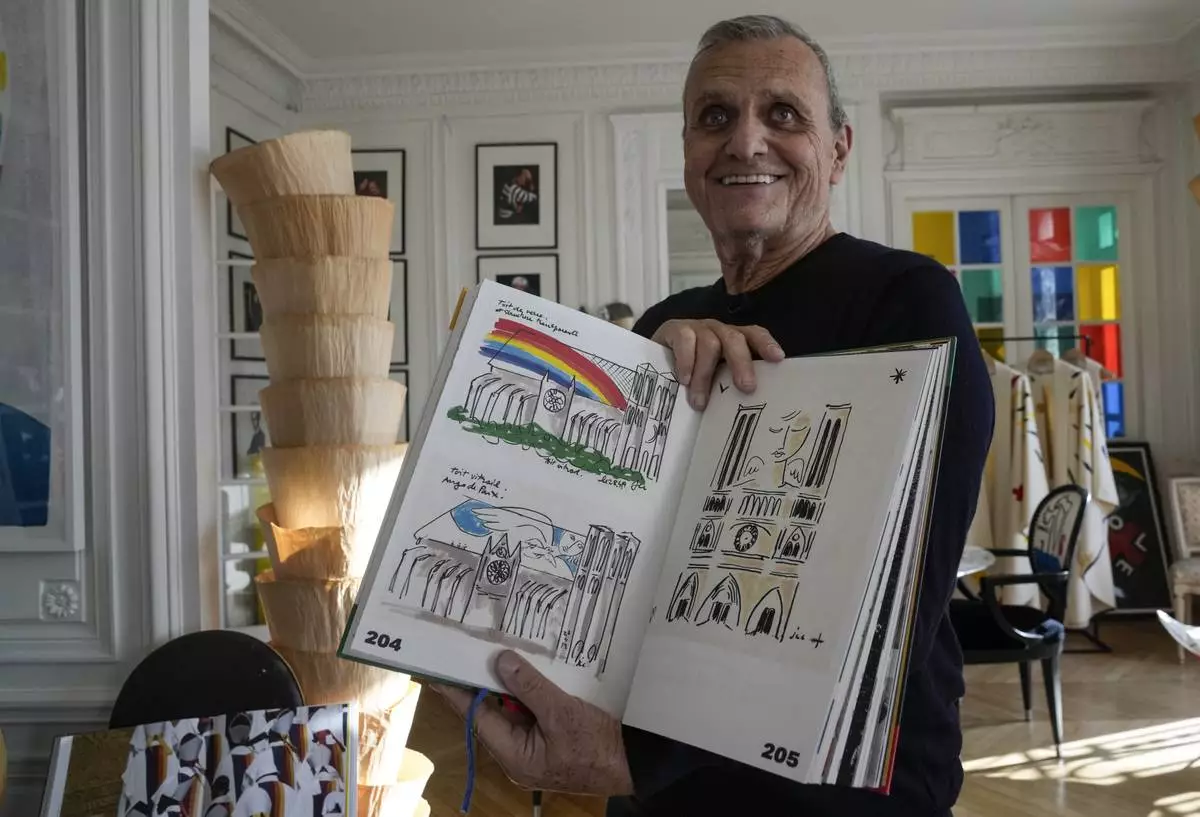
Designer Jean-Charles de Castelbajac displays his book with drawings of the Notre-Dame Cathedral during an interview with the Associated Press, Wednesday, Nov. 20, 2024 in Paris. (AP Photo/Michel Euler)
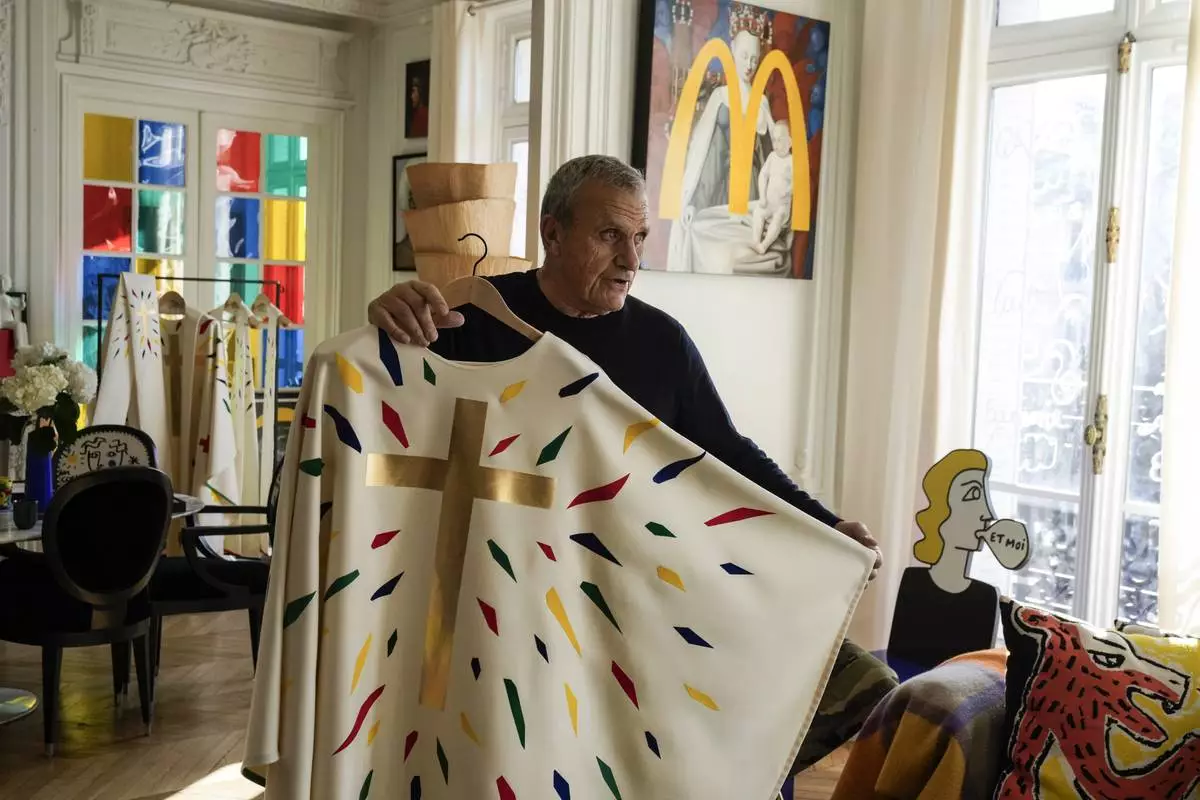
Designer Jean-Charles de Castelbajac displays a liturgical vestment for priests and to be worn at the reopening of Paris' Notre-Dame Cathedral in December, Wednesday, Nov. 20, 2024 in Paris. (AP Photo/Michel Euler)
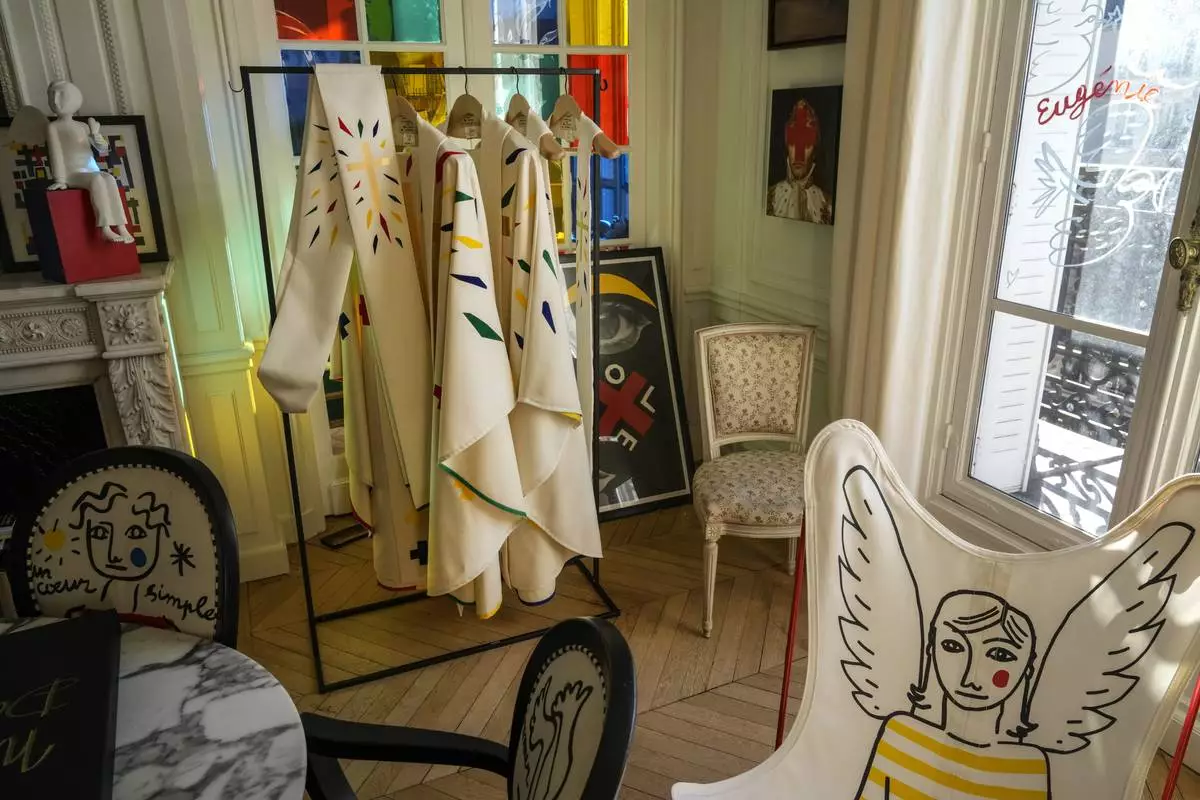
Liturgical vestments for bishops and priests designed by Jean-Charles de Castelbajac and to be worn at the reopening of Paris' Notre Dame Cathedral in December hang, Wednesday, Nov. 20, 2024 in Paris. (AP Photo/Michel Euler)
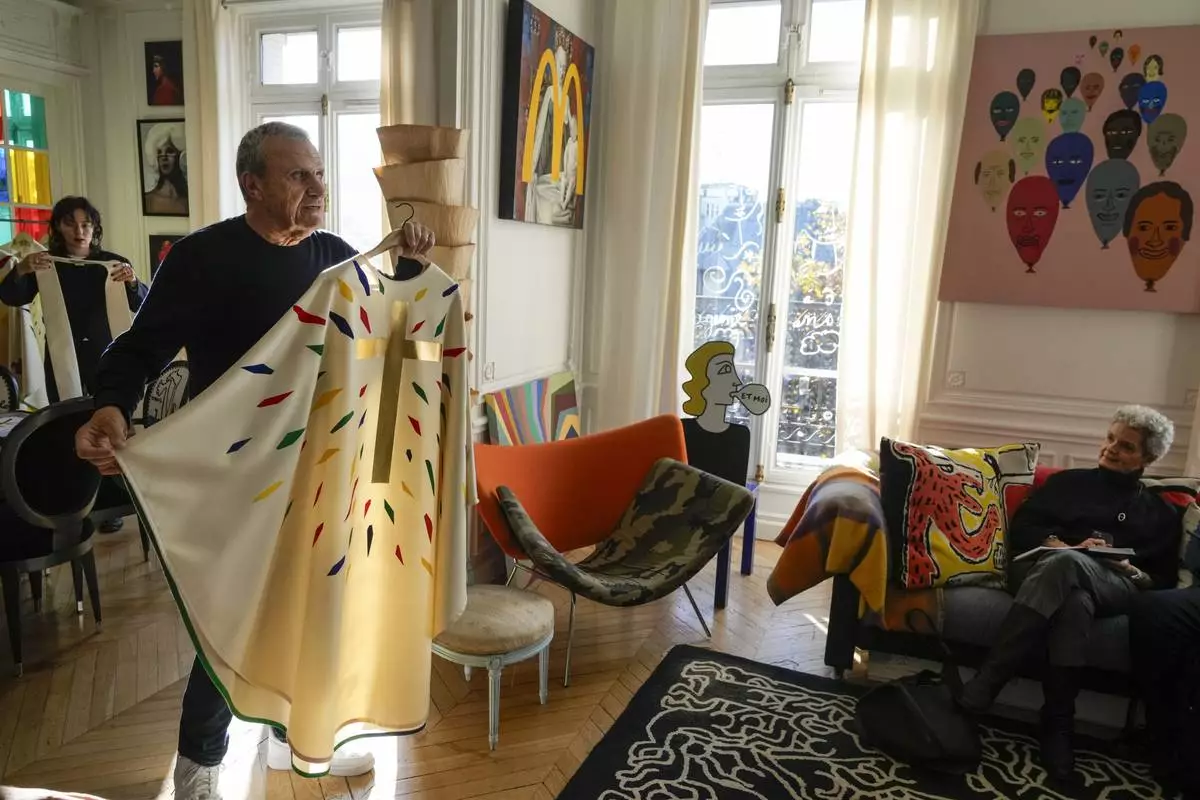
Designer Jean-Charles de Castelbajac displays a liturgical vestment for priests to be worn at the reopening of Paris' Notre-Dame cathedral in December, Wednesday, Nov. 20, 2024 in Paris. (AP Photo/Michel Euler)
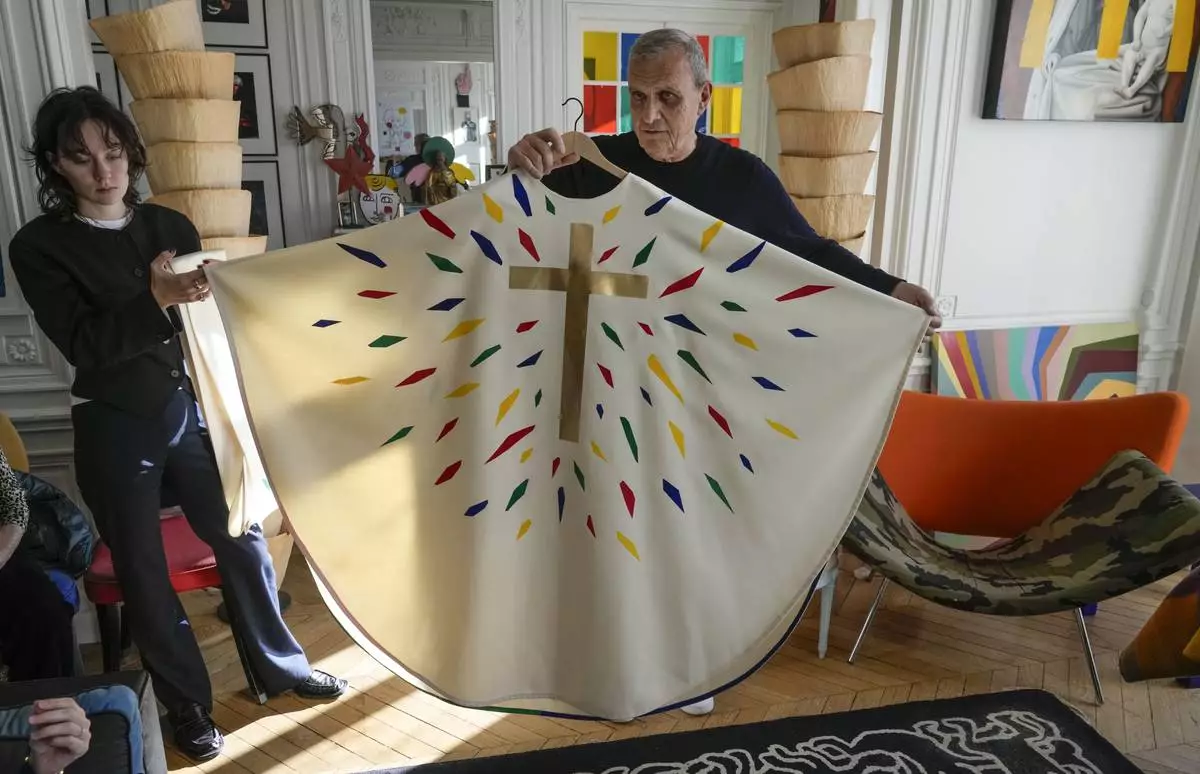
Designer Jean-Charles de Castelbajac displays a liturgical vestment for priests and to be worn at the reopening of Paris' Notre-Dame Cathedral in December, Wednesday, Nov. 20, 2024 in Paris. (AP Photo/Michel Euler)
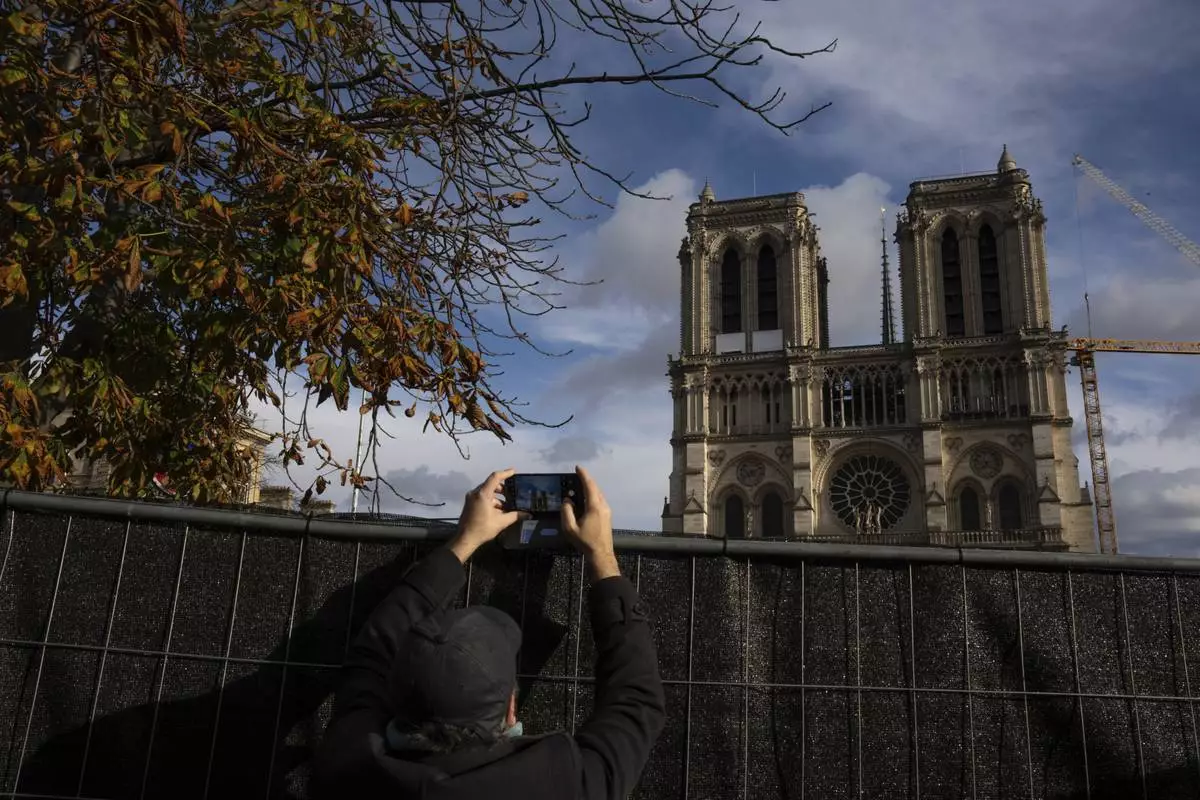
A visitor takes photographs of Notre-Dame cathedral in Paris, Wednesday, Nov. 20, 2024. (AP Photo/Louise Delmotte)
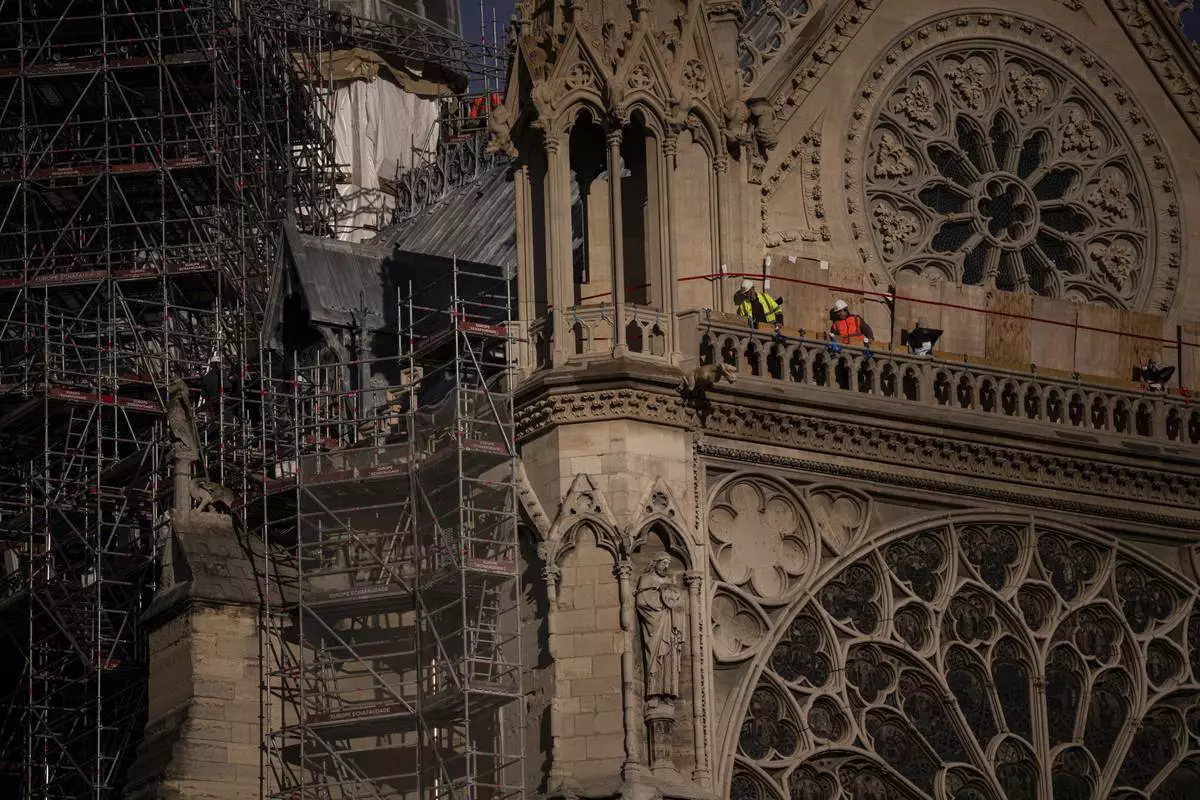
Workers stand on Notre-Dame cathedral in Paris, Wednesday, Nov. 20, 2024. (AP Photo/Louise Delmotte)
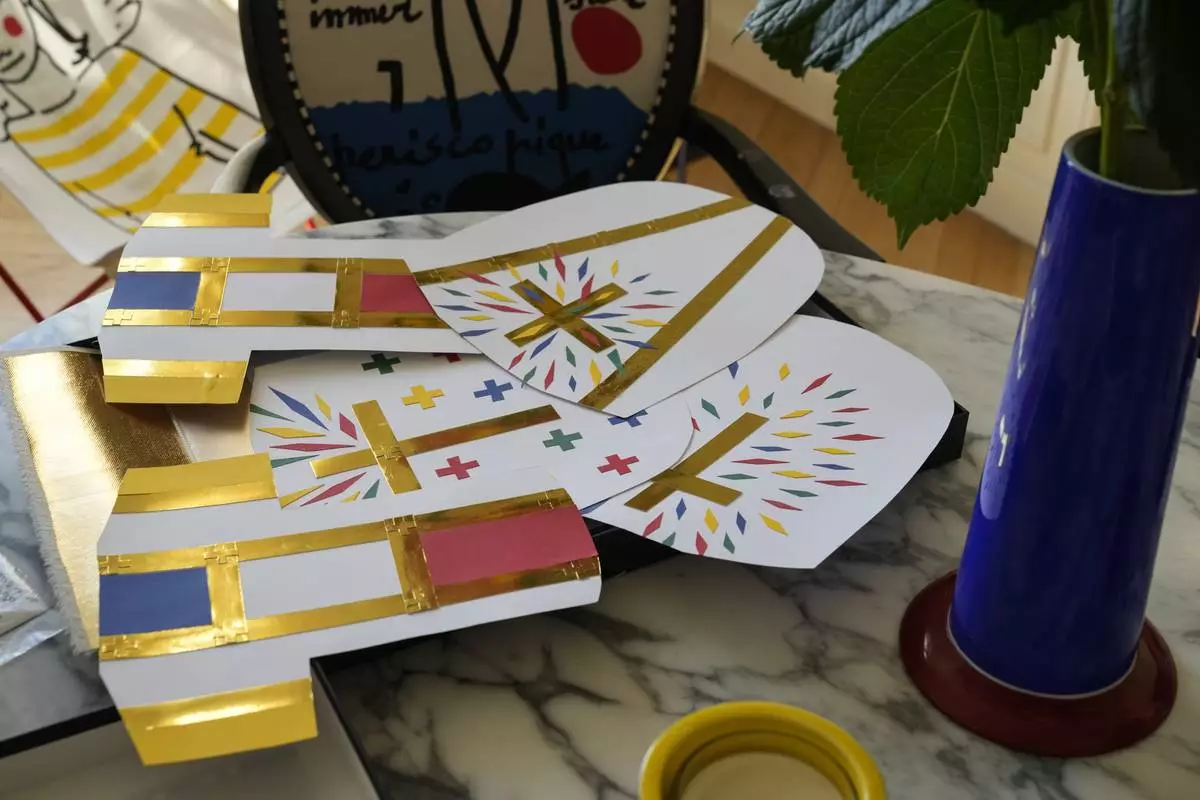
Sketches for liturgical vestments designed by Jean-Charles de Castelbajac for the reopening of Paris' Notre-Dame cathedral in December, are pictured during an interview with the Associated Press, Wednesday, Nov. 20, 2024 in Paris. (AP Photo/Michel Euler)
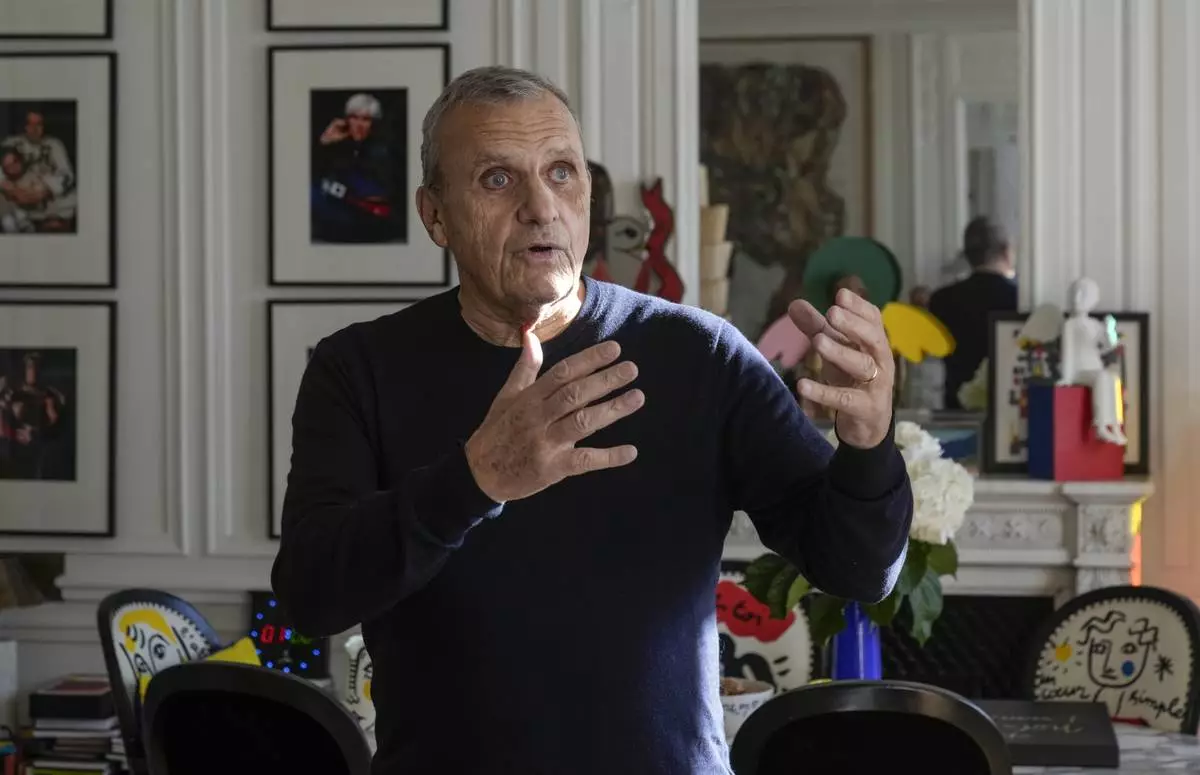
Designer Jean-Charles de Castelbajac gestures as he speaks during an interview with the Associated Press Wednesday, Nov. 20, 2024 in Paris. (AP Photo/Michel Euler)
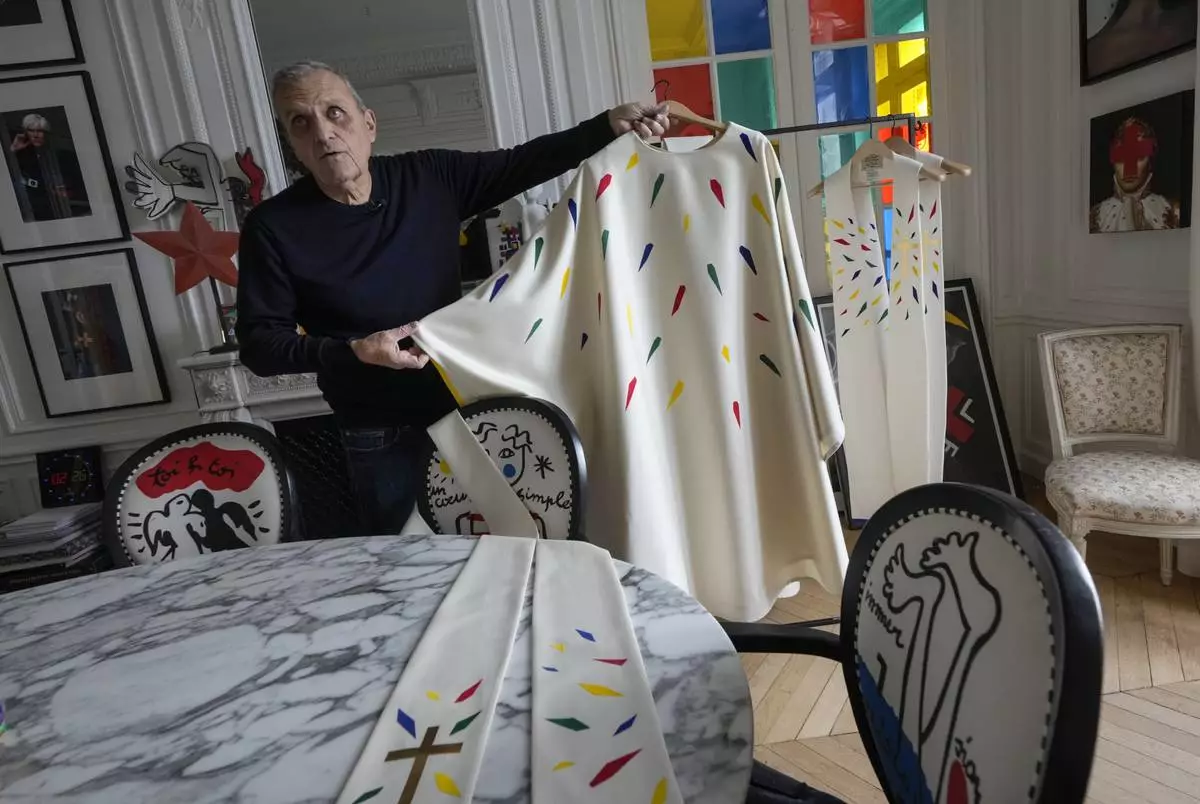
Designer Jean-Charles de Castelbajac displays a liturgical vestment for priests to be worn at the reopening of Paris' Notre-Dame cathedral in December, Wednesday, Nov. 20, 2024 in Paris. (AP Photo/Michel Euler)
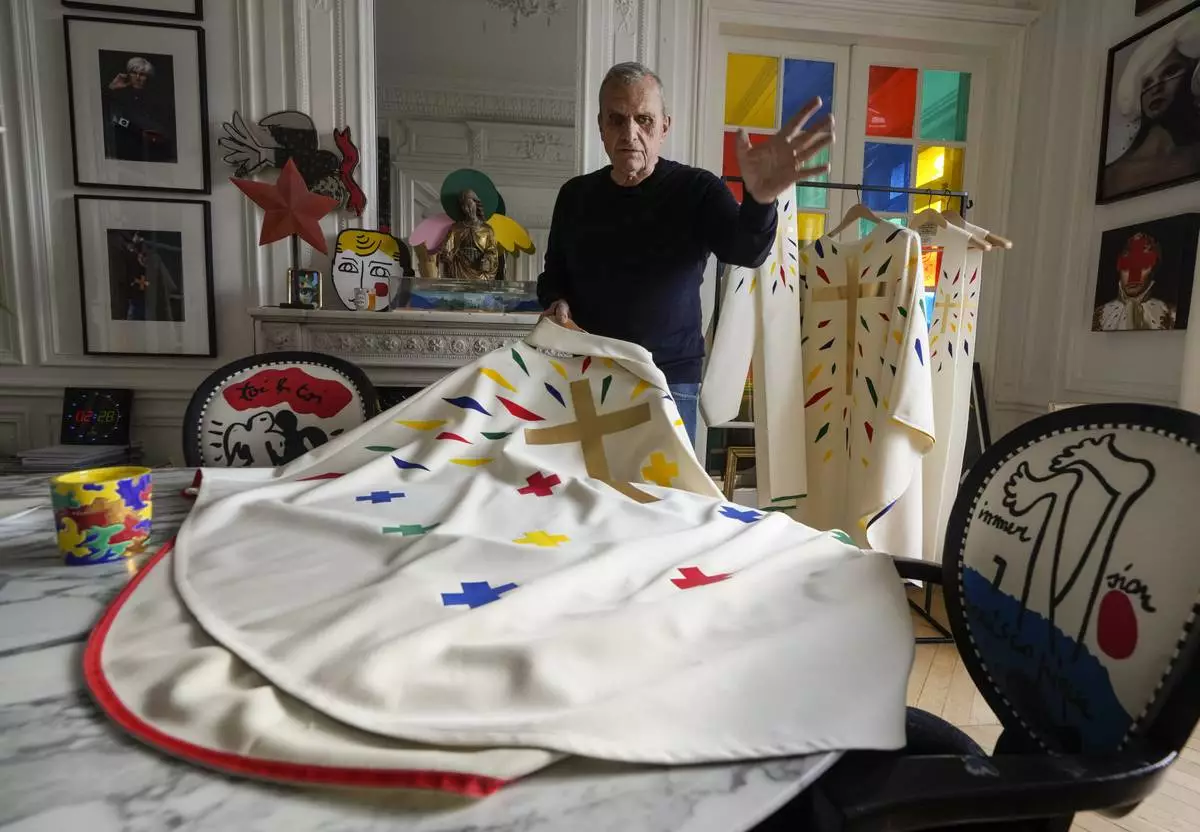
Designer Jean-Charles de Castelbajac displays a liturgical vestment for bishops to be worn at the reopening of Paris' Notre Dame Cathedral in December during an interview with the Associated Press Wednesday, Nov. 20, 2024 in Paris. (AP Photo/Michel Euler)
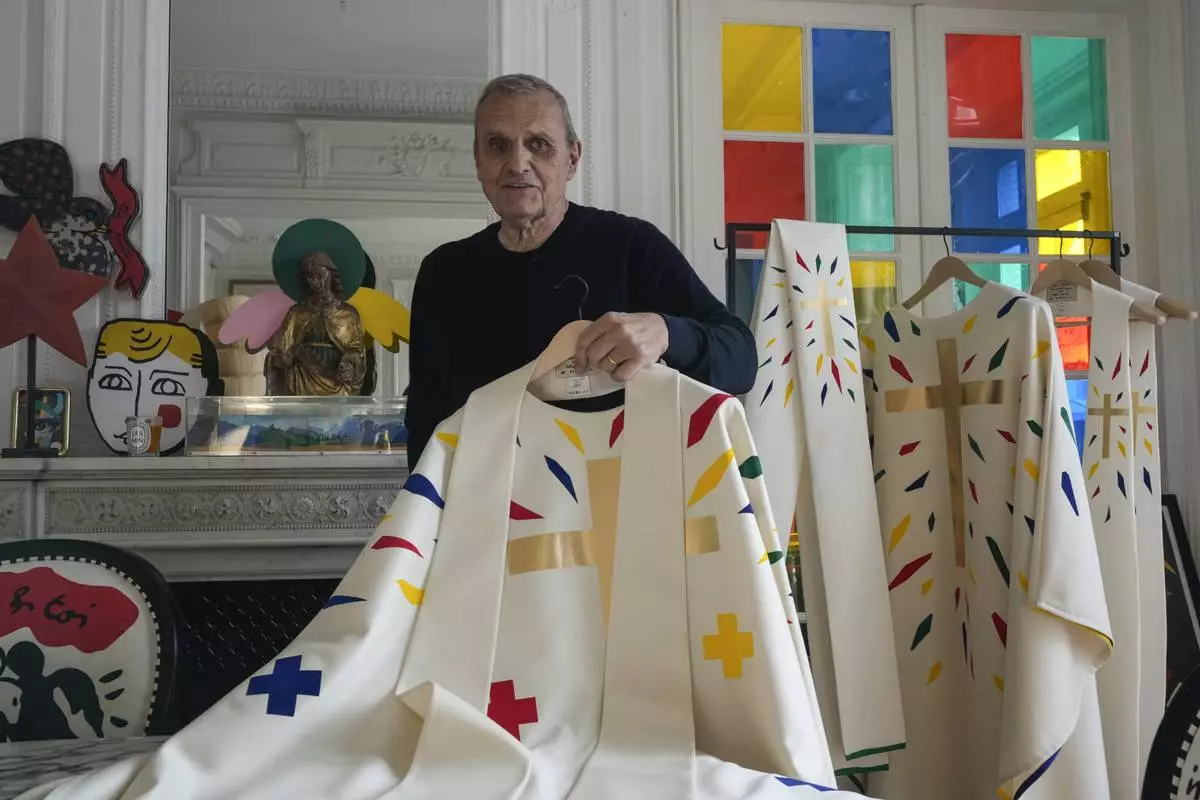
Designer Jean-Charles de Castelbajac displays a liturgical vestment for bishops to be worn at the reopening of Paris' Notre-Dame Cathedral in December, Wednesday, Nov. 20, 2024 in Paris. (AP Photo/Michel Euler)