SCHAUMBURG, Ill.--(BUSINESS WIRE)--Nov 21, 2024--
A new survey by NMI ®, a global leader in embedded payments infrastructure, reveals that 87% of consumers say gifts from small businesses are more thoughtful, while 78% of consumers are willing to pay more to help small businesses thrive.
This press release features multimedia. View the full release here: https://www.businesswire.com/news/home/20241121866919/en/
The survey of 1,000 U.S. adults explores consumer attitudes and shopping patterns, offering actionable insights to help small and medium-sized businesses (SMBs) understand how they can attract and retain customers. The findings come as the holiday shopping season approaches and ahead of American Express® Small Business Saturday, which takes place on November 30 this year.
Black Friday and Cyber Monday are king, but Small Business Saturday gains traction
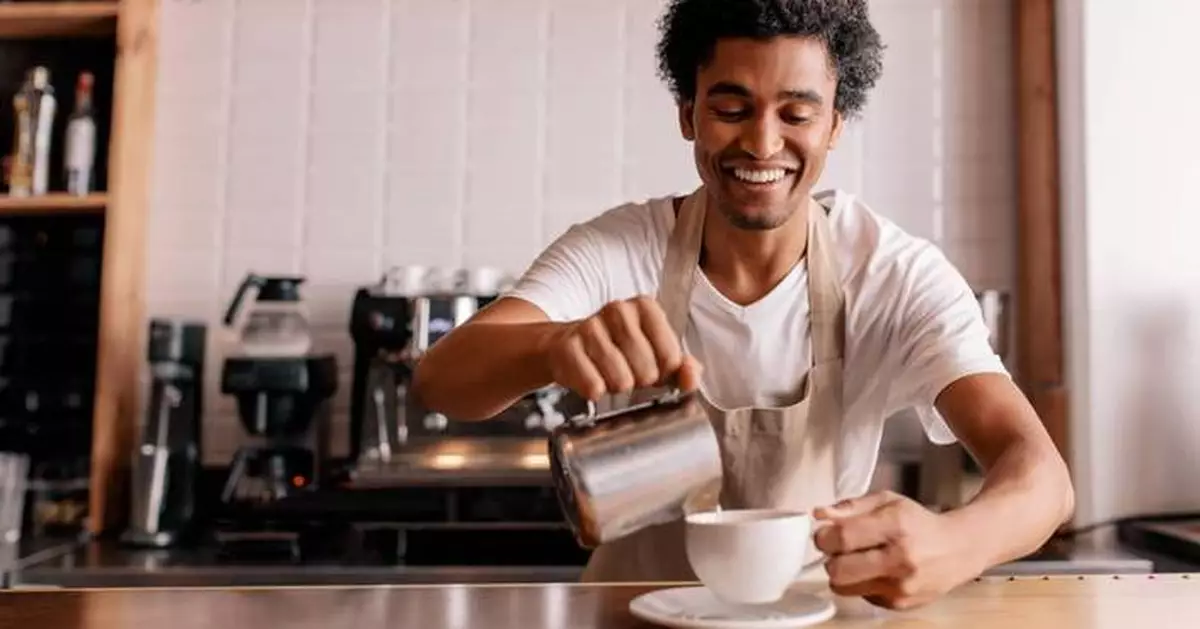
The survey highlights strong emotional connections associated with supporting small businesses and found that 53% of consumers surveyed feel a sense of belonging or community, 49% feel satisfied, and 40% feel proud. While 49% of consumers plan to shop on Small Business Saturday, this trails the 66% who plan to flock to big box stores for Black Friday (66%) and Cyber Monday (61%) deals, indicating that SMB owners still struggle to convince holiday shoppers to shop small. Coffee shops, casual takeout restaurants and bakeries top the list of small businesses most likely to win consumers’ hearts this year.
Millennials lead the charge in supporting small businesses
Millennials emerged as the most supportive demographic for supporting small business, with 90% agreeing that gifts from local outlets are more thoughtful, 83% willing to pay more to help SMBs, and 81% more likely to shop small during challenging times like economic turbulence or natural disasters.
This tech-savvy group also has higher expectations for convenience. Online ordering was cited as a key factor influencing consumers to shop at larger retailers, with 39% of Millennials and 34% of Gen Zers highlighting it as a deciding factor. Flexible payment options, such as contactless payments and mobile wallets, were a draw for 42% of Gen Zers and 29% of Millennials, compared to 21% of U.S. adults overall.
Local products drive holiday cheer, but outdated checkout experiences emerge as the Grinch
When asked why they might choose a large retailer, service, or hospitality brand over a small business, modern checkout experiences emerged as a significant factor, particularly for younger generations. Online ordering was cited by 32% of U.S. adults as a key draw, increasing to 39% among Millennials and 34% for Gen Z. Similarly, 21% of consumers pointed to flexible payment options as an advantage, with this figure climbing to 42% for Gen Z and 29% for Millennials. These preferences align with the most popular payment methods consumers use when shopping small, including credit/debit cards, cash, and contactless options like Apple Pay or Google Pay.
Peter Galvin, CMO at NMI, said:
"Small businesses employ more than 61.7 million Americans and are the backbone of our economy, driving job creation and fostering vibrant communities. More than that, they bring pride and joy to the communities they serve. As the payment platform of choice for more than 4,000 partners and their merchants, NMI is a long-time small business advocate, which is why we’re proud to support the American Express Shop Small® initiative and Small Business Saturday. Our survey highlights that to survive in today’s challenging economic environment, small businesses must adapt to evolving customer expectations. Secure, fast, and flexible payment options are key to winning customer loyalty and those that embrace omnichannel strategies and modern checkout experiences will be well-positioned for success this holiday season and well into the future.”
Shop Small and Small Business Saturday, now in its 15th year, is a sales holiday and social media movement by American Express designed to bring attention to small, local merchants. This year Amex is aiding small businesses affected by Hurricanes Helen and Milton, by donating $1 to the U.S. Chamber of Commerce Foundation for each eligible Card purchase made at qualifying U.S. small businesses on November 30. To learn more and access resources visit: https://www.americanexpress.com/en-us/benefits/shop-small/
For independent sales organizations (ISOs) and software companies seeking ways to ensure their merchants make the most out of Small Business Saturday, learn how NMI offers everything they need to start taking payments online, in-store, via mobile, however their customers want to pay and talk to our team.
About NMI
NMI is a global leader in embedded payments, powering more than $225+ billion in payment volumes every year. From our industry-leading payment gateway technology to our seamless merchant underwriting, acquiring, onboarding, and management platform, we enable our partners across the entire payments ecosystem. We help our partners deliver frictionless payment solutions to their customers, offering modularity, flexibility, and choice, wherever and however consumers want to pay – online, in-store, in-app, mobile, and unattended. And we’re constantly innovating, empowering ISOs, software vendors, and payment professionals as they embrace the future of fintech. Learn more at www.nmi.com

NMI survey: coffee shops, casual takeout restaurants and bakeries top the list of small businesses most likely to win consumers’ hearts this year (Photo: Business Wire)
CLEVELAND, Miss. (AP) — A sparse crowd drifted into Walter Sillers Coliseum for Delta State’s first women’s basketball game in 1973.
It was a 4 p.m. tipoff against Holmes Community College — announced only in the local paper in rural Cleveland, Mississippi. There were no tickets, no concessions or buzz. Just a handful of curious women's basketball fans with no clue what this team led by a former high school coach named Margaret Wade could be.
“We had no expectations because, see, the coach came from the high school, and she had never coached college ball," said Dot Bright, a 1962 Delta State graduate who still lives just a few blocks from the school. "So we thought, 'Oh, OK. It’s all in the family. We thought it was just little hometown people.”
What Bright and a few others saw that day was the beginning of something bigger. Within a couple of years, Delta State became one of women's basketball's early powerhouses. The Lady Statesmen were the first No. 1 team when the women's college basketball poll debuted 50 years ago and won three straight national championships in the Association for Intercollegiate Athletics for Women (AIAW) from 1975-1977.
The Lady Statesmen will be recognized during “The AP Top 25 Fan Poll Experience” being held Thursday-Saturday at Arizona State’s First Amendment Forum in the Walter Cronkite School of Journalism and Mass Communication. The poll has served as a road map for the rise of the sport, though a lot has changed since the NCAA took over in 1982.
The women's basketball spotlight has since shifted elsewhere as money reshaped the sports landscape and large programs with big budgets — like the powerhouses in this weekend’s Final Four including UConn and South Carolina — began to dominate.
In Cleveland, Delta States' rich legacy still resonates.
“People still support it," Delta State athletic director Mike Kinnison said. "While we’ve had some ups and downs with it, it’s still a good program. That's still very important to me that we keep that tradition and keep that history and heritage out front.”
Reminders of that history are scattered across Delta State's campus. The basketball court is named after coach Lloyd Clark, who led the program to three national titles in 1989, 1990 and 1992 after its move to the NCAA's Division II. The jerseys of star players including women's basketball pioneer Lusia Harris are hanging in the gym. A “Hall of Fame” room of photos and trophies is set up in the athletic building chronicling those dominant days.
Current Delta State women's basketball coach Tracy Stewart-Lange makes sure prospective players are aware of the program's legacy when they arrive on campus.
Stewart-Lange, who just led the Lady Statesmen to an 18-11 record in her fourth season, stops recruits by the stadium's concourse to see a replica of the Wade Trophy given each year to the best player in women's basketball, which is encased near the front door, as well as a display of Delta State's national championship trophies under Wade and Clark.
Even Delta State football coaches bring up Wade, Clark and Harris when selling recruits on the school.
“You try to give them little snippets of, ‘Guys, this is where you are now,’” Stewart-Lange said. “'Don’t take it for granted. Step into those shoes and shine and push it forward. Get it back to the top.'”
Wade, who had coached at nearby Cleveland High School years before taking over at Delta State ahead of the 1973 season, had a roster that included the future Hall of Famer, Harris, who became one of the greatest women's players ever.
But publicity was scarce that first year. Former sports information director Langston Rogers recalled that many local and regional papers mostly ran box scores — until the wins and crowds became impossible to ignore.
The Lady Statesmen went undefeated in 1974, upsetting Philadelphia powerhouse Immaculata to win the AIAW national title and quickly building national credibility with wins over teams like Ole Miss and Auburn. They eventually drew thousands to venues like Madison Square Garden and UCLA's Pauley Pavilion, a rarity in women's hoops during that time.
Demand at home far exceeded the 3,000-seat Walter Sillers Coliseum, so portable bleachers were brought in and students sat along stage railings to squeeze inside.
"Everybody in Cleveland knew us and knew our names," said Debbie Brock, starting point guard from 1974-78. “You would drive up to the Sonic — and we didn’t have many restaurants or anything then — but I’d go to the Sonic, and the man would say, ‘Great game tonight.’”
Kinnison, athletic director since 2019, is now trying to recapture those times.
After the NCAA replaced the AIAW as the governing body for women's college sports, Delta State and other small colleges faced a major challenge to stay competitive on a national scale.
Recruiting advantages and national media attention have since dwindled, and for a while it was hard to bring in the same caliber of coaches.
“People don’t jump up and down when they find out they’re moving to the Mississippi Delta,” Bright said. “It’s hard to recruit here. I think the coach we have now, Coach Lange, she is doing an awesome job ... We have a very good record this year, some of the best since Lloyd Clark.”
Bright, 82, still never misses a game — though they're much quieter than they were 50 years ago.
Stewart-Lange runs into people around the Cleveland area who talk of their memories from those days. That gives her hope that local support can still remain even as the national spotlight has faded.
“I do feel like the undercurrent is there within the community,” Stewart-Lange said. “It’s been done before. And it can be done again.”
AP Top 25 Fan Poll Experience: https://apnews.com/https:/apnews.com/projects/arizona-state-fan-poll-experience/
AP March Madness bracket: https://apnews.com/hub/ncaa-womens-bracket and coverage: https://apnews.com/hub/march-madness
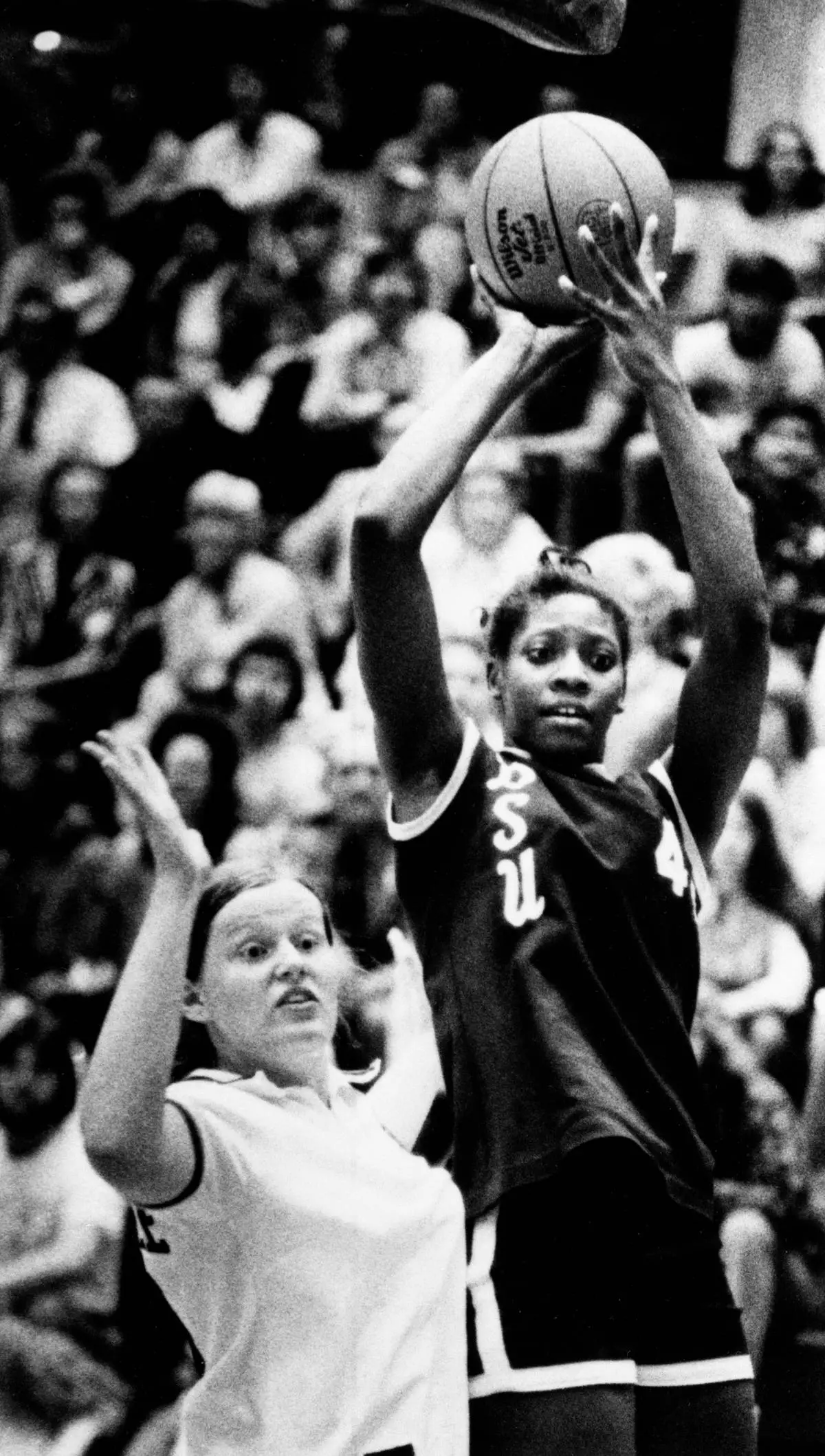
FILE - Delta State center Lusia Harris, right, towers over Penn State's Mag Strittmatter, left, as she pulls down a rebound at Penn State in University Park, Pa., March 24, 1976. (AP Photo, File)
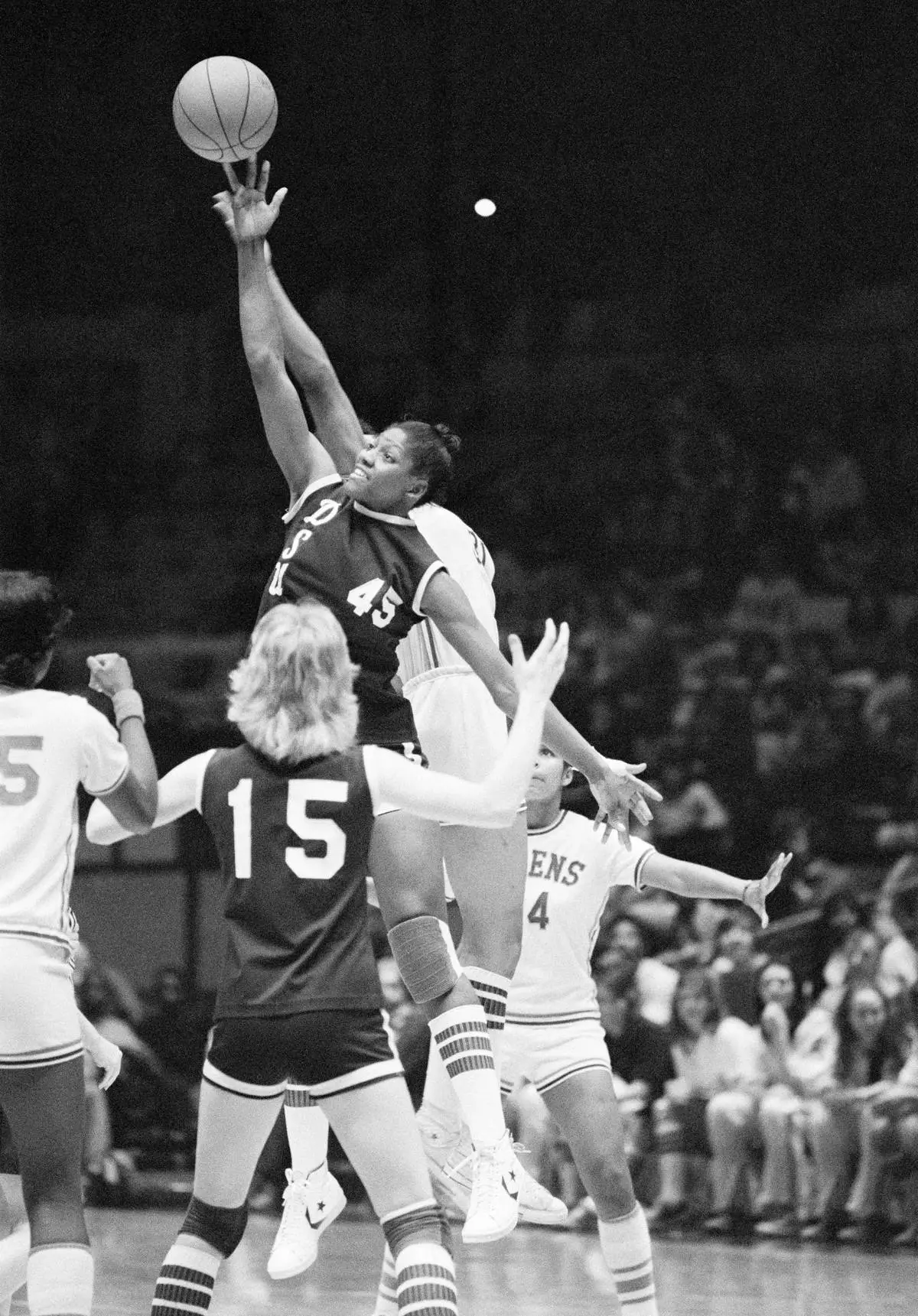
FILE - Delta State University's Lusia Harris (45) gets off a shot against Queens College during a women's college basketball game at Madison Square Garden in New York, Feb. 23, 1976. (AP Photo/Ron Frehm, File)
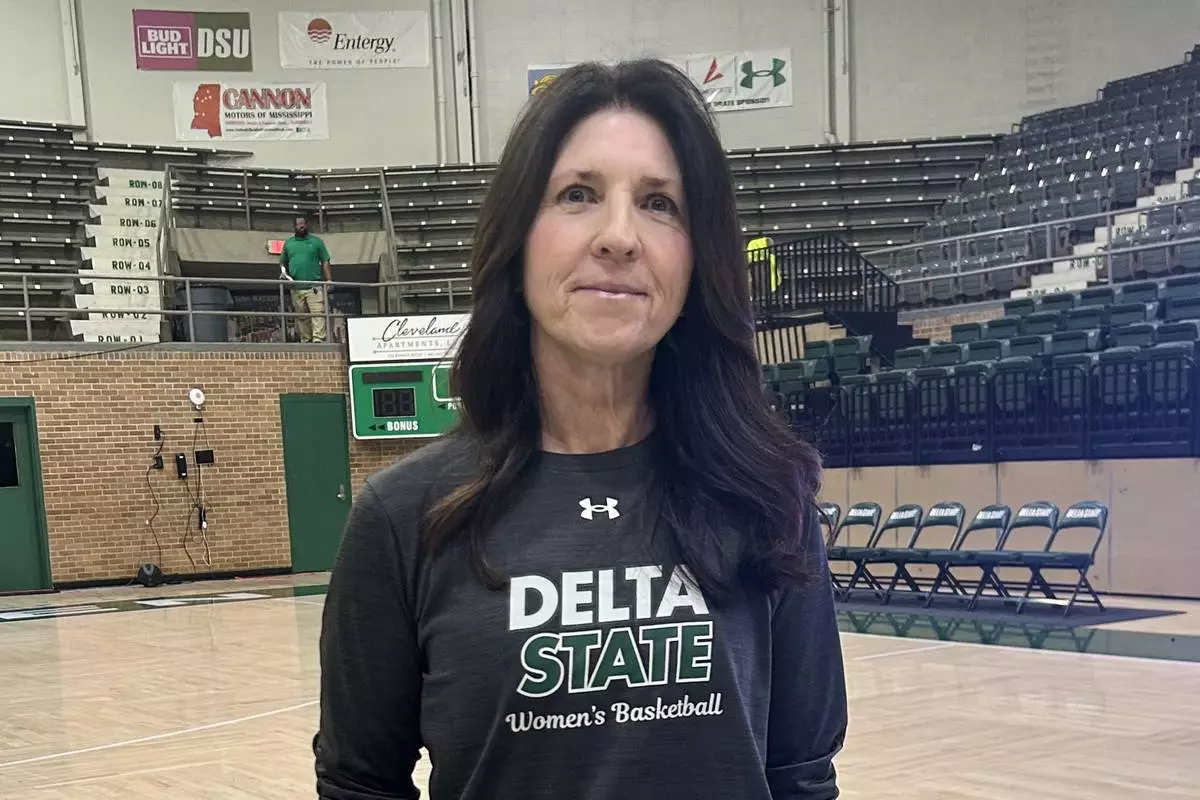
Delta State women's basketball coach Tracy Stewart-Lange poses for a photo, Feb. 17, 2026, in Cleveland, Miss. (AP Photo/Alanis Thames)
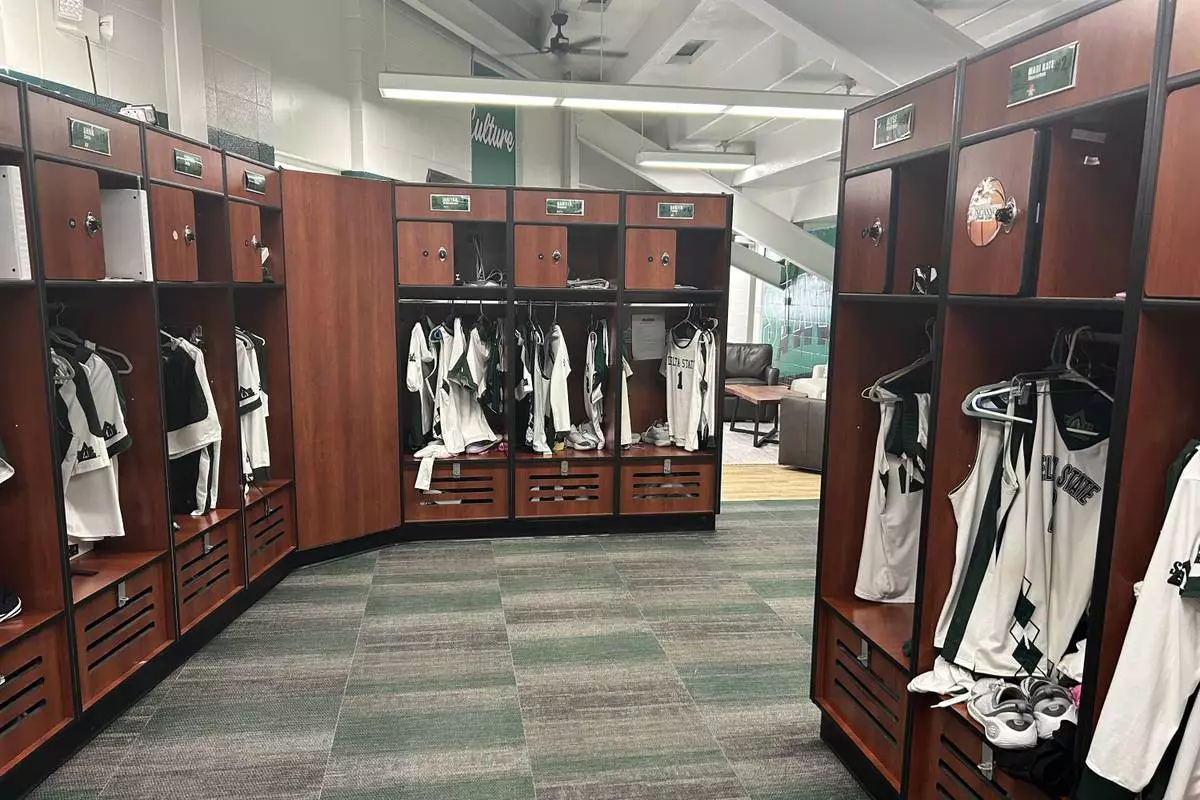
The Delta State women's basketball locker room is seen, Feb. 17, 2026, in Cleveland, Miss. (AP Photo/Alanis Thames)
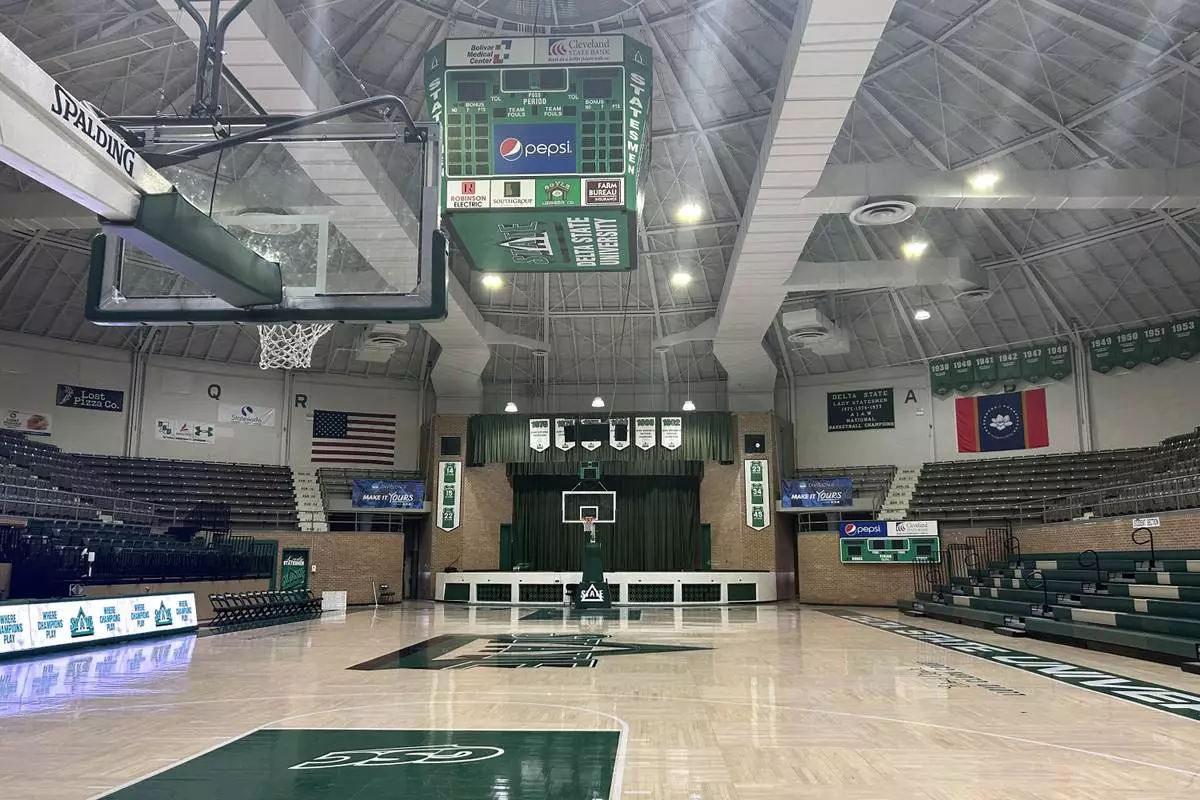
The Delta State basketball court is seen, Feb. 17, 2026, in Cleveland, Miss. (AP Photo/Alanis Thames)