A Chinese envoy on Thursday stressed that pressure and coercion are not the tools of diplomacy, and confrontation cannot resolve the Iranian nuclear issue.
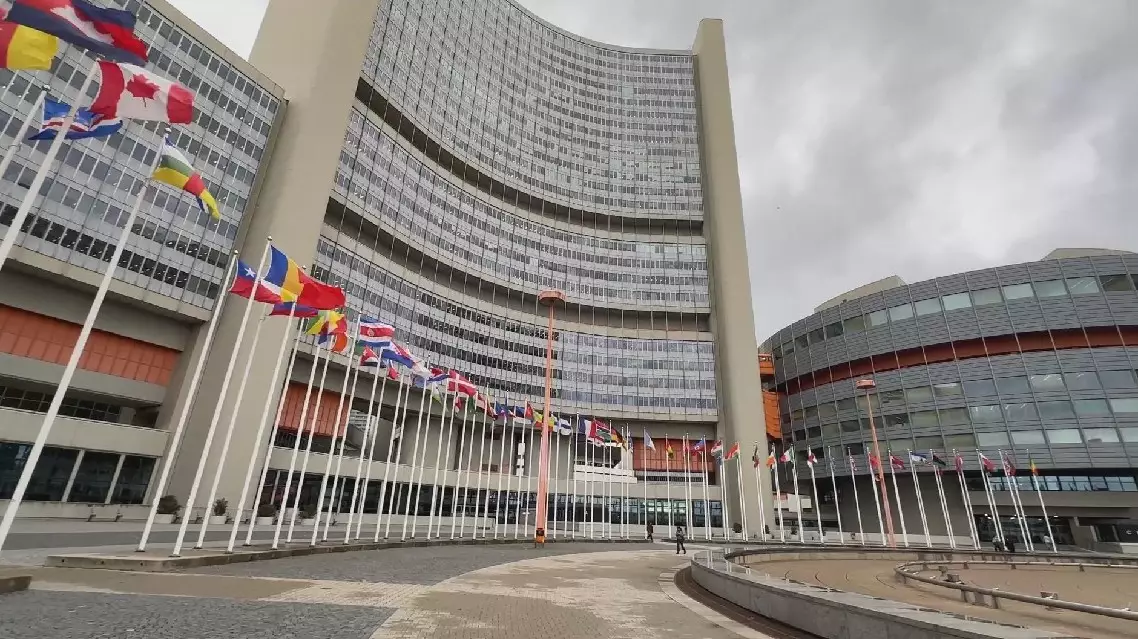
Li Song, China's permanent representative to the International Atomic Energy Agency (IAEA), made the remarks at an IAEA Board of Governors meeting where Iran's nuclear program was the focus of discussion.
The United States, the United Kingdom, France and Germany pushed for a resolution aimed at pressuring Iran.
However, China, Russia, and Burkina Faso, out of the 35 board members, vetoed the resolution. Additionally, 12 developing countries, including South Africa, India, and Egypt, chose to abstain from voting.
The Board of Governors is one of the two policy-making bodies of the IAEA, along with the annual General Conference of IAEA Member States.
China welcomes Iran's cooperation with the IAEA on unresolved safeguards issues and commended the positive outcomes of IAEA Director General Rafael Grossi's recent visit to Iran, according to Li.
He warned that creating confrontation and escalating tensions would only serve to complicate the cooperation between the IAEA and Iran.
Emphasizing that exerting pressure and coercion are not the means to resolve the Iranian nuclear issue, Li called for renewed political and diplomatic endeavors. He stressed the importance of constructive multilateral cooperation in addressing non-proliferation challenges.
In light of the Joint Comprehensive Plan of Action (JCPOA) being severely undermined in recent years, Li urged all parties to adopt a measured and responsible approach.
He called for practical steps to support genuine diplomacy and to move towards a political resolution on the issue.
China urges diplomacy, opposes pressure on Iran nuclear issue