Skip to Content Facebook Feature Image

China's major cities see surges in housing sales following new policies

China

China

China

China's major cities see surges in housing sales following new policies

2024-11-23 12:24 Last Updated At:18:57

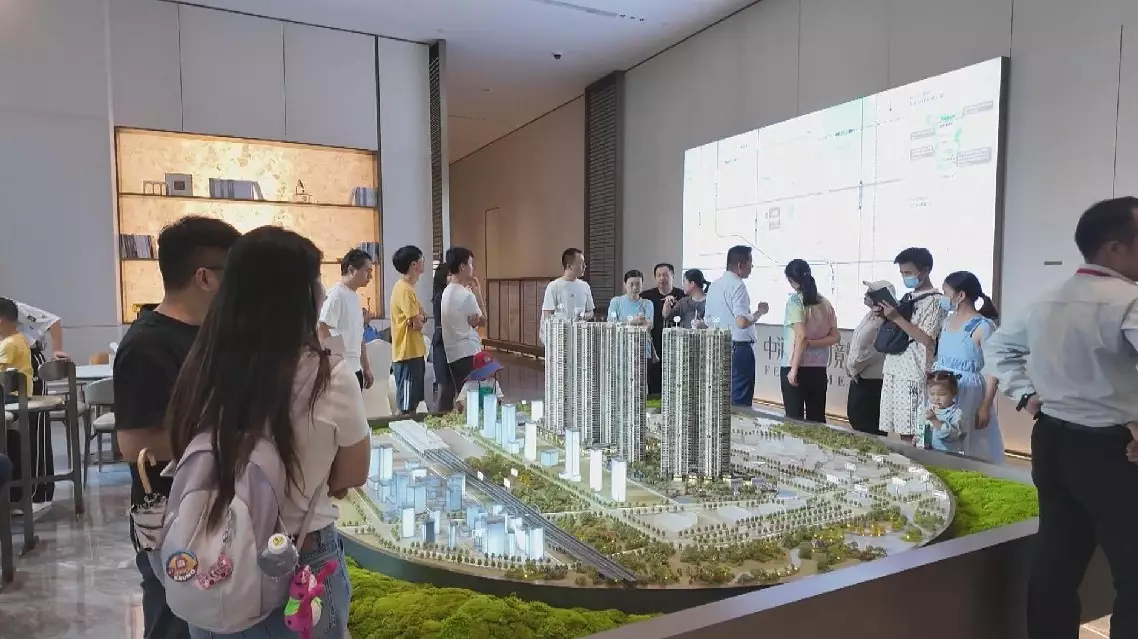
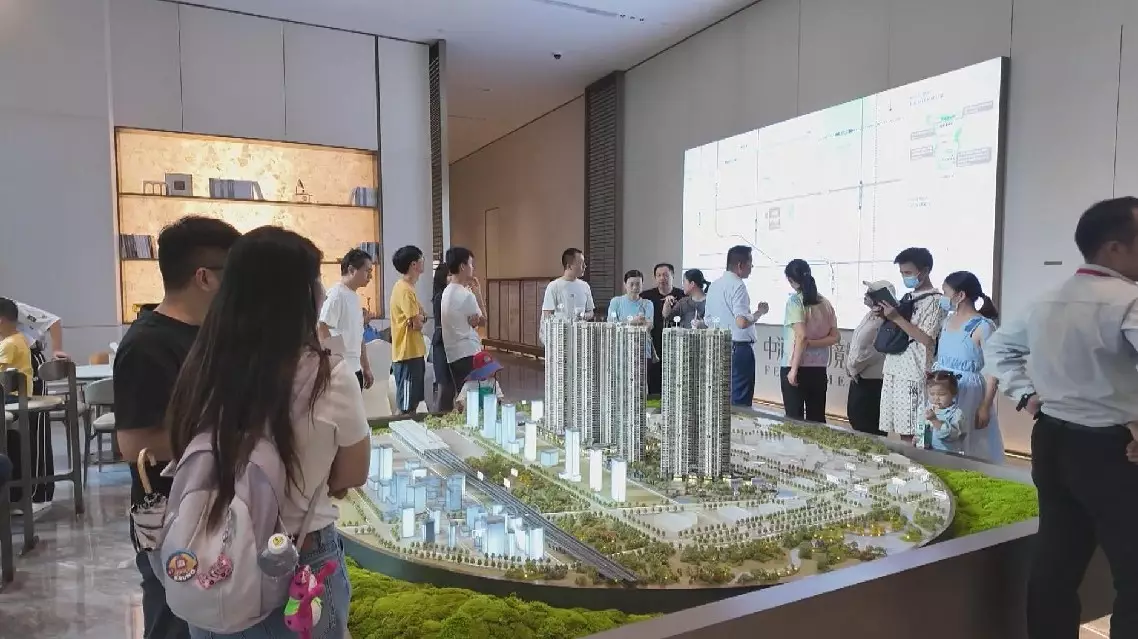
China's major cities have seen significant recovery in housing transactions following the adoption of new policies to lower costs for homebuyers, ease the financial pressure of real estate companies and stabilize the housing market.

The four first-tier cities -- Beijing, Shanghai, Guangzhou and Shenzhen -- have all announced the cancellation of standards for ordinary residences and non-ordinary residences earlier this week.

Due to the distinction between ordinary residences and non-ordinary residences, in the past, home buyers would have differences in value-added tax, deed tax, loan interest rates, among other during transactions of larger houses.

After canceling this classification standard, the reduction of tax burden becomes a major highlight.

This marks another round of policies implemented after a meeting of the Political Bureau of Communist Party of China (CPC) Central Committee in late September stressed the need to respond to public concerns by adjusting policies restricting housing purchases, lowering interest rates on existing housing loans, and promptly improving policies related to land, fiscal and tax matters, and finance to promote the establishment of a new model for real estate development.

The latest policies have greatly boosted confidence and sales in the housing markets nationwide.

"So far in November, we have averaged at around 20 deals a day. The figure was 15 deals in September," said Guo Zichen, manager of a real estate service center in Beijing.

In Shanghai, some homebuyers looking for better housing have raised their budgets after the standards for ordinary residences and non-ordinary residences were canceled.

"In October, a client said his budget was around 5 or 6 million yuan (about 690,000 or 830,000 U.S. dollars). Now (the new policy helps him) save the money and he added it into his budget, and eventually he bought a home at the price of 8 million yuan (about 1.1 million U.S. dollars)," said Du Qiaojun, manager of a real estate agency office in Xuhui District of Shanghai.

In Shenzhen, south China's Guangdong Province, the number of new housing units sold daily reached 276 from November 1 to 17, a record high since December 2006.

"In general, the sales have increased significantly in the past one and a half months. Specifically, the sales of new homes have surged by 366 percent month on month," said Zhang Qingping, vice president for marketing of a real estate agency in Shenzhen.

In Guangzhou, the sales of new homes doubled month on month to 10,418 in October, covering a total area of 1.1147 million square meters, according to statistics.

"In November, the number of transactions in Guangzhou's housing market remains at a high level, further consolidating the trend of steady recovery. From November 1 to 18, new homes with a total area of 744,300 square meters were sold, an increase of 25.6 percent month on month. The daily average sales of new homes amount to 41,400 square meters, the highest in 20 months," said Song Jiaping, deputy director of the real estate management office of the Guangzhou Municipal Housing and Urban-Rural Development Bureau.
China's major cities see surges in housing sales following new policies
China's major cities see surges in housing sales following new policies


China's major cities see surges in housing sales following new policies
China's major cities see surges in housing sales following new policies

From cutting-edge technology exhibitions to retail stores thousands of kilometers away from Europe and Southeast Asia, China-made robot vacuum cleaners are increasingly becoming a popular choice among consumers worldwide.

At electronics retailers in Berlin, Germany, Chinese brands such as Roborock and Dreame occupy prominent positions in dedicated robot vacuum sections, offering a wide range of products priced between 200 and 2,000 euros.

Many local consumers said that when purchasing smart home appliances including robot vacuum cleaners, they tend to give priority to Chinese-made products.

"It's a good price and good quality. It's also the innovation. I have a feeling that the European brands are not innovating enough," said one customer.

"I think they're always on top of the other technologies. They are getting them out faster. A lot of us are switching to the Chinese technology," another consumer said.

Germany is one of the most important overseas markets for China's floor-cleaning robots.

According to data from market research firm GfK, from January to November 2025, more than six out of 10 robot vacuum cleaners sold in Western Europe were Chinese brands.

Industry data also point to a strong global momentum.

According to the International Data Corporation (IDC), global shipments of smart robot vacuum cleaners reached 17.424 million units in the first three quarters of 2025, representing a year-on-year increase of 18.7 percent.

Chinese brands including Roborock, Ecovacs, Dreame, Xiaomi and Narwal ranked among the world's top five in terms of shipment volume, with a combined share of nearly 70 percent of the global market.

At a robot vacuum cleaner manufacturing plant in Huizhou, south China's Guangdong Province, workers were seen stepping up production of newly launched models that recently debuted at the Consumer Electronics Show in the United States, which concluded Friday in Las Vegas, Nevada.

The factory adjusted its production lines as early as December 2025 and stocked inventory in advance for overseas markets to ensure that new products could be delivered to global consumers at the earliest possible time.

"In 2025, Roborock's global shipments exceeded 7.2 million units. Since 2024, overseas revenue has accounted for more than 50 percent of our total revenue. Our products have now been sold to more than 170 countries and regions, serving more than 20 million households worldwide," said Quan Gang, president of Roborock.

At another robot vacuum cleaner manufacturing facility in Dongguan, Guangdong, rising overseas orders have prompted the company to upgrade its production lines with intelligent technologies to further boost capacity. The factory is currently operating at full load to meet a growing demand.

"For 2026, we have already obtained overseas orders worth at least 300 million to 400 million yuan (around 43 million to 57.3 million U.S. dollars). In addition, we've engaged in strategic cooperation with European home appliance group Cebos Group, and our total confirmed orders have exceeded 600 million yuan (around 86 million U.S. dollars)," said Zhang Junbin, founder and CEO of Narwal Robotics.

Chinese robot vacuum brands gain strong global traction

Chinese robot vacuum brands gain strong global traction

Recommended Articles