Chinese artisans of traditional wax printing, an ancient craft recognized as a national intangible cultural heritage, are embracing modern technology to explore new opportunities for increased productivity and industrial growth.
Jin Xiuli, an inheritor of wax printing in Kaili, southwest China's Guizhou Province, has set an example for revitalizing this ancient craft by modernizing her own wax printing workshop through industrial upgrades.
In the past, creating a hand-made piece of wax printing required a lot of time and effort due to a series of complex steps, such as waxing, dyeing, and dewaxing.
As market demand for batik products has grown over the recent years, the traditional handcrafting methods, which are slow and labor-intensive, are no longer efficient enough.
Traditional technique faces new challenges due to the growing demand for both personalized designs and large-scale production. To address this, Jin has been working to improve the production mode of her workshop since 2019. "It took us about four years of continuous testing to find right spray printing technology, the proper nozzle, and the optimal temperature for melting the wax. After testing repetitively, we finally built the equipment that gave me a big surprise," said Jin.
The newly developed wax painting machine, using digital spray printing technology, can automatically apply wax onto fabric in the desired patterns. Compared with traditional batik methods, the machine works faster, more precisely, and with greater stability.
"This piece was made with our wax painting equipment. It depicts traditional Chinese-style landscape, perfect for hotel or home decoration. Such four pieces make up a set, which would take more than four days to complete by hand. But the machine completes the wax painting in just 40 minutes," said Jin.
According to Jin, the wax painting machine can do the work of 50 skilled painters in just one hour, without compromising the quality. Since the machine was applied last year, orders for the workshop have surged, bringing jobs for over 80 local women.
"I've been working here for almost a year, and when there are a lot of orders, we can earn about 4,000 yuan (about 550 U.S. dollars) a month," said Long Yan, a batik worker.
In addition to enhancing production capacity and boosting income, the adoption of new technology has enabled wax printing works from Jin's workshop to reach more customers, further promoting this traditional craft.
"The inheritance of intangible cultural heritage is not about keeping it in a museum, but about making it accessible to the public, which, I believe, is the best way to preserve it. That's why I want to promote this intangible cultural heritage to more people. They can use our products and feel the colorful ethnic culture of Guizhou," said Jin.
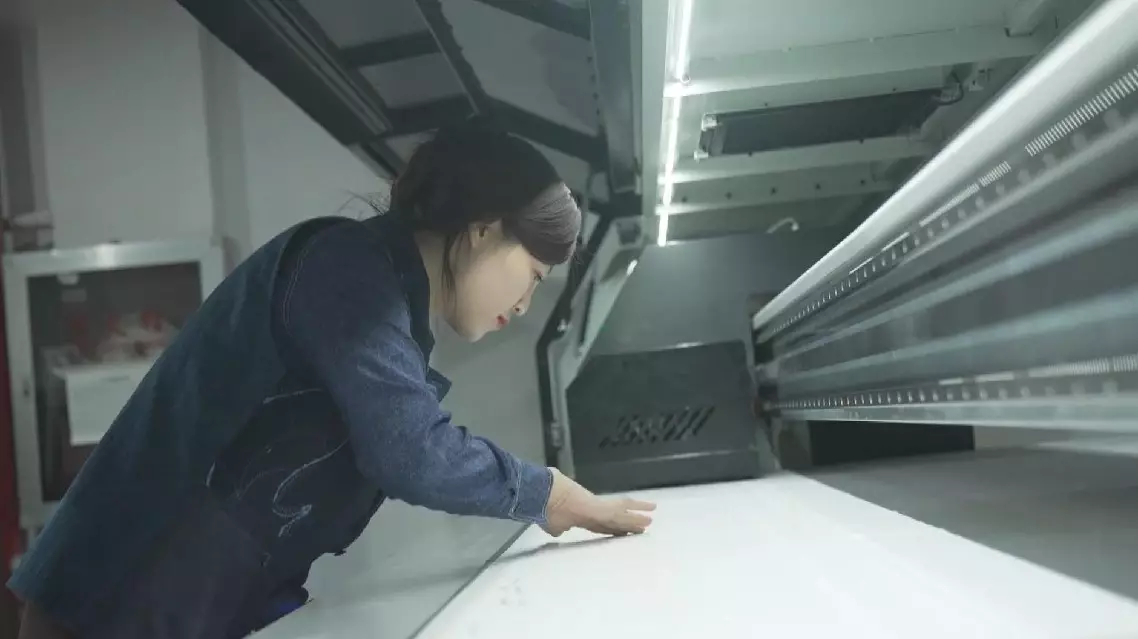
Digital spray printing technology revolutionizes traditional wax printing
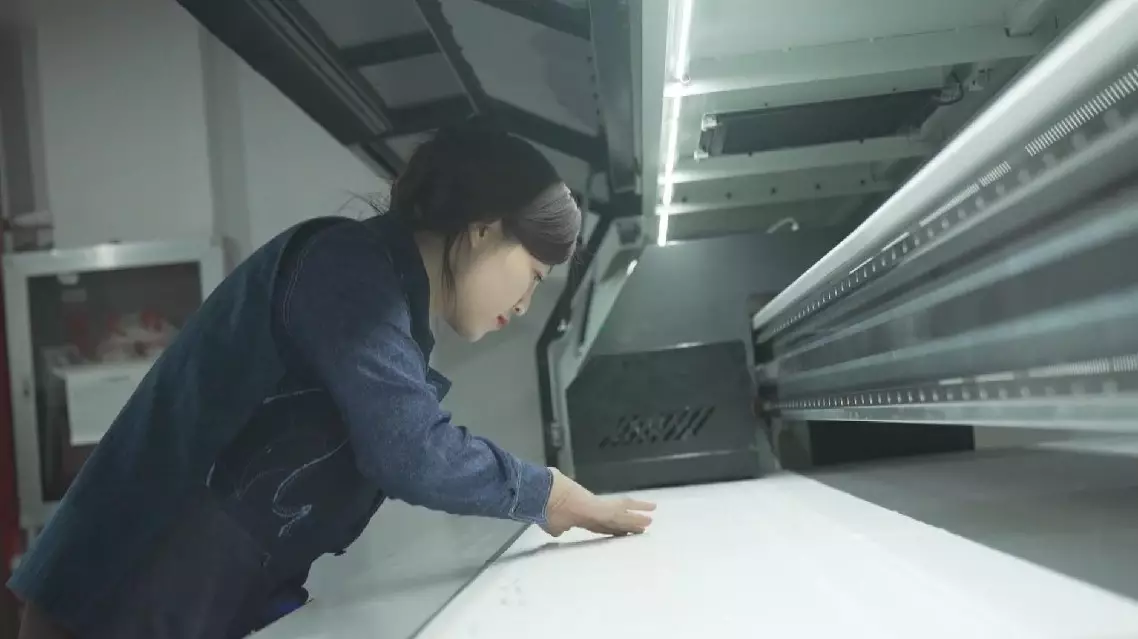
Digital spray printing technology brings revolutionary transformation to traditional wax printing