Skip to Content Facebook Feature Image

China's battery recycling market soars as power battery retirements surge

China

China

China

China's battery recycling market soars as power battery retirements surge

2024-11-24 19:04 Last Updated At:23:17

The large-scale retirement of power batteries continues to attract numerous enterprises to the battery recycling industry, with the market size projected to surpass 100 billion yuan (approximately 138 billion U.S. dollars) by 2030.

In 2023, the total volume of retired power batteries exceeded 580,000 tons, according to the China Society of Automotive Engineers. This growing volume has drawn various companies involved in recycling retired power batteries through cascade utilization and reprocessing cycles.

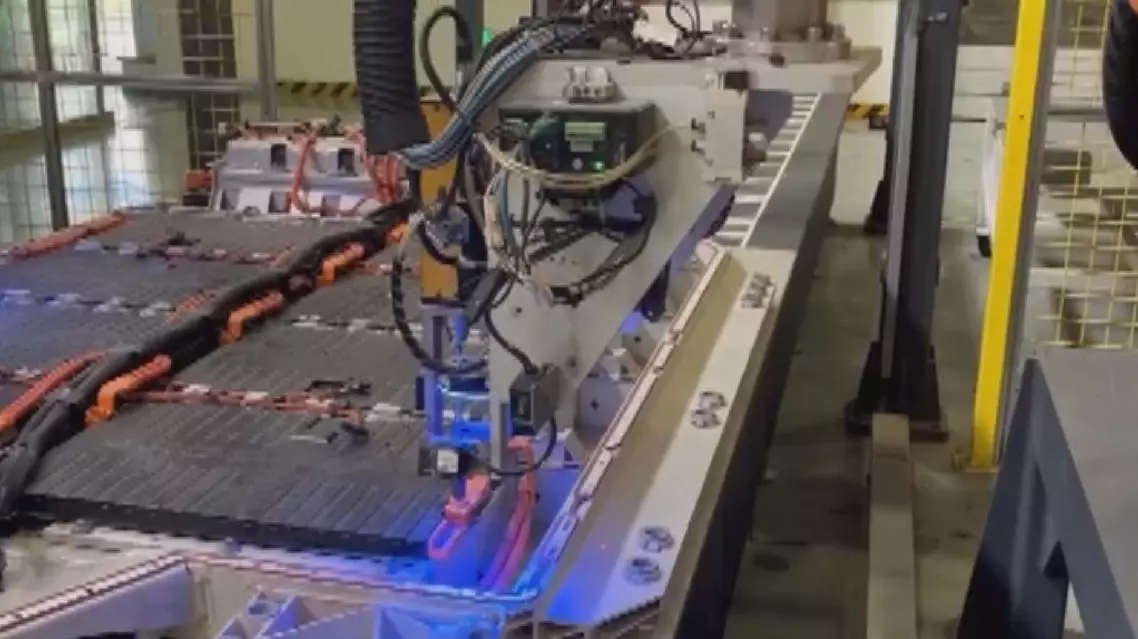
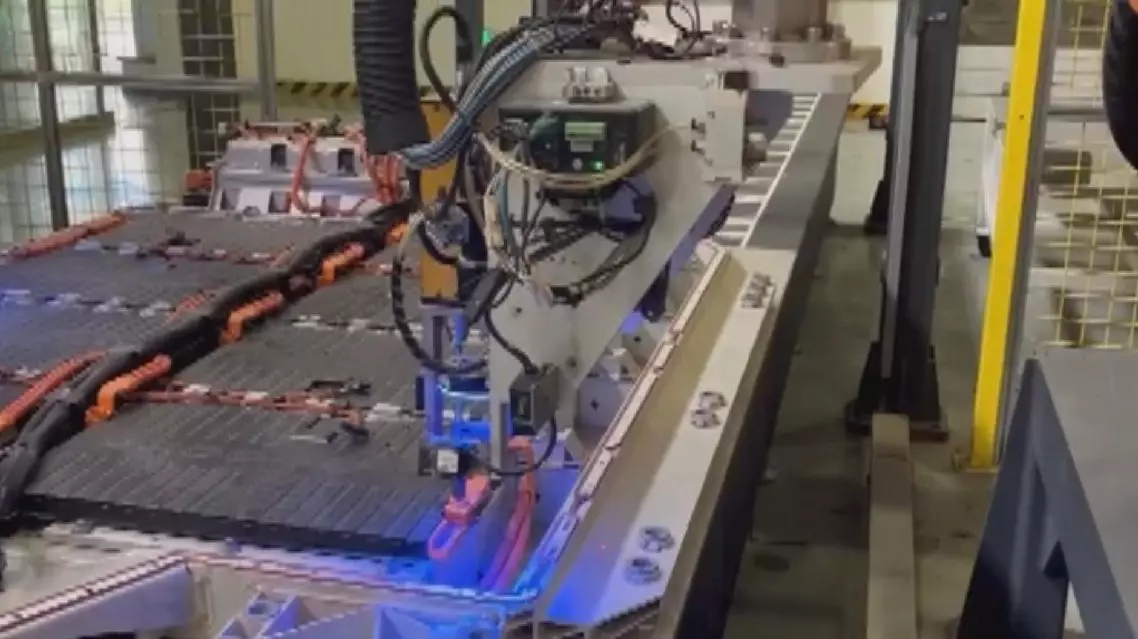
In Quzhou, eastern China's Zhejiang Province, the recycled battery packs will be disassembled, with the battery units that show better performance being reexamined and selected for reassembly into new batteries that meet the demands of cascade utilization.

"We will collaborate with partners to gather data on batteries and assess their quality to determine whether they can be used in cascade utilization. The batteries repurposed for cascade utilization are reassembled for applications such as pallet trucks, forklift trucks in factories, and energy storage or solar power integration products," said Bao Wei, manager of a recycling science company in Zhejiang Province.

Many companies in related industries have reported an annual business growth of around 30 percent, accelerating their expansion both domestically and internationally.

"We have two production plants, one in Xiamen and the other in Ganzhou. Both are focused on subdivided sectors that form a closed-loop industrial chain," said Zhu Xiaoming, business director of a recycling company in Xiamen City, east China's Fujian Province.

If retired power batteries do not meet the criteria for cascade utilization, they are sent for reprocessing. In Jingmen, central China's Hubei Province, a battery reprocessing company established last year is capable of processing around 20,000 tons of retired batteries annually. "After separation, the recycling rate of materials increases to over 98 percent. We can completely utilize all of the valuable elements in the batteries," said Wang Jintao, manager of a new material company in Hubei.

According to the manager of this company, the raw materials for their reprocessed batteries mainly come from waste generated by battery manufacturers. The processing capacity of the reprocessing industry currently exceeds the volume of retired batteries available.

"The industry has prepared well in advance to respond to the future boom in battery retirements," said Wang Jintao, manager of a new material company in Hubei.

Latest data shows that the recycling and reuse market for waste batteries is on the rise. It is estimated that the total capacity for cascade utilization and reprocessing in China has surpassed 800,000 tons and 1.8 million tons per year, respectively.
China's battery recycling market soars as power battery retirements surge
China's battery recycling market soars as power battery retirements surge


China's battery recycling market soars as power battery retirements surge
China's battery recycling market soars as power battery retirements surge
China will strengthen fiscal and financial coordination to amplify policy effectiveness, experts said as the draft central and local budgets for 2026 were unveiled on Friday at the ongoing fourth session of the 14th National People's Congress.

According to the draft central and local budgets for 2026, 1.3 trillion yuan (190 billion U.S. dollars) of ultra-long special treasury bonds will be issued to provide continued support for the implementation of major national strategies and security capacity-building in key areas and for large-scale equipment upgrades and consumer goods trade-in programs.

Ultra-long special treasury bonds totaling 800 billion yuan will be allocated to support the implementation of major national strategies and security capacity-building in key areas, and 250 billion yuan in ultra-long special treasury bonds will be earmarked for consumer goods trade-in programs.

The country will refine these programs in terms of their scope and subsidy standards, and continue to support the scrapping and replacement of automobiles, home appliance trade-in schemes, and purchases of new digital and smart products.

China will also set up a 100-billion-yuan fiscal-financial coordination fund to boost domestic demand. The fund will support consumption and private investment through loan interest subsidies, financing guarantee, and risk compensation.

"Fiscal and monetary policies are the two major macroeconomic tools for macro-control, and their coordination is crucial. For instance, fiscal funds primarily serve as a guiding role, while financial institutions provide the capital. When fiscal guidance and financial resources are combined, the synergistic effect creates a result greater than the sum of its parts," said Yang Zhiyong, director of the Chinese Academy of Fiscal Sciences.

"By leveraging interest subsidies, we can mobilize substantial credit from financial institutions, thereby naturally stimulating consumption. The Ministry of Finance, in collaboration with the People's Bank of China, has introduced highly innovative measures, such as providing guarantees for the issuance of corporate bonds by small and medium-sized enterprises (SMEs), and compensating investors for losses. I believe the leveraging effect, making minimal efforts for maximum results, will become even more potent," said Yao Dongmin, director of the Center for China Fiscal Development under the Central University of Finance and Economics.

China's top legislature opened its annual session on Thursday morning at the Great Hall of the People in Beijing, with Chinese President Xi Jinping and other Party and state leaders attending the opening meeting alongside more than 2,700 NPC deputies. This year's NPC session is scheduled to run till March 12.

China to strengthen fiscal, financial coordination to amplify policy effectiveness: experts

China to strengthen fiscal, financial coordination to amplify policy effectiveness: experts

Recommended Articles