Efforts to combat desertification in the Taklamakan Desert, located in northwest China's Xinjiang Uygur Autonomous Region, are yielding remarkable results, as local authorities deploy innovative methods to build sand stabilization barriers.
In Pishan and Yecheng counties, multiple initiatives are transforming arid lands into productive and sustainable zones, addressing both environmental and economic challenges.
High-standing sand fences are being erected along a 32.85-kilometer stretch of the desert edge. These barriers, standing 1.2 meters high, are made from water reed grass mats fixed onto pre-installed wooden stakes.
The stakes are treated with asphalt to prevent underground alkalinity damage, ensuring durability. These barriers effectively slow wind speeds, reduce sand movement and shield plants and critical infrastructure such as railways.
Checkerboard sand barriers, spanning 4.3 million square meters in Yecheng County, serve as an additional layer of protection. Constructed manually, each grid of the barrier is meticulously assembled using reeds that are firmly embedded into the sand. These grids not only stabilize the desert surface but also effectively decelerate the shifting of sand dunes.
The grass grids last four to five years where afforestation efforts and economic vegetation cultivation take root.
The sand barriers of Yecheng are part of a three-tier defense strategy. The first line consists of grass grids, 24 kilometers long and 180 meters wide, as initial barriers. The second line involves building areas for desert sightseeing and photovoltaic bases, and planting drought-resistant trees such as Populus Euphratica and desert dates, which not only stabilize the sand but also yield income-generating products. The third line is dense forest belts that shield nearby oases and communities. These efforts have resulted in significant economic benefits.
The cultivation of drought-resistant plants has created 820,000 mu (approximately 54,667 hectares) of orchards composed of cash crops such as walnuts and pomegranates, and these crops are major contributors to local incomes and exports.
Photovoltaic installations are planned to generate clean energy while further stabilizing the desert. Additionally, the projects have also created job opportunities for residents of nearby towns.
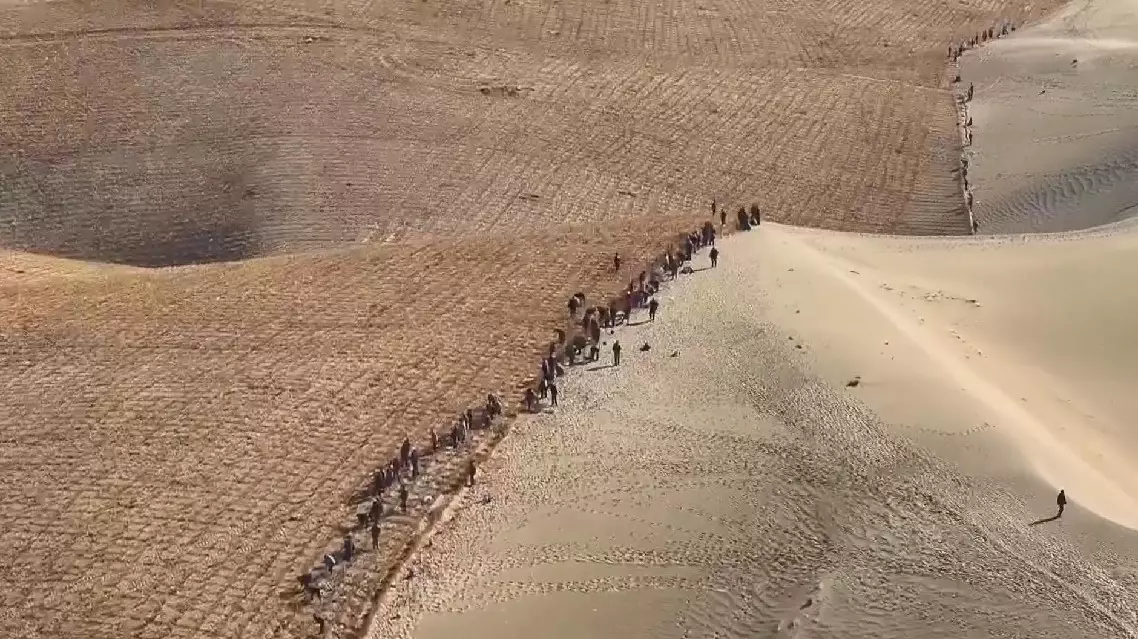
Xinjiang builds sand fences to hold back desertification, boost local economy