The 2024 Shanghai Tower Vertical Marathon, the world's tallest and largest vertical race, took place on Sunday, attracting more than 2,000 athletes from over 20 countries and regions.
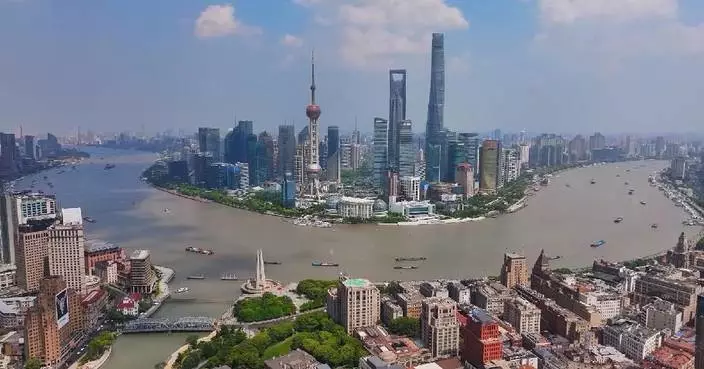
The event was held in Shanghai Tower, China's tallest skyscraper. Participants in the full individual race had to climb 3,398 steps to reach the finish line at the 119th floor at a height of 552 meters.
Olympic cycling champion Zhong Tianshi led a group of front runners to start from the ground floor at 08:20, and then the individual full course runners set off in turn at 30-second intervals.
In the men's competition, Japan's Ryoji Watanabe emerged victorious, completing the climb in 18 minutes. The Women's Individual Championship was claimed by Croatia's Tea Faber, who conquered the stairs in 21 minutes and 26 seconds.
"[It's a] very very long race. The track is very long. I had to keep my mind calm to climb my way up," said Watanabe.
"This is my fourth time here, and I won two times. I like Shanghai," said Italian female mountain runner Valentina Belotti who took the second place in the race.
As a self-owned brand event created by Shanghai, the Shanghai Tower Vertical Marathon was founded in 2017 and is currently the top-level event with highest competition building in the world.
In order to motivate more Chinese runners and marathon enthusiasts to participate, the event also set up a special award for Chinese athletes and the shorter "fun race" for amateur runner, which took climbers to the 22nd floor.
"I kept climbing without a stop. It's really a self-challenge, giving me the strength to go higher," said Huang Jing, a participant.

Int'l elite vertical marathoners contest in China's tallest skyscraper

Int'l elite vertical marathoners contest in China's tallest skyscraper

Int'l elite vertical marathoners contest in China's tallest skyscraper
Serbian officials and scholars expect that President Aleksandar Vucic's visit to China will further cement the ironclad friendship between the two countries and open up new avenues for cooperation.
At the invitation of President Xi Jinping, Serbian President Vucic arrived in Beijing on Sunday for a state visit to China from May 24 to 28. During the visit, the two heads of state will exchange views on bilateral relations, as well as international and regional issues of mutual interest.
As the first European country that has agreed to jointly build a community with a shared future for the new era with China, Serbia is an important partner for China in Southeast Europe. According to high-level Serbian officials, the partnership could expand even further.
"I think that the most important one, apart [from] the infrastructure, will be scientific cooperation and widening the existing cooperation in each field, from infrastructure to culture. Our anchored friendship could become a role model for everyone else," said Marina Ragus, deputy speaker of Serbia's National Assembly.
Bojan Lalic, director of the Belt and Road Institute in Belgrade, anticipates that actions following the two presidents' discussions can bring stability to Serbia's economic and industrial development.
"We expect President Vucic and President Xi to have fruitful discussions, but also some following steps that will bring stability to our economy, to our industry. I truly believe that when speaking about the future, we are speaking about young people, (which) means education, research, science -- those are fields that I believe are fundamental for our exchange, for our future cooperation, and for our win-win achievements and success," said Lalic.
Ljubodrag Savic, a professor at the Faculty of Economy of the University of Belgrade, highlighted the importance of growing trade between the two countries. Since the signing of a bilateral free trade agreement in 2023, exports from Serbia to China nearly doubled, from 1.2 billion U.S dollars the year the agreement was signed to 2 billion U.S. dollars in 2025.
"China treats all countries equally, regardless of their size or so-called importance, maintaining friendly relations with countries around the world. The free trade agreement signed between Serbia and China grants Serbia preferential treatment. Most Serbian products can be exported to China almost duty-free. China is a truly valuable friend to Serbia," said the professor.
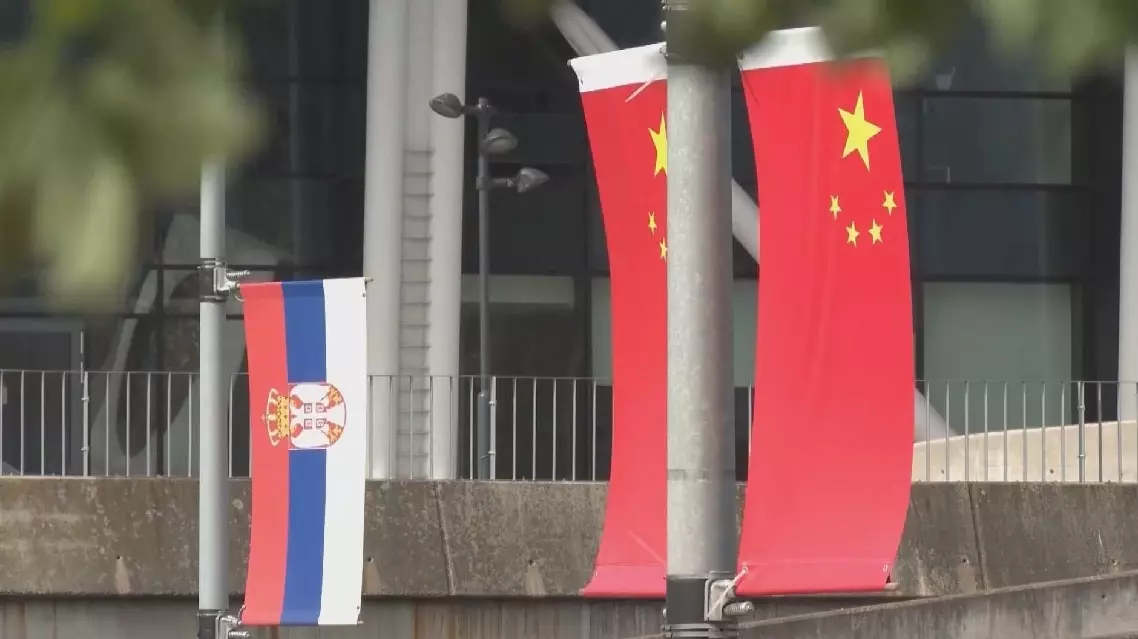
Serbian experts predict fruitful outcomes from Vucic's visit to China