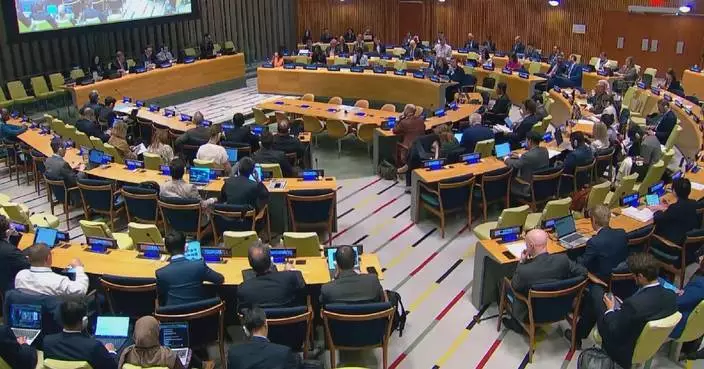
The week-long fifth and final U.N. Intergovernmental Negotiating Committee (INC-5) meeting opened on Monday in Busan, South Korea, aiming to securing an international treaty to curb plastic pollution.
In March 2022, at the resumed fifth session of the UN Environment Assembly (UNEA-5.2), a historic resolution was adopted to develop an international legally binding instrument on plastic pollution.
The resolution requested the Executive Director of the UN Environment Programme (UNEP) to convene an Intergovernmental Negotiating Committee (INC) to develop "the instrument," which is to be based on a comprehensive approach that addresses the full life cycle of plastic, including its production, design, and disposal.
The INC began its work during the second half of 2022, with the ambition to complete the negotiations by the end of 2024.
From November 2022 to April this year, four sessions of the INC were held.
At the ongoing meeting in Busan, negotiators gathers in a final push to create the treaty to address the global crisis of plastic pollution.
The ever-increasing plastic pollution, one of the most serious environmental problems facing mankind, has sparked widespread concerns among countries, and has led to an urgent need to find alternatives to plastic.
According to data released by the UNEP, with the recycling rate less than 10 percent, approximately 7 billion of the 9.2 billion tonnes of plastic produced from 1950-2017 became plastic waste, ending up in landfills or dumped. This does not just have a huge effect on the environment, but on human health as well.
Every year, more than 400 million tonnes of plastic is produced worldwide, one third of which is used just once, said the UNEP.
According to estimates, an equivalent of over 2,000 garbage trucks full of plastic is dumped into the world's oceans, rivers, and lakes every day.
Every year, about 19 to 23 million tonnes of plastic waste leaks into aquatic ecosystems every year, polluting lakes, rivers and seas.
In addition, plastic production also contributes to more than 3 percent of global greenhouse gas emissions, exacerbating the climate crisis.
So far, more than 140 countries and regions across the globe have formulated policies to ban or impose restrictions on the use of plastics.
Analysts say that finding alternatives to plastic is an effective way to cut down the use of plastics and alleviate plastic pollution at the source, and it is also a top priority for the world to cope with the crisis brought by plastic pollution.
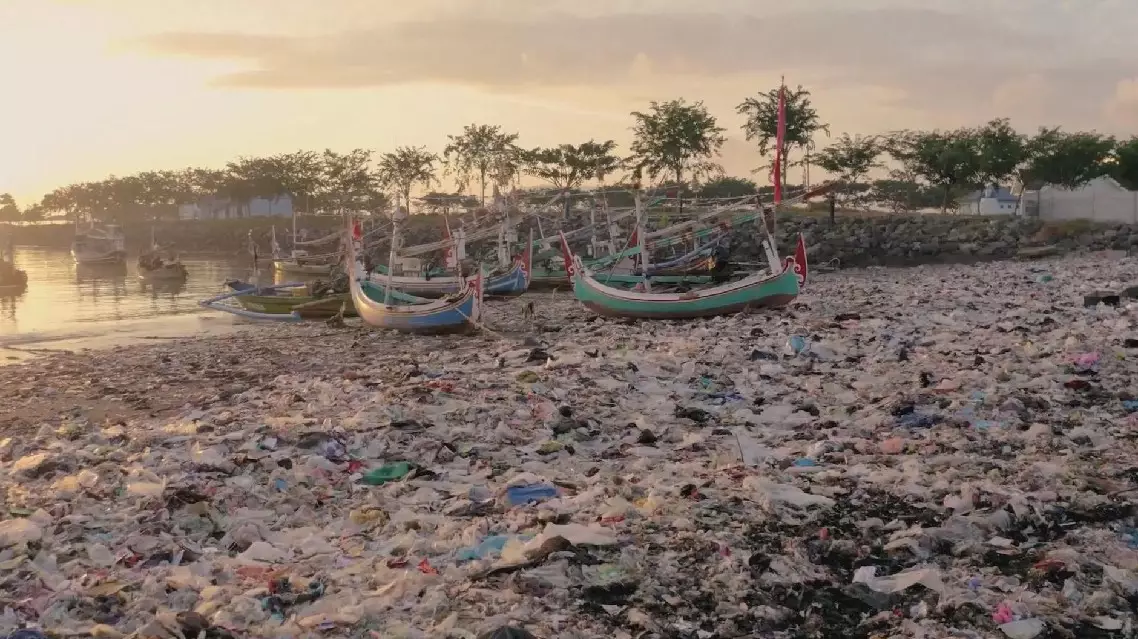
5th UN plastics treaty talks begin in South Korea
The international community on Thursday continued to lash out at Israeli National Security Minister Ben-Gvir for releasing a video which mocks the participants of the Global Sumud Flotilla.
On Thursday local time, the Israeli Foreign Ministry issued a statement saying that all foreign activists who had recently participated in the flotilla had been expelled from the country, and that Israel would not tolerate any violations of the maritime blockade of the Gaza Strip.
Hundreds of members from a Gaza-bound aid flotilla were brought to Israel's Ashdod Port on Wednesday, as Ben-Gvir released the video showing some of them shackled and forced to the ground.
In the video, released by Ben-Gvir on his social media channels, dozens of activists are shown kneeling on the floor, bent forward with their heads down and hands bound behind their backs with zip ties, as the Israeli national anthem is played loudly over speakers.
Organizers of the Global Sumud Flotilla said Israeli naval vessels intercepted all ships in the convoy in international waters, about 250 nautical miles off the coast of Gaza. According to the organizers, 428 activists were "kidnapped" by Israel after the interception began on Monday morning.
On Thursday, the British government issued a statement saying that the Britain had summoned the charge d'affaires of the Israeli Embassy that day to express strong denunciation of the video released by Ben-Gvir on Wednesday.
Britain accused the relevant actions of violating the most basic principles of respect for human dignity and demanded that the Israeli government provide an explanation regarding the detention.
Italian Deputy Prime Minister and Minister of Foreign Affairs and International Cooperation Antonio Tajani on Thursday said on social media that he had requested the European Union (EU) to impose sanctions on Ben-Gvir.
Tajani said that the Israeli side detained activists in international waters and subjected them to harassment and humiliation, describing such actions as "unacceptable" and "a violation of the most basic human rights."
On the same day, the Polish foreign affairs ministry issued a statement saying that Poland had summoned the charge d'affaires of the Israeli Embassy in Poland, demanding that Israel launch an investigation into the detention and issue an official apology to the detained activists.
Earlier that day, Polish Deputy Prime Minister and Foreign Minister Radoslaw Sikorski decided to seek a ban on Ben-Gvir's entry into Poland.
On Thursday, Polish Minister of Interior and Administration Marcin Kierwinski also said that he had ordered the initiation of formal procedures to designate Ben-Gvir as a persona non grata.
Additionally, on Thursday, Danilo Della Valle, a member of the European Parliament, said that he had written to European Council President Antonio Costa, calling on the EU to impose sanctions on Ben-Gvir. The letter was co-signed by nearly 30 members of the European Parliament.
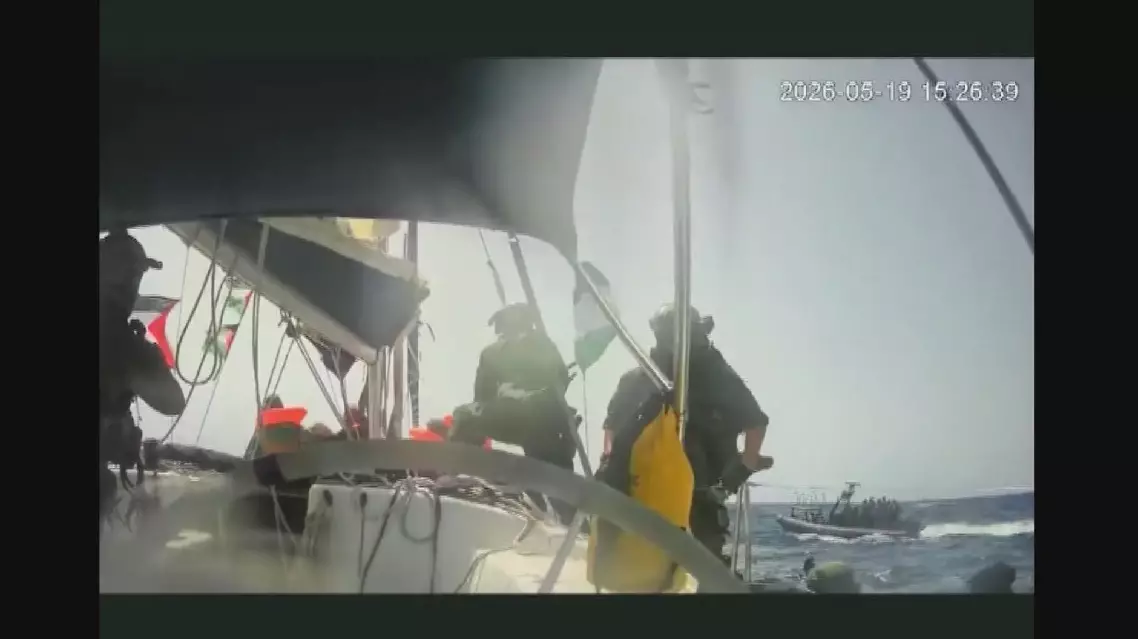
Int'l community continues to slam Israel for maltreating Gaza aid flotilla members