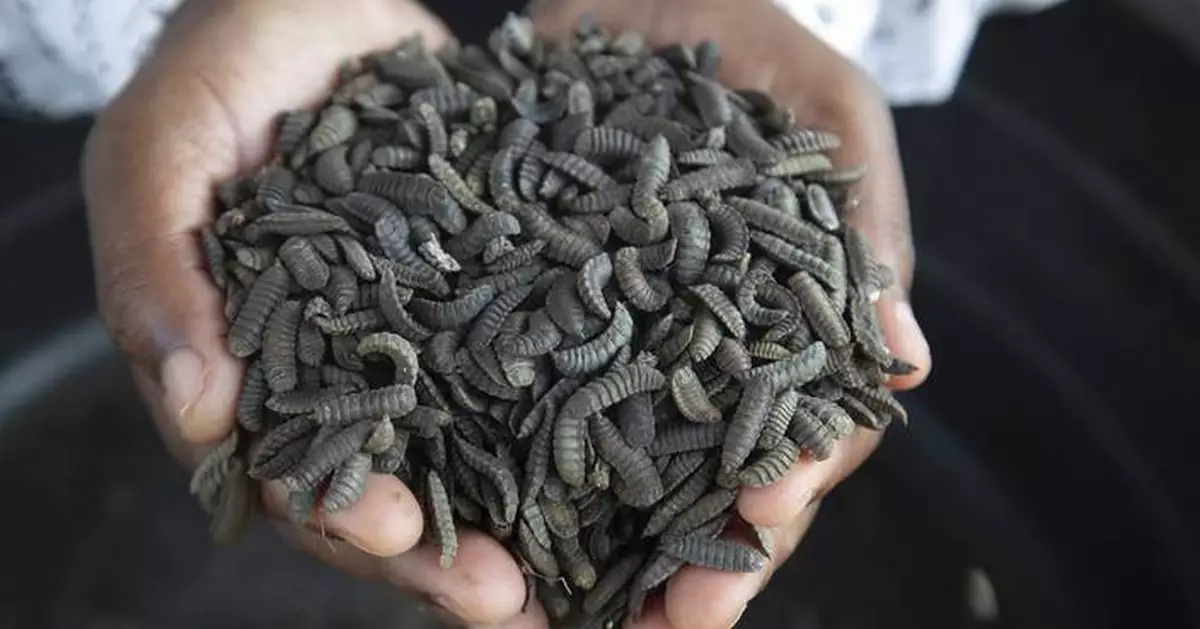
NYANGAMBE, Zimbabwe (AP) — At first, the suggestion to try farming maggots spooked Mari Choumumba and other farmers in Nyangambe, a region in southeastern Zimbabwe where drought wiped out the staple crop of corn.
After multiple cholera outbreaks in the southern African nation resulting from extreme weather and poor sanitation, flies were largely seen as something to exterminate, not breed.
Click to Gallery

Maggot breeder, Chemari Choumumba works at a production tank of maggots at her home in Chiredzi, Zimbabwe Wednesday, Sept. 18, 2024. (AP Photo/Aaron Ufumeli)
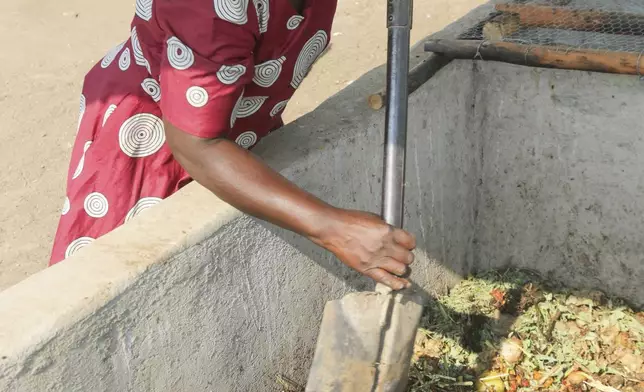
Maggot breeder, Chemari Choumumba works at a production tank of maggots at her home in Chiredzi, Zimbabwe Wednesday, Sept. 18, 2024. (AP Photo/Aaron Ufumeli)
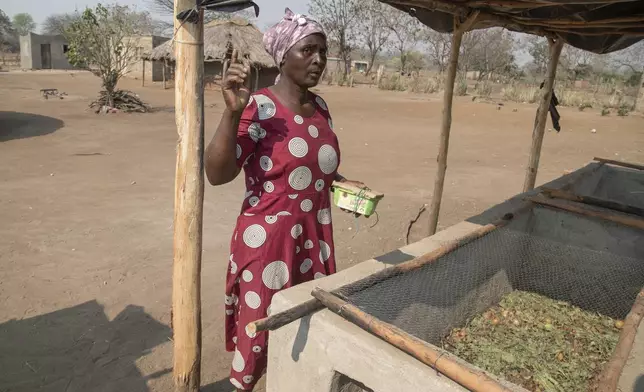
Maggot breeder, Chemari Choumumba stands next to a production tank of maggots at her home in Chiredzi, Zimbabwe Wednesday, Sept. 18, 2024. (AP Photo/Aaron Ufumeli)
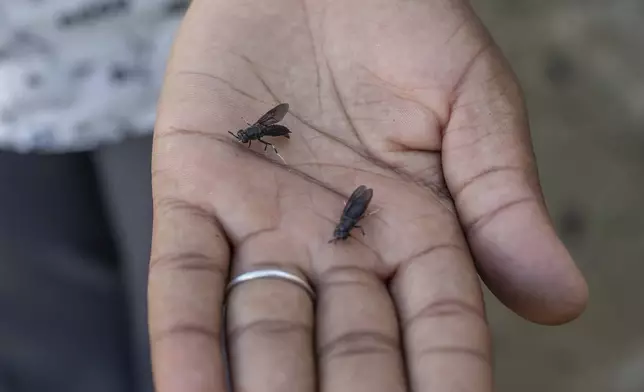
Maggots are held by a worker at a maggot breeding centre in Chinhoyi, Zimbabwe, Friday, Oct. 19, 2024. (AP Photo/Aaron Ufumeli)
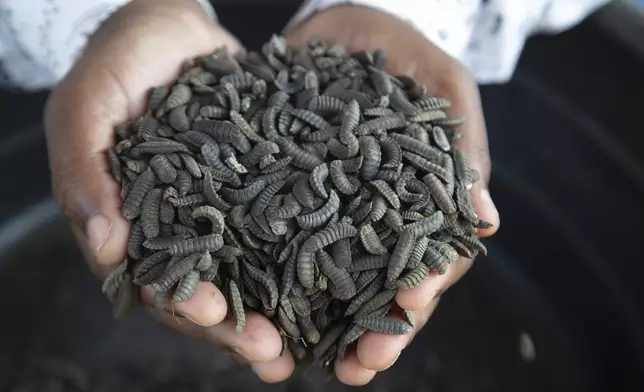
Maggots are held by a worker at a maggot breeding centre in Chinhoyi, Zimbabwe, Friday, Oct. 19, 2024. (AP Photo/Aaron Ufumeli)
“We were alarmed,” Choumumba said, recalling a community meeting where experts from the government and the United States Agency for International Development, or USAID, broached the idea.
People had flocked to the gathering in hope of news about food aid. But many stepped back when told it was about training on farming maggots for animal feed and garden manure.
“People were like, ‘What? These are flies, flies bring cholera’,” Choumumba said.
A year later, the 54-year-old walks with a smile to a smelly cement pit covered by wire mesh where she feeds rotting waste to maggots — her new meal ticket.
After harvesting the insects about once a month, Choumumba turns them into protein-rich feed for her free-range chickens that she eats and sells.
Up to 80% of chicken production costs were gobbled up by feed for rural farmers before they took up maggot farming. Many couldn’t afford the $35 charged by stores for a 50-kilogram (about 110-pound) bag of poultry feed, said Francis Makura, a specialist with a USAID program aimed at broadening revenue streams for farmers affected by climate change.
But maggot farming reduces production costs by about 40%, he said.
The maggots are offspring of the black soldier fly, which originates in tropical South America. Unlike the house fly, it is not known to spread disease.
Their life cycle lasts just weeks, and they lay between 500 and 900 eggs. The larvae devour decaying organic items — from rotting fruit and vegetables to kitchen scraps and animal manure — and turn them into a rich protein source for livestock.
“It is even better than the crude protein we get from soya,” said Robert Musundire, a professor specializing in agricultural science and entomology at Chinhoyi University of Technology in Zimbabwe, which breeds the insects and helps farmers with breeding skills.
Donors and governments have pushed for more black soldier fly maggot farming in Africa because of its low labor and production costs and huge benefits to agriculture, the continent’s mainstay that is under pressure from climate change and Russia’s war in Ukraine.
In Uganda, the maggots helped plug a fertilizer crisis caused by the war in Ukraine. In Nigeria and Kenya, they are becoming a commercial success.
In Zimbabwe, the government and partners piloted it among farmers struggling with securing soya meal for their animals. A World Bank-led project later used it as a recovery effort for communities affected by a devastating 2019 cyclone.
Now it is becoming a lifesaver for some communities in the country of 15 million people where repeated droughts make it difficult to grow corn. It's not clear how many people across the country are involved in maggot-farming projects.
At first, “a mere 5%” of farmers that Musundire, the professor, approached agreed to venture into maggot farming. Now that’s up to “about 50%,” he said, after people understood the protein benefits and the lack of disease transmission.
The “yuck factor” was an issue. But necessity triumphed, he said.
With the drought decimating crops and big livestock such as cattle — a traditional symbol of wealth and status and a source of labor — small livestock like chickens are helping communities recover more quickly.
“They can fairly raise a decent livelihood out of the resources they have within a short period of time,” Musundire said.
It also helps the environment. Zimbabwe produces about 1.6 million tons of waste annually, 90% of which can be recycled or composted, according to the country’s Environmental Management Agency. Experts say feeding it to maggots can help reduce greenhouse emissions in a country where garbage collection is erratic.
At a plot near the university, Musundire and his students run a maggot breeding center in the city of 100,000 people. The project collects over 35 metric tons a month in food waste from the university’s canteens as well as vegetable markets, supermarkets, abattoirs, food processing companies and beer brewers.
“Food waste is living, it respires and it contributes to the generation of greenhouse gases,” Musundire said.
According to the U.N. Food and Agriculture Organization, food loss — which occurs in the stages before reaching the consumer — and food waste after sale account for 8% to 10% of greenhouse gas emissions globally, or about five times that of the aviation sector.
The university project converts about 20-30 metric tons of the waste into livestock protein or garden manure in about two weeks.
Choumambo said people often sneer as she goes around her own community collecting banana peels and other waste that people toss out at the market and bus station.
“I tell them we have good use for it, it is food for our maggots,” she said. She still has to contend with “ignorant” people who accuse maggot farmers of “breeding cholera.”
But she cares little about that as her farm begins to thrive.
From bare survival, it is becoming a profitable venture. She can harvest up to 15 kilograms (about 33 pounds) of maggots in 21 days, turning out 375 kilograms (826.7 pounds) of chicken feed after mixing it with drought-tolerant crops such as millets, cowpeas and sunflower and a bit of salt.
Choumambo sells some of the feed to fellow villagers at a fraction of the cost charged by stores for traditional animal feed. She also sells eggs and free-range chickens, a delicacy in Zimbabwe, to restaurants. She's one of 14 women in her village taking up the project.
“I never imagined keeping and surviving on maggots,” she said, taking turns with a neighbor to mix rotting vegetables, corn meal and other waste in a tank using a shovel.
“Many people would puke at the sight and the stench. But this is the sweet smell of food for the maggots, and for us, the farmers.”
The Associated Press receives financial support for global health and development coverage in Africa from the Gates Foundation. The AP is solely responsible for all content. Find AP’s standards for working with philanthropies, a list of supporters and funded coverage areas at AP.org.

Maggot breeder, Chemari Choumumba works at a production tank of maggots at her home in Chiredzi, Zimbabwe Wednesday, Sept. 18, 2024. (AP Photo/Aaron Ufumeli)
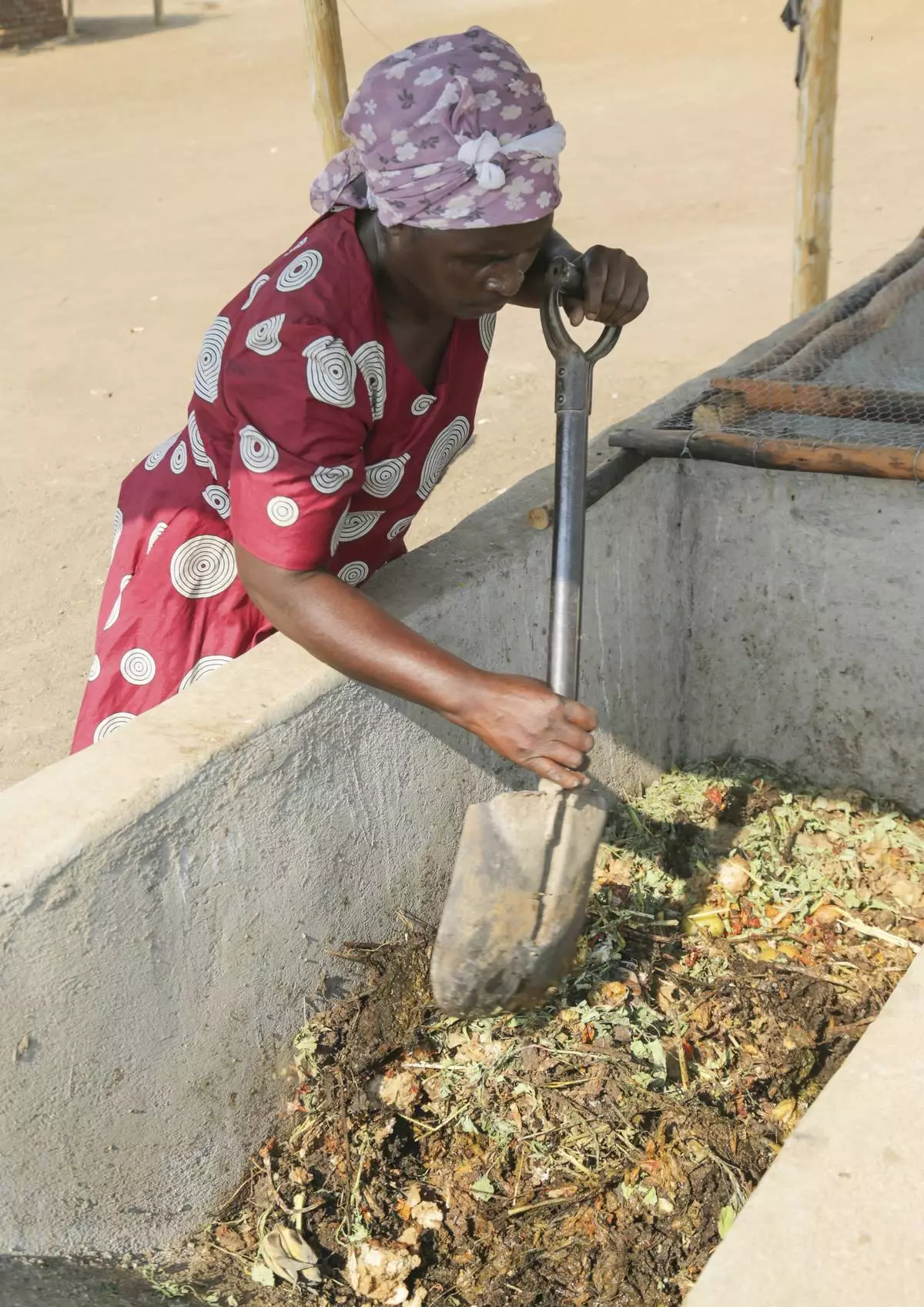
Maggot breeder, Chemari Choumumba works at a production tank of maggots at her home in Chiredzi, Zimbabwe Wednesday, Sept. 18, 2024. (AP Photo/Aaron Ufumeli)
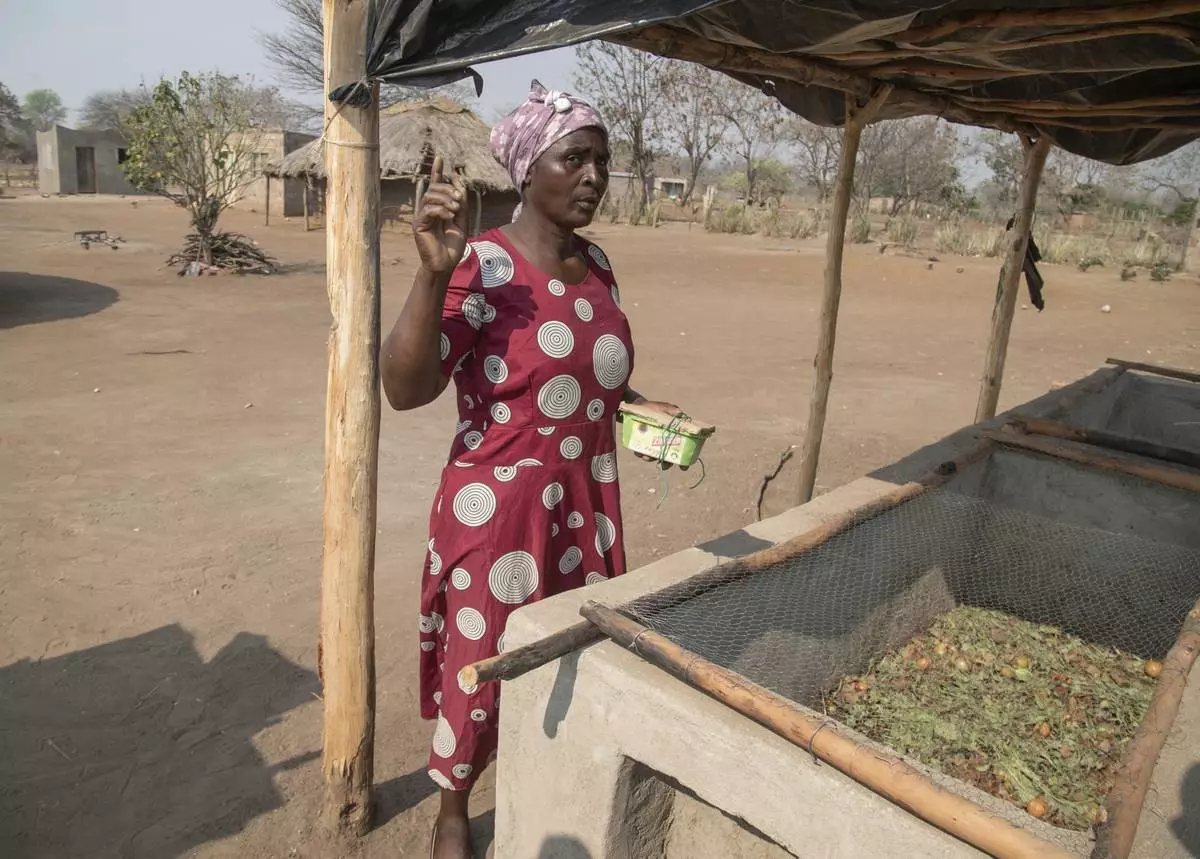
Maggot breeder, Chemari Choumumba stands next to a production tank of maggots at her home in Chiredzi, Zimbabwe Wednesday, Sept. 18, 2024. (AP Photo/Aaron Ufumeli)
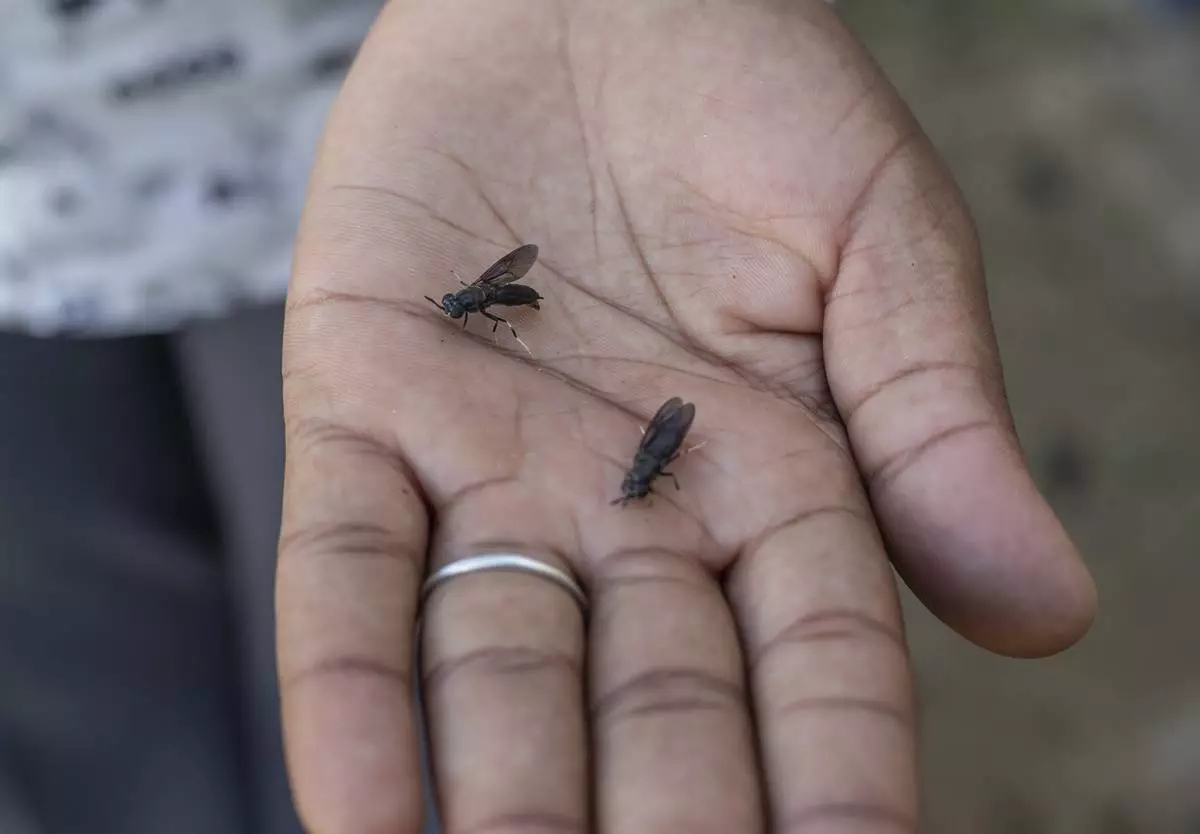
Maggots are held by a worker at a maggot breeding centre in Chinhoyi, Zimbabwe, Friday, Oct. 19, 2024. (AP Photo/Aaron Ufumeli)
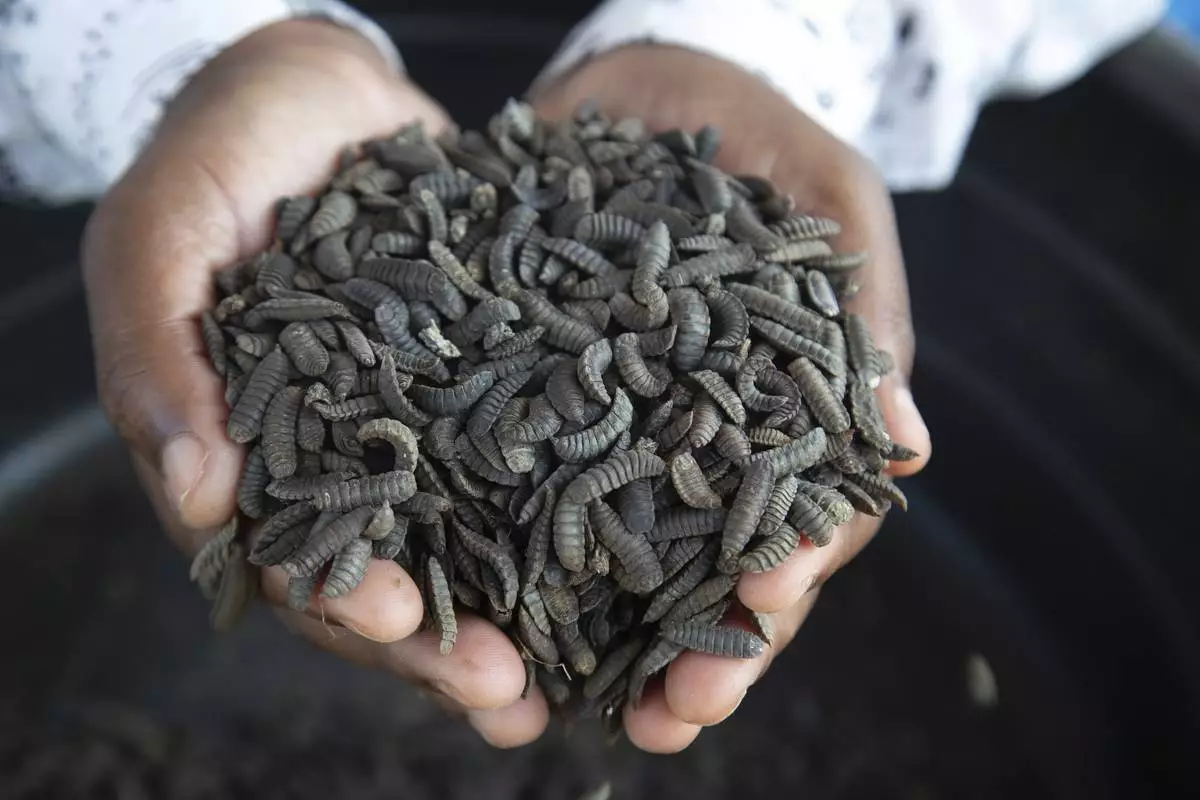
Maggots are held by a worker at a maggot breeding centre in Chinhoyi, Zimbabwe, Friday, Oct. 19, 2024. (AP Photo/Aaron Ufumeli)