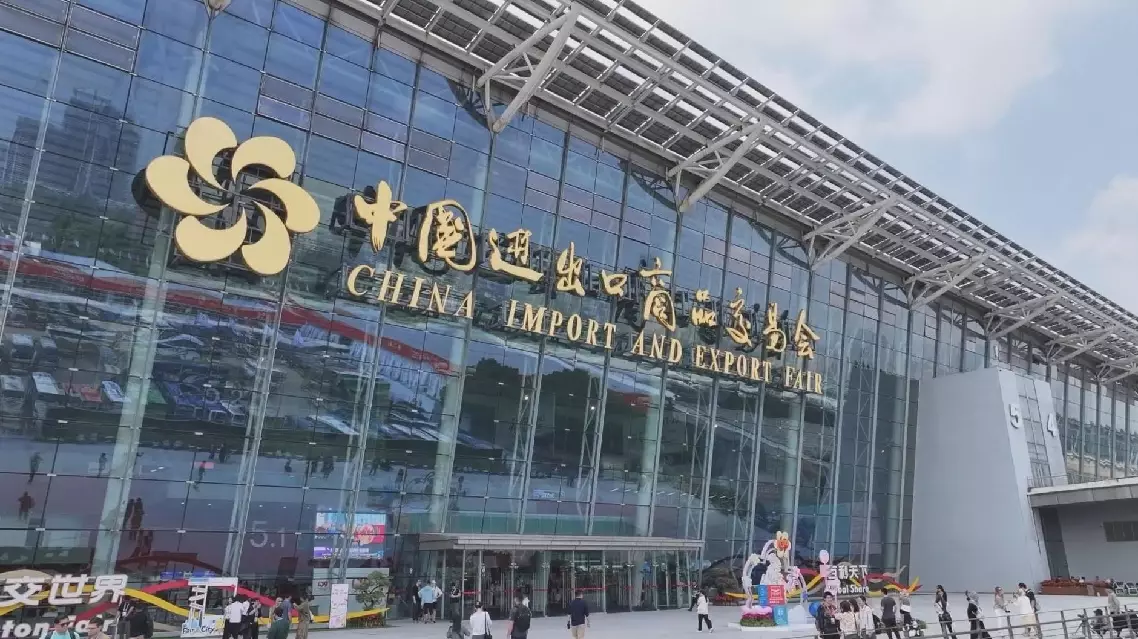
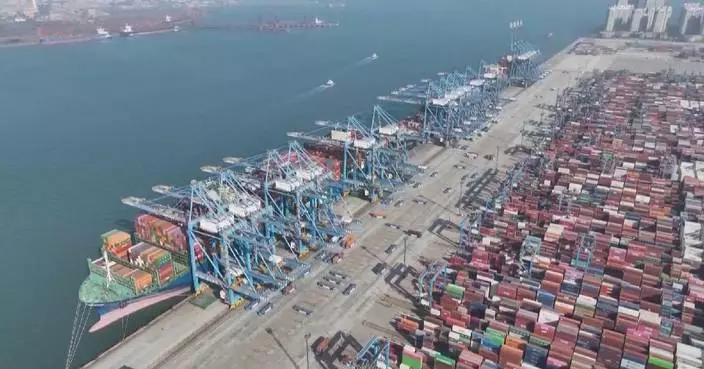
International companies at the ongoing China International Supply Chain Expo (CISCE) warned that efforts to break supply chains between major world markets, termed "decoupling," could have devastating effects on global trade and the course of globalization.
The second CISCE opened in Beijing on Tuesday, bringing together 620 companies and institutions from around the world to showcase their products, technologies and solutions.
At the expo, many cross-border enterprises were seen recruiting partners, demonstrating their belief in building up global supply chains. They emphasized that decoupling and breaking ties with China are simply unfeasible, and they are unwilling to pursue such paths.
"Without a strong multilateral system underpinning that, we can end up in fragmentation. That will cause some complications in the way which globalization will continue. But the wholesale rewiring of the world, which decoupling implies is even seen by those who were proposing originally as too hard and too difficult to actually pull off," said John Denton, Secretary General of the International Chamber of Commerce.
"Decoupling is definitely detrimental to globalization. But we are fighting. It proves that everybody needs each other. So, you cannot confine to your own resources, depend on your own businesses," said Rahamtalla M. Osman, permanent representative of the African Union (AU) to China.
Many global firms at the expo are moving toward further investment in China, in stark contrast to calls to back away. U.S. company GE Healthcare, which collaborates with ten major suppliers, noted that its network in China is expanding, with over 1,000 suppliers in the circle.
"Since we attended the first CISCE, we've invested 380 million yuan (about 52.4 million U.S. dollars) in Shanghai and 500 million yuan (about 69 million U.S. dollars) in Tianjin. Our factories in China are fully integrated into global supply chains and production systems," said Zhang Yihao, President and CEO of GE Healthcare China.
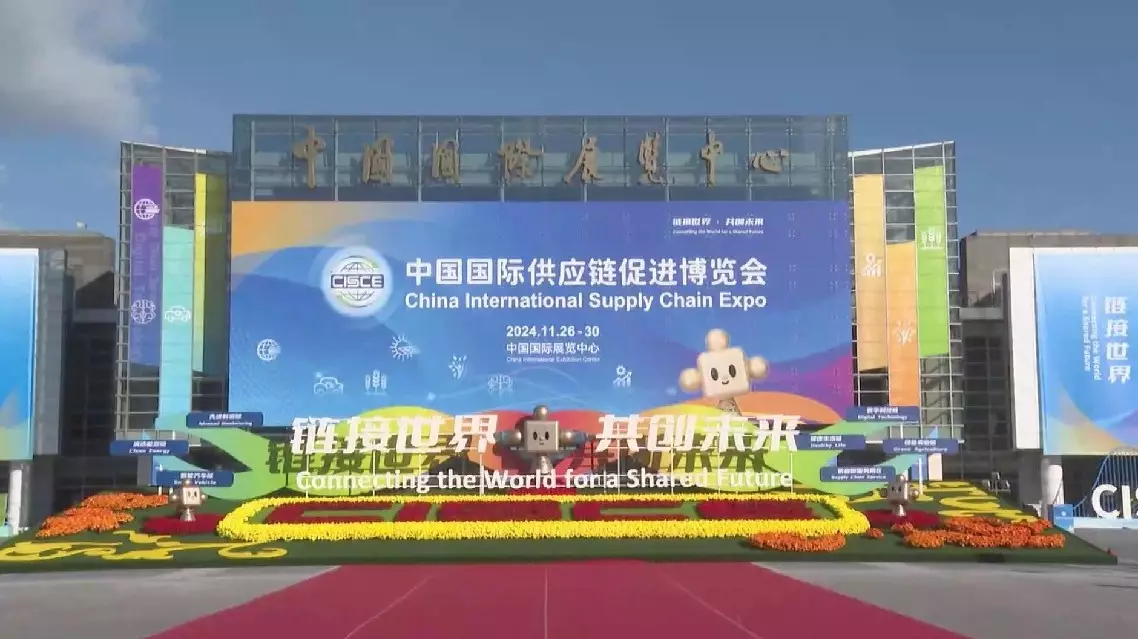
'Decoupling' rejected by cross-border companies at China supply chain expo