Skip to Content Facebook Feature Image

In Bolivia's scrappy highlands, proud Indigenous Cholas take the runway by storm

News

In Bolivia's scrappy highlands, proud Indigenous Cholas take the runway by storm
News

News

In Bolivia's scrappy highlands, proud Indigenous Cholas take the runway by storm

2024-11-30 14:59 Last Updated At:15:00

VIACHA, Bolivia (AP) — In the huddled markets, sprawling farms and pulsing parties of Viacha, a town southeast of Bolivia’s capital, it's typical for women to sport bowler hats, tiered skirts and fringed shawls.

What's less typical is for the fashion spotlight to turn to these outfits — worn by “Cholas,” Indigenous women from the highland Altiplano.

More Images
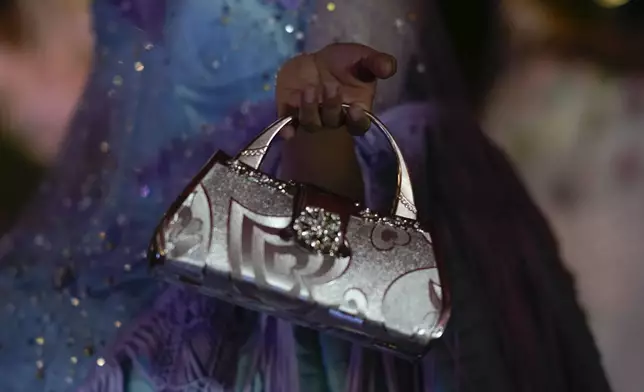
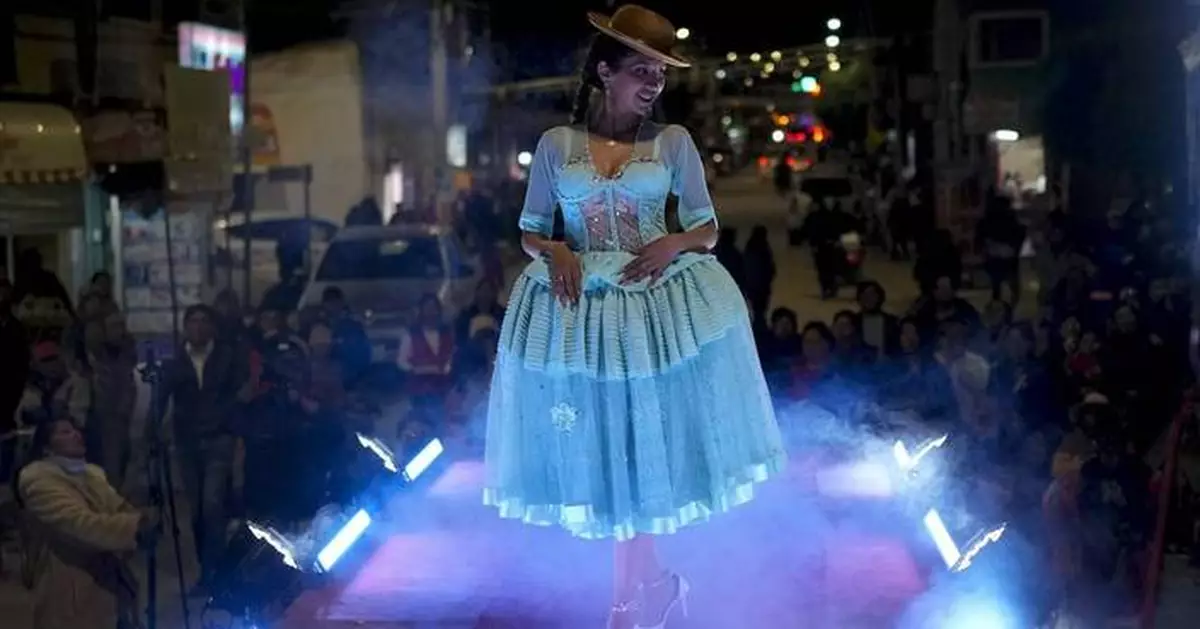
A woman models a creation by a local designer at a Chola fashion show, promoting the Andean style and beauty of Aymara women, in Viacha, Bolivia, Friday, Nov. 29, 2024. (AP Photo/Juan Karita)
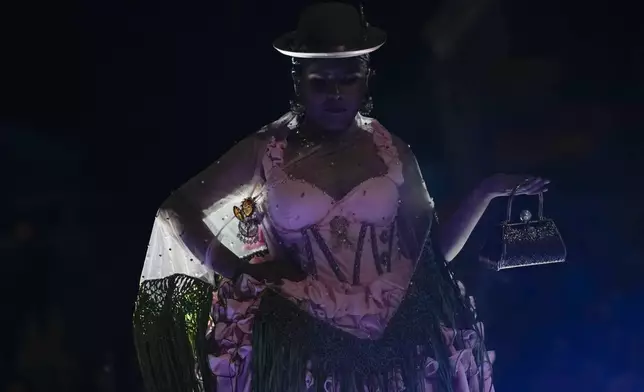
A woman models a creation by a local designer at a Chola fashion show, promoting the Andean style and beauty of Aymara women, in Viacha, Bolivia, Friday, Nov. 29, 2024. (AP Photo/Juan Karita)
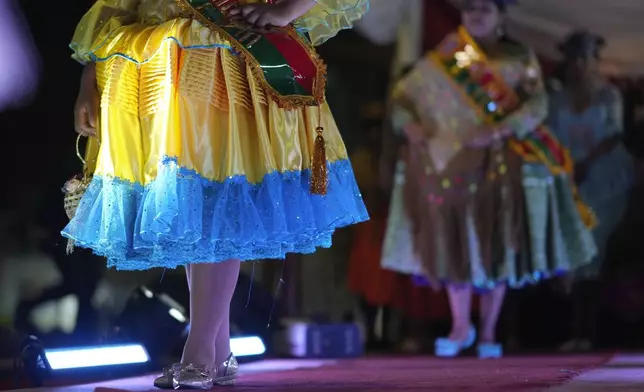
A woman models a creation by a local designer at a Chola fashion show, promoting the Andean style and beauty of Aymara women, in Viacha, Bolivia, Friday, Nov. 29, 2024. (AP Photo/Juan Karita)
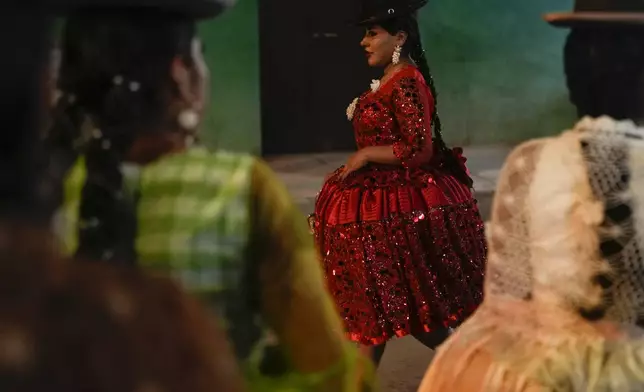
A woman models a creation by a local designer at a Chola fashion show, promoting the Andean style and beauty of Aymara women, in Viacha, Bolivia, Friday, Nov. 29, 2024. (AP Photo/Juan Karita)
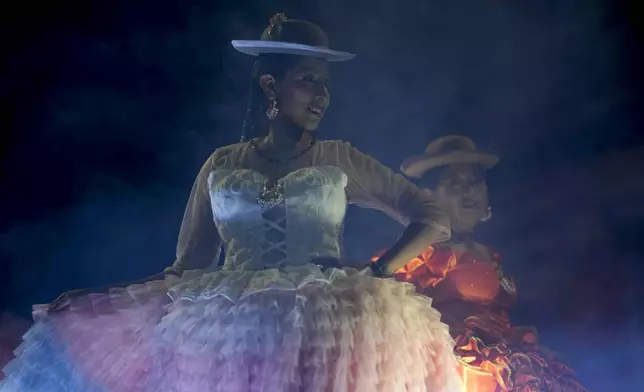
Women model creations by a local designer at a Chola fashion show, promoting the Andean style and beauty of Aymara women, in Viacha, Bolivia, Friday, Nov. 29, 2024. (AP Photo/Juan Karita)
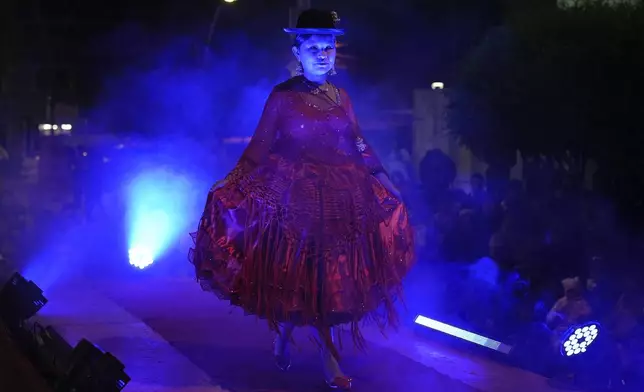
Women model creations by a local designer at a Chola fashion show, promoting the Andean style and beauty of Aymara women, in Viacha, Bolivia, Friday, Nov. 29, 2024. (AP Photo/Juan Karita)
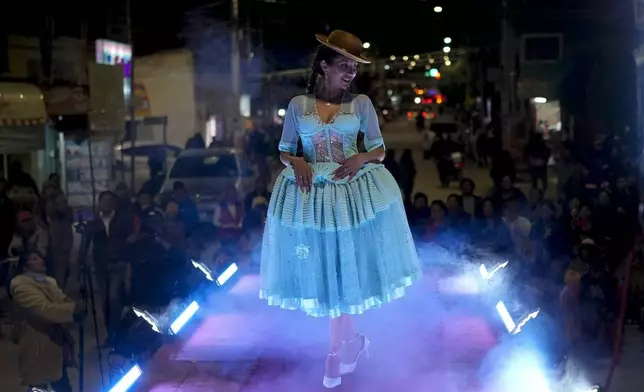
Women model creations by a local designer at a Chola fashion show, promoting the Andean style and beauty of Aymara women, in Viacha, Bolivia, Friday, Nov. 29, 2024. (AP Photo/Juan Karita)

Women model creations by a local designer at a Chola fashion show, promoting the Andean style and beauty of Aymara women, in Viacha, Bolivia, Friday, Nov. 29, 2024. (AP Photo/Juan Karita)

Women model creations by a local designer at a Chola fashion show, promoting the Andean style and beauty of Aymara women, in Viacha, Bolivia, Friday, Nov. 29, 2024. (AP Photo/Juan Karita)

Women model creations by a local designer at a Chola fashion show, promoting the Andean style and beauty of Aymara women, in Viacha, Bolivia, Friday, Nov. 29, 2024. (AP Photo/Juan Karita)

A woman models a creation by a local designer at a Chola fashion show, promoting the Andean style and beauty of Aymara women, in Viacha, Bolivia, Friday, Nov. 29, 2024. (AP Photo/Juan Karita)

A woman models a creation by a local designer at a Chola fashion show, promoting the Andean style and beauty of Aymara women, in Viacha, Bolivia, Friday, Nov. 29, 2024. (AP Photo/Juan Karita)

A woman models a creation by a local designer at a Chola fashion show, promoting the Andean style and beauty of Aymara women, in Viacha, Bolivia, Friday, Nov. 29, 2024. (AP Photo/Juan Karita)

A woman models a creation by a local designer at a Chola fashion show, promoting the Andean style and beauty of Aymara women, in Viacha, Bolivia, Friday, Nov. 29, 2024. (AP Photo/Juan Karita)

But late Friday in Viacha, some 22 kilometers (13 miles) from Bolivia's capital of La Paz — over 12,000 feet (3,650 meters) above sea level — awe-struck teenage boys and proud mothers throbbed the main square as the town’s dirt roadway was briefly transformed into a runway.

One by one, the girls from Viacha — mostly students between 15-25 years old — strutted down the catwalk to a surprising soundtrack of early 2000s American pop music. Street vendors hawked hot dogs and empanadas. Supporters cheered in Spanish and the Indigenous Aymaran language.

Wearing glittering shoes and brightly colored, bunched-out skirts called “polleras,” the amateur models of all heights and sizes twirled, tipped their hats and threw sultry glances at the crowd.

“Years ago, people would associate these skirts with the fields, they'd look down on us as rural peasants,” said Rogelia Canaviri, 42, who couldn't stop smiling as she watched her daughter, Carolina, stride down the runway in dangling pearl earrings, the sequins on her layer-cake red skirt catching the stage lights.

“It's something I'm proud of, to see my daughter and her friends enjoy what I've worn for work my whole life," she said, pointing to the wool shawl, velvet hat and lower-key beige pollera she had on — the same clothes, she said, she still wears to milk her cows and sell her cheese at open-air markets. Her own mother did the same.

Generations ago, the Aymara were subject to waves of conquest and dispossession, first by the Inca, then by the Spanish, who forced the Indigenous communities to abandon their traditional way of dressing and adopt the style then-popular in the court of Seville.

Legend has it that the jaunty felt bowler hat became critical to the get-up after being introduced by British railway workers in the 1920s.

Bolivia's whiter, more affluent population has used “Chola” — and its diminutive, “Cholita” — as dismissive racial epithets. But in recent decades that stigma has dissipated, with Indigenous Aymara proudly reclaiming the word and younger Bolivians rediscovering the charm of their mothers' and grandmothers' vibrant garments.

“I think the ‘Cholita’ has become something very interesting, very exciting in our current context,” said Brittany Cantuta Valeria, 21, a first-time model, her hat brimmed upward and cheeks flushed a reddish gold.

“We’re now at the point of being respected because of everything that’s been implemented, so I wear this to have fun, to show off, to go to parties and dances. I have nothing to do with working the fields.”

Most of the girls parading onstage Friday, in the show organized by the Viacha municipality, grew up during the tenure of former leftist President Evo Morales (2006-2019), the country’s first-ever Indigenous president whose championing of Bolivia's Indigenous majority earned him fervent support across the cinderblock and adobe homes of the Altiplano.

Morales instituted a new constitution, which, among other things, expanded recognition for Bolivia’s 36 ethnic groups. He promoted the teaching of Indigenous languages and boosted state funding for folkloric arts. More Chola runway shows and beauty contests cropped up, widening the reach of Bolivia's native highland culture.

But fashion fanfare was largely limited to La Paz, the seat of the government. Before Friday, the town of Viacha, like most of the other villages across these austere mountain-rimmed plains, had never taken its turn on the runway.

“I was really nervous but I realized this is the first time for all of us,” said 15-year-old Tomasa Ramirez. “I feel so pretty. Now I know it’s my dream to be a Cholita model.”

With Bolivia's economic crisis closing like a vise on families whose money has diminished in value while the cost of food has doubled, many girls said walking the show was no easy feat.

Top-notch velvet hats and shawls made from vicuña wool with silk fringes can fetch thousands of dollars. Polleras cost a few hundred dollars. Then there's the jewelry — ideally made of real gold, pearls and diamonds when worn to these kinds of formal events.

“This year there was no way I could have real ones,” said Julieta Mamani, 16, pointing to her gold-colored earrings. “I hope things will be different next year.”

Watching her 24-year-old daughter pose for selfies in her elaborate skirt, Canaviri, the dairy farmer, has another hope.

“I hope she doesn't like wearing pants,” she said of her daughter. “I tried on pants once in my life, and I felt naked. Never again.”

A woman models a creation by a local designer at a Chola fashion show, promoting the Andean style and beauty of Aymara women, in Viacha, Bolivia, Friday, Nov. 29, 2024. (AP Photo/Juan Karita)

A woman models a creation by a local designer at a Chola fashion show, promoting the Andean style and beauty of Aymara women, in Viacha, Bolivia, Friday, Nov. 29, 2024. (AP Photo/Juan Karita)

A woman models a creation by a local designer at a Chola fashion show, promoting the Andean style and beauty of Aymara women, in Viacha, Bolivia, Friday, Nov. 29, 2024. (AP Photo/Juan Karita)

A woman models a creation by a local designer at a Chola fashion show, promoting the Andean style and beauty of Aymara women, in Viacha, Bolivia, Friday, Nov. 29, 2024. (AP Photo/Juan Karita)

Women model creations by a local designer at a Chola fashion show, promoting the Andean style and beauty of Aymara women, in Viacha, Bolivia, Friday, Nov. 29, 2024. (AP Photo/Juan Karita)

Women model creations by a local designer at a Chola fashion show, promoting the Andean style and beauty of Aymara women, in Viacha, Bolivia, Friday, Nov. 29, 2024. (AP Photo/Juan Karita)

Women model creations by a local designer at a Chola fashion show, promoting the Andean style and beauty of Aymara women, in Viacha, Bolivia, Friday, Nov. 29, 2024. (AP Photo/Juan Karita)
Women model creations by a local designer at a Chola fashion show, promoting the Andean style and beauty of Aymara women, in Viacha, Bolivia, Friday, Nov. 29, 2024. (AP Photo/Juan Karita)
Women model creations by a local designer at a Chola fashion show, promoting the Andean style and beauty of Aymara women, in Viacha, Bolivia, Friday, Nov. 29, 2024. (AP Photo/Juan Karita)

Women model creations by a local designer at a Chola fashion show, promoting the Andean style and beauty of Aymara women, in Viacha, Bolivia, Friday, Nov. 29, 2024. (AP Photo/Juan Karita)

A woman models a creation by a local designer at a Chola fashion show, promoting the Andean style and beauty of Aymara women, in Viacha, Bolivia, Friday, Nov. 29, 2024. (AP Photo/Juan Karita)
A woman models a creation by a local designer at a Chola fashion show, promoting the Andean style and beauty of Aymara women, in Viacha, Bolivia, Friday, Nov. 29, 2024. (AP Photo/Juan Karita)

A woman models a creation by a local designer at a Chola fashion show, promoting the Andean style and beauty of Aymara women, in Viacha, Bolivia, Friday, Nov. 29, 2024. (AP Photo/Juan Karita)

A woman models a creation by a local designer at a Chola fashion show, promoting the Andean style and beauty of Aymara women, in Viacha, Bolivia, Friday, Nov. 29, 2024. (AP Photo/Juan Karita)
DUBAI, United Arab Emirates (AP) — U.S. President Donald Trump said Iran wants to negotiate with Washington after his threat to strike the Islamic Republic over its bloody crackdown on protesters, a move coming as activists said Monday the death toll in the nationwide demonstrations rose to at least 544.

Iran had no immediate reaction to the news, which came after the foreign minister of Oman — long an interlocutor between Washington and Tehran — traveled to Iran this weekend. It also remains unclear just what Iran could promise, particularly as Trump has set strict demands over its nuclear program and its ballistic missile arsenal, which Tehran insists is crucial for its national defense.

Meanwhile Monday, Iran called for pro-government demonstrators to head to the streets in support of the theocracy, a show of force after days of protests directly challenging the rule of 86-year-old Supreme Leader Ayatollah Ali Khamenei. Iranian state television aired chants from the crowd, who shouted “Death to America!” and “Death to Israel!”

Trump and his national security team have been weighing a range of potential responses against Iran including cyberattacks and direct strikes by the U.S. or Israel, according to two people familiar with internal White House discussions who were not authorized to comment publicly and spoke on condition of anonymity.

“The military is looking at it, and we’re looking at some very strong options,” Trump told reporters on Air Force One on Sunday night. Asked about Iran’s threats of retaliation, he said: “If they do that, we will hit them at levels that they’ve never been hit before.”

Trump said that his administration was in talks to set up a meeting with Tehran, but cautioned that he may have to act first as reports of the death toll in Iran mount and the government continues to arrest protesters.

“I think they’re tired of being beat up by the United States,” Trump said. “Iran wants to negotiate.”

He added: “The meeting is being set up, but we may have to act because of what’s happening before the meeting. But a meeting is being set up. Iran called, they want to negotiate.”

Iran through country's parliamentary speaker warned Sunday that the U.S. military and Israel would be “legitimate targets” if America uses force to protect demonstrators.

More than 10,600 people also have been detained over the two weeks of protests, said the U.S.-based Human Rights Activists News Agency, which has been accurate in previous unrest in recent years and gave the death toll. It relies on supporters in Iran crosschecking information. It said 496 of the dead were protesters and 48 were with security forces.

With the internet down in Iran and phone lines cut off, gauging the demonstrations from abroad has grown more difficult. The Associated Press has been unable to independently assess the toll. Iran’s government has not offered overall casualty figures.

Those abroad fear the information blackout is emboldening hard-liners within Iran’s security services to launch a bloody crackdown. Protesters flooded the streets in the country’s capital and its second-largest city on Saturday night into Sunday morning. Online videos purported to show more demonstrations Sunday night into Monday, with a Tehran official acknowledging them in state media.

In Tehran, a witness told the AP that the streets of the capital empty at the sunset call to prayers each night. By the Isha, or nighttime prayer, the streets are deserted.

Part of that stems from the fear of getting caught in the crackdown. Police sent the public a text message that warned: “Given the presence of terrorist groups and armed individuals in some gatherings last night and their plans to cause death, and the firm decision to not tolerate any appeasement and to deal decisively with the rioters, families are strongly advised to take care of their youth and teenagers.”

Another text, which claimed to come from the intelligence arm of the paramilitary Revolutionary Guard, also directly warned people not to take part in demonstrations.

“Dear parents, in view of the enemy’s plan to increase the level of naked violence and the decision to kill people, ... refrain from being on the streets and gathering in places involved in violence, and inform your children about the consequences of cooperating with terrorist mercenaries, which is an example of treason against the country,” the text warned.

The witness spoke to the AP on condition of anonymity due to the ongoing crackdown.

The demonstrations began Dec. 28 over the collapse of the Iranian rial currency, which trades at over 1.4 million to $1, as the country’s economy is squeezed by international sanctions in part levied over its nuclear program. The protests intensified and grew into calls directly challenging Iran’s theocracy.

Nikhinson reported from aboard Air Force One.

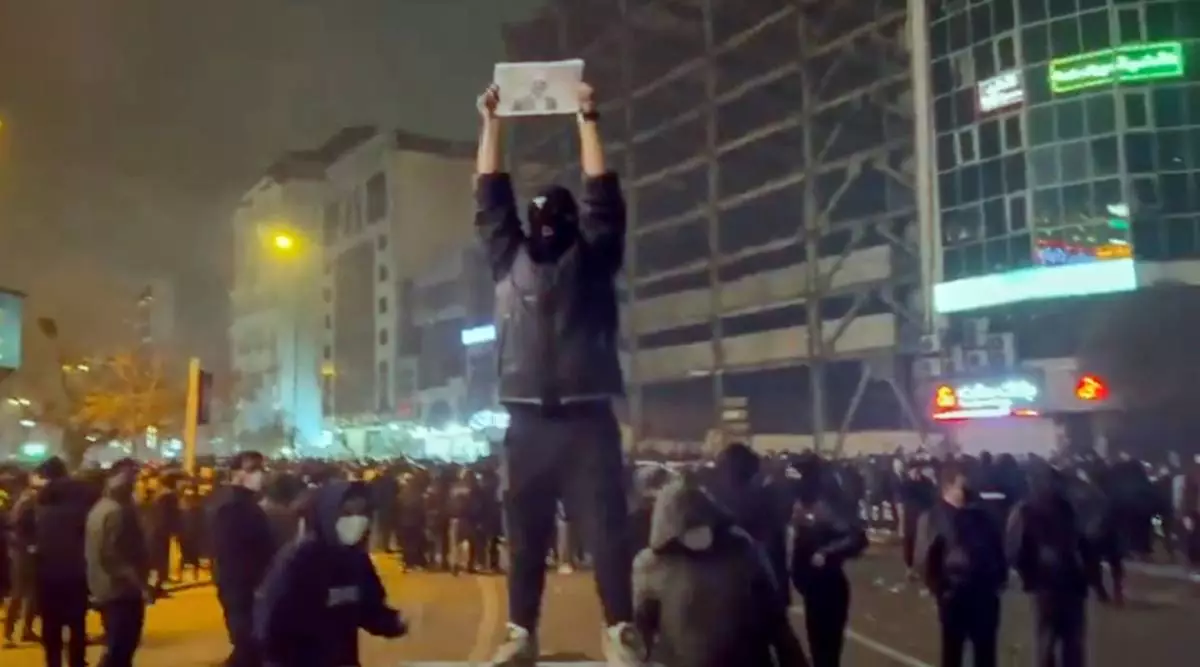
In this frame grab from video obtained by the AP outside Iran, a masked demonstrator holds a picture of Iran's Crown Prince Reza Pahlavi during a protest in Tehran, Iran, Friday, January. 9, 2026. (UGC via AP)

In this frame grab from video obtained by the AP outside Iran, a masked demonstrator holds a picture of Iran's Crown Prince Reza Pahlavi during a protest in Tehran, Iran, Friday, January. 9, 2026. (UGC via AP)

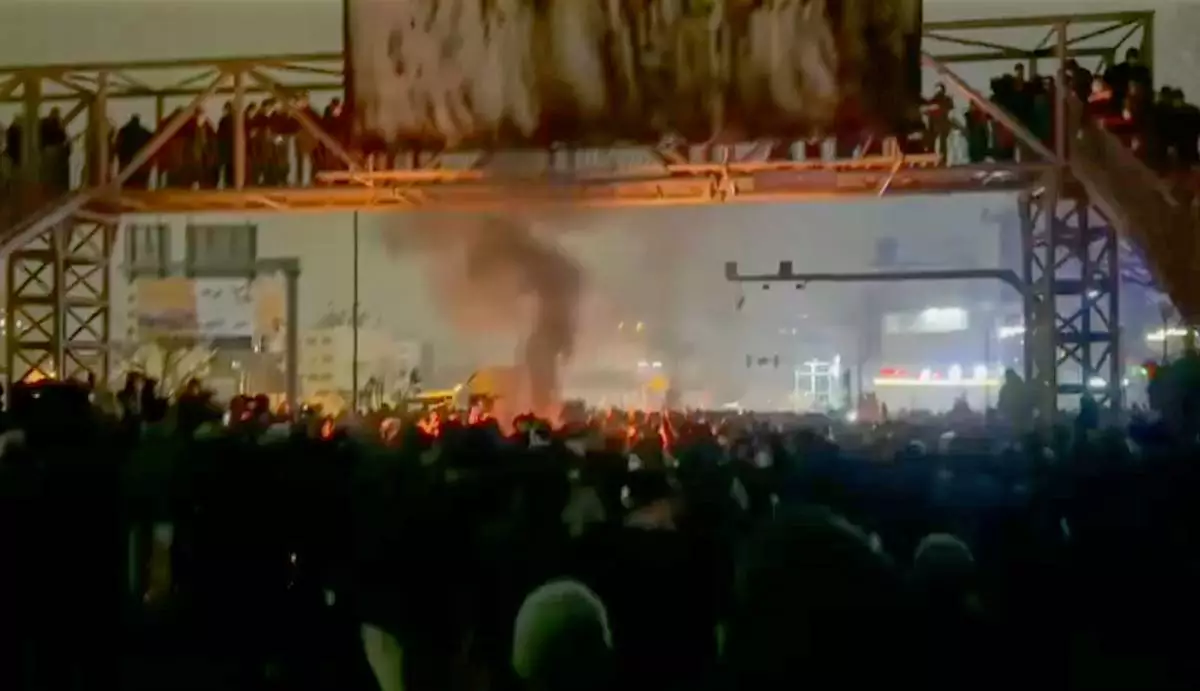
In this frame grab from footage circulating on social media from Iran shows protesters taking to the streets despite an intensifying crackdown as the Islamic Republic remains cut off from the rest of the world in Tehran, Iran, Friday, Jan. 9, 2026.(UGC via AP)

In this frame grab from footage circulating on social media from Iran shows protesters taking to the streets despite an intensifying crackdown as the Islamic Republic remains cut off from the rest of the world in Tehran, Iran, Friday, Jan. 9, 2026.(UGC via AP)

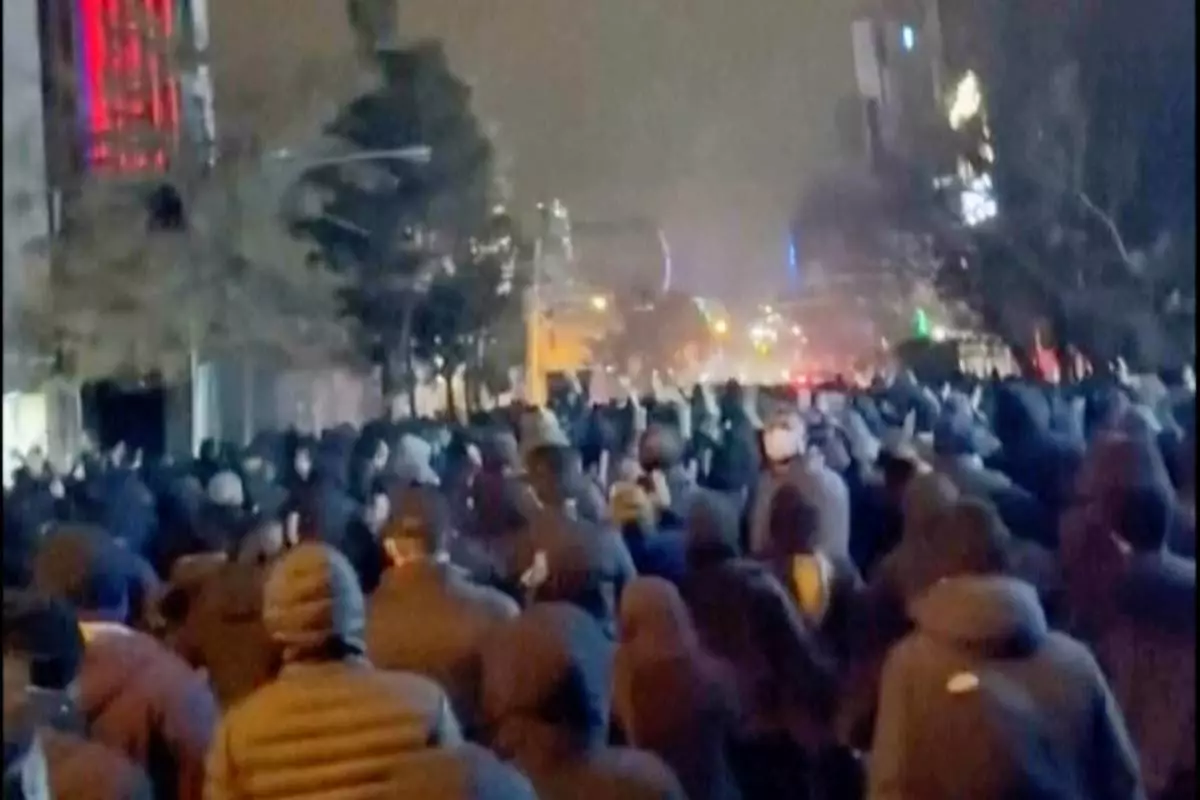
In this frame grab from footage circulating on social media from Iran showed protesters once again taking to the streets of Tehran despite an intensifying crackdown as the Islamic Republic remains cut off from the rest of the world in Tehran, Iran, Saturday Jan. 10, 2026. (UGC via AP)

In this frame grab from footage circulating on social media from Iran showed protesters once again taking to the streets of Tehran despite an intensifying crackdown as the Islamic Republic remains cut off from the rest of the world in Tehran, Iran, Saturday Jan. 10, 2026. (UGC via AP)

Recommended Articles