Semiconductor analyst Malcolm Penn has raised concerns about the short-term effects of suggested high tariffs on imported chips by U.S. President-elect Donald Trump, stressing their potential to impact consumer prices and industry profitability.
Trump has criticized the CHIPS and Science Act that the U.S. government signed into law in 2022 in a bid to revive the country's sci-tech and chip sectors by offering incentives to chipmakers and forcing them to take side. He suggested high tariffs on imported chips, instead of relying on federal incentives for domestic production of semiconductors.
In an interview with China Global Television Network (CGTN), Penn highlighted the stark contrast between federal incentives and proposed tariffs on imported chips.
"I think the thing about the CHIPS Act is it was designed to encourage manufacturers to build factories back in the United States, and that takes a long time. So you can understand why Mr. Trump doesn't like that because it will be the next president that gets the benefit of that, rather than him. Whereas tariffs are an instant effect and that will put the price up of everybody's imported components. And that would then have an immediate impact on the cost of everything that we buy and has electronics in it. And those effect take immediate effect because nobody keeps on inventory anymore. So the fact is that you put the tariff, it would be instantly happen and the prices would rise straight away," he said.
Penn highlighted the critical role of semiconductors in the cost structure of various goods, particularly in the automotive sector. He noted that a 200-percent tariff on semiconductor imports, as proposed by Trump, would triple their price, driving up car manufacturing costs by 10 to 20 percent.
"I think that the semiconductor is anything from around 10 percent to 30, 40 percent of the cost of a car, depending on whether it's conventional gasoline driven car or an EV (Electric Vehicle) car. And so it is a big part of the overall cost. Now the actual chip value in that, there is probably half that amount. But anyway, that's still a big amount. So if you suddenly add 200 percent of the cost of the chip and effectively makes the chip three times the price that it currently is, that would affect the cost of manufacture by a minimum of 10 percent, probably could be as high as 20 percent," Penn said.
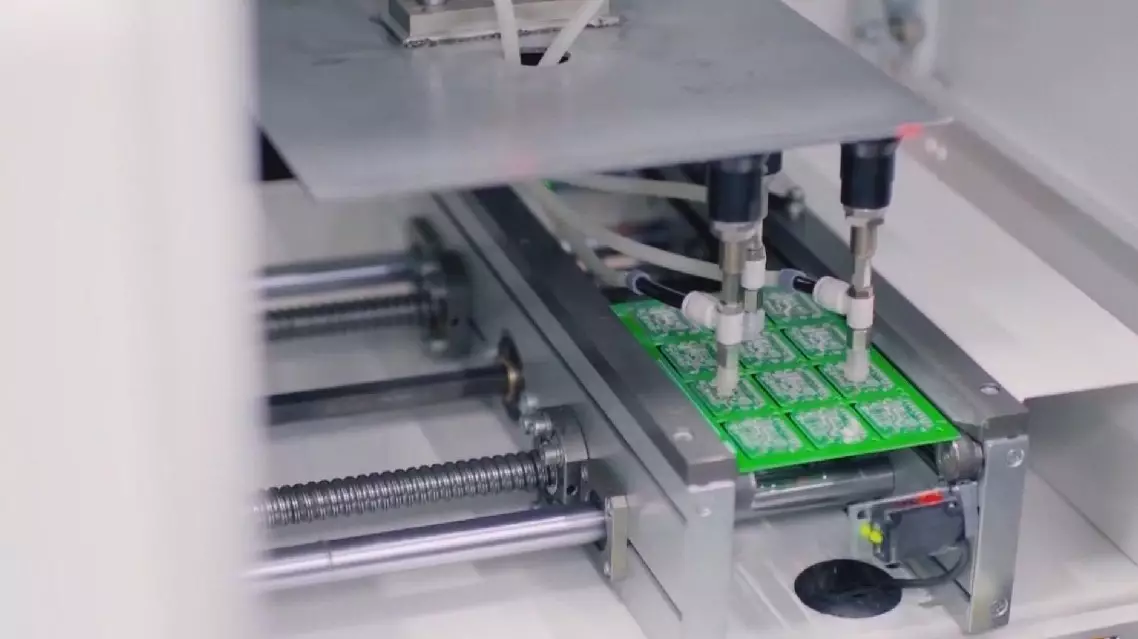
Trump-proposed tariffs on chip imports to impact industry profitability: analyst
Chinese mainland markets wrapped up their first full trading week since the National Day holiday with mixed results, capped by a dramatic last-minute recovery in the benchmark Shanghai Composite Index amid signs of major investor intervention, according to a market analyst.
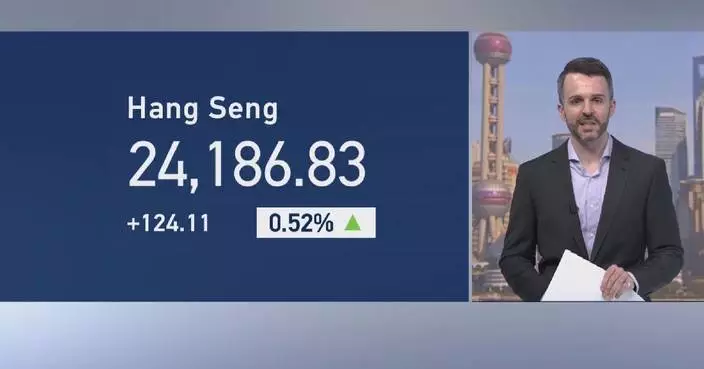
The Shanghai Composite Index rose 0.24 percent to close at 3,716.28 points on Friday, while the Shenzhen Component Index dropped 0.12 percent to settle at 11,802.46 points. The ChiNext Index, tracking China's Nasdaq-style board for growth enterprises, lost 0.39 percent to finish at 2,772.38 points.
Timothy Pope, a market analyst at China Global Television Network (CGTN), said the session was a roller coaster for mainland investors.
"It's been a bit of a mixed end to the first full trading week since China's National Day holiday, and today's session was quite the roller coaster for the Chinese mainland markets. We had a strong morning rally, followed by a sharp afternoon reversal and then an extraordinary last-minute recovery for the Shanghai Composite Index. It finished 0.25 percent higher, having recovered almost a full percentage point in just the final 15 minutes of trading. The Shenzhen Component [Index] was down 0.1 percent and the ChiNext board, though, was down 0.4 percent -- both though having recovered from some steeper losses in the afternoon. Real estate, energy and consumer stocks were among the stronger performers. We had healthcare, technology and financial shares really struggling, though," he said.
Pope attributed the extraordinary late-session bounce in the Shanghai Composite partially to the expiration of stock index futures and options contracts, which often triggers significant portfolio repositioning. However, he also pointed to possible intervention by large institutional investors.
"One possible explanation for the last-minute bounce is the stock index futures and options contracts expired today. That can trigger some significant repositioning towards the end of the session. But there's also growing speculation that China's so-called national team of state-backed investment firms is returning to the market to put a floor under share prices. Bloomberg and Chinese financial media have reported some really extraordinary activity in exchange-traded funds (ETFs) this week. On Thursday alone, one ETF tracking the CSI 300 attracted almost 19 billion yuan (about 2.84 billion U.S. dollars) in net inflows. And there was some even more tremendous activity in broader equity ETFs as well. And almost 90 percent of the trading in that single CSI 300 fund happened in just the last half hour of the session. So there are certainly some signs of very big investors stepping in to support the market, although no confirmation yet that those buyers are from the big state-backed funds," he said.
Growing concerns over AI valuations and the massive capital costs of building AI infrastructure continue to weigh on tech shares, Pope noted, even as investors brace for a heavy week of macroeconomic data.
"The weakness that we saw in tech shares also fits with what we've seen across global markets this month. There's growing concern about AI company valuations and the enormous costs of building out AI infrastructure, and whether future revenues can really justify that spending. And those concerns extend to companies supplying the AI industry as well, and China has plenty of those. What was interesting about today's session is that the stronger contributions to the Shanghai Composite [Index] came from companies like Petro China, Zijin Mining and Kweichow Moutai rather than a broad recovery or a buyback into the technology sector. Looking ahead, we've got China's third-quarter GDP figures due on Monday along with retail sales, industrial production and investment data. And those are certainly going to give investors plenty to chew on when the markets open on Monday," said the analyst.

Chinese mainland markets stage last-minute recovery amid speculation of big-investor support: analyst