The user base of generative artificial intelligence (AI) products in China has now reached 230 million people and the core industry scale approached nearly 600 billion yuan (about 83 billion U.S. dollars), according to a report released by the China Internet Network Information Center (CINIC) on Saturday.
The development prospects of generative AI in China are broad, providing new driving forces for high-quality development, said the report.
According to the report, the generative AI sector in China is experiencing robust development, witnessing rapid growth in industry scale and product diversity and gradually becoming integrated into people's daily life. As of now, China has laid the foundation for a comprehensive AI industry system, with over 4,500 related enterprises contributing to a core industry scale nearing 600 billion yuan. This industry chain spans crucial sectors such as chips, algorithms, data, platforms, and applications.
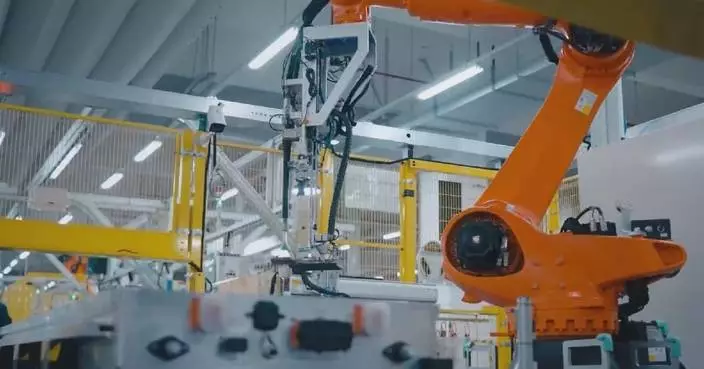
The report highlights the deep integration of generative AI with traditional industries like manufacturing, agriculture, healthcare and education, propelling industrial transformation and ushering in new formats and models. As of June 2024, the user base of generative AI products in China has reached an impressive 230 million people, accounting for 16.4 percent of the nation's total population.
"The rapid growth of the user base of generative AI applications is driven by multiple factors. From a technical perspective, the continuous innovation and breakthroughs in core technologies such as deep learning and neural networks provide a solid technical foundation for generative AI. From the perspective of market demand, as digital transformation accelerates, industries have a surging demand for efficient and intelligent solutions, which can be satisfied by generative AI," said Liu Yulin, director of the China Internet Network Information Center.
Aside from technological advancements and market demands, Liu emphasizes the increasingly refined ecosystem of China's AI industry, where hardware, software, algorithms, and applications work in close coordination, fostering ideal conditions for the widespread adoption of generative AI.
The report reveals that by July 2024, over 190 large generative AI service models had been registered and launched to serve the public, offering users a diverse array of choices and unique user experiences.
The report underscores the rapid infiltration of generative AI into various sectors. Bolstered by resource concentration, technological innovation, and substantial policy support, Beijing, Shanghai, and Guangdong Province have emerged as forerunners in the development of the industry.
Over 60 percent of AI related products in the country are developed in the three places. As of November 2024, China has recorded a total of 309 registered generative AI products, with Beijing, Shanghai, and Guangdong representing 31.1 percent, 27.2 percent, and 11.7 percent, respectively.
In the first three quarters of 2024, China saw a total of 504 investment and financing events related to AI, with an aggregate investment amounting to approximately 81.2 billion yuan. Data from the China Organization Data Service indicates a 35.65-percent year-on-year increase in the number of AI enterprises in China during the first half of 2024.

China boasts 230 million generative AI products users: report

China boasts 230 million generative AI products users: report

China boasts 230 million generative AI products users: report