 |
Begins recruiting development partners for key use cases OEM partners aiming to develop their own AR glasses
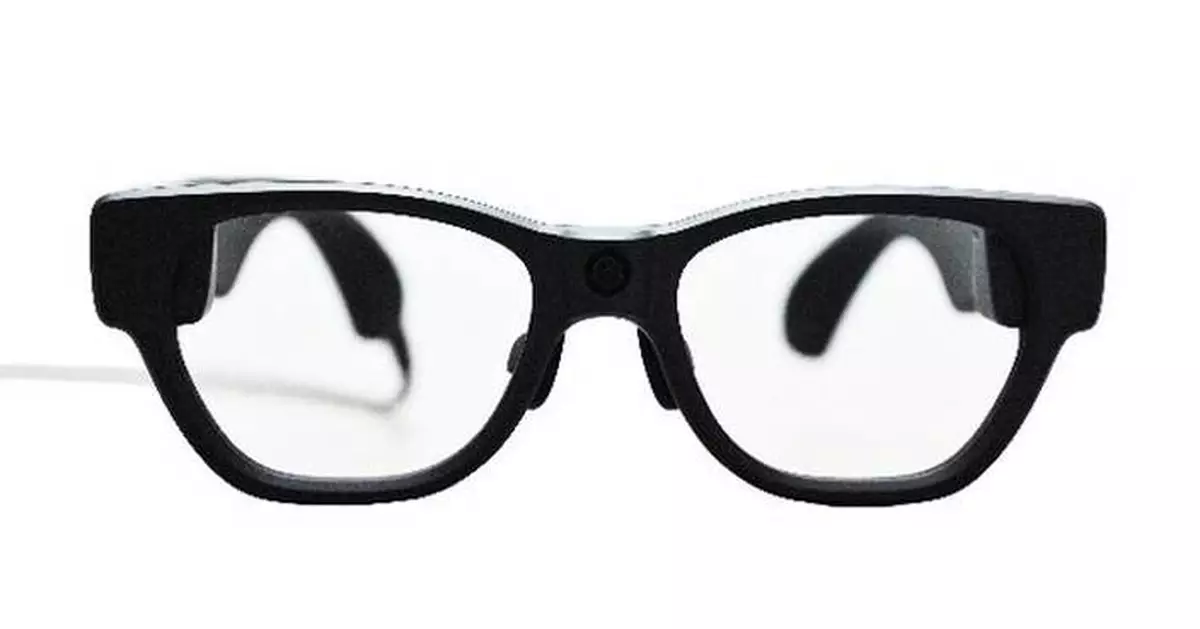
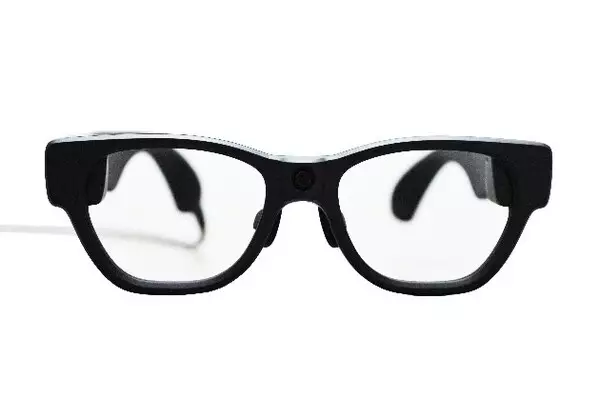
TOKYO, Dec. 3, 2024 /PRNewswire/ -- Cellid Inc., a developer of AR glasses displays and spatial recognition engines for next-generation devices, today announced the release of "Reference Design," an eyeglass-type augmented reality (AR) smart glasses with a superior design and light weight.
Cellid has developed the reference design spectacle-type AR smart glasses for global enterprises, which allows them to experience the most advanced technologies for smart glasses, such as the state-of-the-art, optical, see-through display method Waveguide (DOE method) and micro projector, which are being developed in-house.
The reference design also includes the provision of an SDK to support the development of AR glasses applications linked to generative AI and object recognition functions. In conjunction with the launch of reference design, the business development partner and OEM partner programs will be launched to recruit partners aiming to promote digital transformation and create new businesses using AR glasses, as well as companies aiming to develop AR glasses as their own brand.
The Waveguide (display lens for AR glasses) developed by Cellid, which is used in the reference model, achieves vivid full-color expression while remaining as thin and light as ordinary spectacle lenses. The technology has received the 2024 Display Component of the Year Award from The Society for Information Display (SID), the world's largest display society. This award is given to technology innovations that change technology trends, and Cellid is the second Japanese company to win this award after major companies such as Sony, Toray, and Japan Display. As a result of the high reputation of AR Glasses within the industry, Cellid is currently collaborating with major companies in Japan and abroad towards the joint development and mass production of AR Glasses in order to promote their widespread use.
The Business Development Partner Program enables the joint development and demonstration of applications for the creation of new businesses using AR glasses. Through the program, participating companies can obtain business and service design support, demonstration support and application development support suitable for AR glasses. The OEM Partner Program also enables companies aiming to develop their own AR glasses to develop their own branded AR glasses based on the reference model. The reference model is similar in shape to normal glasses and lighter in weight than conventional head-mounted display AR glasses, enabling use in more everyday situations and supporting industry partnerships and the creation of new businesses.
Quote from Cellid CEO, Satoshi Shiraga
We are very pleased to present the reference model for Cellid's proprietary AR glasses. This innovative device has the potential to transform the way we live and work. With the reference model we have presented, we are working to build an ecosystem to further promote AR glasses and expand the market. This ecosystem will provide a place where developers, companies and users can collaborate and grow together. Our goal is to make AR technology more accessible, so that it can be used naturally in everyday life as the real and digital worlds merge. To achieve this, we will strive to follow industry-wide best practices and ensure that users get the most out of their AR experience.
Spectacle Type AR Glasses: Key features of reference design
1: Well-designed and lightweight AR glasses in spectacle size
The state-of-the-art optical see-through display system with wave-guide optical lenses makes the design and weight (approx. 58 g) as light as normal spectacles, and the fit is less tiring than conventional head-mounted display types, even after long periods of daily use.
2: Seamless AR spatial experience with high-resolution cameras & IMU sensors
With an 8MP high-resolution, 84-degree wide-angle camera and a 3-axis IMU sensor, it can also recognize objects and positions in real space, enabling users to experience a more seamless AR space.
3: Building AR spaces with superior UI/UX
It can be connected to Android and Windows devices and uses its own SDK for development, allowing AR spaces and AR content to be built easily and with excellent UI/UX for each use case.
4: SDKs for a wide variety of use cases
The SDK of the reference model comes standard with an API for generative AI, which enables its use in a wide range of use cases. For example, by asking through the reference model how to use a device in front of you, the device can be automatically recognized, and the usage and operating instructions can be displayed. In addition, by registering content to AR markers, it is possible to recognize the AR markers and display the content in real space, allowing users to instantly check equipment manuals and other hands-free information. Furthermore, additional eye tracking and gesture recognition functions are planned for the future.
###
About Cellid
Cellid's core business is development of AR glass display modules, mainly waveguides and spatial recognition engines for next-generation devices. Cellid's unique optical simulation technology and proprietary production technology have enabled the development of display modules that are as thin and light as ordinary eyeglass lenses, with clear images and one of the world's largest fields of view for waveguides. Cellid also develops and provides industry-specific solutions using spatial recognition software technologies such as Cellid SLAM. By combining AR display hardware technology and real-world spatial recognition software technology, we are accelerating "Blending the Physical and Digital Worlds," and leading the realization of extraordinary information tools that are more accessible and convenient for humans.
Begins recruiting development partners for key use cases OEM partners aiming to develop their own AR glasses
TOKYO, Dec. 3, 2024 /PRNewswire/ -- Cellid Inc., a developer of AR glasses displays and spatial recognition engines for next-generation devices, today announced the release of "Reference Design," an eyeglass-type augmented reality (AR) smart glasses with a superior design and light weight.
Cellid has developed the reference design spectacle-type AR smart glasses for global enterprises, which allows them to experience the most advanced technologies for smart glasses, such as the state-of-the-art, optical, see-through display method Waveguide (DOE method) and micro projector, which are being developed in-house.
The reference design also includes the provision of an SDK to support the development of AR glasses applications linked to generative AI and object recognition functions. In conjunction with the launch of reference design, the business development partner and OEM partner programs will be launched to recruit partners aiming to promote digital transformation and create new businesses using AR glasses, as well as companies aiming to develop AR glasses as their own brand.
The Waveguide (display lens for AR glasses) developed by Cellid, which is used in the reference model, achieves vivid full-color expression while remaining as thin and light as ordinary spectacle lenses. The technology has received the 2024 Display Component of the Year Award from The Society for Information Display (SID), the world's largest display society. This award is given to technology innovations that change technology trends, and Cellid is the second Japanese company to win this award after major companies such as Sony, Toray, and Japan Display. As a result of the high reputation of AR Glasses within the industry, Cellid is currently collaborating with major companies in Japan and abroad towards the joint development and mass production of AR Glasses in order to promote their widespread use.
The Business Development Partner Program enables the joint development and demonstration of applications for the creation of new businesses using AR glasses. Through the program, participating companies can obtain business and service design support, demonstration support and application development support suitable for AR glasses. The OEM Partner Program also enables companies aiming to develop their own AR glasses to develop their own branded AR glasses based on the reference model. The reference model is similar in shape to normal glasses and lighter in weight than conventional head-mounted display AR glasses, enabling use in more everyday situations and supporting industry partnerships and the creation of new businesses.
Quote from Cellid CEO, Satoshi Shiraga
We are very pleased to present the reference model for Cellid's proprietary AR glasses. This innovative device has the potential to transform the way we live and work. With the reference model we have presented, we are working to build an ecosystem to further promote AR glasses and expand the market. This ecosystem will provide a place where developers, companies and users can collaborate and grow together. Our goal is to make AR technology more accessible, so that it can be used naturally in everyday life as the real and digital worlds merge. To achieve this, we will strive to follow industry-wide best practices and ensure that users get the most out of their AR experience.
Spectacle Type AR Glasses: Key features of reference design
1: Well-designed and lightweight AR glasses in spectacle size
The state-of-the-art optical see-through display system with wave-guide optical lenses makes the design and weight (approx. 58 g) as light as normal spectacles, and the fit is less tiring than conventional head-mounted display types, even after long periods of daily use.
2: Seamless AR spatial experience with high-resolution cameras & IMU sensors
With an 8MP high-resolution, 84-degree wide-angle camera and a 3-axis IMU sensor, it can also recognize objects and positions in real space, enabling users to experience a more seamless AR space.
3: Building AR spaces with superior UI/UX
It can be connected to Android and Windows devices and uses its own SDK for development, allowing AR spaces and AR content to be built easily and with excellent UI/UX for each use case.
4: SDKs for a wide variety of use cases
The SDK of the reference model comes standard with an API for generative AI, which enables its use in a wide range of use cases. For example, by asking through the reference model how to use a device in front of you, the device can be automatically recognized, and the usage and operating instructions can be displayed. In addition, by registering content to AR markers, it is possible to recognize the AR markers and display the content in real space, allowing users to instantly check equipment manuals and other hands-free information. Furthermore, additional eye tracking and gesture recognition functions are planned for the future.
###
About Cellid
Cellid's core business is development of AR glass display modules, mainly waveguides and spatial recognition engines for next-generation devices. Cellid's unique optical simulation technology and proprietary production technology have enabled the development of display modules that are as thin and light as ordinary eyeglass lenses, with clear images and one of the world's largest fields of view for waveguides. Cellid also develops and provides industry-specific solutions using spatial recognition software technologies such as Cellid SLAM. By combining AR display hardware technology and real-world spatial recognition software technology, we are accelerating "Blending the Physical and Digital Worlds," and leading the realization of extraordinary information tools that are more accessible and convenient for humans.
** The press release content is from PR Newswire. Bastille Post is not involved in its creation. **
Cellid Announces "Reference Design," its Proprietary Lightweight, AR Smart Glasses
|
- Will collaborate with the Vietnamese government and educational institutions to train construction equipment professionals
- Plans to provide comprehensive support and technical expertise for the entire process leading to WorldSkills Shanghai in September
- "Committed to fostering young technical talent and bolstering industrial competitiveness in Vietnam."
SEOUL, South Korea, April 5, 2026 /PRNewswire/ -- HD Construction Equipment, the intermediary holding company of HD Hyundai's construction equipment business, will be expanding its commitment to nurturing global technical talent in the construction machinery sector by supporting Vietnam's national team for WorldSkills.
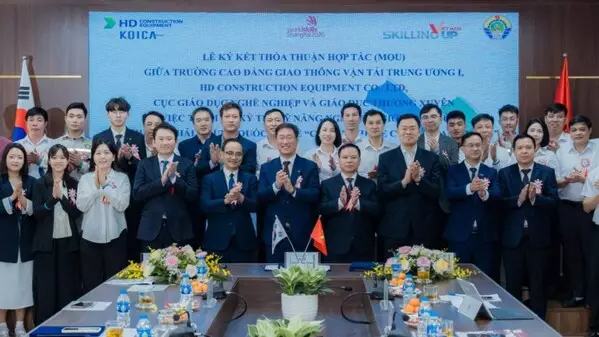
HD Construction Equipment announced on Sunday, April 5 that it signed a tripartite Memorandum of Understanding (MOU) in Hanoi with the Directorate of Vocational Education and Training, or DVET, under the Vietnamese Ministry of Labour, Invalids and Social Affairs, and the Central College of Transport No. 1 (CCT1), a local vocational training college. The agreement aims to support Vietnam's participation in the WorldSkills competition.
Under this agreement, HD Construction Equipment will assist with the entire process—from training to competition entry—for the Vietnamese national representative competing in the Heavy Vehicle Maintenance category at WorldSkills Shanghai 2026, scheduled for this September.
The company plans to offer comprehensive technical training to Nguyen Xuan Khanh, who was selected as the national representative last year. Furthermore, the company will cover all expenses related to this training, including airfare, registration fees, and accommodation, in order to create an optimal environment for the competitor to maximize his performance.
In July of last year, HD Construction Equipment signed an MOU with CCT1, which includes the Green and Smart Construction Equipment Talent Project. This initiative is part of the Korea International Cooperation Agency (KOICA)'s inclusive business program. The collaboration aims to support the development of smart equipment in Vietnam and to create localized training curricula.
The company has deepened its commitment to Vietnam through a series of key initiatives, including hosting government officials and instructors for training in October, supporting national skills trials in November, and awarding scholarships.
An official from HD Construction Equipment stated, "This collaboration is not just a one-time event; it is part of our commitment to sustainable, locally integrated business practices. We will continue to foster Vietnam's young technical talents, helping them compete on the global stage."
- Will collaborate with the Vietnamese government and educational institutions to train construction equipment professionals
- Plans to provide comprehensive support and technical expertise for the entire process leading to WorldSkills Shanghai in September
- "Committed to fostering young technical talent and bolstering industrial competitiveness in Vietnam."
SEOUL, South Korea, April 5, 2026 /PRNewswire/ -- HD Construction Equipment, the intermediary holding company of HD Hyundai's construction equipment business, will be expanding its commitment to nurturing global technical talent in the construction machinery sector by supporting Vietnam's national team for WorldSkills.
HD Construction Equipment announced on Sunday, April 5 that it signed a tripartite Memorandum of Understanding (MOU) in Hanoi with the Directorate of Vocational Education and Training, or DVET, under the Vietnamese Ministry of Labour, Invalids and Social Affairs, and the Central College of Transport No. 1 (CCT1), a local vocational training college. The agreement aims to support Vietnam's participation in the WorldSkills competition.
Under this agreement, HD Construction Equipment will assist with the entire process—from training to competition entry—for the Vietnamese national representative competing in the Heavy Vehicle Maintenance category at WorldSkills Shanghai 2026, scheduled for this September.
The company plans to offer comprehensive technical training to Nguyen Xuan Khanh, who was selected as the national representative last year. Furthermore, the company will cover all expenses related to this training, including airfare, registration fees, and accommodation, in order to create an optimal environment for the competitor to maximize his performance.
In July of last year, HD Construction Equipment signed an MOU with CCT1, which includes the Green and Smart Construction Equipment Talent Project. This initiative is part of the Korea International Cooperation Agency (KOICA)'s inclusive business program. The collaboration aims to support the development of smart equipment in Vietnam and to create localized training curricula.
The company has deepened its commitment to Vietnam through a series of key initiatives, including hosting government officials and instructors for training in October, supporting national skills trials in November, and awarding scholarships.
An official from HD Construction Equipment stated, "This collaboration is not just a one-time event; it is part of our commitment to sustainable, locally integrated business practices. We will continue to foster Vietnam's young technical talents, helping them compete on the global stage."
** This press release is distributed by PR Newswire through automated distribution system, for which the client assumes full responsibility. **
HD Construction Equipment to Support Training for Vietnam's National WorldSkills Team