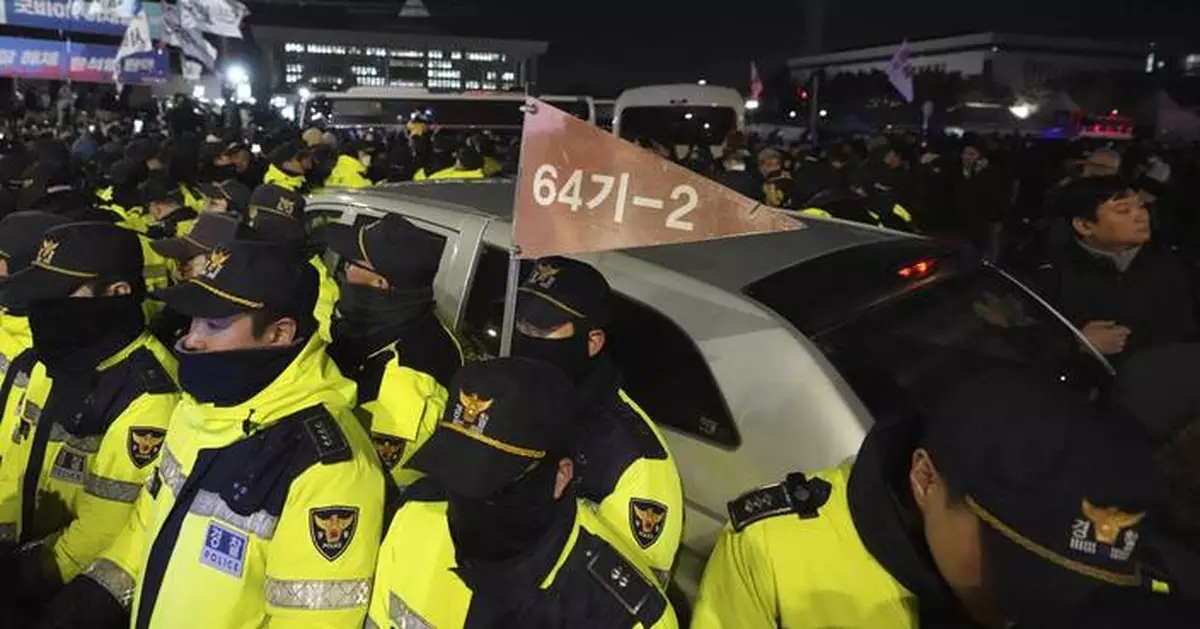
TOKYO (AP) — Is South Korean President Yoon Suk Yeol on the verge of being forced out of office for declaring martial law nearly a week ago?
The question, which has dogged Yoon through a series of moves by the opposition to end his presidency, will be highlighted Saturday, when parliament seems likely to make a second attempt at his impeachment.
Click to Gallery
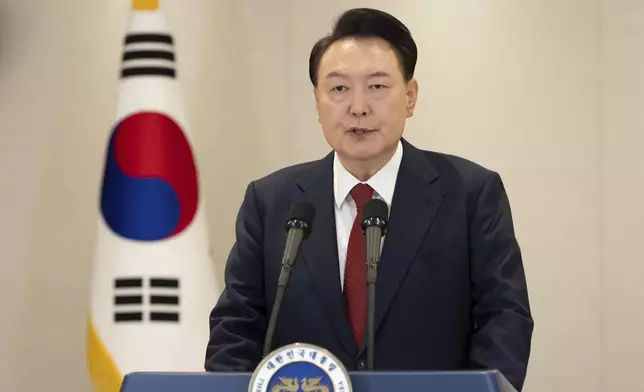
In this photo provided by South Korea Presidential Office, South Korean President Yoon Suk Yeol speaks at the presidential office in Seoul, South Korea, Thursday, Dec. 12, 2024. (South Korea Presidential Office via AP)
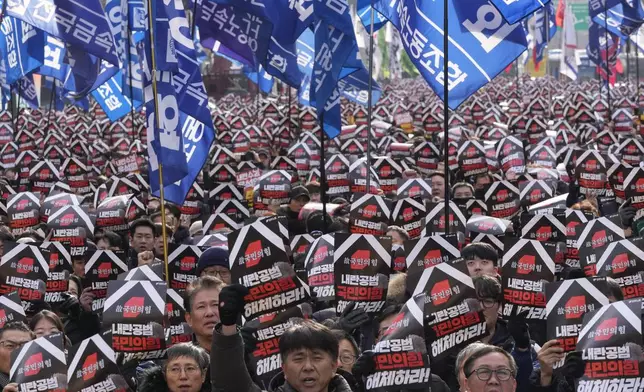
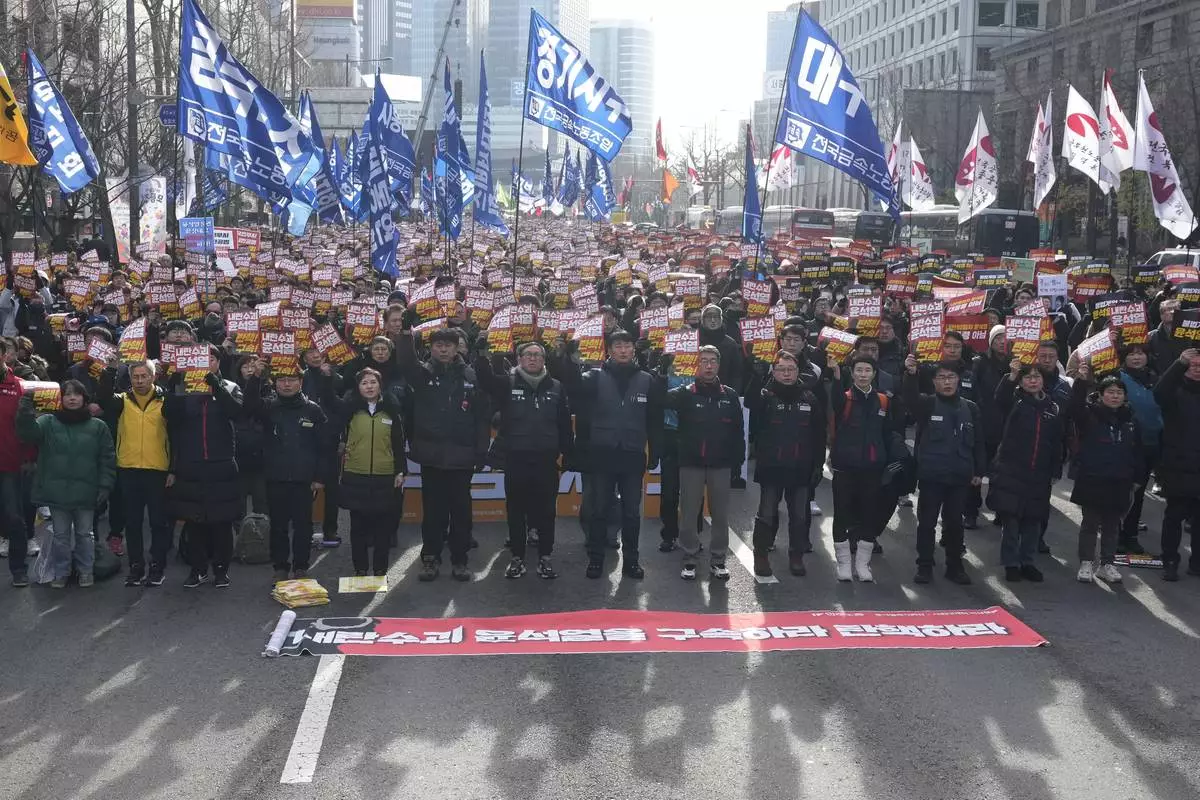
Protesters stage a rally to demand South Korean President Yoon Suk Yeol's impeachment in Seoul, South Korea, Thursday, Dec. 12, 2024. The signs read "Disband the ruling People Power Party." (AP Photo/Ahn Young-joon)
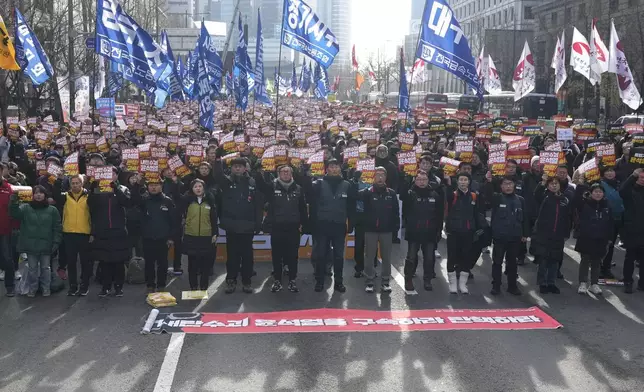
Protesters stage a rally to demand South Korean President Yoon Suk Yeol's impeachment in Seoul, South Korea, Thursday, Dec. 12, 2024. The signs read "Arrest the rebellion leader Yoon Suk Yeol." (AP Photo/Ahn Young-joon)
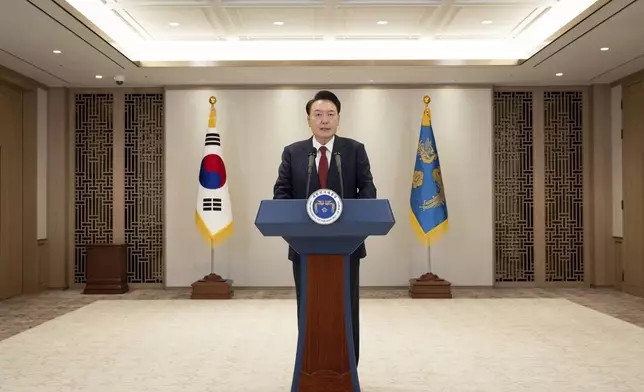
In this photo provided by South Korea Presidential Office, South Korean President Yoon Suk Yeol speaks at the presidential office in Seoul, South Korea, Thursday, Dec. 12, 2024. (South Korea Presidential Office via AP)
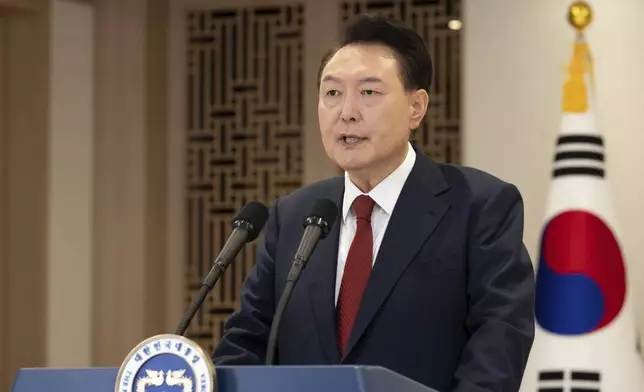
In this photo provided by South Korea Presidential Office, South Korean President Yoon Suk Yeol speaks at the presidential office in Seoul, South Korea, Thursday, Dec. 12, 2024. (South Korea Presidential Office via AP)
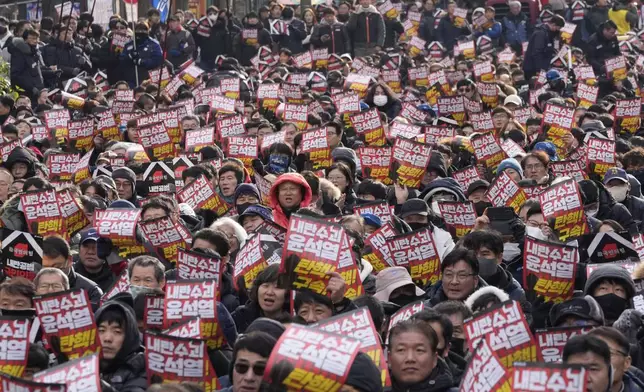
Protesters stage a rally to demand South Korean President Yoon Suk Yeol's impeachment in Seoul, South Korea, Thursday, Dec. 12, 2024. The signs read "Arrest the rebellion leader Yoon Suk Yeol." (AP Photo/Ahn Young-joon)
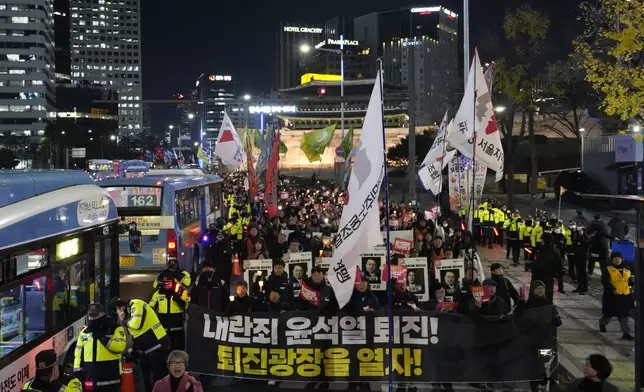
Protesters march to the presidential office after a candlelight vigil against South Korean President Yoon Suk Yeol in Seoul, South Korea, Thursday, Dec. 5, 2024. (AP Photo/Ahn Young-joon)
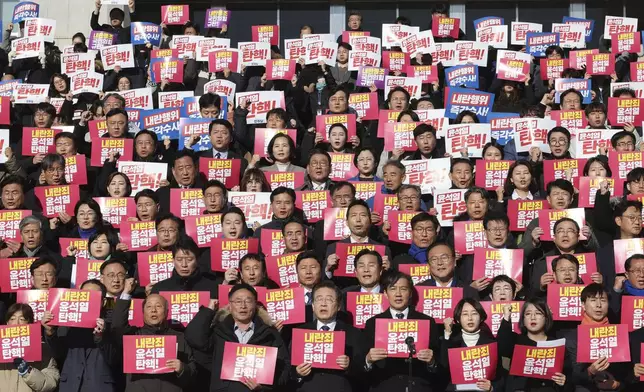
South Korea's main opposition Democratic Party leader Lee Jae-myung, bottom center, shouts slogans during a joint press conference with members of civil society and the five opposition parties to condemn the ruling People Power Party at the National Assembly in Seoul, South Korea, Friday, Dec. 6, 2024. The signs read "Impeach Yoon Suk Yeol." (Park Dong-ju/Yonhap via AP)
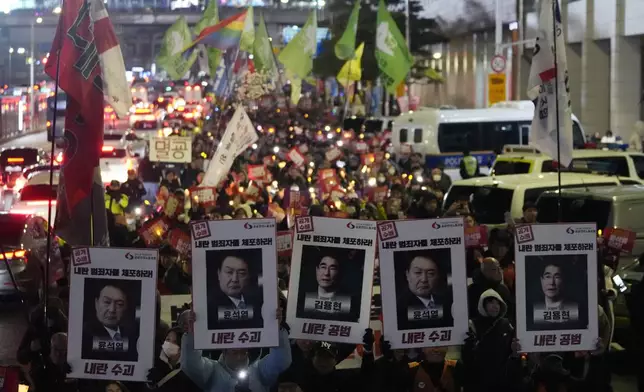
Protesters march to the presidential office after a candlelight vigil against South Korean President Yoon Suk Yeol in Seoul, South Korea, Thursday, Dec. 5, 2024. (AP Photo/Ahn Young-joon)
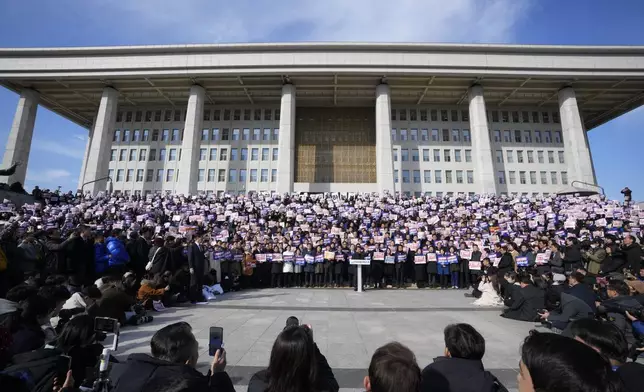
Members of main opposition Democratic Party stage a rally against South Korean President Yoon Suk Yeol at the National Assembly in Seoul, South Korea, Wednesday, Dec. 4, 2024. (AP Photo/Ahn Young-joon)
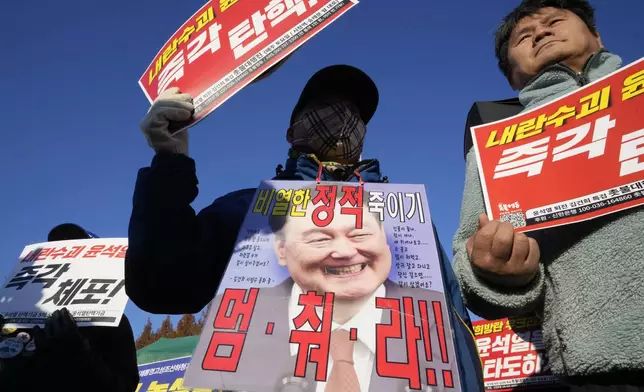
Protesters attend a rally to demand South Korean President Yoon Suk Yeol to step down in front of the National Assembly in Seoul, South Korea, Wednesday, Dec. 4, 2024. The signs read "Stop." (AP Photo/Ahn Young-joon)
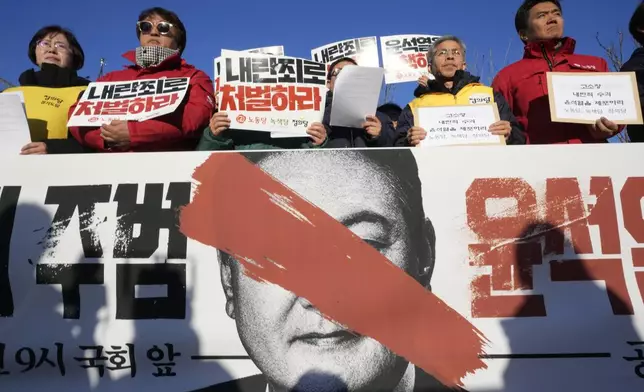
Protesters stage a rally to demand South Korean President Yoon Suk Yeol to step down in front of the National Assembly in Seoul, South Korea, Wednesday, Dec. 4, 2024. The signs read "Punish." (AP Photo/Ahn Young-joon)

FILE - Mass students demonstrators demand the lifting of martial law and the resignation of Premier Shin Hyon-Hwack and Korean Central Intelligence chief Lt. Gen. Chun Doo-Hwan, in May 1980. (AP Photo, File)

FILE - Armed South Korean government martial law troops guard captured rebels in Gwangju (Kwangju), South Korea, on May 27, 1980. The rebels were rounded up following the government's recapture by the riot-battered city. (AP Photo/Sadayuki Mikami, File)
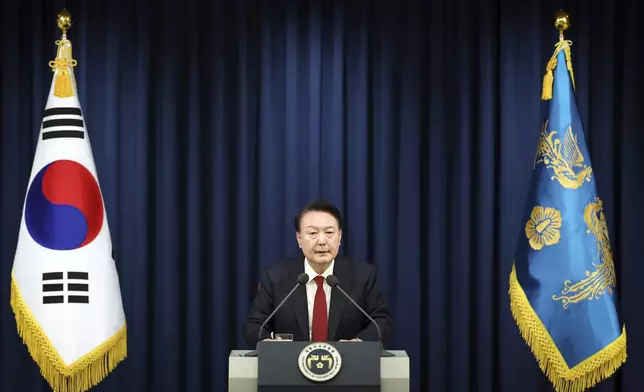
In this photo provided by South Korea Presidential Office, South Korean President Yoon Suk Yeol speaks during a press briefing at the presidential office in Seoul, South Korea, Tuesday, Dec. 3, 2024. (South Korea Unification Ministry via AP).
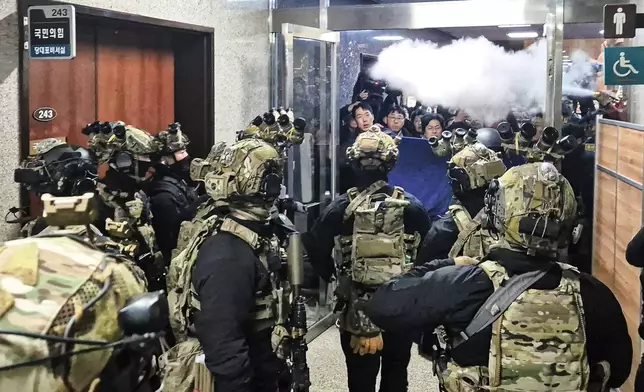
A National Assembly staff sprays fire extinguishers to block soldiers entering the main hall of the National Assembly in Seoul, South Korea, Wednesday, Dec. 4, 2024. (Jo Da-un/Yonhap via AP)
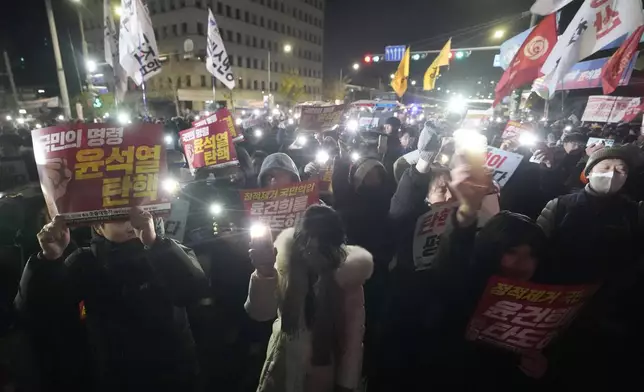
People gather to demand South Korean President Yoon Suk Yeol to step down in front of the National Assembly in Seoul, South Korea, Wednesday, Dec. 4, 2024. (AP Photo/Ahn Young-joon)
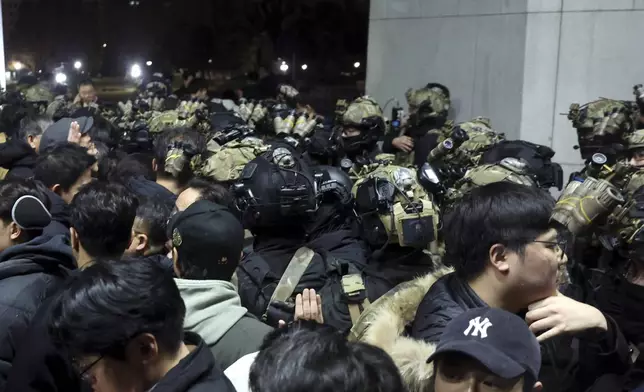
South Korean martial law soldiers try to enter the National Assembly compound in Seoul, South Korea, Wednesday, Dec. 4, 2024. (Cho Sung-bong/Newsis via AP)
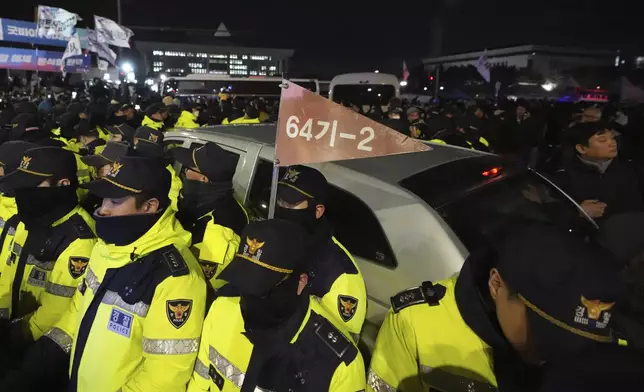
Police officers stand outside the National Assembly in Seoul, South Korea, Wednesday, Dec. 4, 2024. (AP Photo/Lee Jin-man)
The last week has seen political chaos and huge protests by angry South Koreans against Yoon. After his baffling, dark-of-night martial law edict on Dec. 3, the first in more than 40 years, throngs of lawmakers and nearly 300 heavily armed soldiers rushed to the parliament ahead of a predawn vote that reversed it after only six hours.
As lawmakers debate impeachment, deepening investigations into Yoon's decree have been accompanied by detentions of high-level officials.
Here is what to know about one of the most politically fraught weeks in recent South Korean history:
The opposition has labeled Yoon's short-lived martial law declaration an “unconstitutional, illegal rebellion or coup.” But with 192 seats in the 300-member National Assembly, it needs support from at least eight members of the president’s conservative governing party to get the two-thirds majority required to pass an impeachment motion.
Yoon, in a speech Thursday that seemed designed to influence supporters in parliament, defended his martial law decree as an act of governance, not rebellion. He vowed to “fight to the end” in the face of impeachment attempts and intensifying investigations into the decree.
The main liberal opposition Democratic Party planned to submit a new impeachment motion against Yoon on Thursday that would set up a vote this weekend.
The chair of the governing party, Han Dong-hun, a critic of Yoon, called the president’s statement “a confession of rebellion” during a party meeting. Han earlier urged party members to vote for Yoon’s impeachment.
If Yoon is eventually impeached, he would be suspended until the Constitutional Court decides whether to remove him from office. Prime Minister Han Duck-soo, who holds the No. 2 position in the government, would take over presidential responsibilities.
It's been a political whirlwind in Seoul.
Police, prosecutors and other agencies are investigating whether Yoon and others involved in the martial law decree committed rebellion, abuse of power and other crimes. Earlier in the week, the Justice Ministry banned Yoon from leaving the country, but it’s still unclear if they would be able to detain or arrest the president.
On Wednesday, Yoon’s presidential security service didn’t allow police to search the presidential office. Yoon’s former defense minister, Kim Yong Hyun, has been arrested on allegations of playing a key role in a rebellion and committing abuse of power. Kim became the first person formally arrested over the martial law decree. He tried to kill himself at a Seoul detention center on Wednesday night, but correctional officers stopped him and officials said he was in stable condition.
The country’s police chief and the head of Seoul’s metropolitan police were detained as well for sending police to the National Assembly. Lawmakers voted on Thursday to impeach the national police chief and the justice minister.
Thousands of protesters have been marching in the streets of Seoul calling for Yoon’s ouster. Autoworkers and other members of the Korean Metal Workers’ Union, one of the country’s biggest umbrella labor groups, have started hourly strikes.
South Korea’s constitution gives the president the power to use the military to keep order in “wartime, war-like situations or other comparable national emergency states.” Martial law powers can include suspending civil rights such as freedom of the press and assembly and temporarily limiting the powers of the courts and government agencies.
The constitution also gives the National Assembly the power to lift martial law with a majority vote. Lawmakers rushed to the assembly building as soon as they heard of Yoon’s declaration. Some climbed the walls to evade a military cordon so they could assemble a quorum. Their vote to lift the order was 190-0, including 18 members of Yoon’s party.
The impeachment motion alleges that Yoon imposed martial law far beyond his legitimate powers and in a situation that did not meet the constitutional standard of a severe crisis. The constitution also doesn’t allow a president to use the military to suspend parliament. The motion argues that suspending political party activities and deploying troops to seal the National Assembly amounted to rebellion.
Yoon has had little success in getting his policies adopted by a parliament that has been controlled by the opposition since he took over in 2022.
Conservatives have said the opposition moves are political revenge for investigations into Democratic Party leader Lee Jae-myung, who is seen as the favorite in the next presidential election due in 2027.
Just this month, Yoon denied wrongdoing in an influence-peddling scandal involving him and his wife. The claims have battered his approval ratings and fueled attacks by his rivals. The scandal centers on claims that Yoon and first lady Kim Keon Hee exerted inappropriate influence on the governing party to pick a certain candidate to run for a parliamentary by-election in 2022 at the request of Myung Tae-kyun, an election broker and founder of a polling agency who conducted free opinion surveys for Yoon before he became president.
Yoon has said he did nothing inappropriate.
During the dictatorships that emerged as South Korea rebuilt from the 1950-53 Korean War, leaders occasionally proclaimed martial law that allowed them to station soldiers, tanks and armored vehicles on streets or in public places to prevent anti-government demonstrations.
Army Gen. Park Chung-hee led several thousand troops into Seoul in the early hours of May 16, 1961, in the country’s first coup. He led South Korea for nearly 20 years and proclaimed martial law several times to stop protests and jail critics before he was assassinated by his spy chief in 1979.
Less than two months after Park’s death, Maj. Gen. Chun Doo-hwan led tanks and troops into Seoul in December 1979 in the country’s second coup. The next year, he orchestrated a brutal military crackdown on a pro-democracy uprising in the southern city of Gwangju, killing at least 200 people.
In the summer of 1987, massive street protests forced Chun’s government to accept direct presidential elections. His army buddy Roh Tae-woo, who had joined Chun’s 1979 coup, won an election held later in 1987 largely because of divided votes among liberal opposition candidates.
Associated Press writers Kim Tong-hyung and Hyung-jin Kim in Seoul, South Korea, contributed to this story.
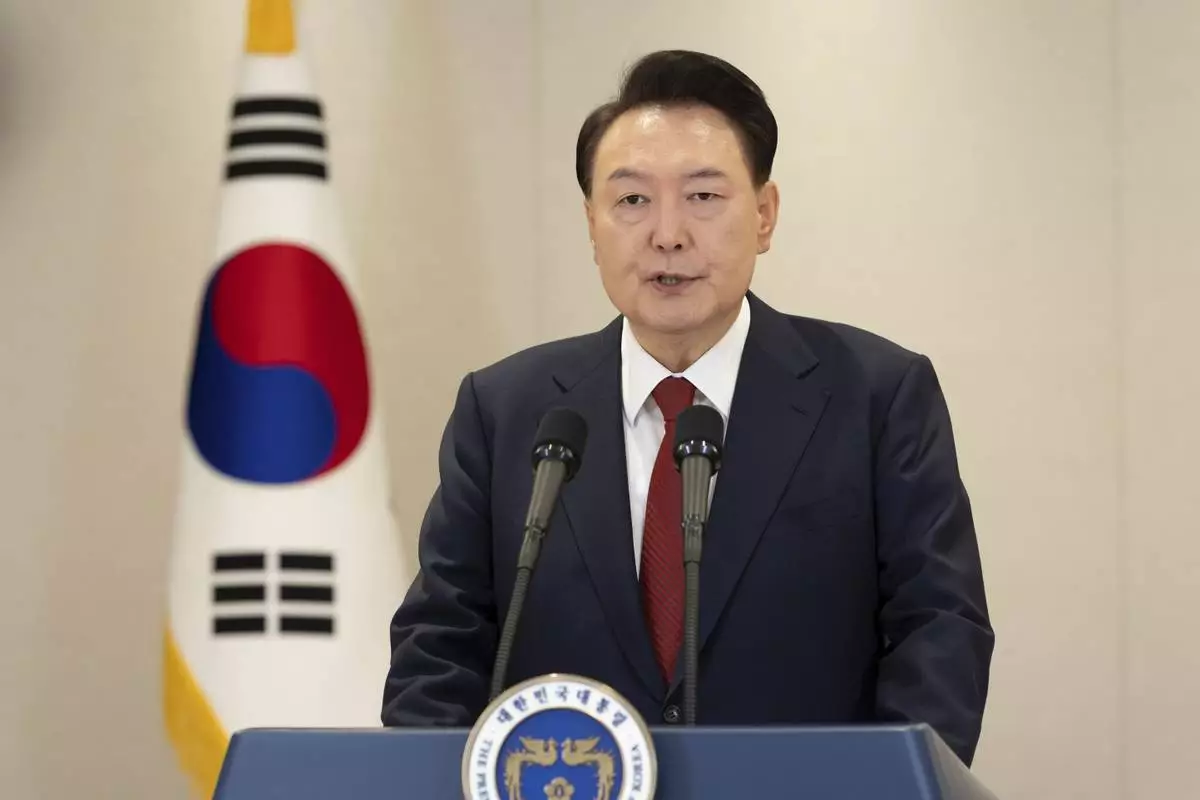
In this photo provided by South Korea Presidential Office, South Korean President Yoon Suk Yeol speaks at the presidential office in Seoul, South Korea, Thursday, Dec. 12, 2024. (South Korea Presidential Office via AP)
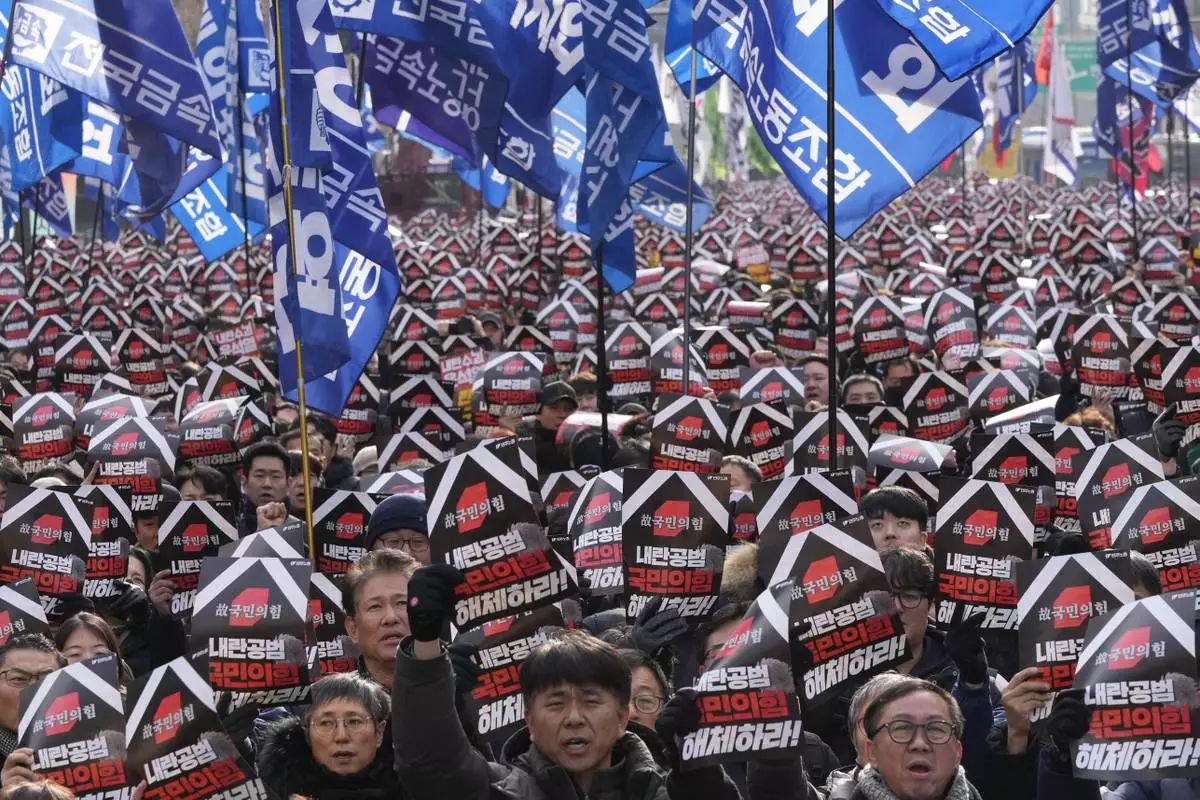
Protesters stage a rally to demand South Korean President Yoon Suk Yeol's impeachment in Seoul, South Korea, Thursday, Dec. 12, 2024. The signs read "Disband the ruling People Power Party." (AP Photo/Ahn Young-joon)
Protesters stage a rally to demand South Korean President Yoon Suk Yeol's impeachment in Seoul, South Korea, Thursday, Dec. 12, 2024. The signs read "Arrest the rebellion leader Yoon Suk Yeol." (AP Photo/Ahn Young-joon)
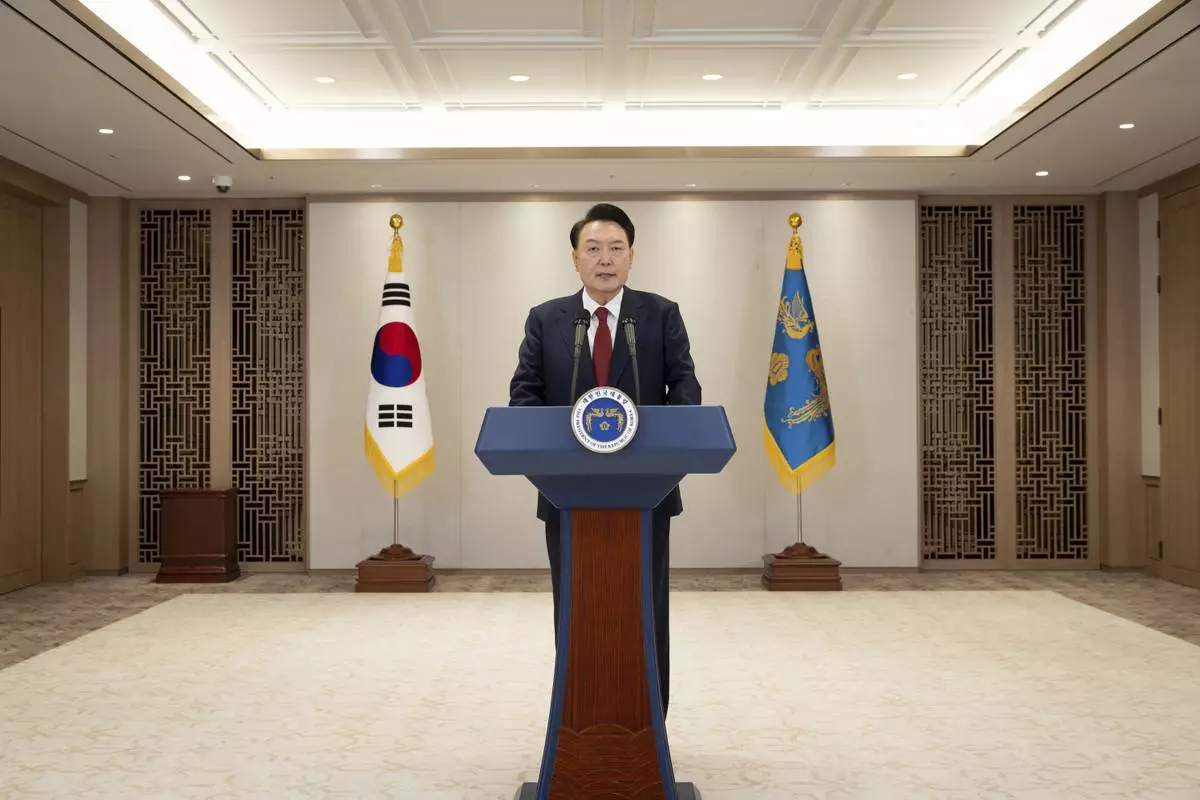
In this photo provided by South Korea Presidential Office, South Korean President Yoon Suk Yeol speaks at the presidential office in Seoul, South Korea, Thursday, Dec. 12, 2024. (South Korea Presidential Office via AP)
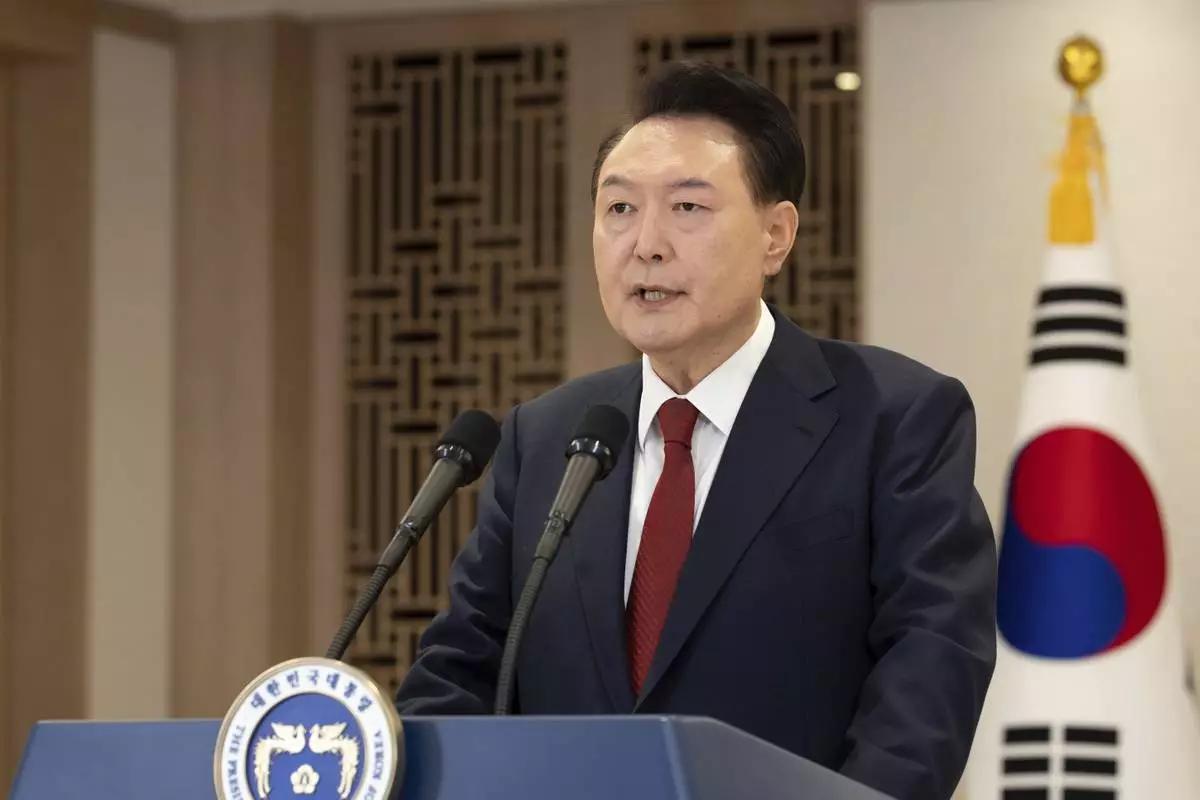
In this photo provided by South Korea Presidential Office, South Korean President Yoon Suk Yeol speaks at the presidential office in Seoul, South Korea, Thursday, Dec. 12, 2024. (South Korea Presidential Office via AP)
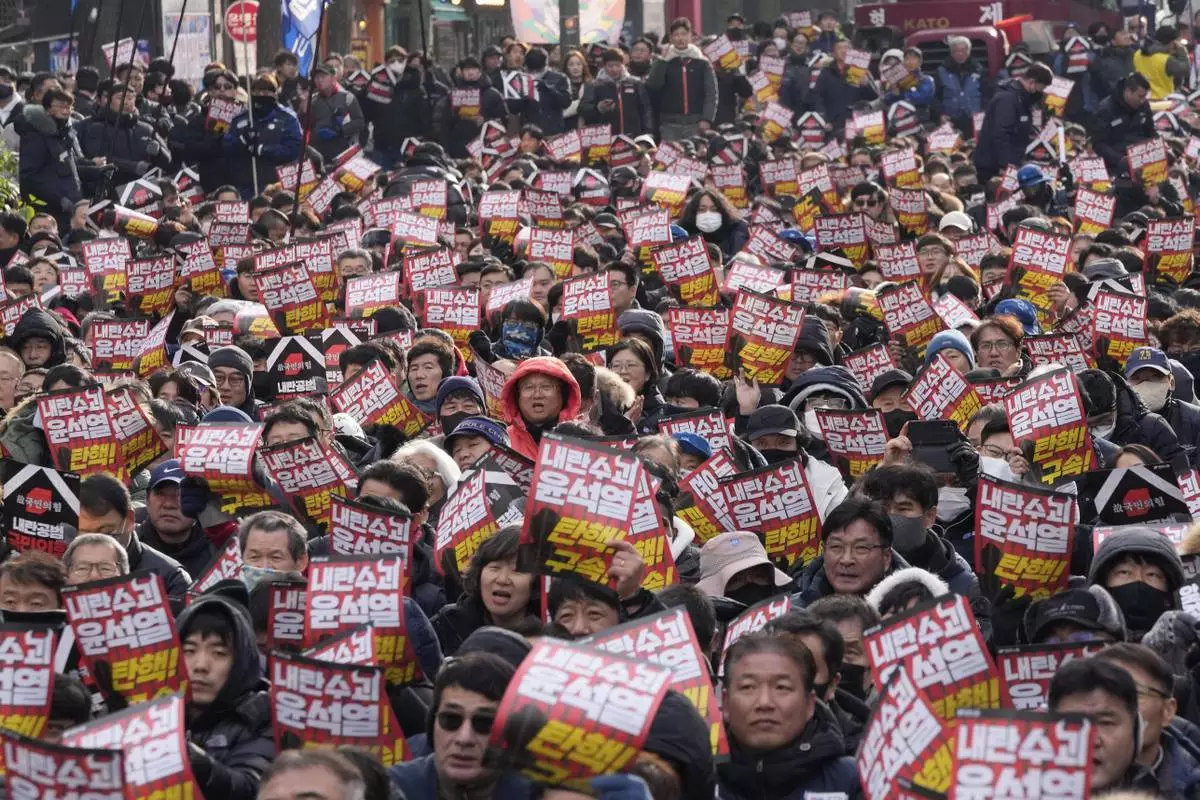
Protesters stage a rally to demand South Korean President Yoon Suk Yeol's impeachment in Seoul, South Korea, Thursday, Dec. 12, 2024. The signs read "Arrest the rebellion leader Yoon Suk Yeol." (AP Photo/Ahn Young-joon)
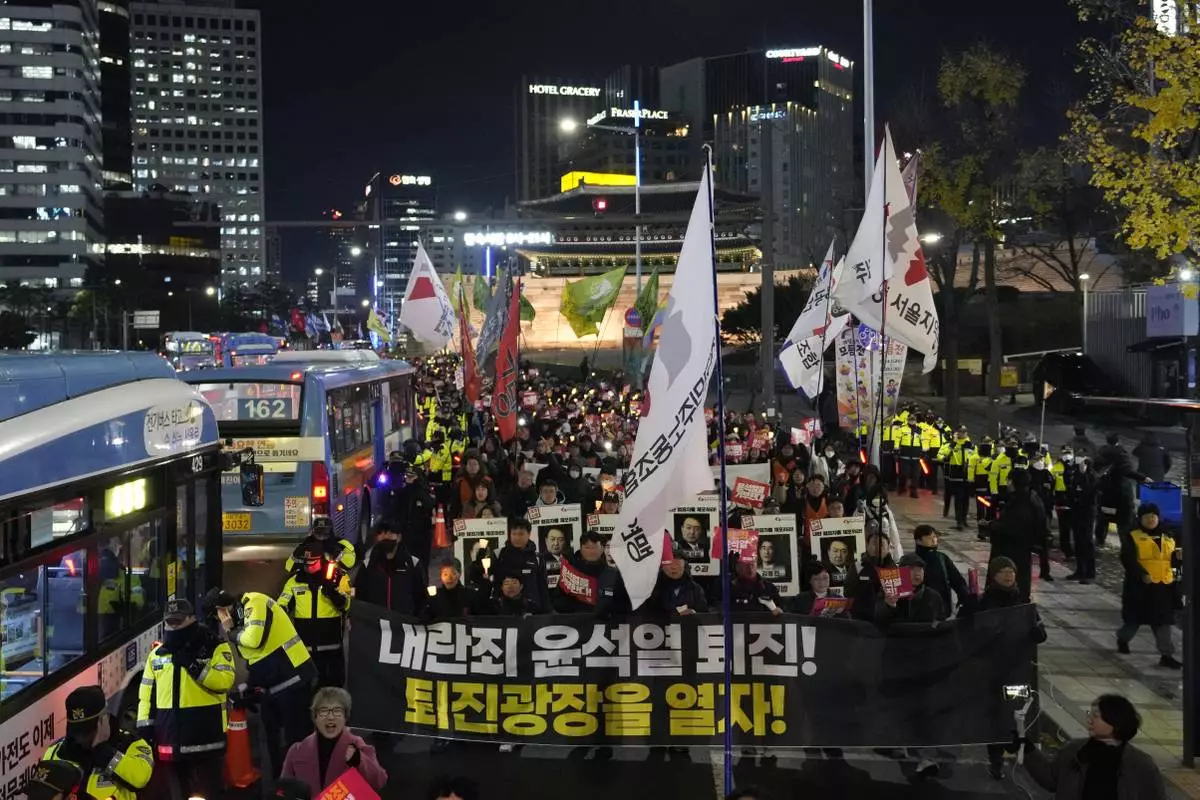
Protesters march to the presidential office after a candlelight vigil against South Korean President Yoon Suk Yeol in Seoul, South Korea, Thursday, Dec. 5, 2024. (AP Photo/Ahn Young-joon)
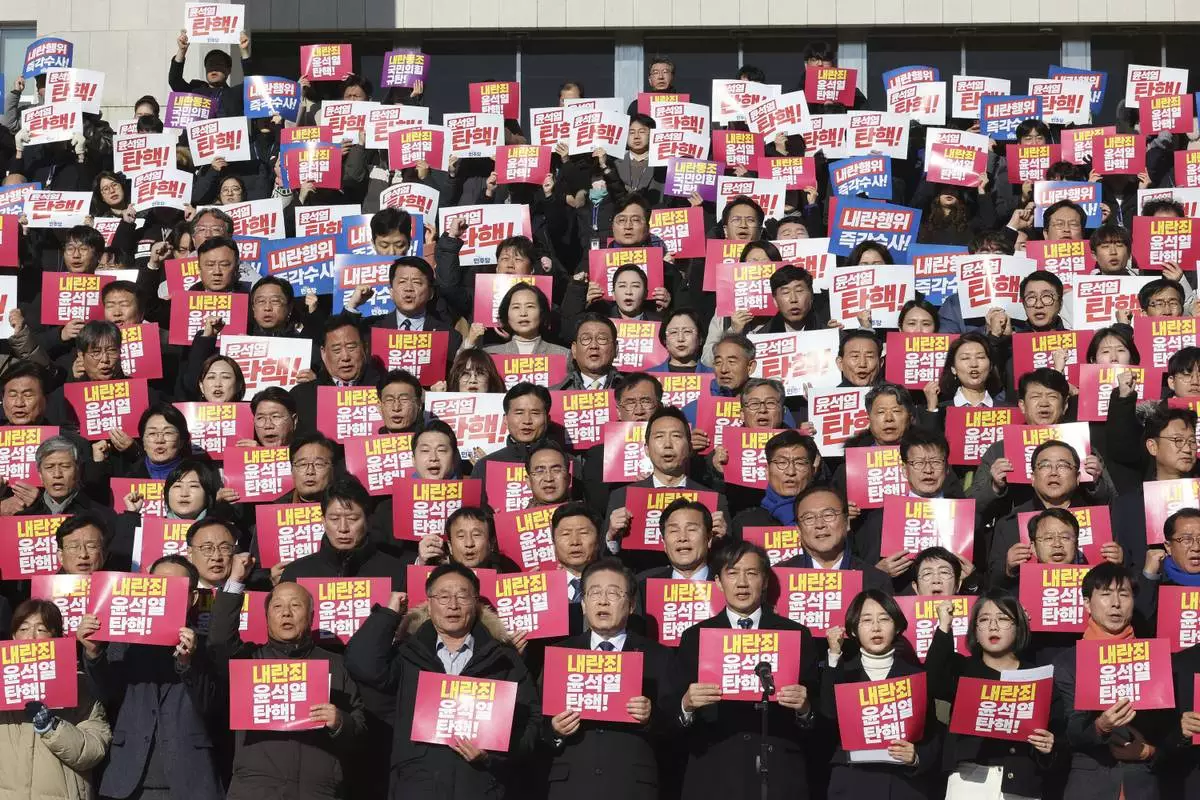
South Korea's main opposition Democratic Party leader Lee Jae-myung, bottom center, shouts slogans during a joint press conference with members of civil society and the five opposition parties to condemn the ruling People Power Party at the National Assembly in Seoul, South Korea, Friday, Dec. 6, 2024. The signs read "Impeach Yoon Suk Yeol." (Park Dong-ju/Yonhap via AP)
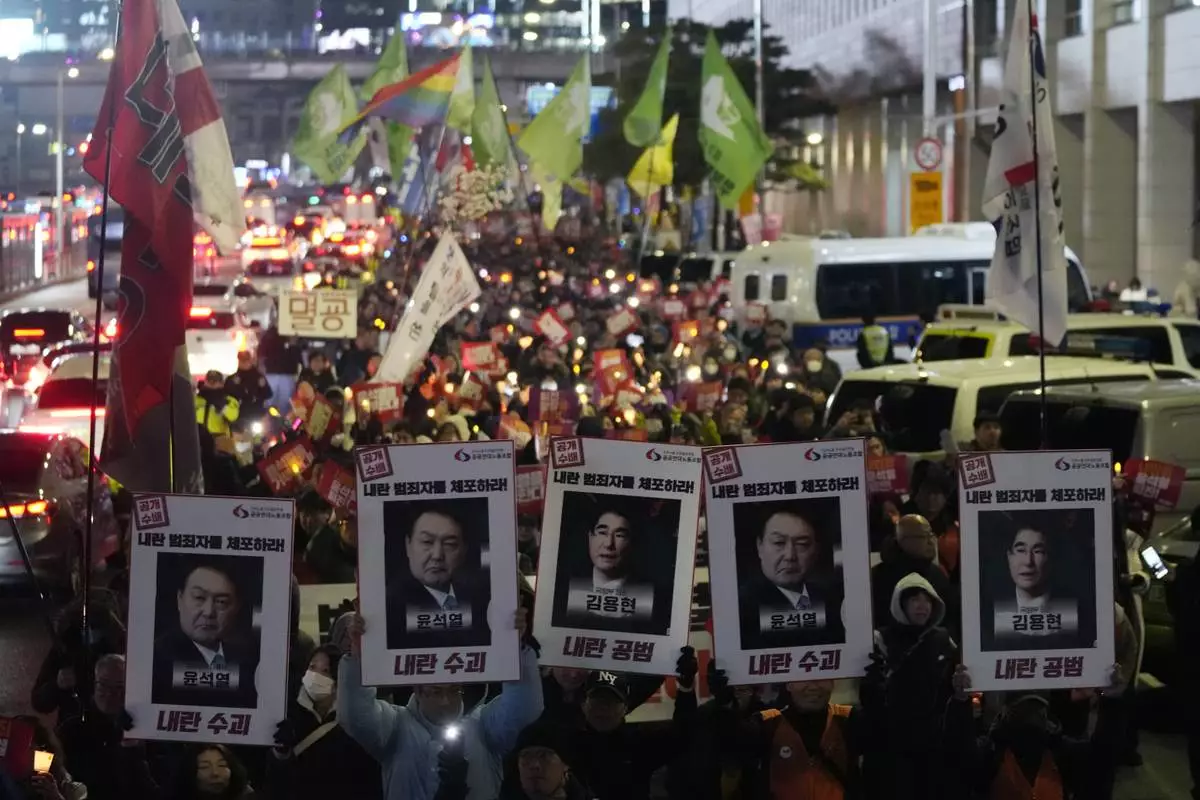
Protesters march to the presidential office after a candlelight vigil against South Korean President Yoon Suk Yeol in Seoul, South Korea, Thursday, Dec. 5, 2024. (AP Photo/Ahn Young-joon)
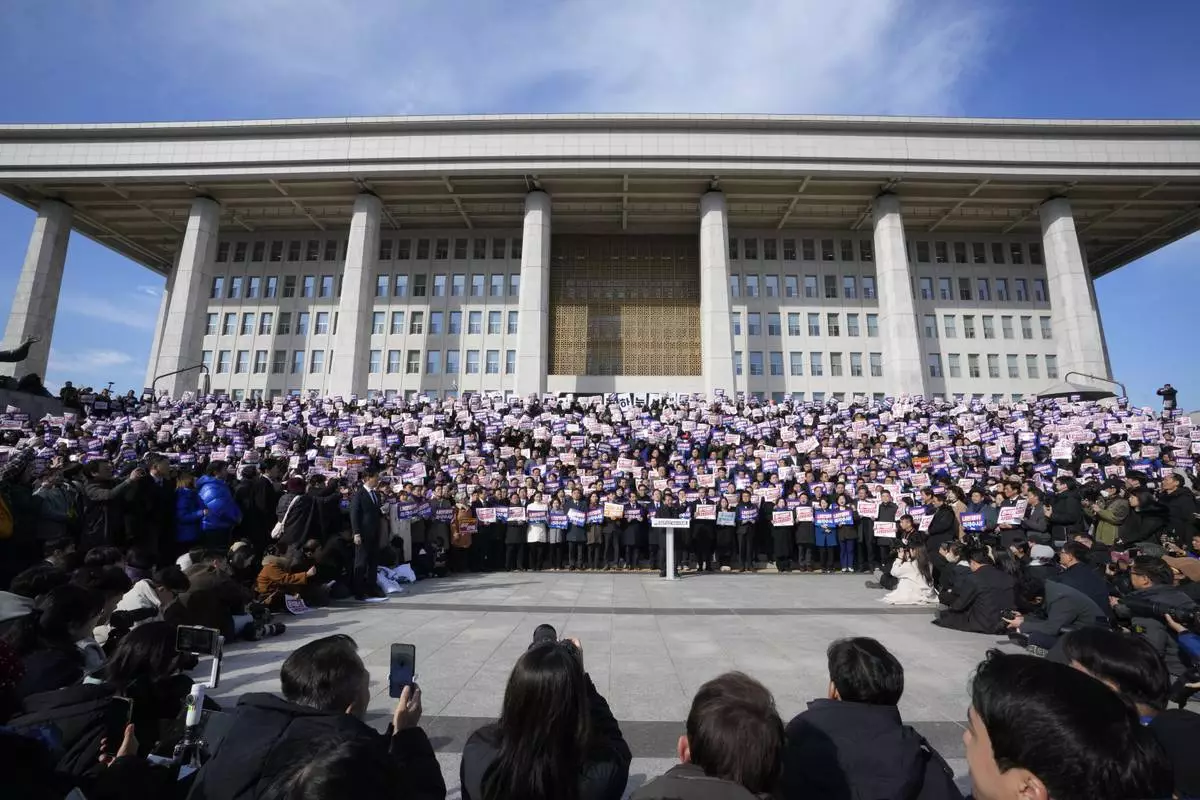
Members of main opposition Democratic Party stage a rally against South Korean President Yoon Suk Yeol at the National Assembly in Seoul, South Korea, Wednesday, Dec. 4, 2024. (AP Photo/Ahn Young-joon)
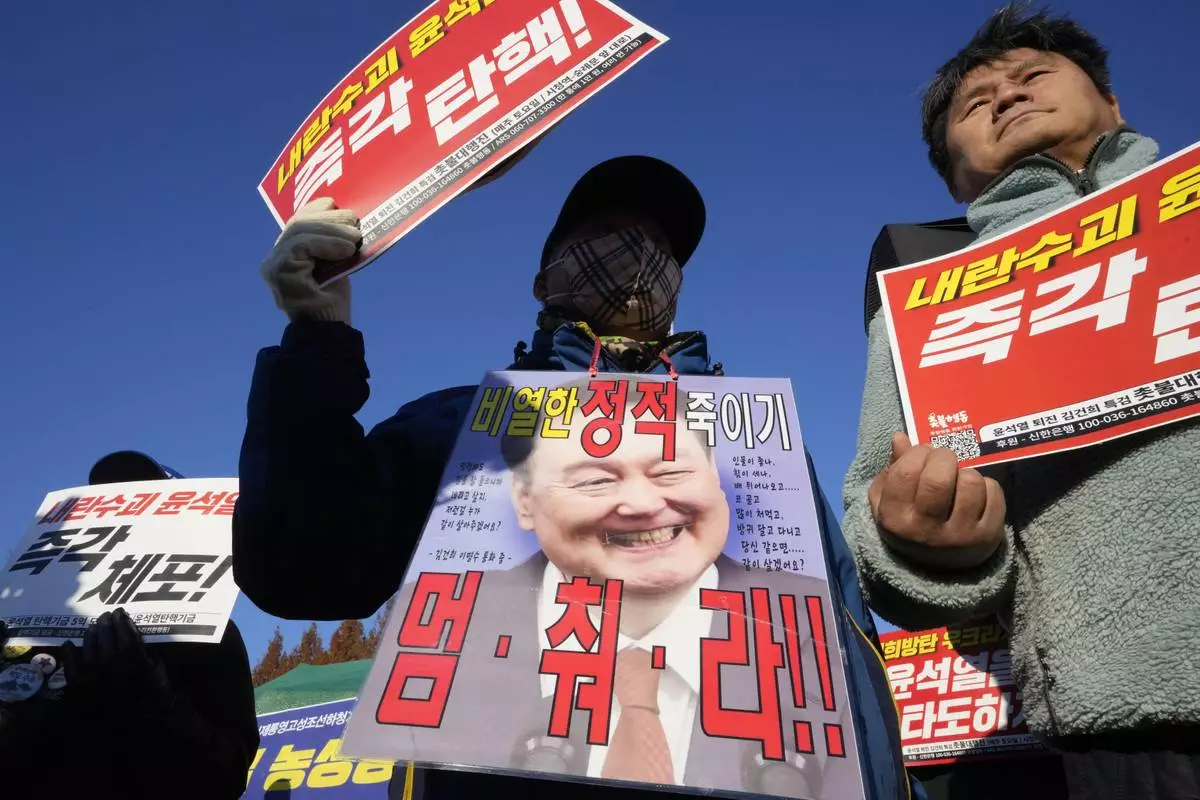
Protesters attend a rally to demand South Korean President Yoon Suk Yeol to step down in front of the National Assembly in Seoul, South Korea, Wednesday, Dec. 4, 2024. The signs read "Stop." (AP Photo/Ahn Young-joon)
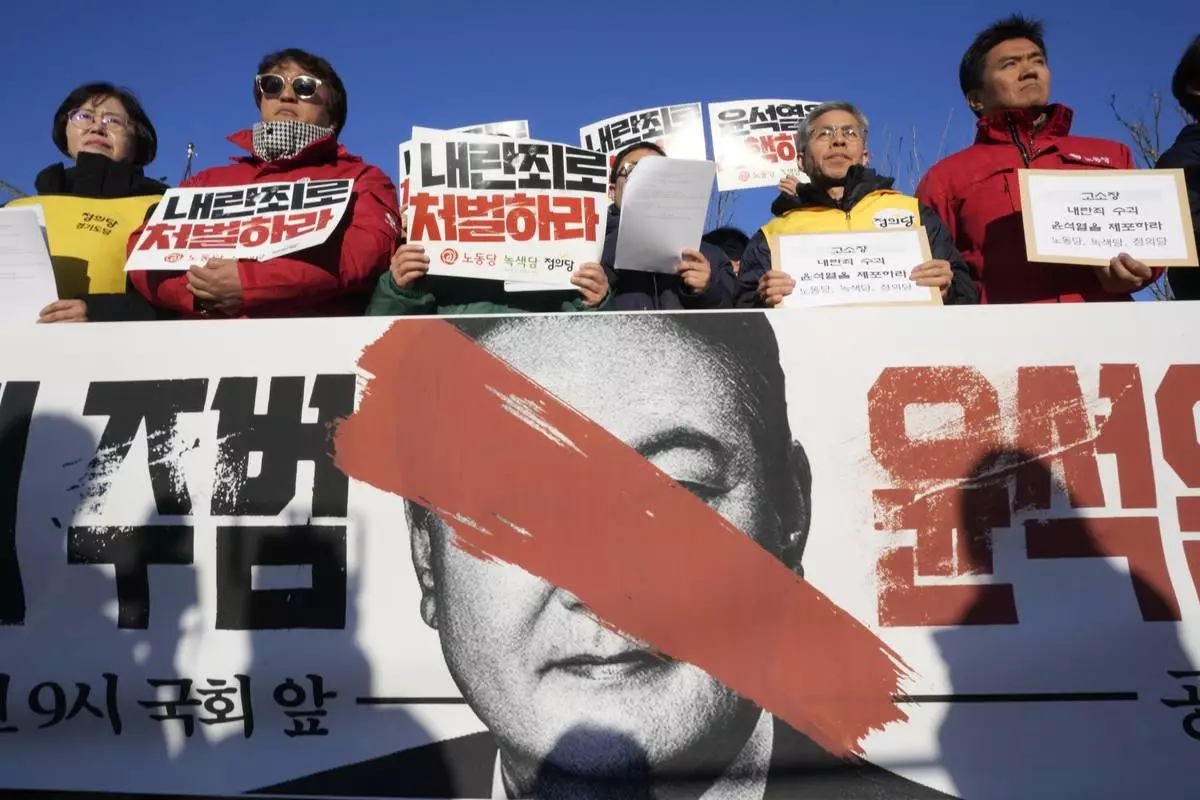
Protesters stage a rally to demand South Korean President Yoon Suk Yeol to step down in front of the National Assembly in Seoul, South Korea, Wednesday, Dec. 4, 2024. The signs read "Punish." (AP Photo/Ahn Young-joon)
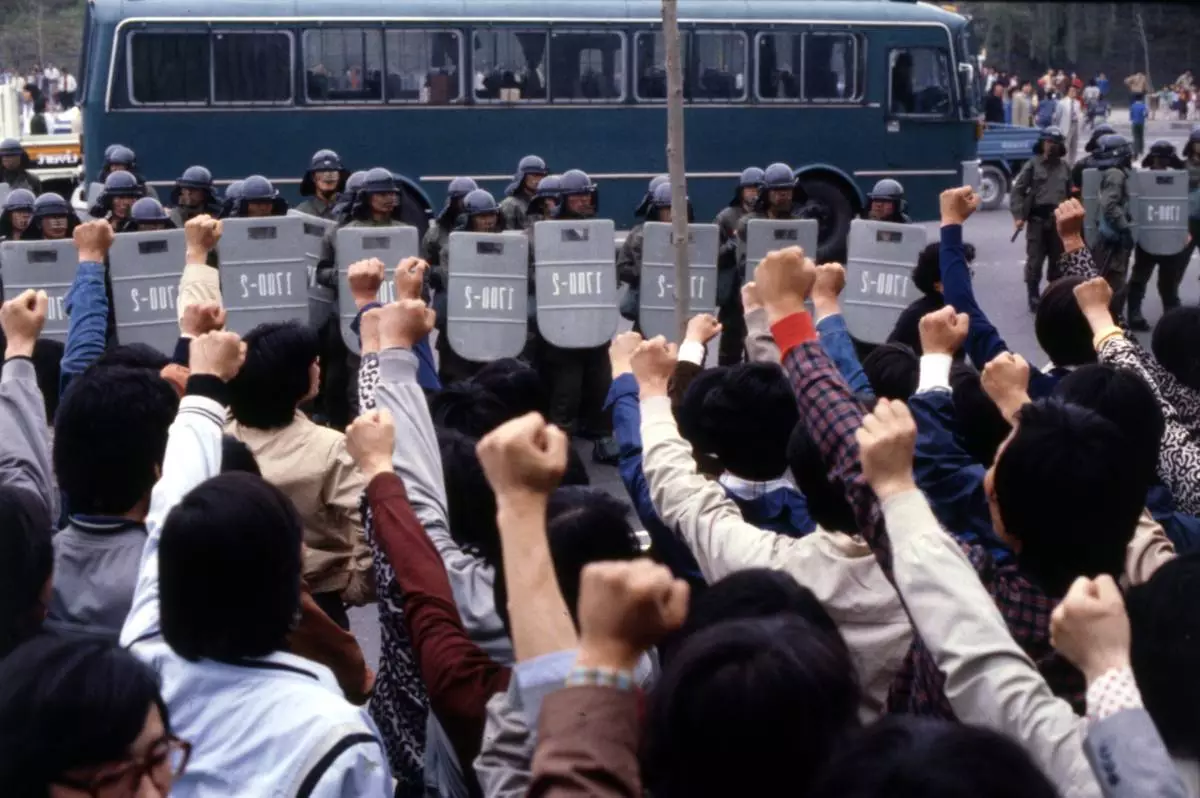
FILE - Mass students demonstrators demand the lifting of martial law and the resignation of Premier Shin Hyon-Hwack and Korean Central Intelligence chief Lt. Gen. Chun Doo-Hwan, in May 1980. (AP Photo, File)
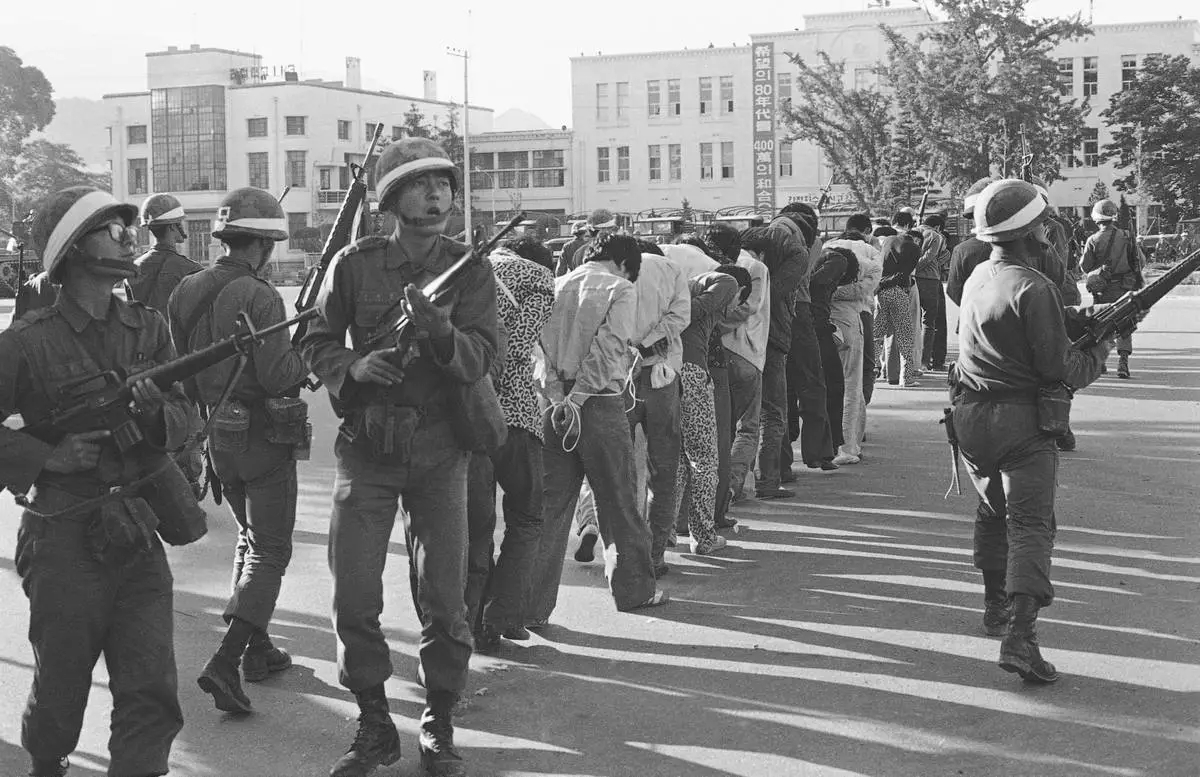
FILE - Armed South Korean government martial law troops guard captured rebels in Gwangju (Kwangju), South Korea, on May 27, 1980. The rebels were rounded up following the government's recapture by the riot-battered city. (AP Photo/Sadayuki Mikami, File)
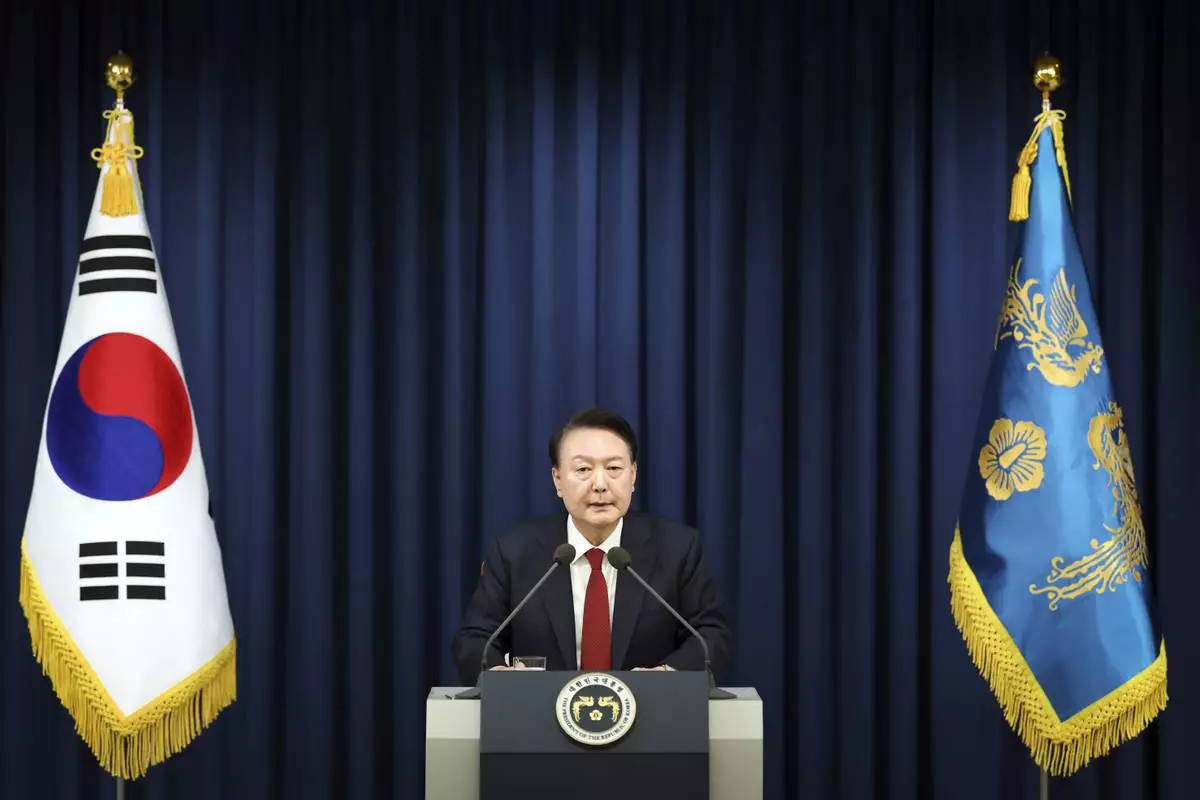
In this photo provided by South Korea Presidential Office, South Korean President Yoon Suk Yeol speaks during a press briefing at the presidential office in Seoul, South Korea, Tuesday, Dec. 3, 2024. (South Korea Unification Ministry via AP).
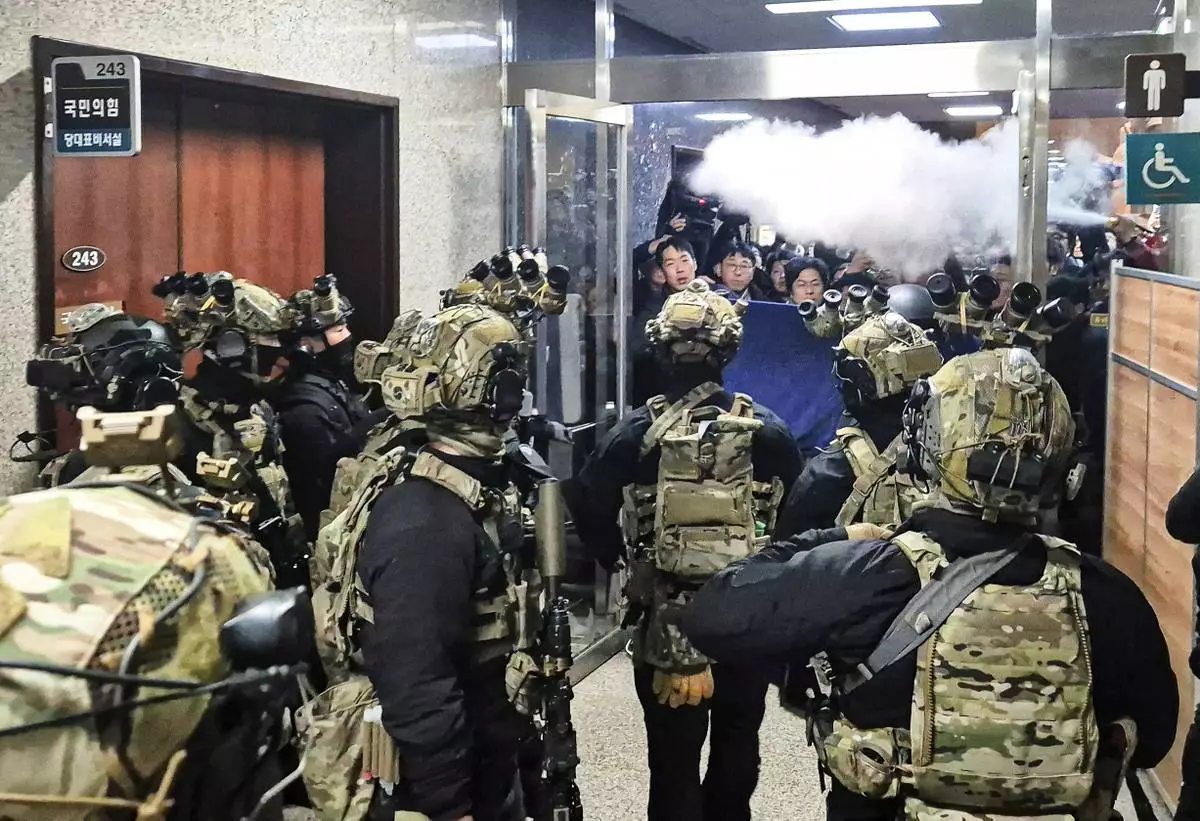
A National Assembly staff sprays fire extinguishers to block soldiers entering the main hall of the National Assembly in Seoul, South Korea, Wednesday, Dec. 4, 2024. (Jo Da-un/Yonhap via AP)
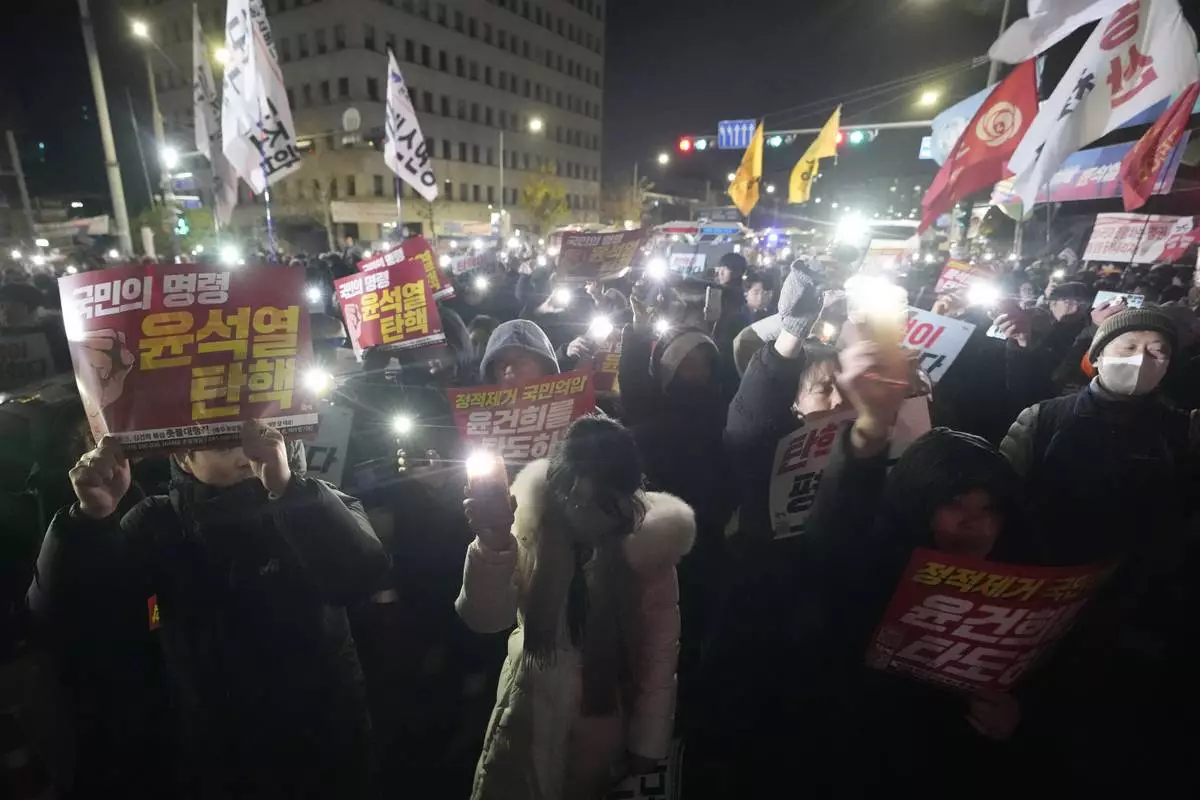
People gather to demand South Korean President Yoon Suk Yeol to step down in front of the National Assembly in Seoul, South Korea, Wednesday, Dec. 4, 2024. (AP Photo/Ahn Young-joon)
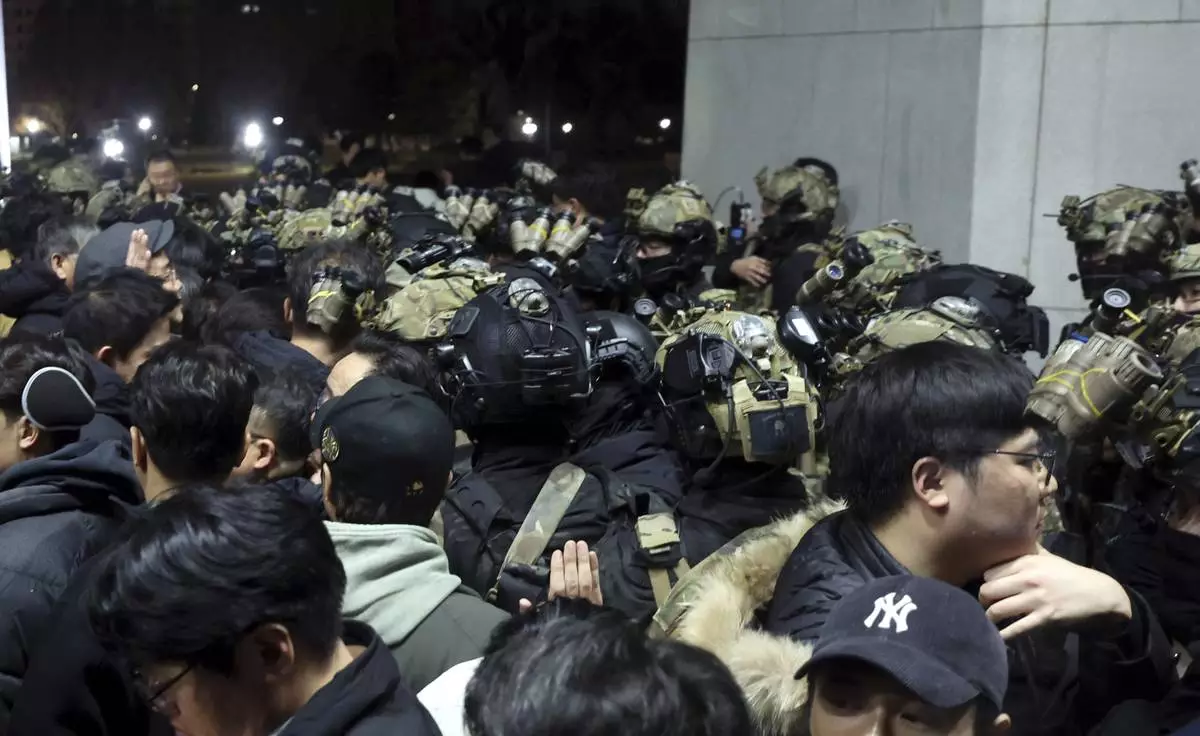
South Korean martial law soldiers try to enter the National Assembly compound in Seoul, South Korea, Wednesday, Dec. 4, 2024. (Cho Sung-bong/Newsis via AP)
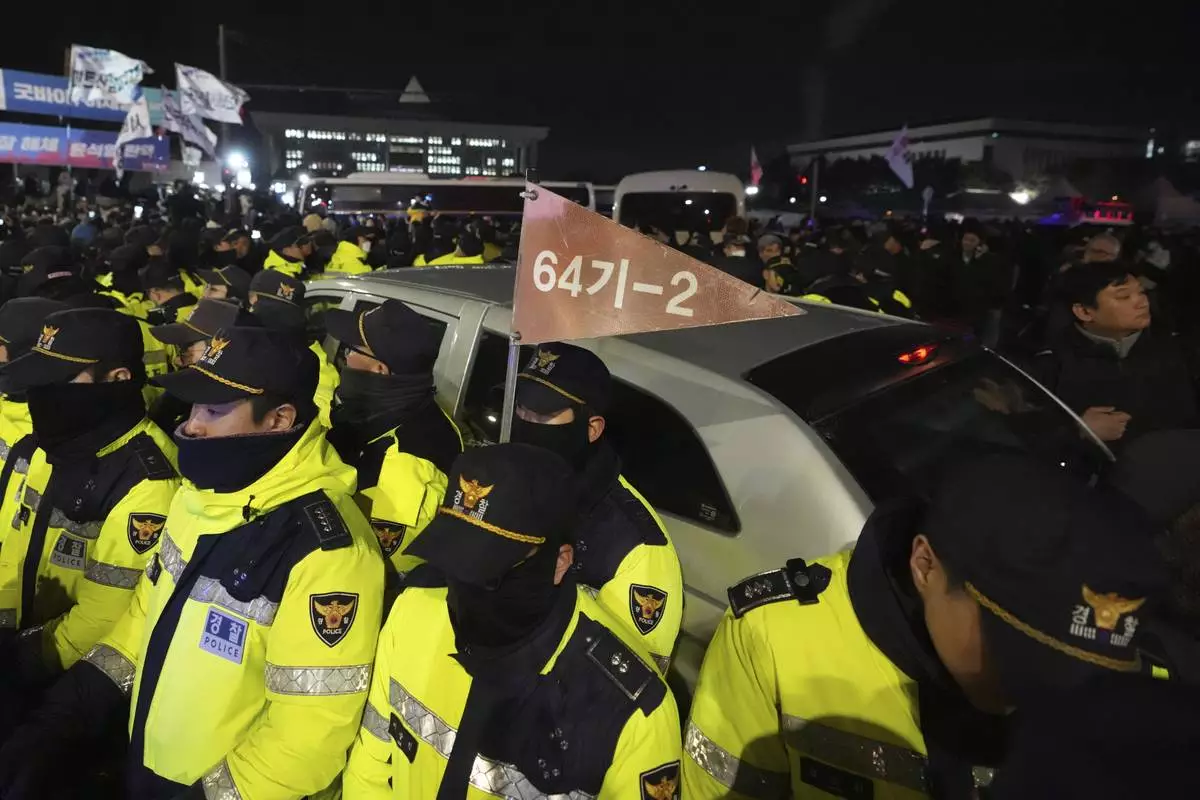
Police officers stand outside the National Assembly in Seoul, South Korea, Wednesday, Dec. 4, 2024. (AP Photo/Lee Jin-man)