IRVING, Texas--(BUSINESS WIRE)--Dec 4, 2024--
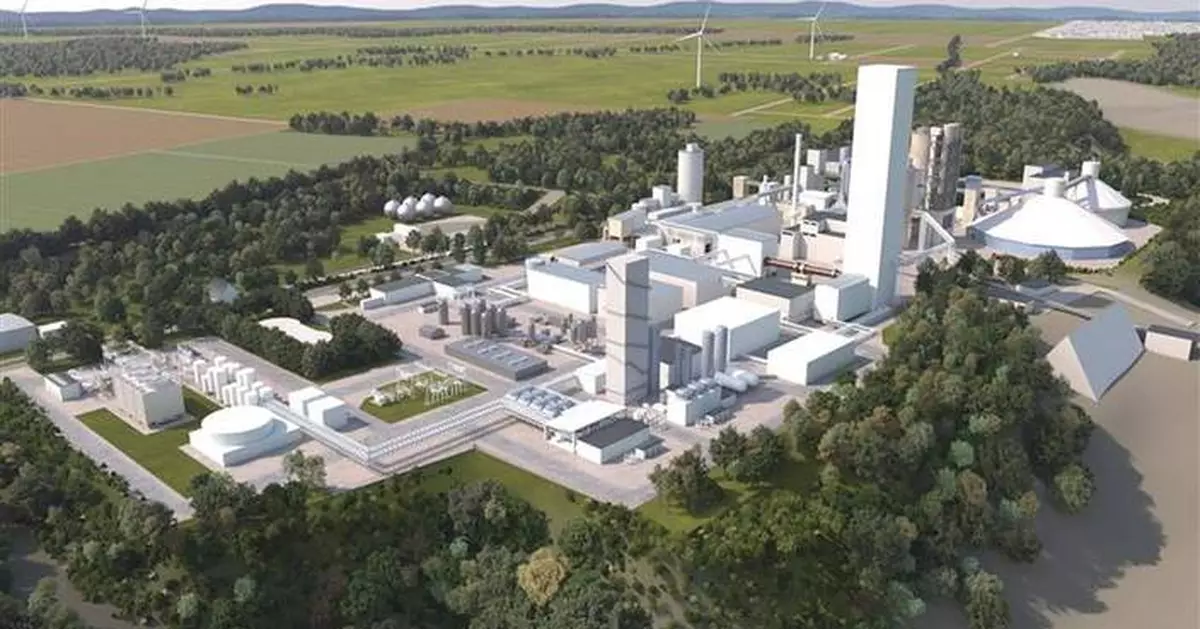
Fluor Corporation (NYSE: FLR) announced today that it has signed a Front-end Engineering and Design (FEED) contract with Heidelberg Materials for its GeZero project to integrate an industrial-scale carbon capture and storage solution into its cement production facility in Geseke, Germany. Fluor will recognize the undisclosed contract value in the fourth quarter of 2024.
This press release features multimedia. View the full release here: https://www.businesswire.com/news/home/20241204614714/en/
“GeZero is a flagship project for the decarbonization strategy of Heidelberg Materials and Fluor is excited to assist with this pioneering technology,” said Mike Alexander, Group President of Fluor’s Energy Solutions business. “Carbon capture and permanent storage is crucial in meeting sustainability goals.”
Fluor will be responsible for design integration of several decarbonization technologies at the Geseke cement production facility. Construction is planned to start in 2026, with commissioning three years later.
Based on state-of-the-art second generation advanced Oxyfuel technology, Heidelberg Materials’ project aims to capture 700,000 tonnes of CO₂ annually. Once captured, the CO₂ will be transported to offshore storage sites in the North Sea via pipeline or ship, where it will be permanently and safely stored.
About Fluor Corporation
Fluor Corporation (NYSE: FLR) is building a better world by applying world-class expertise to solve its clients’ greatest challenges. Fluor’s nearly 34,000 employees provide professional and technical solutions that deliver safe, well-executed, capital-efficient projects to clients around the world. Fluor had revenue of $15.5 billion in 2023 and is ranked 265 among the Fortune 500 companies. With headquarters in Irving, Texas, Fluor has provided engineering, procurement and construction services for more than a century. For more information, please visit www.fluor.com or follow Fluor on Facebook, Instagram, LinkedIn, X and YouTube.
#EnergySolutions

A rendering of Heidelberg Materials’ cement production facility in Geseke, Germany. (Photo: Business Wire)
HONG KONG (AP) — Fireworks are typically a celebratory centerpiece of Hong Kong's New Year celebrations. Not this year.
The territory will ring in 2026 without spectacular and colorful explosions in the sky over its iconic Victoria Harbor after a massive fire in November that killed at least 161 people.
The city’s tourism board will instead host a music show Wednesday night featuring soft rock duo Air Supply and other singers in Central, a business district that also is home to the famous nightlife hub Lan Kwai Fong. The facades of eight landmarks will turn into giant countdown clocks presenting a three-minute light show at midnight.
Fireworks have long been part of the city’s celebrations for the New Year, Lunar New Year and National Day. The pyrotechnic displays against Hong Kong’s world-famous skyline of skyscrapers typically draw hundreds of thousands of people including many tourists to both sides of the promenade.
Rosanna Law, the territory's secretary for culture, sports and tourism, acknowledged Tuesday that having no fireworks would affect some hotel and restaurant businesses.
The financial hub’s worst blaze since 1948 broke out at Wang Fuk Court, in the northern suburban district of Tai Po, in late November. The apartment complex was undergoing a monthslong renovation project with buildings covered by bamboo scaffolding and green netting.
Authorities have pointed to the substandard netting and foam boards installed on windows as contributing factors in the fire’s rapid spread. Thousands of affected residents have moved to transitional homes, hotels and youth hostels, struggling to recover from the loss of lives and homes that took them years to buy. The casualties pained many residents across the city.
Past tragedies in Hong Kong have forced similar cancellations of fireworks. They include the 2013 National Day festivities following a vessel collision that killed 39 people on Oct. 1, 2012, and the 2018 Lunar New Year celebration after a bus crash that left 19 dead. During the 2019 anti-government protests and the COVID-19 pandemic, multiple displays also were scrapped.
The origin of fireworks is believed to date to China in the second century B.C., when someone discovered bamboo stalks exploded with loud bangs when thrown into fire, creating the first natural “firecrackers,” according to the American Pyrotechnics Association, a U.S. trade group.
The Guinness World Records organization says the first accurately documented firework, the Chinese firecracker, was created by Li Tian, a monk from China’s Tang dynasty dating to around 618 to 907 C.E. Li discovered that putting gunpowder in enclosed hollow bamboo stems created loud explosions and bound crackers together to create the traditional New Year firecrackers to drive out evil spirits, Guinness said.
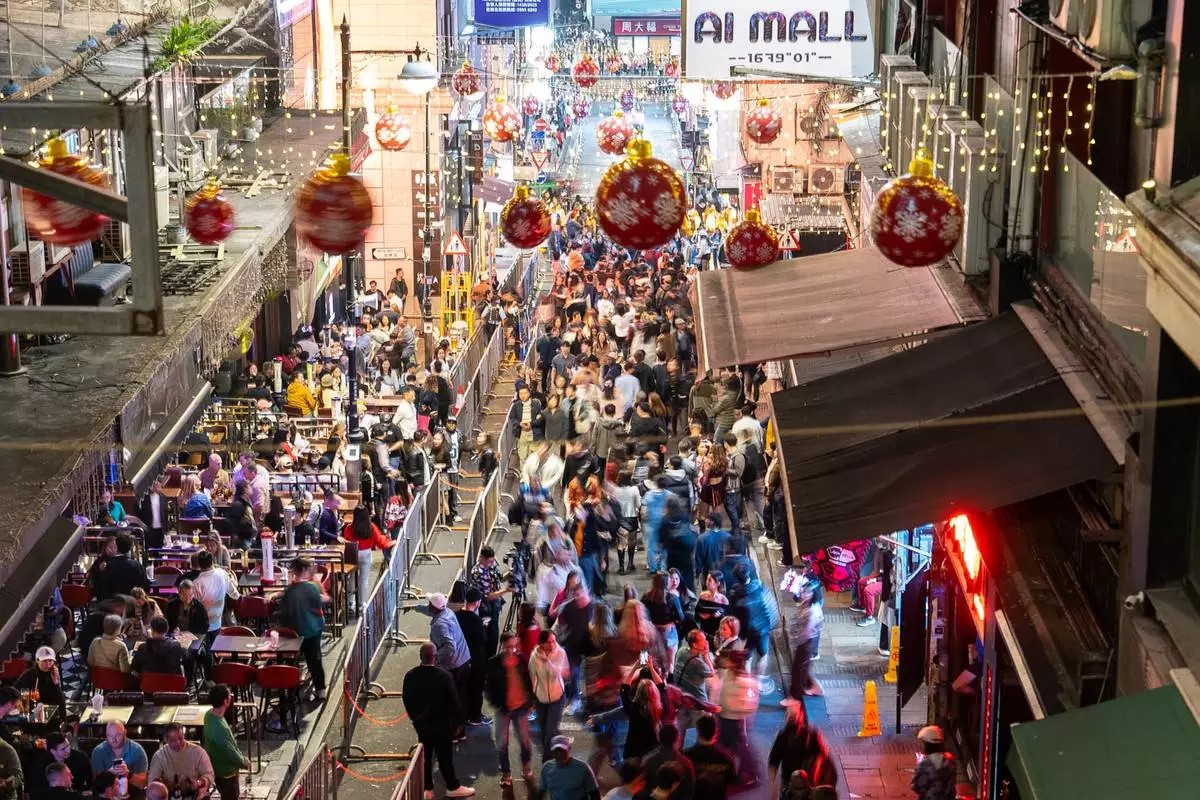
People gather at Lan Kwai Fong to celebrate the start of 2026 in the Central district of Hong Kong, Wednesday, Dec. 31, 2025. (AP Photo/Chan Long Hei)
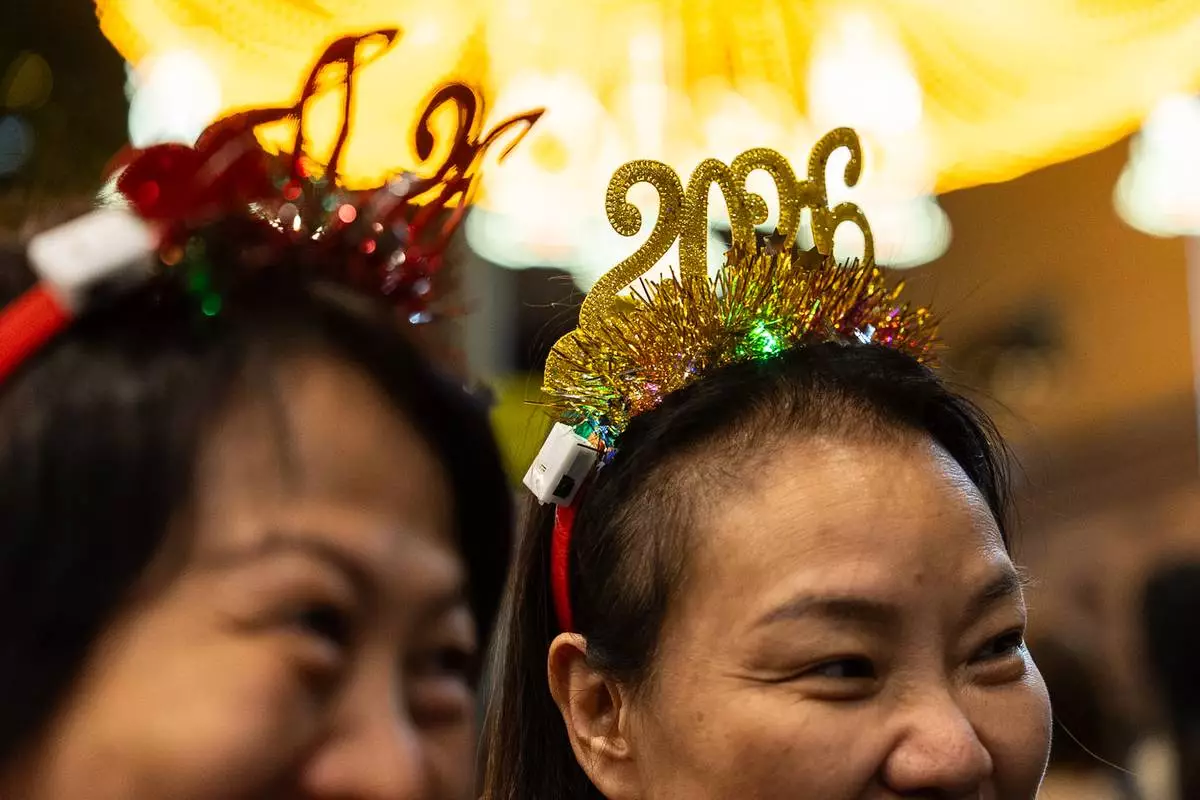
People attend the New Year countdown event to celebrate the start of 2026 in the Central district of Hong Kong, on Wednesday, Dec. 31, 2025. (AP Photo/Chan Long Hei)
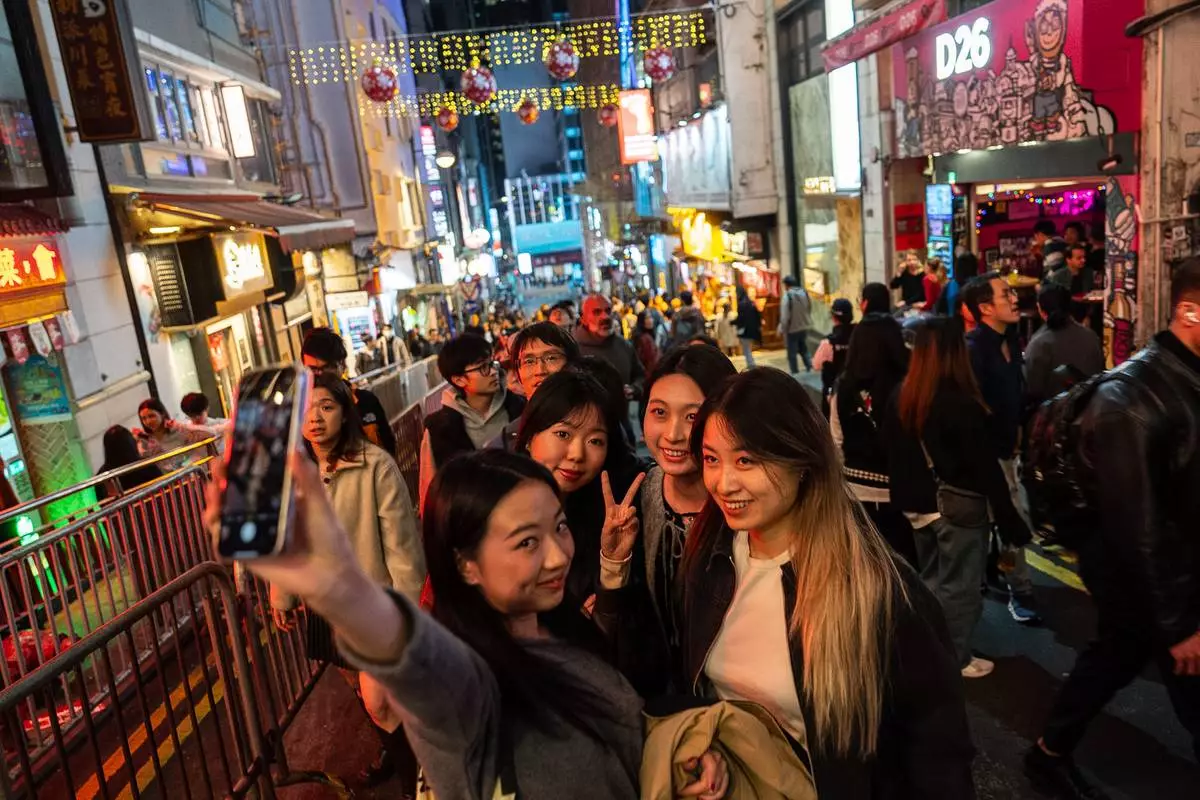
People take selfies at Lan Kwai Fong to celebrate the start of 2026 in the Central district of Hong Kong, on Wednesday, Dec. 31, 2025. (AP Photo/Chan Long Hei)
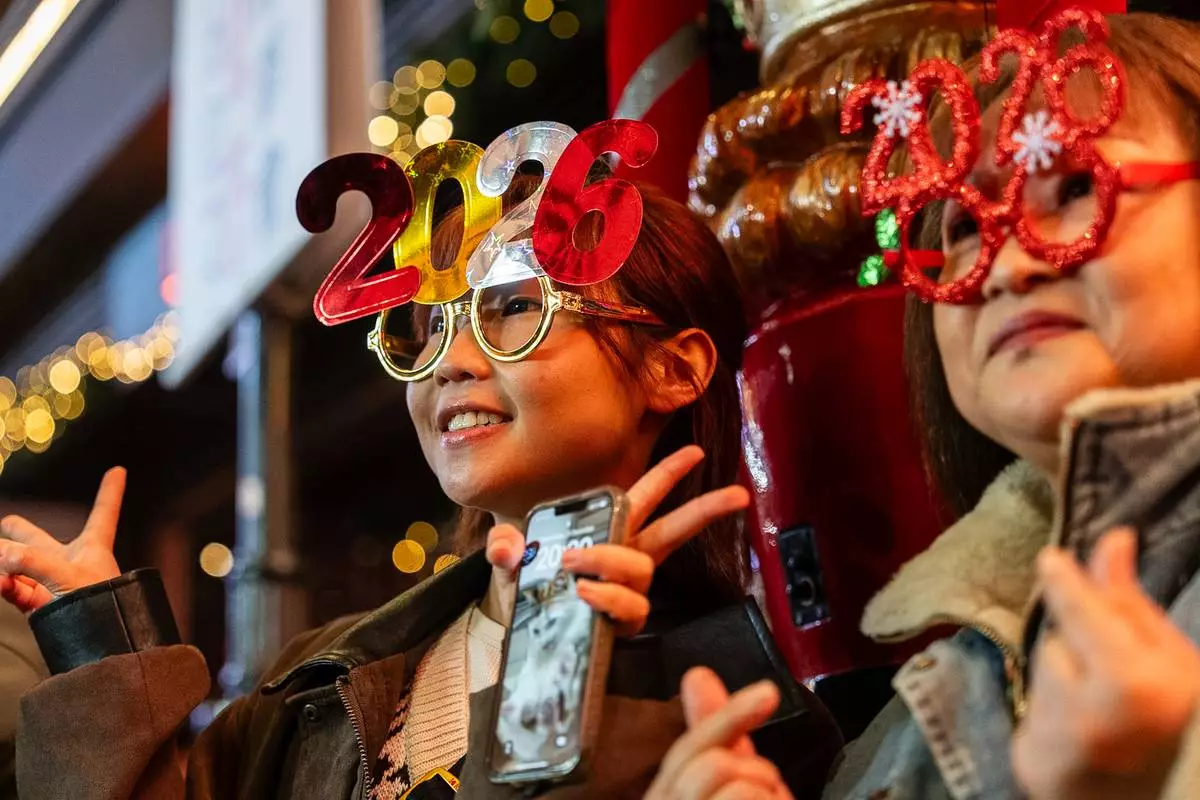
People pose for photographs at Lan Kwai Fong to celebrate the start of 2026 in the Central district of Hong Kong, on Wednesday, Dec. 31, 2025. (AP Photo/Chan Long Hei)
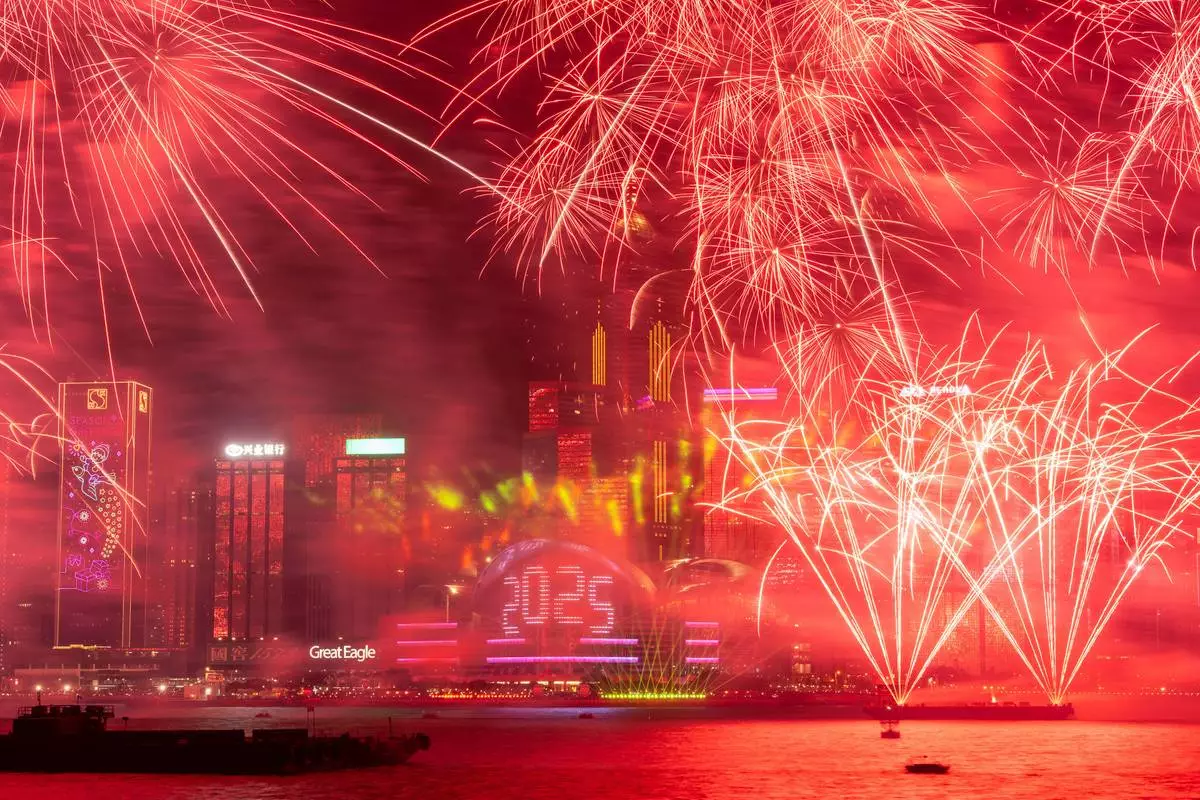
FILE - Fireworks explode over Victoria Harbour to celebrate the start of 2025 at Tsim Sha Tsui in Hong Kong, Jan. 1, 2025. (AP Photo/Chan Long Hei, File)