MEMPHIS, Tenn. (AP) — The Memphis Police Department uses excessive force and discriminates against Black people, according to the findings of a U.S. Department of Justice investigation launched after the beating death of Tyre Nichols after a traffic stop in 2023.
A report released Wednesday marked the conclusion of the investigation that began six months after Nichols was kicked, punched and hit with a police baton as five officers tried to arrest him after he fled a traffic stop.
The report says that “Memphis police officers regularly violate the rights of the people they are sworn to serve.”
"The people of Memphis deserve a police department and city that protects their civil and constitutional rights, garners trust and keeps them safe,” Assistant Attorney General Kristen Clarke of the Justice Department’s Civil Rights Division said in an emailed statement.
The city said in a letter released earlier Wednesday that it would not agree to negotiate federal oversight of its police department until it could review and challenge results of the investigation.
City officials had no immediate comment on the report but said they plan to hold a news conference Thursday after Justice Department officials hold their own news conference in Memphis on Thursday morning to address the findings.
Police video showed officers pepper spraying Nichols and hitting him with a Taser before he ran away from a traffic stop. Five officers chased down Nichols and kicked, punched and hit him with a police baton just steps from his home as he called out for his mother. The video showed the officers milling about, talking and laughing as Nichols struggled with his injuries.
Nichols died on Jan. 10, 2023, three days after the beating. The five officers — Tadarrius Bean, Demetrius Haley, Emmitt Martin, Desmond Mills Jr. and Justin Smith — were fired, charged in state court with murder, and indicted by a federal grand jury on civil rights and witness tampering charges.
Nichols was Black, as are the former officers. His death led to national protests, raised the volume on calls for police reforms in the U.S., and directed intense scrutiny towards the police department in Memphis, a majority Black city. The Memphis Police Department is more than 50 percent Black, and police chief Cerelyn “CJ” Davis is also Black.
The report specifically mentions the Nichols case, and it addresses the police department’s practice of using traffic stops to address violent crime. The police department has encouraged officers in specialized units, task forces, and on patrol to prioritize street enforcement, and officers and community members have described this approach as “saturation,” or flooding neighborhoods with traffic stops, the report said.
“This strategy involves frequent contact with the public and gives wide discretion to officers, which requires close supervision and clear rules to direct officers’ activity,” the report said. “But MPD does not ensure that officers conduct themselves in a lawful manner.”
The report said prosecutors and judges told federal investigators that officers do not understand the constitutional limits on their authority. Officers stop and detain people without adequate justification, and they conduct invasive searches of people and cars, the report said.
“Black people in Memphis disproportionately experience these violations,” the report said. “MPD has never assessed its practices for evidence of discrimination. We found that officers treat Black people more harshly than white people who engage in similar conduct.”
The investigation found that Memphis officers resort to force likely to cause pain or injury “almost immediately in response to low-level, nonviolent offenses, even when people are not aggressive.”
The report says officers pepper sprayed, kicked and fired a Taser at an unarmed man with a mental illness who tried to take a $2 soda from a gas station. By the end of an encounter outside the gas station, at least nine police cars and 12 officers had responded to the incident, for which the man served two days in jail for theft and disorderly conduct.
In a letter to the Justice Department’s Civil Rights Division released earlier Wednesday, Memphis City Attorney Tannera George Gibson said the city had received a request from the DOJ to enter into an agreement that would require it to “negotiate a consent decree aimed at institutional police and emergency services.”
A consent decree is an agreement requiring reforms that are overseen by an independent monitor and are approved by a federal judge. The federal oversight can continue for years, and violations could result in fines paid by the city.
It remains to be seen what will happen to attempts to reach such agreements between cities and the Justice Department once President-elect Donald Trump returns to office and installs new department leadership. The Justice Department under the first Trump administration curtailed the use of consent decrees, and the Republican president-elect is expected to again radically reshape the department’s priorities around civil rights.
“Until the City has had the opportunity to review, analyze, and challenge the specific allegations that support your forthcoming findings report, the City cannot — and will not — agree to work toward or enter into a consent decree that will likely be in place for years to come and will cost the residents of Memphis hundreds of millions of dollars,” the letter said.
The officers in the Nichols case were part of a crime suppression team called the Scorpion Unit, which was disbanded after Nichols’ death. The team targeted drugs, illegal guns and violent offenders, with the goal of amassing arrest numbers, while sometimes using force against unarmed people.
Memphis police never adopted policies and procedures to direct the unit, despite alarms that it was minimally supervised, according to the Justice Department report. Some prosecutors told department investigators that there were some “outrageous” inconsistences between body camera footage and arrest reports, and if the cases went to trial, they would be “laughed out of court.” The report found that the unit’s misconduct led to dozens of criminal cases being dismissed.
In court proceedings dealing with Nichols' death, Martin and Mills pleaded guilty to the federal charges under deals with prosecutors. The other three officers were convicted in early October of witness tampering related to the cover-up of the beating. Bean and Smith were acquitted of civil rights charges of using excessive force and being indifferent to Nichols’ serious injuries.
Haley was acquitted of violating Nichols’ civil rights causing death, but he was convicted of two lesser charges of violating his civil rights causing bodily injury. The five men face sentencing by a federal judge in the coming months.
Martin and Mills also are expected to change their not guilty pleas in state court, according to lawyers involved in the case. Bean, Haley and Smith have also pleaded not guilty to state charges of second-degree murder. A trial in the state case has been set for April 28.
Justice Department investigators have targeted other cities with similar probes in recent years, including Minneapolis after the killing of George Floyd, and Louisville, Kentucky, following an investigation prompted by the fatal police shooting of Breonna Taylor.
In its letter, the city of Memphis said the DOJ's investigation “only took 17 months to complete, compared to an average of 2-3 years in almost every other instance, implying a rush to judgment.”
Mattise reported from Nashville, Tennessee, and Durkin Richer reported from Washington.
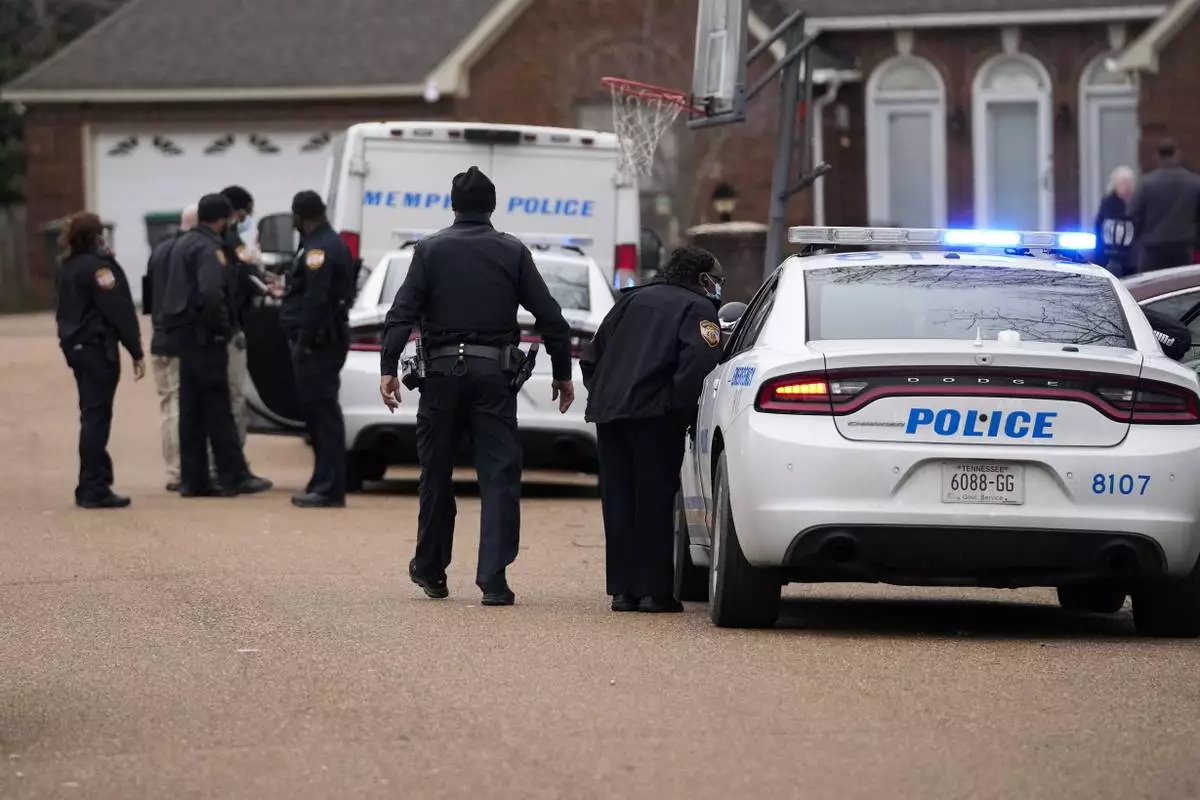
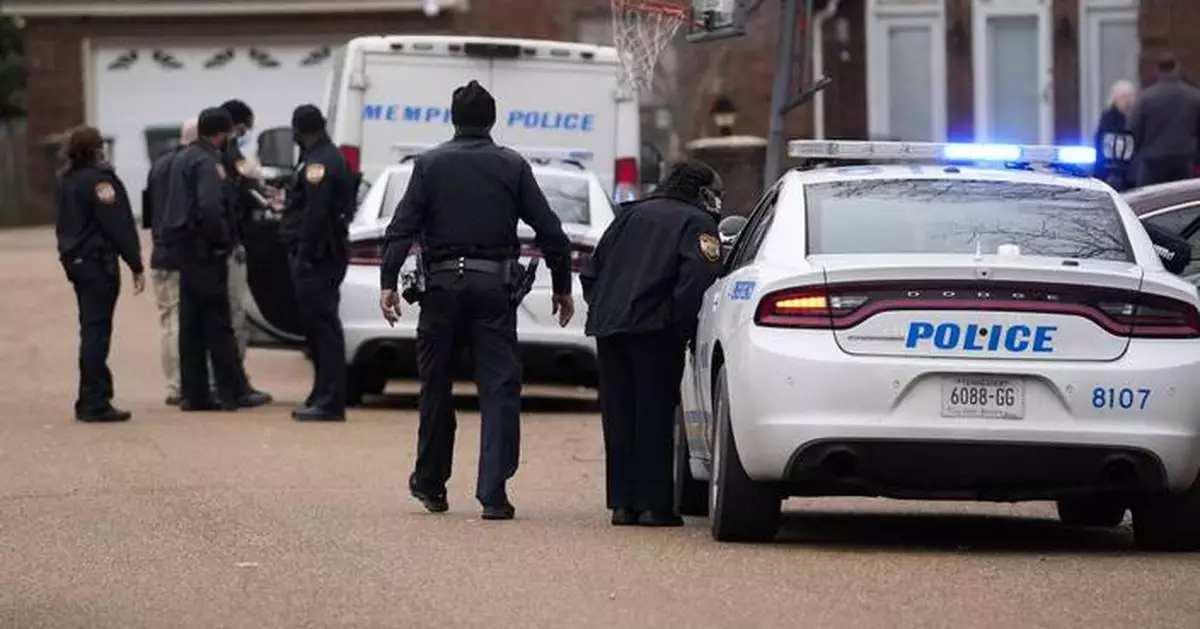
FILE - Members of the Memphis Police Department work a crime scene in Memphis, Tenn., Tuesday, Jan. 24, 2023. (AP Photo/Gerald Herbert, File)