KOVACICA, Serbia (AP) — Nearly a century ago, two farmers in an ethnic Slovak village in northern Serbia started painting to pass the time during the long winter months. This week, their art is being inscribed on UNESCO's intangible cultural heritage list.
The farmers' paintings and those of others from the village of Kovacica are what is known as naïve art — a form that depicts everyday scenes, landscapes, village life and farm surroundings with a childlike simplicity.
Click to Gallery
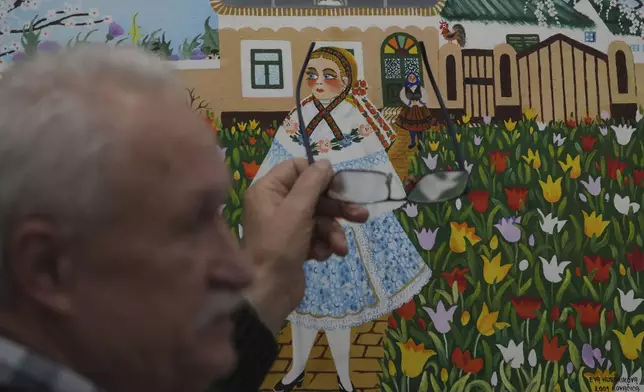
Pavel Babka, gallerist and naïve art expert shows painting of a girl in traditional Slovak multi-layered skirt in the village of Kovacica, Serbia, Thursday, Nov. 28, 2024. (AP Photo/Darko Vojinovic)
Pavel Babka, gallerist and naïve art expert shows painting of a horse-drawn cart and a yellow house dating back to Austro-Hungarian times in the village of Kovacica, Serbia, Thursday, Nov. 28, 2024. (AP Photo/Darko Vojinovic)
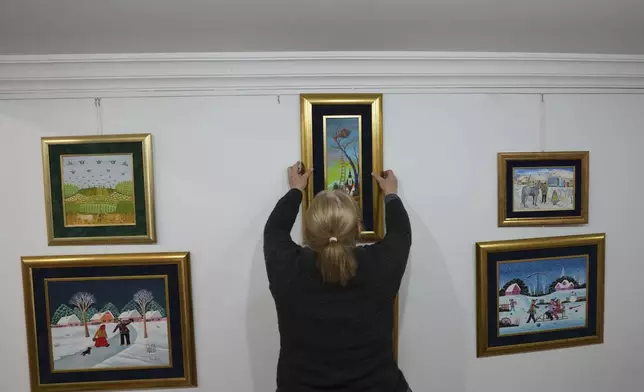
Klara Babka hangs a painting in the Gallery of naive art in the village of Kovacica, Serbia, Thursday, Nov. 28, 2024. (AP Photo/Darko Vojinovic)
Klara Babka hangs a painting in the Gallery of naive art in the village of Kovacica, Serbia, Thursday, Nov. 28, 2024. (AP Photo/Darko Vojinovic)
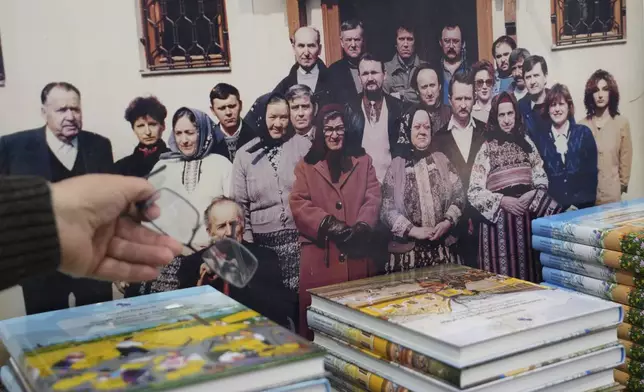
Pavel Babka, gallerist and naïve art expert shows the photo of older generations of naïve painters in the village of Kovacica, Serbia, Thursday, Nov. 28, 2024. (AP Photo/Darko Vojinovic)
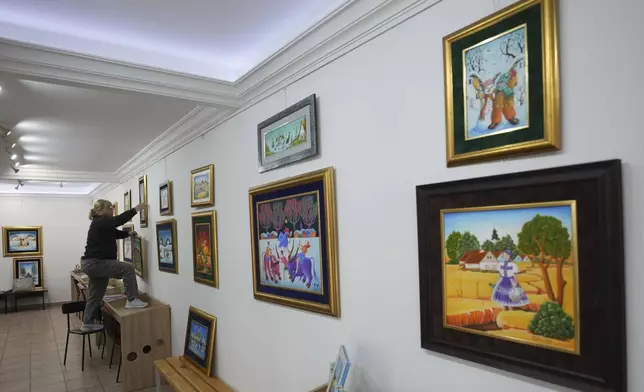
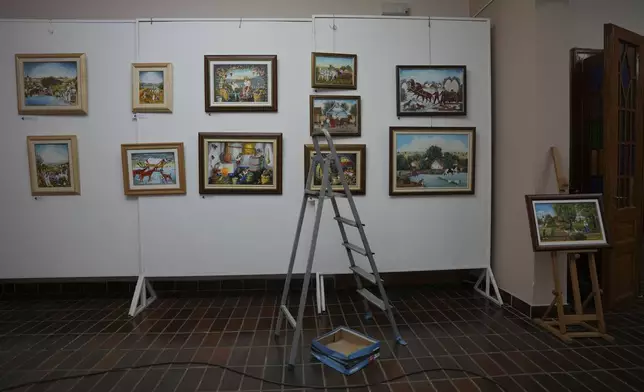
Various paintings in the Gallery of naive art in the village of Kovacica, Serbia, Thursday, Nov. 28, 2024. (AP Photo/Darko Vojinovic)
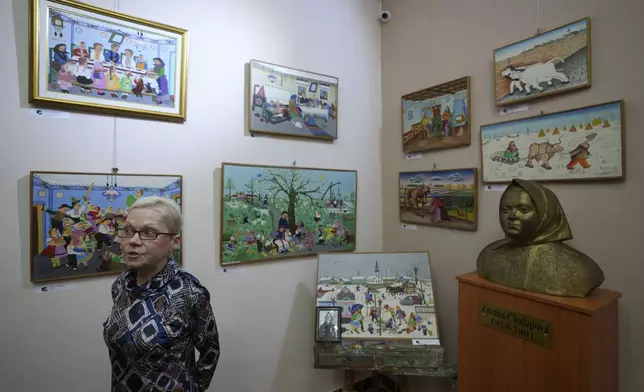
Ana Zolnaj Barca, head of the Gallery of naive art speaks about various paintings in the village of Kovacica, Serbia, Thursday, Nov. 28, 2024. (AP Photo/Darko Vojinovic)
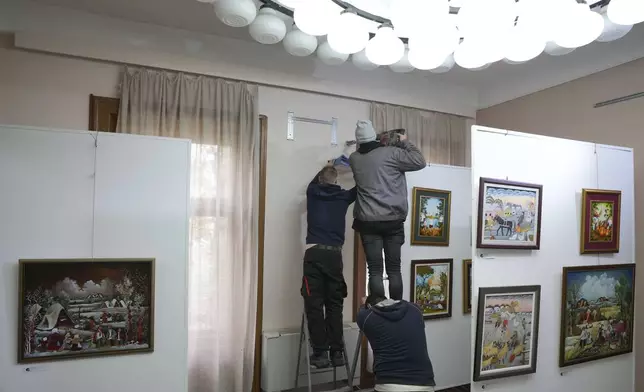
Workers put up air conditioner in the Gallery of naive art in the village of Kovacica, Serbia, Thursday, Nov. 28, 2024. (AP Photo/Darko Vojinovic)
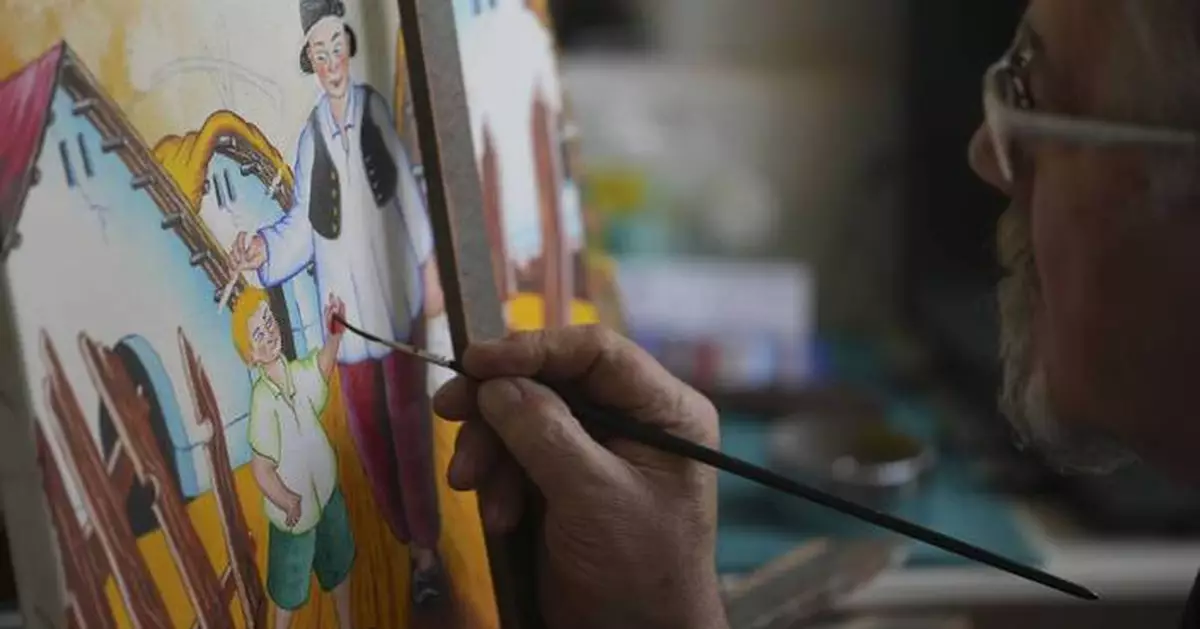
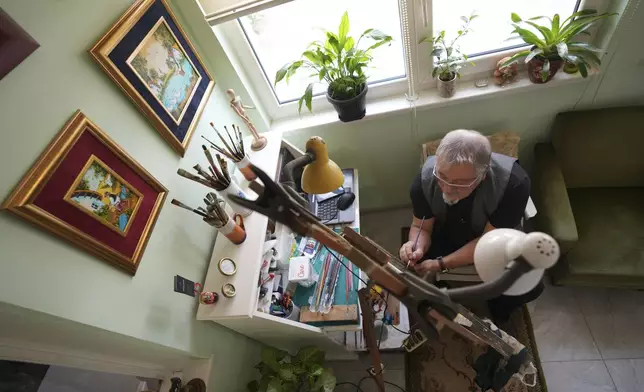
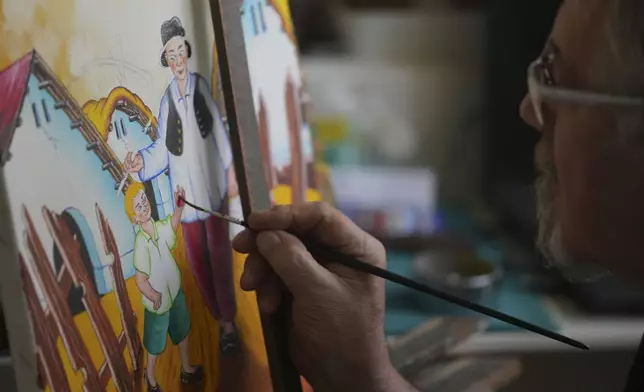
Stefan Varga paints in his room in the village of Kovacica, Serbia, Thursday, Nov. 28, 2024. (AP Photo/Darko Vojinovic)
Stefan Varga paints in his room in the village of Kovacica, Serbia, Thursday, Nov. 28, 2024. (AP Photo/Darko Vojinovic)
With their bright colors and folk motives, the self-taught naïve painters of Kovacica, about 50 kilometers (30 miles) northeast of Belgrade, Serbia's capital, have developed a unique tradition among the country's ethnic Slovak minority.
“Naïve art in Kovacica began in 1939 when Martin Paluska and Jan Sokol started painting,” explained Ana Zolnaj Barca, the head of the Gallery of Naïve Art in the village. “They were farmers with only four grades of elementary school.”
Paluska and Sokol initially painted scenes they saw on postcards, such as Venetian gondolas or wild animals, explained Zolnaj Barca. But their art really bloomed over time, when they turned to their own surroundings rather than far-away lands, she said.
The village's naïve art gallery, established in 1955, now holds the works of nearly 50 recognized artists and hosts some 20,000 visitors each year.
Among its most famous artists is Zuzana Chalupova, who often painted children and whose work was featured on millions of UNICEF postcards. Another Kovacica artist, Martin Jonas, depicted farmers with oversized hands and feet but small heads — meant to symbolize their hard-working life.
And though the Kovacica style of naïve paintings originated in the village, it has since spread far beyond the area.
“An identifying factor, the practice is a means of transmitting the cultural heritage and history of the Slovak community in Serbia,” UNESCO said in its citation.
Serbia’s government said Tuesday that the UNESCO decision to inscribe Kovacica's naïve paintings confirms the Balkan nation’s “promotion of cultural diversity.”
For gallerist and expert Pavel Babka, naïve art represents a treasure chest of traditional ways and customs — he points to a painting in his gallery showing a girl in traditional Slovak multi-layered skirt being sent off to church alone for the first time.
Another painting in Babka's gallery features a horse-drawn cart and a yellow house dating back to Austro-Hungarian times, testifying of the long presence of the ethnic Slovak community in what is today Serbia.
Contemporary naïve artists, Babka said, often also seek inspiration in the tales of the past and “would rather paint a horse than a tractor.”
Artist Stefan Varga, 65, agrees. He said he paints images based on the “stories my grandmother told me from when she was a little girl."
Those times weren't easy but they were “simple and beautiful,” he said.
Varga’s paintings feature cheerful, red-cheeked villagers in traditional clothes, bright colors, farm animals and huge pumpkins. The main characteristics of naïve painting are “joy and purity, the purity of heart and colors," he said.
“Naïve painters usually use simple colors,” said Varga. They “use the simplest way to say what they want to say so everybody can understand them, whether they are Chinese, Japanese, English or Serb.”
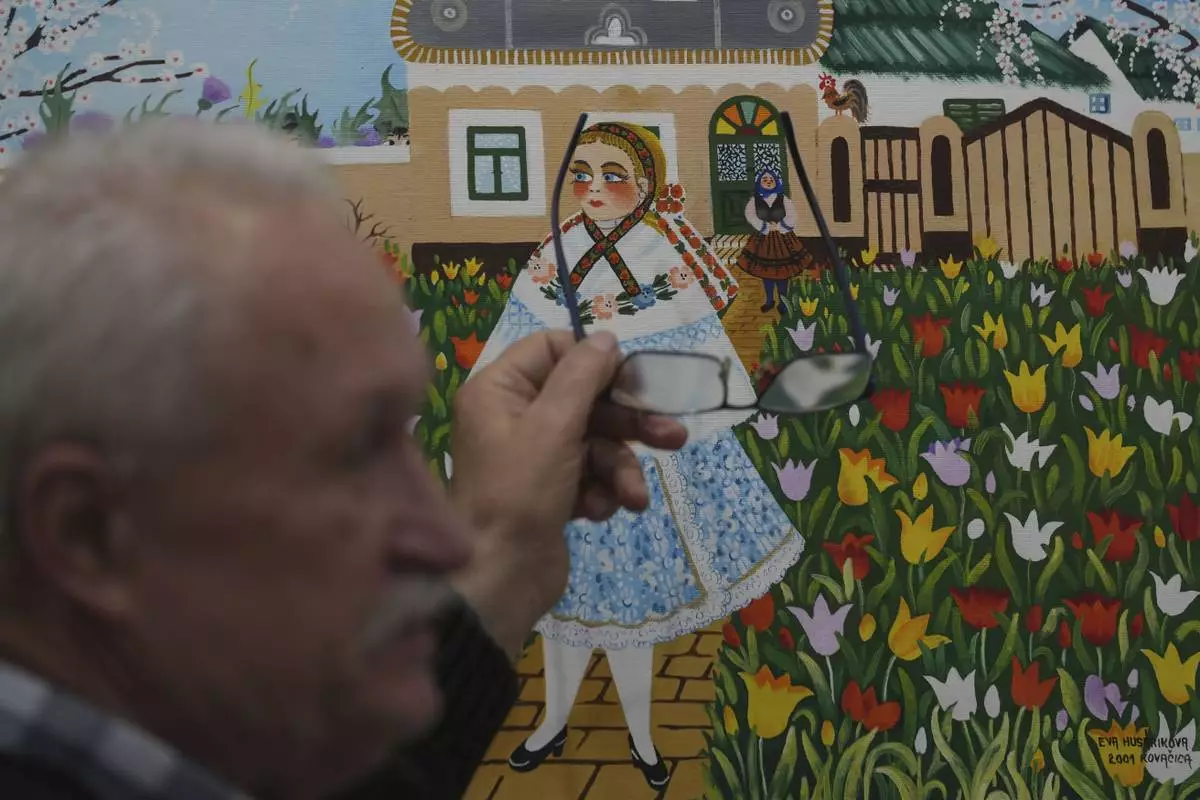
Pavel Babka, gallerist and naïve art expert shows painting of a girl in traditional Slovak multi-layered skirt in the village of Kovacica, Serbia, Thursday, Nov. 28, 2024. (AP Photo/Darko Vojinovic)

Pavel Babka, gallerist and naïve art expert shows painting of a horse-drawn cart and a yellow house dating back to Austro-Hungarian times in the village of Kovacica, Serbia, Thursday, Nov. 28, 2024. (AP Photo/Darko Vojinovic)

Klara Babka hangs a painting in the Gallery of naive art in the village of Kovacica, Serbia, Thursday, Nov. 28, 2024. (AP Photo/Darko Vojinovic)

Klara Babka hangs a painting in the Gallery of naive art in the village of Kovacica, Serbia, Thursday, Nov. 28, 2024. (AP Photo/Darko Vojinovic)
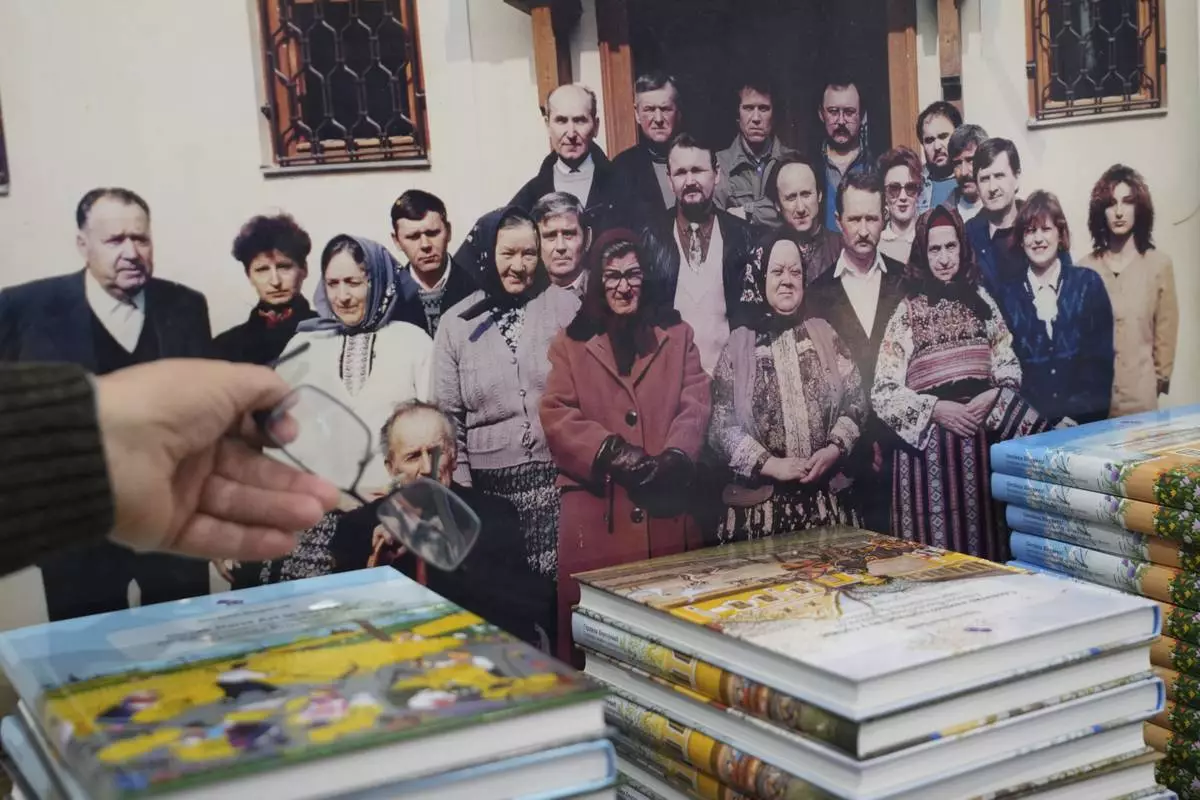
Pavel Babka, gallerist and naïve art expert shows the photo of older generations of naïve painters in the village of Kovacica, Serbia, Thursday, Nov. 28, 2024. (AP Photo/Darko Vojinovic)
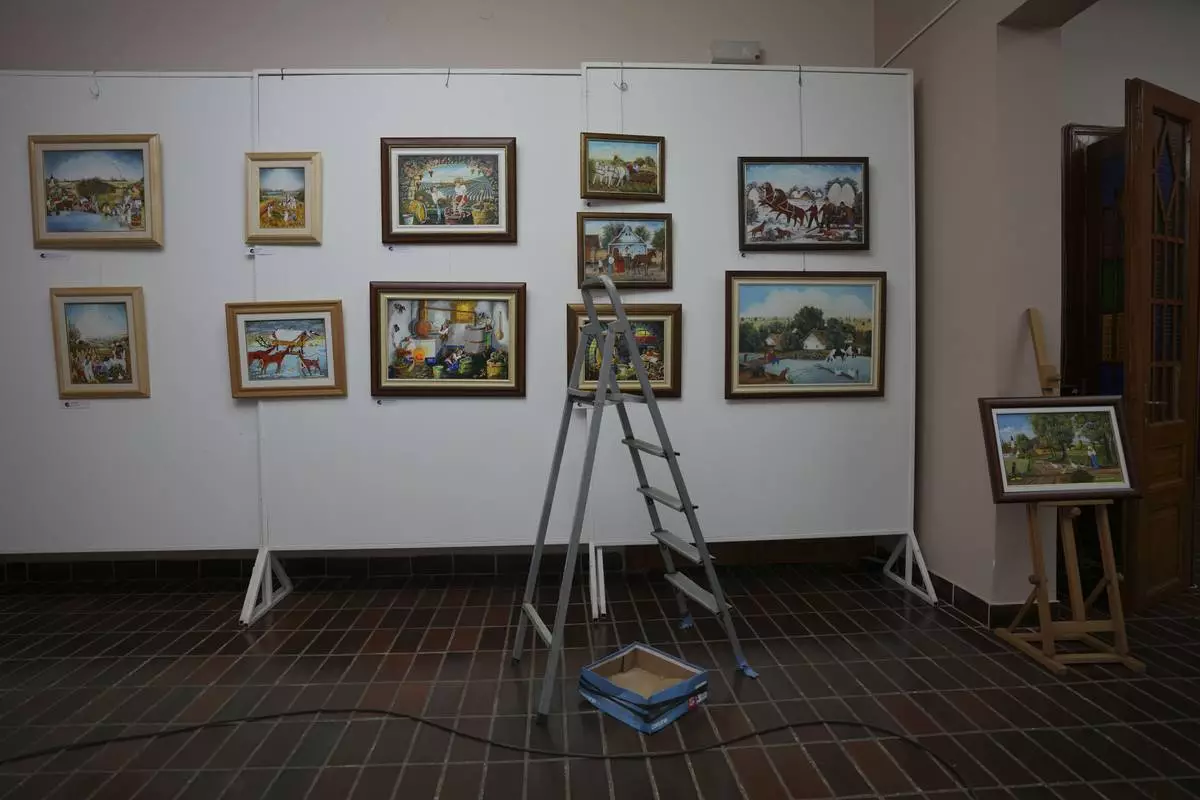
Various paintings in the Gallery of naive art in the village of Kovacica, Serbia, Thursday, Nov. 28, 2024. (AP Photo/Darko Vojinovic)
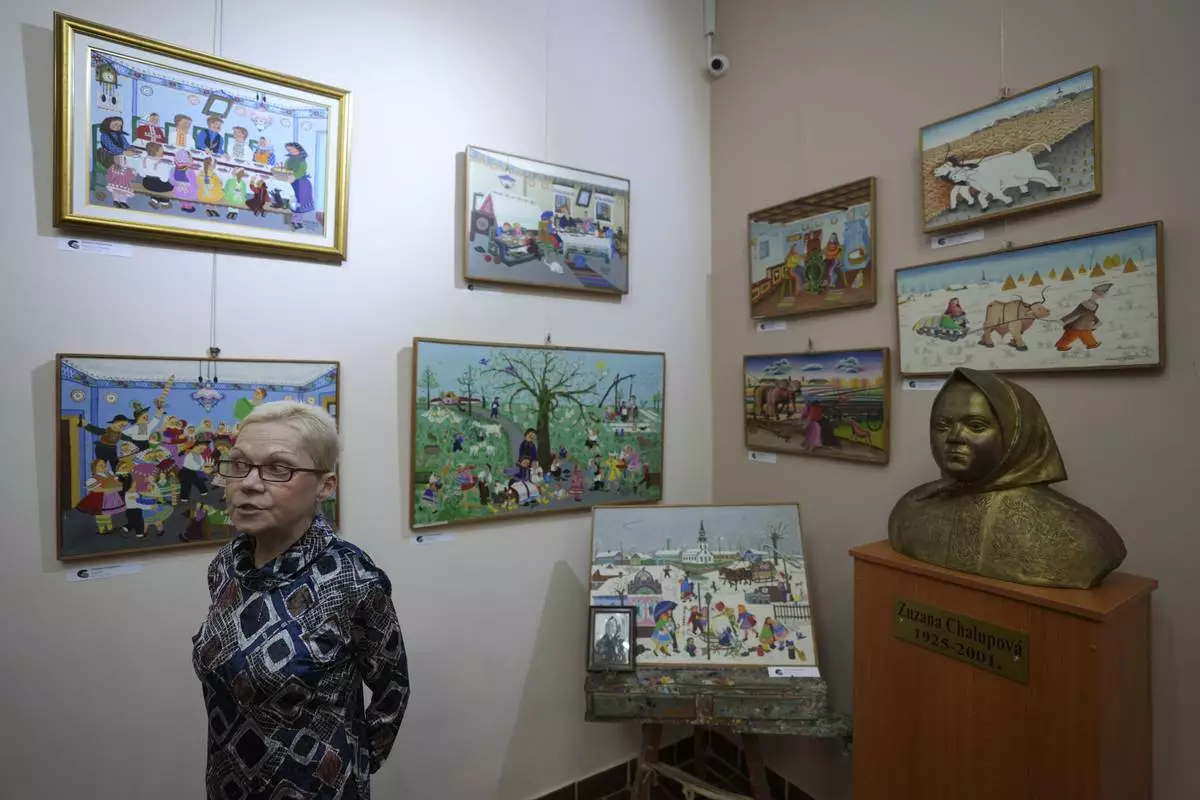
Ana Zolnaj Barca, head of the Gallery of naive art speaks about various paintings in the village of Kovacica, Serbia, Thursday, Nov. 28, 2024. (AP Photo/Darko Vojinovic)
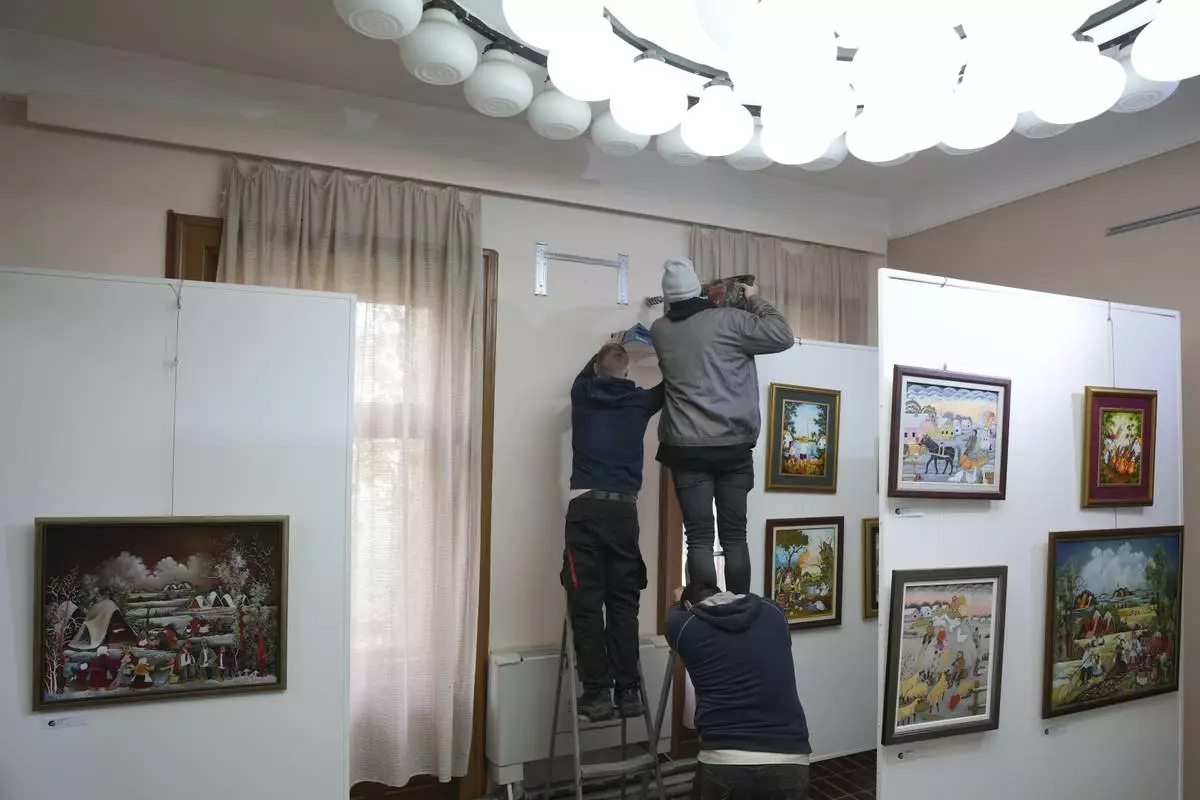
Workers put up air conditioner in the Gallery of naive art in the village of Kovacica, Serbia, Thursday, Nov. 28, 2024. (AP Photo/Darko Vojinovic)
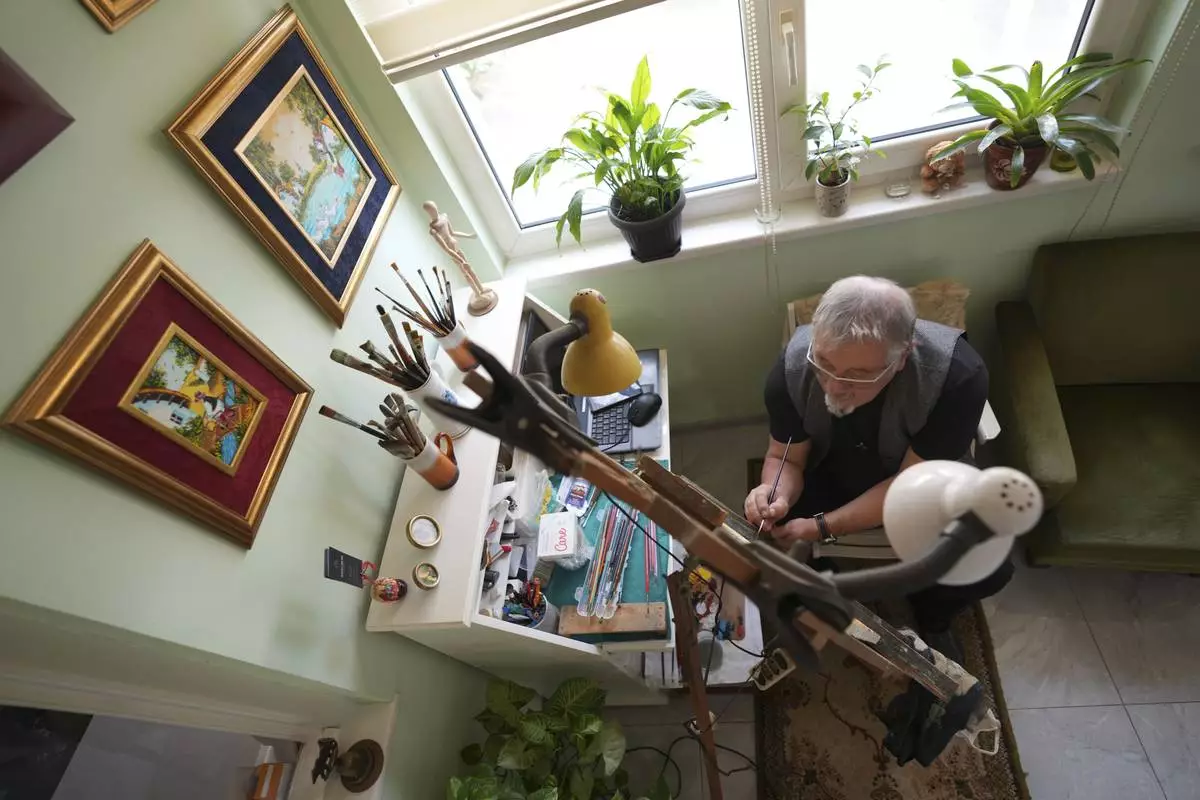
Stefan Varga paints in his room in the village of Kovacica, Serbia, Thursday, Nov. 28, 2024. (AP Photo/Darko Vojinovic)
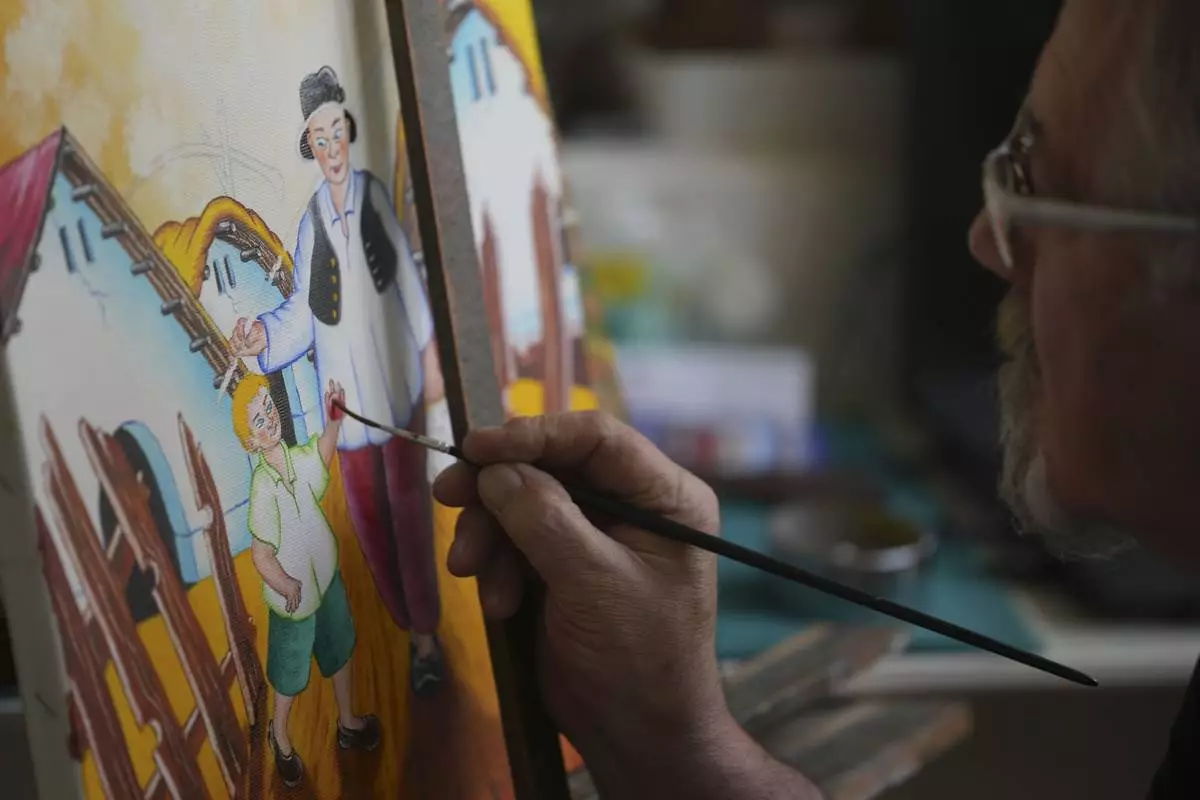
Stefan Varga paints in his room in the village of Kovacica, Serbia, Thursday, Nov. 28, 2024. (AP Photo/Darko Vojinovic)
NEW YORK (AP) — U.S. consumers haven’t stopped spending money since the Iran war drove up fuel prices, but many shoppers are reassessing what they buy and where, according to company executives and retail analysts.
The behavior changes observed so far are subtle, such as altered routines for buying gasoline and fewer visits to clothing and furniture stores. They also are uneven across the population. During recent earnings calls with analysts, executives from American mainstays like Walmart, McDonald's and Dollar General cited overall shopper resilience as well as noticeable cutbacks by lower-income customers.
But the new signs of strain cited by major retailers as generous income tax refunds helped shore up their sales make some economists and analysts think they will see a wider retrenchment when the refunds are gone and consumers face the cumulative impact of more expensive gas and higher prices for food, clothing, insurance and other goods and services.
Trevor Chapman, a communications executive in West Hills, California, said that instead of going to a local independent gas station, he and his wife now plan their fuel stops around Costco stores with filling stations. The couple also is doing more online food shopping to avoid impulse buys, he said.
“Gas is a kind of catalyst,” Chapman said. “It trickles down into the entire budget. We’re trying to keep everything as normal as possible. But it’s starting to feel like it’s adding up more and more.”
Well before the U.S. and Israel launched the war, many consumers already were being more choosy with their discretionary purchases, fatigued by several years of stubborn inflation and tariffs on imported goods imposed last year.
The U.S. Commerce Department reported last week that higher prices, not more purchases, accounted for most of the growth in Americans' spending in April, when a key inflation gauge reached the highest level since October 2023.
Members-only warehouse stores like Costco, Walmart's Sam's Club and BJ's Wholesale Club have seen more traffic at their fuel pumps since the war began in late February, according to the companies. Fuel typically costs less at the wholesale clubs.
But many drivers are not filling their tanks up, Walmart Chief Financial Officer John David Rainey told analysts late last month. For the first time since 2022, Walmart customers and Sam’s Club members are buying an average of less than 10 gallons per trip, he said.
“That’s an indication of stress,” Rainey said.
Costco members also are making changes. They are visiting store gas stations more frequently to “top up in between what would have normally been a gap between getting the tank to empty because of the concern about what might the gas price be tomorrow,” Chief Financial Officer Gary Millerchip said in late May.
Meanwhile, the gas price surge has hurt convenience stores, where 80% of all fuel is sold in the U.S., according to Jeff Lenard, a vice president at the National Association of Convenience Stores.
A sales analysis by the trade group found that the number of pump transactions at the properties of 130 convenience store companies fell by nearly 10% across March and April compared to the same two months last year. The number of sales inside the companies' stores dropped by 10.4%, according to the analysis.
“When you lose gallons to the big box, you also lose in-store sales," Lenard said.
Higher gas prices did not stop many Americans from dining out in the first two months of the war with Iran. Tax refunds helped, the National Restaurant Association said. Customer traffic at U.S. restaurants in April was unchanged from the same month last year, although a 2.6% increase in restaurant spending resulted largely from higher menu prices, according to market research firm Circana.
But cracks are starting to form as budget-conscious U.S. residents shoulder the combined weight of paying more for gas and other consumer goods on top of increasing costs in other areas from inflation past and present.
The price of gas won't help bring customers with household incomes of $45,000 or less back to U.S. fast-food restaurants, McDonald’s Chairman and CEO Chris Kempczinski said last month. People in that income group began scaling back their fast-food purchases after the period of inflation that accompanied the end of the COVID-19 pandemic, and the trend picked up speed last year.
U.S.-based restaurant consulting firm Revenue Management Solutions analyzed 14.6 billion restaurant transactions from the last four years and found that as gasoline gets more expensive, restaurant visits gradually decline, according to Chief Research Officer Sebastián Fernandez. The analysis indicated the impact doubles when gas hits the $4 mark, which it did as a nationwide average on March 31.
Consumers also are making concessions when they shop for groceries, according to Stew Leonard, president of an eight-store supermarket chain his father founded, Stew Leonard's. He's noticed customers buying meat in bulk to freeze and being less tempted to buy the products showcased during live food demonstrations or offered for sampling.
“It's telling me that people are sticking more to their shopping list,” Leonard said.
Dollar General CEO Todd Vasos also cited $4 a gallon gas as a tipping point that had more consumers with household incomes above $100,000 frequenting the discount chain. Vasos told analysts Tuesday that many of Dollar General's core shoppers, who have mid-to-low incomes and live in rural areas, were paring back their food spending.
Sophie Tolsdorf, 29, of La Grange, Kentucky, said she is one of the consumers stocking up on meat when the price is reasonable. She also switched to buying whole fruit instead pre-cut fruit in containers and cut back on the rawhide bones for her dog that cost $40 a pack.
“He might have noticed,” Tolsdorf said. "He's definitely a little bit bored during the workday now.”
Before the war, retailers had spent multiple earnings seasons highlighting consumer caution and selectivity as factors that could weigh on sales of nonessential products. Shoppers appear to have curbed their discretionary spending even more as the cost of buying gas went up, said Marshal Cohen, chief retail advisor at Circana.
Between April 25 and May 23, U.S. retailers sold 6% fewer non-grocery products than they did during the comparable four-week period of 2025, Cohen said. Housewares, clothing, footwear and sports equipment had the biggest declines, anywhere from 5% to 7%. Circana reported that toys and beauty items remained bright spots, registering at least an 8% increase in the number of units sold.
Location intelligence company Placer.ai, which tracks people's movements based on cellphone usage, saw visits to the gas stations of BJ’s, Costco and Sam’s Club stores start to accelerate in early March, aligning with a sharp rise in fuel prices, according to R.J. Hottovy, the company's head of analytical research.
By early May, Placer.ai's data showed four consecutive weeks of reduced foot traffic at clothing, electronics and home furnishing stores, and more trips to grocery stores and dollar stores.
“Consumers are prioritizing value-oriented retailers like warehouse clubs, superstores, and off-price chains," Hottovy said.
AP Food Writer Dee-Ann Durbin in Detroit contributed to the report.
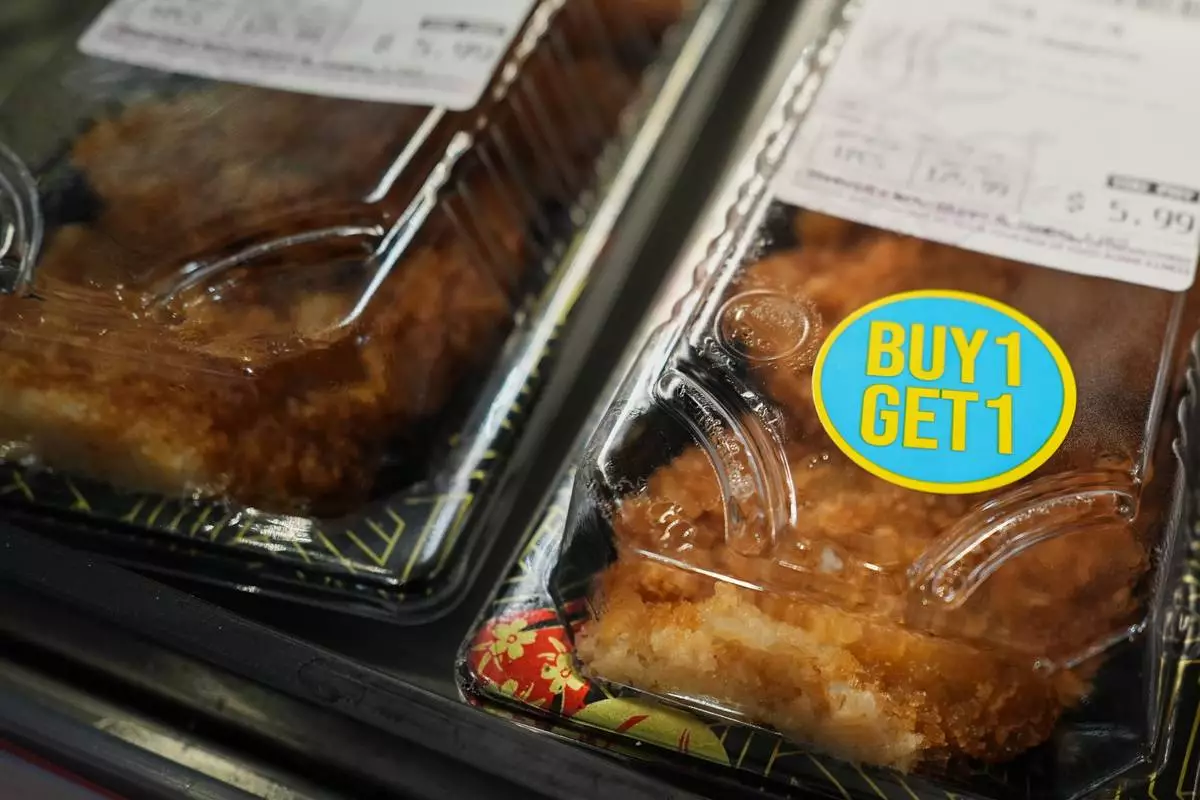
FILE - "Buy one Get one" sign is displayed on a product at a grocery store in Schaumburg, Ill., Thursday, May 14, 2026. (AP Photo/Nam Y. Huh, File)
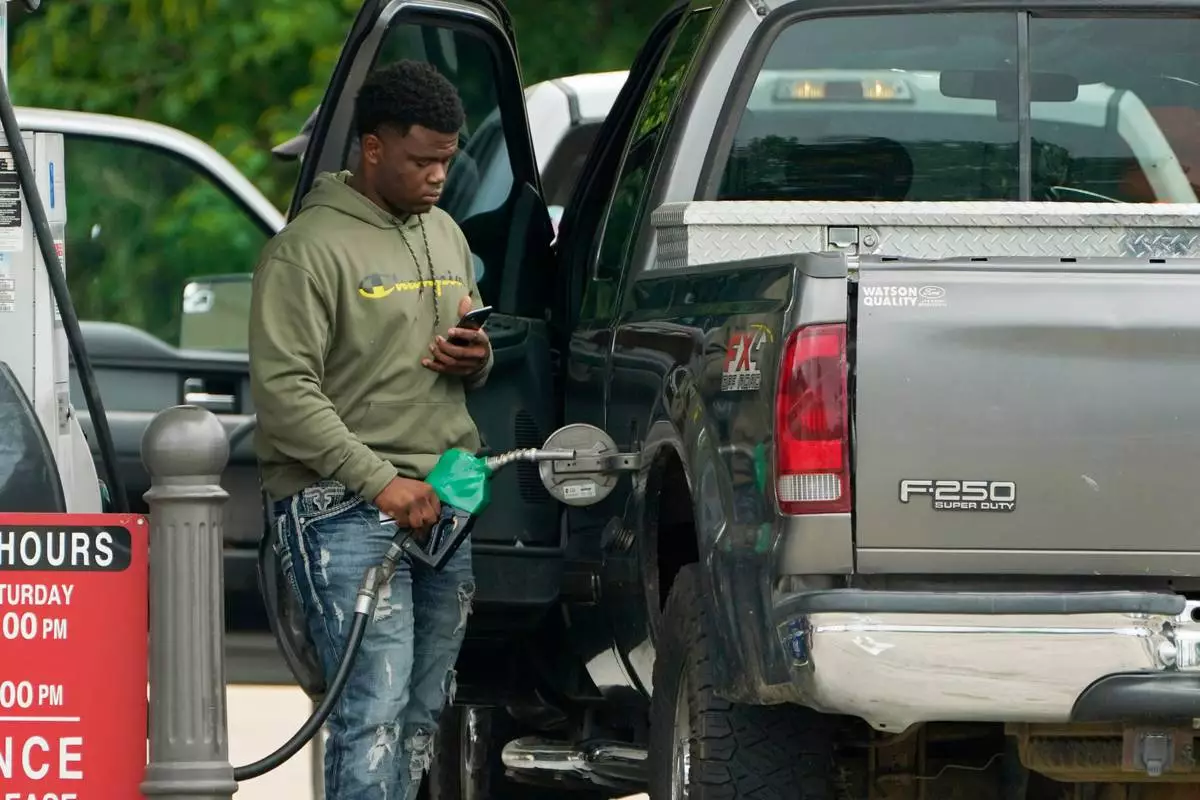
FILE - A customer prepares to pump diesel fuel at this Madison, Miss., Sam's Club, Tuesday, May 24, 2022. (AP Photo/Rogelio V. Solis, File)
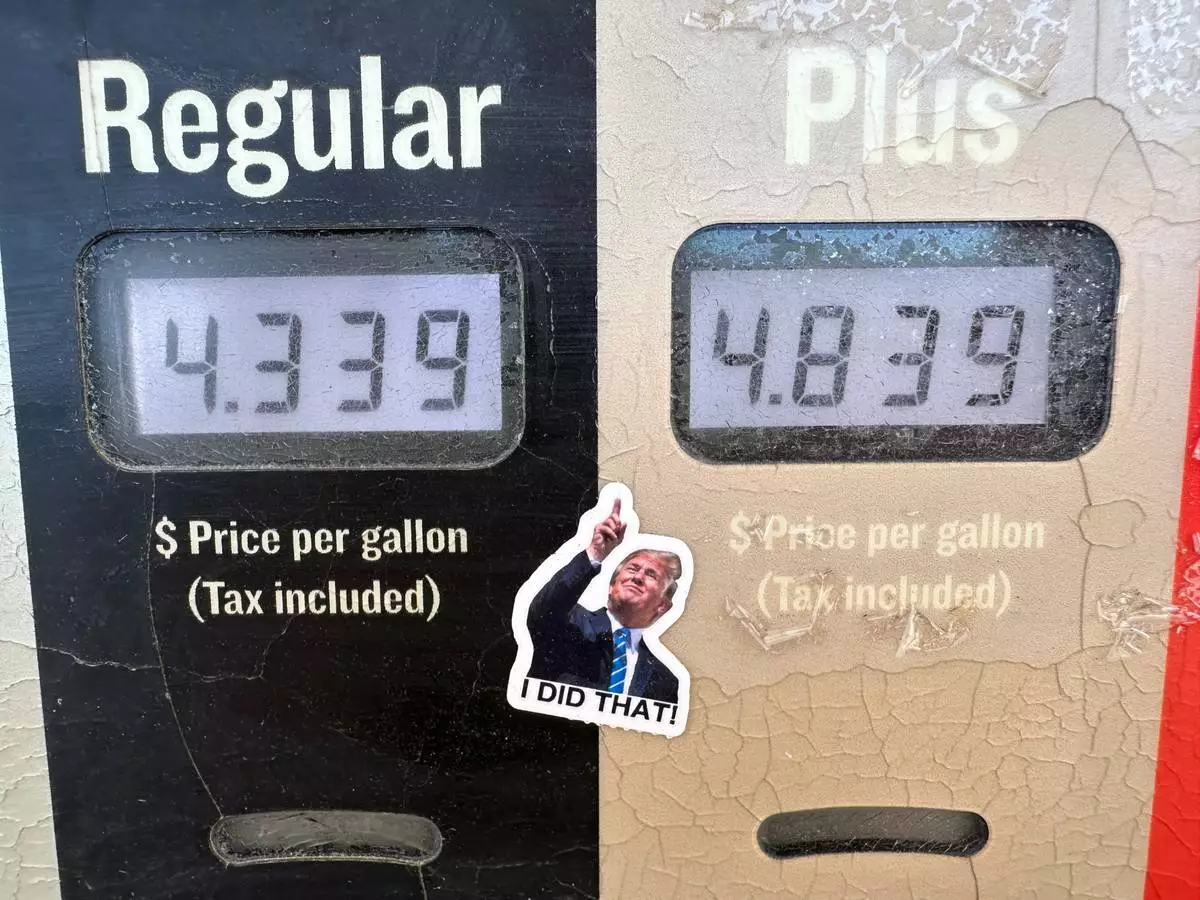
A sticker of President Donald J. Trump points to the electronically-posted prices for a gallon of regular or regular plus gasoline available at a Conoco station Saturday, May 30, 2026, in Denver. (AP Photo/David Zalubowski)
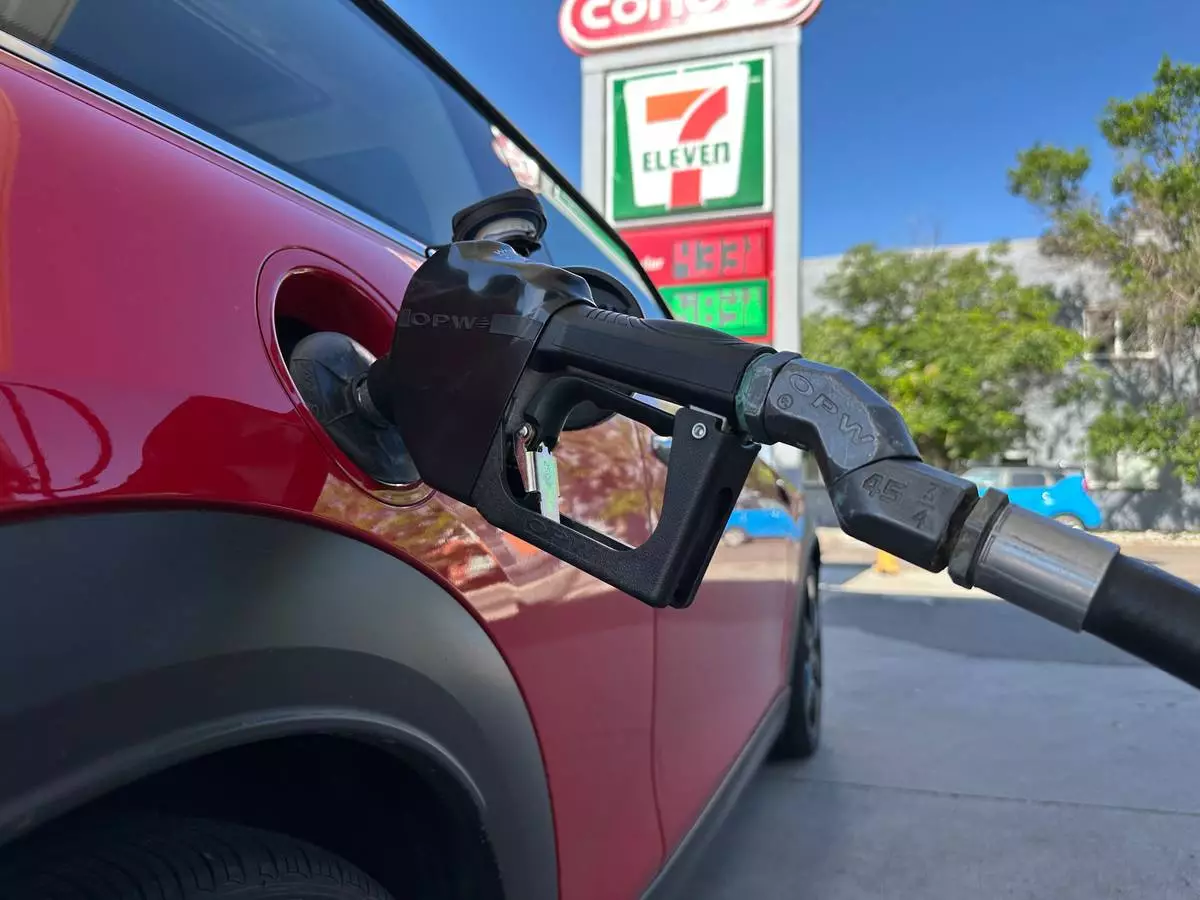
A motorist fills up the tank of a vehicle at a Conoco gasoline station Saturday, May 30, 2026, in Denver. (AP Photo/David Zalubowski)