China's first commercial spacecraft launch site aims to lower costs while ensuring reliability to support high-frequency and sustainable space missions in the days to come.
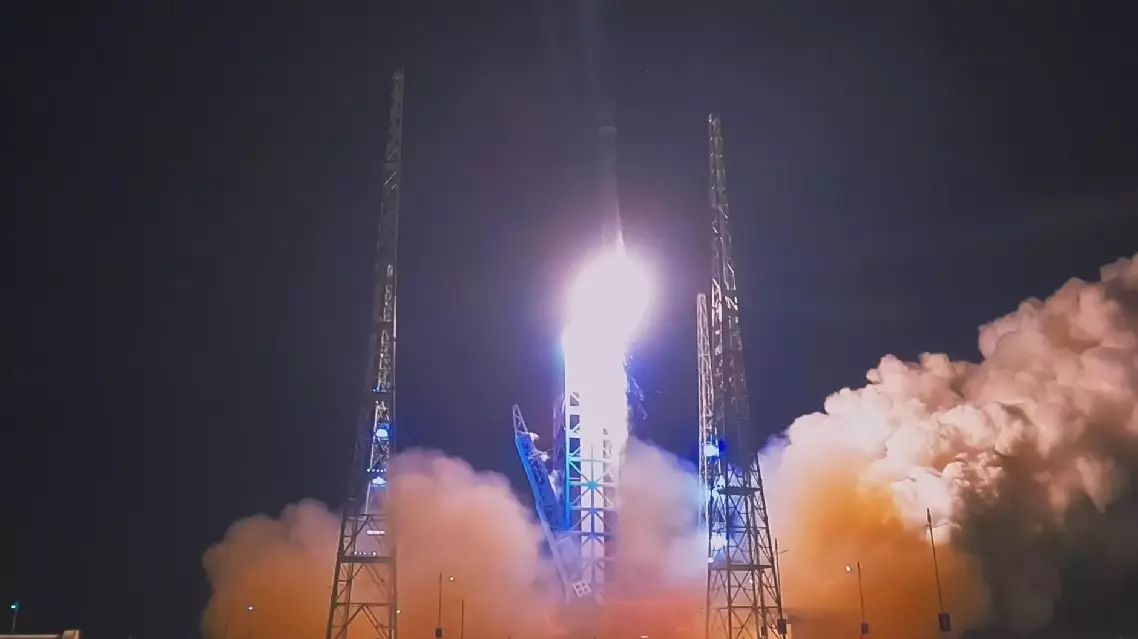
The Hainan commercial spacecraft launch site in the southern island province of Hainan on Nov 30 successfully launched the Long March-12 carrier rocket from its No. 2 launch pad, sending two experimental satellites into their planned orbits.
The mission marked the first launch mission undertaken by the Hainan commercial spacecraft launch site. It represents a huge step forward in advancing China's commercial aerospace capabilities.
Construction of the launch site began in July 2022 and was completed in just 878 days. Operated by the Hainan International Commercial Aerospace Launch Co., Ltd. (HICAL), the facility was built with an investment of over 4 billion yuan (about 553 million U.S. dollars).
The site features a launch area, spacecraft testing facilities, rocket assembly buildings, and a telemetry, tracking, and command (TT and C) building.
HICAL Chairman Yang Tianliang highlighted the site's innovative design, which aims at accommodating high launch frequencies and meeting launch demands of nearly 20 types of rockets.
"To meet the growing needs of commercial space missions, we developed a universal launch platform. No matter the rocket size, whether it has a diameter of 3.35 meters, 3.8 meters, 4.2 meters, 4.5 meters, or even 5 meters, operators can simply build their own landing gear, add a small platform, and launch from our site," Yang said.
Yang emphasized the importance of reducing costs in commercial operations without compromising reliability for further economic sustainability.
"Commercial operations are about generating revenue, which means controlling costs. Ignoring costs in the long run is simply not viable. Achieving high launch frequency is not just a slogan for us, and it's a must-do for our development," Yang said.
First commercial launch site advances aerospace development with cost efficiency