China's commercial space industry has accelerated into the fast lane fueled by soaring demand for satellite services in spite of huge launch capacity challenges.
The past few years have witnessed rapid growth of China's commercial space industry. The scale of the market jumped from 800 billion yuan (about 110 billion U.S. dollars) in 2019 to 1.9 trillion yuan in 2023, with a compound annual growth rate of 23.3 percent. The market scale is expected to reach 2.34 trillion yuan by the end of 2024, according to an industry report.
The number of registered and effectively operating commercial space enterprises in China had exceeded 400 by the end of 2022, official data showed.
Buoyed by growing demand for satellite communication, satellite navigation and satellite remote sensing applications, China has conducted an increasing number of rocket launches in recent years. In 2023, China carried out 26 commercial launches, up 23.8 percent year on year.
This rapid growth, however, is underscored by a tangible strain on resources.
Inside the control center at Beijing-based Emposat Co., Ltd., a satellite ground segment service provider, screens are displaying a comprehensive compilation of orbital information for satellites in space, sourced from open channels. Notably, the most prevalent satellites in low-Earth orbit (LEO) are the Starlink satellites from the United States, underscoring the scarcity of space resources.
"The space resources are very limited, and the competition for low-Earth orbit will only intensify. If we don't launch our satellites as quickly as possible, others will lunch theirs, and our access to these resources will continue to diminish," said Cao Meng, vice president of Emposat.
Cao highlighted that both orbital slots and radio frequencies are finite and non-renewable resources, intensifying global competition for low Earth orbit satellites. Countries like Britain, the United States, Canada, and Russia have ambitious plans for Large Low Earth Orbit Satellites Constellations (LLEOSC), while China's own "Qianfan Constellation" and China Satellite Network Group are also accelerating their deployment plans.
The "Qianfan Constellation", also known as the "G60 Constellation", aims to establish a network of over 10,000 LEO multimedia satellites by 2030 for enhanced coverage and more accessible services.
Currently comprising 54 satellites with three launches, the plan anticipates 15,000 satellites by 2030. To achieve this with the current launch pattern, more than 150 launches annually are needed, posing a significant challenge given China's peak annual launches have been under 70.
"Right now, the deployment demand for satellite constellations, especially in the field of satellite internet, has placed very high requirements on our overall launch vehicle capabilities. However, the current traditional launch vehicles are not only expensive, but also unable to meet the required launch cycle and delivery timelines," said Cao.
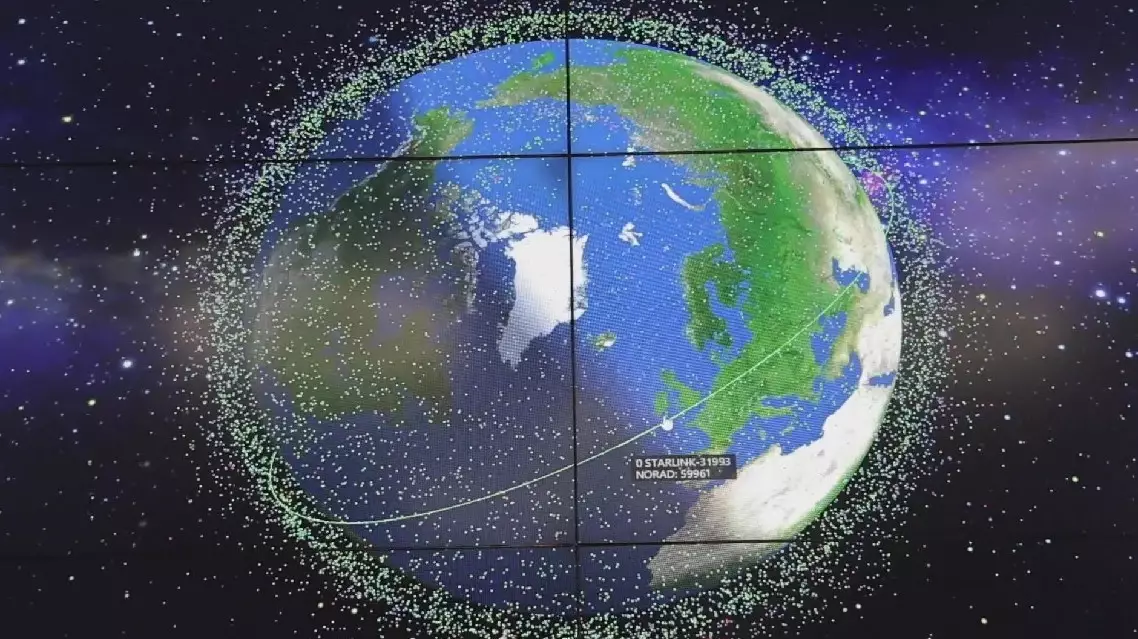
China's commercial space industry embraces surge in demand despite capacity challenges