Skip to Content Facebook Feature Image

HKBU launches Jockey Club Traditional Chinese Medicine-driven Mental Wellness Project

HK

HKBU launches Jockey Club Traditional Chinese Medicine-driven   Mental Wellness Project
HK

HK

HKBU launches Jockey Club Traditional Chinese Medicine-driven Mental Wellness Project

2024-12-09 21:08 Last Updated At:12-10 12:17

Hong Kong Baptist University (HKBU) has received a generous donation of HK$70.95 million from The Hong Kong Jockey Club Charities Trust for the three year “Jockey Club Traditional Chinese Medicine-driven Mental Wellness Project”. Led by HKBU in partnership with the New Life Psychiatric Rehabilitation Association (NLPRA), this is the first large-scale Chinese medicine mental health community project supported by The Hong Kong Jockey Club Charities Trust.

The project aims to address the worrying prevalence of common mental health issues in Hong Kong, as well as enhance public awareness and improve mental wellness through education and evidence-based Chinese medicine services.Ultimately, it intends to establish localised Chinese medicine treatment protocols for common mental disorders.

More Images
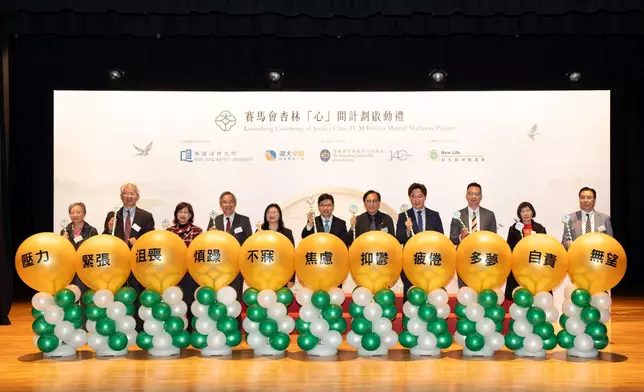
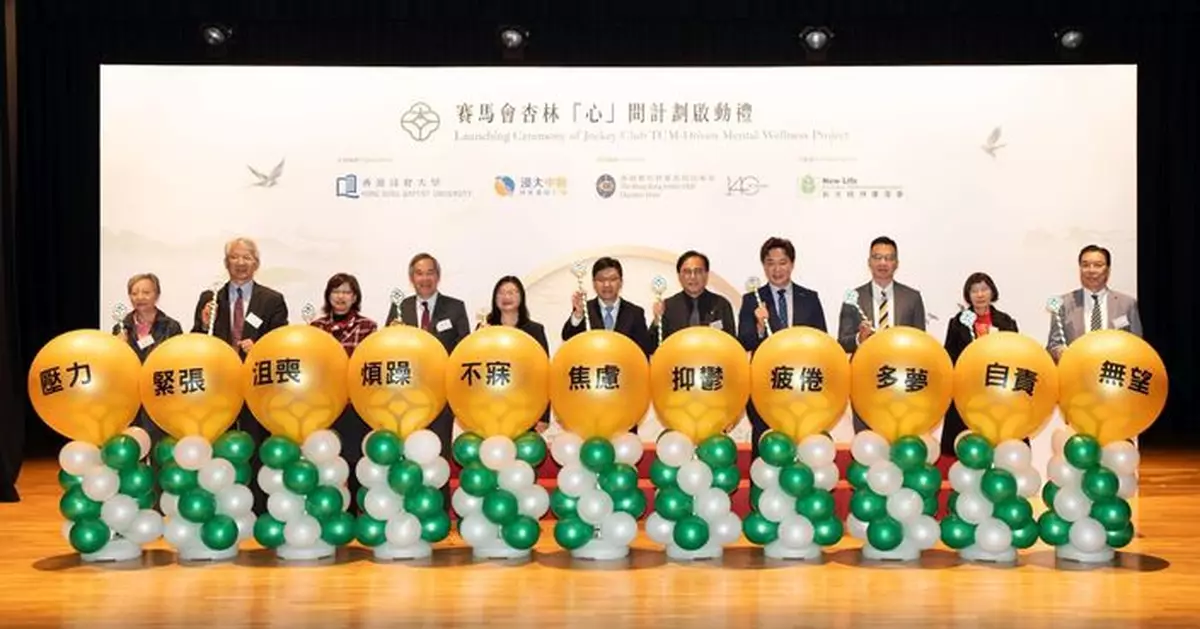
(From left) Dr Wong Hung-ngan, member of the Advisory Committee of the School of Chinese Medicine at HKBU; Professor Bian Zhaoxiang, Associate Vice President (Clinical Chinese Medicine) of HKBU and Principal Investigator of the “Jockey Club Traditional Chinese Medicine-driven Mental Wellness Project”; Ms Rowena Wong How-wan, Chief Manager (Chinese Medicine), the HospitalAuthority; Dr Clement Chen, Chairman of the Council and the Court of HKBU; Ms Imelda Chan, Head of Charities (Positive Ageing & Elderly Care; and HealthyCommunity), The Hong Kong Jockey Club; Mr Chris Sun Yuk-han, Secretary for Labour and Welfare, the HKSAR Government; Professor Martin Wong Ding-fat, Provost of HKBU; Dr Vincent Chung Chi-ho, Commissioner for Chinese MedicineDevelopment of the Health Bureau, the HKSAR Government; Dr Edmund Fong Ho-ching, Assistant Director of Health (Chinese Medicine), the HKSAR Government;Professor Annie Tam Kam-lan, Chairperson of the Executive Committee of NLPRA; and Mr Tommy Y S Li, member of the Advisory Committee of the Schoolof Chinese Medicine at HKBU, officiate at the launch ceremony of the “Jockey Club Traditional Chinese Medicine-driven Mental Wellness Project”
(From left) Dr Wong Hung-ngan, member of the Advisory Committee of the School of Chinese Medicine at HKBU; Professor Bian Zhaoxiang, Associate Vice President (Clinical Chinese Medicine) of HKBU and Principal Investigator of the “Jockey Club Traditional Chinese Medicine-driven Mental Wellness Project”; Ms Rowena Wong How-wan, Chief Manager (Chinese Medicine), the HospitalAuthority; Dr Clement Chen, Chairman of the Council and the Court of HKBU; Ms Imelda Chan, Head of Charities (Positive Ageing & Elderly Care; and HealthyCommunity), The Hong Kong Jockey Club; Mr Chris Sun Yuk-han, Secretary for Labour and Welfare, the HKSAR Government; Professor Martin Wong Ding-fat, Provost of HKBU; Dr Vincent Chung Chi-ho, Commissioner for Chinese MedicineDevelopment of the Health Bureau, the HKSAR Government; Dr Edmund Fong Ho-ching, Assistant Director of Health (Chinese Medicine), the HKSAR Government;Professor Annie Tam Kam-lan, Chairperson of the Executive Committee of NLPRA; and Mr Tommy Y S Li, member of the Advisory Committee of the Schoolof Chinese Medicine at HKBU, officiate at the launch ceremony of the “Jockey Club Traditional Chinese Medicine-driven Mental Wellness Project”

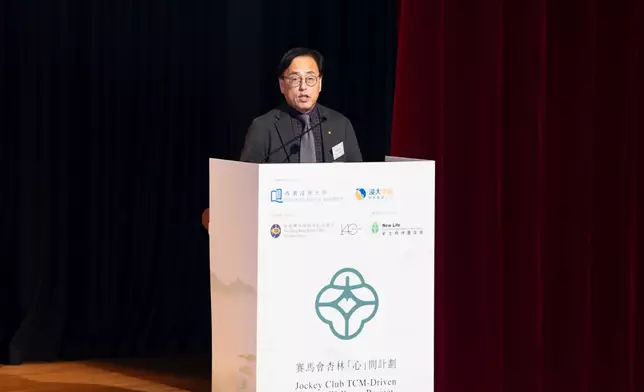
Professor Martin Wong Ding-fat, Provost of HKBU, delivers a speech.
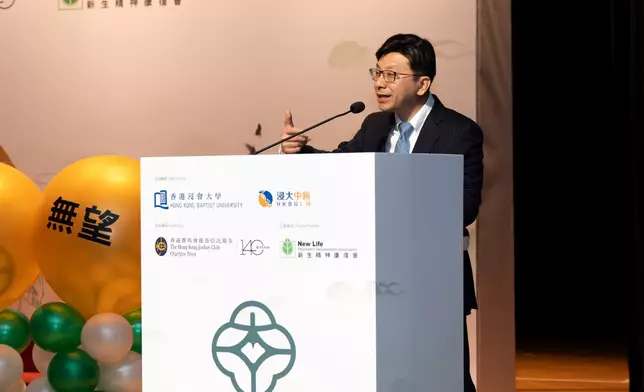
Professor Martin Wong Ding-fat, Provost of HKBU, delivers a speech.

Mr Chris Sun Yuk-han, Secretary for Labour and Welfare, the HKSAR Government delivers a speech.
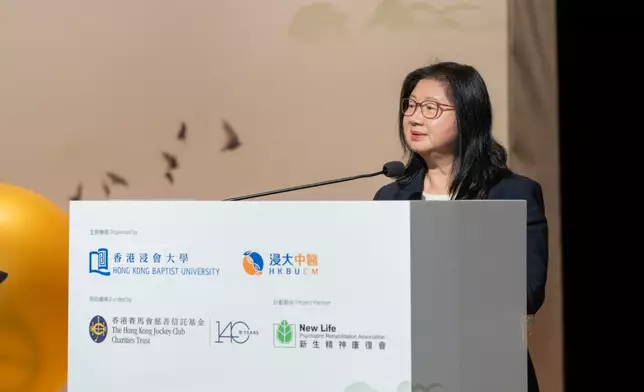
Mr Chris Sun Yuk-han, Secretary for Labour and Welfare, the HKSAR Government delivers a speech.

Ms Imelda Chan, Head of Charities (Positive Ageing & Elderly Care; and Healthy Community), The Hong Kong Jockey Club, delivers a speech.
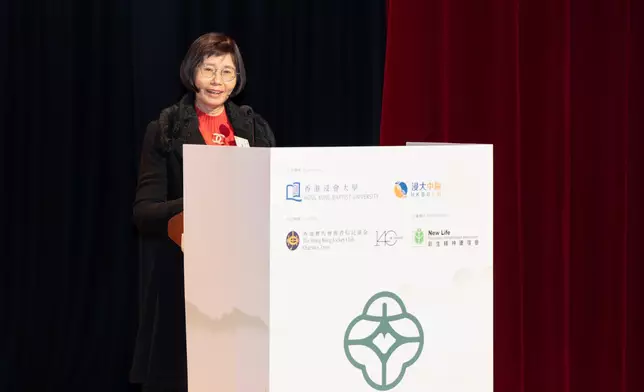
Ms Imelda Chan, Head of Charities (Positive Ageing & Elderly Care; and Healthy Community), The Hong Kong Jockey Club, delivers a speech.

Professor Annie Tam Kam-lan, Chairperson of the Executive Committee of NLPRA, delivers a speech.

Professor Annie Tam Kam-lan, Chairperson of the Executive Committee of NLPRA, delivers a speech.

Free Chinese medicine will be provided to 5,000 participants suffering from common mental health issues, such as insomnia, anxiety and depression.Counselling will also be available for participants in need. The project will provide transdisciplinary training to 100 Chinese medicine practitioners and social workers to strengthen their competence in supporting the individuals with common mental disorders. 150 ambassadors and 100 Chinese medicine students will also be trained to enhance their knowledge in this area.
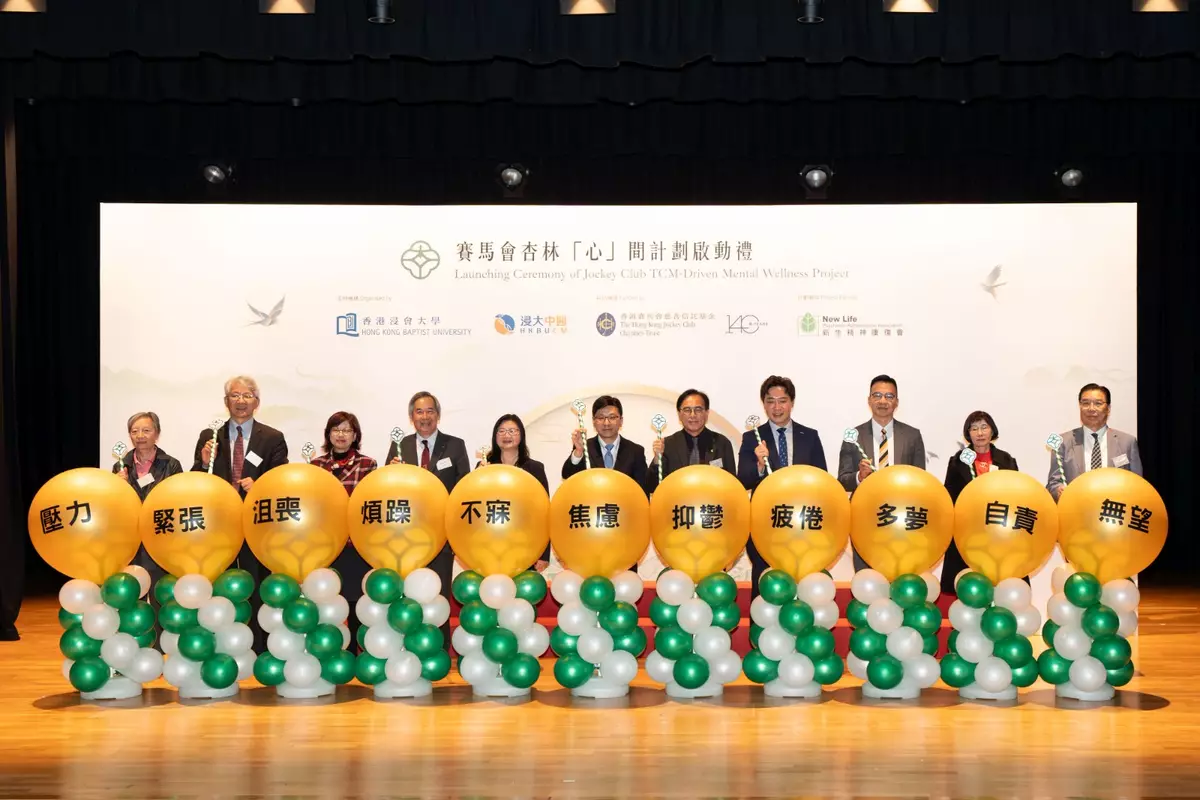
(From left) Dr Wong Hung-ngan, member of the Advisory Committee of the School of Chinese Medicine at HKBU; Professor Bian Zhaoxiang, Associate Vice President (Clinical Chinese Medicine) of HKBU and Principal Investigator of the “Jockey Club Traditional Chinese Medicine-driven Mental Wellness Project”; Ms Rowena Wong How-wan, Chief Manager (Chinese Medicine), the HospitalAuthority; Dr Clement Chen, Chairman of the Council and the Court of HKBU; Ms Imelda Chan, Head of Charities (Positive Ageing & Elderly Care; and HealthyCommunity), The Hong Kong Jockey Club; Mr Chris Sun Yuk-han, Secretary for Labour and Welfare, the HKSAR Government; Professor Martin Wong Ding-fat, Provost of HKBU; Dr Vincent Chung Chi-ho, Commissioner for Chinese MedicineDevelopment of the Health Bureau, the HKSAR Government; Dr Edmund Fong Ho-ching, Assistant Director of Health (Chinese Medicine), the HKSAR Government;Professor Annie Tam Kam-lan, Chairperson of the Executive Committee of NLPRA; and Mr Tommy Y S Li, member of the Advisory Committee of the Schoolof Chinese Medicine at HKBU, officiate at the launch ceremony of the “Jockey Club Traditional Chinese Medicine-driven Mental Wellness Project”

(From left) Dr Wong Hung-ngan, member of the Advisory Committee of the School of Chinese Medicine at HKBU; Professor Bian Zhaoxiang, Associate Vice President (Clinical Chinese Medicine) of HKBU and Principal Investigator of the “Jockey Club Traditional Chinese Medicine-driven Mental Wellness Project”; Ms Rowena Wong How-wan, Chief Manager (Chinese Medicine), the HospitalAuthority; Dr Clement Chen, Chairman of the Council and the Court of HKBU; Ms Imelda Chan, Head of Charities (Positive Ageing & Elderly Care; and HealthyCommunity), The Hong Kong Jockey Club; Mr Chris Sun Yuk-han, Secretary for Labour and Welfare, the HKSAR Government; Professor Martin Wong Ding-fat, Provost of HKBU; Dr Vincent Chung Chi-ho, Commissioner for Chinese MedicineDevelopment of the Health Bureau, the HKSAR Government; Dr Edmund Fong Ho-ching, Assistant Director of Health (Chinese Medicine), the HKSAR Government;Professor Annie Tam Kam-lan, Chairperson of the Executive Committee of NLPRA; and Mr Tommy Y S Li, member of the Advisory Committee of the Schoolof Chinese Medicine at HKBU, officiate at the launch ceremony of the “Jockey Club Traditional Chinese Medicine-driven Mental Wellness Project”

The launch ceremony for the project was held today (9 December) on HKBU campus. The officiating guests included Mr Chris Sun Yuk-han, Secretary for Labour and Welfare, the HKSAR Government; Ms Imelda Chan, Head of Charities (Positive Ageing & Elderly Care; and Healthy Community), The Hong Kong Jockey Club; Dr Vincent Chung Chi-ho, Commissioner for Chinese Medicine Development of the Health Bureau, the HKSAR Government; Dr Edmund Fong Ho-ching, Assistant Director of Health (Chinese Medicine), the HKSAR Government; and Ms Rowena Wong How-wan, Chief Manager (Chinese Medicine), the Hospital Authority.

Representatives from the project organisers included Dr Clement Chen, Chairman of the Council and the Court of HKBU; Professor Martin Wong Dingfat, Provost of HKBU; Mr Tommy Y S Li and Dr Wong Hung-ngan, members of the Advisory Committee of the School of Chinese Medicine at HKBU, and Professor Annie Tam Kam-lan, Chairperson of the Executive Committee of NLPRA.

In his welcoming speech, Professor Martin Wong Ding-fat said, “I would like to express my heartfelt gratitude to The Hong Kong Jockey Club Charities Trust for their generous donation, and to NLPRA for their support, which has enabled the launch of the ‘Jockey Club Traditional Chinese Medicine-driven Mental Wellness Project’. HKBU is a forerunner in Chinese medicine teaching, research and service in Hong Kong. Under the project, a team of experts from the School of Chinese Medicine utilises their professional knowledge to provide Chinese medicine services to people suffering from mental distress, with the aim of improving their mental health and developing treatment protocols that promote the standardisation and internationalisation of Chinese medicine, thereby benefiting more people.”
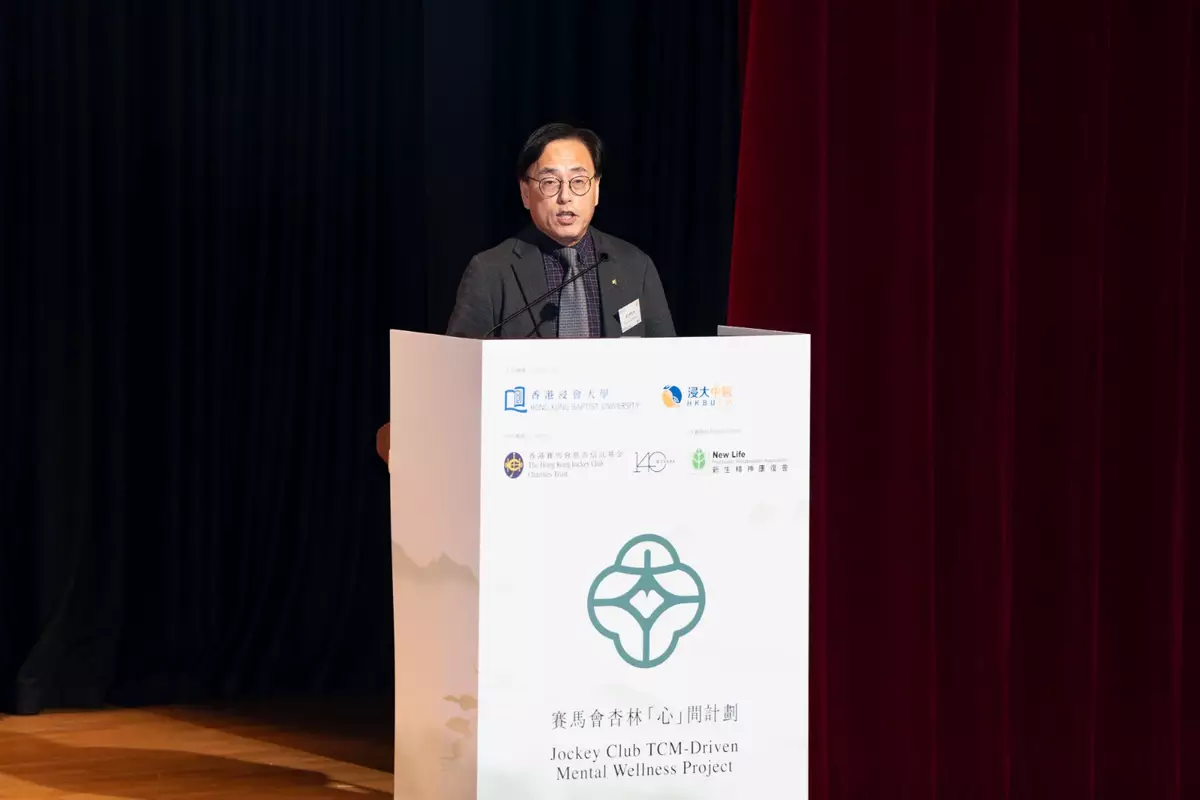
Professor Martin Wong Ding-fat, Provost of HKBU, delivers a speech.

Professor Martin Wong Ding-fat, Provost of HKBU, delivers a speech.

Mr Chris Sun Yuk-han said: "For more than a decade, the Government has provided a substantial amount of social welfare support to assist people suffering from mental distress. The ‘Jockey Club Traditional Chinese Medicine-driven Mental Wellness Project’, launched by HKBU with funding from The Hong Kong Jockey Club Charities Trust and in collaboration with NLPRA, marks an excellent start in strengthening such support with the help of Chinese medicine." He hopes that the project can provide early intervention and treatment for those in need to facilitate early recovery. He also expects that upon completion of the project, its
outcomes can help society tackle mental health challenges.
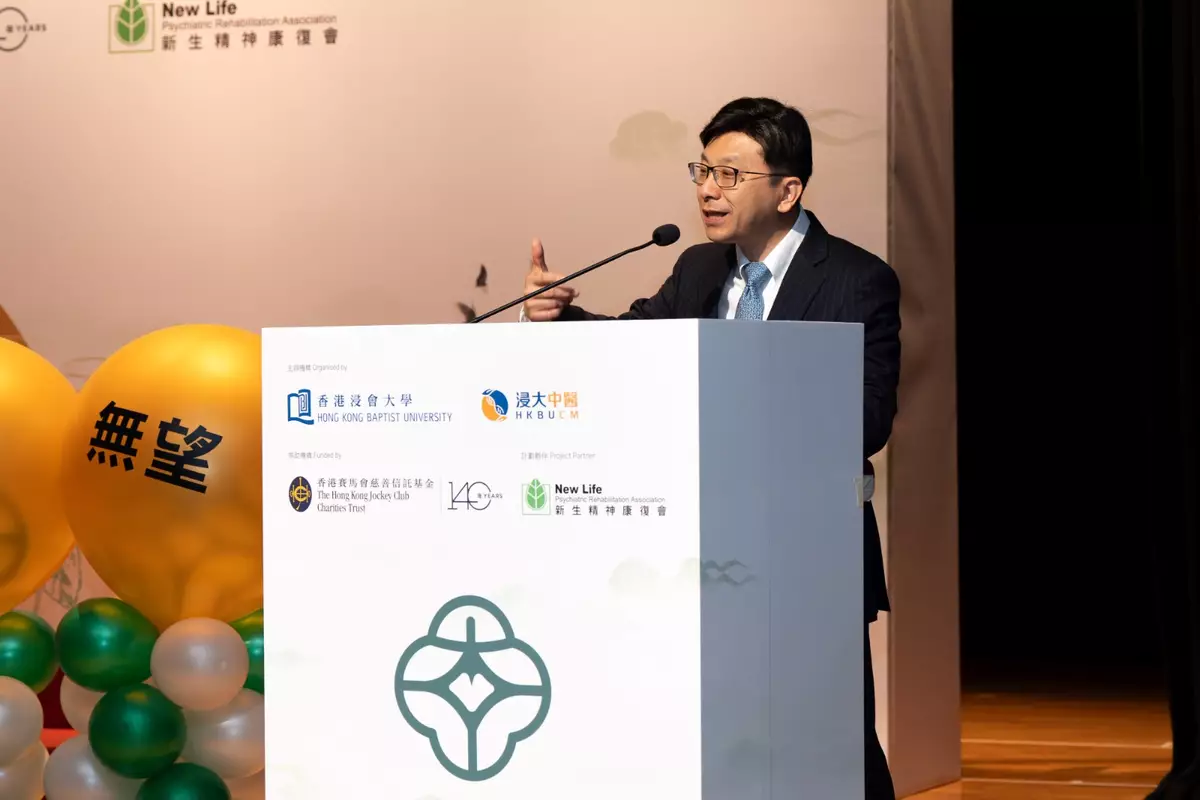
Mr Chris Sun Yuk-han, Secretary for Labour and Welfare, the HKSAR Government delivers a speech.

Mr Chris Sun Yuk-han, Secretary for Labour and Welfare, the HKSAR Government delivers a speech.

Ms Imelda Chan said, “Building a healthy community is one of the priority areas of the Jockey Club's charity strategy, and improving the mental well-being of the public is an essential pillar. This project aims to provide personalised traditional Chinese medicine-driven treatment for individuals experiencing mental distress while incorporating suitable psychotherapies based on their mental health condition and psychological needs. The evidence-based treatment plan established is expected to provide statistics and support for the Chinese Medicine Clinics cum Training and Research Centres across Hong Kong’s 18 districts, as well as for the soon-to-be-completed Chinese Medicine Hospital of Hong Kong, serving as an important reference for delivering mental health services through traditional Chinese medicine at the primary healthcare level.
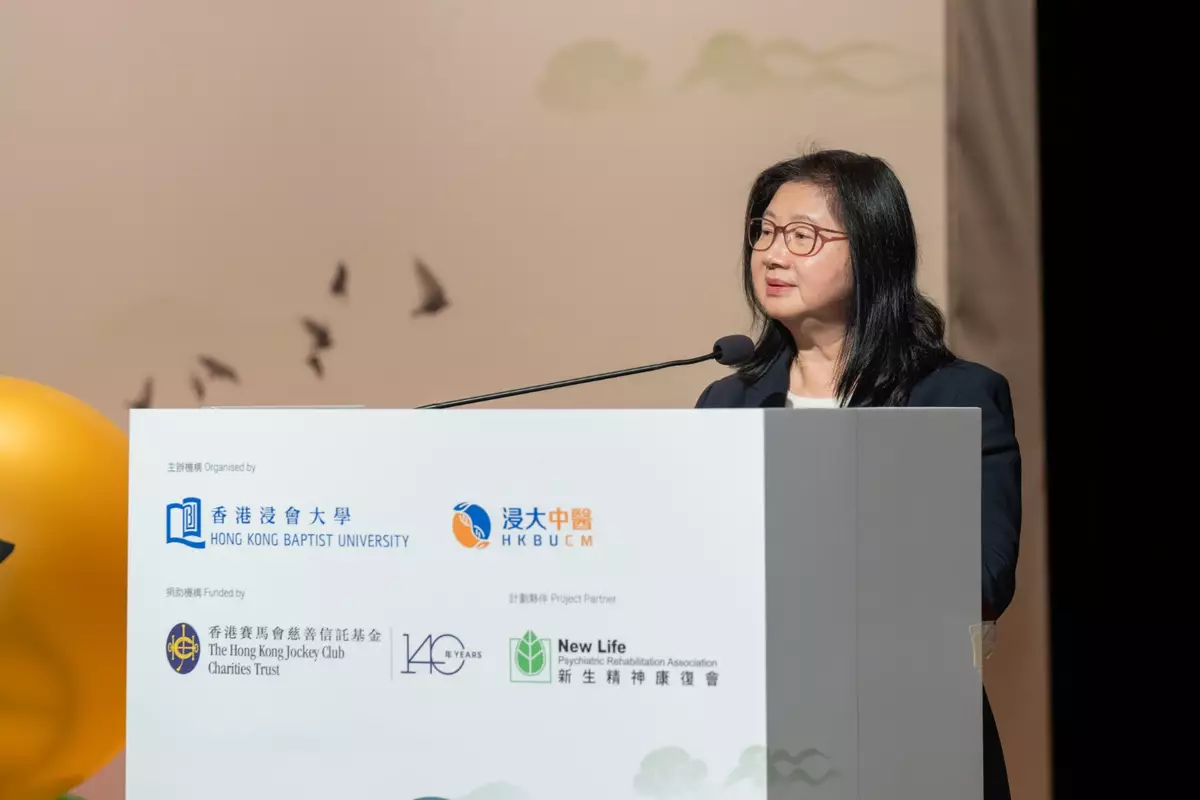
Ms Imelda Chan, Head of Charities (Positive Ageing & Elderly Care; and Healthy Community), The Hong Kong Jockey Club, delivers a speech.

Ms Imelda Chan, Head of Charities (Positive Ageing & Elderly Care; and Healthy Community), The Hong Kong Jockey Club, delivers a speech.

Professor Annie Tam Kam-lan said, “This project enables NLPRA to collaborate with HKBU, illustrating the integration of 'Traditional Chinese Medicine treatments' and 'counselling services' to support individuals experiencing mild to moderate insomnia, anxiety, and depression, and to enhance their mental wellness and foster holistic well-being.”
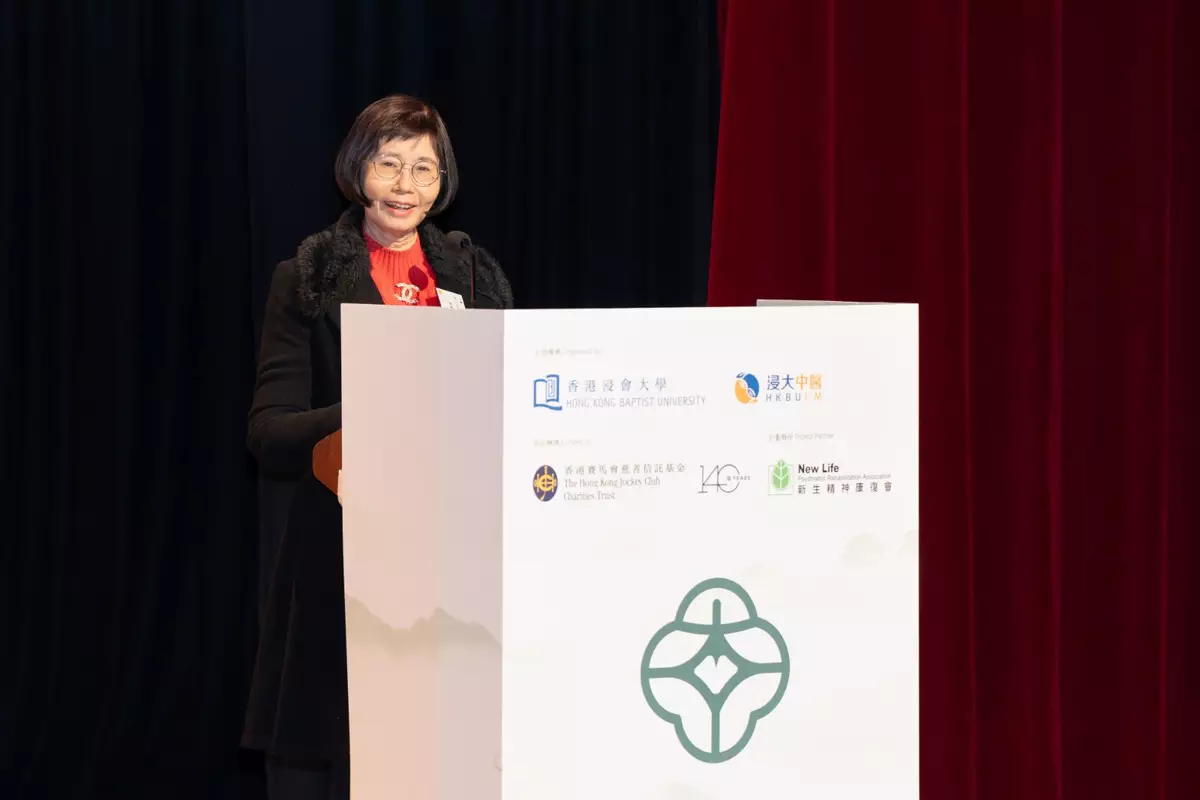
Professor Annie Tam Kam-lan, Chairperson of the Executive Committee of NLPRA, delivers a speech.

Professor Annie Tam Kam-lan, Chairperson of the Executive Committee of NLPRA, delivers a speech.

Started in July 2023, the project targets individuals aged between 18 and 65 with mild-to-moderate insomnia, anxiety and depression. HKBU’s Chinese medicine practitioners will provide consultations and prescribe herbal tisanes or Chinese herbal formulae to participants based on the severity of their symptoms for a duration of six weeks.

If participants with moderate symptoms do not see improvement after receiving treatment, HKBU’s Chinese medicine practitioners will work with the registered social workers or counsellors from NLPRA to provide follow-up counselling services.

The project has served more than 800 participants to date. Participants were invited to complete both self-reported questionnaires and clinical assessment by Chinese medicine practitioners before and after using the service. They reported significant improvements in their sleep quality and mental health conditions.

The services offered by the project is free of charge. Those who are interested in participating and have enquiries can call 3411 2094, or register online.
Marine biologists from Hong Kong Baptist University (HKBU) have identified two new soft coral species, Parasphaerasclera dimorpha sp. nov. and Paraminabea inflata sp. nov, from the urban waters of Hong Kong Special Administrative Region and Zhuhai. With these additions, the number of known species in their respective genus, Parasphaerasclera and Paraminabea, has increased to 11, with Parasphaerasclera dimorpha sp. nov. being the first of its kind reported from the China Seas.

New soft corals species: Parasphaerasclera dimorpha sp. nov. Photo source: HKBU

New soft corals species: Parasphaerasclera dimorpha sp. nov. Photo source: HKBU

Soft coral taxonomy is challenging because different species can closely resemble one another in appearance, and genetic data are limited. In the China Seas, only four digitate or lobate soft coral species in the genus Paraminabea had been documented before this study.

Professor Qiu Jianwen, Professor of the Department of Biology at HKBU, who led the research team, said, “The study expands what we know about soft coral diversity in the Guangdong-Hong Kong-Macao Greater Bay Area. It also shows that even in urbanised waters, significant cryptic biodiversity remains to be documented and protected.”

Since 2023, Professor Qiu’s team has collected eight coral colonies at about 15 to 25 metres depth from the rocky reefs off Hong Kong’s Sung Kong Island and Zhuhai’s Heizhou Island. Among these colonies, they have identified two new species, Parasphaerasclera dimorpha sp. nov. and Paraminabea inflata sp. nov., for the first time worldwide.

Parasphaerasclera dimorpha sp. nov. was discovered in the waters off Hong Kong’s Sung Kong Island. It displays bright orange-red colour and forms colonies that are digitiform in shape with a conspicuous stalk and branches. Usually found scattered on boulders with other coral species, it is characterised by the presence of stalk sclerites including spindle-shaped elements such as rare tuberculated spindles. This marks the first discovery of a Parasphaerasclera species in Hong Kong.

A colony of Parasphaerasclera dimorpha sp. nov. with extended tentacles. Photo source: HKBU

A colony of Parasphaerasclera dimorpha sp. nov. with extended tentacles. Photo source: HKBU

Paraminabea inflata sp. nov. is found in the waters of both Hong Kong and Zhuhai. It is the third Paraminabea species discovered in Hong Kong over the past 15 years. Attached to the rock surfaces in the sea, it forms colonies that are yellow or orange in colour with long polyps. It has unique sclerites including tuberculated spheroids, and was misidentified in the past as another coral species.

New soft coral species Paraminabea inflata sp. nov. in the field. Photo source: HKBU

New soft coral species Paraminabea inflata sp. nov. in the field. Photo source: HKBU

The HKBU research team identified these two new coral species using integrative taxonomy, an approach that combines morphological and genetic data for species delimitation. They worked out the DNA sequencing of the species and clarified their evolutionary relationships: Parasphaerasclera dimorpha sp. nov. is sister to an Australian coral species while Paraminabea inflata sp. nov. is sister to a Hong Kong local species. Their genetic and morphological distinctions from these sister species justify the recognition of these new species.

New soft coral species Paraminabea inflata sp. nov. in laboratory. Photo source: HKBU

New soft coral species Paraminabea inflata sp. nov. in laboratory. Photo source: HKBU

In addition, the team also assembled the mitochondrial genomes (mitochondrion is an essential organelle found in cells which generates chemical energy to support cell activities) of the two new species, as well as another species of digitate soft coral (Paraminabea rubeusa) discovered in Hong Kong, providing genetic data to calculate the genetic distances of soft corals. Professor Qiu said, “Our research highlights the value of integrative taxonomy in identifying soft corals with similar appearance and provides new mitochondrial genomic resources to advance their taxonomy in the Indo-Pacific.”

Led by Professor Qiu, members of the research team include Dr Li Yixuan, Post-doctoral Research Fellow; Loke Haixin, PhD student; Janice Ng Wing-yan, undergraduate student of the Department of Biology at HKBU; and Professor Liu Lan, Professor of the School of Marine Sciences at Sun Yat‑sen University. The research findings have been published in the international journal Ecology and Evolution.

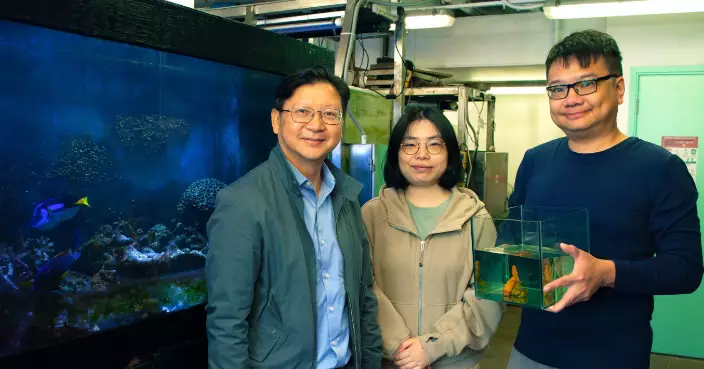
A research team led by Professor Qiu Jianwen (left), with members including Dr Li Yixuan, Post-doctoral Research Fellow (middle) and Loke Haixin, PhD student (right) of the Department of Biology at HKBU, discovered two new species of soft corals, Parasphaerasclera dimorpha sp. nov. and Paraminabea inflata sp. nov., from the waters of Hong Kong and Zhuhai respectively. Photo source: HKBU

A research team led by Professor Qiu Jianwen (left), with members including Dr Li Yixuan, Post-doctoral Research Fellow (middle) and Loke Haixin, PhD student (right) of the Department of Biology at HKBU, discovered two new species of soft corals, Parasphaerasclera dimorpha sp. nov. and Paraminabea inflata sp. nov., from the waters of Hong Kong and Zhuhai respectively. Photo source: HKBU

Corals are commonly divided into hard corals and soft corals. Hard corals have received more attention because they build reefs, which are essential for marine habitats and are highly sensitive to environmental threats. A total of 90 hard coral species have been recorded in Hong Kong. Soft corals are flexible, do not build reefs, and often thrive in habitats unsuitable for hard corals. Prior surveys found only 29 species in Hong Kong, with limited genetic data available.

Recommended Articles