HOUSTON--(BUSINESS WIRE)--Dec 9, 2024--
Keener Management has been awarded the management contract for 600 Nottingham, a 208-unit apartment community located in the heart of Houston, Texas. This addition strengthens Keener’s management footprint in the Houston market.
This press release features multimedia. View the full release here: https://www.businesswire.com/news/home/20241209577748/en/
Owned by 7C Equity Group and situated at 600 Nottingham Oaks Trail in the highly desirable Memorial neighborhood, the community provides easy access to some of Houston’s premier shopping, dining, and entertainment options and is close to top-rated schools and major employment hubs.
600 Nottingham offers residents studio, one-, two- and three-bedroom floorplan options in a fully renovated community. The pet-friendly property provides a range of amenities, including a resort-style swimming pool, fitness center, business center, and children’s play area.
“We chose Keener Management because we have seen firsthand the success they’ve achieved with other properties in the Houston area,” said Rajib Batabyal, Managing Partner of 7C Equity Group. “Their proven track record, dedication to quality service, and resident-focused approach make them the perfect fit to manage our asset at 600 Nottingham.”
"We’re honored to partner with 7C Equity Group to bring our management expertise to 600 Nottingham,” said Pamela McGlashen, President of Keener Management. “Our team looks forward to implementing innovative strategies that enhance the living experience for residents while maximizing the property’s long-term value."
About Keener Management
Keener Management is a Houston-based multifamily property management firm specializing in high-quality management for garden-style and mid-rise communities. Known for its boutique approach, in-house accounting services, and advanced technology platforms, Keener Management delivers a superior tenant experience through exceptional service and dedicated support. With over 100 employees, the company has been recognized as one of the Best Places to Work Multifamily® for five consecutive years, demonstrating its commitment to teamwork and long-term relationships. For more information, please visitwww.keenermanage.com.
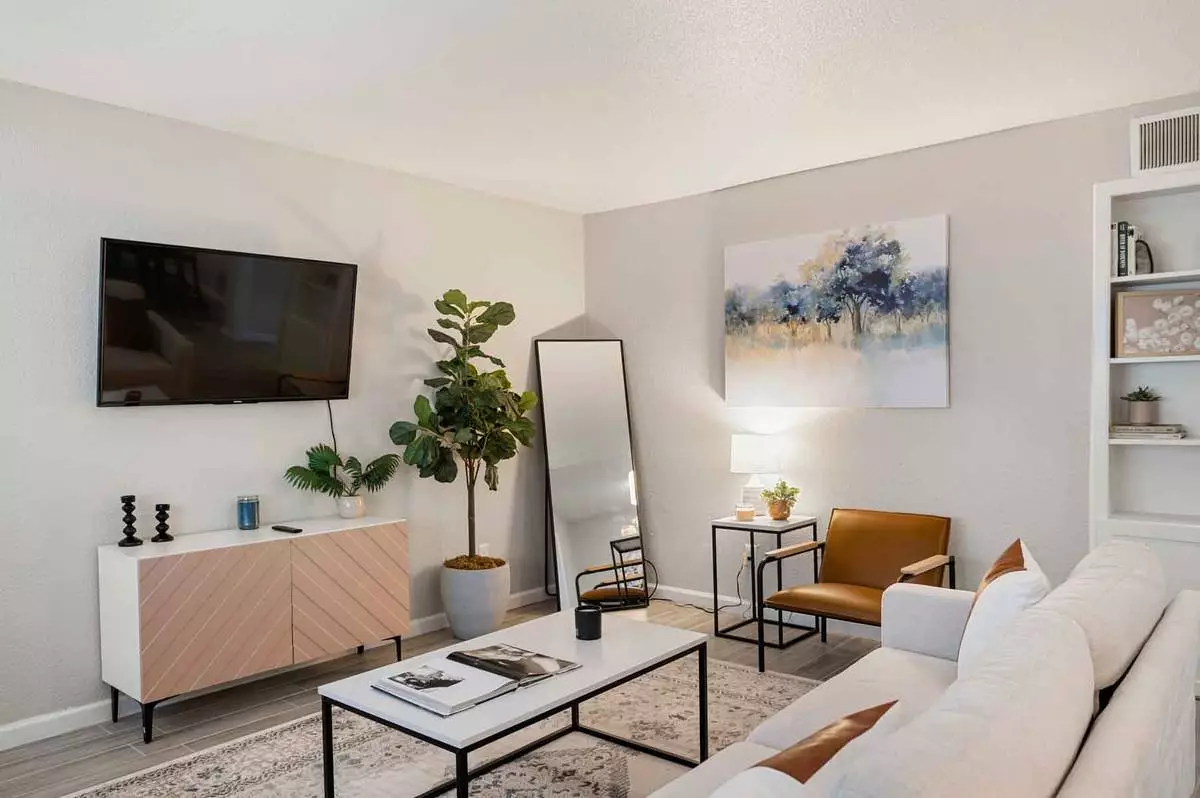
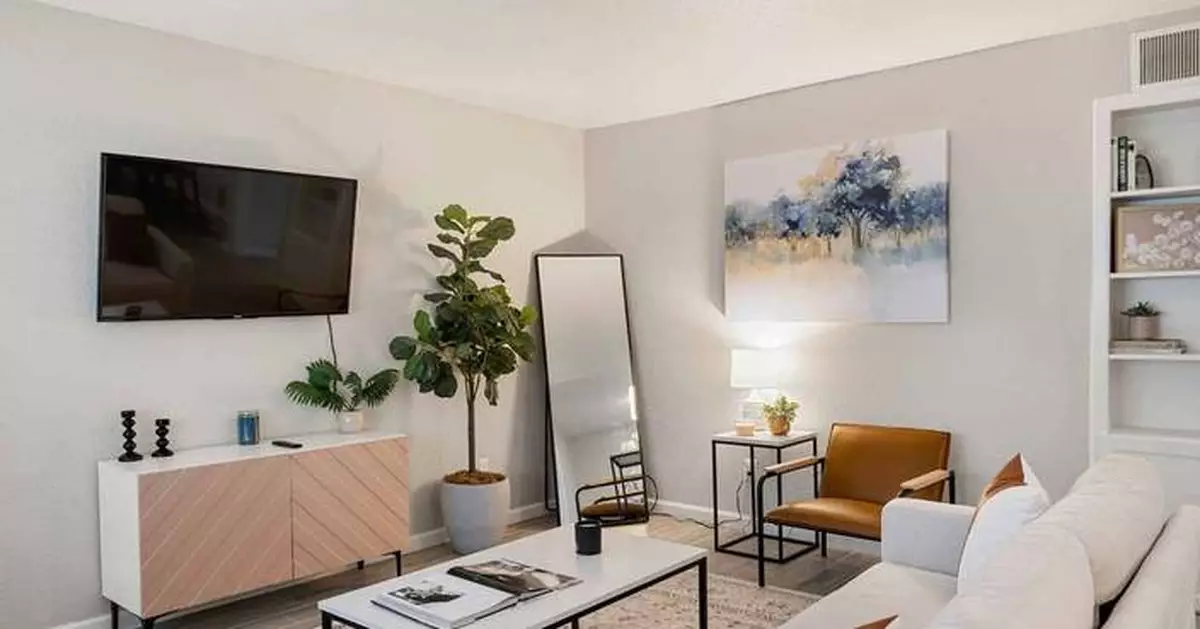
Living room in beautiful model unit at 600 Nottingham Apartments (Photo: Business Wire)
SAN FRANCISCO (AP) — Stephen Curry swished a 3-pointer on his second shot from deep and raised his arms in delight when the ball went through.
He was looking to do the same on the last possession with Golden State down a point, but missed a long, straightaway 3-pointer.
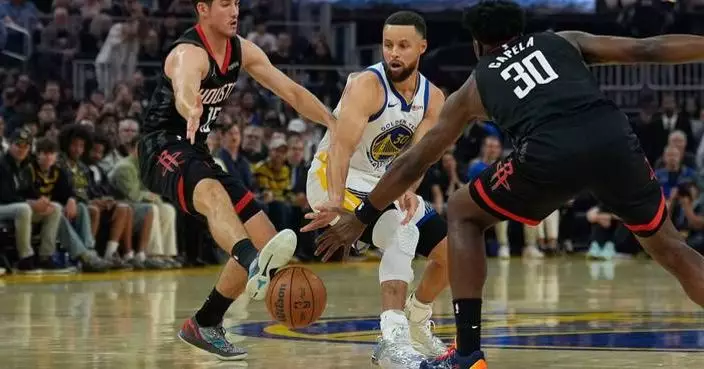
No matter the result, Curry is back and healthy at long last for the Warriors after a right knee injury, and everyone at Chase Center celebrated right along with him in Golden State’s 117-116 loss to the Houston Rockets on Sunday night.
With Curry back, the Warriors hope to make it out of the play-in tournament.
"There were a lot of nerves all day, my family supporting me at home when I was a nervous wreck trying to pass the hours before I got to the arena but once you get back into your routine I've been doing it so long muscle memory takes over and the adrenalin takes over," Curry said. "I appreciate the fans and the reception and just the buzz that was in the arena because you know at a certain point you won't be able to tap into that. So very grateful, it was a beautiful day and now I can kind of settle in to how we're going to finish the year.”
Coming off the bench in the regular season for the first time in 14 years, Curry was greeted by a warm standing ovation and greetings on the big screen — he also expressed his gratitude on video — when he entered with 4:54 left in the opening quarter.
He immediately passed off for an assist on a dunk by Charles Bassey, who just signed with Golden State earlier in the day. Curry made a 3-pointer with 34 seconds remaining in the period.
“You can just feel it, we're back in the mix, we're back in the fight with Steph,” coach Steve Kerr said.
Curry finished with 29 points on 11-for-21 shooting and became the 26th player in NBA history with 9,000 field goals. He was 5 of 10 on 3s, playing 26 minutes.
Fans chanted “We want Steph! We want Steph!” during the fourth quarter, seemingly unaware of his minutes restriction.
This marked the first time he has come off the bench in a regular-season game since March 7, 2012, against Memphis. He last was a reserve in Game 4 of the first round of the 2022 playoffs during the Warriors’ last championship run.
Curry's pregame warmup is always a must-see show long before the main event, and the cheers were extra loud for his latest session now that he's finally back on the floor.
He was cheered before tipoff, too, and was supposed to play 24 minutes following a two-plus-month absence and 27 straight games sidelined because of a right knee injury.
He signed a few autographs after his shooting routine then missed his full-court heave before disappearing into the tunnel.
“He's one of the most beloved players in league history, Bay Area history in any sport and I think a long absence like this reminds everybody how lucky we are to see him, to watch him, to coach him, to play with him,” Kerr said. “So tonight's a special night because we're reminded of how lucky we've been and how lucky we still are.”
Kerr said before the game that it's still unclear how many of the remaining games Curry will play given Golden State has five contests in eight days with a back-to-back the rest of the way — and the expectation is he wouldn't play on consecutive nights.
The schedule will be determined by how Curry feels and input from Vice President of Player Health and Performance Rick Celebrini.
Soon, Curry will be starting again.
Rockets coach Ime Udoka knew Houston would have its hands full with No. 30 back.
“One of the best movers in the game,” Udoka said. "... Obviously, we’ve seen him enough and know some things that have hurt us in the past.”
Curry scrimmaged several times this past week to test his injured right knee, and he said Saturday it was never a consideration to shut it down for the rest of the season. Kerr hoped to have Curry and younger brother Seth finally play together.
At the 6:19 mark of the second quarter, they did — the first time brothers played together in Warriors franchise history, according to Elias. Seth Curry also has been injured much of the season.
Seth Curry did appear in six preseason games for Golden State in 2013 then played for the team’s G League Santa Cruz Warriors that year — with the brothers playing all of 100 seconds together during the fourth quarter of two games during that ’13 preseason.
“That was special,” Curry said. “We both had very difficult years, honestly him more than me with injuries. I was joking calling us the rehab brothers. It's been like that all year but to have that moment coming out of a timeout, talking about our matchups, I was having flashbacks to Charlotte Christian in high school my senior year, his sophomore year was the last time in an actual game. ... That was a dream come true to be honest, it hasn't really sunk in yet.”
Their mother, Sonya, was in the stands for the moment.
Curry warmed up in Kevin Durant's “Scoring Title” Nike KD 4s with former teammate Durant playing for the Rockets.
After Saturday's practice, Curry said dealing with the pain is part of his “new normal” and the offseason will require a significant reset.
The 38-year-old Curry initially expected to be playing right after the All-Star break, but the recovery was prolonged by some difficult moments when he would feel good, push hard then pay for it the following day.
The Warriors (36-42) lost their fourth straight game. They were 13-25 this season without Curry — including 9-18 during the recent stretch with him sidelined by patellofemoral pain syndrome.
Curry was thrilled to battle Durant again — knowing these moments won't last forever. The feeling was mutual.
“Amazing,” Durant said about Curry’s comeback night.
AP NBA: https://apnews.com/NBA
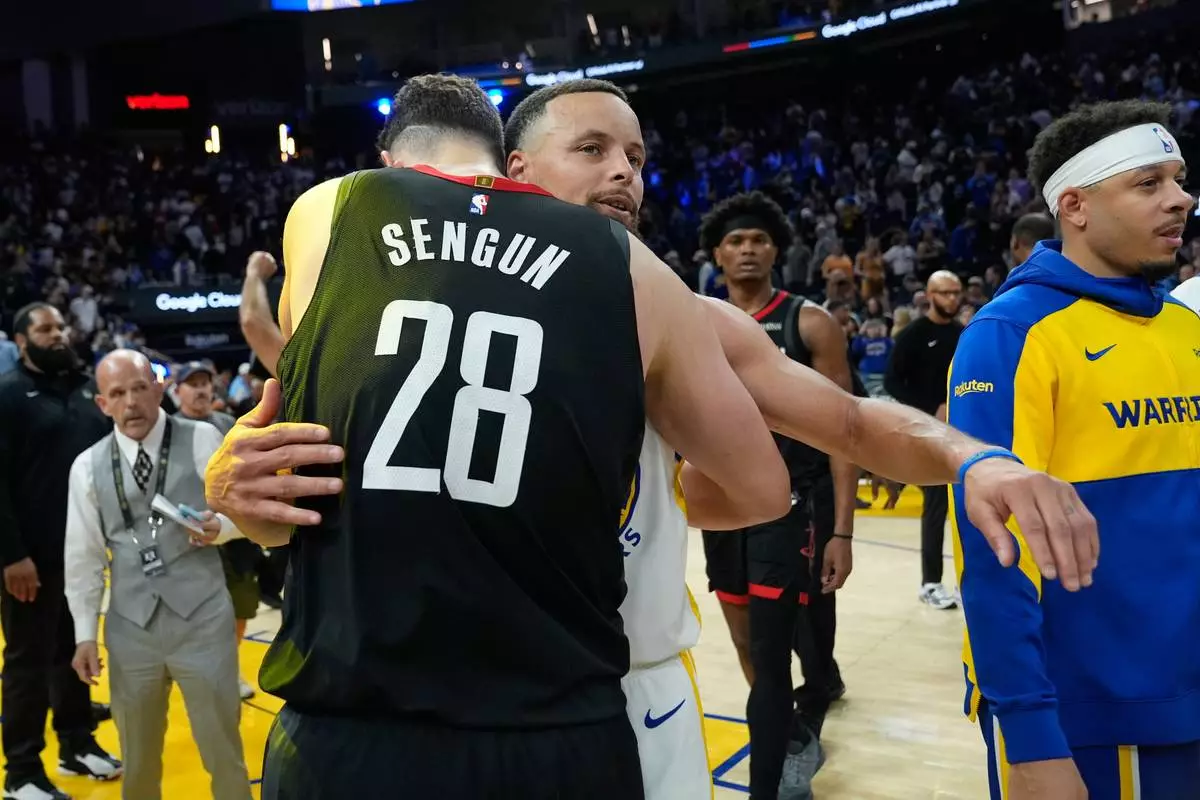
Houston Rockets center Alperen Sengun (28) is hugged by Golden State Warriors guard Stephen Curry (30) after an NBA basketball game, Sunday, April 5, 2026, in San Francisco. (AP Photo/Godofredo A. Vásquez)
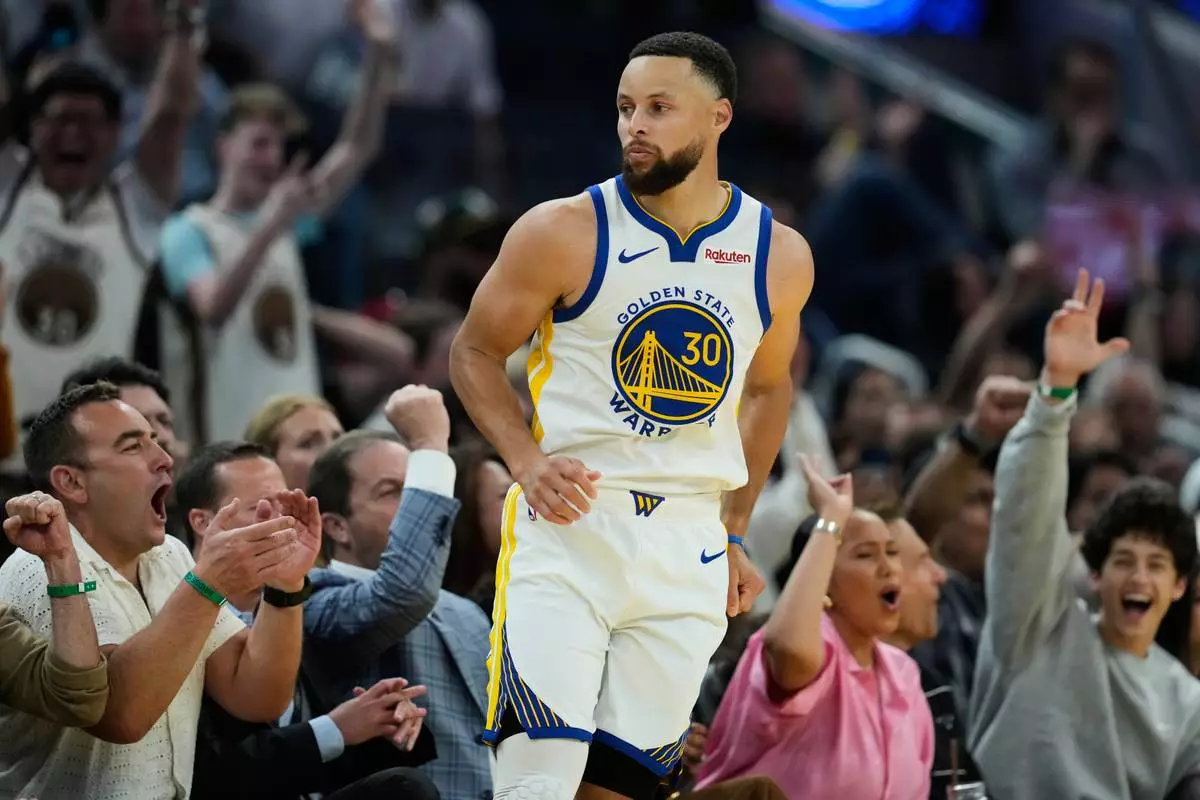
Golden State Warriors guard Stephen Curry (30) reacts after making a 3-point basket during the second half of an NBA basketball game against the Houston Rockets, Sunday, April 5, 2026, in San Francisco. (AP Photo/Godofredo A. Vásquez)
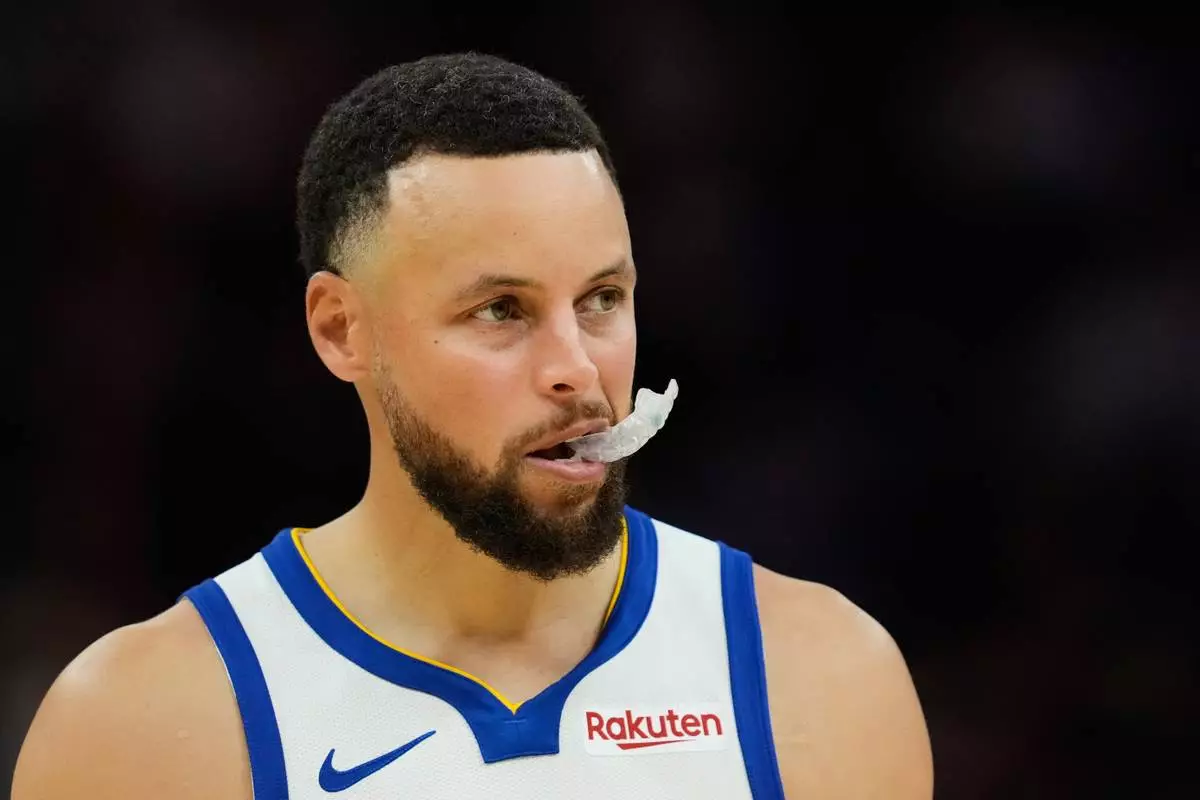
Golden State Warriors guard Stephen Curry looks toward the Houston Rockets bench during the second half of an NBA basketball game, Sunday, April 5, 2026, in San Francisco. (AP Photo/Godofredo A. Vásquez)
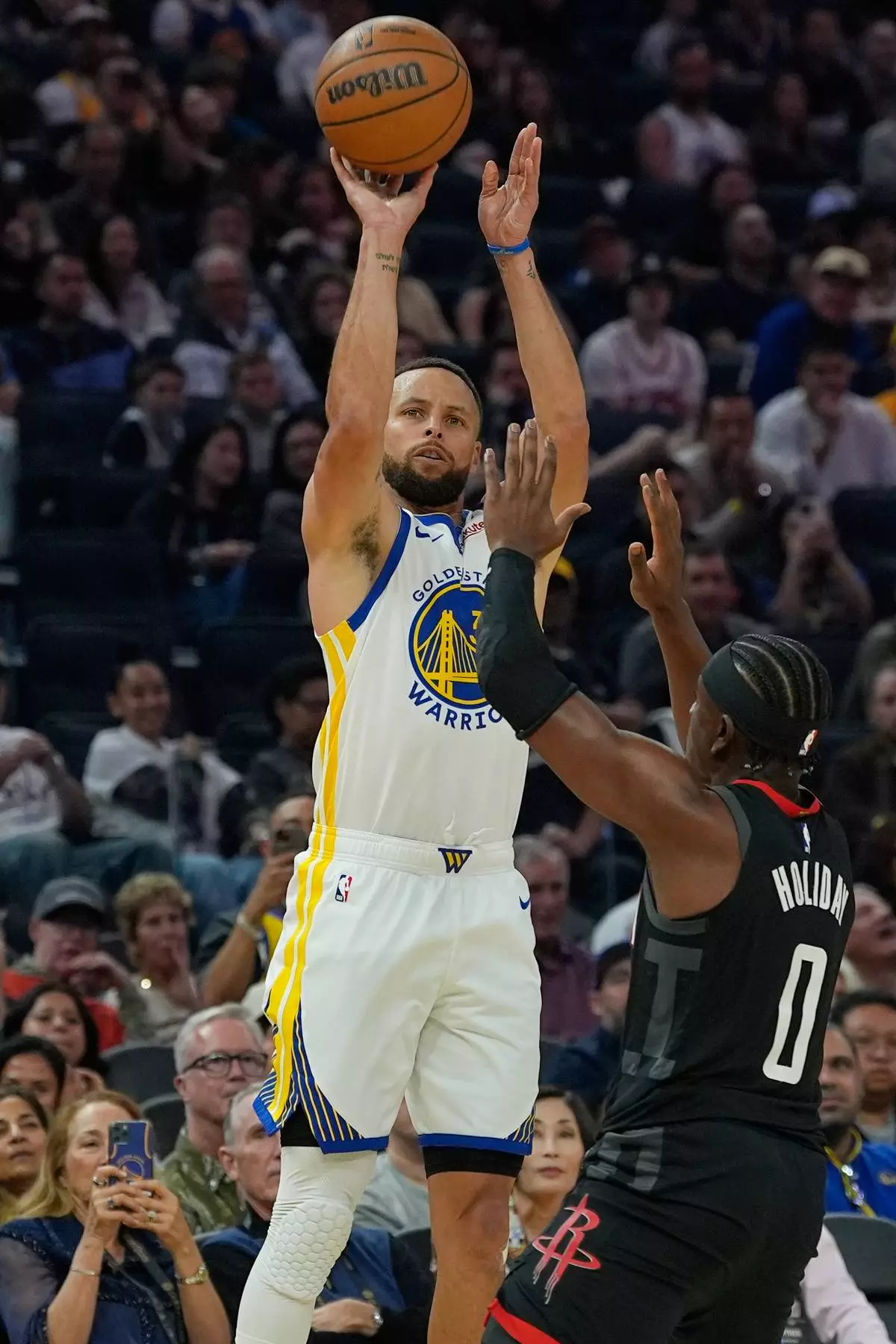
Golden State Warriors guard Stephen Curry, left, shoots a 3-point basket over Houston Rockets guard Aaron Holiday during the first half of an NBA basketball game, Sunday, April 5, 2026, in San Francisco. (AP Photo/Godofredo A. Vásquez)
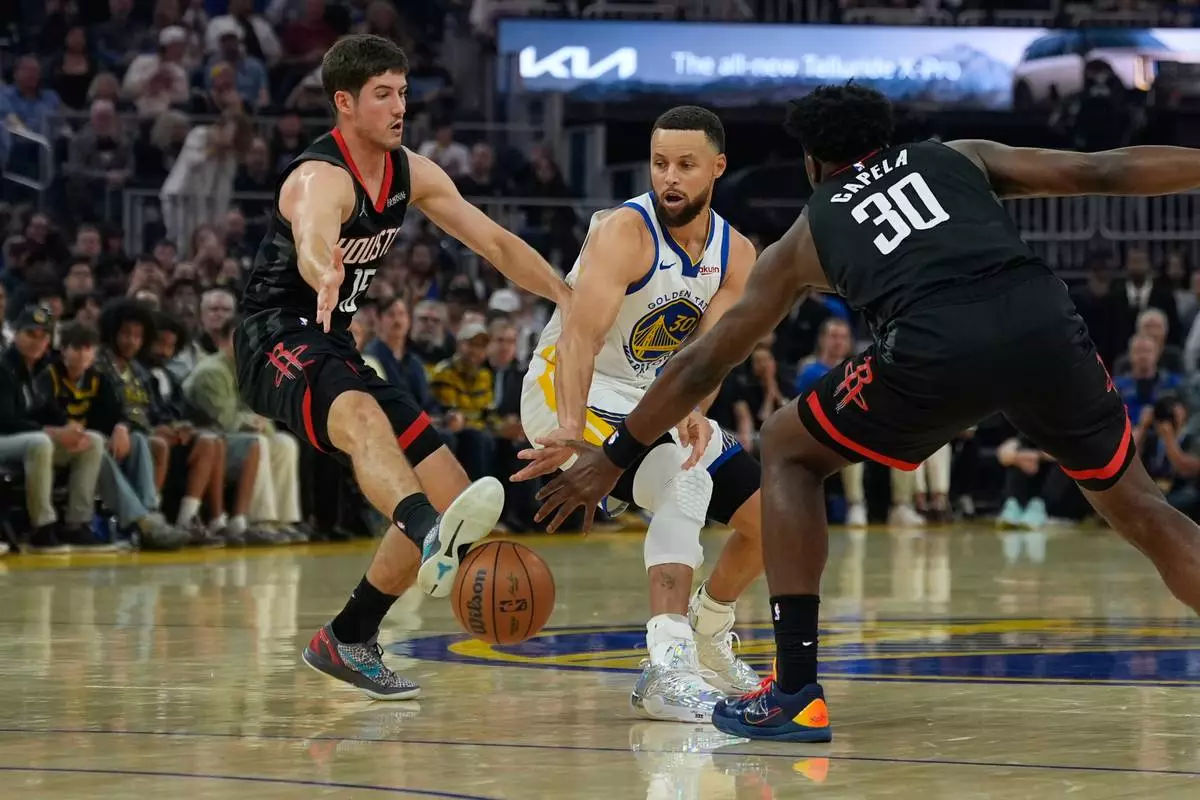
Houston Rockets guard Reed Sheppard, left, kicks a pass by Golden State Warriors guard Stephen Curry, center, during the first half of an NBA basketball game, Sunday, April 5, 2026, in San Francisco. (AP Photo/Godofredo A. Vásquez)
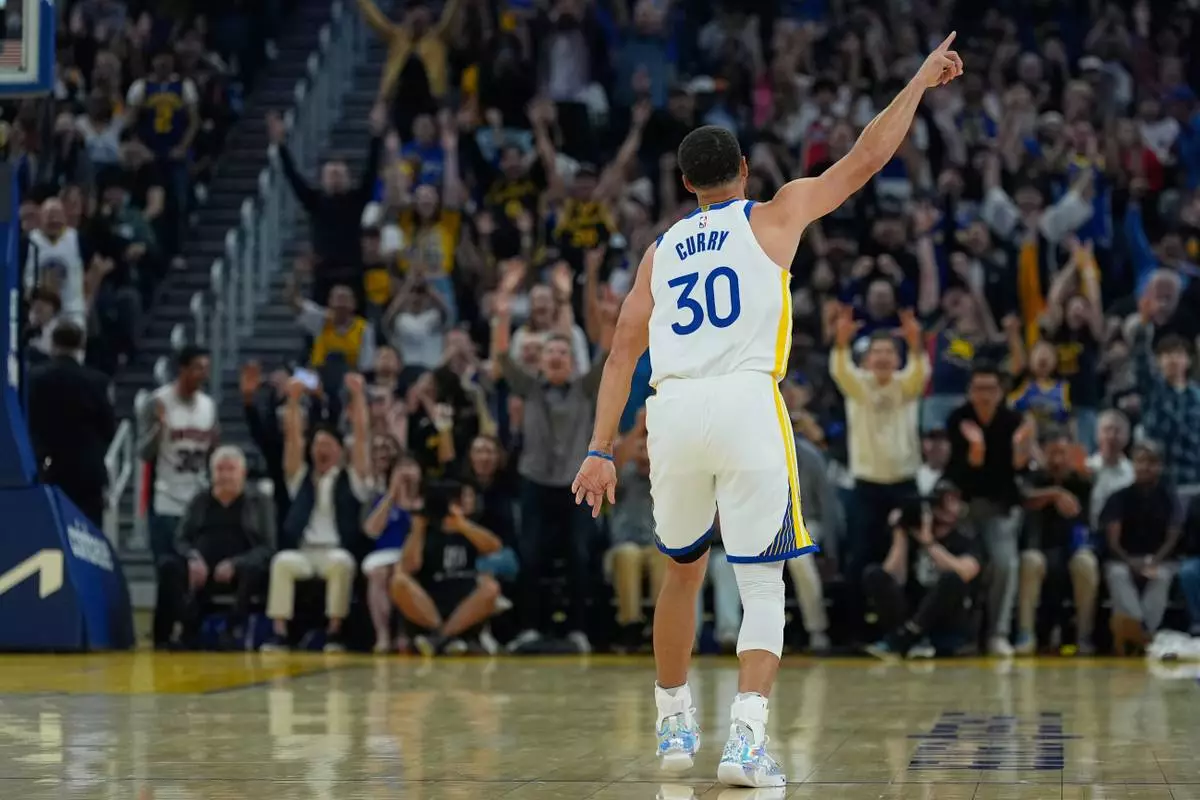
Golden State Warriors guard Stephen Curry celebrates after making a 3-point basket during the first half of an NBA basketball game against the Houston Rockets, Sunday, April 5, 2026, in San Francisco. (AP Photo/Godofredo A. Vásquez)
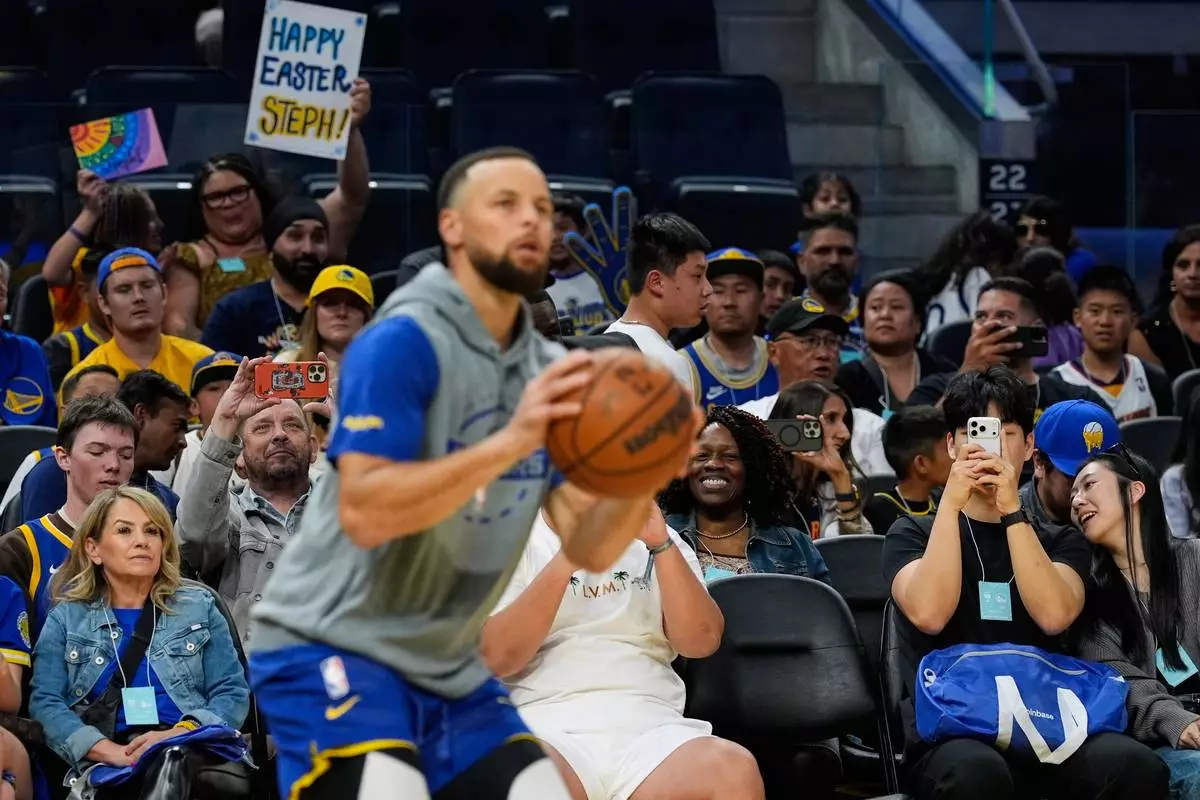
Fans watch as Golden State Warriors guard Stephen Curry, foreground, warms up before an NBA basketball game against the Houston Rockets, Sunday, April 5, 2026, in San Francisco. (AP Photo/Godofredo A. Vásquez)
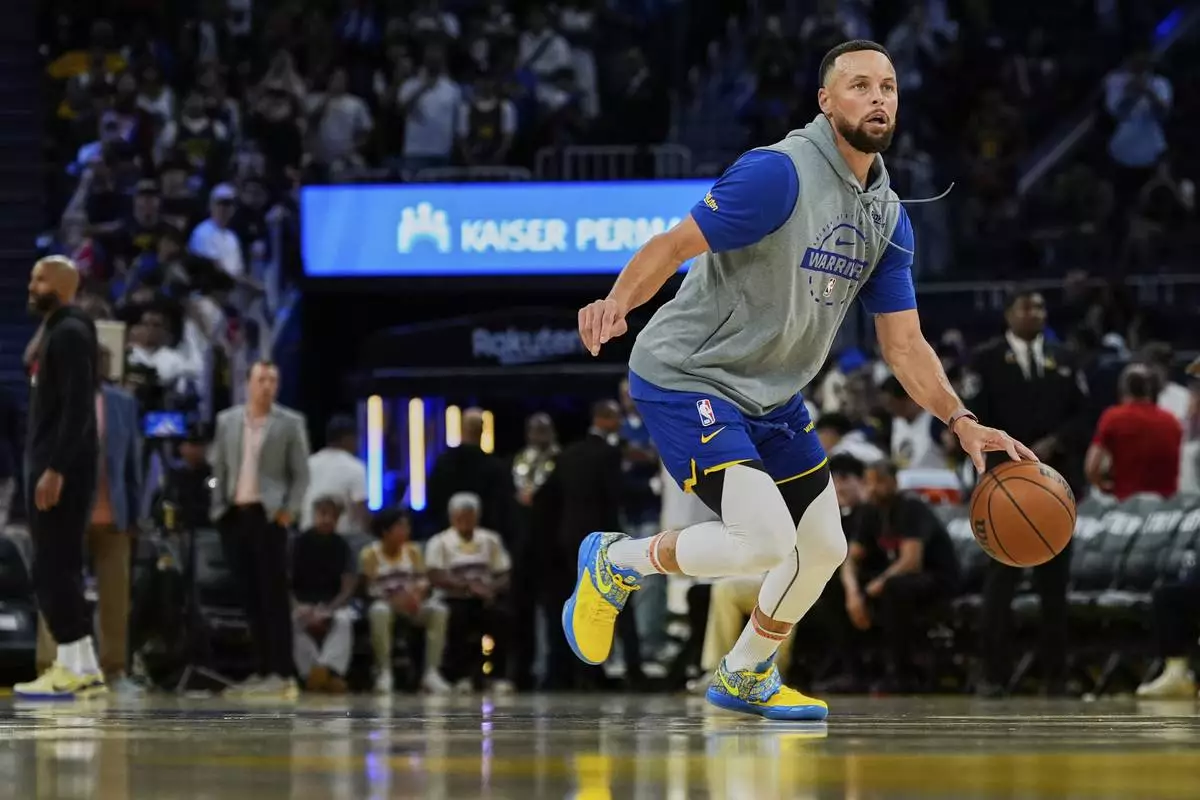
Golden State Warriors guard Stephen Curry warms up before an NBA basketball game against the Houston Rockets, Sunday, April 5, 2026, in San Francisco. (AP Photo/Godofredo A. Vásquez)
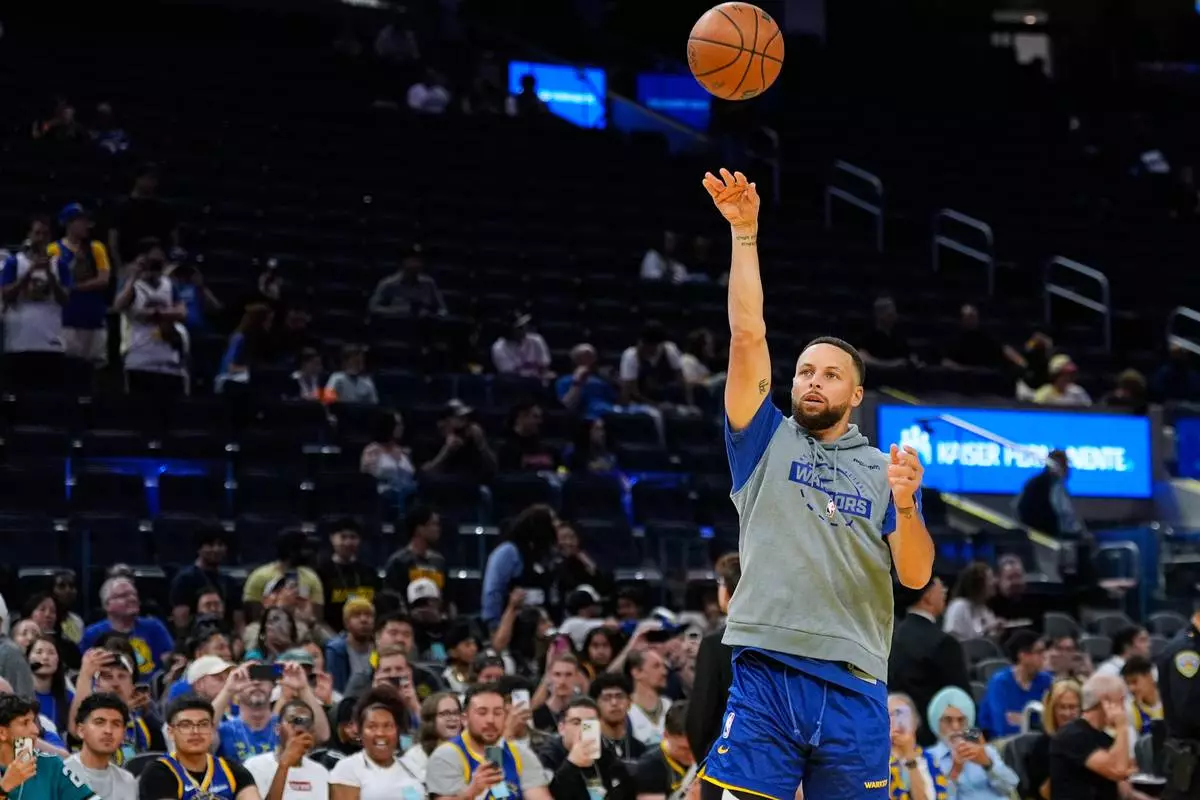
Golden State Warriors guard Stephen Curry warms up before an NBA basketball game against the Houston Rockets, Sunday, April 5, 2026, in San Francisco. (AP Photo/Godofredo A. Vásquez)
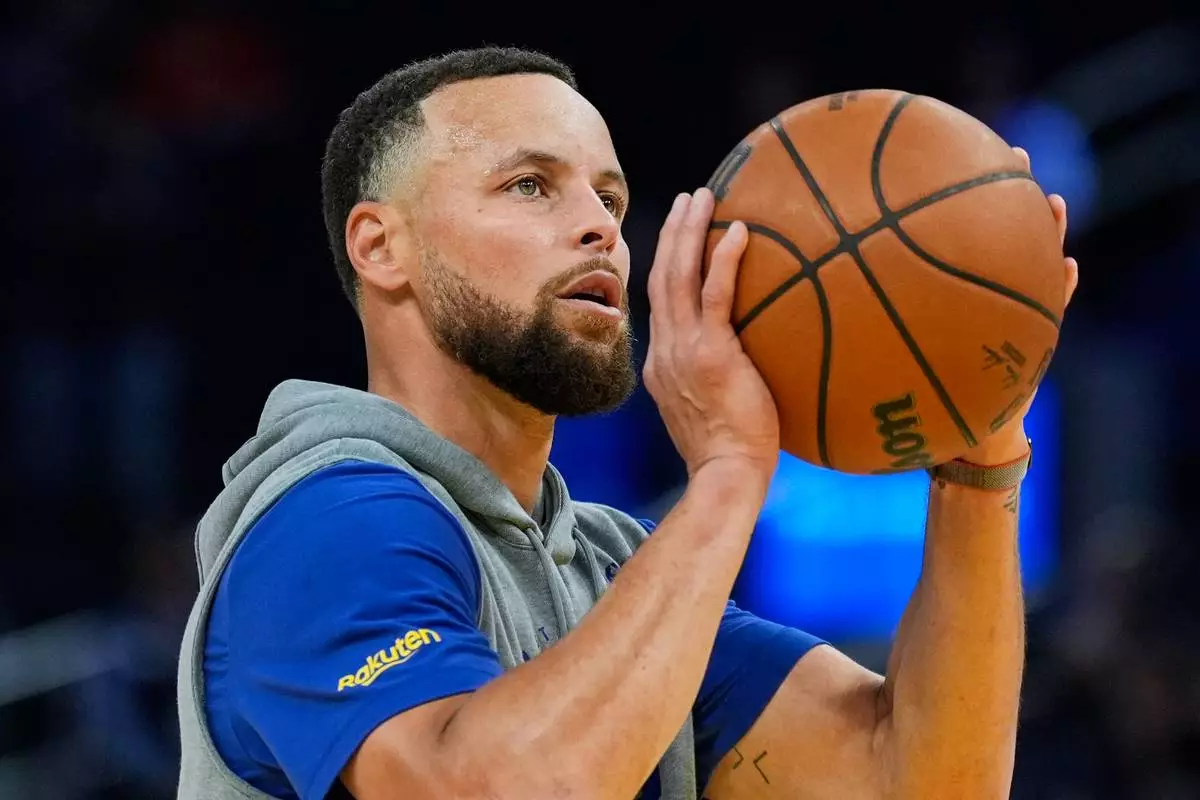
Golden State Warriors guard Stephen Curry warms up before an NBA basketball game against the Houston Rockets, Sunday, April 5, 2026, in San Francisco. (AP Photo/Godofredo A. Vásquez)
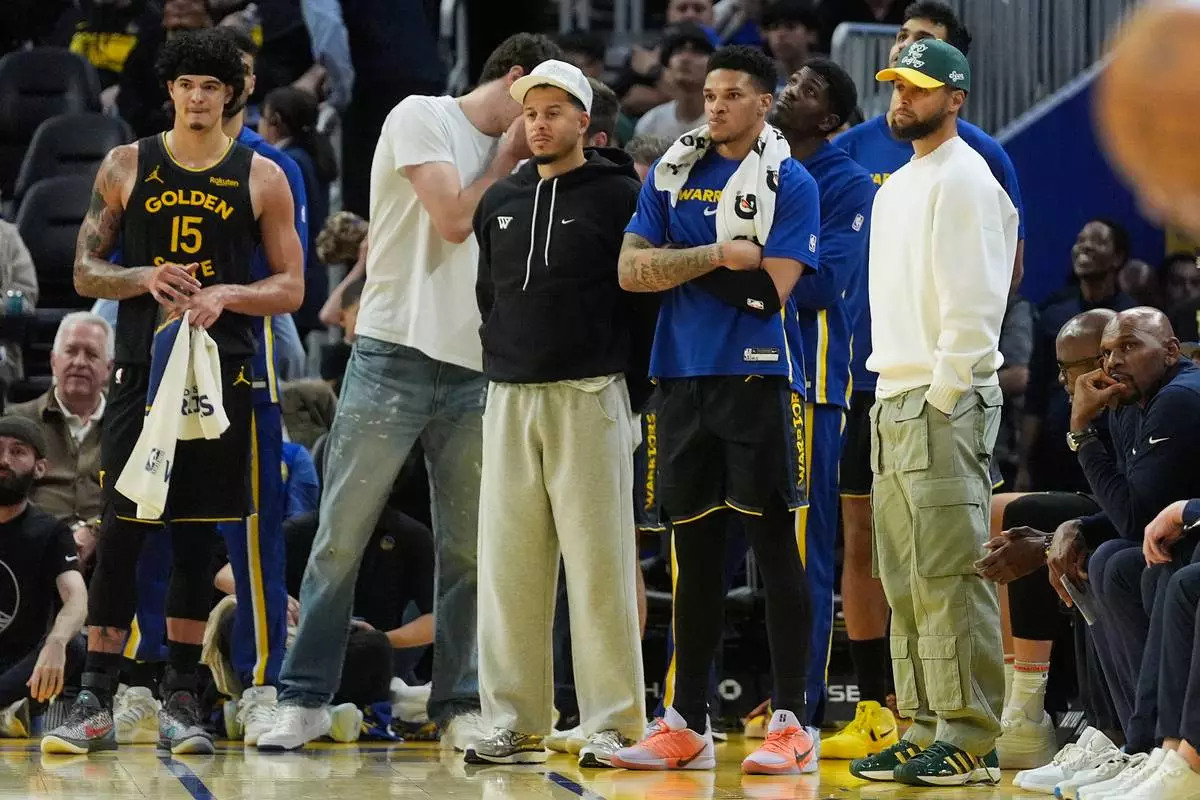
Golden State Warriors forward Gui Santos, from left, reacts from the sideline with Quinten Post, Seth Curry, Will Richard and Stephen Curry during the second half of an NBA basketball game against the Cleveland Cavaliers in San Francisco, Thursday, April 2, 2026. (AP Photo/Jeff Chiu)
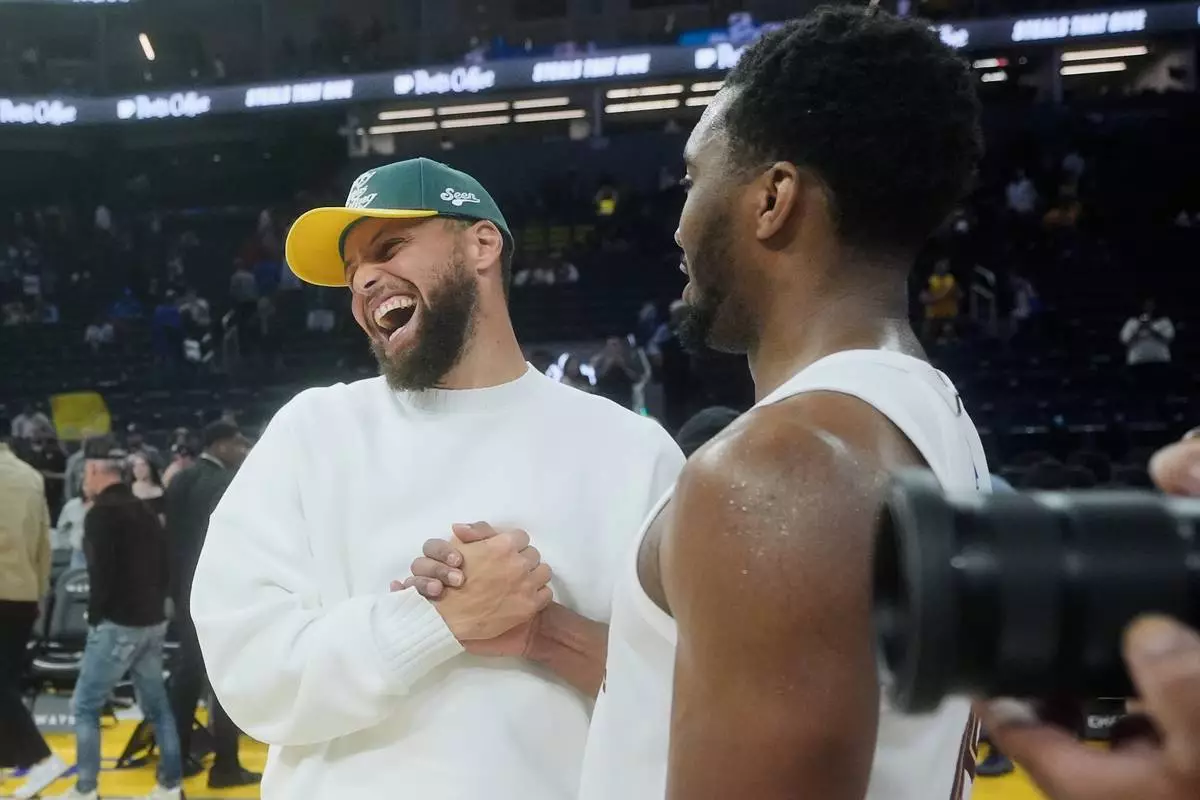
Golden State Warriors guard Stephen Curry, left, smiles while shaking hands with Cleveland Cavaliers guard Donovan Mitchell after an NBA basketball game in San Francisco, Thursday, April 2, 2026. (AP Photo/Jeff Chiu)
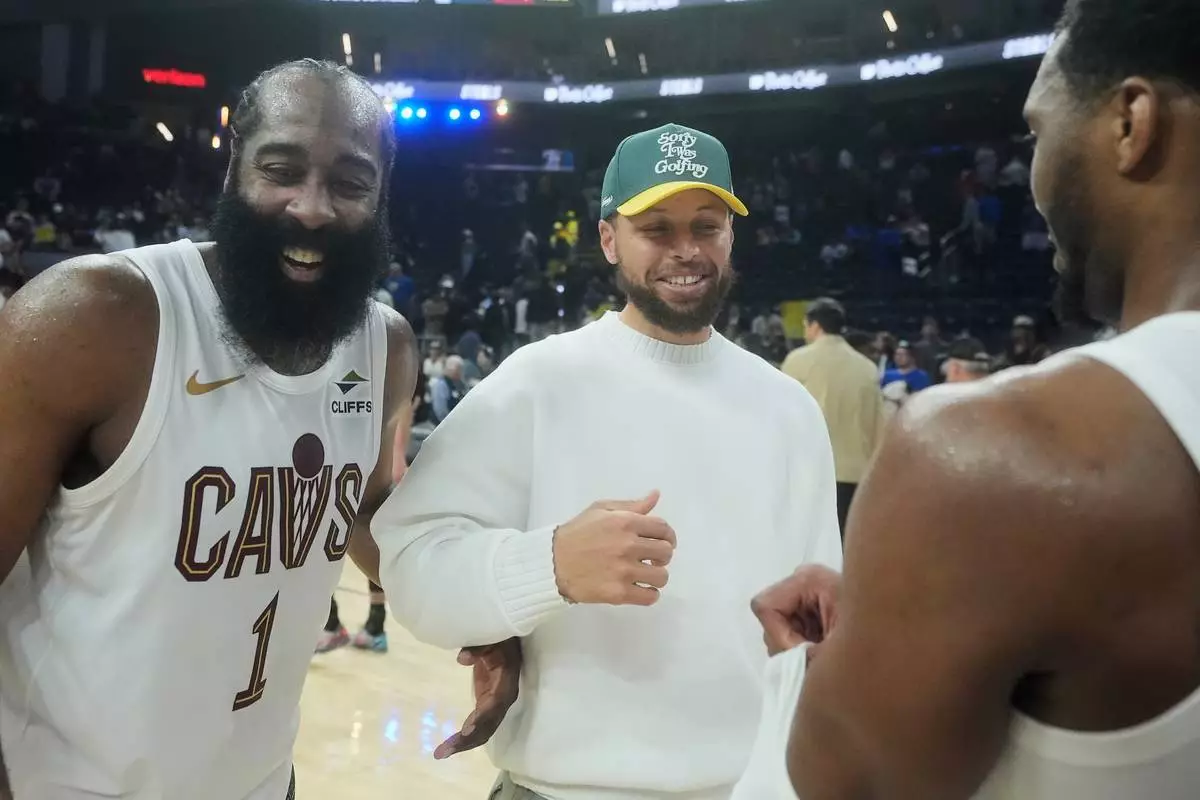
Injured Golden State Warriors guard Stephen Curry, middle, smiles while talking with Cleveland Cavaliers guard James Harden (1) and guard Donovan Mitchell after an NBA basketball game in San Francisco, Thursday, April 2, 2026. (AP Photo/Jeff Chiu)