Skip to Content Facebook Feature Image

A long road ahead to decide Syria’s future after rapid end to Assad’s rule

News

A long road ahead to decide Syria’s future after rapid end to Assad’s rule
News

News

A long road ahead to decide Syria’s future after rapid end to Assad’s rule

2024-12-10 04:30 Last Updated At:04:42

BEIRUT (AP) — For the first time in 50 years, the question of how Syria will be governed is wide open. The end of the Assad family's rule is for many Syrians a moment of mixed joy and fear, of the total unknown.

The insurgency that swept President Bashar Assad out of power is rooted in Islamist jihadi fighters. Its leader says he has renounced past ties to al-Qaida, and he has gone out of his way to assert a vision of creating a pluralistic Syria governed by civil institutions — not dictators and not ideology.

More Images
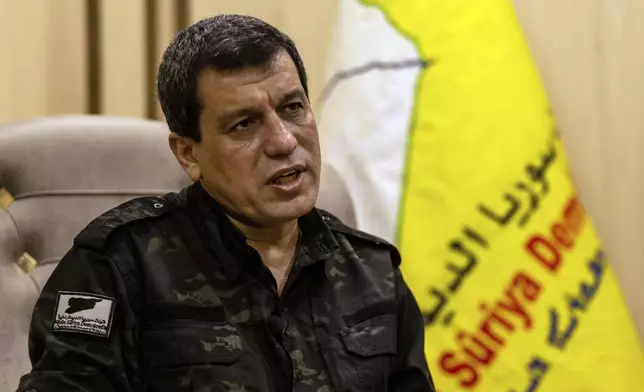
FILE - Mazloum Abdi, the commander of the U.S.-backed Syrian Democratic Forces, speaks during a news conference in Hassakeh, Syria, Nov. 26, 2022. (AP Photo/Baderkhan Ahmad, File)
FILE - Mazloum Abdi, the commander of the U.S.-backed Syrian Democratic Forces, speaks during a news conference in Hassakeh, Syria, Nov. 26, 2022. (AP Photo/Baderkhan Ahmad, File)

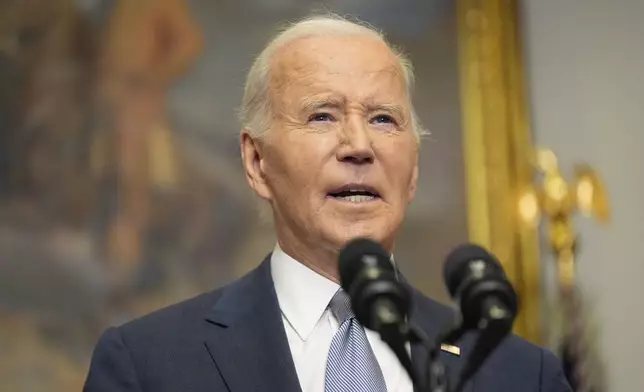
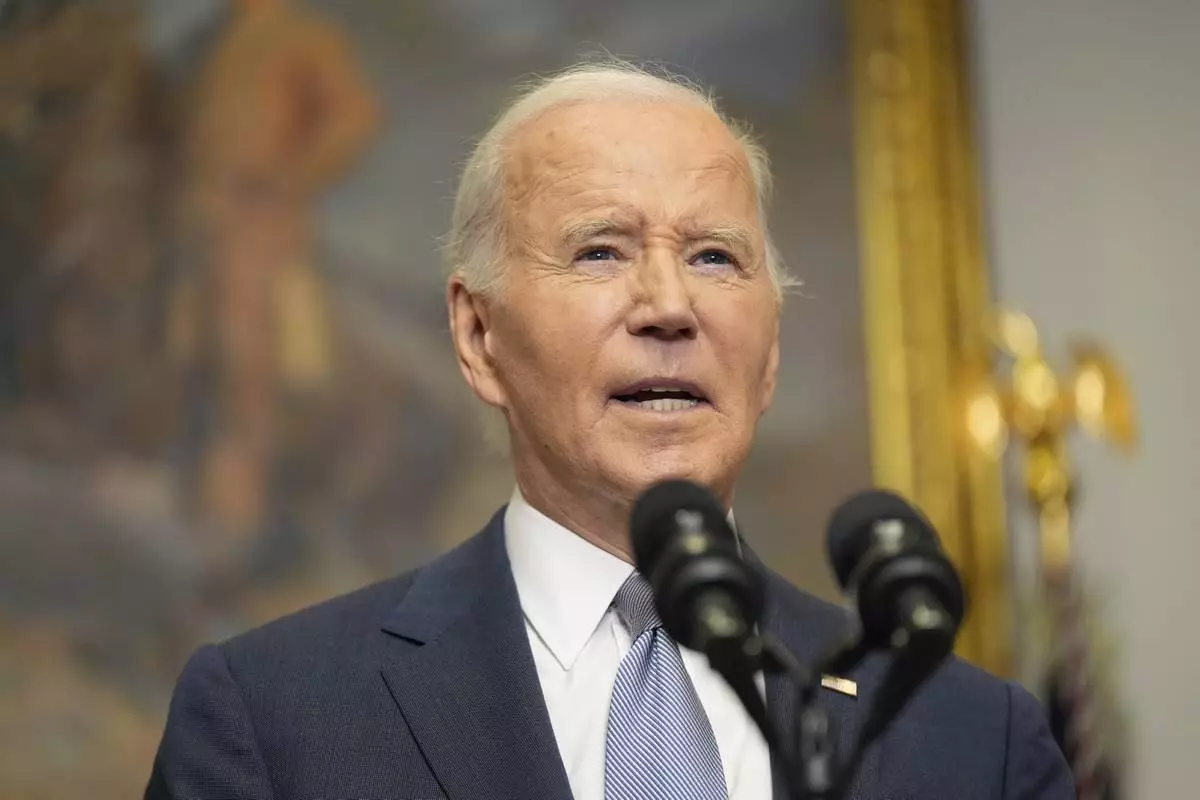
President Joe Biden speaks about the sudden collapse of the Syrian government under Bashar Assad from the Roosevelt Room at the White House in Washington, Sunday, Dec. 8, 2024. (AP Photo/Manuel Balce Ceneta)
President Joe Biden speaks about the sudden collapse of the Syrian government under Bashar Assad from the Roosevelt Room at the White House in Washington, Sunday, Dec. 8, 2024. (AP Photo/Manuel Balce Ceneta)

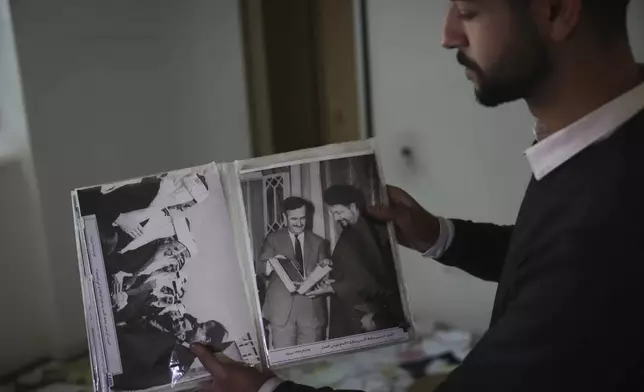
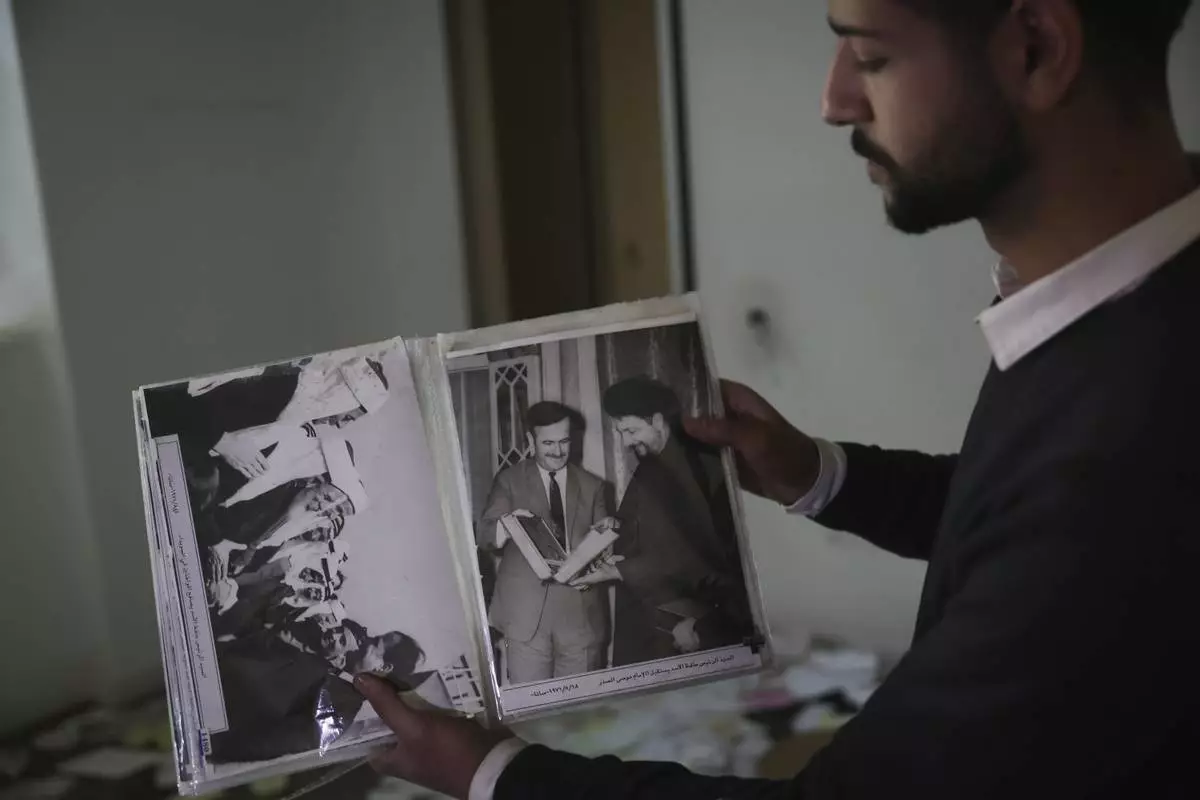
A man shows old pictures of the late Syrian President Hafez Assad as people search for belongings in the ransacked private residence of Syrian President Bashar Assad in Damascus, Syria, on Sunday, Dec. 8, 2024. (AP Photo/Ghaith Alsayed)
A man shows old pictures of the late Syrian President Hafez Assad as people search for belongings in the ransacked private residence of Syrian President Bashar Assad in Damascus, Syria, on Sunday, Dec. 8, 2024. (AP Photo/Ghaith Alsayed)

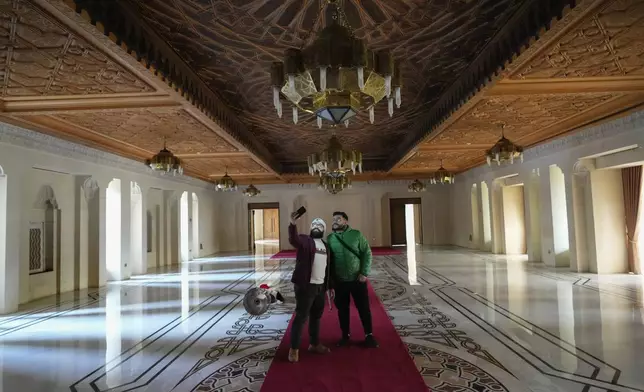
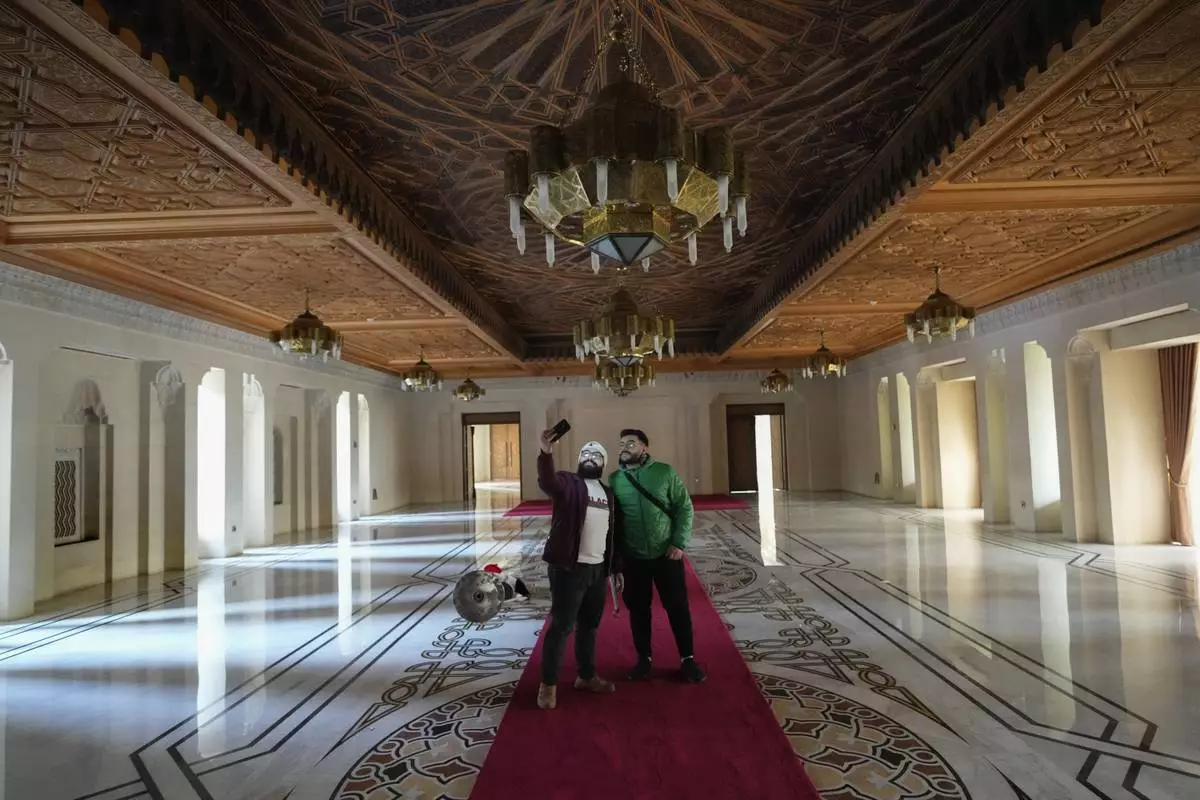
Two men use their cell phones while walking through the halls of Syrian President Bashar Assad's presidential palace in Damascus, Syria, Sunday, Dec. 8, 2024. (AP Photo/Hussein Malla)
Two men use their cell phones while walking through the halls of Syrian President Bashar Assad's presidential palace in Damascus, Syria, Sunday, Dec. 8, 2024. (AP Photo/Hussein Malla)

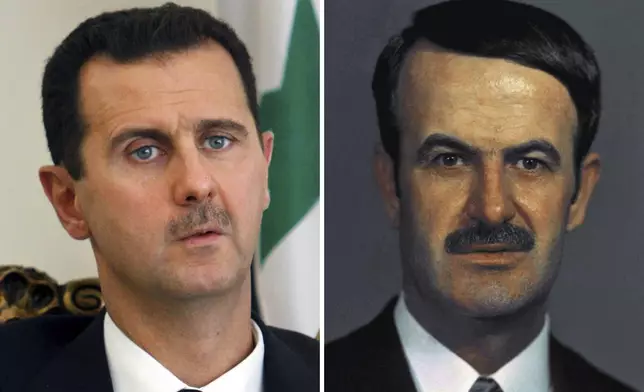
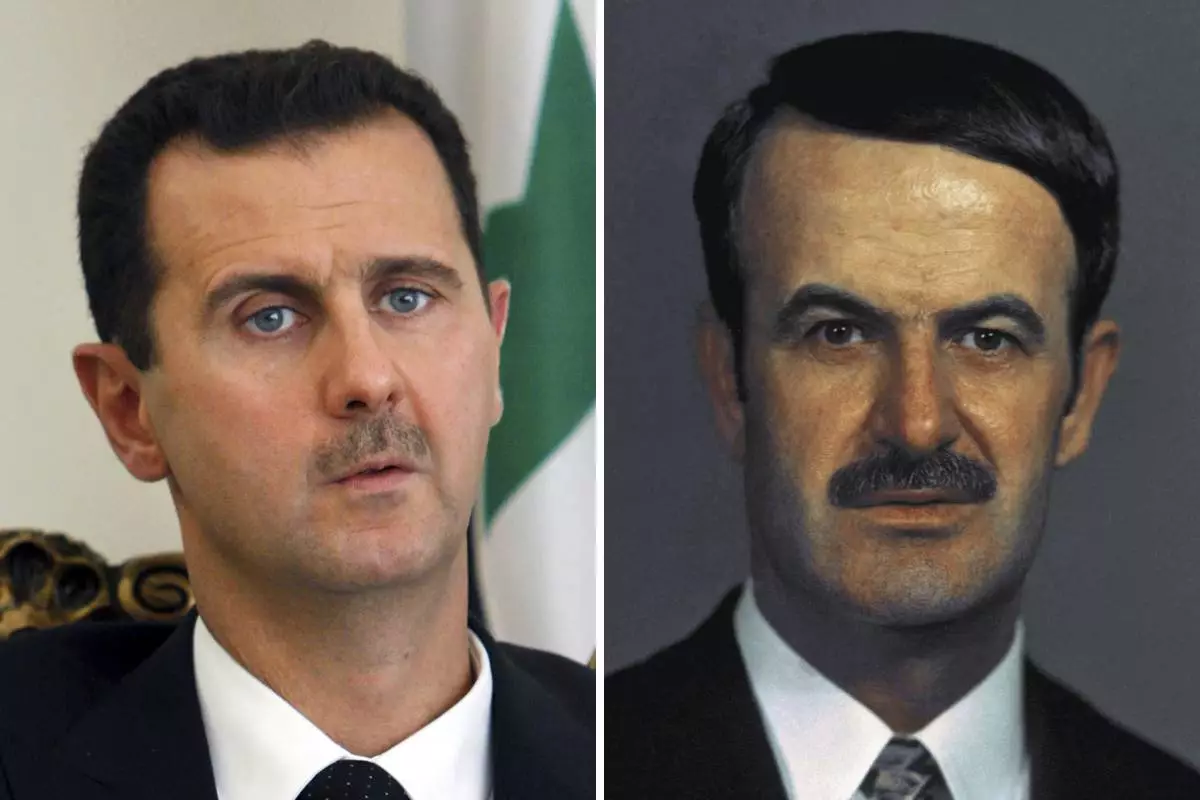
FILE - A combo of file photos shows Syrian President Bashar Assad, left, on Aug. 19, 2009, in Tehran, Iran, and his father, former Syrian President Hafez Assad, on Dec. 1, 1972, in an unknown location. (AP Photo, File)
FILE - A combo of file photos shows Syrian President Bashar Assad, left, on Aug. 19, 2009, in Tehran, Iran, and his father, former Syrian President Hafez Assad, on Dec. 1, 1972, in an unknown location. (AP Photo, File)

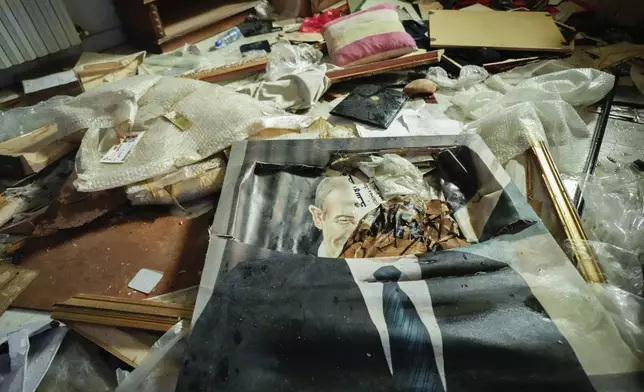
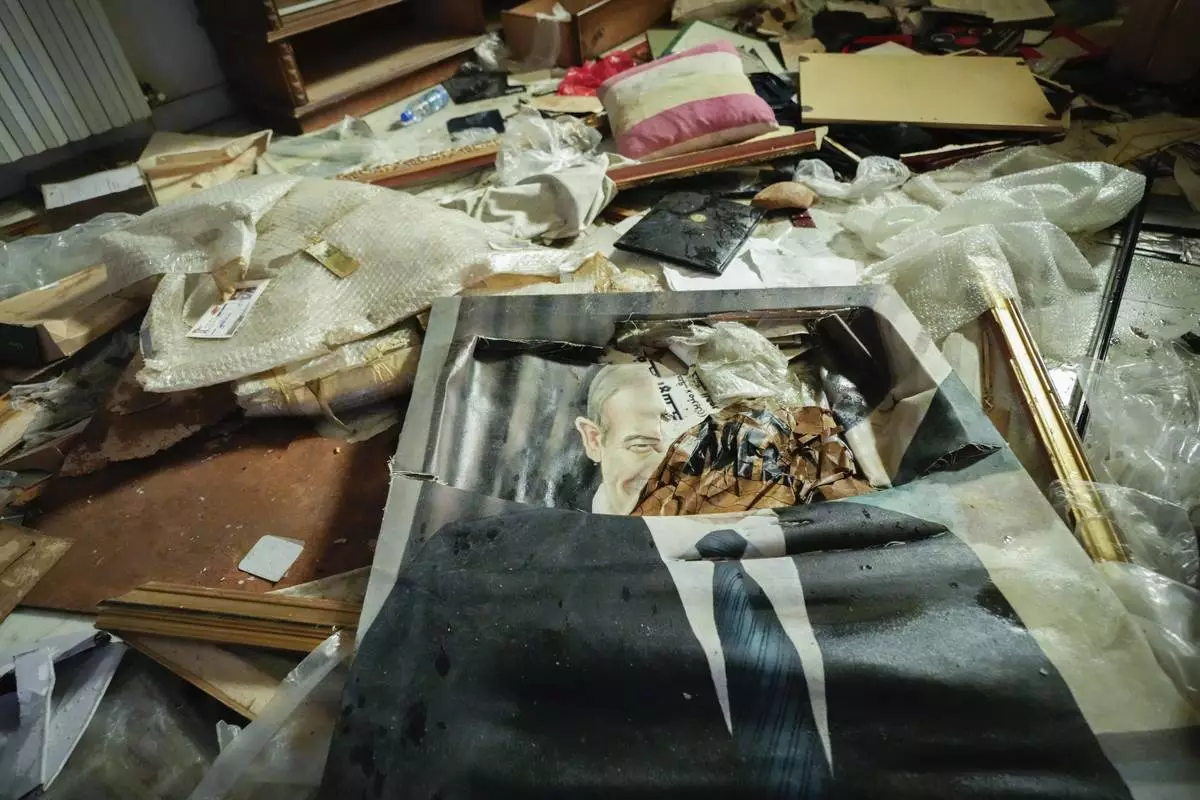
A broken portrait of the late Syrian President Hafez Assad lies on the floor as people search for belongings in the ransacked private residence of Syrian President Bashar Assad in the Malkeh district of Damascus, Syria, on Sunday, Dec. 8, 2024. (AP Photo/Hussein Malla)
A broken portrait of the late Syrian President Hafez Assad lies on the floor as people search for belongings in the ransacked private residence of Syrian President Bashar Assad in the Malkeh district of Damascus, Syria, on Sunday, Dec. 8, 2024. (AP Photo/Hussein Malla)

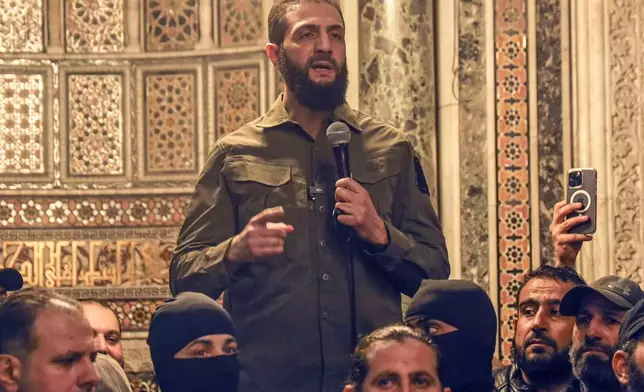
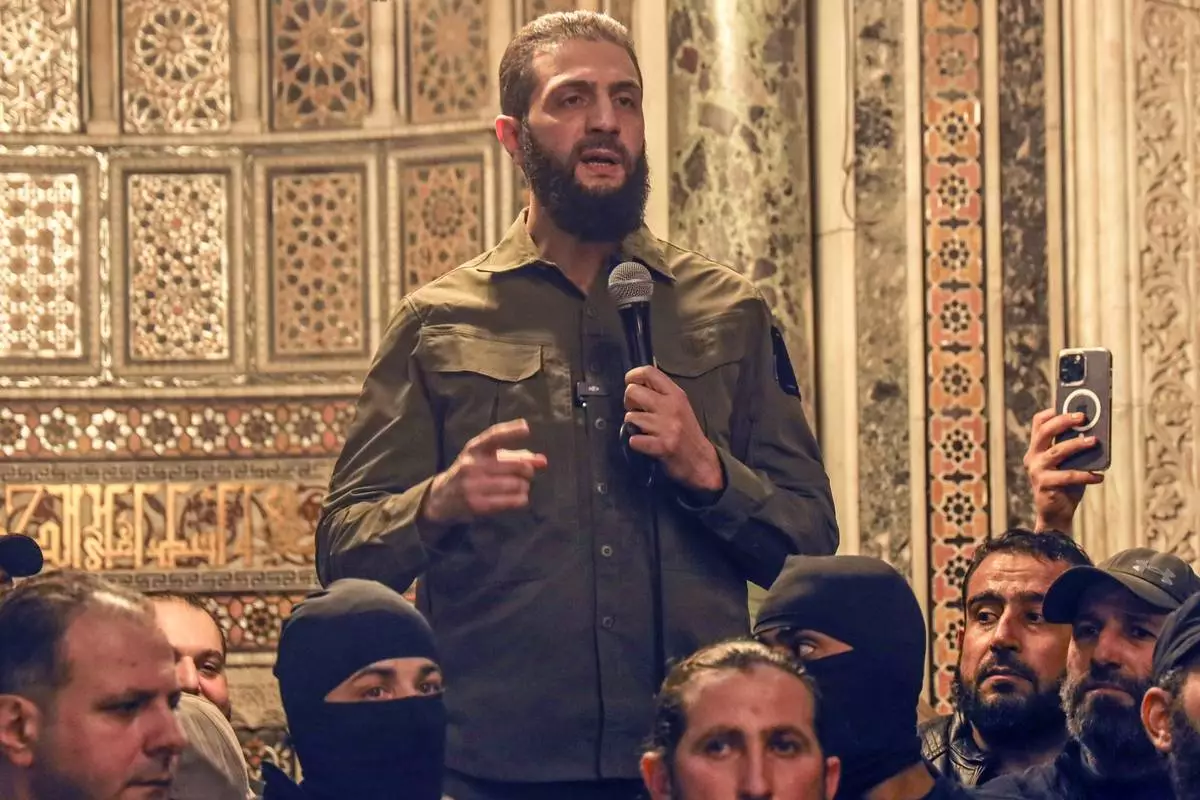
Abu Mohammed al-Golani speaks at the Umayyad Mosque in Damascus Sunday, Dec. 8, 2024. (AP Photo/Omar Albam)
Abu Mohammed al-Golani speaks at the Umayyad Mosque in Damascus Sunday, Dec. 8, 2024. (AP Photo/Omar Albam)

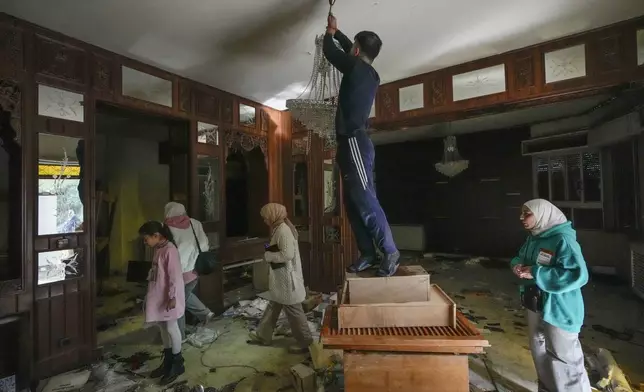
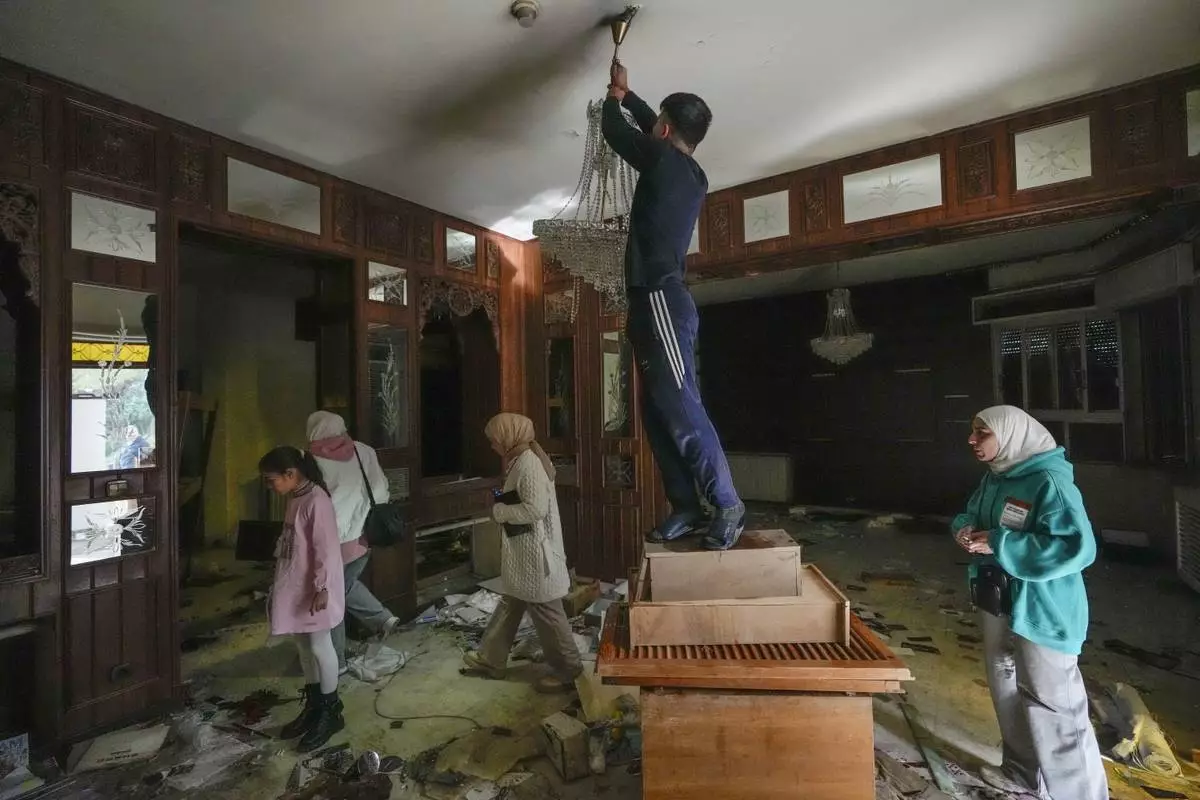
A man tries to take a chandelier as people search for belongings in the ransacked private residence of Syrian President Bashar Assad in the Malkeh district of Damascus, Syria, on Sunday, Dec. 8, 2024. (AP Photo/Hussein Malla)
A man tries to take a chandelier as people search for belongings in the ransacked private residence of Syrian President Bashar Assad in the Malkeh district of Damascus, Syria, on Sunday, Dec. 8, 2024. (AP Photo/Hussein Malla)

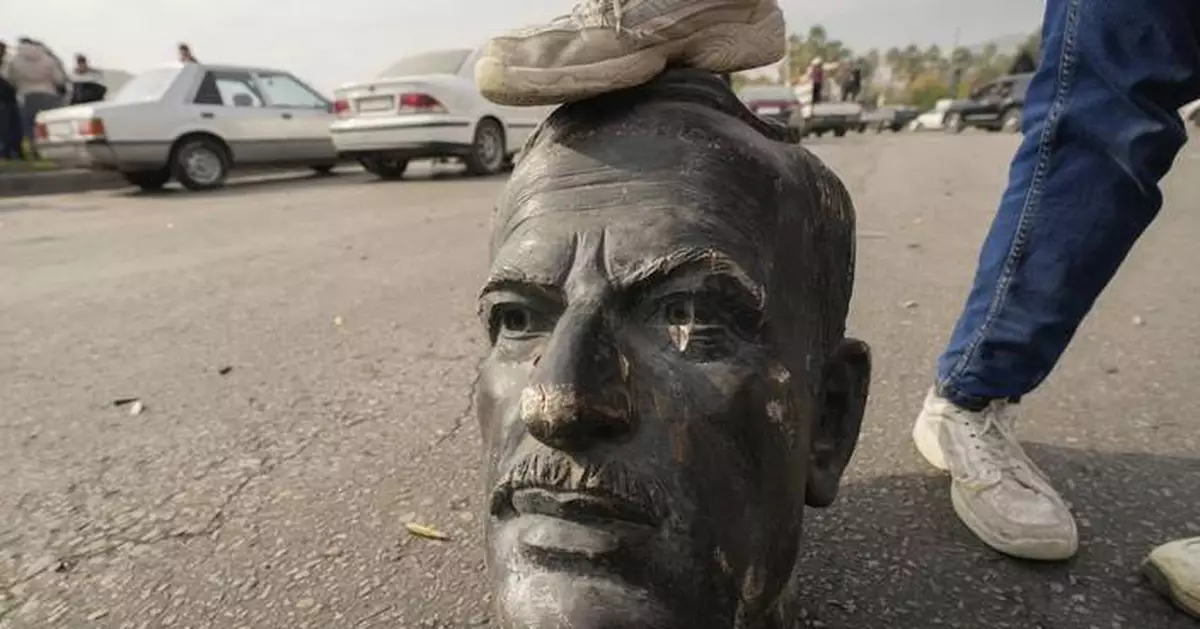
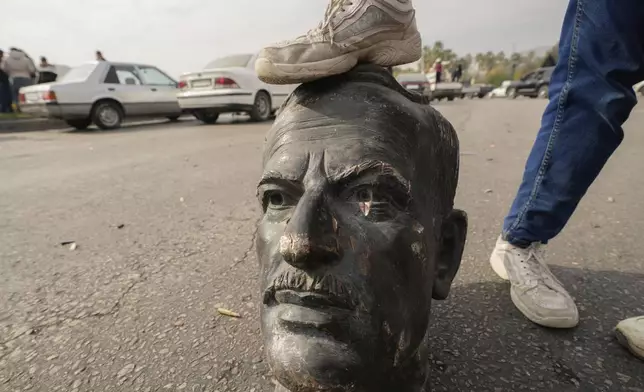
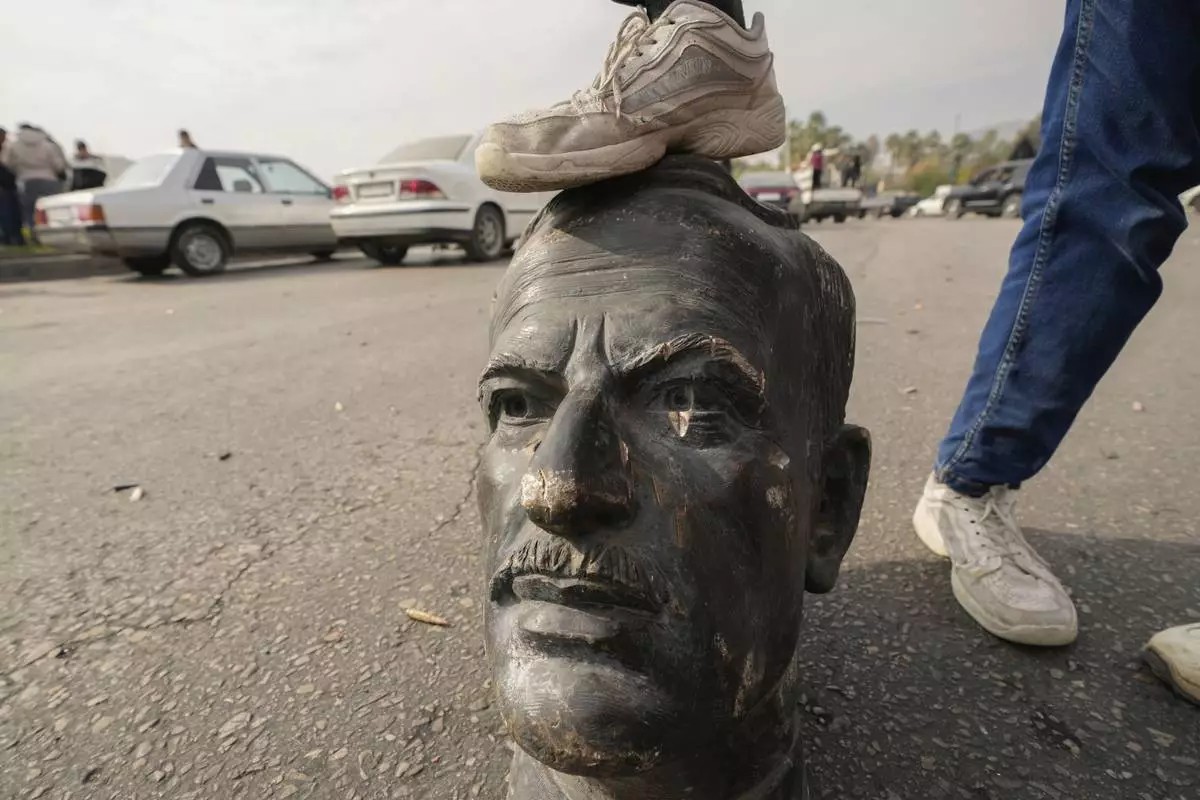
An opposition fighter steps on a broken bust of the late Syrian President Hafez Assad in Damascus, Syria, on Sunday Dec. 8, 2024. (AP Photo/Hussein Malla)

An opposition fighter steps on a broken bust of the late Syrian President Hafez Assad in Damascus, Syria, on Sunday Dec. 8, 2024. (AP Photo/Hussein Malla)

But even if he is sincere, he is not the only player. The insurgency is made up of multiple factions, and the country is riven among armed groups, including U.S.-backed Kurdish fighters controlling the east. Remnants of the old regime’s military — and its feared security and intelligence services — could coalesce once again.

Foreign powers with their own interests have their hands deep in the country, and any of them — Russia, Iran, Turkey, the United States and Israel — could act as spoilers.

Syria’s multifaith and multiethnic population sees itself poised on a moment that could tip either into chaos or cohesion. The country’s Sunni Muslims, Shiite Alawites, Christians and ethnic Kurds have often been pitted against each, whether by Assad’s rule or a 14-year civil war.

Divisions from the conflict run deep, and many worry about revenge killings, whether against former figures of Assad’s state or — more frightening — whole communities seen as backing the old system.

The civil war displaced half of Syria's prewar population of 23 million. Many who fled are watching developments closely to determine whether the time has come to return.

Right now there are only questions.

In the short period following Assad’s abrupt fall, rebel leader Ahmad al-Sharaa, formerly known as Abu Mohammed al-Golani, has sought to reassure Syrians that the group he leads — Hayat Tahrir al-Sham, or HTS – does not seek to dominate the country and will continue government services. He has spoken of setting up a decentralized governance system.

Government officials who remained in Damascus as Assad fled — including Prime Minister Mohammed Ghazi Jalali — have met with the rebels to discuss the transfer of power.

The Al Jazeera television network reported Monday that HTS had decided to appoint the head of the “salvation government” running its stronghold in northwest Syria, Mohammed Al-Bashir, to form a transitional government. There was no official confirmation.

Details on what form the government will take have been scarce.

The rebels likely did not expect to be saddled with running an entire country when they launched their offensive against Aleppo less than two weeks ago, said Qutaiba Idlbi, a senior fellow at the Atlantic Council’s Rafik Hariri Center and Middle East Programs. The rapid fall of Damascus and the melting away of police and military, left security challenges, he said.

The only existing framework for a transition is no longer relevant. U.N. Security Council Resolution 2254 had called for a political process involving both Assad’s government and opposition groups.

“Everyone’s saying, especially rebels on the ground, ‘That framework is no longer applicable, because there is no longer a regime. We’re not going to give the regime in politics what they lost through military means,’” Idlbi said.

So far, public sector workers have not heeded calls from the caretaker prime minister to go back to their jobs -- causing troubles in places like airports, borders and at the Foreign Ministry, said Adam Abdelmoula, the U.N.'s humanitarian coordinator for Syria.

“I think it will take a couple of days — and a lot of assurance on the part of the armed groups — for these people to return to work again,” he said. In the current chaos, U.N. workers have had difficulty accessing the country, and that has hampered distribution of humanitarian aid, he said.

The insurgents have sought to reassure Syria’s religious minorities that they will not be targeted, despite HTS' fundamentalist Sunni Muslim origins.

So far the civil peace seems to be holding. The insurgents have appeared disciplined, working to keep order, with no sign of reprisals. Experts say only time will tell what post-Assad Syria will look like.

“Everyone’s still willing to really engage, really work with others,” said Haid Haid, a consulting fellow at the Middle East and North Africa program of Chatham House. “That sort of positive atmosphere is crucial, but it might not last long.”

Splits could open as decisions are made.

It can’t be guaranteed all the fighters within the HTS will back al-Sharaa’s talk of a pluralist system. Outside Damascus’ historic Hamadiyeh market on Sunday, around a dozen fighters chanted, “Down, down with a secular state” — a sign that at least some among the insurgents may seek a harder Islamist line.

“The opposition is not a homogenous movement,” said Burcu Ozcelik, a senior research fellow for Middle East Security at the Royal United Services Institute think tank in London.

There are multiple armed opposition groups, including forces in the south who are distinct from HTS and the Turkish-backed groups in the north. Internal fractures within the HTS-led movement, “which may become more salient in the weeks and months to come, may lead to discord and threaten Syrian stability,” Ozcelik said.

There may be pressure to purge former members of Assad’s large state bureaucracy, especially those employed as part of a vast security state that included informers and officers widely hated for torture, abuses and corruption.

Insurgents and many in the public don’t want them to return. But a purge can spark a destabilizing backlash — as when U.S. administrators disbanded Iraq’s army after Saddam Hussein’s fall in 2003, fueling a Sunni insurgency.

Syria’s Alawite population is feeling particularly vulnerable. Assad and his family were Alawites — a branch of Shia Islam — and many among the Sunni insurgents see the community as his loyalists.

Kurdish-led forces allied with the United States have run a semi-autonomous zone in Syria’s northeast for years, where they have been a key player in the fight against the Islamic State militant group. While both were opponents of the government during the civil war, the relationship between the Kurds and the Arab opposition groups is tense.

HTS has been extending an olive branch to the Kurds. Reintegrating the east would likely mean some form of concession to Kurdish autonomy.

But that risks angering neighboring Turkey, which vehemently opposes the Kurdish factions that run Syria’s east. Already, Turkish-backed insurgents allied with HTS have taken the opportunity to push the Kurds out of some pockets of territory, seizing the northern town of Manbij, and clashes have broken out in other areas.

While the insurgents' largely benign approach to minorities so far has allayed many international worries, Abdelmoula said, “those pockets of fighting are very significant because the fighting is mostly along ethnic lines. And that’s dangerous.”

———

Associated Press writers Danica Kirka in London and Jamey Keaten in Geneva contributed to this report. Keath reported from Cairo.
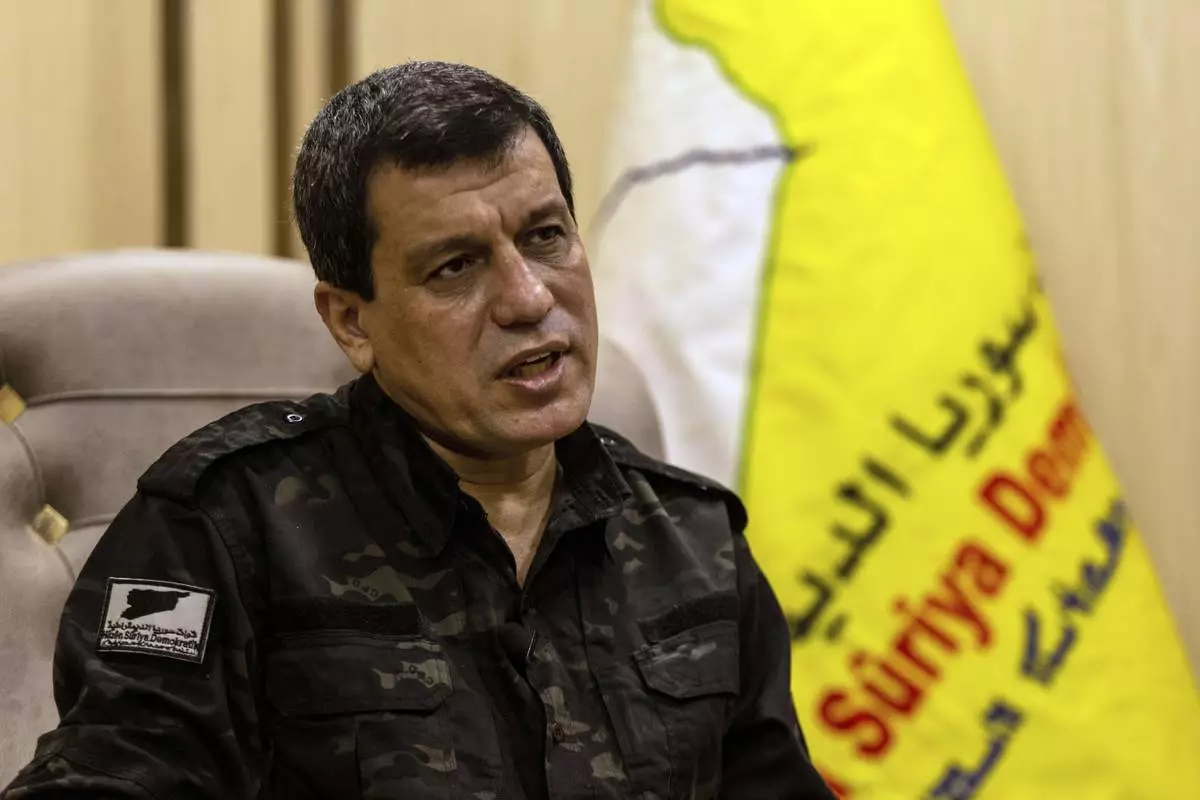
FILE - Mazloum Abdi, the commander of the U.S.-backed Syrian Democratic Forces, speaks during a news conference in Hassakeh, Syria, Nov. 26, 2022. (AP Photo/Baderkhan Ahmad, File)
FILE - Mazloum Abdi, the commander of the U.S.-backed Syrian Democratic Forces, speaks during a news conference in Hassakeh, Syria, Nov. 26, 2022. (AP Photo/Baderkhan Ahmad, File)

President Joe Biden speaks about the sudden collapse of the Syrian government under Bashar Assad from the Roosevelt Room at the White House in Washington, Sunday, Dec. 8, 2024. (AP Photo/Manuel Balce Ceneta)
President Joe Biden speaks about the sudden collapse of the Syrian government under Bashar Assad from the Roosevelt Room at the White House in Washington, Sunday, Dec. 8, 2024. (AP Photo/Manuel Balce Ceneta)

A man shows old pictures of the late Syrian President Hafez Assad as people search for belongings in the ransacked private residence of Syrian President Bashar Assad in Damascus, Syria, on Sunday, Dec. 8, 2024. (AP Photo/Ghaith Alsayed)
A man shows old pictures of the late Syrian President Hafez Assad as people search for belongings in the ransacked private residence of Syrian President Bashar Assad in Damascus, Syria, on Sunday, Dec. 8, 2024. (AP Photo/Ghaith Alsayed)

Two men use their cell phones while walking through the halls of Syrian President Bashar Assad's presidential palace in Damascus, Syria, Sunday, Dec. 8, 2024. (AP Photo/Hussein Malla)
Two men use their cell phones while walking through the halls of Syrian President Bashar Assad's presidential palace in Damascus, Syria, Sunday, Dec. 8, 2024. (AP Photo/Hussein Malla)

FILE - A combo of file photos shows Syrian President Bashar Assad, left, on Aug. 19, 2009, in Tehran, Iran, and his father, former Syrian President Hafez Assad, on Dec. 1, 1972, in an unknown location. (AP Photo, File)
FILE - A combo of file photos shows Syrian President Bashar Assad, left, on Aug. 19, 2009, in Tehran, Iran, and his father, former Syrian President Hafez Assad, on Dec. 1, 1972, in an unknown location. (AP Photo, File)

A broken portrait of the late Syrian President Hafez Assad lies on the floor as people search for belongings in the ransacked private residence of Syrian President Bashar Assad in the Malkeh district of Damascus, Syria, on Sunday, Dec. 8, 2024. (AP Photo/Hussein Malla)
A broken portrait of the late Syrian President Hafez Assad lies on the floor as people search for belongings in the ransacked private residence of Syrian President Bashar Assad in the Malkeh district of Damascus, Syria, on Sunday, Dec. 8, 2024. (AP Photo/Hussein Malla)

Abu Mohammed al-Golani speaks at the Umayyad Mosque in Damascus Sunday, Dec. 8, 2024. (AP Photo/Omar Albam)
Abu Mohammed al-Golani speaks at the Umayyad Mosque in Damascus Sunday, Dec. 8, 2024. (AP Photo/Omar Albam)

A man tries to take a chandelier as people search for belongings in the ransacked private residence of Syrian President Bashar Assad in the Malkeh district of Damascus, Syria, on Sunday, Dec. 8, 2024. (AP Photo/Hussein Malla)
A man tries to take a chandelier as people search for belongings in the ransacked private residence of Syrian President Bashar Assad in the Malkeh district of Damascus, Syria, on Sunday, Dec. 8, 2024. (AP Photo/Hussein Malla)

An opposition fighter steps on a broken bust of the late Syrian President Hafez Assad in Damascus, Syria, on Sunday Dec. 8, 2024. (AP Photo/Hussein Malla)

An opposition fighter steps on a broken bust of the late Syrian President Hafez Assad in Damascus, Syria, on Sunday Dec. 8, 2024. (AP Photo/Hussein Malla)

WASHINGTON (AP) — A day after the audacious U.S. military operation in Venezuela, President Donald Trump on Sunday renewed his calls for an American takeover of the Danish territory of Greenland for the sake of U.S. security interests, while his top diplomat declared the communist government in Cuba is “in a lot of trouble.”

The comments from Trump and Secretary of State Marco Rubio after the ouster of Venezuela's Nicolás Maduro underscore that the U.S. administration is serious about taking a more expansive role in the Western Hemisphere.

With thinly veiled threats, Trump is rattling hemispheric friends and foes alike, spurring a pointed question around the globe: Who's next?

“It’s so strategic right now. Greenland is covered with Russian and Chinese ships all over the place," Trump told reporters as he flew back to Washington from his home in Florida. "We need Greenland from the standpoint of national security, and Denmark is not going to be able to do it.”

Asked during an interview with The Atlantic earlier on Sunday what the U.S.-military action in Venezuela could portend for Greenland, Trump replied: “They are going to have to view it themselves. I really don’t know.”

Trump, in his administration's National Security Strategy published last month, laid out restoring “American preeminence in the Western Hemisphere” as a central guidepost for his second go-around in the White House.

Trump has also pointed to the 19th century Monroe Doctrine, which rejects European colonialism, as well as the Roosevelt Corollary — a justification invoked by the U.S. in supporting Panama’s secession from Colombia, which helped secure the Panama Canal Zone for the U.S. — as he's made his case for an assertive approach to American neighbors and beyond.

Trump has even quipped that some now refer to the fifth U.S. president's foundational document as the “Don-roe Doctrine.”

Saturday's dead-of-night operation by U.S. forces in Caracas and Trump’s comments on Sunday heightened concerns in Denmark, which has jurisdiction over the vast mineral-rich island of Greenland.

Danish Prime Minister Mette Frederiksen in a statement that Trump has "no right to annex" the territory. She also reminded Trump that Denmark already provides the United States, a fellow member of NATO, broad access to Greenland through existing security agreements.

“I would therefore strongly urge the U.S. to stop threatening a historically close ally and another country and people who have made it very clear that they are not for sale,” Frederiksen said.

Denmark on Sunday also signed onto a European Union statement underscoring that “the right of the Venezuelan people to determine their future must be respected” as Trump has vowed to “run” Venezuela and pressed the acting president, Delcy Rodriguez, to get in line.

Trump on Sunday mocked Denmark’s efforts at boosting Greenland’s national security posture, saying the Danes have added “one more dog sled” to the Arctic territory’s arsenal.

Greenlanders and Danes were further rankled by a social media post following the raid by a former Trump administration official turned podcaster, Katie Miller. The post shows an illustrated map of Greenland in the colors of the Stars and Stripes accompanied by the caption: “SOON."

“And yes, we expect full respect for the territorial integrity of the Kingdom of Denmark,” Amb. Jesper Møller Sørensen, Denmark's chief envoy to Washington, said in a post responding to Miller, who is married to Trump's influential deputy chief of staff Stephen Miller.

During his presidential transition and in the early months of his return to the White House, Trump repeatedly called for U.S. jurisdiction over Greenland, and has pointedly not ruled out military force to take control of the mineral-rich, strategically located Arctic island that belongs to an ally.

The issue had largely drifted out of the headlines in recent months. Then Trump put the spotlight back on Greenland less than two weeks ago when he said he would appoint Republican Gov. Jeff Landry as his special envoy to Greenland.

The Louisiana governor said in his volunteer position he would help Trump “make Greenland a part of the U.S.”

Meanwhile, concern simmered in Cuba, one of Venezuela’s most important allies and trading partners, as Rubio issued a new stern warning to the Cuban government. U.S.-Cuba relations have been hostile since the 1959 Cuban revolution.

Rubio, in an appearance on NBC's “Meet the Press,” said Cuban officials were with Maduro in Venezuela ahead of his capture.

“It was Cubans that guarded Maduro,” Rubio said. “He was not guarded by Venezuelan bodyguards. He had Cuban bodyguards.” The secretary of state added that Cuban bodyguards were also in charge of “internal intelligence” in Maduro’s government, including “who spies on who inside, to make sure there are no traitors.”

Trump said that “a lot” of Cuban guards tasked with protecting Maduro were killed in the operation. The Cuban government said in a statement read on state television on Sunday evening that 32 officers were killed in the U.S. military operation.

Trump also said that the Cuban economy, battered by years of a U.S. embargo, is in tatters and will slide further now with the ouster of Maduro, who provided the Caribbean island subsidized oil.

“It's going down,” Trump said of Cuba. “It's going down for the count.”

Cuban authorities called a rally in support of Venezuela’s government and railed against the U.S. military operation, writing in a statement: “All the nations of the region must remain alert, because the threat hangs over all of us.”

Rubio, a former Florida senator and son of Cuban immigrants, has long maintained Cuba is a dictatorship repressing its people.

“This is the Western Hemisphere. This is where we live — and we’re not going to allow the Western Hemisphere to be a base of operation for adversaries, competitors, and rivals of the United States," Rubio said.

Cubans like 55-year-old biochemical laboratory worker Bárbara Rodríguez were following developments in Venezuela. She said she worried about what she described as an “aggression against a sovereign state.”

“It can happen in any country, it can happen right here. We have always been in the crosshairs,” Rodríguez said.

AP writers Andrea Rodriguez in Havana, Cuba, and Darlene Superville traveling aboard Air Force One contributed reporting.

In this photo released by the White House, President Donald Trump monitors U.S. military operations in Venezuela, with Secretary of State Marco Rubio at Mar-a-Lago in Palm Beach, Fla., Saturday, Jan. 3, 2026. (Molly Riley/The White House via AP)

In this photo released by the White House, President Donald Trump monitors U.S. military operations in Venezuela, with Secretary of State Marco Rubio at Mar-a-Lago in Palm Beach, Fla., Saturday, Jan. 3, 2026. (Molly Riley/The White House via AP)

Recommended Articles