The rime brought on by a new cold wave sweeping across China has played a role in transforming parts of the colder Xinjiang Uygur Autonomous Region in northwest China and Jilin Province in northeast China into what appear to be dreamy snowy scenic spots.
In the Xinjiang Uygur Autonomous Region, a large-scale snowfall blanketed the Taklimakan Desert, China's largest desert, also known as the "Sea of Death," creating a spectacular scene. Snowflakes, like delicate petals, have gently fell across the yellow sands and plants, softening the harsh desert landscape and creating a glittering, ethereal world.
In Jilin Province, the cold wave has boosted the popularity of ice and snow tourism at the famous Changbai Mountain scenic area. One of the highlights is river drifting, which attracts visitors from across the country.
As they drift down the river, tourists are captivated by the stunning landscape, with trees on the riverbanks coated in a layer of rime frost. This year, more than ten new spots have been opened for tourists in the Changbai Mountain scenic area, and over 60,000 visitors have already experienced the activity.

Cold waves bring dreamy snowy scenes to parts of northern China
A Chinese analyst Sunday predicted that a fragile ceasefire between the United States and Iran will continue to hold although plans for a second round of peace talks stalled again in Islamabad, Pakistan, a main mediator.
Wang Jin, director of the Center for Strategic Studies at Northwest University in China, cautioned against overestimating the importance of the talks. He argued that the ceasefire itself remains the most critical factor in the Middle East region.
"I think the ceasefire will continue. That would be good news, but uncertainties remain over the Strait of Hormuz, over the possibilities of whether or not to reaching the kind of agreement. When we're talking about the dialogue in Islamabad between the United States and Iran, I don't think we should overestimate its influence," he said.
On Feb. 28, Israel and the United States launched joint attacks on Tehran and other Iranian cities, killing Iran's then-Supreme Leader Ali Khamenei, senior commanders, and civilians. Iran responded with waves of missile and drone strikes targeting Israel and U.S. assets in the Middle East, and tightened control over the Strait of Hormuz, blocking passage by vessels belonging to or affiliated with Israel and the United States.
An April 8 ceasefire was followed by Iran-U.S. talks in Islamabad on April 11 and 12. After the negotiations collapsed, the United States imposed a blockade on the Strait of Hormuz, preventing ships to and from Iranian ports from transiting.
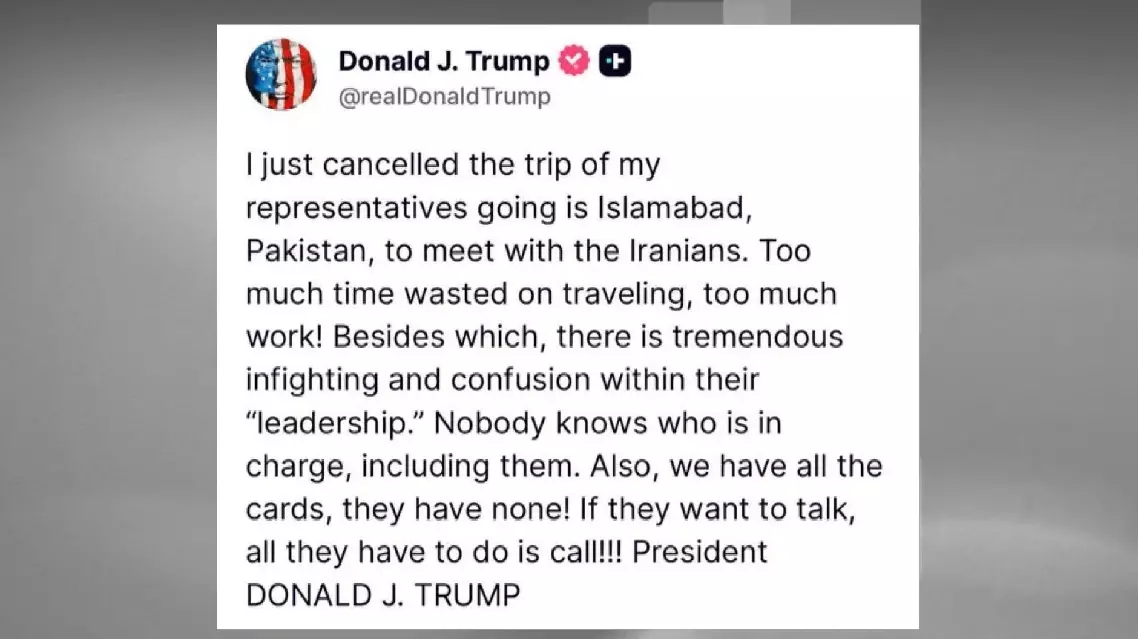
A new round of negotiations had been expected in Pakistan this week, but Iran declined to attend, citing continued U.S. naval pressure and "excessive demands."
U.S. President Donald Trump said Sunday that he will no longer send delegations to talk with Iran. "If they (the Iranians) want to talk, they can come to us, or they can call us," he said.
"Too much patience and focus has been paid to these [talks]. But then one thing we have already forgotten is that the ceasefire continues. So from my personal point of view, the meeting is just an excuse for the extension, for the continuation of ceasefire. Whether or not the meeting in Islamabad would take place, we should not overestimate its importance. The ceasefire is the most important thing, the determining thing. So when the ceasefire continues, everything will be fine," Wang said.
US-Iran ceasefire likely to continue despite stalled talks: analyst