HOUSTON (AP) — High-profile legal battles are nothing new for Texas attorney Tony Buzbee, with his latest being a lawsuit he's filed against Jay-Z, accusing the iconic rapper as well as Sean “Diddy” Combs of sexually assaulting a minor at an awards show after-party in 2000.
The lawsuit against Jay-Z is part of a series of civil cases the Houston-based Buzbee has filed against Combs, who remains jailed in New York as he awaits trial on federal charges that he coerced and abused women for years.
In his legal career, Buzbee has represented a variety of clients. He helped acquit Texas Attorney General Ken Paxton at his impeachment trial in the Texas Senate last year. He represented more than two dozen women who accused Cleveland Browns quarterback Deshaun Watson of sexual misconduct and assault. Buzbee has also made a couple of unsuccessful runs at elected office, including a bid to be Houston’s mayor.
His critics say he’s full of bluster and bombast. Jay-Z said the lawsuit against him is part of an extortion attempt. Buzbee's law firm has said he’s worked to amplify the voices of the marginalized and to “pursue justice against powerful figures.”
“We’re a society where we typically don’t believe the accuser. We blame the victim and by proxy we blame her lawyers,” Buzbee said during a March 2021 news conference.
Here’s what to know about Buzbee, his involvement in the lawsuits against Combs and what other cases he’s handled.
Buzbee is a well-known name in Texas courtrooms who has won billions of dollars in settlements for his clients.
He grew up in northeast Texas, the son of a butcher and a high school cafeteria worker. After graduating from Texas A&M University, he served in the U.S. Marine Corps. Buzbee later went to law school and founded his own firm.
His style is “characterized by his aggressive legal tactics, his ability to command media attention and his knack for turning complex legal battles into public narratives that resonate with juries and the public alike," according to his law firm's website.
Buzbee has said his firm is representing more than 150 people, both men and women, who allege sexual abuse and exploitation at the hands of Combs.
Buzbee's firm, which has set up a 1-800 number for accusers, has filed a wave of suits against the hip-hop mogul. Buzbee’s lawsuits allege that many of the people he represents were abused at parties in New York, California and Florida where individuals were given drinks that were laced with drugs.
Combs’ lawyers have dismissed Buzbee’s lawsuits as “shameless publicity stunts, designed to extract payments from celebrities who fear having lies spread about them, just as lies have been spread about Mr. Combs.”
On Sunday, Jay-Z issued a statement in which he accused Buzbee of trying to blackmail him by getting him to agree to a legal settlement over allegations he and Combs raped a woman when she was 13 years old.
“I have no idea how you have come to be such a deplorable human Mr. Buzbee, but I promise you I have seen your kind many times over,” Jay-Z said in his statement. “You claim to be a marine? Marines are known for their valor, you have neither honor nor dignity.”
Buzbee said in a Sunday Facebook post he “won't be bullied or intimidated.”
“Sunlight is the best disinfectant and I am quite certain the sun is coming," Buzbee said.
In 2009, his firm won a $100 million settlement for 10 workers who were sicked by a chemical release at a refinery in suburban Houston.
Buzbee has also represented politicians, including Paxton and former Texas Gov. Rick Perry in an abuse-of-power case.
In 2013, he settled lawsuits for 10 teenagers who had accused eccentric Texas millionaire Stanley Marsh 3 of paying them for sexual acts.
Buzbee has also settled lawsuits that he filed on behalf of 25 women who had accused Watson, when he was with the Houston Texans, of exposing himself, touching them with his genitals or kissing them against their will during massage appointments.
“I’ve handled some of the largest cases in this state,” Buzbee said during the 2021 news conference.
Follow Juan A. Lozano on X at https://x.com/juanlozano70
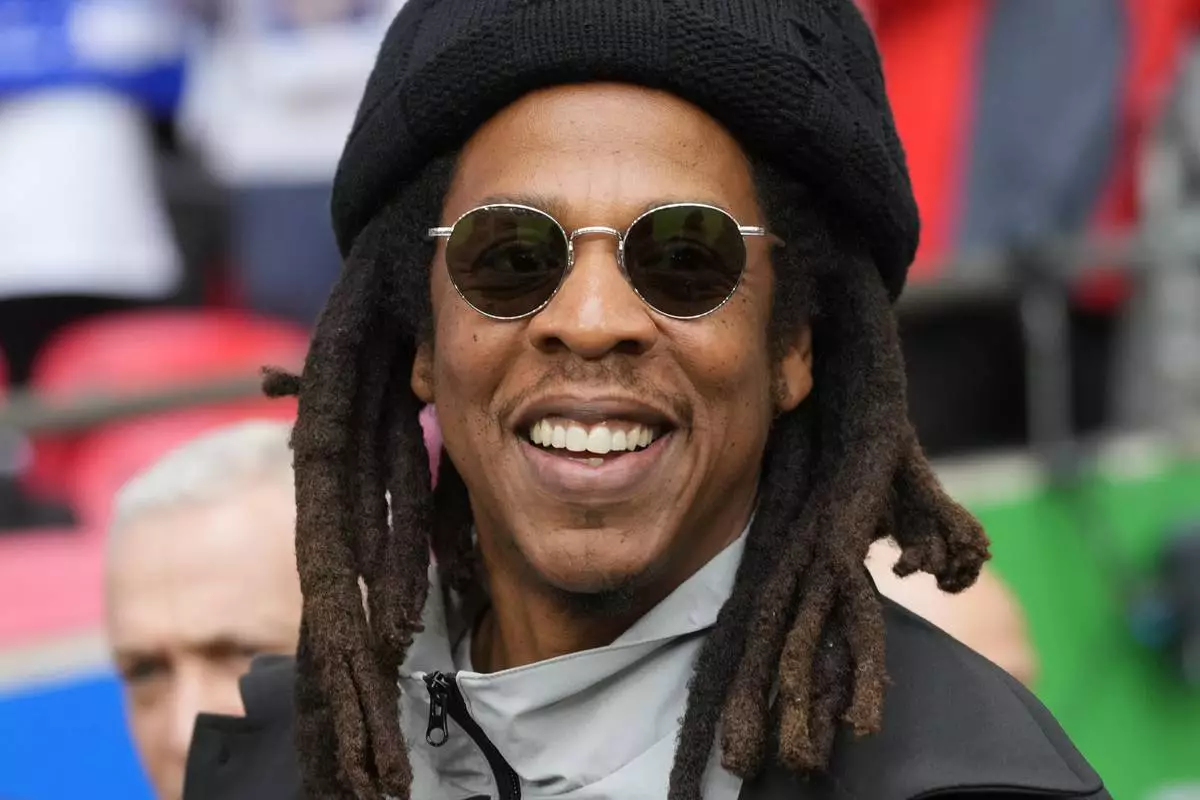
FILE - Jay-Z smiles ahead of the Champions League final soccer match between Borussia Dortmund and Real Madrid at Wembley stadium in London, Saturday, June 1, 2024. (AP Photo/Kirsty Wigglesworth, File)
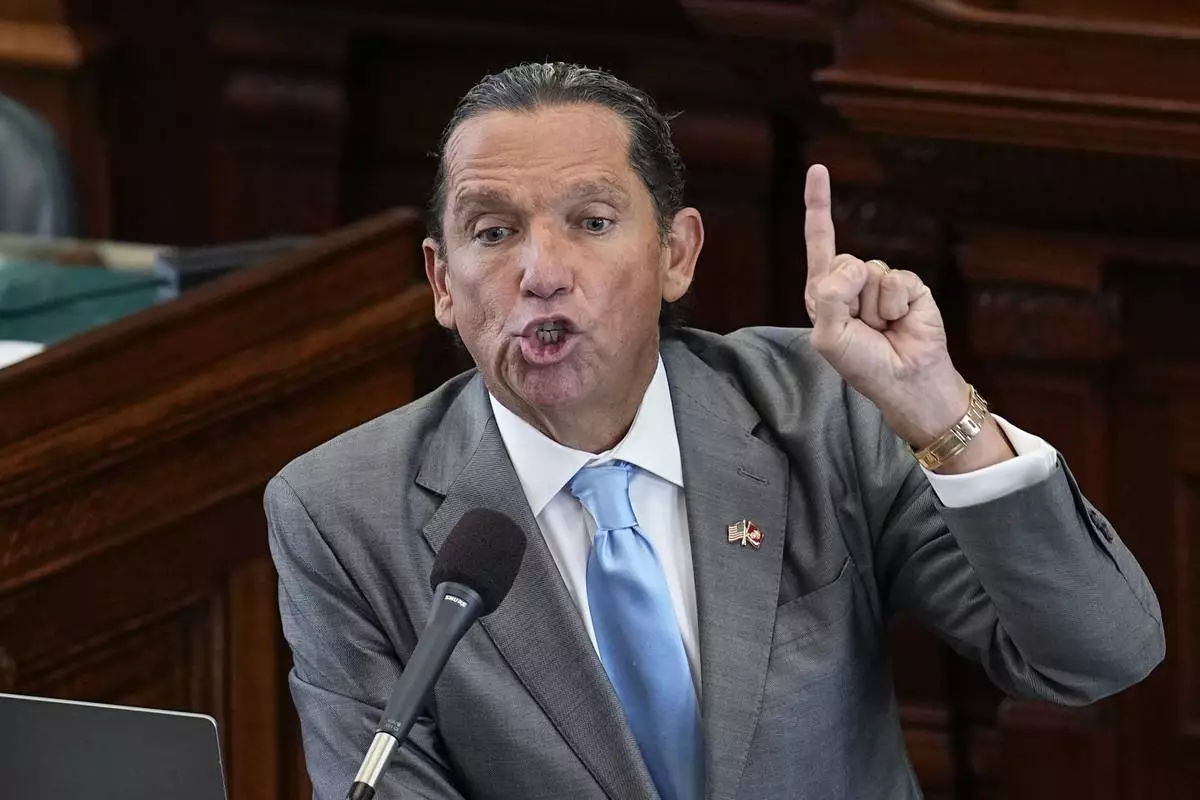
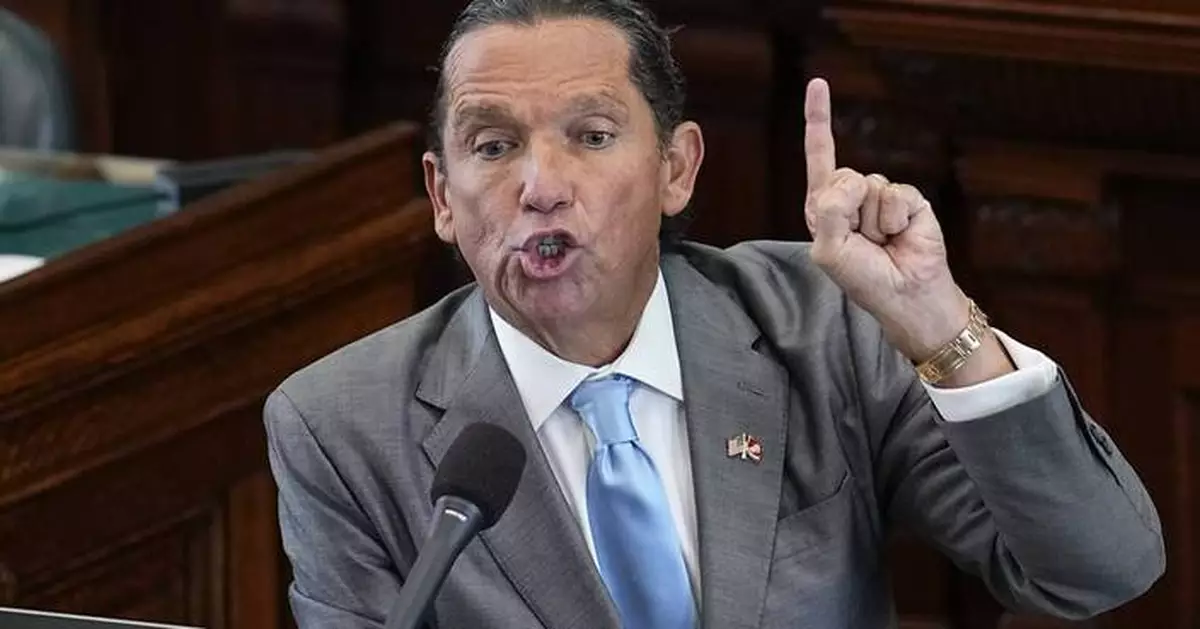
FILE - Attorney Tony Buzbee speaks in the Senate Chamber at the Texas Capitol, Friday, Sept. 15, 2023, in Austin, Texas. (AP Photo/Eric Gay, File)
BEIRUT (AP) — President Donald Trump acknowledged criticizing Israeli Prime Minister Benjamin Netanyahu as “crazy” in a phone call that involved expletives, saying he was “a little bit perturbed” that Israel’s fighting with Hezbollah militants in Lebanon was holding back peace talks with Iran.
But even as the U.S. president conceded the tensions in an interview released Wednesday, he insisted that his relationship with Netanyahu was solid and that they connected, in part, because they are both “wartime” leaders.
“We’ve worked very well together. I like Bibi a lot. And I work very well with him,” Trump told The New York Post’s “Pod Force One.”
In an interview on the American business-news channel CNBC, Netanyahu responded that he and Trump sometimes have “tactical disagreements” but have “common goals” and “agree on the main things.”
“He respects me. I respect him. We always find a way to work out our differences,” the prime minister said.
The president's comments about the Monday call offered a sign of the growing pressure he faces to resolve the Iran war as higher energy prices and economic uncertainty threaten Republican prospects in the midterm elections and hamper global commerce.
Talks have dragged on for weeks as mediators seek to extend a fragile ceasefire into a more enduring truce. The negotiations are further strained by Israel’s broadening war with the Iranian-backed militia group in Lebanon. The conflicts have become increasingly intertwined as Iran insists that any potential truce in the war there must also quell the fighting in Lebanon.
Trump remained noncommittal about a timeline for settling the Iran conflict, saying the Strait of Hormuz might stay blocked through the Labor Day holiday on Sept. 7. He has insisted that Iran stop any efforts that could lead to a nuclear weapon and that the strait be reopened for shipments of oil and natural gas.
“I don’t know. I mean, I think it could be (closed through Labor Day), but I think it’s unlikely. I think that we’ll have it. I think this will resolve itself fairly quickly,” Trump said.
Iran’s Supreme Leader Mojtaba Khamenei, who succeeded his late father, is “involved” in peace talks, Trump added.
“They have a lot of respect for him,” the president said in the interview.
Trump said that Khamenei is not doing well due to wounds sustained in an airstrike, but “they say he’s giving approval because that’s the way it has been for a long, long time." Khamenei's father was killed in an airstrike when the U.S. and Israel attacked Iran at the end of February.
Meanwhile in the Persian Gulf region, Kuwait briefly shut its main airport Wednesday after Iranian drones hit a passenger terminal building, killing one person and wounding dozens. It was the latest in the back-and-forth attacks by Tehran and Washington that have tested the ceasefire.
The strike again brought home the risks to residents and travelers in Gulf countries that had considered themselves relative safe havens before the war, now in its fourth month.
The path toward a lasting ceasefire between Israel and Hezbollah remained unclear as hostilities continued in Lebanon.
An Israeli strike Wednesday hit a car on a busy highway just south of Beirut, hours before the second day of talks between Lebanon and Israel in Washington were set to take place.
The strike in Khaldeh came without warning, and it was not immediately clear if the person targeted was killed.
Israel and Lebanon on Monday reached a U.S.-brokered agreement in which Israel would not strike Beirut's southern suburbs and Hezbollah would end its attacks on northern Israel.
The agreement was made hours after Israel announced that it was going to launch strikes across the sprawling urban neighborhoods near the Lebanese capital in what would have been the most intense strikes since a nominal ceasefire went into effect on April 17.
The State Department said progress was made during the first day of talks on Tuesday. Lebanon hopes to widen the scope of the ceasefire so it becomes comprehensive across the country. Israel wants to disarm Hezbollah immediately before the Israeli military ends its operations in Lebanon and withdraws its troops from dozens of villages and towns.
Not long after the strike on Khaldeh, the Israeli military said it intercepted what it called a hostile aircraft coming from southern Lebanon, but it did not immediately blame Hezbollah. Hezbollah has not claimed a cross-border attack since the agreement.
Israeli strikes over southern Lebanon continued, especially in and around the battered cities of Tyre and Nabatiyeh. Two overnight strikes near Tyre, a coastal city, killed four Syrians and two Palestinians.
Israel warned the Christian neighborhoods in Tyre that Hezbollah members were among them. Many Lebanese Shiite Muslims fled to those areas in recent days because they were spared from the aerial bombardment along the Mediterranean coast.
After the warning, the Lebanese army deployed to the Christian district of Tyre in an effort to prevent Israeli attacks there and to show that Hezbollah has no armed presence in the area.
Israel launched an invasion of southern Lebanon days after the latest war was sparked on March 2, when Iran-backed Hezbollah fired rockets toward northern Israel in solidarity with Iran. Israeli troops have pushed deeper into Lebanon over the past week, as Hezbollah continues to claim rocket and drone attacks.
The latest round of fighting between Israel and Hezbollah has killed 3,468 people in Lebanon and displaced 1.2 million people. According to Netanyahu’s office, at least 27 Israeli soldiers and a defense contractor have been killed in or near southern Lebanon. Two civilians have also been killed in northern Israel.
Many residents of southern Lebanon remained in villages near the hostilities or returned to areas where strikes occurred after evacuation warnings.
The Al-Abdallah family returned to their home in Marwanieyh, which they left because they thought the village was unsafe following earlier strikes. A day later, two rockets hit the home, bringing down the three-story building and killing six family members, said the brother of Hassan Al-Abdallah, who was killed.
Ahmed Al-Abdallah, 13, was thrown away from the building by the force of the blasts and was the only member of his family to survive. His uncle, Eissa Al-Abdallah, said the boy has two broken legs and shrapnel wounds all over his body.
“What good is talking now? They are gone, and nothing will bring them back,” the uncle told The Associated Press in a phone call Tuesday. “This land costs blood.”
Boak reported from Washington.
This version has been updated to correct that the Iran war began at the end of February, not March.
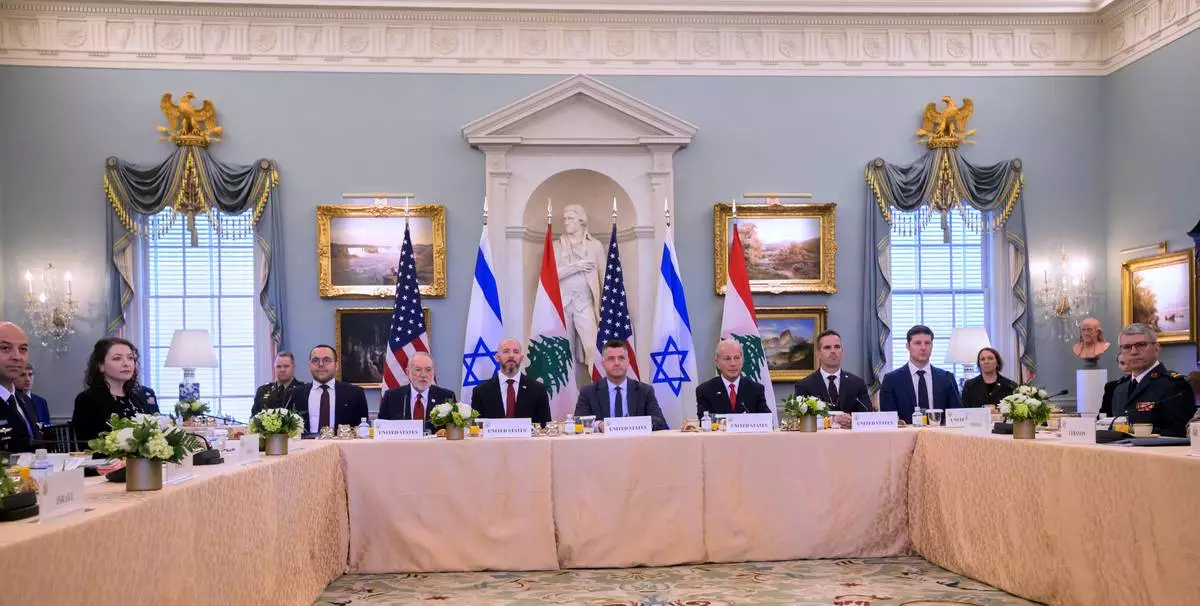
United States Ambassador to Israel Mike Huckabee, second from left, is joined by third from left: State Department Chief of Staff Dan Holler, Sr., State Department Counselor and Director, Office of Policy Planning Michael A. Needham and United States Ambassador to Lebanon Michel Issa, as they meet with Israeli Ambassador to the United States Yechiel Leiter and Lebanese Ambassador to the United States Nada Hamadeh, at the State Department, Tuesday, June 2, 2026, in Washington. (AP Photo/Rod Lamkey, Jr.)
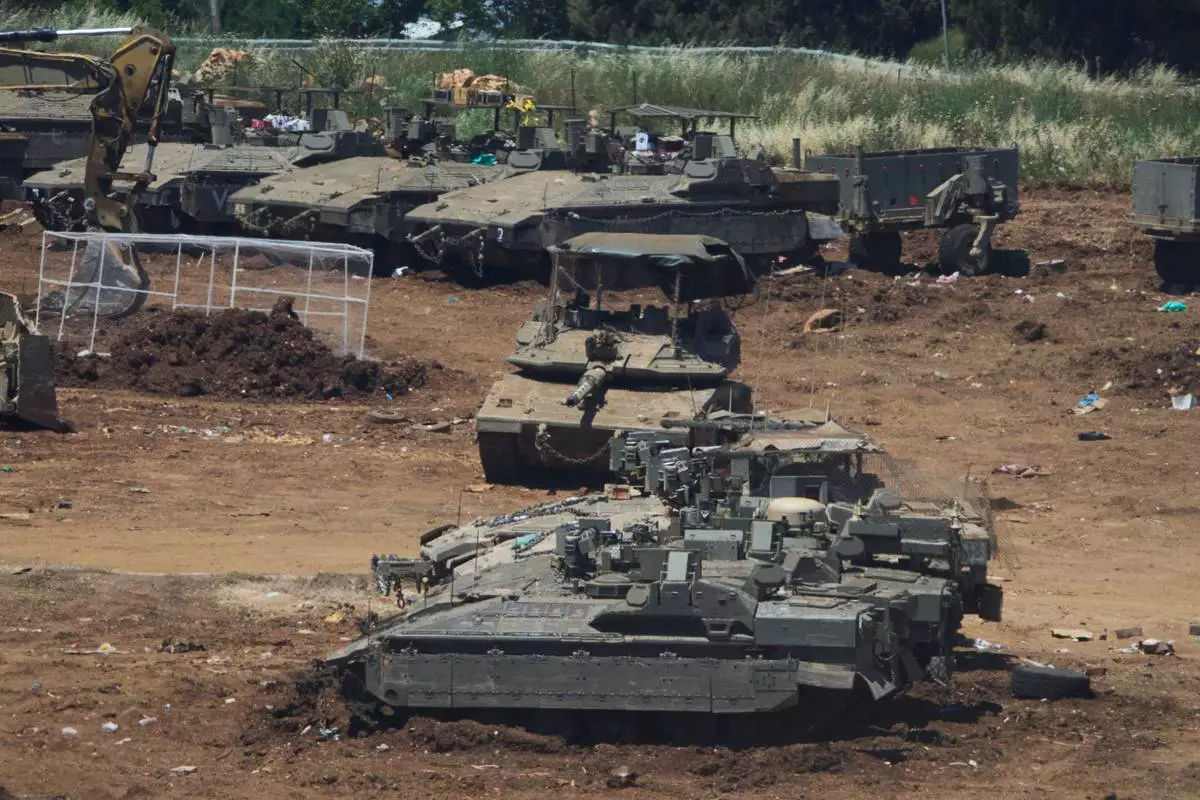
Israeli troops gather on the border with Lebanon in northern Israel, Tuesday, June 2, 2026. (AP Photo/Ariel Schalit)
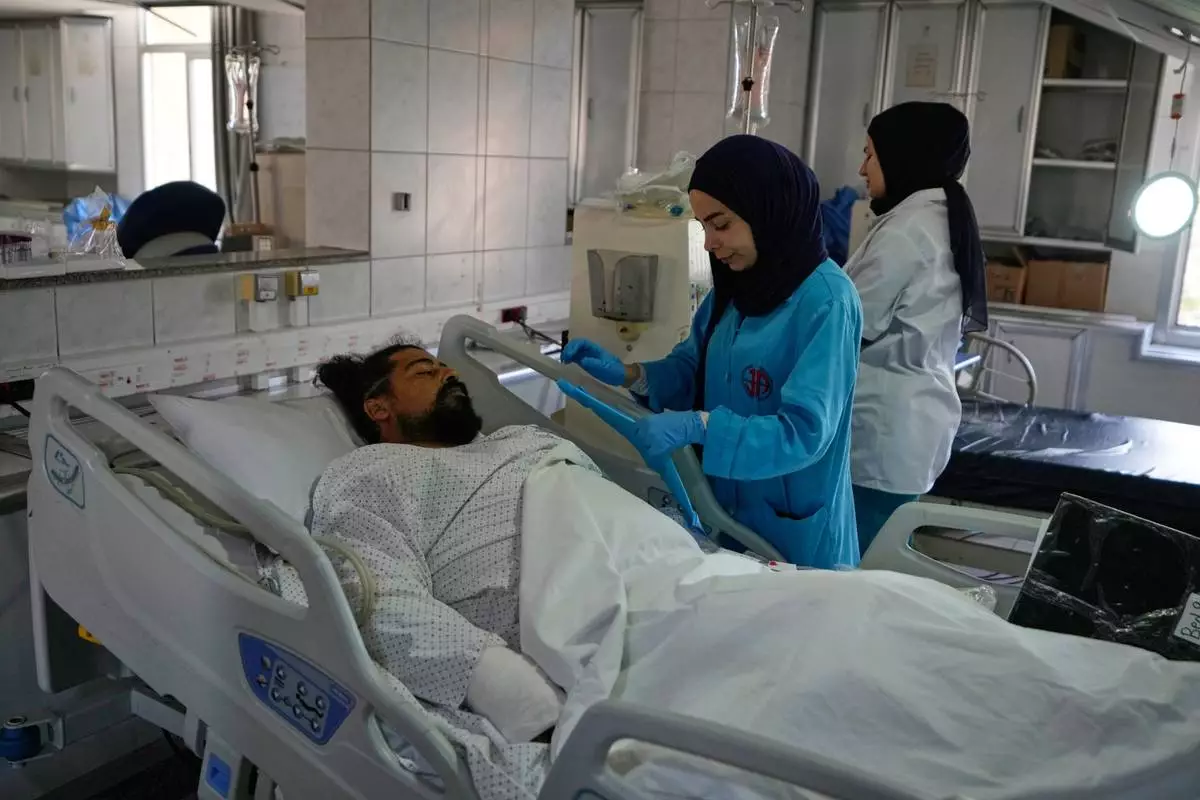
A nurse treats an injured man at the damaged Jabal Amel Hospital, following Monday's Israeli airstrike that was hit a nearby building, in the southern port city of Tyre, Lebanon, Tuesday, June 2, 2026. (AP Photo/Mohammed Zaatari)
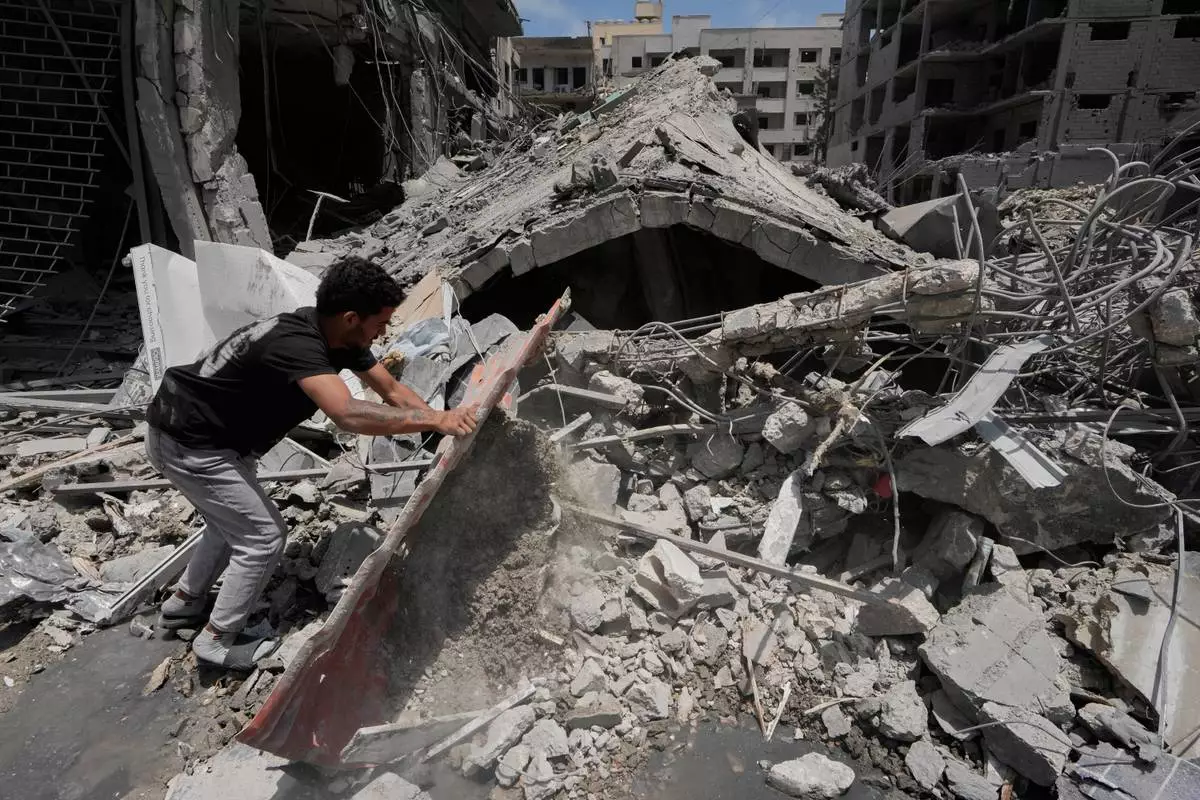
A man removes debris of a building that was hit Monday in an Israeli airstrike in the southern port city of Tyre, Lebanon, Tuesday, June 2, 2026. (AP Photo/Mohammed Zaatari)
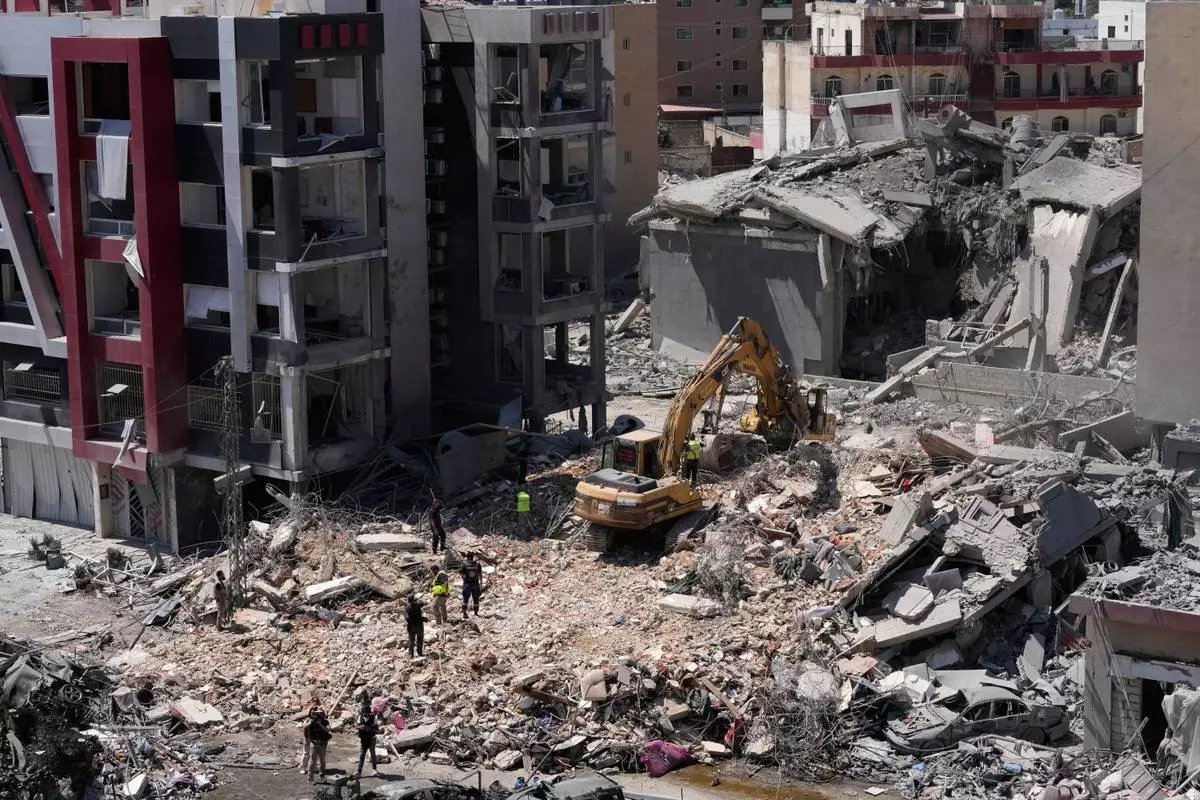
Rescue workers use an excavator, as they search for victims under the rubble of a building that was hit Monday in an Israeli airstrike in the southern port city of Tyre, Lebanon, Tuesday, June 2, 2026. (AP Photo/Mohammed Zaatari)
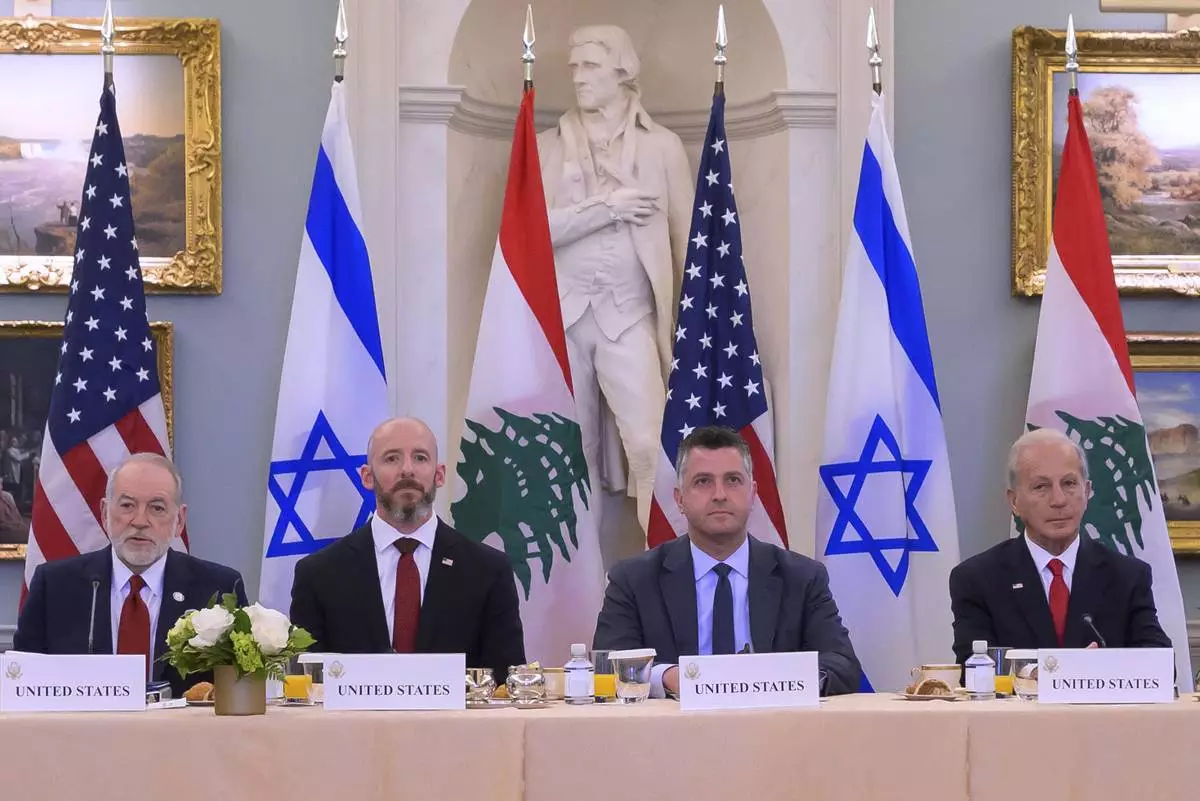
United States Ambassador to Israel Mike Huckabee, left, is joined by second from left: State Department Chief of Staff Dan Holler, Sr., State Department Counselor and Director, Office of Policy Planning Michael A. Needham and United States Ambassador to Lebanon Michel Issa, as they meet with Israeli Ambassador to the United States Yechiel Leiter and Lebanese Ambassador to the United States Nada Hamadeh, at the State Department, Tuesday, June 2, 2026, in Washington. (AP Photo/Rod Lamkey, Jr.)
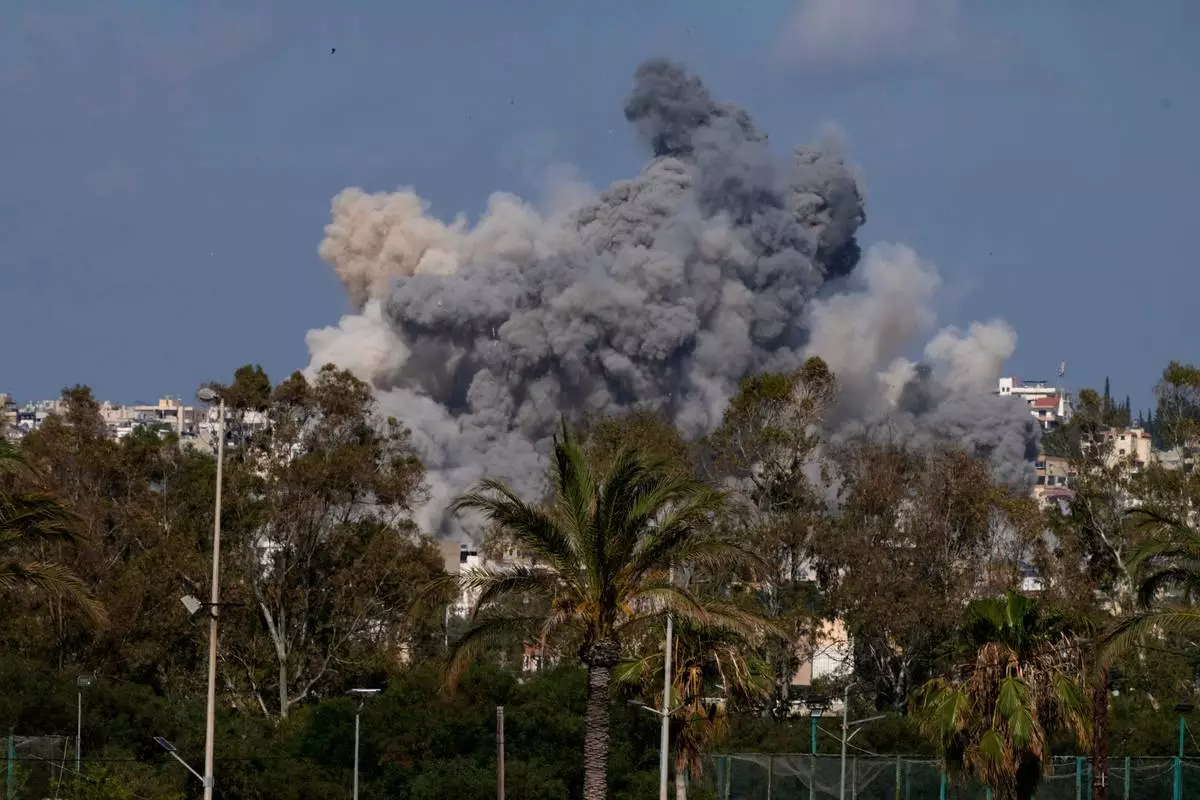
Smoke rises from an Israeli airstrike that hit Burj al-Shamali village near the southern port city of Tyre, Lebanon, Tuesday, June 2, 2026. (AP Photo/Mohammed Zaatari)