CHEKKA, Lebanon (AP) — Suheil Hamwi spent 32 years in a Syrian prison, and now, after an offensive by insurgents that toppled the government of Bashar Assad, he's finally returned to his home in Lebanon.
In 1992, Hamwi worked as a merchant, selling various goods in the town of Chekka in northern Lebanon. On the night of Eid il-Burbara, or Saint Barbara’s Day — a holiday similar to Halloween — a man came to his door to buy some whiskey. Hamwi said he handed his 10-month-old son, George, to his wife and went to his car to fetch the whiskey and make the sale.
Click to Gallery
Suheil Hamwi, who spent 32 years in a prison in Syria and returned to Lebanon after the government of Bashar Assad was toppled, sits on the balcony of his home watching the sea in Chekka, Lebanon, Tuesday, Dec. 10, 2024. (AP Photo/Hassan Ammar)
Suheil Hamwi, who spent 32 years in prison in Syria and returned to Lebanon after the government of Bashar Assad was toppled, poses for a photograph inside of his home in Chekka, Lebanon, Tuesday, Dec. 10, 2024. (AP Photo/Hassan Ammar)
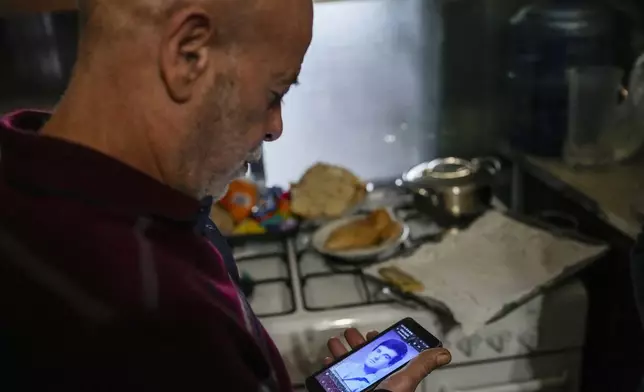
Suheil Hamwi, who spent 32 years in prison in Syria, reacts as a man shows him a picture of a missing Lebanese prisoner inside Syria, at Hamwi's home in Chekka, Lebanon, Tuesday, Dec. 10, 2024. (AP Photo/Hassan Ammar)
Suheil Hamwi, left, who spent 32 years in prison in Syria, reacts as a man shows him a picture of a missing Lebanese prisoner inside Syria, at Hamwi's home in Chekka, Lebanon, Tuesday, Dec. 10, 2024. (AP Photo/Hassan Ammar)
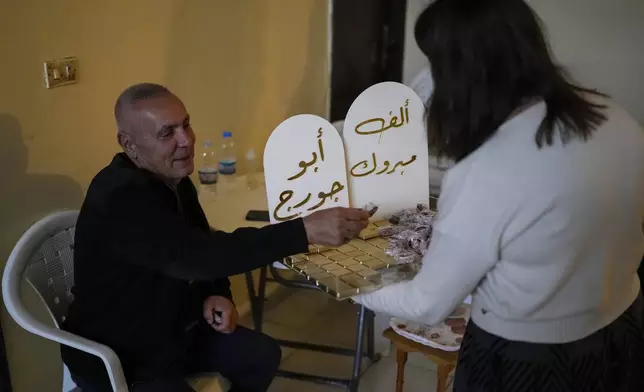
A woman distributes sweets to celebrate the return of Suheil Hamwi, who spent 32 years in prison in Syria and returned to Lebanon after the government of Bashar Assad was toppled, inside of his home in Chekka, Lebanon, Tuesday, Dec. 10, 2024. (AP Photo/Hassan Ammar)
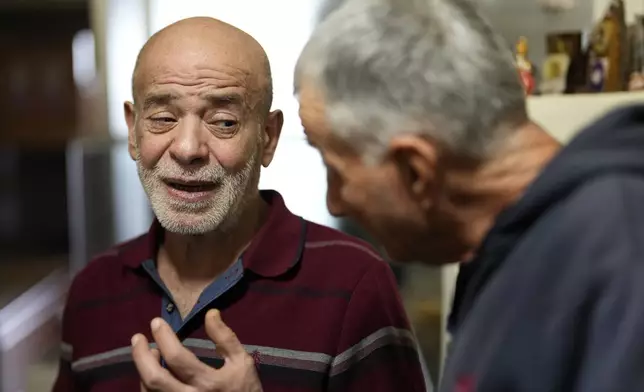
A neighbor welcomes Suheil Hamwi, right, who spent 32 years in prison in Syria, at Hamwi's home in Chekka, Lebanon, Tuesday, Dec. 10, 2024. (AP Photo/Hassan Ammar)
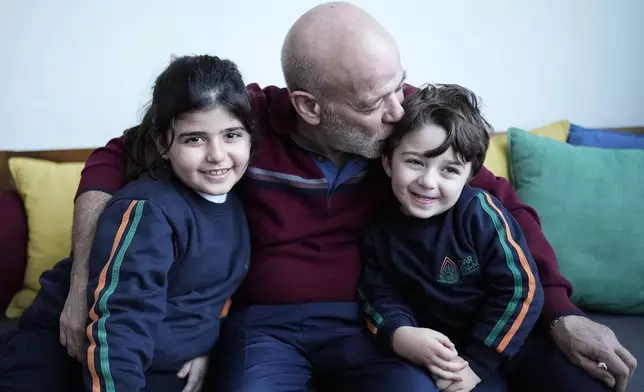
Suheil Hamwi, center, who spent 32 years in prison in Syria and returned to Lebanon after the government of Bashar Assad was toppled kisses his grandchildren at his home in Chekka, Lebanon, Tuesday, Dec. 10, 2024. (AP Photo/Hassan Ammar)
An old picture of Suheil Hamwi, left, who spent 32 years in prison in Syria and returned to Lebanon after the government of Bashar Assad was toppled, sits on a table inside of his home at the northern coastal town of Chekka, Lebanon, Tuesday, Dec. 10, 2024. (AP Photo/Hassan Ammar)
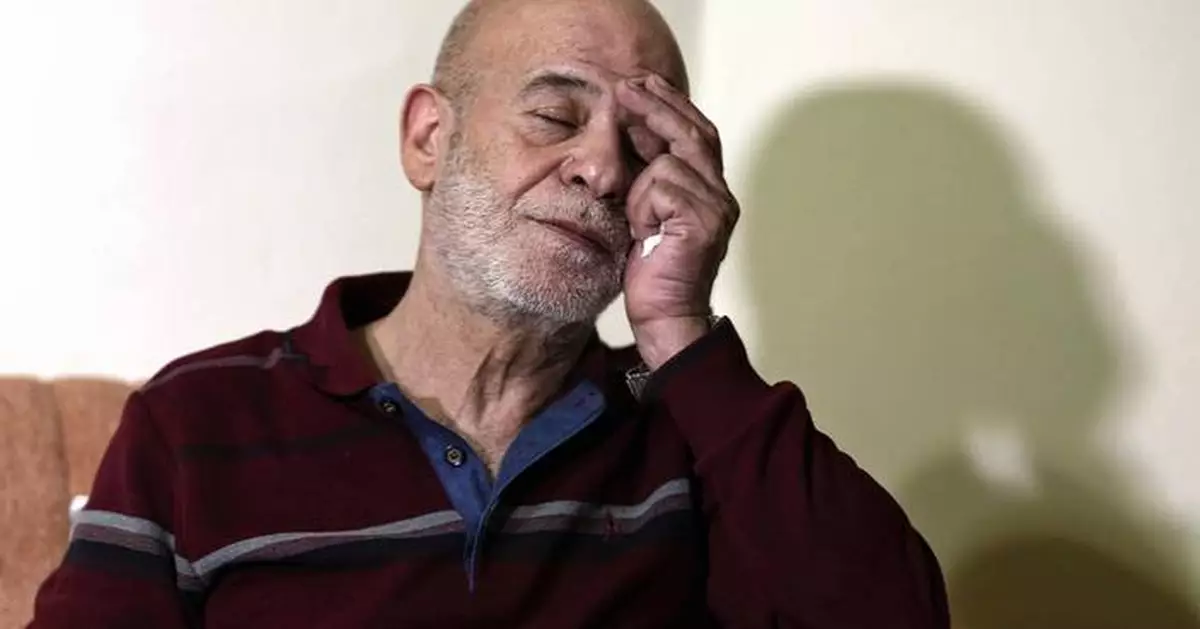
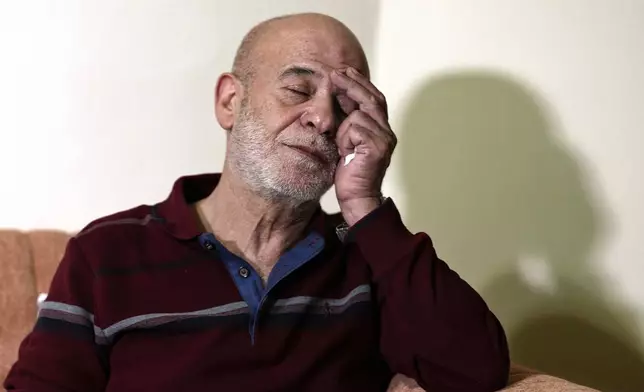
Suheil Hamwi, who spent 32 years in prison in Syria and returned to Lebanon after the government of Bashar Assad was toppled, reacts as he sits inside of his home in Chekka, Lebanon, Tuesday, Dec. 10, 2024. (AP Photo/Hassan Ammar)
As Hamwi approached his vehicle, a car filled with men pulled up, he said, forcing him inside and taking him away.
It would be years before his family heard from him again.
Hamwi was one of hundreds of Lebanese citizens detained during Syria’s occupation of Lebanon from 1976 to 2005 and believed to be held in Syrian prisons for decades. On Sunday, freedom came to him and others unexpectedly — prisoners who'd heard rumors about Syria’s opposition forces and their sweeping campaign found that guards had abandoned their posts. Hamwi and other prisoners left, he said, and he would soon be among the first from Lebanon to reenter the country.
“I’m still scared this might not be real,” he told The Associated Press in an interview Tuesday from his home — the same one he left more than three decades ago.
This new reality feels fragile, but, he said, “I found my freedom.”
For years after the night of his disappearance, Hamwi’s family didn’t know where he was. It wasn’t until 16 years later that his wife discovered he was imprisoned in Syria. Even then, the reason for his detention remained unclear, Hamwi said.
It took another four years before authorities finally told him the charge, he said: He was detained because he was a member of the Lebanese Forces, a Christian political party that also functioned as a militia during the 15-year Lebanese civil war that ended in 1990. The party fought against Syrian forces and remained opposed to Syria's military presence in Lebanon afterward.
Hamwi said prison interrogations were cryptic.
“They asked for my name, my parents’ names, my age, and where I was from. That’s all,” he said. Then he would be sent back to his cell. “There was no lawyer, no nothing.”
He said he spent his first years in Syria’s notorious Saydnaya prison before being transferred to other facilities, eventually ending up in prison in Latakia. Torture marked his early days behind bars, he added, “but that stopped after a while."
For years, he said, he lived in nearly complete isolation. He was alone in a small cell, surrounded by other Lebanese detainees as well as Palestinians and Iraqis.
In 2008, he said, his wife was able to visit him for the first time. Then she came about once a year.
Last week, there was some buzz in the prison about what was happening outside. “But we didn’t know the dream would reach us,” Hamwi said.
Early Sunday morning, chaos erupted as prisoners discovered the guards were gone.
“The first door opened,” Hamwi said, describing how rebels stormed the prison and started opening cell gates. “Then others followed. And for those who couldn’t open their gates, they started coming out through the walls.”
The prisoners left “walking toward the unknown,” he said. "And I walked with them.”
Strangers on the street helped guide him back to Lebanon, Hamwi said. He came into the country through the Arida border crossing in northern Lebanon, where his family waited on the other side.
As Hamwi walked through his door, it was his two grandchildren who greeted him.
“This is the first time I met them,” Hamwi later told AP, his voice tinged with disbelief.
In the living room, Hamwi lit a cigarette and took a slow drag. He took in photos of moments he'd missed: George’s graduation portrait; George with his wife; Hamwi's own smiling wife, Josephine, with granddaughter Tala.
Grandson Chris clung to Hamwi's hand, giggling as he called out “Jeddo!” — Arabic for grandpa.
Josephine handed out sweets, her hands steady despite the emotions of the last several days. Outside, neighbors and friends gathered, their voices echoing in the narrow hallway outside his apartment. They sat on chairs in a circle, sharing laughter and memories, as plates of the Arabic sweets and small chocolates were passed around.
“Do you know me? Do you remember me?” one friend asked, shaking Hamwi’s hand. Hamwi paused, studying the man’s face.
“You’re Jean! Yes, you’re Jean,” he said.
Hawmi has visited a hospital, for tests to assess the toll of 32 years in captivity. And he has to relearn life outside prison walls.
He hoped one of the best moments was yet to come: his reunion with only son George, an engineer working in the Gulf.
In their first phone call, Hamwi said, George told him the words he'd been longing to hear: “I miss you. I love you. I’m waiting to see you.”

Suheil Hamwi, who spent 32 years in a prison in Syria and returned to Lebanon after the government of Bashar Assad was toppled, sits on the balcony of his home watching the sea in Chekka, Lebanon, Tuesday, Dec. 10, 2024. (AP Photo/Hassan Ammar)
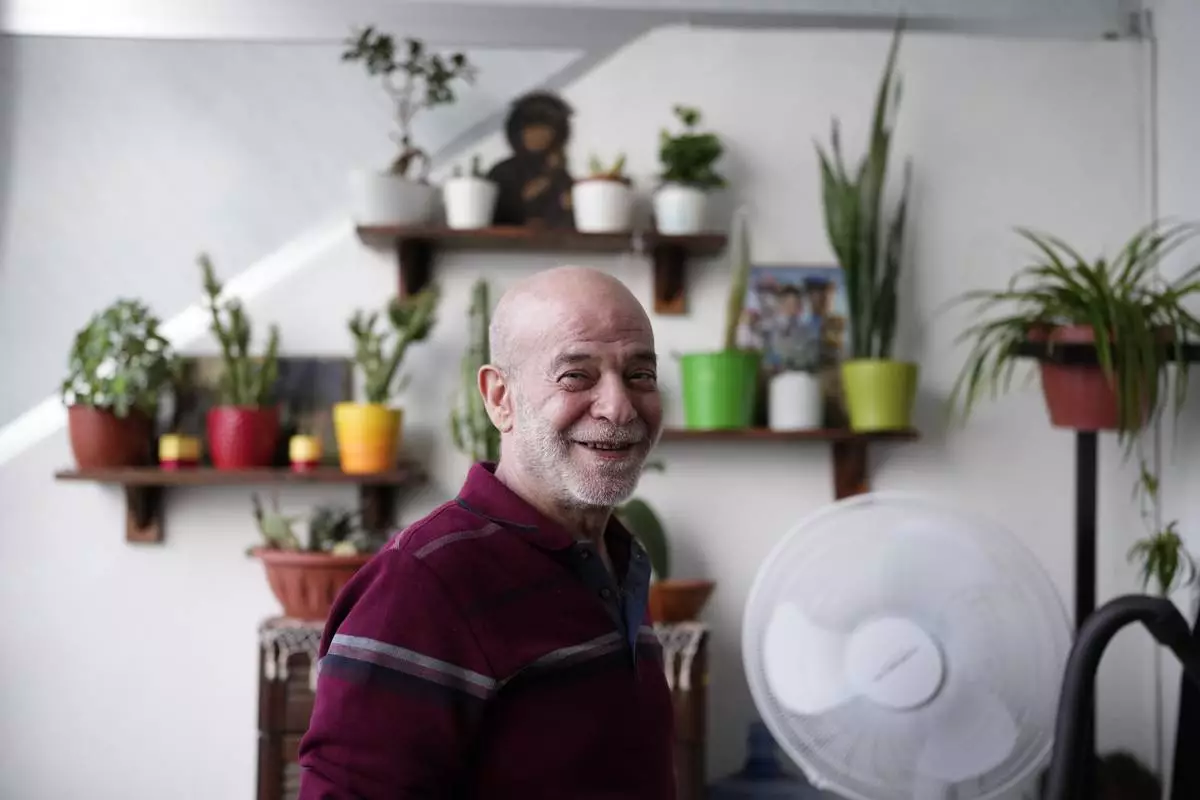
Suheil Hamwi, who spent 32 years in prison in Syria and returned to Lebanon after the government of Bashar Assad was toppled, poses for a photograph inside of his home in Chekka, Lebanon, Tuesday, Dec. 10, 2024. (AP Photo/Hassan Ammar)
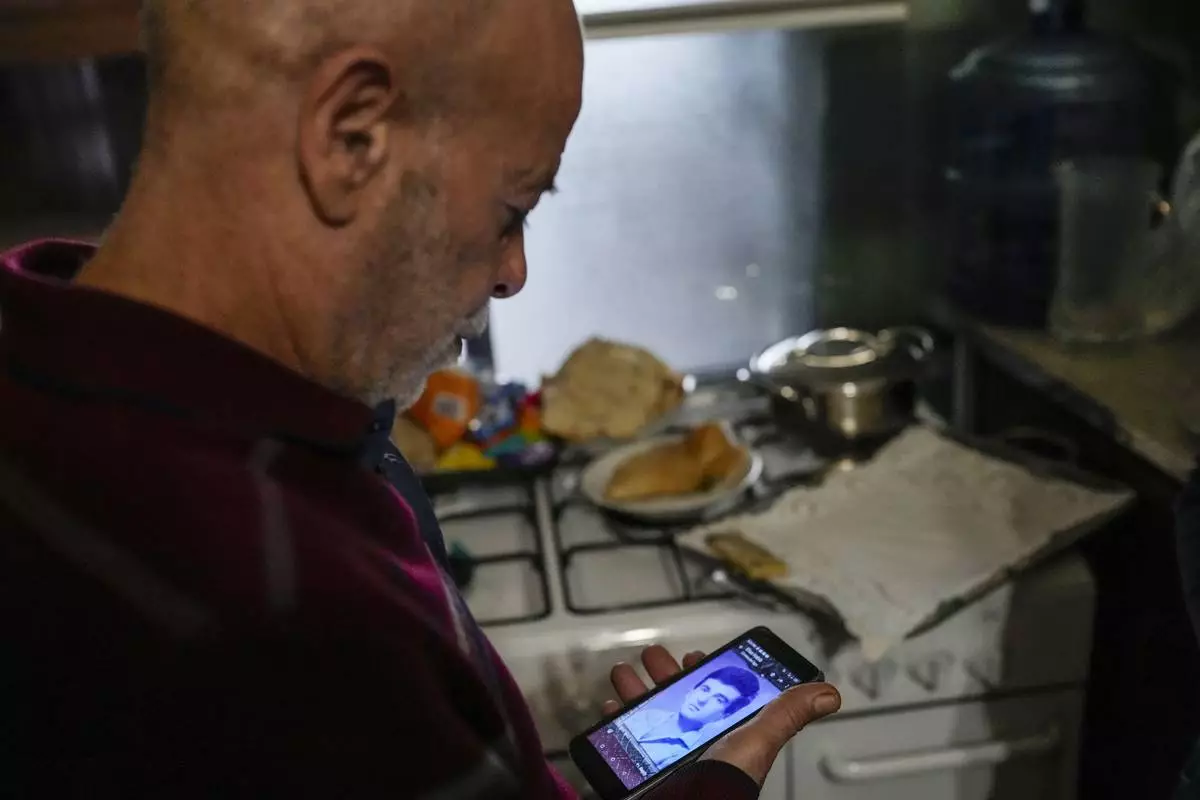
Suheil Hamwi, who spent 32 years in prison in Syria, reacts as a man shows him a picture of a missing Lebanese prisoner inside Syria, at Hamwi's home in Chekka, Lebanon, Tuesday, Dec. 10, 2024. (AP Photo/Hassan Ammar)
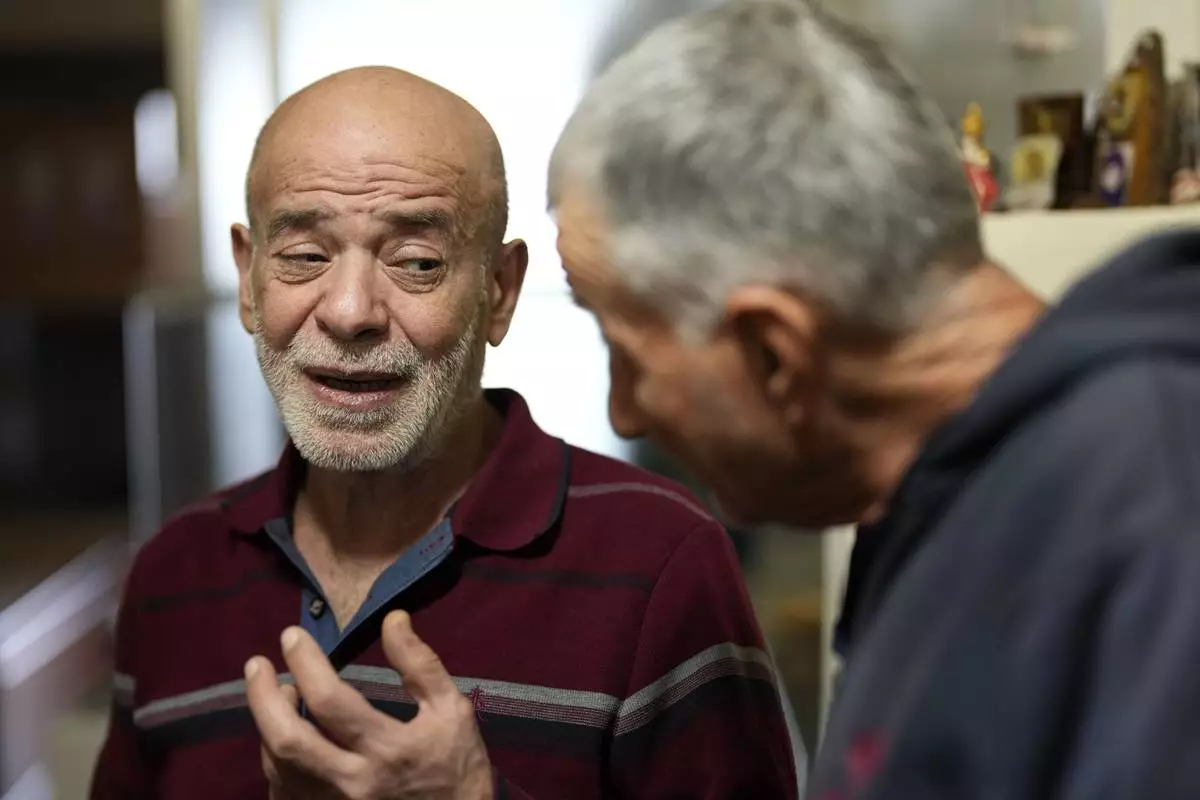
Suheil Hamwi, left, who spent 32 years in prison in Syria, reacts as a man shows him a picture of a missing Lebanese prisoner inside Syria, at Hamwi's home in Chekka, Lebanon, Tuesday, Dec. 10, 2024. (AP Photo/Hassan Ammar)
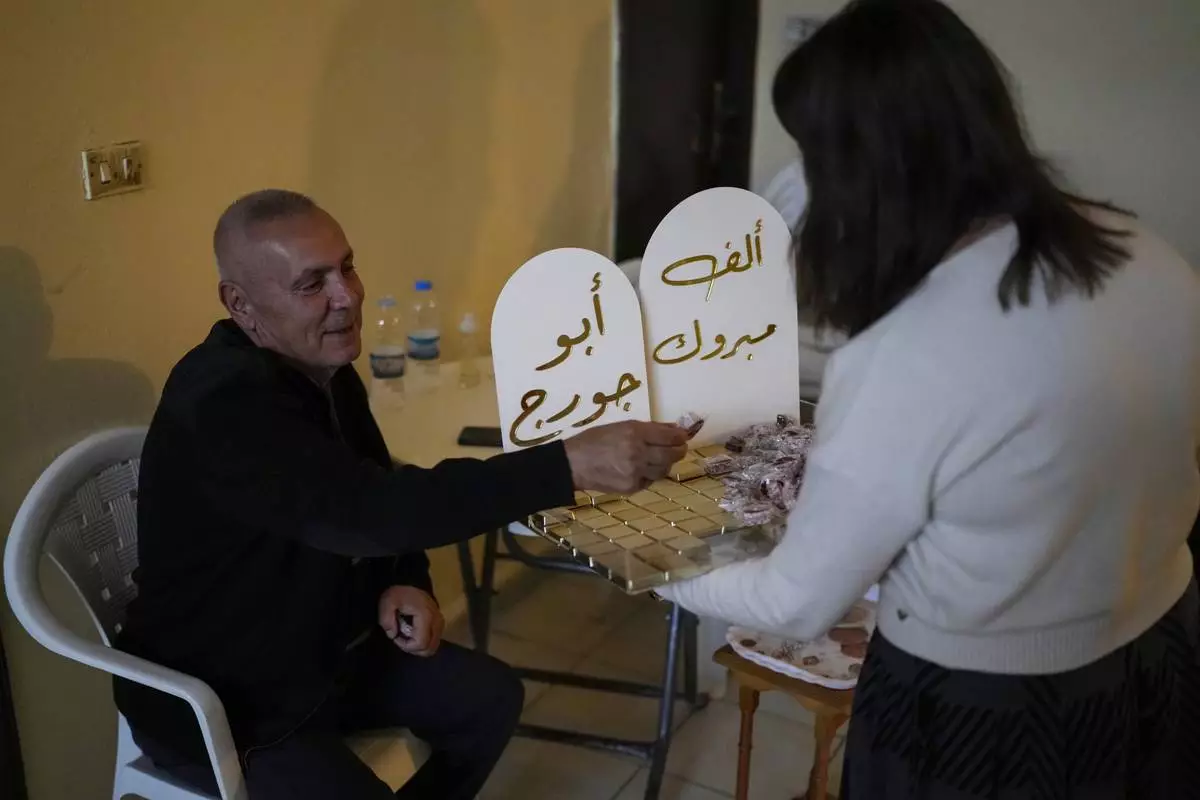
A woman distributes sweets to celebrate the return of Suheil Hamwi, who spent 32 years in prison in Syria and returned to Lebanon after the government of Bashar Assad was toppled, inside of his home in Chekka, Lebanon, Tuesday, Dec. 10, 2024. (AP Photo/Hassan Ammar)

A neighbor welcomes Suheil Hamwi, right, who spent 32 years in prison in Syria, at Hamwi's home in Chekka, Lebanon, Tuesday, Dec. 10, 2024. (AP Photo/Hassan Ammar)
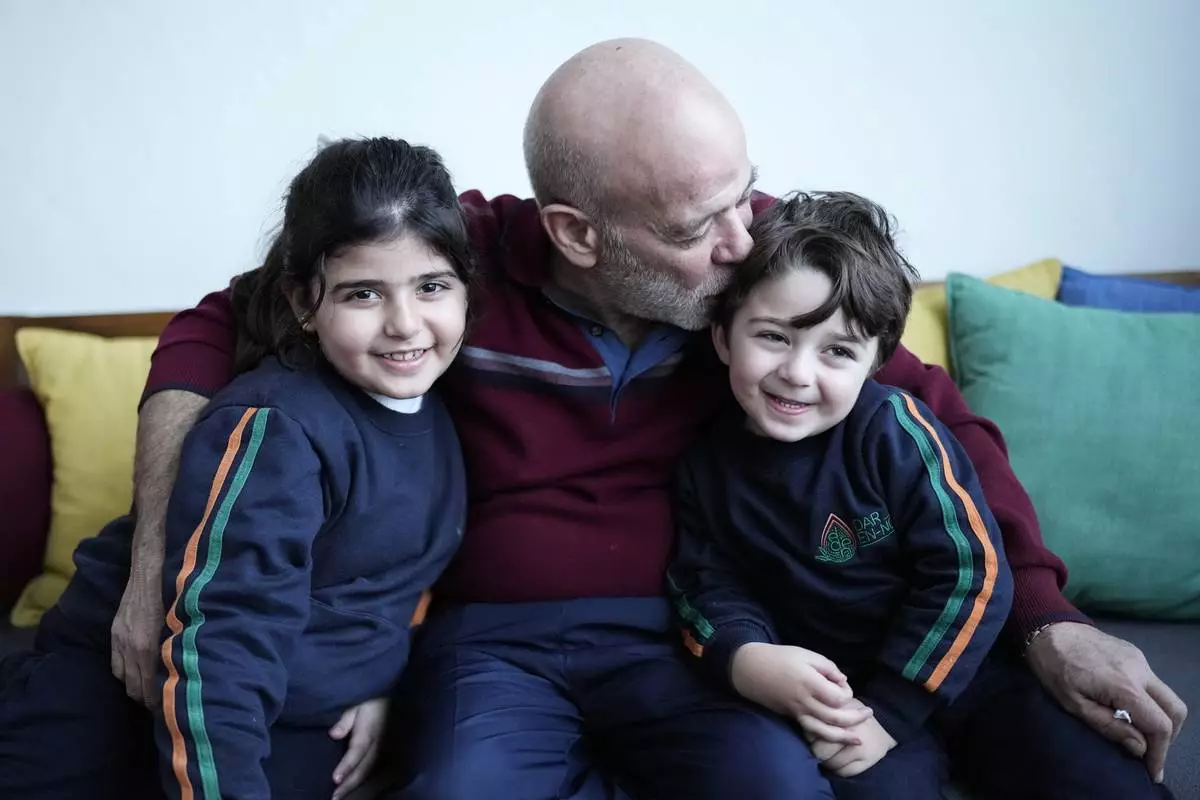
Suheil Hamwi, center, who spent 32 years in prison in Syria and returned to Lebanon after the government of Bashar Assad was toppled kisses his grandchildren at his home in Chekka, Lebanon, Tuesday, Dec. 10, 2024. (AP Photo/Hassan Ammar)
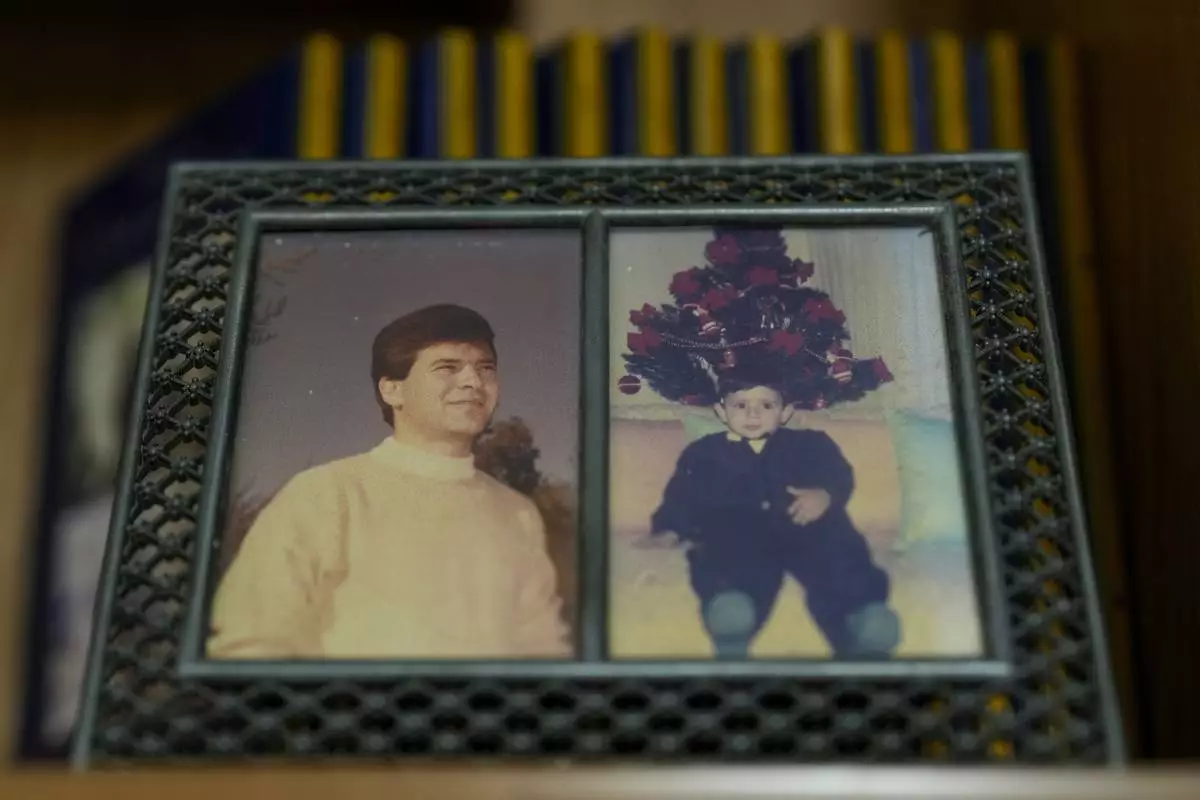
An old picture of Suheil Hamwi, left, who spent 32 years in prison in Syria and returned to Lebanon after the government of Bashar Assad was toppled, sits on a table inside of his home at the northern coastal town of Chekka, Lebanon, Tuesday, Dec. 10, 2024. (AP Photo/Hassan Ammar)
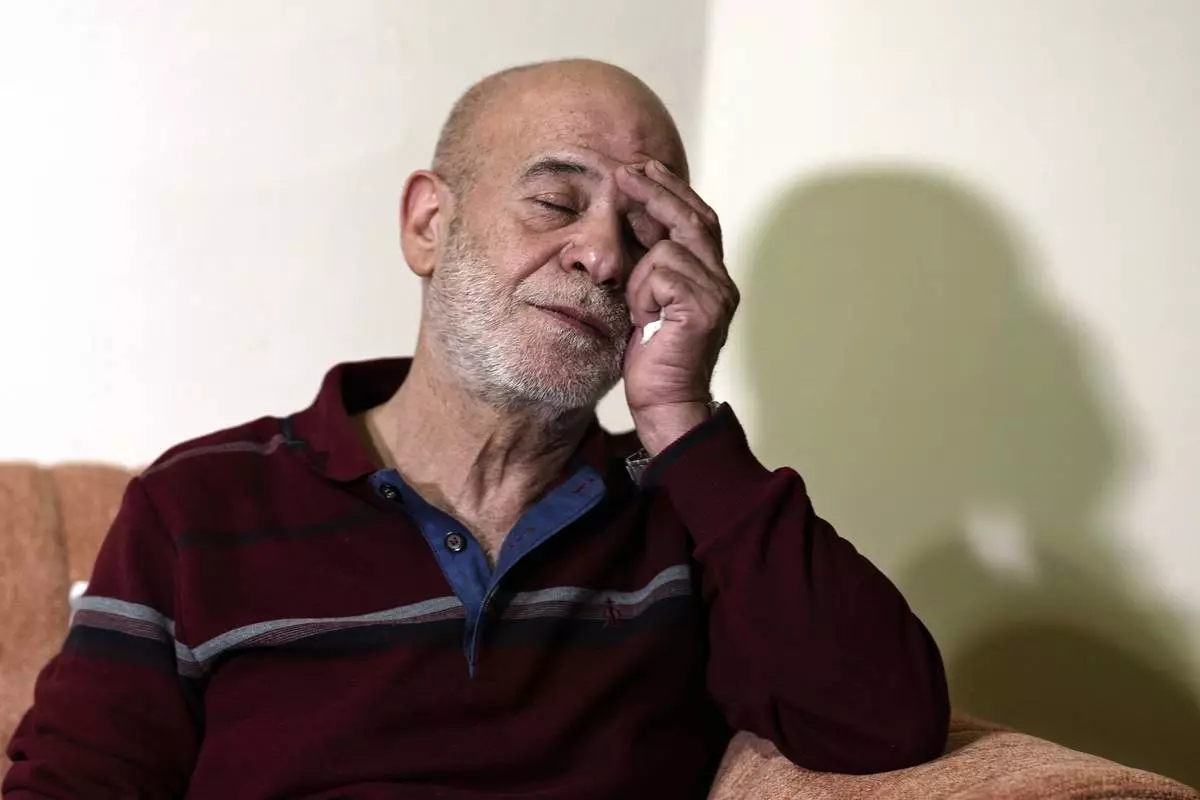
Suheil Hamwi, who spent 32 years in prison in Syria and returned to Lebanon after the government of Bashar Assad was toppled, reacts as he sits inside of his home in Chekka, Lebanon, Tuesday, Dec. 10, 2024. (AP Photo/Hassan Ammar)
RIYADH, Saudi Arabia--(BUSINESS WIRE)--Jan 12, 2026--
Nextpower (Nasdaq: NXT, formerly Nextracker) and Abunayyan Holding today announced the completion of the incorporation of the previously announced joint venture, Nextpower Arabia, headquartered in Riyadh, Kingdom of Saudi Arabia. The new joint venture will accelerate the deployment of utility-scale solar power plants across the Middle East and North Africa (MENA) region, supporting national and regional renewable energy transformation objectives and Net Zero targets.
This press release features multimedia. View the full release here: https://www.businesswire.com/news/home/20260111848469/en/
As part of the new joint venture, the partners also announced a new advanced manufacturing facility in Jeddah, Saudi Arabia. Nextpower Arabia will provide advanced tracker systems, yield management, and control solutions for installation on large-scale solar projects across the MENA region.
The facility is expected to enable total manufacturing and localized supply chain capacity of up to 12 GW per year, supporting the creation of up to 2,000 jobs and development of local engineering and technical talent within the Kingdom. Currently under construction on a 42,000-square-meter site, the production facility is anticipated to open in Q2 of calendar year 2026 and will manufacture Nextpower’s comprehensive portfolio of solar tracking systems, adding up to 600 employees ( watch the video ).
Khalid Abunayyan, Chairman of Abunayyan Holding, said, “Making energy and water supply readily accessible, sustainable, and affordable is essential to the continued economic and social development of Saudi Arabia and our partners across the region. It is also central to the core values and DNA of Abunayyan Holding. Partnering with Nextpower, a true pioneer in the international solar energy community, strengthens our role in advancing Saudi’s clean energy vision by localizing advanced manufacturing and technologies, building local capacity development, and creating lasting value for generations to come.”
Dan Shugar, founder and CEO of Nextpower, said, “Saudi Arabia is a strategic market for Nextpower as we expand our ability to serve customers across the Middle East. The Kingdom is making significant progress in advancing the energy transition, and we’re proud and honored to support these monumental initiatives with proven solar technology and trusted local partnerships. Abunayyan Group’s regional expertise and alignment with our business focus make them the right partner to help deliver greater value, faster, for customers in the region.”
Turki Al-Amri, Abunayyan Holding CEO and Nextpower Arabia Chairman and CEO, said, “Our manufacturing facility represents the first step in our strategic vision to strengthen and localize the solar supply chain for our partners across the MENA region and enhance collaboration to deliver highly efficient and cost-effective clean energy. By sourcing core materials such as Saudi-produced steel through our strategic partners and manufacturing locally, we are supporting economic diversification and industrial growth that is at the foundation of Saudi Vision 2030.”
Nextpower Arabia combines the deep regional expertise of Riyadh-based Abunayyan Holding with the global solar technology leadership of Nextpower. Abunayyan Holding brings more than 75 years of experience developing and privatizing the operation of critical water and energy infrastructure across Saudi and the MENA region. The company was a key driver of the consortium behind the founding and growth of several development arms and forming joint ventures that bring leading technology to the region.
U.S.-headquartered Nextpower is a global leader in advanced solar tracking systems and software, with over 150 GW of trackers under fulfilment or operational across more than 45 countries worldwide. This total includes more than 6 GW of solar projects across the Middle East and Africa, such as Phase V of the Mohammed Bin Rashid Al Maktoum Solar Park in the UAE and 3 GW of Saudi landmark projects, including:
Nextpower Arabia is well positioned to support the National Renewable Energy Program in the Kingdom of Saudi Arabia, which targets increasing the share of renewables in the country’s energy mix by 2030. Localizing manufacturing in the Kingdom will also support Saudi Arabia’s industrialization and export development plans while helping reduce the cost of clean energy for major projects across the region.
According to the Middle East Solar Industry Association’s (MESIA) recent 2025 Solar Outlook Report, cost competitiveness and improving production efficiencies are accelerating solar adoption and government-backed clean energy strategies, with regional solar capacity projected to exceed 180 GW by 2030.
In support of this growth opportunity, Abunayyan Holding and Nextpower anticipate funding the joint venture with approximately $88 million (approximately 330 million Saudi Riyals) in equity and public and private debt financings over the next two years alone. This capital will facilitate the buildout of the state-of-the-art manufacturing facility and development of highly skilled technical and engineering capabilities with a track record in operational excellence.
About Nextpower
Nextpower™ (Nasdaq: NXT, formerly Nextracker) designs, engineers, and delivers an advanced energy technology platform for solar power plants, innovating across structural, electrical, and digital domains. Our integrated solutions are designed to streamline project execution, increase energy yield and long-term reliability, and enhance customer ROI. Building on over a decade of technology and market leadership, the company delivers intelligent power generation systems and services to meet rapidly expanding global electricity demand. Nextpower partners with the world’s leading energy companies to power what’s next. Learn more at www.nextpower.com.
About Abunayyan Holding
Abunayyan Holding is one of Saudi Arabia’s most established and leading companies in the fields of water, energy, and infrastructure. With a legacy spanning more than 75 years of leadership and innovation, the company provides integrated solutions that contribute to sustaining life and supporting the Kingdom’s national development goals.
The Group comprises a portfolio of strategic subsidiaries covering the full value chain across water, renewable energy, treatment, industrial equipment, and smart infrastructure, serving both local and regional markets in Saudi Arabia and the broader Middle East and North Africa region.
Through its local and international partnerships, Abunayyan Holding plays a key role in localizing technologies and empowering national talent in alignment with the objectives of Saudi Vision 2030 to build a prosperous, sustainable, and innovation-driven economy.
For more information, please visit Abunayyan Holding.
Forward-Looking Statements
This press release contains forward-looking statements within the meaning of the Private Securities Litigation Reform Act of 1995, including: statements regarding the deployment of utility-scale solar power plants in MENA and the ability to reach renewable energy objectives, including Net Zero targets; statements regarding the speed, cost efficiency and supply-chain optimization anticipated from the joint venture; statements regarding the development of manufacturing facilities and the benefits associated with such development, including capacity increases and job creation; and statements regarding the anticipated benefits of the joint venture, and future opportunities for the joint venture, including the benefits customers may realize as a result of the joint venture. These forward-looking statements are only predictions and may differ materially from actual results due to a variety of factors including: the satisfaction of other closing conditions and the ability of Nextpower to successfully integrate operations and employees in the joint venture; the market demand for products, solutions and services offered by the joint venture and the joint venture’s ability to deliver them to customers; the risks of operating in the Kingdom and the MENA region; unexpected costs, charges or expenses resulting from the joint venture; the joint venture’s ability to successfully grow its business; potential adverse reactions or changes to business relationships resulting from the announcement or completion of the joint venture; the retention of key employees, customers, or suppliers; projections regarding the global demand for electricity and solar power; macro-economic trends; and legislative, regulatory and economic developments, including changing business conditions in our industry or markets overall and the economy in general. These statements involve risks and uncertainties that could cause the actual results to differ materially from those anticipated by these forward-looking statements, including risks and uncertainties that are also described under “Risk Factors” and “Management’s Discussion and Analysis of Financial Condition and Results of Operations” in Nextpower’s most recent Quarterly Report on Form 10-Q, Annual Report on Form 10-K and other documents that Nextpower has filed or will file with the Securities and Exchange Commission. There may be additional risks that Nextpower and/or the joint venture is not aware of or that Nextpower and/or the joint venture currently believes are immaterial that could also cause actual results to differ from these forward-
looking statements. Readers are cautioned not to place undue reliance on these forward-looking statements. Nextpower and the joint venture assume no obligation to update these forward-looking statements.
Energy Leaders Abunayyan Holding and Nextpower Complete Formation of Joint Venture, Nextpower Arabia