RIO DE JANEIRO (AP) — Criminal gangs are operating in over a third of municipalities in Brazil’s Amazon rainforest driving a boom in violence, according to a report published Wednesday by a prominent nonprofit organization.
Gangs were present this year in 260 of 772 municipalities in the region, compared with 178 in 2023, according to the Brazilian Forum on Public Safety. The entrenchment of “mafia-like” organizations — particularly the Red Command and First Capital Command (PCC) — “greatly aggravate the situation in the Legal Amazon, which is now seen as a very strategic territory for transnational trafficking, with the circulation of different illicit goods,” the report said.
The Legal Amazon is an area in nine states of Brazil that's home to the largest hydrographic basin in the world.
Of the 260 municipalities where organized crime groups are present, Red Command controls fully half, up from one-fourth last year, forum president Renato Sérgio de Lima told The Associated Press.
Red Command expanded into cities in Brazil's northern region after PCC took control of the drug trafficking route via Ponta Pora, a municipality on the border with Paraguay in the center-west region. Red Command has since swallowed up some local factions that no longer function autonomously, Lima said.
The fact that gangs are securing monopolies on criminal activities could help explain the 6.2% drop in violent deaths across the region from 2021 to 2023, authors wrote in the third edition of the report titled “Cartographies of Violence in the Amazon.”
However, "the internalization of violence to rural and forest areas has made small, quiet municipalities some of the most violent in the country,” they said.
The killings of Indigenous peoples expert Bruno Pereira and British journalist Dom Phillips in 2022 threw into sharp relief the increase in violence in the region. They were traveling along the Itaquai River near the entrance of the Javari Valley Indigenous Territory, which borders Peru and Colombia, when they were attacked. Their bodies were dismembered, burned and buried.
Brazilian police have formally charged a Colombian fish trader as the person who planned their slayings. The killings were motivated by Pereira’s efforts to monitor and enforce environmental laws in the region, police have said. Phillips was working on a book about Amazon preservation.
Federal Police detective Alexandre Saraiva, who led police departments in three Amazon states between 2011 and 2021, knew both Phillips and Pereira. “There's no shadow of a doubt” that organized crime in the region has increased in recent years, he said.
The expansion of criminal organizations in the Amazon happened at the same time as the growth of illegal mining, Saraiva said, which sharply increased under former President Jair Bolsonaro, who encouraged the practice.
After defeating Bolsonaro in the 2022 election and returning to office for a third, non-consecutive term in January 2023, President Luiz Inácio Lula da Silva has sought to tackle crime and deforestation in the region. While deforestation has decreased, the report shows his administration has had little success in reigning in the expansion of drug gangs.
“Today, might makes right in the Amazon,” Saraiva, who authored the book “Jungle: Loggers, Miners and Corruption in a Lawless Amazon,” said by phone from Rio. He said some Brazilian lawmakers and local politicians were also responsible for the situation and accused them of receiving funds from criminal groups in exchange for protection.
Criminal organizations' grip over the region poses a public security problem, but it is also an obstacle to the development of sustainable practices experts say are essential for its preservation.
Brazil's Federal Police launched an operation on Wednesday against criminal organizations that transport gold illegally extracted from Indigenous lands, including the Munduruku Indigenous territory in the Amazon. Officers carried out nine arrest warrants across six states and seized assets worth $100 million, according to a statement. Over the course of a year-long investigation, groups transported approximately one tonne of illegal gold and recruited foreigners on commercial flights to fly with gold in their baggage, police said.
The police operation is “an example of how the state can and should act,” Lima said. But tackling drug trafficking, environmental crimes, land-grabbing and other illegal actions also requires coordinated, multi-pronged public policies as well as local development projects, according to the report.
“There is no magic wand that is going to solve all the problems,” he said.
Follow AP’s coverage of Latin America and the Caribbean at https://apnews.com/hub/latin-america
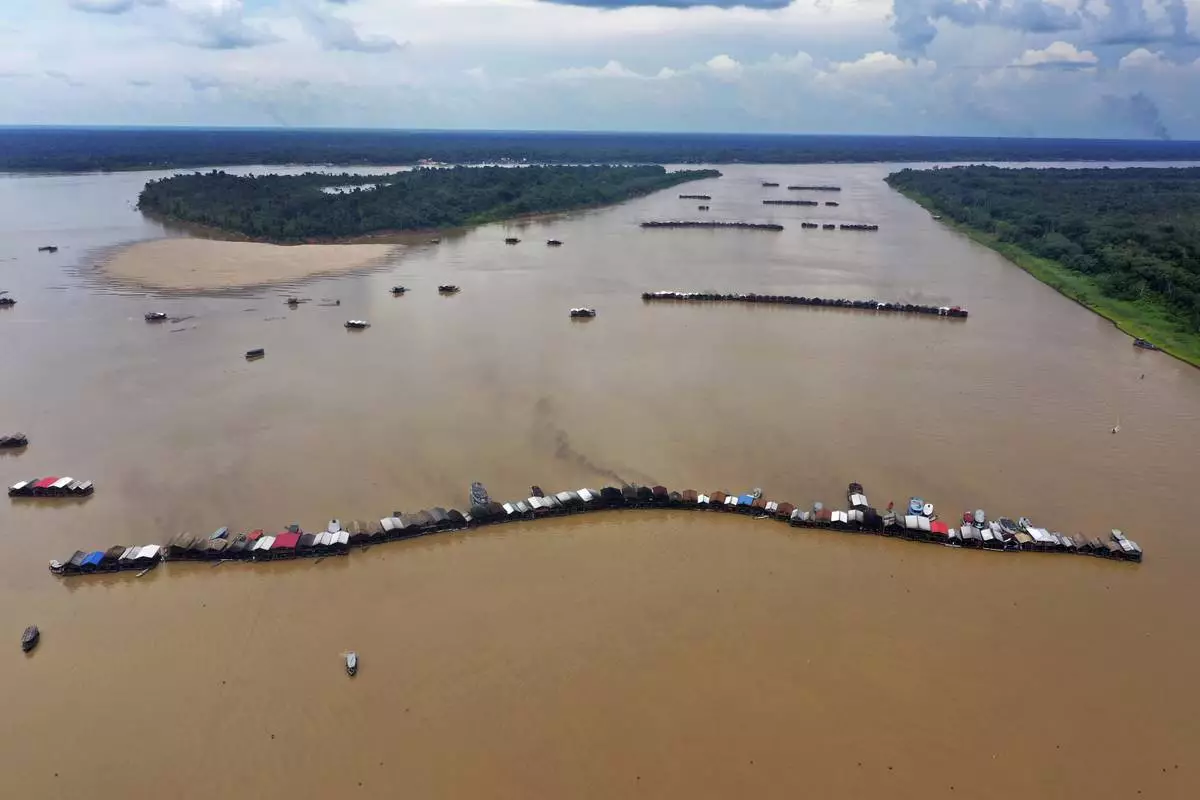
FILE - Dredging barges operated by illegal miners converge on the Madeira river, a tributary of the Amazon river, searching for gold, in Autazes, Amazonas state, Brazil, Nov. 25, 2021. (AP Photo/Edmar Barros, File)
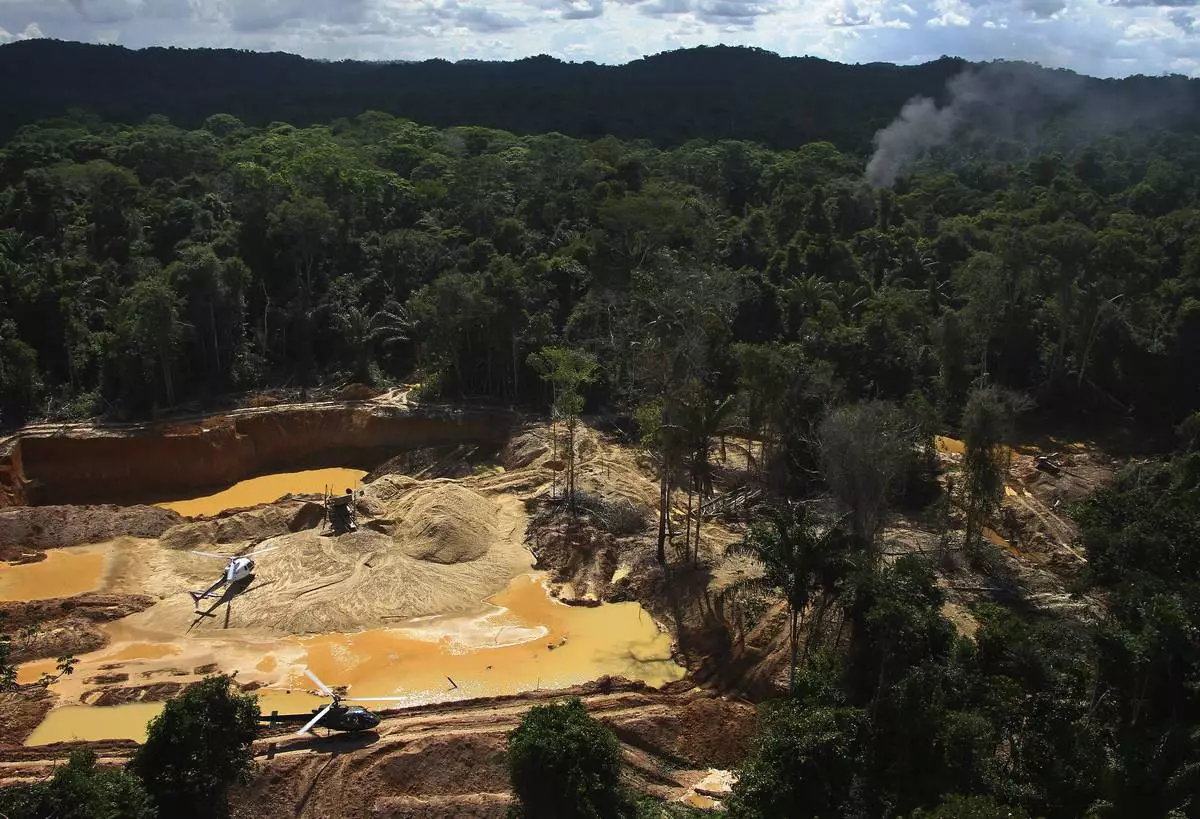
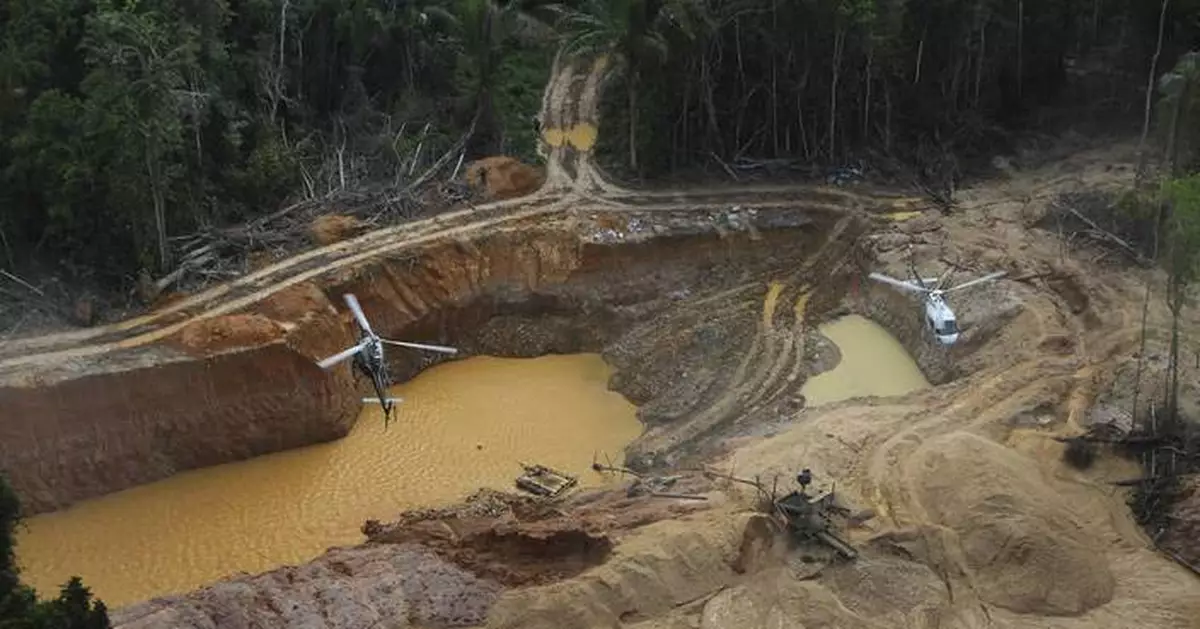
FILE - Brazil Environmental Agency helicopters fly over an illegal mining camp during an operation to try to contain the practice in Yanomami Indigenous territory, Roraima state, Brazil, Feb. 11, 2023. (AP Photo/Edmar Barros, File)
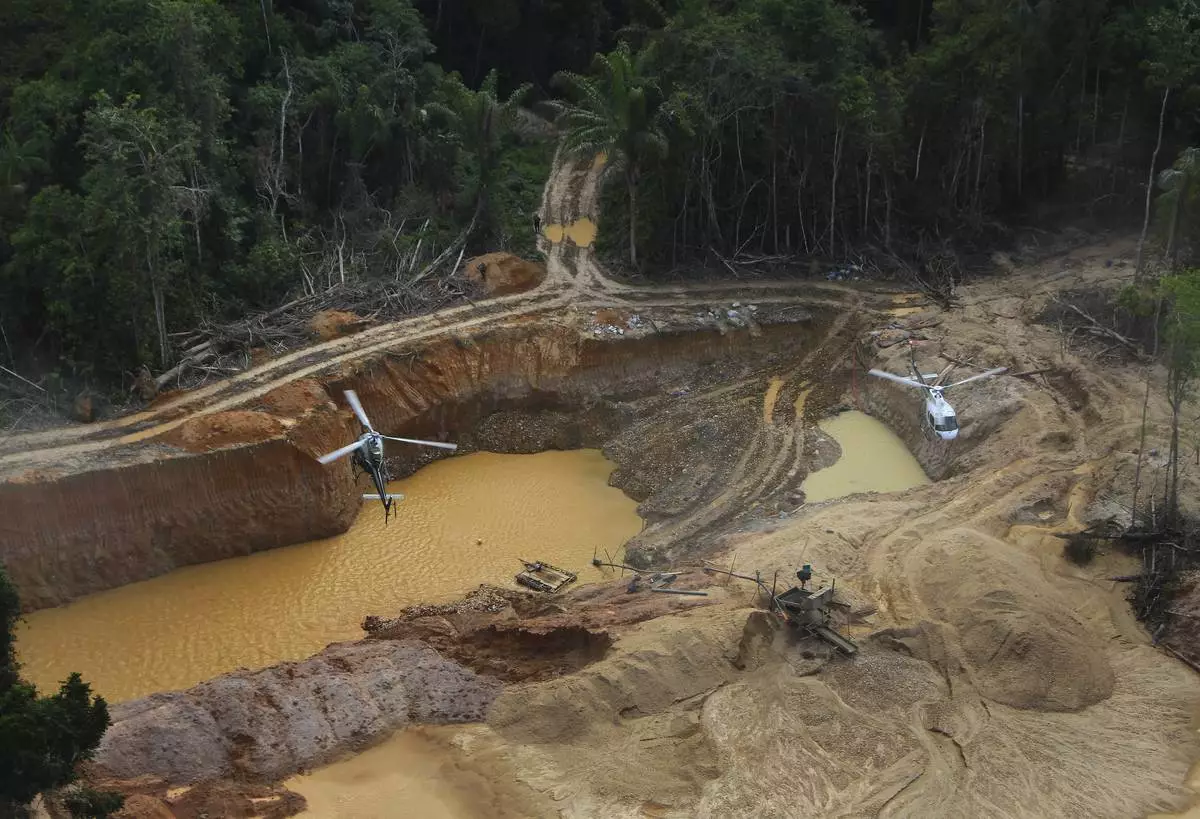
FILE - Brazil Environmental Agency helicopters fly over an illegal mining camp during an operation to try to contain the practice in Yanomami Indigenous territory, Roraima state, Brazil, Feb. 11, 2023. (AP Photo/Edmar Barros, File)