GROTON, Conn.--(BUSINESS WIRE)--Dec 11, 2024--
Nimbus Power Systems, Inc., a pioneering developer of advanced fuel cell technologies for heavy-duty vehicles, today announced the successful completion of a fuel cell technology licensing agreement with Blue Origin to facilitate electric power and potable water production in space applications. Nimbus’ unique fuel cell technology features gravity and momentum independent water management, a critical enabler of fuel cell power production in space environments.
This press release features multimedia. View the full release here: https://www.businesswire.com/news/home/20241211265773/en/
Fuel cells for space applications react oxygen and hydrogen to produce electricity, heat, and potable water, three vital resources for crewed space operations. The water produced in fuel cells for terrestrial applications is frequently managed using a combination of gravitational and reactant momentum forces – both limited or unavailable in space applications. Nimbus’ unique water management technology removes product water via a combination of capillary and hydraulic forces that are uncompromised by the space environment. This water management advantage decreases system complexity and offers significant weight savings, resulting in more reliable and affordable space operations.
“Blue Origin and Nimbus Power Systems are collaborating on advanced Polymer Electrolyte Membrane (PEM) fuel cell technology specifically tailored to space applications,” said John Couluris, Senior Vice President of Lunar Permanence at Blue Origin. “Working with Nimbus leverages the latest advances in their terrestrial fuel cell technology to accelerate Blue Origin’s in-house fuel cell solutions for in-space and lunar products.”
“Nimbus’ fuel cell technology traces its roots back to the crewed Gemini space flights, where reliable operation under zero gravity was first demonstrated.” said Michael Gorman, CEO of Nimbus Power Systems “This collaboration with Blue Origin combines decades of fuel cell technology advancements, with state-of-the-art crewed space flight systems to serve the rapidly growing market for affordable space products and services. We are delighted that our dual-use fuel cell technology will support terrestrial and aerospace applications for years to come.”
For more information about Nimbus Power Systems visit nimbuspowersystems.com.
About Nimbus Power Systems:
Nimbus Power System Inc. is a Groton, CT, USA company developing zero-emission, fuel cell systems for the heavy-duty mobility and stationary power markets. The company’s primary mission is to provide uncompromising zero-emission replacements for heavy-duty engines currently serving these markets while serving adjacent markets, including space applications, via license and support agreements.
About Blue Origin:
We are building a road to space for the benefit of Earth, humanity’s blue origin. Our team is focused on radically reducing the cost of access to space and harnessing its vast resources while mobilizing future generations to realize this mission. Blue Origin builds and operates reusable rocket engines, launch vehicles, in-space systems, and lunar landers. Discover more at BlueOrigin.com.
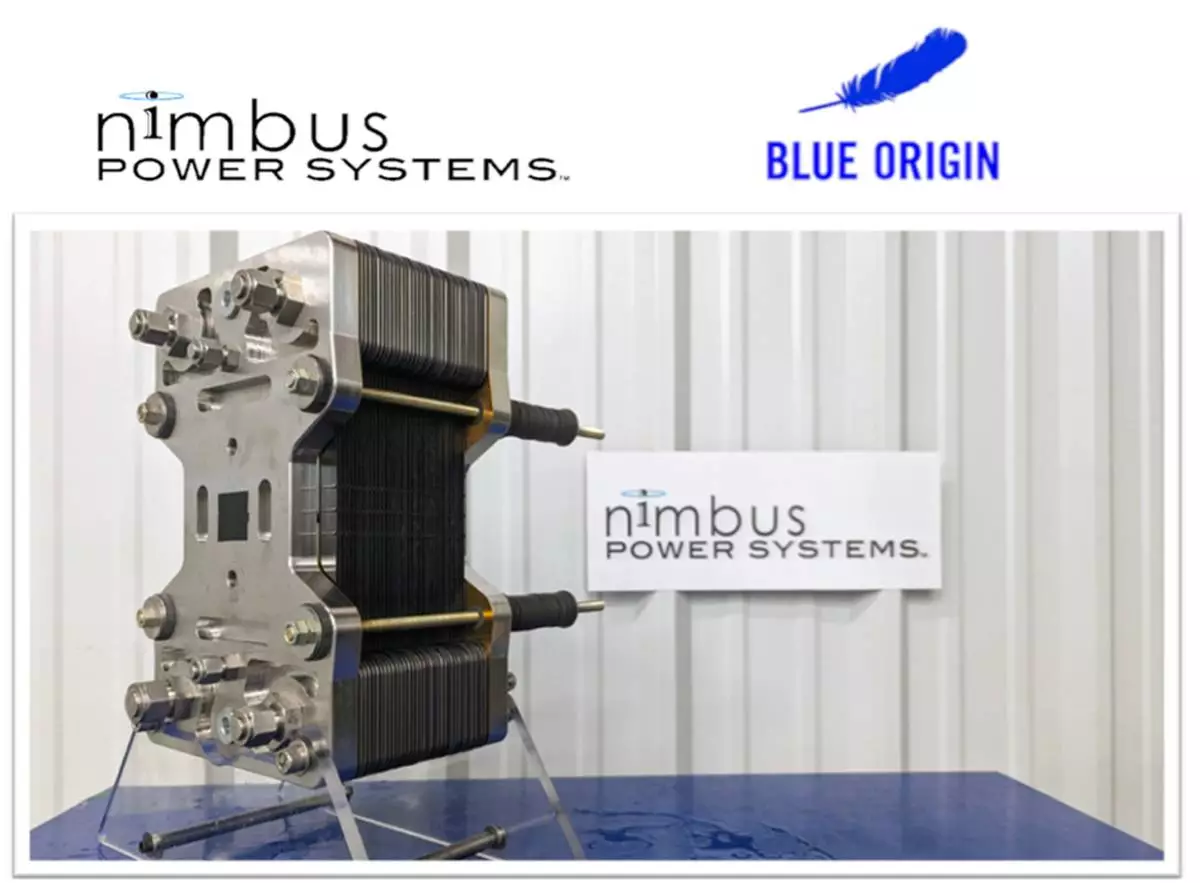
(Photo: Business Wire)
KYIV, Ukraine (AP) — Russian drones blasted apartment buildings and the power grid in the southern Ukraine city of Odesa in an overnight attack that injured six people, including a toddler and two other children, officials said Wednesday.
Four apartment buildings were damaged in the bombardment, according to regional military administration head Oleh Kiper. Power company DTEK said two of its energy facilities suffered significant damage. The company said that 10 substations that distribute electricity in the Odesa region were damaged in December alone.
Russia has this year escalated its long-range attacks on urban areas of Ukraine. In recent months, as Russia’s invasion of its neighbor approaches its four-year milestone in February, it has also intensified its targeting of energy infrastructure, seeking to deny Ukrainians heat and running water in the bitter winter months.
From January to November this year, more than 2,300 Ukrainian civilians were killed and more than 11,000 were injured, the United Nations said earlier this month. That was 26% higher than in the same period in 2024 and 70% higher than in 2023, it said.
Russia’s sustained drone and missile attacks have taken place against backdrop of renewed diplomatic efforts to stop the fighting.
U.S. President Donald Trump hosted Ukrainian President Volodymyr Zelenskyy at his Florida resort on Sunday and announced that a settlement is “closer than ever before." The Ukrainian leader is due to hold talks next week with the heads of European governments supporting his efforts to secure acceptable terms.
The ongoing attacks, meantime, are inflaming tensions.
The overnight Odesa strikes “are further evidence of the enemy’s terror tactics, which deliberately target civilian infrastructure,” Kiper, the regional head, said.
Moscow has alleged that Ukraine attempted to attack Russian President Vladimir Putin’s residence in northwestern Russia with 91 long-range drones late Sunday and early Monday. Ukrainian officials deny the claim and say it’s a ruse to derail progress in the peace negotiations.
Maj. Gen. Alexander Romanenkov of the Russian air force claimed Wednesday that the drones took off from Ukraine’s Sumy and Chernihiv regions.
At a briefing where no questions were allowed, he presented a map showing the drone flight routes before they were downed by Russian air defenses over the Bryansk, Tver, Smolensk and Novgorod regions.
It was not possible to independently verify the reports.
The European Union’s foreign policy chief, Kaja Kallas, on Wednesday called the Russian allegations “a deliberate distraction” from the peace talks.
“No one should accept unfounded claims from the aggressor who has indiscriminately targeted Ukraine’s infrastructure and civilians since the start of the war,” Kallas posted on X.
Zelenskyy said Wednesday that Romania and Croatia are the latest countries to join a fund that buys weapons for Ukraine from the United States. The financial arrangement, known as the Prioritized Ukraine Requirements List, or PURL, pools contributions from NATO members, except the United States, to purchase American weapons, munitions and equipment.
Since it was established in August, 24 countries are now contributing to the fund, according to Zelenskyy. The fund has so far received $4.3 billion, with almost $1.5 billion coming in December alone, he said on social media.
Ukraine’s air force said Wednesday that Russia fired 127 drones at the country during the night, with 101 of them intercepted by air defenses.
Meanwhile, the Russian Defense Ministry said that 86 Ukrainian drones were shot down overnight over Russian regions, the Black Sea and the illegally annexed Crimea peninsula.
The Ukrainian attack started a fire at an oil refinery in Russia's southern Krasnodar region, but it was quickly put out, local authorities said.
This story has corrected the day of the alleged Ukrainian drone attack on the Russian president’s residence to late Sunday and early Monday.
Follow AP’s coverage of the war in Ukraine at https://apnews.com/hub/russia-ukraine
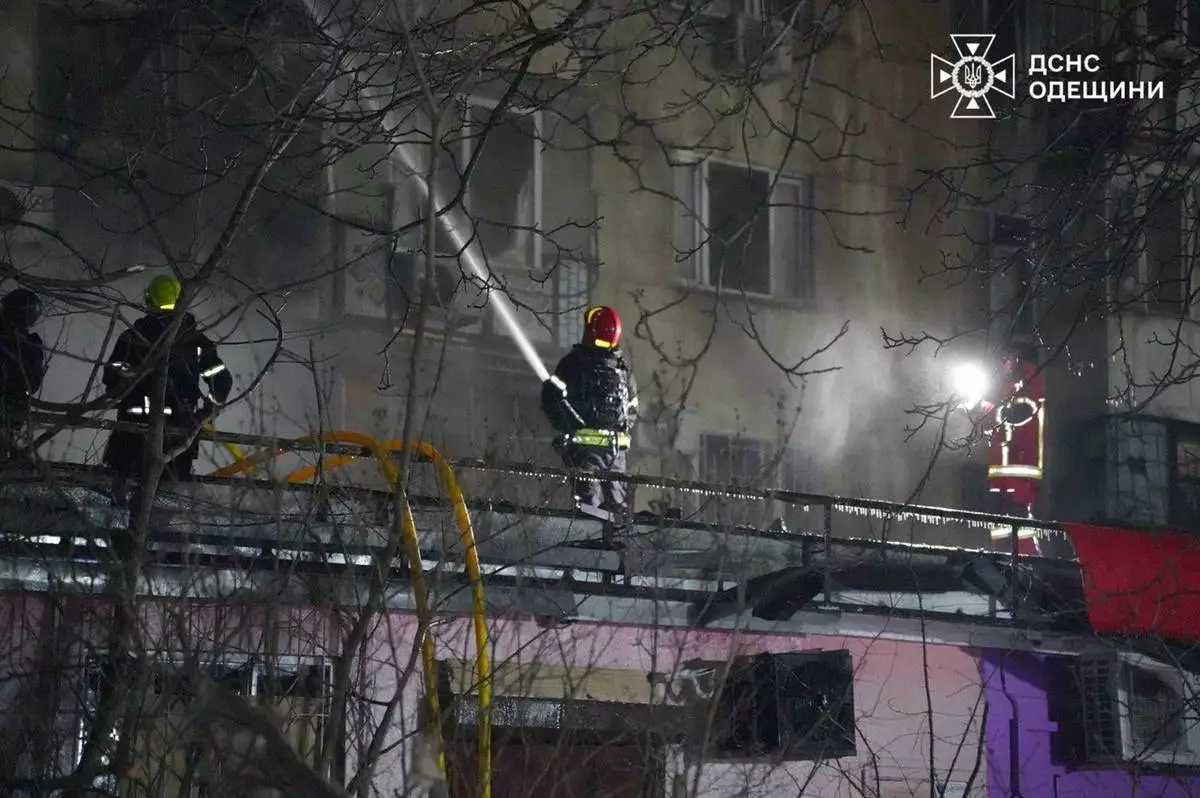
In this photo provided by the Ukrainian Emergency Service, emergency services personnel work to extinguish a fire following a Russian attack in Odesa, Ukraine, Wednesday, Dec. 31, 2025. (Ukrainian Emergency Service via AP)
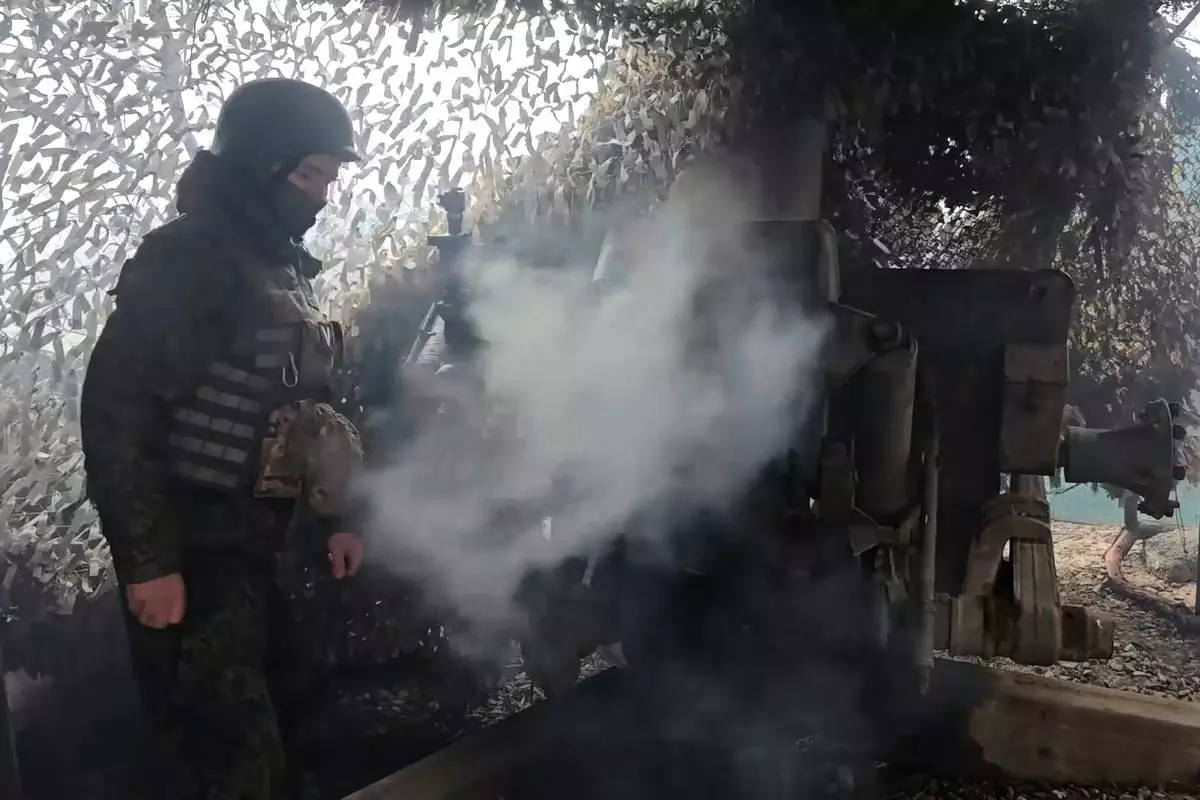
In this image made from video provided by the Russian Defense Ministry Press Service on Tuesday, Dec. 30, 2025, a Russian Army soldier fires from D-30 howitzer towards Ukrainian positions in an undisclosed location in Ukraine. (Russian Defense Ministry Press Service via AP)