Skip to Content Facebook Feature Image

Breakthrough zeolite structure to unleash superior heavy oil cracking efficiency

China

China

China

Breakthrough zeolite structure to unleash superior heavy oil cracking efficiency

2024-12-13 05:54 Last Updated At:06:37

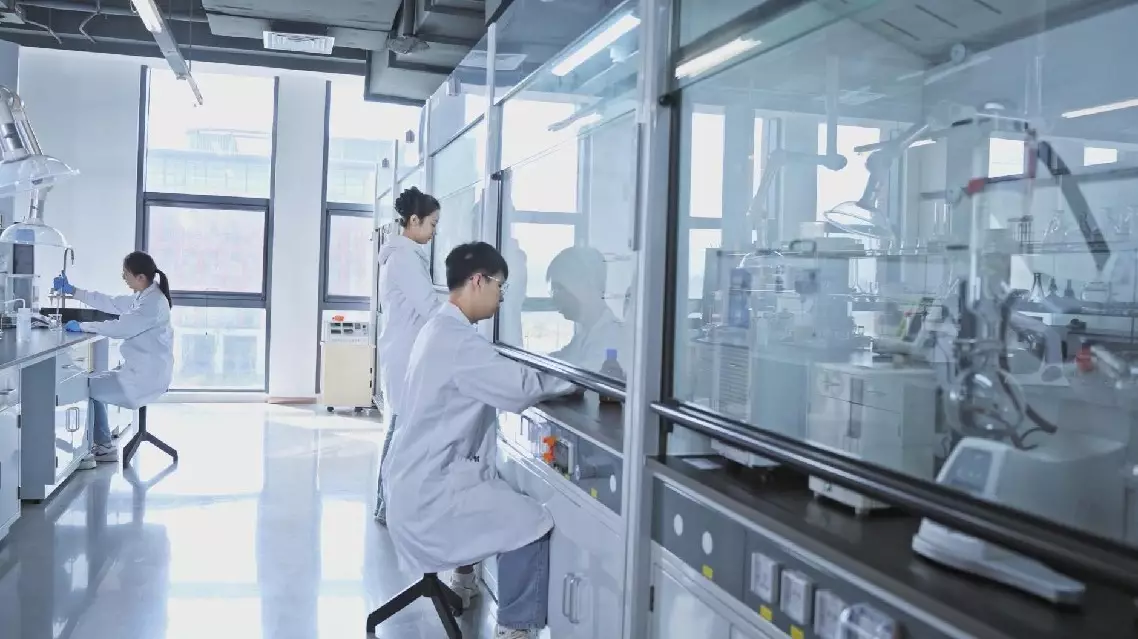
Chinese researchers have developed a new aluminosilicate zeolite, ZMQ-1, which features a unique intersecting meso-microporous channel system that is expected to enhance catalytic processes in the petrochemical industry.

The study, published in Nature on Wednesday, highlights ZMQ-1 as the first aluminosilicate zeolite with interconnected intrinsic 28-ring mesopores. This breakthrough overcomes long-standing challenges related to zeolite pore size limitation, stability, and catalytic efficiency.

Zeolites are crystalline materials renowned for their applications in ion exchange, adsorption, and catalysis. However, their microporous structure limits their use in processing larger molecules. Researchers have addressed this limitation by developing a zeolite with intrinsic mesopores while maintaining stability and acidity.

ZMQ-1 zeolite was developed by a research team at the Qingdao Institute of Bioenergy and Process Technology of the Chinese Academy of Sciences. It has larger holes, allowing large molecules to pass through unimpeded. At the same time, it has strong stability and can stably perform molecular screening even in special environments such as high temperature and high moisture.

According to the researchers, ZMQ-1 makes the chemical production process more efficient and is environmentally friendly. For example, in the process of oil processing, the material can more efficiently convert heavy oil into gasoline and diesel, with a conversion rate of more than 80 percent, far higher than the current average level of 65 percent.

At the same time, the conversion method using this material can also reduce the production of by-products such as coke and waste gas, making the process greener.

Furthermore, in the field of biomass treatment, this type of new material can convert biological waste into chemicals with application value such as diesel and alcohol.  In the fields of fine chemicals and gas storage, it can also save energy and reduce consumption for industrial production, thereby providing new opportunities for promoting the upgrading of industries such as petrochemicals and biomass utilization, and providing important support for the development of green chemistry.
Breakthrough zeolite structure to unleash superior heavy oil cracking efficiency

Breakthrough zeolite structure to unleash superior heavy oil cracking efficiency
Nobel laureate economist Christopher Pissarides said that new technologies, especially artificial intelligence (AI), could be a solution for labor gaps, highlighting areas like elderly care where AI could bring real benefits.

In an exclusive interview with China Global Television Network (CGTN) at the 2026 World Economic Forum, Pissarides, who is also Regius Professor of Economics at the London School of Economics, said countries with aging populations could help solve the "silver challenge" by developing new technologies.

"You are resilient in China, more than some European countries. Now China has what you call 'the silver challenge', so there's a gap in the middle. It's not a big concern actually in my view, because the new technologies could be developed in a way that you don't need so much labor. You could develop new technologies in a way to work together with people, but not requiring as many people to do it, you could manage the demographic transition that way," he said.

This year sees China begin its 15th Five-Year Plan (2026-2030) period and Pissarides said China was well positioned to maximize the opportunities that AI and new technology will bring in the years ahead.

"The key to success actually is to apply AI in a way that is more conducive to economic development, and collaboration between the AI technologies and human labor, human capital. That will enhance the capabilities of human capital. It will become more productive, it will improve the well-being of the workforce, and it would generally give you a high-income country with a high level of life and job satisfaction," he said.

Pissarides said the green transformation is ever more crucial for long-term sustainability, and he applauded China for its keen focus on developing smart, green technology.

Under the theme "A Spirit of Dialogue," the 2026 WEF meeting opened on Monday in Davos and will run through Friday. About 3,000 leaders and experts from around the world are gathering to discuss five pressing global challenges, including enhancing cooperation, unlocking new sources of growth and deploying innovation at scale and responsibly.

Nobel economist says AI could help bridge labor gaps in aging populations

Nobel economist says AI could help bridge labor gaps in aging populations

Recommended Articles