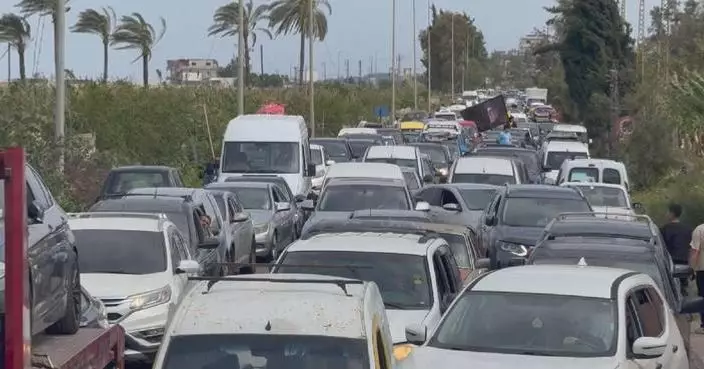
Since its launch 10 years ago, the first phase of the eastern and central routes of China's South-North Water Diversion Project have diverted 76.5 billion cubic meters of water, providing critical relief to the country's drought-prone northern regions.
The project, the largest of its kind in the world, connects major river basins in China, including the Yangtze, Huai, Yellow and Hai rivers, creating a national water grid that optimizes resource allocation.
In Beijing, two out of every three glasses of water a resident drinks or uses come from over a thousand kilometers away. This is because of a massive water diversion project that has not only significantly alleviated the water shortage in the capital city, but also greatly improved its water supply security. And Beijing is not the only city reaping the benefits of this ambitious project.
"The project has effectively improved the allocation of water resources. For instance, in Beijing, groundwater reliance has been significantly reduced due to an increased supply of surface water from the South. Additionally, water quality has also improved, with many regions now enjoying class one and two water, [which is] suitable for drinking and ecosystem health," Wang Yisen, former chief engineer of the project, said recently.
Wang said that the implementation of three guiding principles has ensured the project's sustainability: prioritizing water-saving and pollution control, minimizing the ecological impact, and aligning water transfer plans with social and economic development.
Advanced planning and adaptive management strategies mitigate risks, such as potential downstream impacts on the Yangtze River.
"From the beginning, ecological protection has been a top priority. Measures like pollution control along transfer routes and detailed hydrological studies have ensured minimal environmental disruption. For example, concerns about schistosomiasis transmission were thoroughly addressed, confirming the parasite cannot survive in northern climates," he said.
The South-North Water Diversion Project stands as a testament to China's commitment to balancing development with environmental stewardship.
As the project moves into its next phase, with the western route still in the planning stages, the engineer says challenges posed by global climate change and lessons learned from past experiences will fully be taken into consideration, with the goal of strengthening water security in dry regions across the country.

China's mega water diversion project marks 10 years, alleviating regional water imbalance
Thursday was marked by grief and frustration in southern Türkiye's Kahramanmaras City, where funerals for the school shooting victims took place, and the city came together in mourning.
At least nine people were killed and 13 others wounded in the attack on Wednesday.
The attacker, an eighth-grade student at the same school who later committed suicide, had used a photo of a U.S. mass shooter as his profile picture on social media, according to the police. The father of the gunman - a former police officer whose weapons were used - has been taken into custody.
At the funerals, families clung to coffins during prayers, many of them in tears.
"Sadly, we lost the child of our colleague. We are in indescribable pain. I hope security measures will be in place in schools and that our students can come safely, because right now, we unfortunately don't even have the strength to go to school," said Emre Kurkut, a teacher.
At the house in mourning, Mustafa Kazici grieved over his 11-year-old daughter Suranur. He said she was among the first to be shot.
"Our pain is great. These may sound like familiar words, but they are words that truly reflect this moment and what we are going through," said the father.
Details of the incident have been emerging. As the attack unfolded, some students were seen jumping out of windows on the second floor, while it's been reported that the teacher who was killed died as she shielded her students, saving others. The school is now closed - at least until Monday.
Kutay Doluzengin, a student, said he arrived shortly after the first shots and is still shaken by what he saw.
"I felt like it was a massacre. I was scared. I kept thinking, what if it had been my sibling? What if it had been me? What if it had been my friend? What I would have done," said Doluzengin.
Amid his grief, Kazici also called for stronger security measures.
"There must be a police officer at the entrance of every school for security. Just as you cannot enter shopping malls without going through X-ray screening, I believe the same should be implemented in schools. Children's bags should be checked as well," said Kazici.
The government says it plans to introduce tighter school security, increase inspections, limit access to weapons, and expand psychosocial support.
The incident took place just one day after a school shooting in the Siverek district in southeastern Türkiye's Sanliurfa Province, where a former student at the school injured at least 16 people with a shotgun on campus before taking his own life.
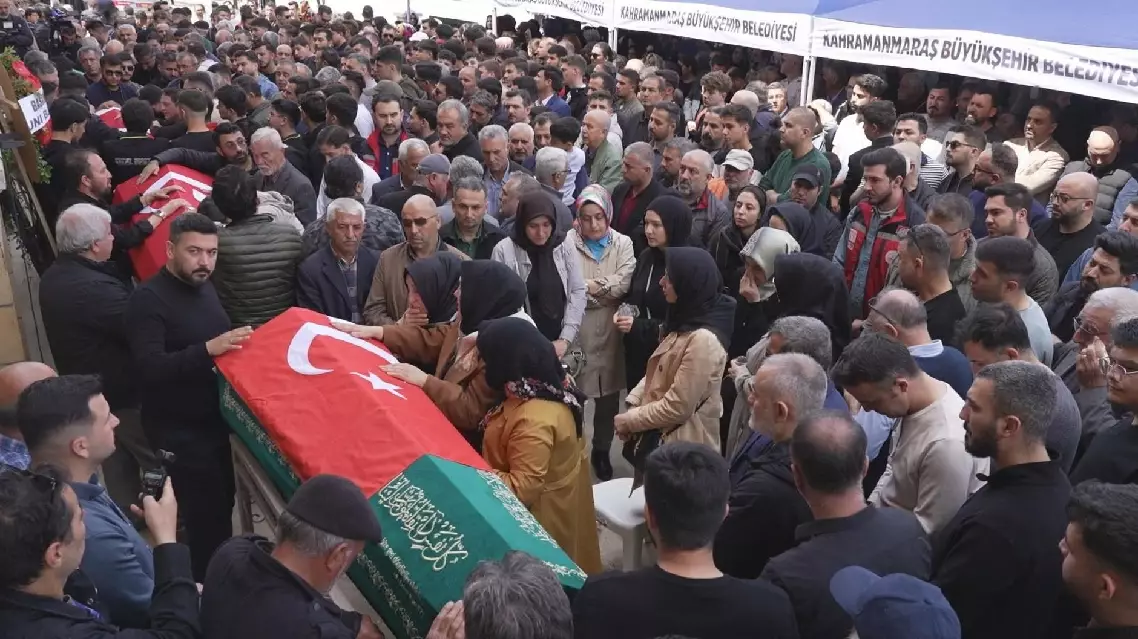
Funeral held for victims of school shooting, as gov't vows to tighten school security