Macao, one of China's two special administrative regions (SARs) on the country's southern coast, is a small but vibrant city where historic charm meets modern energy.
With a land area of just 33.3 square kilometers, it's a place bursting with vitality. While the iconic Ruins of St. Paul's, the bustling Rua do Cunha street and the tempting flavors of pork chop buns and Portuguese custard tarts often grab attention, Macao has so much more to offer.
This city is a treasure trove of historical and cultural heritages, with many centuries-old buildings still standing today to tell tales of the past.
Visitors can step into the serene 16th-century St. Lawrence's Church, explore the 17th-century Mount Fortress with its panoramic views, or admire the enduring elegance of the 18th-century Macau Holy House of Mercy, one of the oldest charitable organizations in the region. Performances at the 19th-century Dom Pedro V Theatre, China's first western-style theater, bring history to life, while the cobblestone streets of the 20th century echo Macao's Portuguese influence.
Macao is a living chronicle of 400 years of Sino-Portuguese cultural fusion. Its Historic Centre, a UNESCO World Heritage Site since 2005, bears testimony to this unique blend.
Yet, Macao is not bound by its past. Today, the city hosts hundreds of international and domestic cultural performances, art exhibitions, and sports events annually, establishing itself as a dynamic hub for global exchange.
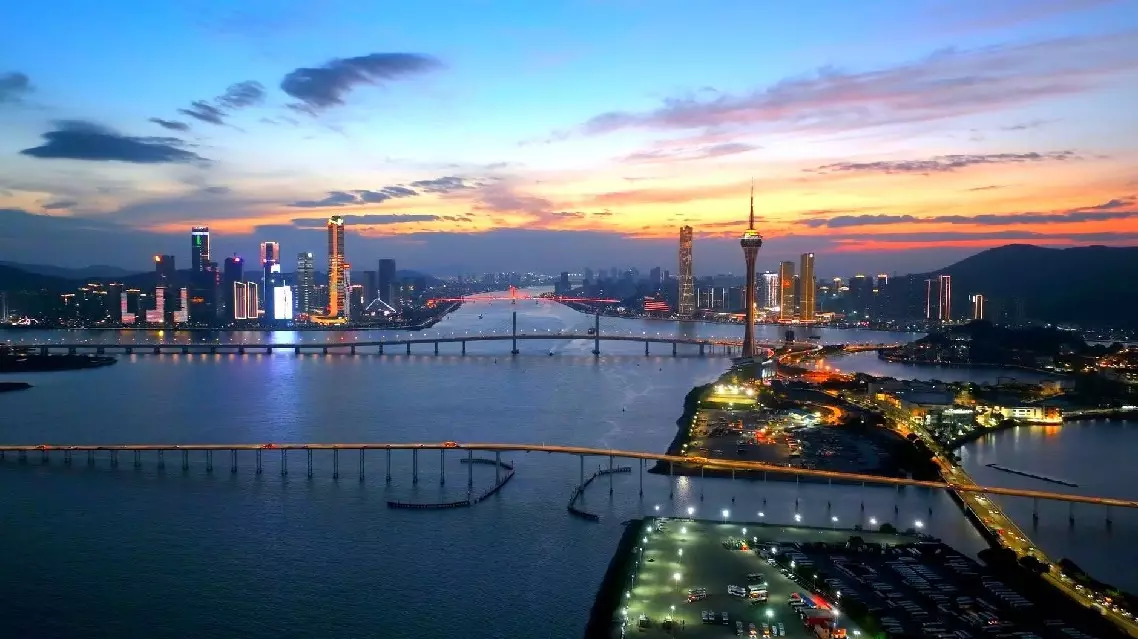
Macao, a dynamic fusion of history and modernity
Multiple civic groups in the Republic of Korea (ROK) gathered on Wednesday in Seoul to call on the Japanese government to face up to its history and offer a sincere apology and remorse.
The civic groups, composed of student representatives and social activists from various organizations, including those advocating for the rights of "comfort women," rallied in front of the embassy of Japan.
Demonstrators said recent moves by Japanese Prime Minister Sanae Takaichi deny Japan's history of aggression and are a sign of the resurgence of militarism.
Since Takaichi took office as prime minister, Japan has embarked on an accelerated path toward military buildup, steadily departing from its exclusively defense-oriented policy.
Recent risky steps -- sharply increasing the defense budget, restructuring the Self-Defense Forces to enhance combat capabilities, deploying long-range missiles with so-called "counterstrike capabilities," as well as relentless efforts to revise the Constitution, the "Three Non-Nuclear Principles" and the three security documents -- all point to a deliberate departure from Japan's postwar pacifist principles and an advance toward remilitarization.
Takaichi, on April 21, sent a ritual "masakaki" tree offering and made a monetary offering to the controversial shrine, which honors 14 convicted Class-A Japanese war criminals from World War II alongside the war dead.
"The Yasukuni Shrine, which honors Class-A Japanese war criminals from World War II (WWII), stands as a symbol of Japanese militarism," said Kim Tae Jung, a civic group member.
"Presenting offerings at a shrine that honors war criminals demonstrates that the Japanese government has shown no remorse for its war crimes and the move is a ruthless trampling on the feelings of war victims," said Han Kyung Hee, another civic group member.
Demonstrators said the international community should be vigilant against Japan as the country seeks to revert to militarism.
"The international community should make it clear that Japanese militarism is threatening stability in Northeast Asia. Only by voicing support for peace rather than strengthening military cooperation can Japan’s ambition of rearmament be contained, and the war be prevented," said Kim.
"Japan has shown no remorse and has not adopted a responsible attitude. On the contrary, it has repeatedly blocked the erection of statues of young women who symbolize 'comfort women.' A country like this now seeks to regain the right to wage war, which undoubtedly poses a grave threat to peace in Northeast Asia," said Han.
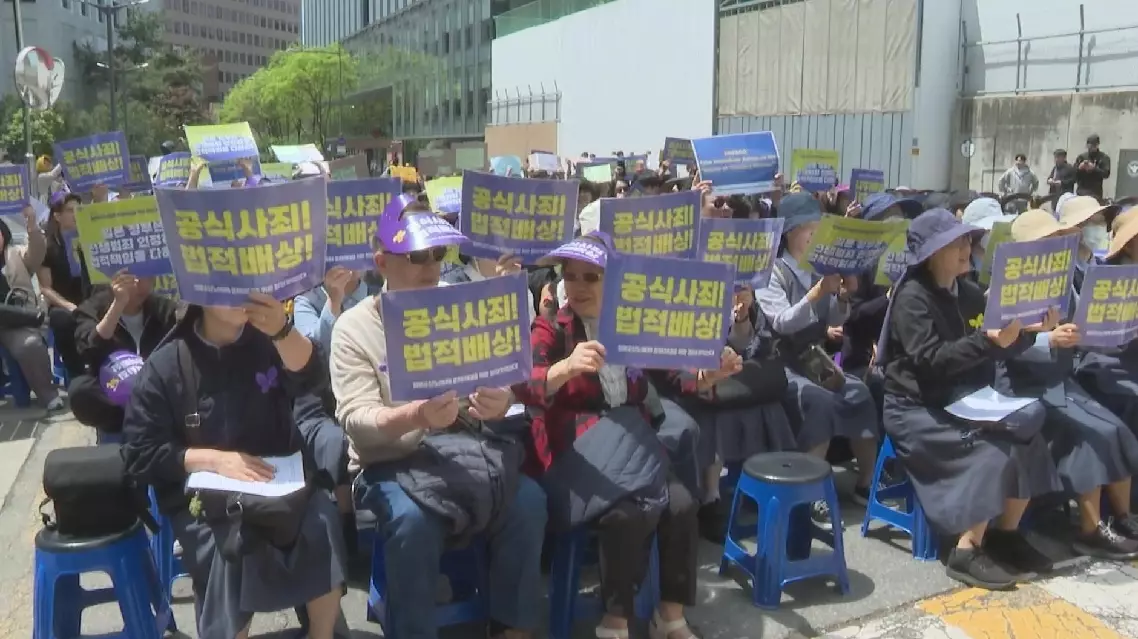
ROK civic groups call on Japanese government to face up to history