
Skip to Content Facebook Feature Image

Ryder Names Chief Operating Officer and New Chief Financial Officer

News

Ryder Names Chief Operating Officer and New Chief Financial Officer
News

News

Ryder Names Chief Operating Officer and New Chief Financial Officer

2024-12-17 05:36 Last Updated At:05:51

MIAMI--(BUSINESS WIRE)--Dec 16, 2024--

Ryder System, Inc. (NYSE: R), a leader in supply chain, dedicated transportation, and fleet management solutions, today announces the appointment of John J. Diez to president and chief operating officer (COO), effective January 1, 2025. In this new role, Mr. Diez will continue to report to Ryder Chairman and Chief Executive Officer Robert E. Sanchez with responsibility for the general management of all business operations of Ryder’s three business segments.

This press release features multimedia. View the full release here: https://www.businesswire.com/news/home/20241216030723/en/

In addition, Cristina Gallo-Aquino, most recently senior vice president, controller, and principal accounting officer since August 2020, has been promoted to succeed Mr. Diez as executive vice president and chief financial officer (CFO), effective January 1, 2025. In this role, Ms. Gallo-Aquino will oversee all of Ryder’s financial management functions, including finance and accounting, treasury, tax, audit, investor relations, and continue to serve as principal accounting officer.

“At Ryder, we have a commitment to talent development at all levels in our organization. This includes providing leadership opportunities in positions that broaden our team’s capabilities through rotational assignments, as well as providing roles of increasing responsibility that contribute to the long-term progress and stability of our company,” says Mr. Sanchez. “These appointments are an example of that commitment. Both executives bring a powerful combination of industry knowledge to their new roles, complemented by a deep understanding of Ryder’s overall business operations and how our business units collaborate.”

During his 22-year tenure at Ryder, Mr. Diez has held a variety of senior business and financial management roles with increasing responsibility. Prior to his current role serving as the company’s executive vice president and chief financial officer since May 2021, he was president of Ryder’s FMS business, leading all areas of global fleet operations, as well as president of the company’s DTS business unit where he led strong revenue growth and improved business returns.

Ms. Gallo-Aquino joined Ryder in 2004 and has extensive financial and accounting experience. Prior to her current role, she served as vice president and chief financial officer for the company’s FMS business unit and vice president and corporate controller.

NOTE: Headshots of Mr. Diez and Ms. Gallo-Aquino are available in the Ryder Newsroom and via BusinessWire.

About Ryder System, Inc.

Ryder System, Inc. (NYSE: R) is a fully integrated port-to-door logistics and transportation company. It provides supply chain, dedicated transportation, and fleet management solutions, including warehousing and distribution, contract manufacturing and packaging, e-commerce fulfillment, last-mile delivery, managed transportation, professional drivers, freight brokerage, nearshoring solutions, full-service leasing, maintenance, commercial truck rental, and used vehicle sales to some of the world’s most-recognized brands. Ryder provides services throughout the United States, Mexico, and Canada. In addition, Ryder manages nearly 250,000 commercial vehicles, services fleets at 760 maintenance locations, and operates nearly 300 warehouses encompassing more than 100 million square feet. Ryder is regularly recognized for its industry-leading practices; technology-driven innovations; corporate responsibility; environmental management; safety, health and security programs; military veteran recruitment initiatives; and the hiring of a diverse workforce. www.ryder.com

Note Regarding Forward-Looking Statements: Certain statements and information included in this news release are “forward-looking statements” within the meaning of the Federal Private Securities Litigation Reform Act of 1995. These forward-looking statements are based on our current plans and expectations and are subject to risks, uncertainties and assumptions. Accordingly, these forward-looking statements should be evaluated with consideration given to the many risks and uncertainties that could cause actual results and events to differ materially from those in the forward-looking statements including those risks set forth in our periodic filings with the Securities and Exchange Commission. New risks emerge from time to time. It is not possible for management to predict all such risk factors or to assess the impact of such risks on our business. Accordingly, we undertake no obligation to publicly update or revise any forward-looking statements, whether as a result of new information, future events, or otherwise.

ryder-org
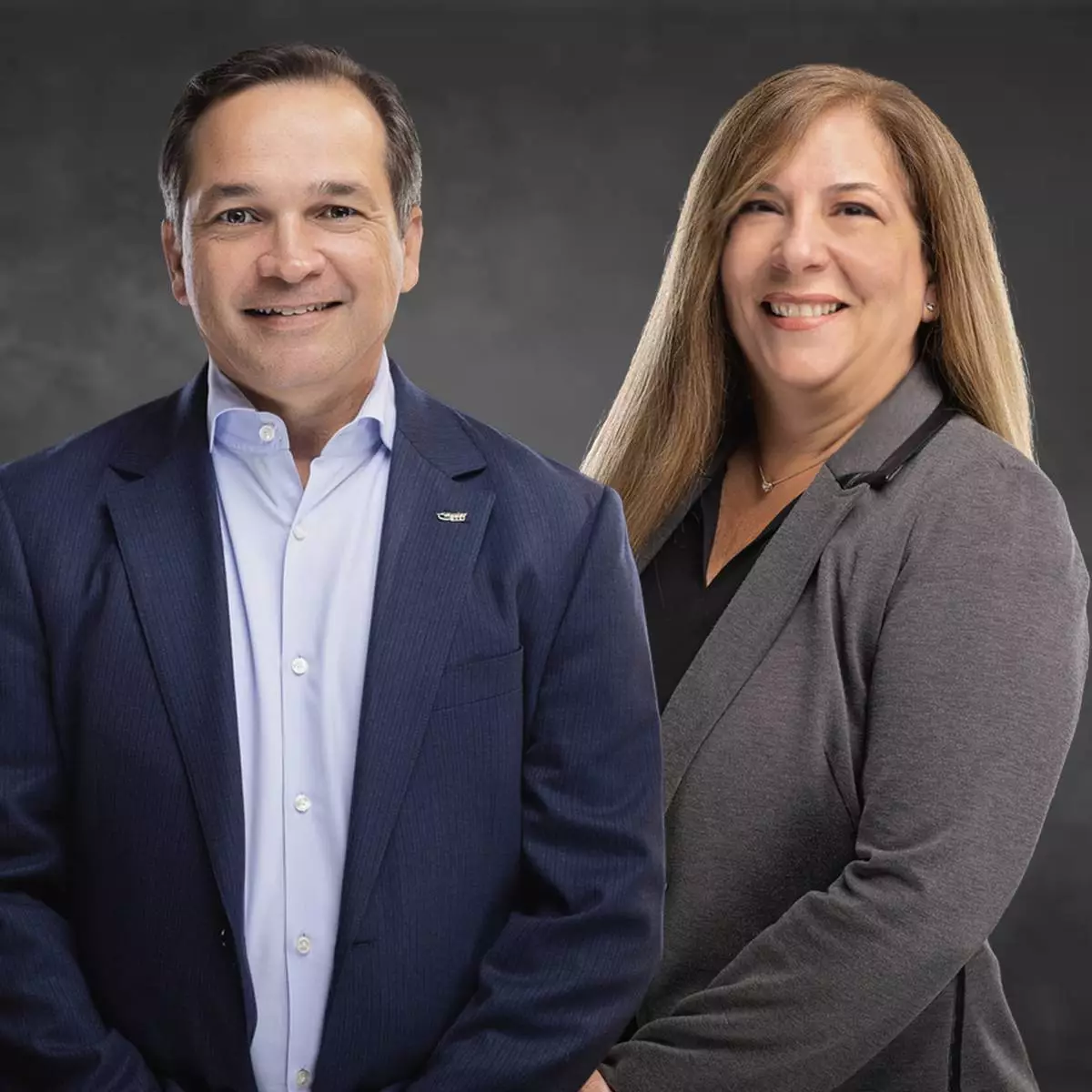
Ryder System, Inc. appoints John J. Diez to its top operations role as president and chief operating officer (COO), effective January 1, 2025. Succeeding Mr. Diez as Ryder’s Executive Vice President and Chief Financial Officer (CFO) is Cristina Gallo-Acquino. (Photo: Business Wire)


Ryder System, Inc. appoints John J. Diez to its top operations role as president and chief operating officer (COO), effective January 1, 2025. Succeeding Mr. Diez as Ryder’s Executive Vice President and Chief Financial Officer (CFO) is Cristina Gallo-Acquino. (Photo: Business Wire)

COPENHAGEN, Denmark (AP) — More than 200 years after being sunk by Adm. Horatio Nelson and the British fleet, a Danish warship has been discovered on the seabed of Copenhagen Harbor by marine archaeologists.

Working in thick sediment and almost zero visibility 15 meters (49 feet) beneath the waves, divers are working against the clock to unearth the 19th-century wreck of the Dannebroge before it becomes a construction site in a new housing district being built off the Danish coast.

Denmark’s Viking Ship Museum, which is leading the monthslong underwater excavations, announced its findings on Thursday, 225 years to the day since the Battle of Copenhagen in 1801.

“It’s a big part of the Danish national feeling,” said Morten Johansen, the museum’s head of maritime archaeology.

A great deal has been written about the battle “by very enthusiastic spectators, but we actually don’t know how it was to be onboard a ship being shot to pieces by English warships and some of that story we can probably learn from seeing the wreck, Johansen said.

In the Battle of Copenhagen, Nelson and the British fleet attacked and defeated Denmark’s navy as it formed a protective blockade outside the harbor.

Thousands were killed and wounded during the brutal hourslong naval clash, considered one of Nelson’s “great battles.” The intention was to force Denmark out of an alliance of Northern European powers, including Russia, Prussia and Sweden.

At the center of the fighting was the Danish flagship, the Dannebroge, commanded by Commodore Olfert Fischer.

The 48-meter (157-foot) Dannebroge was Nelson’s main target. Cannon fire tore through its upper deck before incendiary shells sparked a fire aboard.

“(It was) a nightmare to be on board one of these ships,” Johansen said. “When a cannonball hits a ship, it’s not the cannonball that does the most damage to the crew, it’s wooden splinters flying everywhere, very much like grenade debris.”

The battle also is believed to have inspired the phrase “to turn a blind eye.” After deciding to ignore a superior’s signal, Nelson, who had lost sight in his right eye, reportedly remarked: “I have only one eye, I have a right to be blind sometimes.”

Nelson eventually offered a truce and a ceasefire was later agreed with Denmark’s Crown Prince Frederik.

The stricken Dannebroge slowly drifted northward and exploded. Records say the sound created a deafening roar across Copenhagen.

Marine archaeologists have discovered two cannons, uniforms, insignia, shoes, bottles and even part of a sailor’s lower jaw, perhaps one of the 19 unaccounted-for crew members who likely lost their lives that day.

The dig site will soon be enveloped by construction work for Lynetteholm, a megaproject to build a new housing district in the middle of Copenhagen Harbor that is expected to be completed by 2070.

Marine archaeologists began surveying the area late last year, targeting a spot thought to match the flagship’s final position.

Experts say the sizes of the wooden parts found match old drawings. Dendrochronological dating, the method of using tree rings to establish the age of wood, match the year the ship was built. They also say the darkened dig site is full of cannonballs, a hazard for divers navigating waters darkened by clouds of silt stirred up from the seabed.

“Sometimes you can’t see anything, and then you really have to just feel your way, look with your fingers instead of with your eyes,” diver and maritime archaeologist Marie Jonsson said.

Chronicled in books and painted on canvases, the 1801 battle is deeply embedded in Denmark’s national story.

Archaeologists hope their discoveries may help reexamine the event that shaped the Scandinavian country and perhaps uncover personal stories of those who went into battle on that day 225 years ago.

“There are bottles, there are ceramics, and even pieces of basketry,” Jonsson said. “You get closer to the people onboard.”

Morten Johansen, head of maritime archaeology at Denmark's Viking Ship Museum, shows part of a human lower jawbone recovered from the wreck of Danish flagship "Dannebroge" that sank during the Battle of Copenhagen in 1801, in Copenhagen, Denmark, Tuesday, March 31, 2026. (AP Photo/James Brooks)

Morten Johansen, head of maritime archaeology at Denmark's Viking Ship Museum, shows part of a human lower jawbone recovered from the wreck of Danish flagship "Dannebroge" that sank during the Battle of Copenhagen in 1801, in Copenhagen, Denmark, Tuesday, March 31, 2026. (AP Photo/James Brooks)

Archaeologists sail with boat through the harbor in Copenhagen, Denmark, Tuesday, March 31, 2026. (AP Photo/James Brooks)

Archaeologists sail with boat through the harbor in Copenhagen, Denmark, Tuesday, March 31, 2026. (AP Photo/James Brooks)

An archaeologist points to a computer screen, showing a map of the wreck of Danish flagship "Dannebroge" that sank during the Battle of Copenhagen in 1801. in Copenhagen, Denmark, Tuesday, March 31, 2026. (AP Photo/James Brooks)

An archaeologist points to a computer screen, showing a map of the wreck of Danish flagship "Dannebroge" that sank during the Battle of Copenhagen in 1801. in Copenhagen, Denmark, Tuesday, March 31, 2026. (AP Photo/James Brooks)

Morten Johansen, head of maritime archaeology at Denmark's Viking Ship Museum, shows a metal insignia recovered from the wreck of Danish flagship "Dannebroge" that sank during the Battle of Copenhagen in 1801, in Copenhagen, Denmark, Tuesday, March 31, 2026. (AP Photo/James Brooks)

Morten Johansen, head of maritime archaeology at Denmark's Viking Ship Museum, shows a metal insignia recovered from the wreck of Danish flagship "Dannebroge" that sank during the Battle of Copenhagen in 1801, in Copenhagen, Denmark, Tuesday, March 31, 2026. (AP Photo/James Brooks)

Morten Johansen, head of maritime archaeology at Denmark's Viking Ship Museum, shows a metal insignia recovered from the wreck of Danish flagship "Dannebroge" that sank during the Battle of Copenhagen in 1801, in Copenhagen, Denmark, Tuesday, March 31, 2026. (AP Photo/James Brooks)

Morten Johansen, head of maritime archaeology at Denmark's Viking Ship Museum, shows a metal insignia recovered from the wreck of Danish flagship "Dannebroge" that sank during the Battle of Copenhagen in 1801, in Copenhagen, Denmark, Tuesday, March 31, 2026. (AP Photo/James Brooks)

Recommended Articles