A senior Russian general was killed Tuesday by a bomb hidden in a scooter outside his apartment building in Moscow, a day after Ukraine’s security service leveled criminal charges against him. A Ukrainian official said the service carried out the attack.
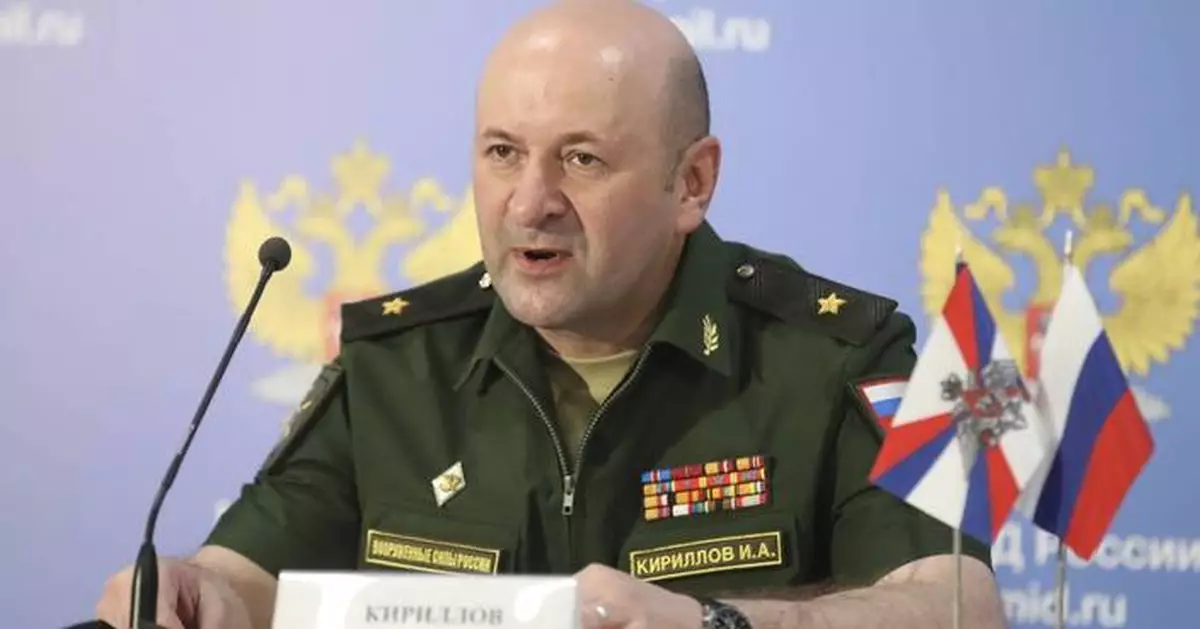
Lt. Gen. Igor Kirillov, the chief of the military’s nuclear, biological and chemical protection forces, was killed as he left for his office. Kirillov’s assistant also died in the attack.
Click to Gallery
EDS NOTE: GRAPHIC CONTENT - Investigators work at the place where Lt. General Igor Kirillov, the head of Russia's Nuclear, Biological, and Chemical Defence Forces and his assistant Ilya Polikarpov were killed by an explosive device planted close to a residential apartment's block in Moscow, Russia, Tuesday, Dec. 17, 2024. (AP Photo)
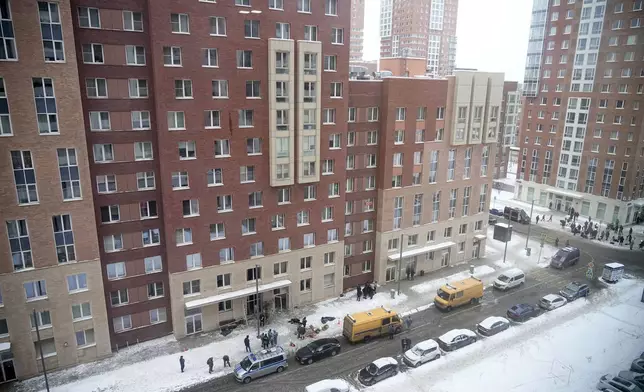
Investigators work at the place where Lt. General Igor Kirillov, the head of Russia's Nuclear, Biological, and Chemical Defence Forces and his assistantIlya Polikarpov were killed by an explosive device planted close to a residential apartment's block in Moscow, Russia, Tuesday, Dec. 17, 2024. (AP Photo)
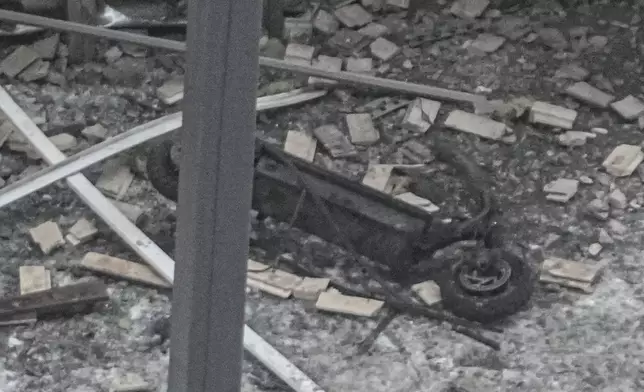
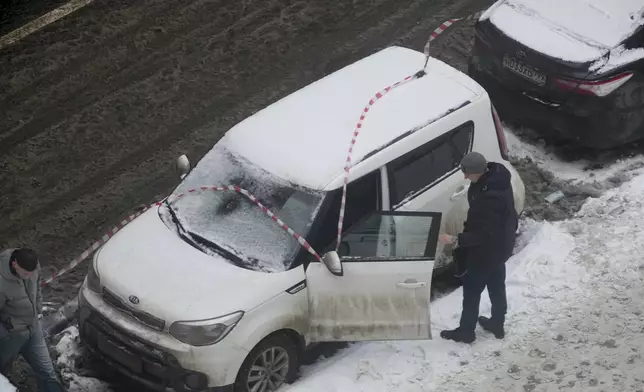
Investigators work near a scooter at the place where Lt. General Igor Kirillov, the head of Russia's Nuclear, Biological, and Chemical Defence Forces and his assistant Ilya Polikarpov were killed by an explosive device planted close to a residential apartment's block in Moscow, Russia, Tuesday, Dec. 17, 2024. (AP Photo)
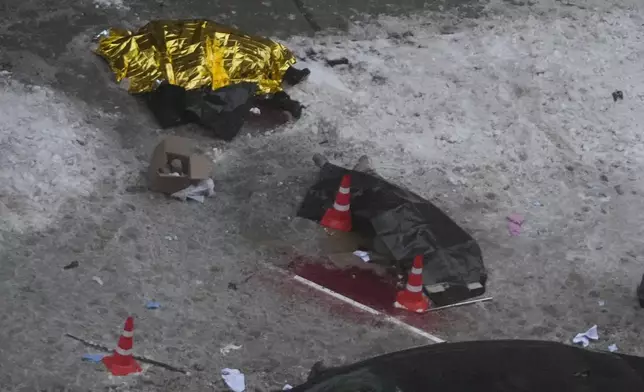
A view of the place where Lt. General Igor Kirillov, the head of Russia's Nuclear, Biological, and Chemical Defence Forces and his assistantIlya Polikarpov were killed by an explosive device planted close to a residential apartment's block in Moscow, Russia, Tuesday, Dec. 17, 2024. (AP Photo)
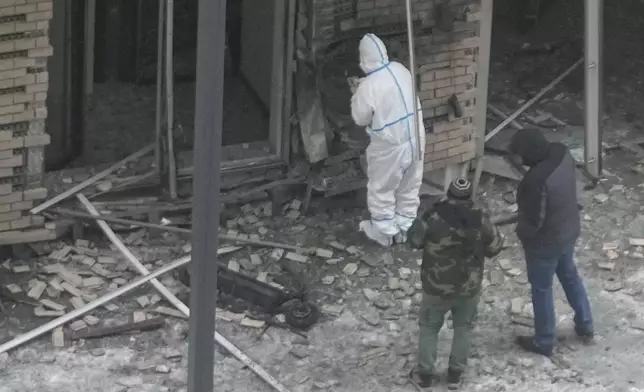
Investigators work near a scooter at the place where Lt. General Igor Kirillov, the head of Russia's Nuclear, Biological, and Chemical Defence Forces and his assistant Ilya Polikarpov were killed by an explosive device planted close to a residential apartment's block in Moscow, Russia, Tuesday, Dec. 17, 2024. (AP Photo)
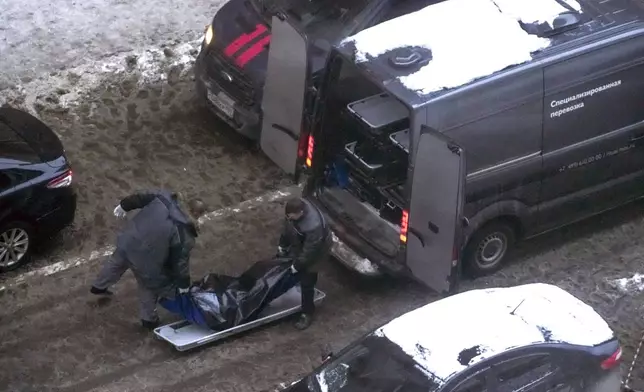
Workers load a body of Lt. General Igor Kirillov, the head of Russia's Nuclear, Biological, and Chemical Defence Forces into a bus after he and his assistant Ilya Polikarpov were killed by an explosive device planted close to a residential apartment's block in Moscow, Russia, Tuesday, Dec. 17, 2024. (AP Photo)
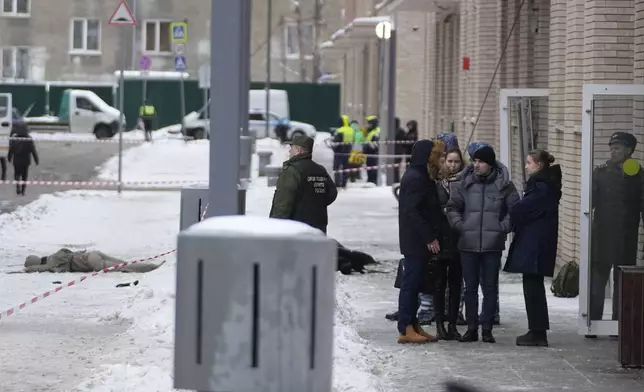
Investigators work at the place where Lt. General Igor Kirillov, the head of Russia's Nuclear, Biological, and Chemical Defence Forces and his assistant, seen at left, were killed by an explosive device planted close to a residential apartment's block in Moscow, Russia, Tuesday, Dec. 17, 2024. (AP Photo)
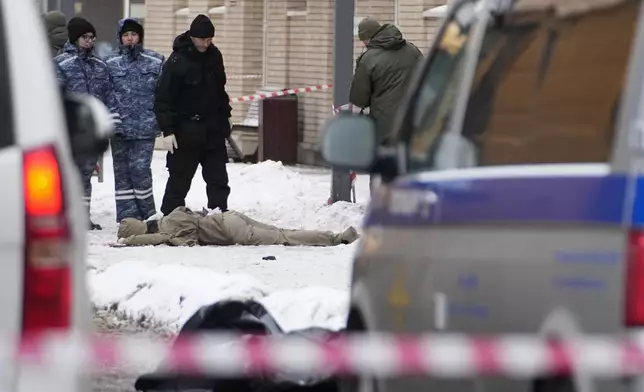
Investigators work at the place where Lt. General Igor Kirillov, the head of Russia's Nuclear, Biological, and Chemical Defence Forces and his assistant, seen at lower center, were killed by an explosive device planted close to a residential apartment's block in Moscow, Russia, Tuesday, Dec. 17, 2024. (AP Photo)
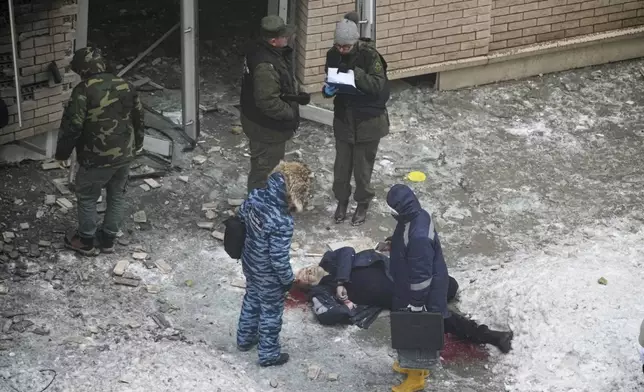
EDS NOTE: GRAPHIC CONTENT - Investigators stand near the body of Lt. General Igor Kirillov, the head of Russia's Nuclear, Biological, and Chemical Defence Forces after he and his assistant were killed by an explosive device planted close to a residential apartment's block in Moscow, Russia, Tuesday, Dec. 17, 2024. (AP Photo)
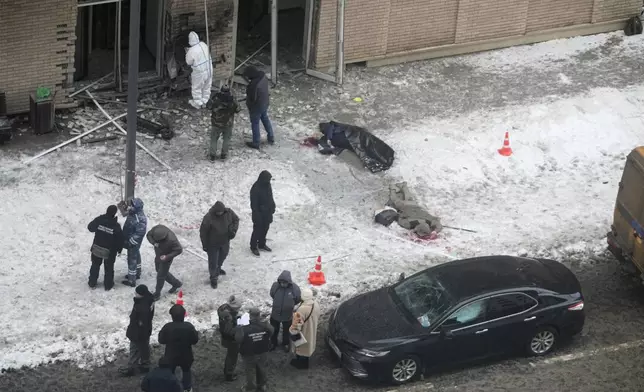
EDS NOTE: GRAPHIC CONTENT - Investigators work at the place where Lt. General Igor Kirillov, center, the head of Russia's Nuclear, Biological, and Chemical Defence Forces and his assistant, right, were killed by an explosive device planted close to a residential apartment's block in Moscow, Russia, Tuesday, Dec. 17, 2024. (AP Photo)
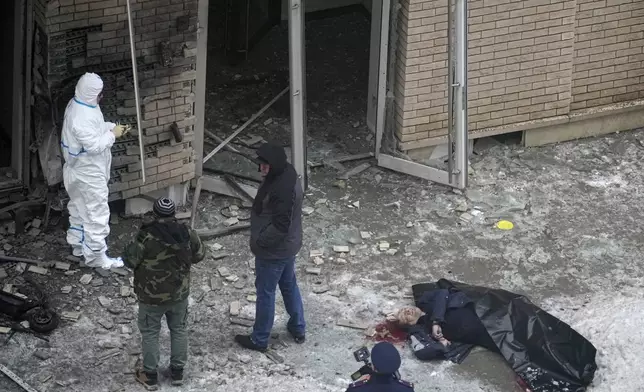
EDS NOTE: GRAPHIC CONTENT - Investigators work at the place where Lt. General Igor Kirillov, right, the head of Russia's Nuclear, Biological, and Chemical Defence Forces and his assistant were killed by an explosive device planted close to a residential apartment's block in Moscow, Russia, Tuesday, Dec. 17, 2024. (AP Photo)
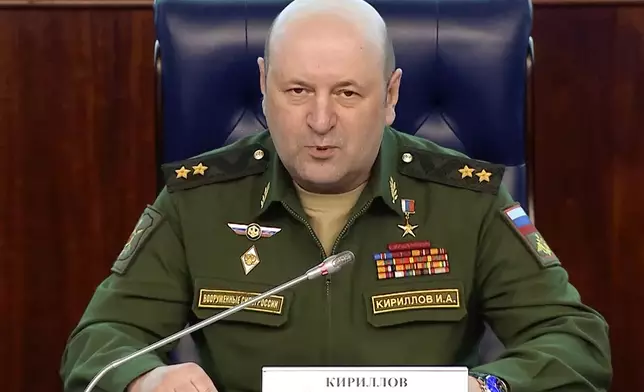
FILE - In this photo taken from video released by Russian Defense Ministry Press Service on Feb. 28, 2023, the head of the radiation, chemical and biological defense troops of the Russian Armed Forces Lt. Gen. Igor Kirillov speaks during a briefing in Moscow, Russia. (Russian Defense Ministry Press Service via AP, File)
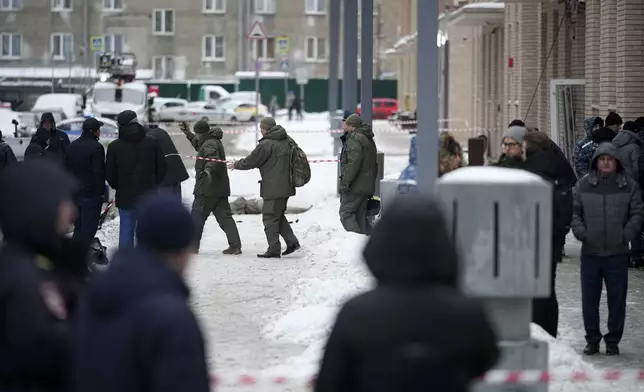
Investigators work at the place where Lt. General Igor Kirillov, the head of Russia's Nuclear, Biological, and Chemical Defence Forces was killed by an explosive device planted close to a residential apartment's block in Moscow, Russia, Tuesday, Dec. 17, 2024. (AP Photo)
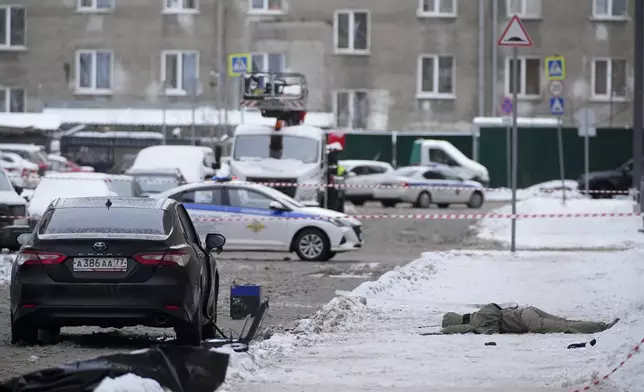
A body lies at the place where Lt. General Igor Kirillov, the head of Russia's Nuclear, Biological, and Chemical Defence Forces was killed by an explosive device planted close to a residential apartment's block in Moscow, Russia, Tuesday, Dec. 17, 2024. (AP Photo)
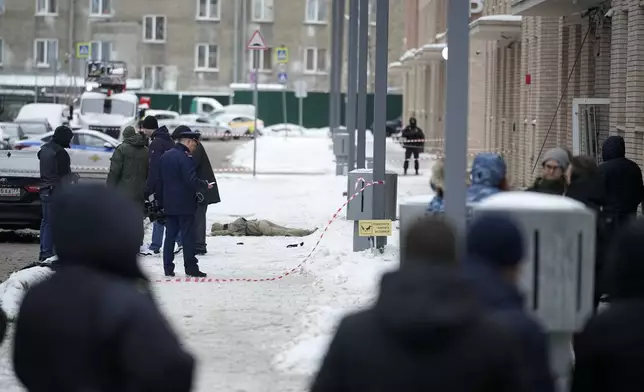
Investigates work at the place where Lt. General Igor Kirillov, the head of Russia's Nuclear, Biological, and Chemical Defence Forces was killed by an explosive device planted close to a residential apartment's block in Moscow, Russia, Tuesday, Dec. 17, 2024. (AP Photo)
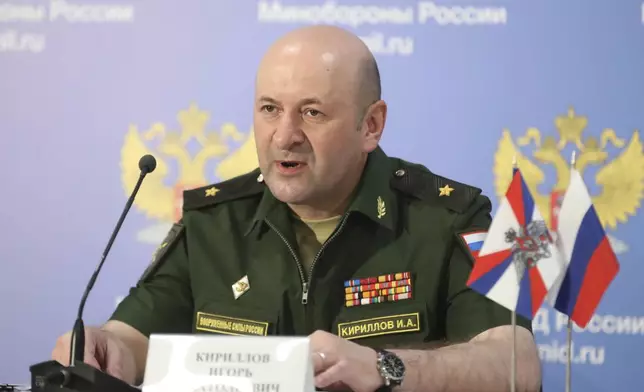
FILE - Maj. Gen. Igor Kirillov, the chief of the Russian military's radiation, chemical and biological protection unit, attends a briefing in Kubinka Patriot park, outside Moscow, Russia, on June 22, 2018. (AP Photo, File)
Kirillov, 54, was under sanctions from several countries, including the U.K. and Canada, for his actions in Moscow’s war in Ukraine. On Monday, Ukraine’s Security Service, or SBU, opened a criminal investigation against him, accusing him of directing the use of banned chemical weapons.
An official with the SBU said the agency was behind the attack. The official, who spoke on condition of anonymity because they were not authorized to release the information, described Kirillov as a “war criminal and an entirely legitimate target.”
The SBU has said it recorded more than 4,800 occasions when Russia used chemical weapons on the battlefield since its full-scale invasion in February 2022. In May, the U.S. State Department said that it had recorded the use of chloropicrin, a poison gas first deployed in World War I, against Ukrainian troops.
Russia has denied using any chemical weapons in Ukraine and, in turn, has accused Kyiv of using toxic agents in combat.
Kirillov, who took his current job in 2017, was one of the most high-profile figures to level those accusations. He held numerous briefings to accuse the Ukrainian military of using toxic agents and planning to launch attacks with radioactive substances — claims that Ukraine and its Western allies rejected as propaganda.
The bomb used in Tuesday's attack was triggered remotely, according to Russian news reports. Images from the scene showed shattered windows and scorched brickwork.
The SBU official provided video that they said was of the bombing. It shows two men leaving a building shortly before a blast fills the frame.
Russia’s top state investigative agency said it's looking into Kirillov’s death as a case of terrorism, and officials in Moscow vowed to punish Ukraine.
Dmitry Medvedev, deputy head of Russia’s Security Council chaired by President Vladimir Putin, described the attack as an attempt by Kyiv to distract public attention from its military failures and vowed that its “senior military-political leadership will face inevitable retribution.”
Some Russian military bloggers and hawkish commentators made unsubstantiated claims that the U.S. could have been involved in Kirillov's killing.
Asked about Kirillov’s death, U.S. State Department spokesman Matthew Miller told reporters Tuesday: “The United States was not aware of it in advance and was not involved.”
Speaking on the sidelines of a summit in Estonia, Sweden’s Prime Minister Ulf Kristersson said he did not have details of the attack but told The Associated Press that it would be understandable for the Ukrainians "to do everything in their power to hit back.”
In the past year, Russia has been on the front foot in the war, grinding deeper into the Donetsk region of eastern Ukraine despite heavy losses. Ukraine tried to change the dynamic with an incursion into Russia's Kursk region, but it has continued to slowly lose ground on its own territory.
Since Russia invaded, several prominent figures have been killed in targeted attacks believed to have been carried out by Ukraine.
Darya Dugina, a commentator on Russian TV channels and the daughter of Kremlin-linked nationalist ideologue Alexander Dugin, died in a 2022 car bombing that investigators suspected was aimed at her father.
Vladlen Tatarsky, a popular military blogger, died in April 2023, when a statuette given to him at a party in St. Petersburg exploded. A Russian woman, who said she presented the figurine on orders of a contact in Ukraine, was convicted and sentenced to 27 years in prison.
In December 2023, Illia Kyva, a former pro-Moscow Ukrainian lawmaker who fled to Russia, was shot and killed near Moscow. The Ukrainian military intelligence lauded the killing, warning that other “traitors of Ukraine” would share the same fate.
On Dec. 9, a bomb planted under a car in the Russian-occupied Ukrainian city of Donetsk killed Sergei Yevsyukov, the former head of the Olenivka Prison where dozens of Ukrainian prisoners of war died in a missile strike in July 2022. One other person was injured in the blast. Russian authorities said they detained a suspect in the attack.
Associated Press writer Illia Novikov contributed from Kyiv, Ukraine.
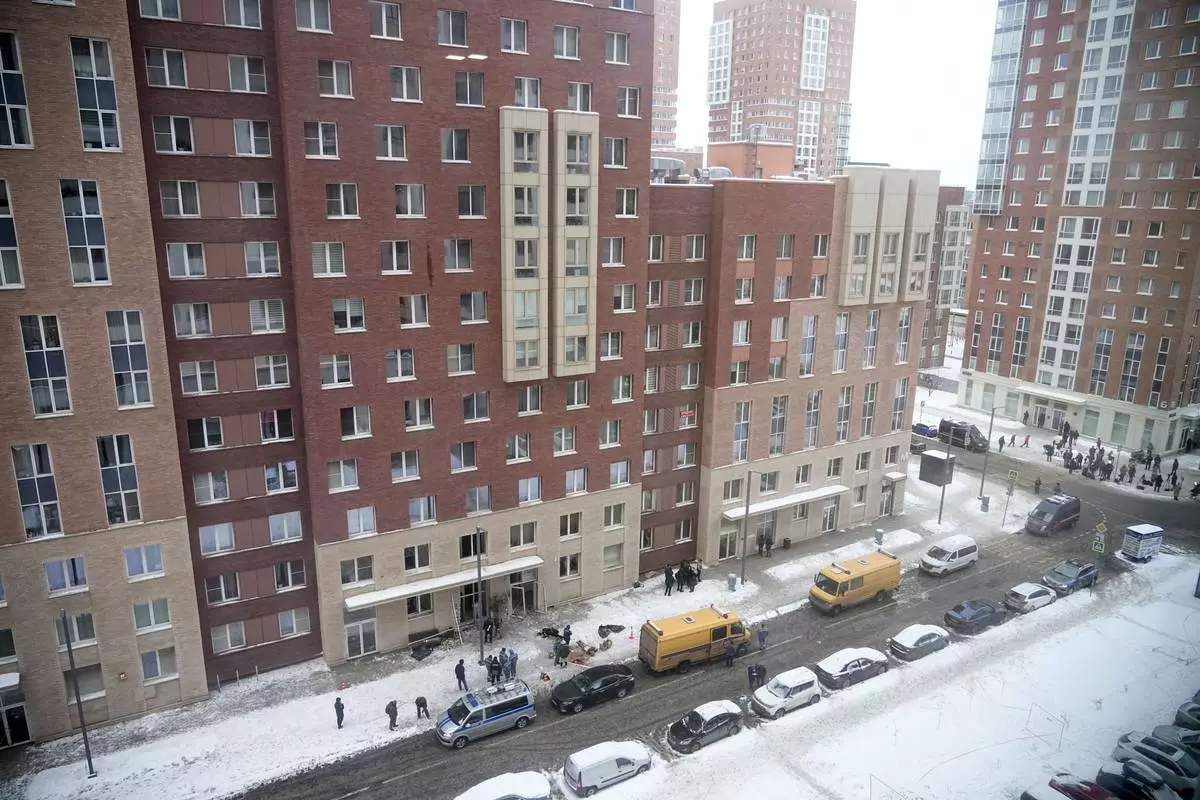
EDS NOTE: GRAPHIC CONTENT - Investigators work at the place where Lt. General Igor Kirillov, the head of Russia's Nuclear, Biological, and Chemical Defence Forces and his assistant Ilya Polikarpov were killed by an explosive device planted close to a residential apartment's block in Moscow, Russia, Tuesday, Dec. 17, 2024. (AP Photo)
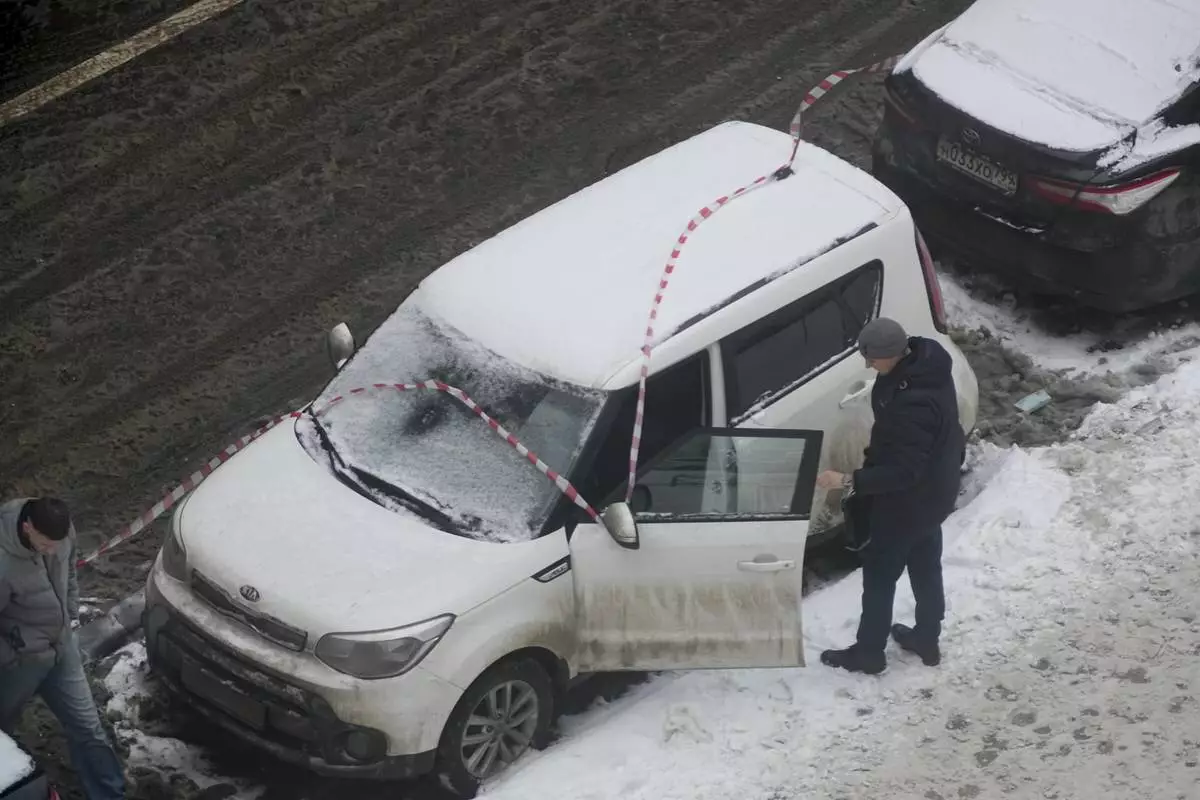
Investigators work at the place where Lt. General Igor Kirillov, the head of Russia's Nuclear, Biological, and Chemical Defence Forces and his assistantIlya Polikarpov were killed by an explosive device planted close to a residential apartment's block in Moscow, Russia, Tuesday, Dec. 17, 2024. (AP Photo)
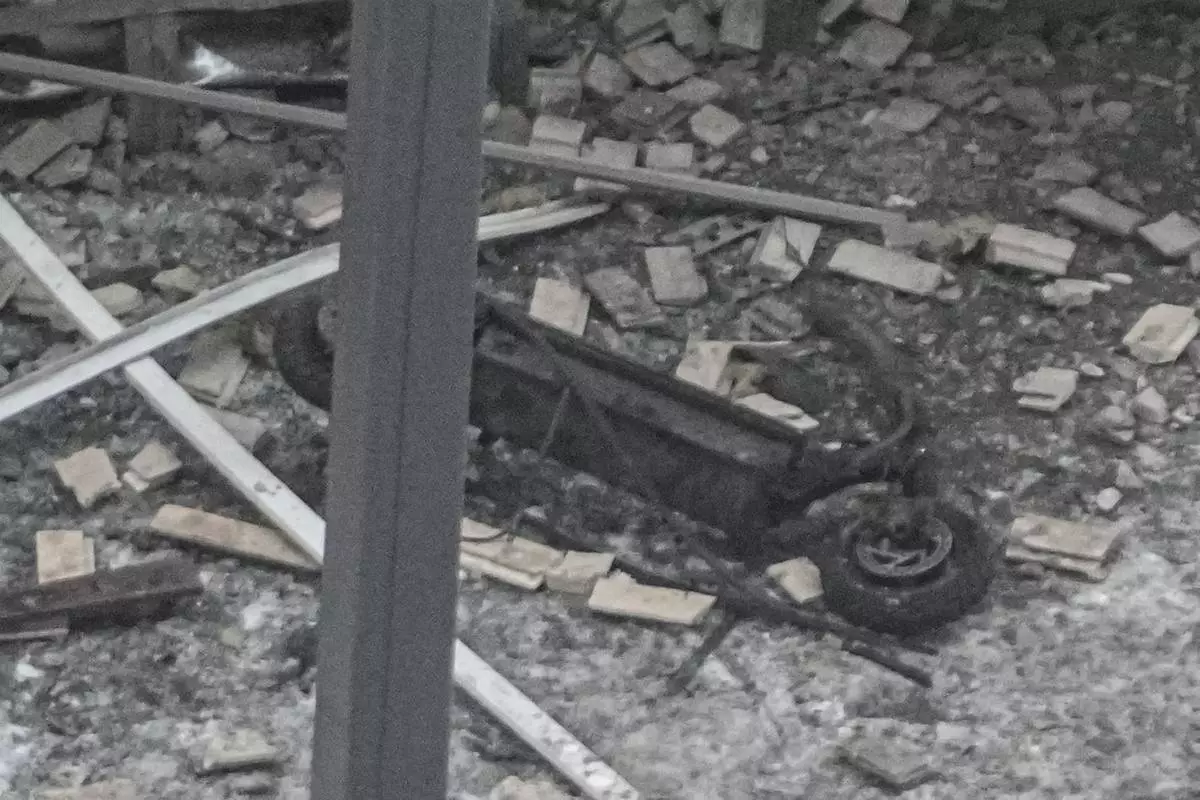
Investigators work near a scooter at the place where Lt. General Igor Kirillov, the head of Russia's Nuclear, Biological, and Chemical Defence Forces and his assistant Ilya Polikarpov were killed by an explosive device planted close to a residential apartment's block in Moscow, Russia, Tuesday, Dec. 17, 2024. (AP Photo)
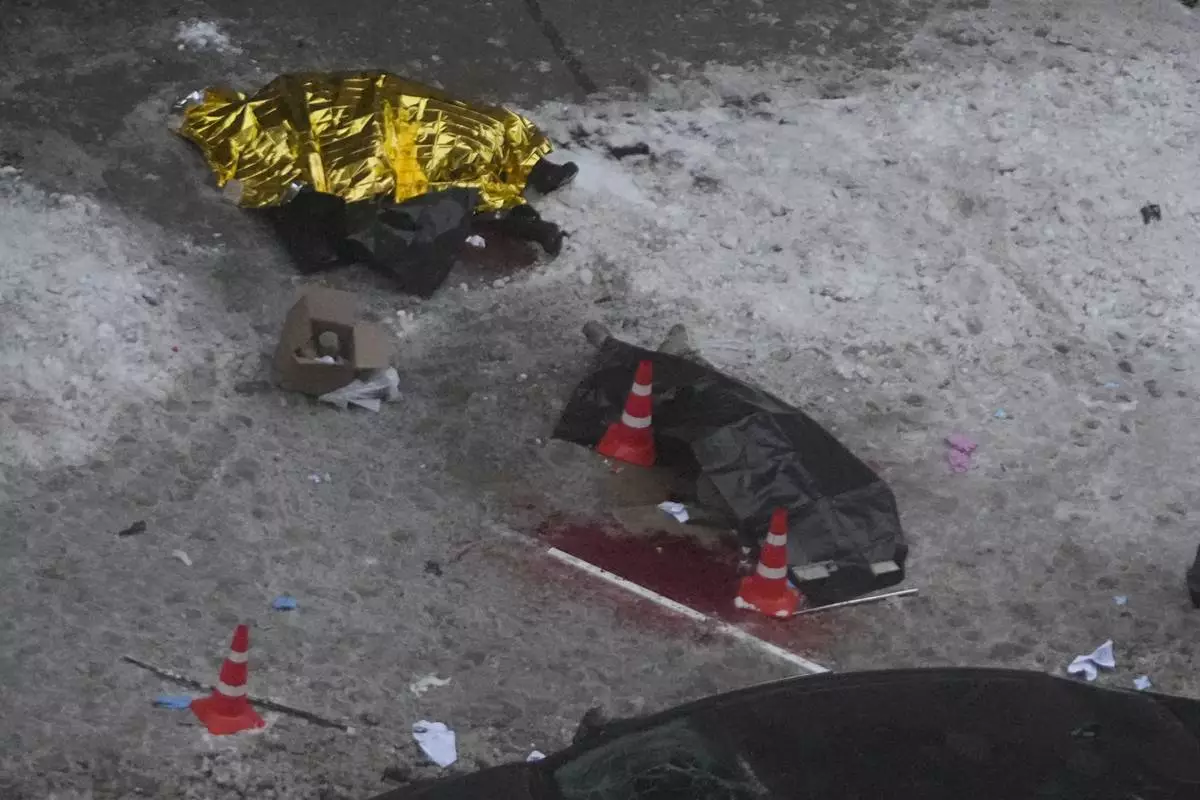
A view of the place where Lt. General Igor Kirillov, the head of Russia's Nuclear, Biological, and Chemical Defence Forces and his assistantIlya Polikarpov were killed by an explosive device planted close to a residential apartment's block in Moscow, Russia, Tuesday, Dec. 17, 2024. (AP Photo)
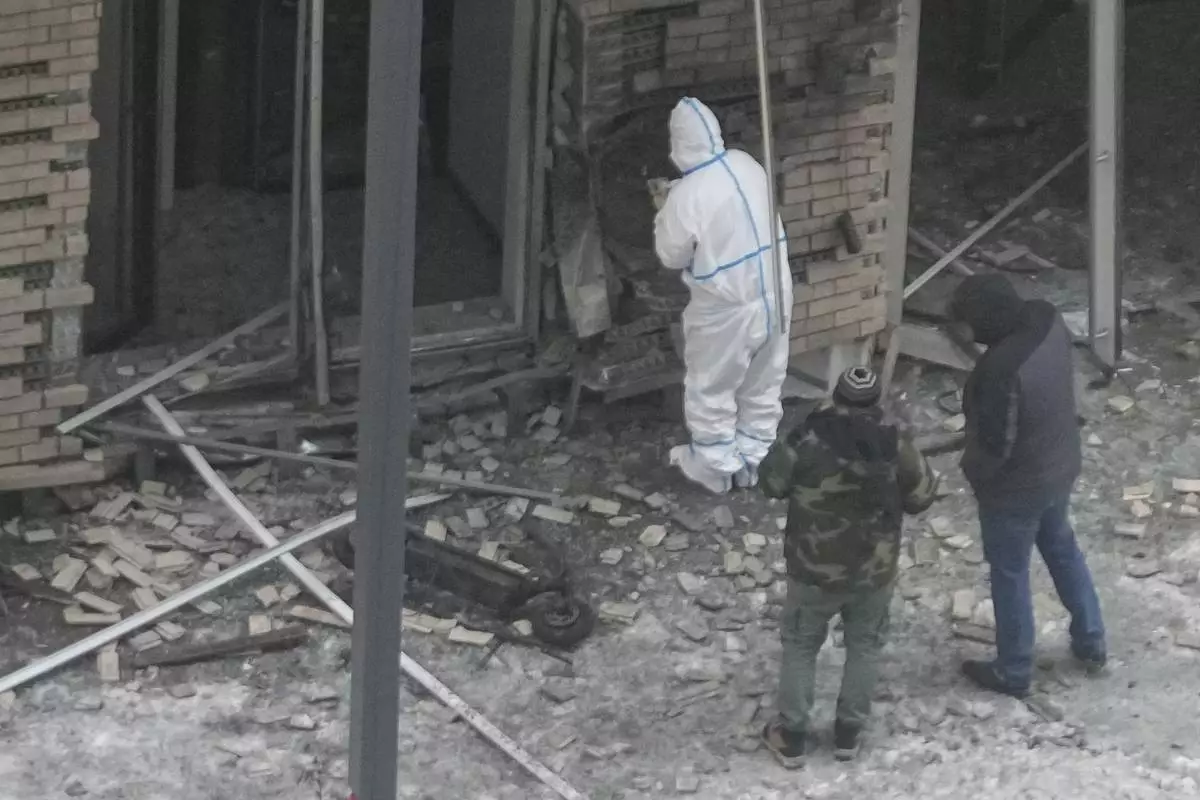
Investigators work near a scooter at the place where Lt. General Igor Kirillov, the head of Russia's Nuclear, Biological, and Chemical Defence Forces and his assistant Ilya Polikarpov were killed by an explosive device planted close to a residential apartment's block in Moscow, Russia, Tuesday, Dec. 17, 2024. (AP Photo)
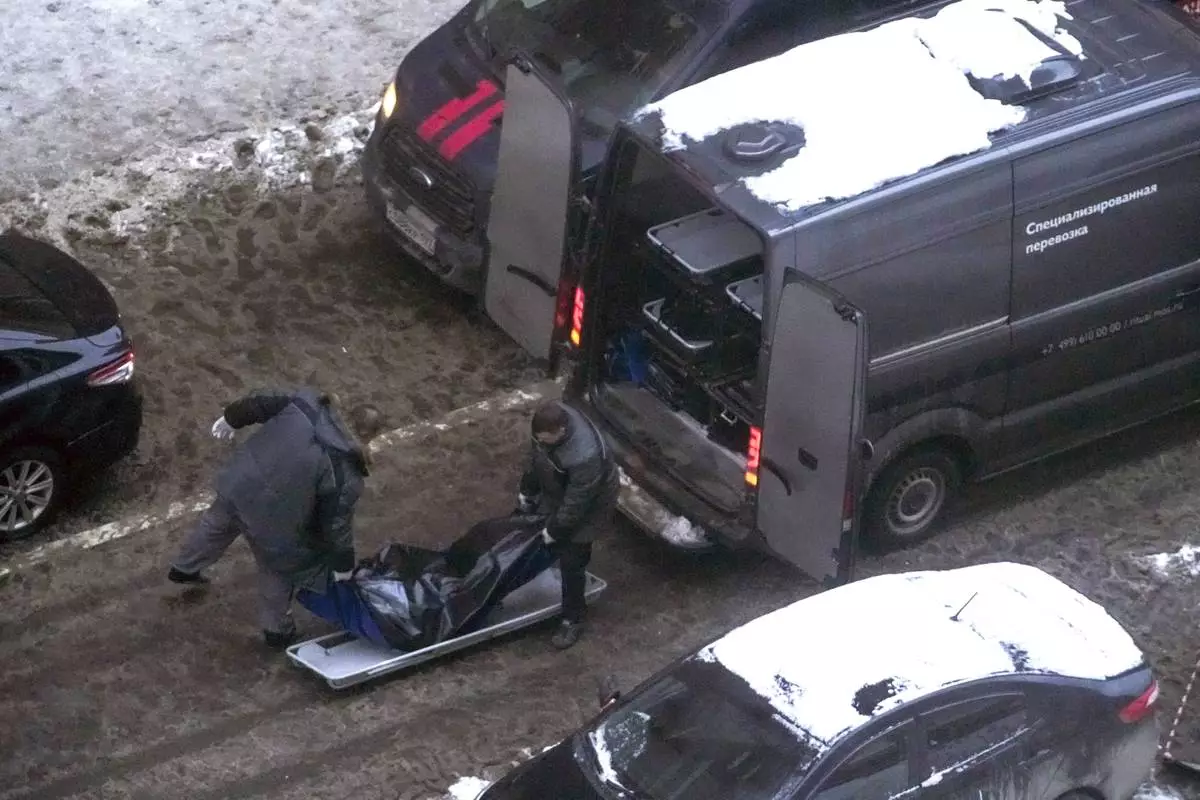
Workers load a body of Lt. General Igor Kirillov, the head of Russia's Nuclear, Biological, and Chemical Defence Forces into a bus after he and his assistant Ilya Polikarpov were killed by an explosive device planted close to a residential apartment's block in Moscow, Russia, Tuesday, Dec. 17, 2024. (AP Photo)
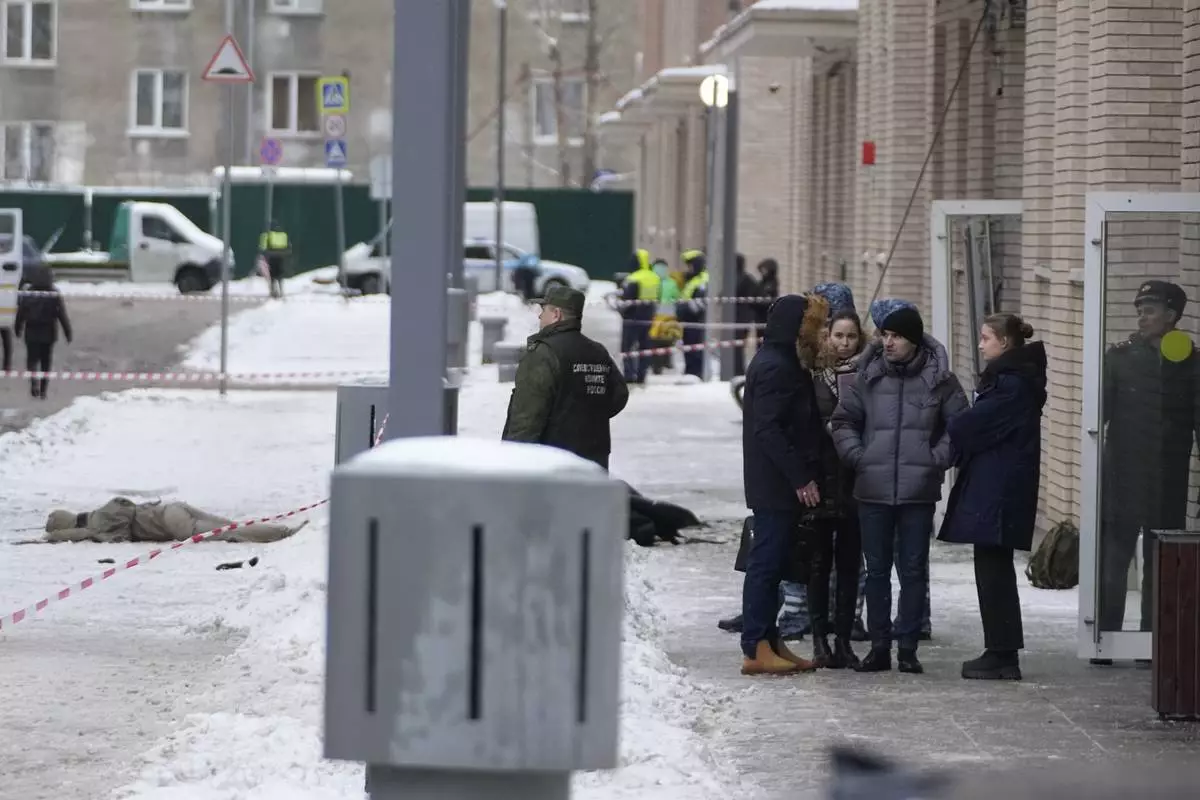
Investigators work at the place where Lt. General Igor Kirillov, the head of Russia's Nuclear, Biological, and Chemical Defence Forces and his assistant, seen at left, were killed by an explosive device planted close to a residential apartment's block in Moscow, Russia, Tuesday, Dec. 17, 2024. (AP Photo)
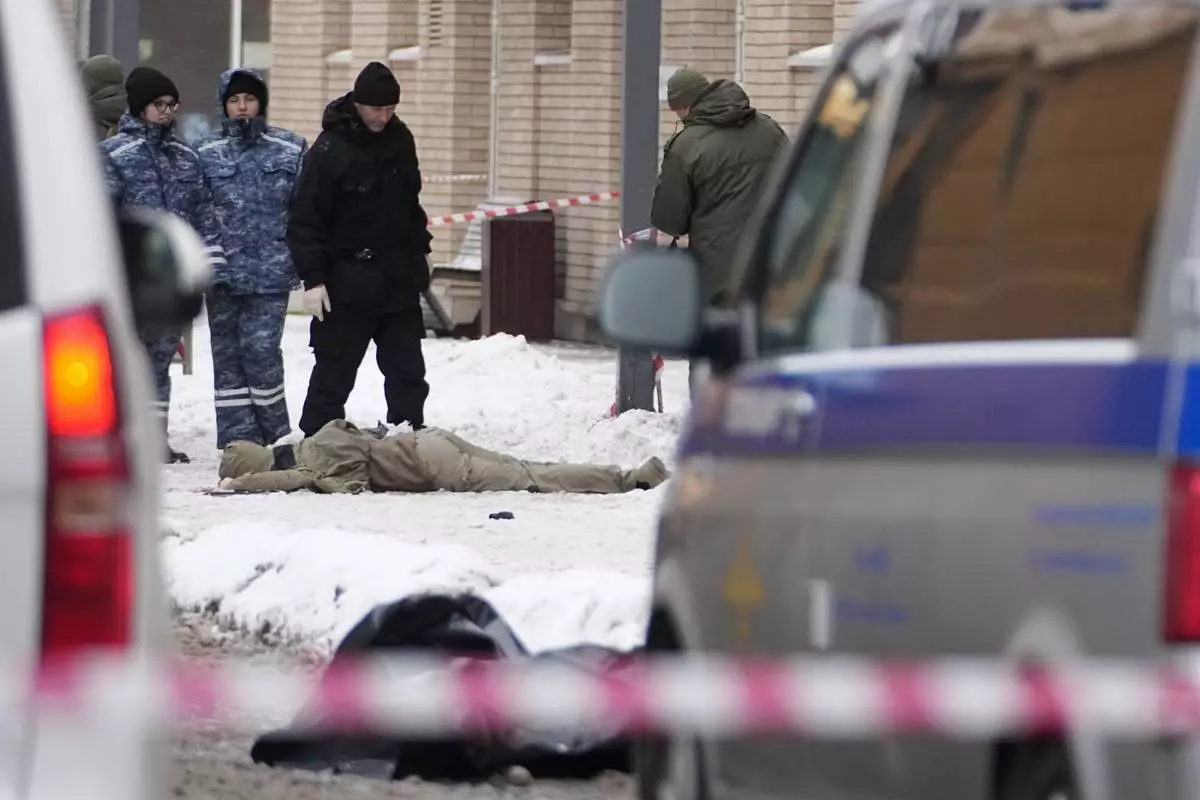
Investigators work at the place where Lt. General Igor Kirillov, the head of Russia's Nuclear, Biological, and Chemical Defence Forces and his assistant, seen at lower center, were killed by an explosive device planted close to a residential apartment's block in Moscow, Russia, Tuesday, Dec. 17, 2024. (AP Photo)
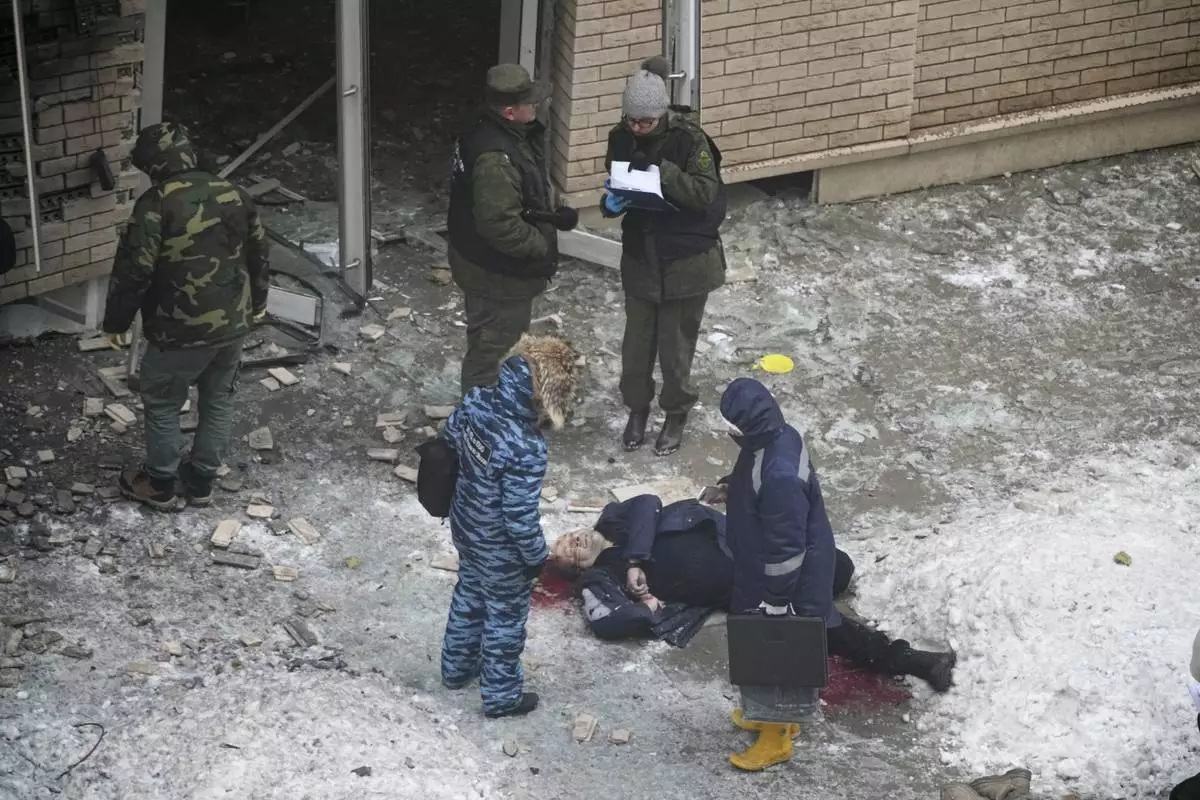
EDS NOTE: GRAPHIC CONTENT - Investigators stand near the body of Lt. General Igor Kirillov, the head of Russia's Nuclear, Biological, and Chemical Defence Forces after he and his assistant were killed by an explosive device planted close to a residential apartment's block in Moscow, Russia, Tuesday, Dec. 17, 2024. (AP Photo)
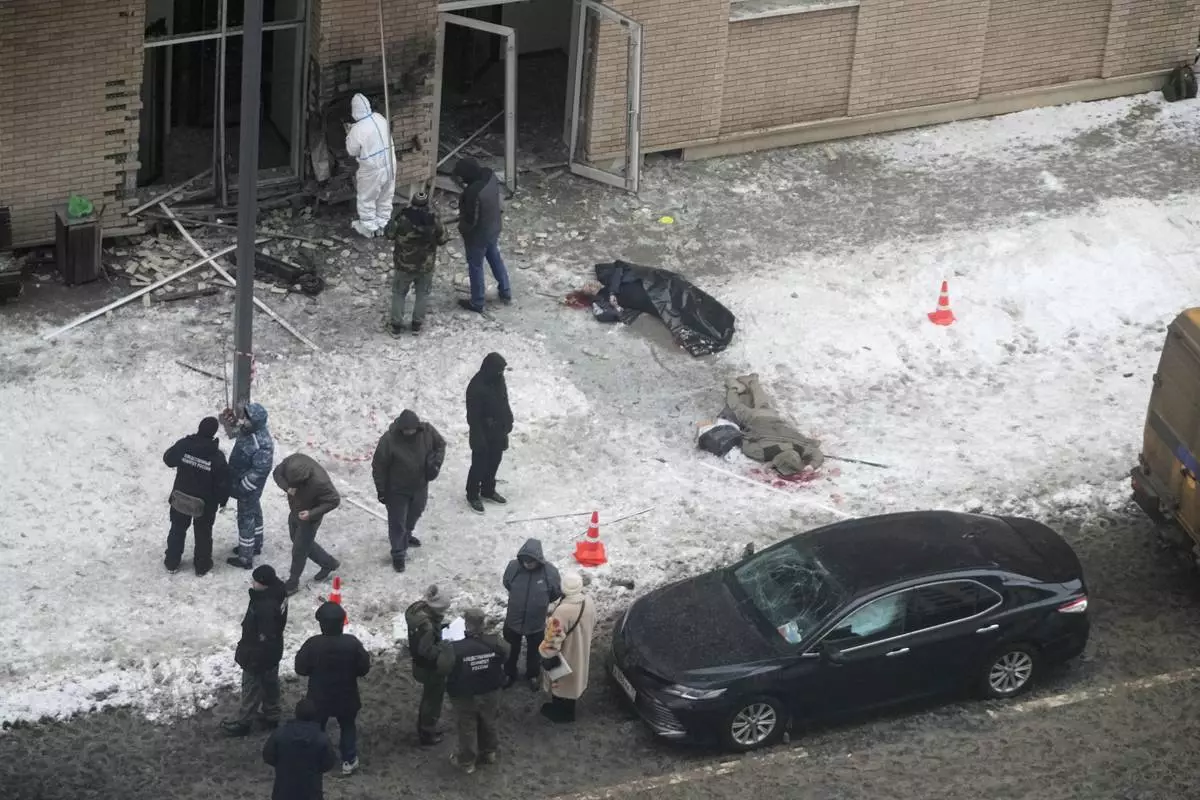
EDS NOTE: GRAPHIC CONTENT - Investigators work at the place where Lt. General Igor Kirillov, center, the head of Russia's Nuclear, Biological, and Chemical Defence Forces and his assistant, right, were killed by an explosive device planted close to a residential apartment's block in Moscow, Russia, Tuesday, Dec. 17, 2024. (AP Photo)
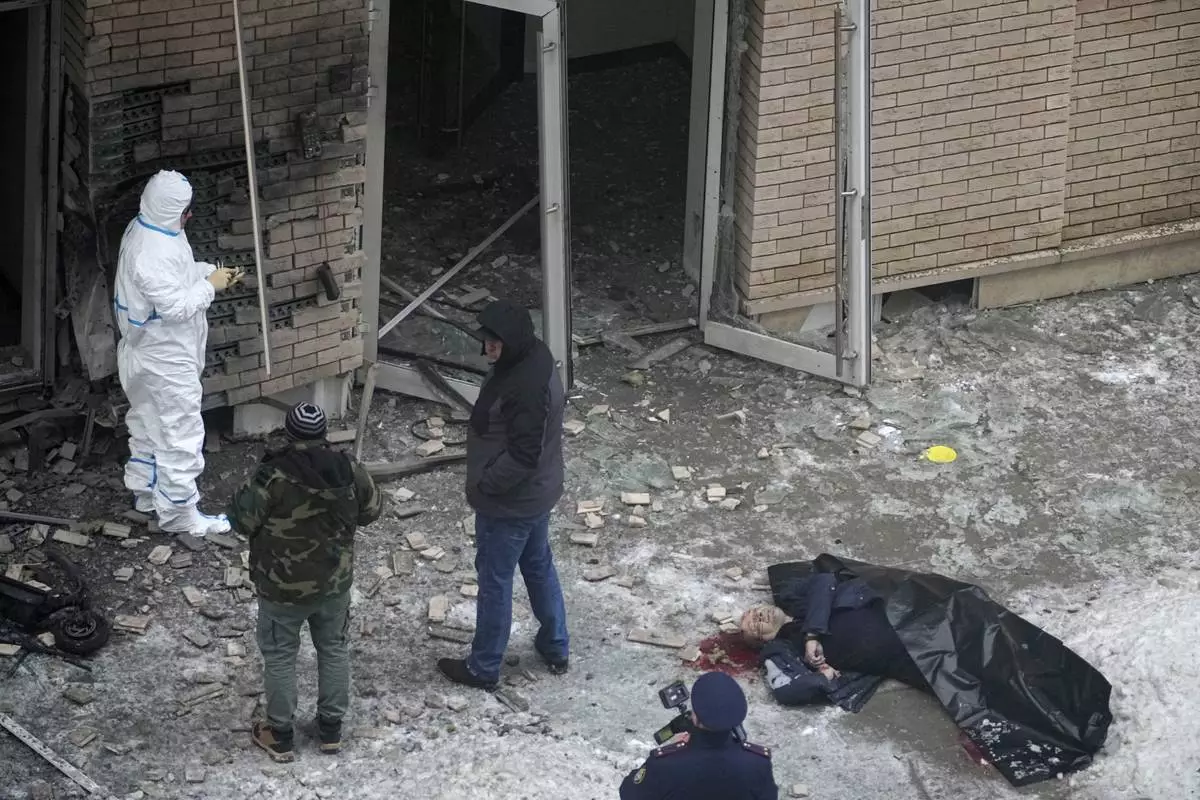
EDS NOTE: GRAPHIC CONTENT - Investigators work at the place where Lt. General Igor Kirillov, right, the head of Russia's Nuclear, Biological, and Chemical Defence Forces and his assistant were killed by an explosive device planted close to a residential apartment's block in Moscow, Russia, Tuesday, Dec. 17, 2024. (AP Photo)
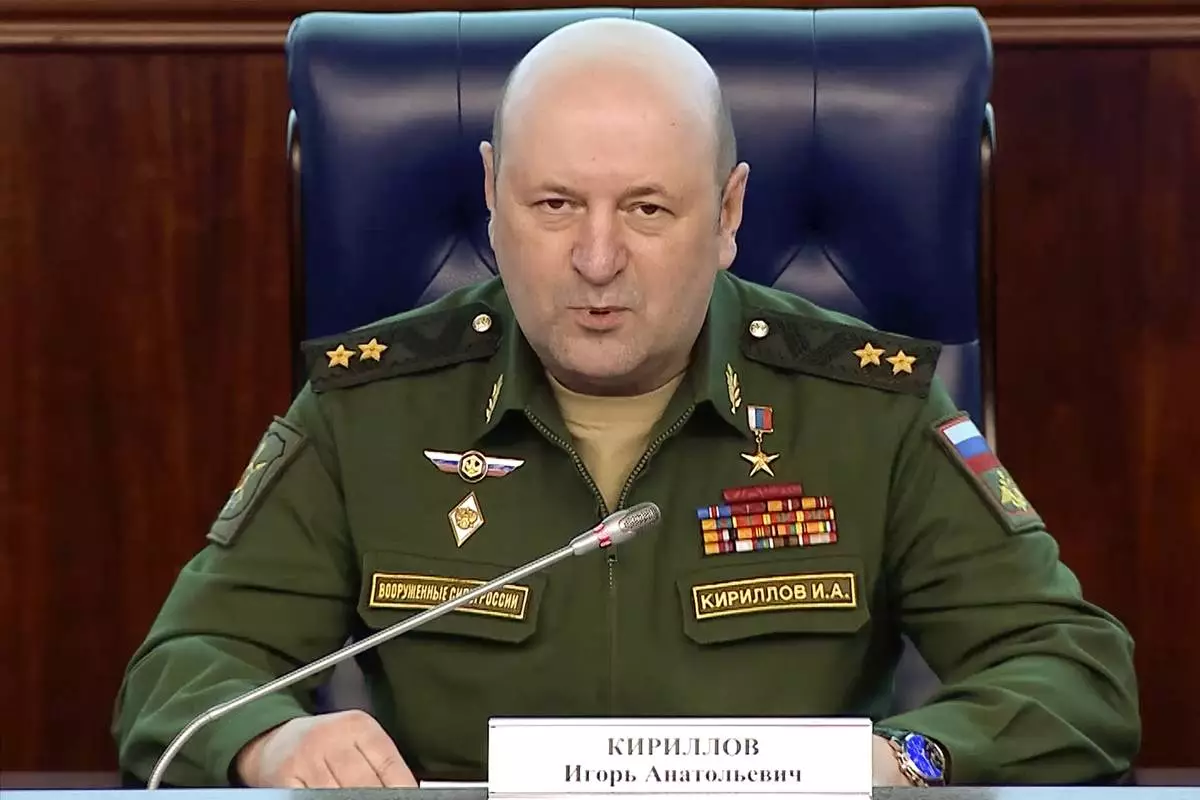
FILE - In this photo taken from video released by Russian Defense Ministry Press Service on Feb. 28, 2023, the head of the radiation, chemical and biological defense troops of the Russian Armed Forces Lt. Gen. Igor Kirillov speaks during a briefing in Moscow, Russia. (Russian Defense Ministry Press Service via AP, File)
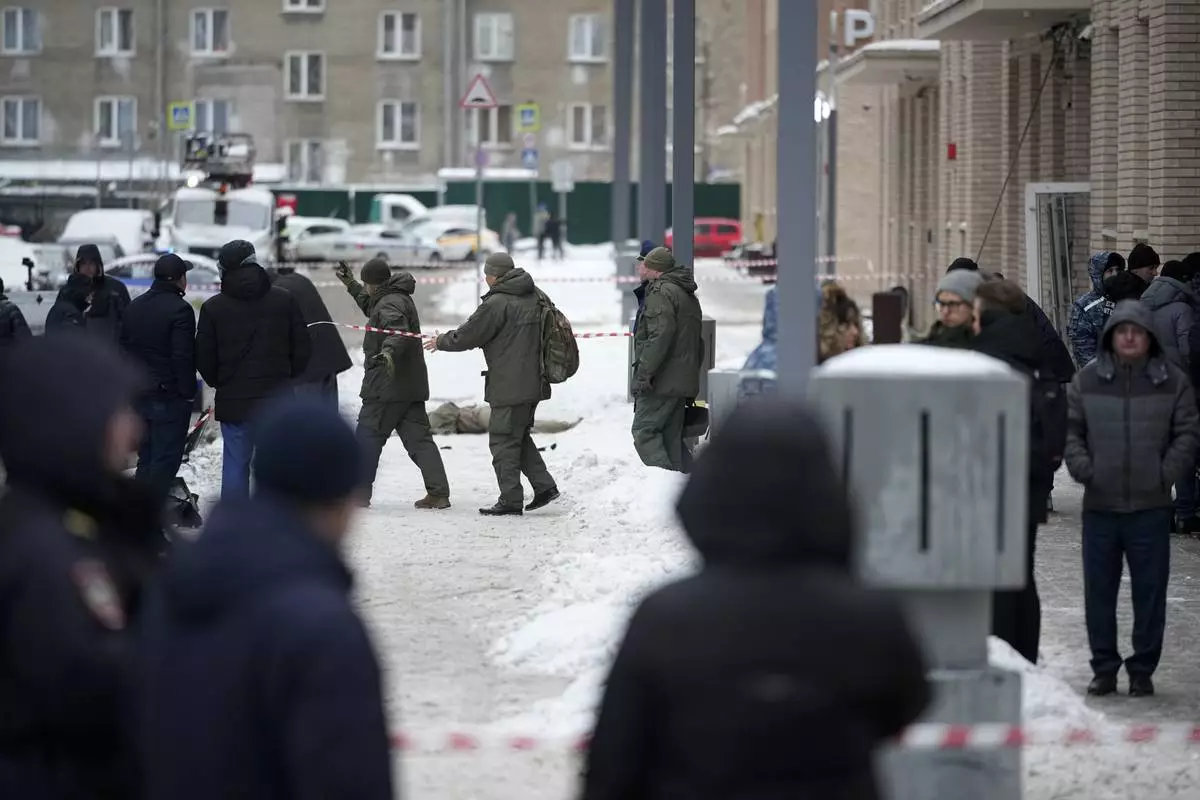
Investigators work at the place where Lt. General Igor Kirillov, the head of Russia's Nuclear, Biological, and Chemical Defence Forces was killed by an explosive device planted close to a residential apartment's block in Moscow, Russia, Tuesday, Dec. 17, 2024. (AP Photo)
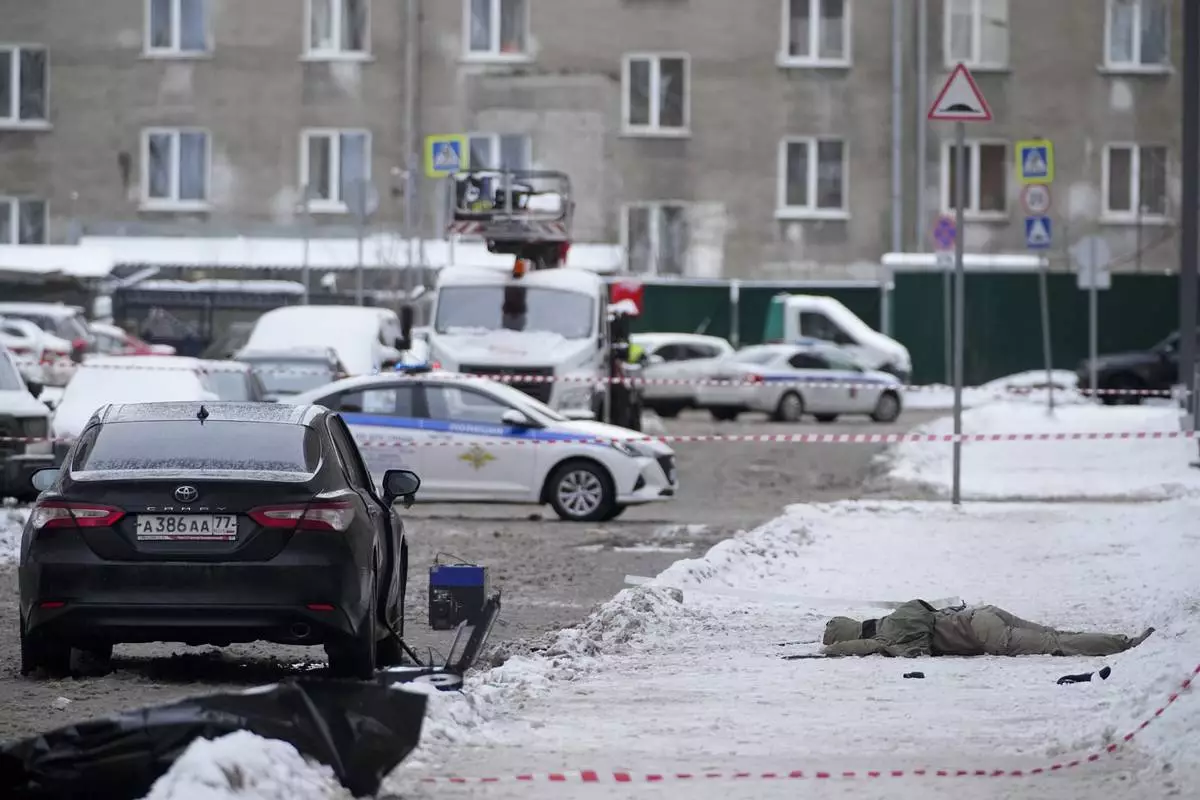
A body lies at the place where Lt. General Igor Kirillov, the head of Russia's Nuclear, Biological, and Chemical Defence Forces was killed by an explosive device planted close to a residential apartment's block in Moscow, Russia, Tuesday, Dec. 17, 2024. (AP Photo)
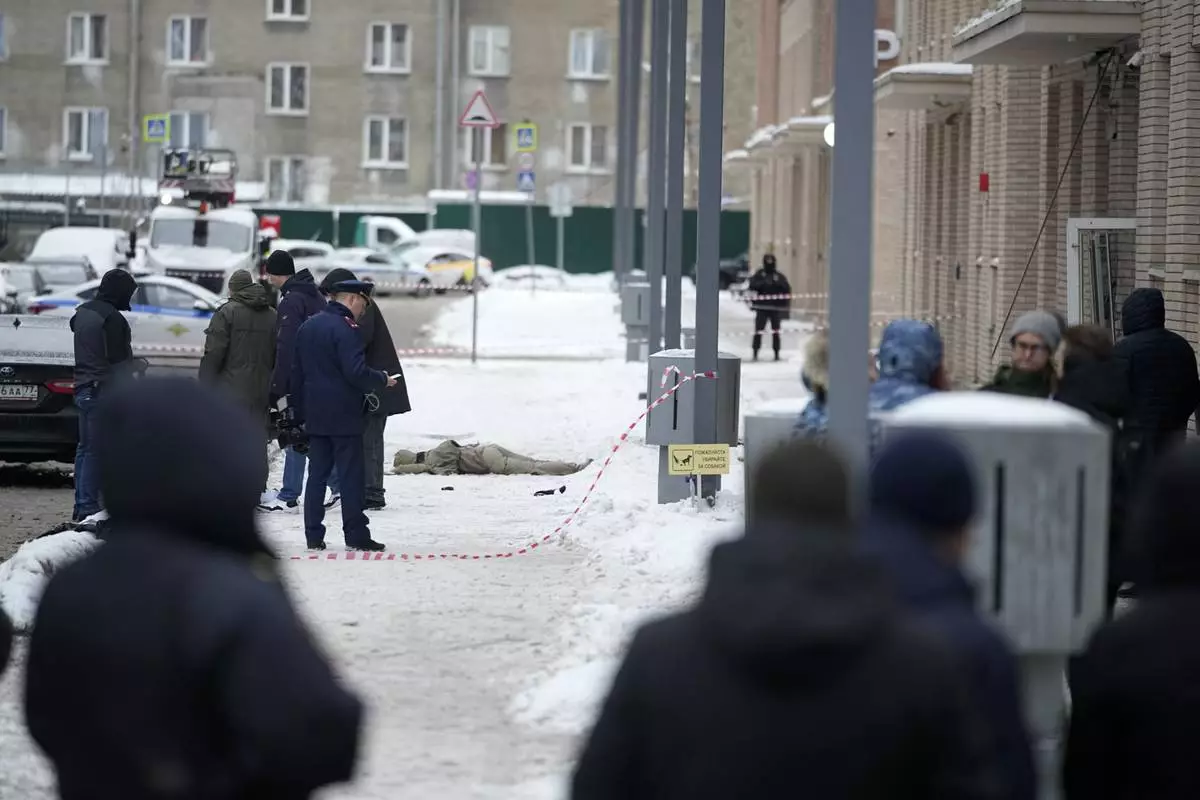
Investigates work at the place where Lt. General Igor Kirillov, the head of Russia's Nuclear, Biological, and Chemical Defence Forces was killed by an explosive device planted close to a residential apartment's block in Moscow, Russia, Tuesday, Dec. 17, 2024. (AP Photo)
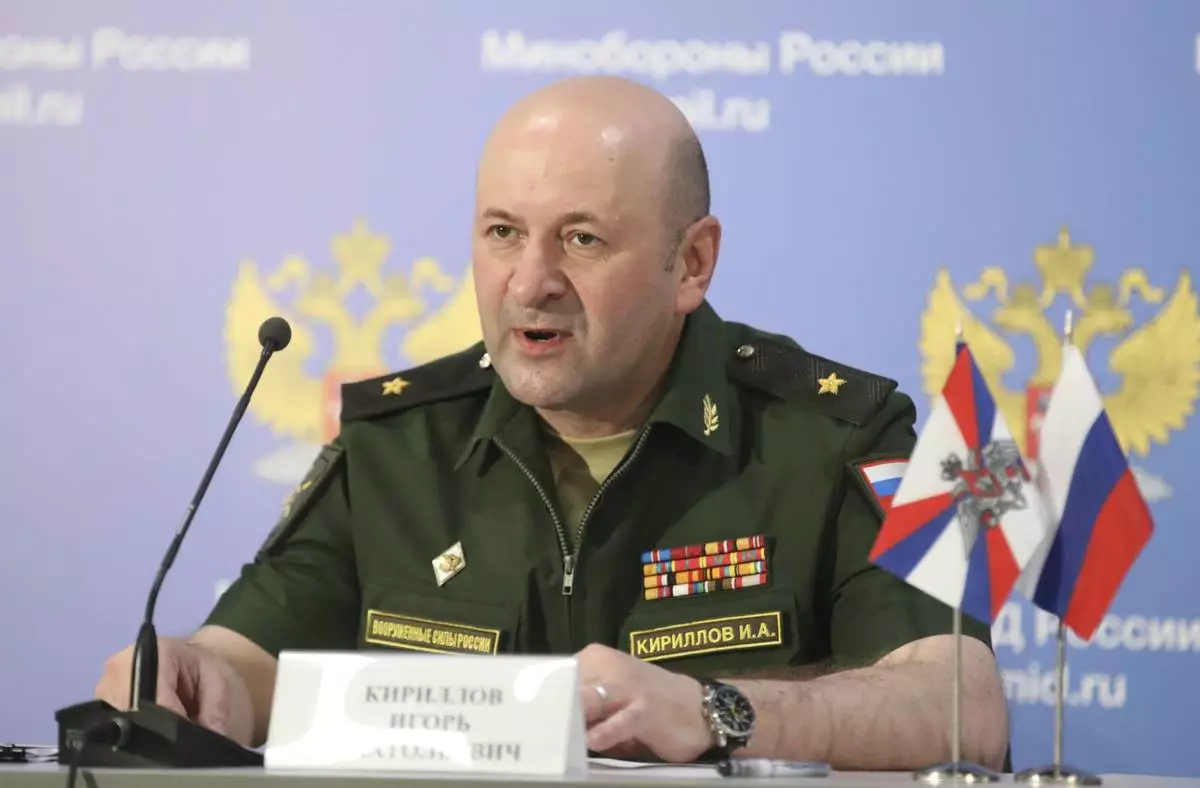
FILE - Maj. Gen. Igor Kirillov, the chief of the Russian military's radiation, chemical and biological protection unit, attends a briefing in Kubinka Patriot park, outside Moscow, Russia, on June 22, 2018. (AP Photo, File)