TELFORD, England--(BUSINESS WIRE)--Dec 17, 2024--
Following its acquisition last summer of Vinatic, one of the leading flexible plastic recyclers in Vietnam, Cedo, a leader in sustainable FMCG private label solutions, is proud to announce another milestone in its strategic journey with the acquisition of Plasta Group, one of Europe’s largest polyethylene recyclers, producers, and suppliers of sustainable plastic products.
This press release features multimedia. View the full release here: https://www.businesswire.com/news/home/20241215202045/en/
Plasta Group, headquartered in Vilnius, Lithuania, operates modern manufacturing plants located in Lithuania and Sweden, employs more than 500 skilled professionals, and has an impressive legacy of 60 years in the industry. Annually recycling over 45,000 tons of post-consumer waste plastic and producing over 36,000 tons of refuse sacks and film products, Plasta is a recognized leader in sustainability, holding a range of certifications such as EcoVadis Silver, ISO 9001, 14001 & 45001, Blue Angel, RAL, and RecyClass.
This acquisition positions Cedo as the largest integrated circularity platform for flexible plastic films servicing Europe, enhancing its leadership in Central and Eastern Europe (CEE) and Scandinavia. The combined organization has an annual capacity to recycle more than 200,000 tons of plastic waste from which to produce plastic bags made with recycled contents, as well other film-based products. Going forward Cedo will be able to offer an expanded range of innovative, sustainable solutions to meet the growing demand for circularity in flexible plastics.
Thierry Navarre, CEO of Cedo, commented:
"Plasta Group’s expertise and shared commitment to sustainability align perfectly with our vision. This partnership strengthens our ability to lead the circular economy in our sector, delivering innovative solutions to our customers and driving a more sustainable future."
Cedo and Plasta Group will work together to ensure a seamless integration process while maintaining their focus on exceptional quality and customer service.
About Cedo
Cedo is a leader in production of sustainable household essentials for the FMCG private label sector. With factories and recycling sites in Europe and Asia, the company employs over 2,000 people and achieves 500m€ turnover. www.cedo.com
About Plasta Group
Plasta Group is a leading European polyethylene recycler, producer, and supplier of sustainable plastic products. Headquartered in Vilnius, Lithuania, the group has 60 years of experience and modern manufacturing facilities in Lithuania and Sweden. www.plastagroup.com

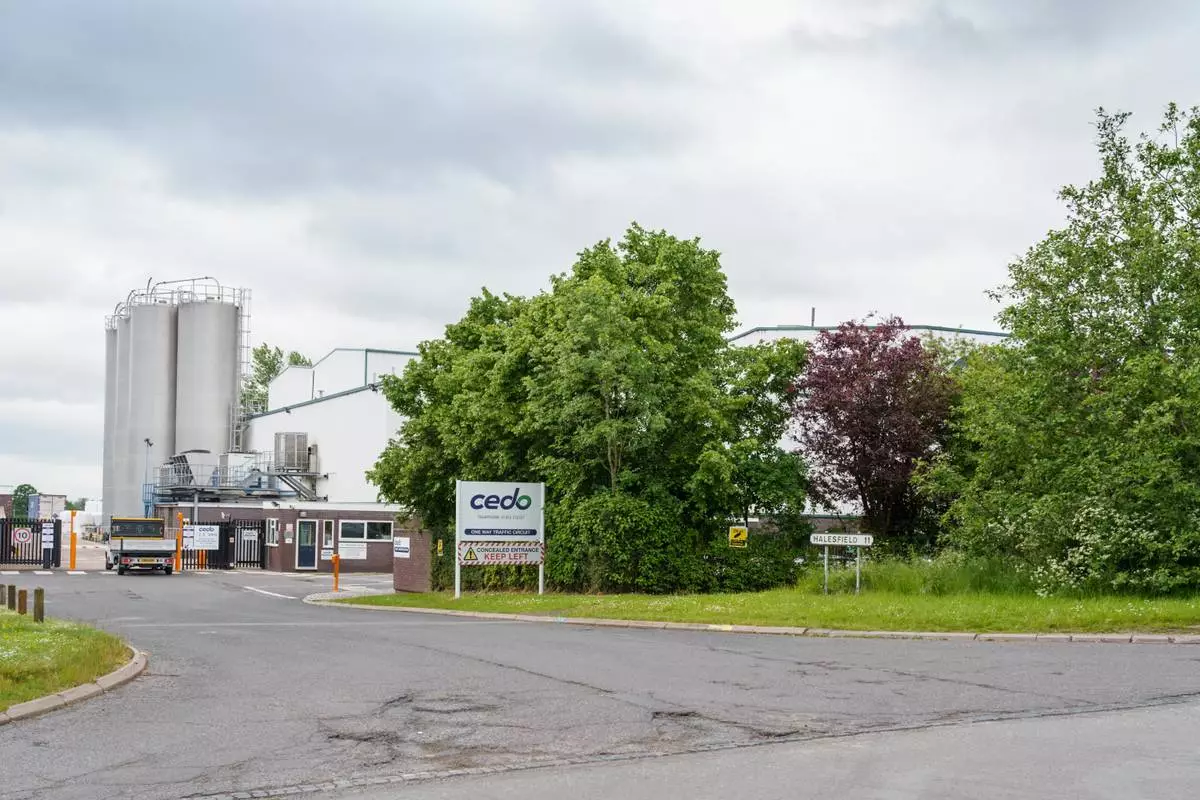
Cedo's UK operations are based in Telford, Shropshire, where the company began. (Photo: Business Wire)
Thierry Navarre, CEO of Cedo, pictured with a globe made from some of the 200,000 tons of recycled soft plastics that Cedo is now capable of processing each year. (Photo: Business Wire)
Strikes on cities across Iran have killed more than 25 people Sunday into Monday, while in Israel's Haifa two people were found dead and two others were missing in rubble a day after an Iranian attack.
U.S. President Donald Trump on Sunday stepped up his threat to hit Iran's critical infrastructure hard if the country's government doesn’t reopen the Strait of Hormuz by his Tuesday deadline.
Trump punctuated his threat with profanity in a social media post, saying Tuesday will be “Power Plant Day, and Bridge Day, all wrapped up in one, in Iran.”
The war began with joint U.S.-Israel strikes on Feb. 28 and has killed thousands, shaken global markets, cut off key shipping routes and spiked fuel prices. Both sides have threatened and hit civilian targets, bringing warnings of possible war crimes from the United Nations and international law experts.
Here is the latest:
An Iranian drone attack damaged a telecommunications building in Fujairah in the United Arab Emirates on Monday, the state-run WAM news agency reported.
The attack targeted a building of the state-funded du telecom company.
No one was injured, WAM reported, quoting officials in Fujairah.
South Korea’s National Intelligence Service says there are no signs North Korea is providing Iran with weapons or other war-related supplies.
The spy agency’s officials told lawmakers Monday that North Korea may be taking a cautious approach to preserve the possibility of dialogue with the Trump administration, according to two lawmakers who attended the closed-door briefing.
North Korea’s Foreign Ministry has condemned the U.S.-Israeli attacks on Iran as illegal, but the NIS said Pyongyang has not sent an official condolence message over the death of Ayatollah Ali Khamenei, Iran’s late supreme leader.
North Korean leader Kim Jong Un in recent years has embraced the idea of a “new Cold War” and attempted to expand cooperation with countries confronting the U.S., including an economic delegation sent to Iran in April 2024.
South Korea plans to send at least five ships to Saudi Arabia’s Yanbu port in the coming weeks to establish new oil transport routes in the Red Sea.
The Ministry of Trade, Industry and Resources said Monday the ships will be deployed in phases beginning in mid-April and the number of vessels could increase depending on contracts with Saudi partners.
Officials did not disclose the companies involved but said some domestic refiners may use non-Korean shipping firms.
South Korea also plans to send special envoys to Saudi Arabia, Oman and Algeria to step up diplomatic efforts to secure alternative fuel supplies, ruling party lawmaker Ahn Do-geol said.
The foreign ministry did not immediately reveal when the envoys would be sent.
Iran has executed another man convicted over charges stemming from the nationwide protests that swept Iran in January.
The judiciary’s Mizan news agency identified the man hanged as Ali Fahim in a report Monday.
It was unclear when he was executed.
Fahim had been convicted of allegedly storming a military base to seize weapons.
Amnesty International said Fahim and others convicted in the case “were subjected to torture and other ill-treatment in detention, including beatings, floggings, prolonged solitary confinement, and death threats at gunpoint before being convicted in grossly unfair trials that relied on forced ‘confessions’ extracted under torture and lasted only a few hours.”
The Human Rights Activist News Agency had said Fahim and others had entered a Tehran base of the all-volunteer Basij militia, an arm of the Revolutionary Guard, after it had been burned, then had been forced into confessions.
Israel rescue services reported Monday morning several sites were hit by missiles launched from Iran toward multiple cities in the center of Israel.
In Petah Tikva, paramedics provided medical treatment to an injured woman in serious condition with a chest injury from shrapnel and evacuated her to the Beilinson Hospital.
Fire fighters in that city are handling cars on fire and continue searching to ensure there are no people trapped in the rubble.
In Tel Aviv, a man slightly injured by glass shrapnel was evacuated to the Ichilov Hospital.
Footage provided by rescue service Magen David Adom shows damage to residential buildings due to the attack.
Meanwhile, Israel’s military warned the public Monday morning of another missile barrage coming from Iran, the fourth-such alert of the day.
Israel’s Magen David Adom and Fire and Rescue services said early Monday that there are several reported sites of Iranian missile hits in the northern city of Haifa.
In one site, four people were slightly injured, including two children.
The missile attacks hit residential areas and a factory in the city.
The factory was hit by shrapnel from an interception.
It is unclear if all the reported hits were caused by shrapnel from interception or direct hits.
Video footage provided by Magen David Adom of the affected sites show active fire and bombed cars in what appears to be a residential area.
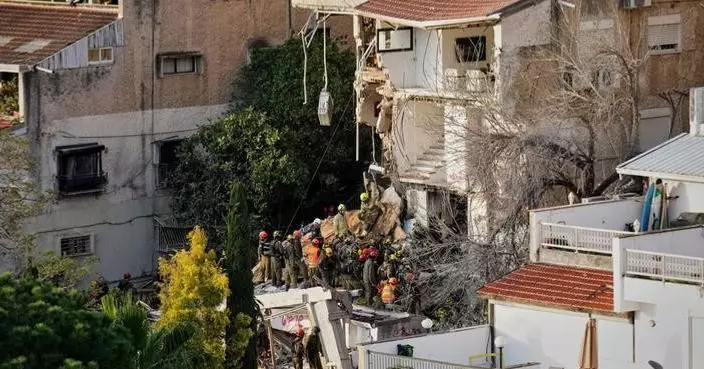
The missile strikes come a day after another attack from Iran also hit a Haifa residential area, killing two people and injuring others.
Two other people remain missing under the rubble caused by Sunday's strike and their fate is still unknown.
In the United Arab Emirates’ capital of Abu Dhabi, authorities said a Ghanaian man suffered wounds from shrapnel after the interception of an Iranian missile over the city’s Musaffah neighborhood.
That’s near Al Dhafra Air Base, which hosts U.S. forces and has been repeatedly targeted by Iran in the war.
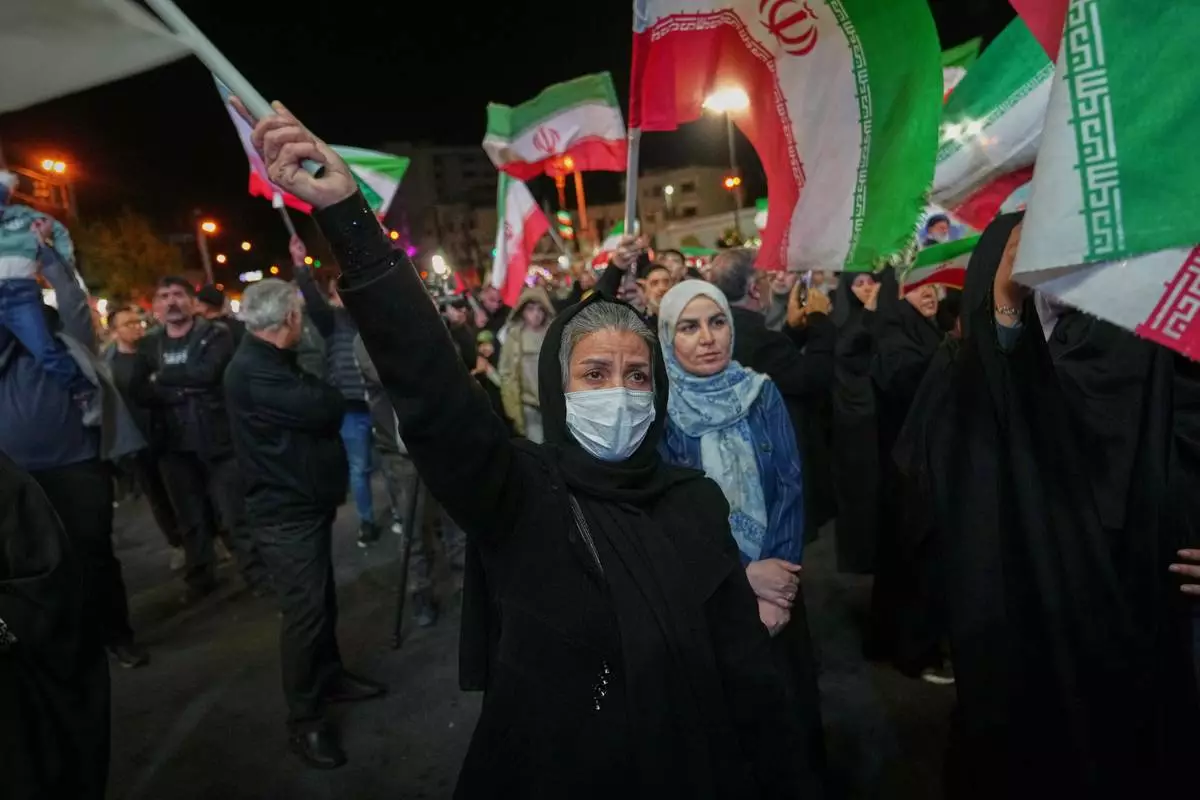
Women hold Iranian flags during a pro-government gathering in a square in Tehran, Iran, Sunday, April 5, 2026. (AP Photo/Francisco Seco)
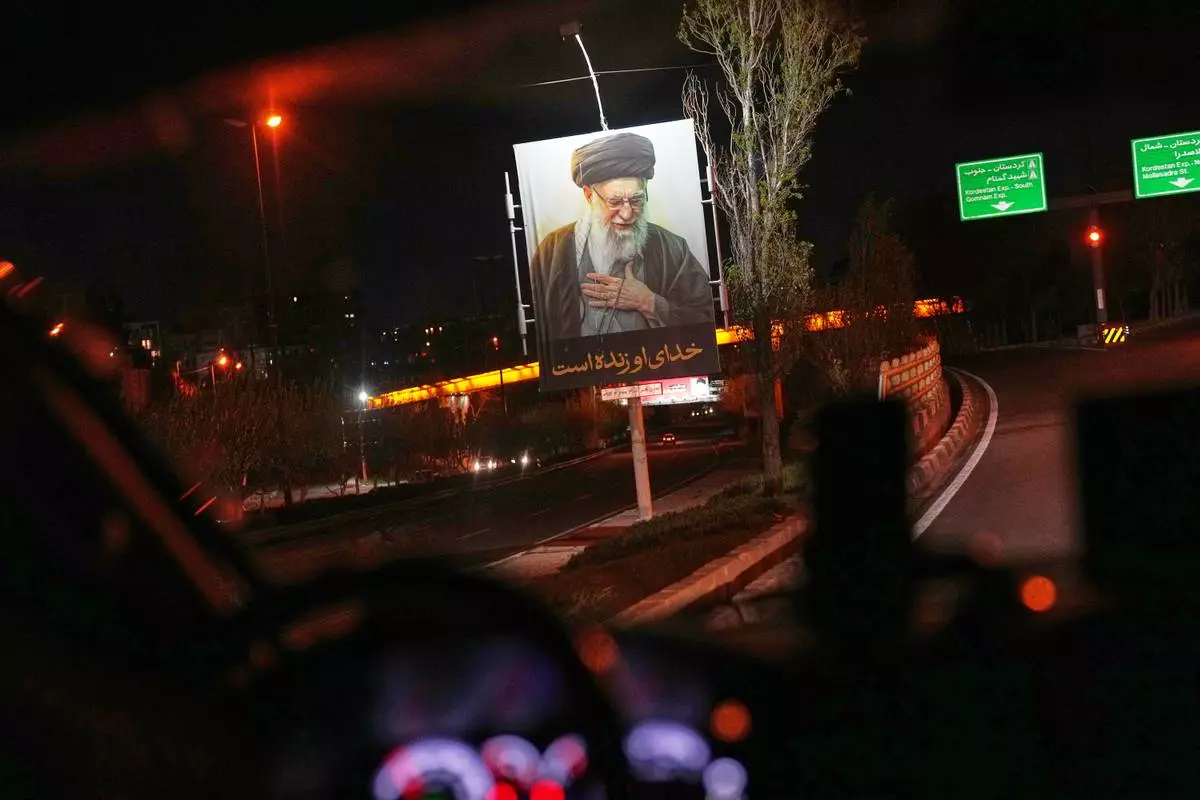
A picture of the late Iranian Supreme Leader Ayatollah Ali Khamenei hangs on the side of the road in the outskirts of Tehran, Iran, early Sunday, April 5, 2026. (AP Photo/Francisco Seco)
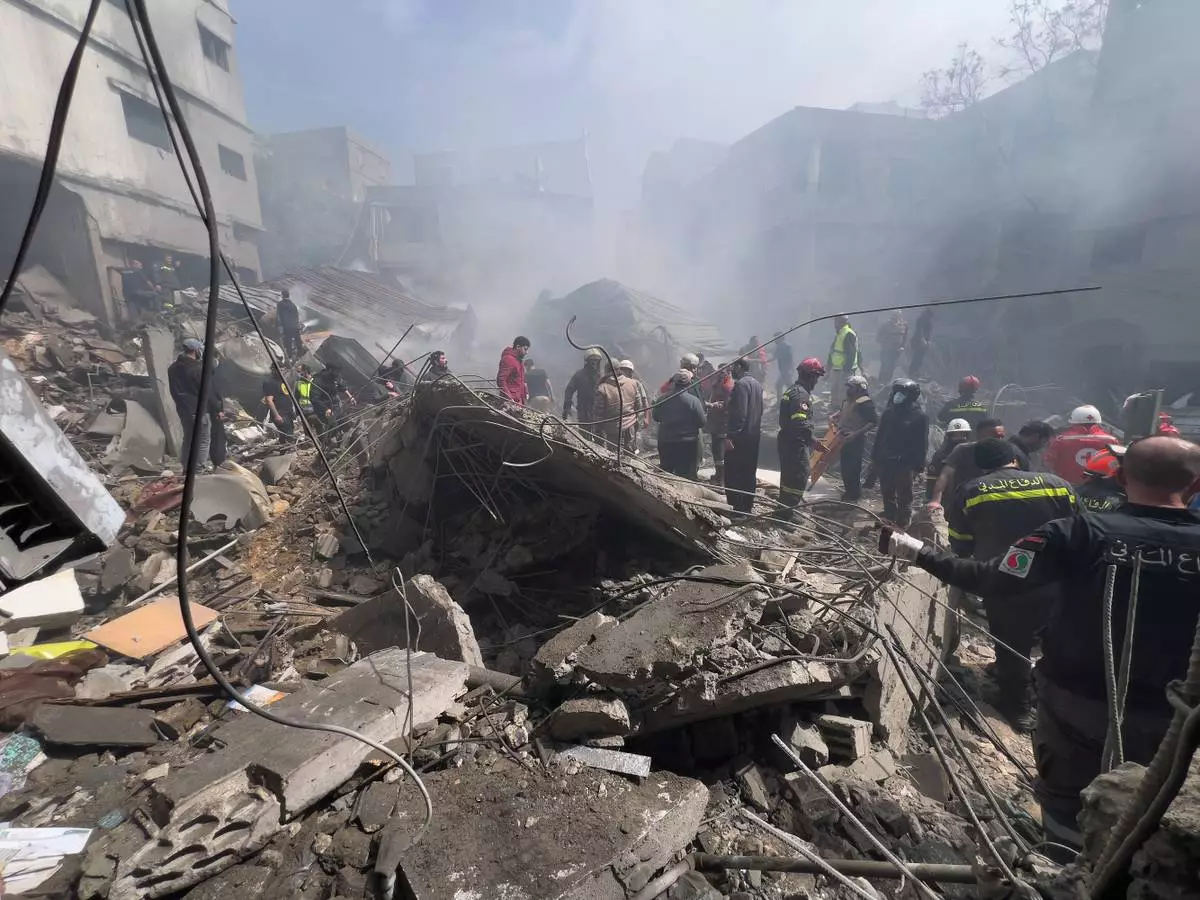
Rescue workers search for victims at the site of an Israeli airstrike that hit a crowded neighbourhood south of Beirut, Lebanon, Sunday, April 5, 2026. (AP Photo/Hussein Malla)
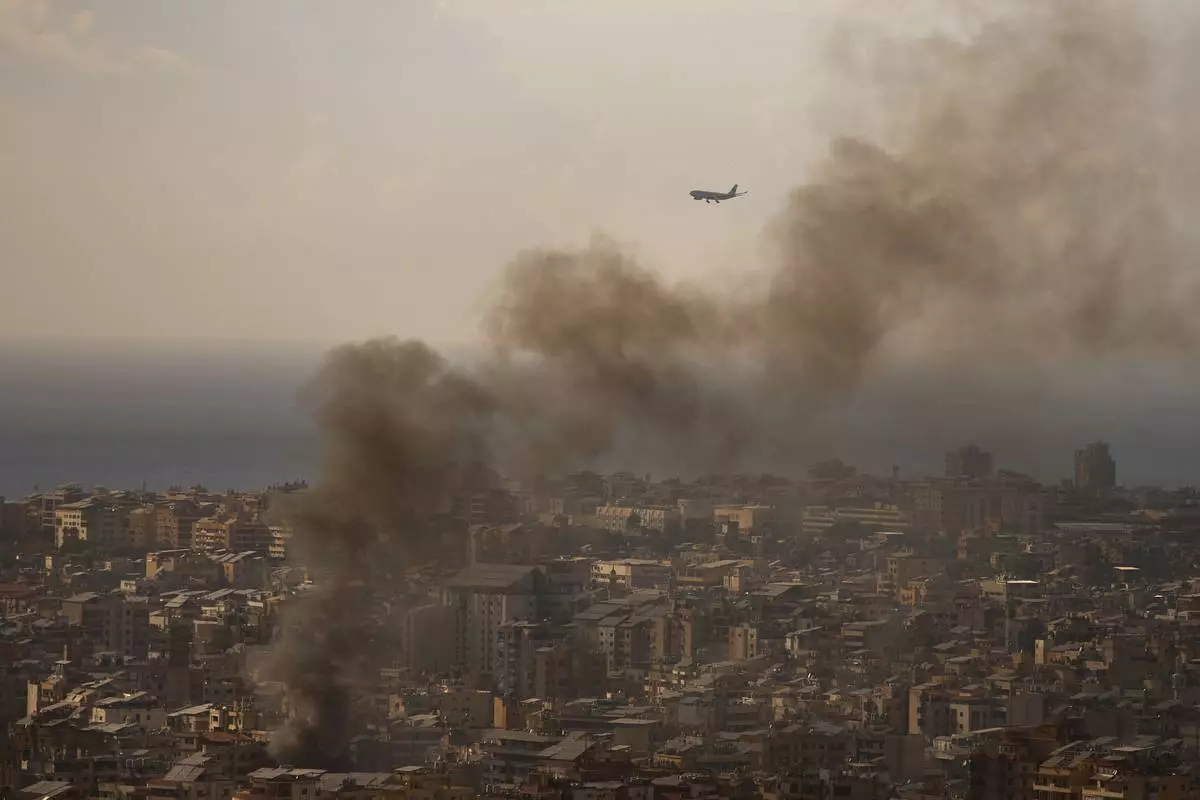
A commercial plane is preparing to land at Beirut Airport as smoke rises from Israeli airstrikes in Dahiyeh, a southern suburb of Beirut, Lebanon, Sunday, April 5, 2026. (AP Photo/Emilio Morenatti)
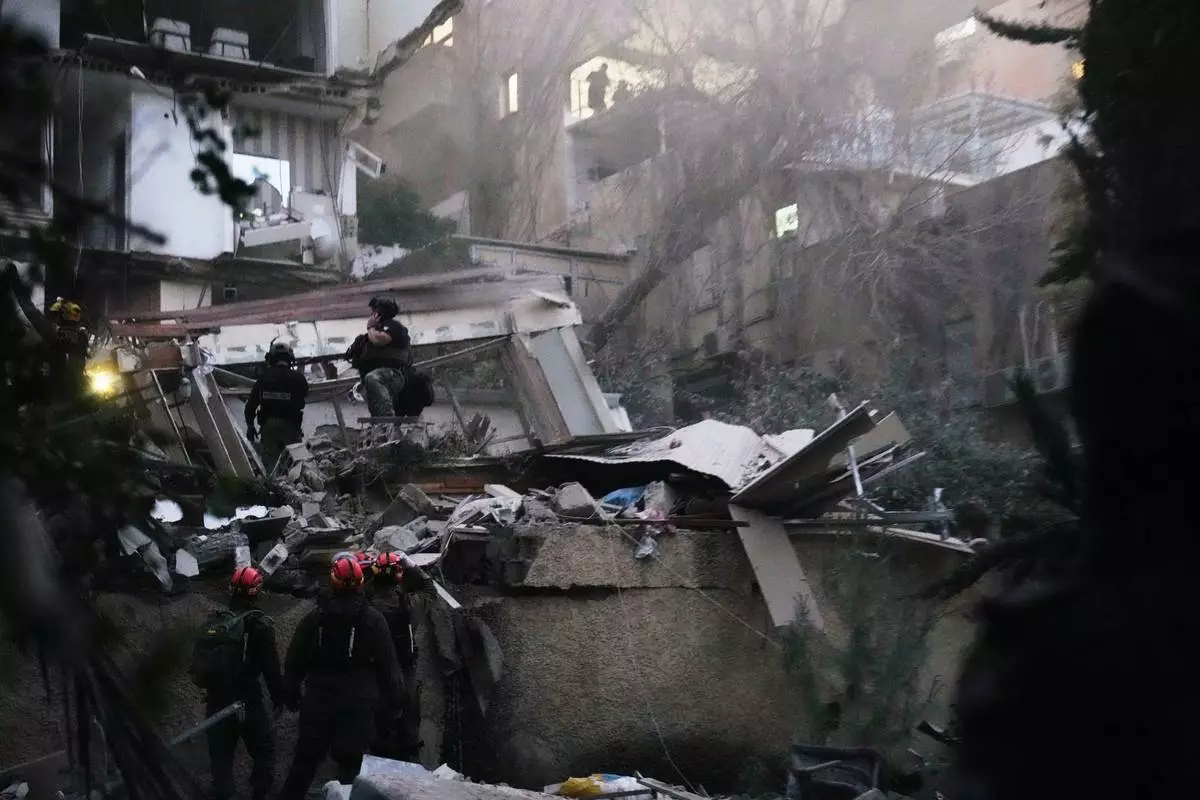
Israeli security forces and rescue teams work amid the rubble of a residential building struck by an Iranian missile in Haifa, Israel, Sunday, April 5, 2026. (AP Photo/Ariel Schalit)