Skip to Content Facebook Feature Image

A step-by-step guide to renovating a neglected garden

ENT

A step-by-step guide to renovating a neglected garden
ENT

ENT

A step-by-step guide to renovating a neglected garden

2024-12-17 22:07 Last Updated At:22:10

Some homeowners gaze out their windows and see lush and beautiful gardens. Others would like to see lush and beautiful gardens but instead are greeted by overgrown, dead or otherwise messy landscapes.

Whether you’ve inherited a neglected garden from a previous homeowner or have been too busy to keep on top of maintenance, don’t despair: Devising a game plan now can set you up for a much better view by next winter.

As with most seemingly hopeless tasks, breaking the process down into small steps performed over time will help make the project manageable.

First, grab a notepad and take a walk around the garden. Assess each section, determining which plants can be saved, which need to go and which require attention. Make a list now.

Dead and invasive plants, as well as weeds, should be first on the chopping block. If the weather allows, dig them out, removing as much of their root systems as possible. Otherwise, tackle this first in spring.

Next, remove and give away otherwise-healthy plants that you don’t want. Online buy-nothing groups and neighborhood pages are great places to find takers. Many will even be willing to do the digging if it means getting a free plant.

If the property has been overrun with a thicket of plants, shrubs, trees and vines that have grown wild, a chainsaw, brush mower or brush grubber may be in order.

If you’re dealing with a lot of weeds or want to create new garden beds in a lawn, you can smother the existing vegetation rather than dig it up. Determine the shape and size of the bed or border, and cover that area with cardboard or thick layers of newspaper. This can be done now, topped with 3 inches of compost and 2 inches of mulch, and left to sit over winter. It can also wait until planting time.

When you’re ready to plant, you'll be cutting root-size holes in the cardboard for your plants. Most weeds will be suppressed, but some may sneak through and require pulling or more cardboard.

Healthy but overgrown or unproductive deciduous shrubs (the types that lose their leaves) can be rejuvenated by pruning. Do this when branches are bare in late winter.

Choosing a method will require weighing aesthetics against rebound time and deciding which is right for you. The fastest (but most severe) method would be to cut the whole plant down just above ground level. It’s scary, but most shrubs can handle this and will bounce back stronger.

If retaining height in the garden is important, you can opt to prune each branch or stem individually at uneven heights. Or cut back one-third of the plant’s branches each year for three years. The latter would have the least drastic effect but require the most patience.

Evergreen trees and shrubs should only undergo selective pruning (the shortening of individual branches). Take care to avoid over-shearing or creating holes in needled evergreen plants and trees; with the exception of yews, they won’t fill back in.

Now that you have a clean canvas, turn your attention to the soil.

Test the soil’s pH to ensure it’s within range for the plants you plan to add. Test kits are available at local and online garden retailers. Your local cooperative extension service may provide testing and soil-amendment advice for a nominal fee.

If indicated, incorporate lime or elemental sulfur into the soil to raise or lower its pH, following package instructions.

If the soil is hard and compacted, use a core aerator or long-handled garden fork to create 2-3-inch holes through which air and water can enter.

Finally, spread a 2-to-3-inch layer of compost or well-rotted manure over the area. As it decomposes, nutrients will work their way into the soil.

After completing the above steps, it will be time to plant your new garden. If by summer you’re not yet ready to plant, apply mulch or use annuals to protect the bare soil.

When you’re ready to plant new trees, shrubs and/or perennials, carefully select varieties that will not run rampant. Dig holes just as deep as their roots but twice as wide and space them appropriately to allow for their mature sizes.

For the lowest maintenance going forward, consider hardy, pollinator-friendly, drought-tolerant native plants.

Incorporate non-invasive groundcovers into beds to serve as a natural mulch and discourage weeds – remember, if you don’t plant something in bare spots, God will. While you wait for groundcovers to fill in, apply 2-to-3 inches of mulch between and around plants to help retain moisture, suppress weeds, keep soil temperatures even and protect tender roots.

It might take a year or two -- or longer, depending on your schedule and ability, but a step-by-step approach will avoid overwhelm and provide a steady stream of small wins as you approach your goal.

Jessica Damiano writes weekly gardening columns for the AP and publishes the award-winning Weekly Dirt Newsletter. You can sign up here for weekly gardening tips and advice.

For her favorite tools and gear of the past year, see her 2024 gardening gift guide.

For more AP gardening stories, go to https://apnews.com/hub/gardening.
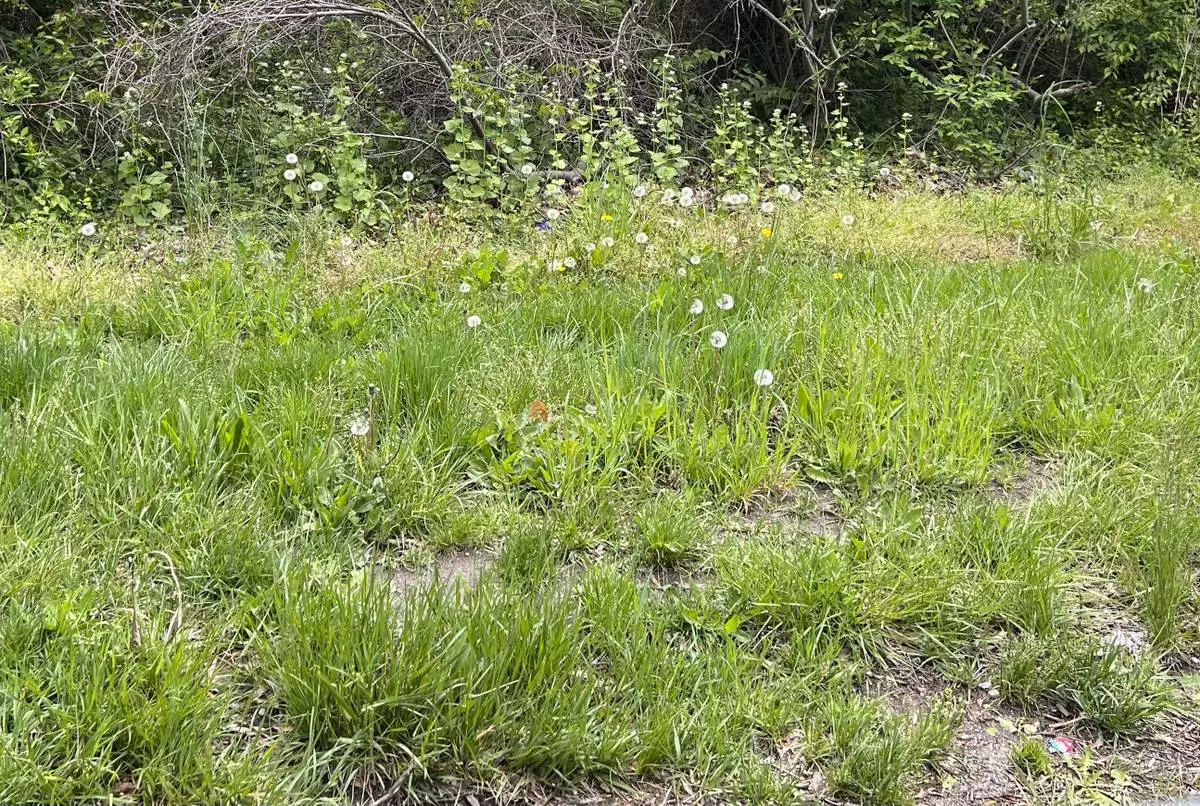
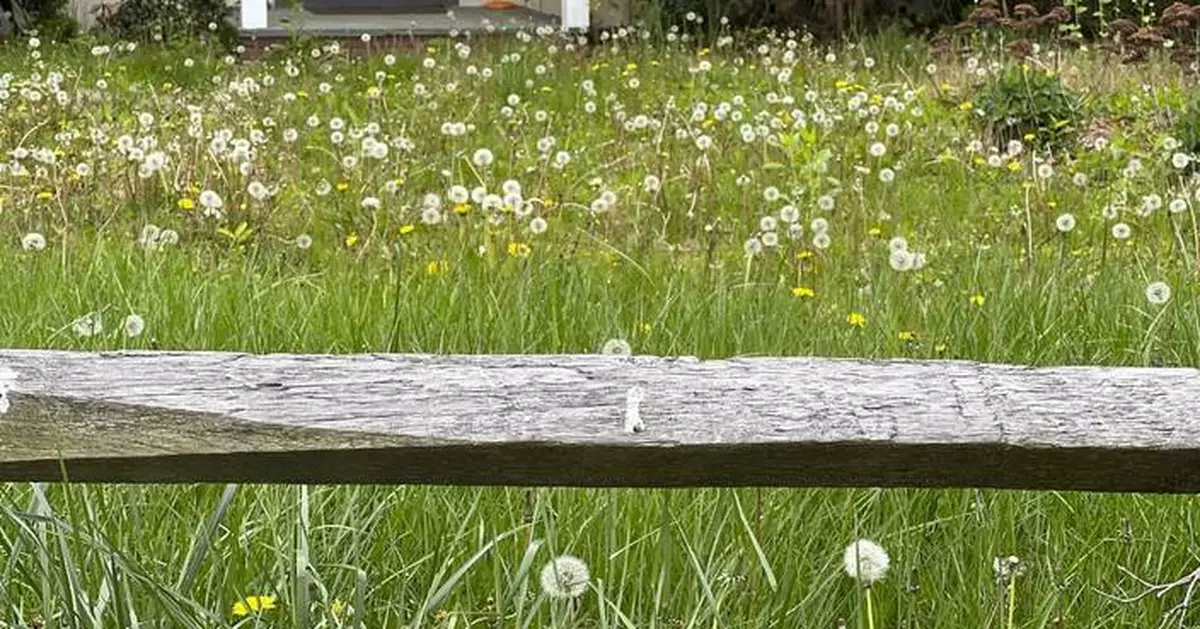
This May 2023 image provided by Jessica Damiano shows a neglected, overgrown property on Long Island, New York. A step-by-step approach is the best strategy for reigning in such gardens. (Jessica Damiano via AP)
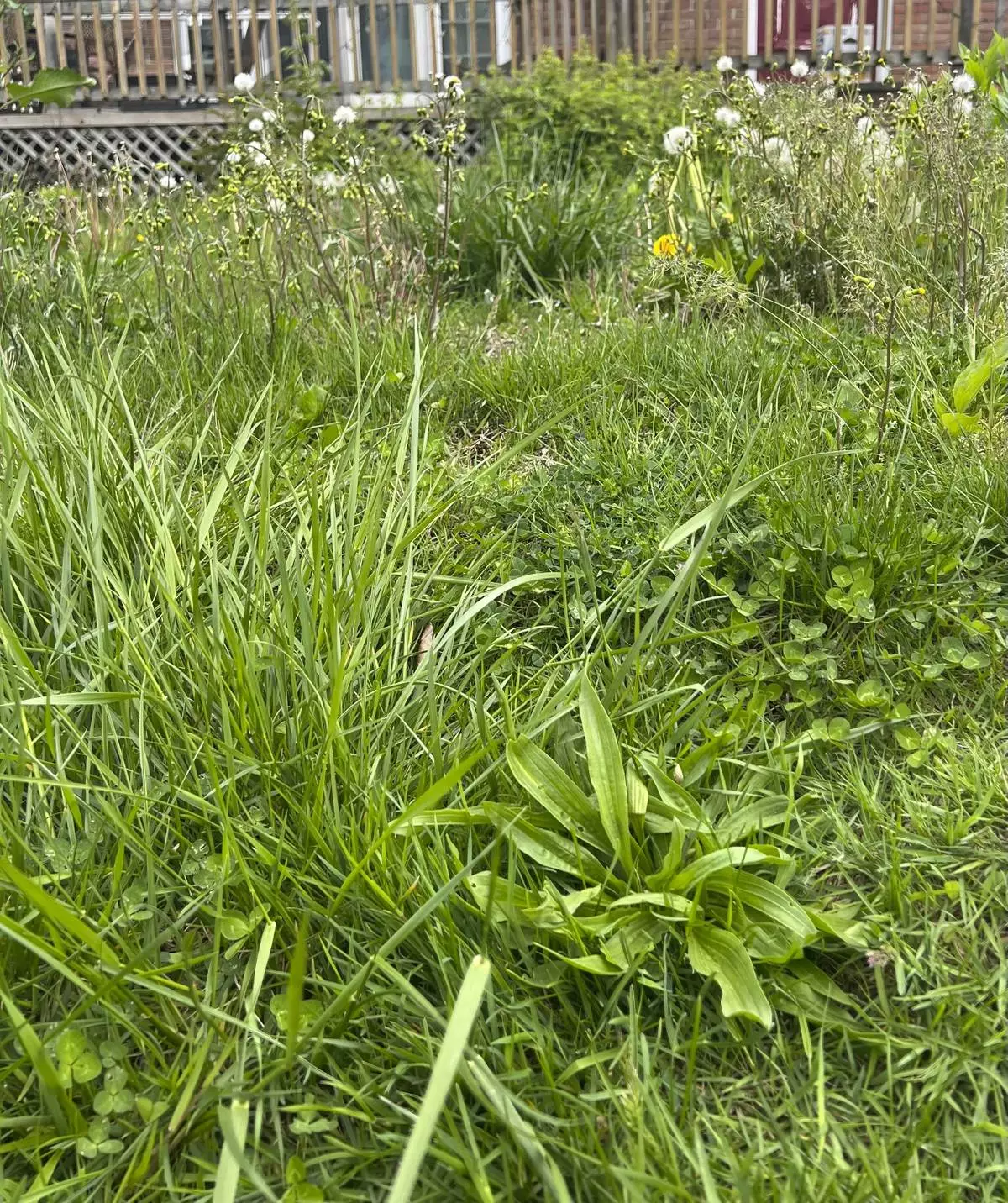
This May 2023 image provided by Jessica Damiano shows a neglected, overgrown property on Long Island, New York. A step-by-step approach is the best strategy for reigning in such gardens. (Jessica Damiano via AP)
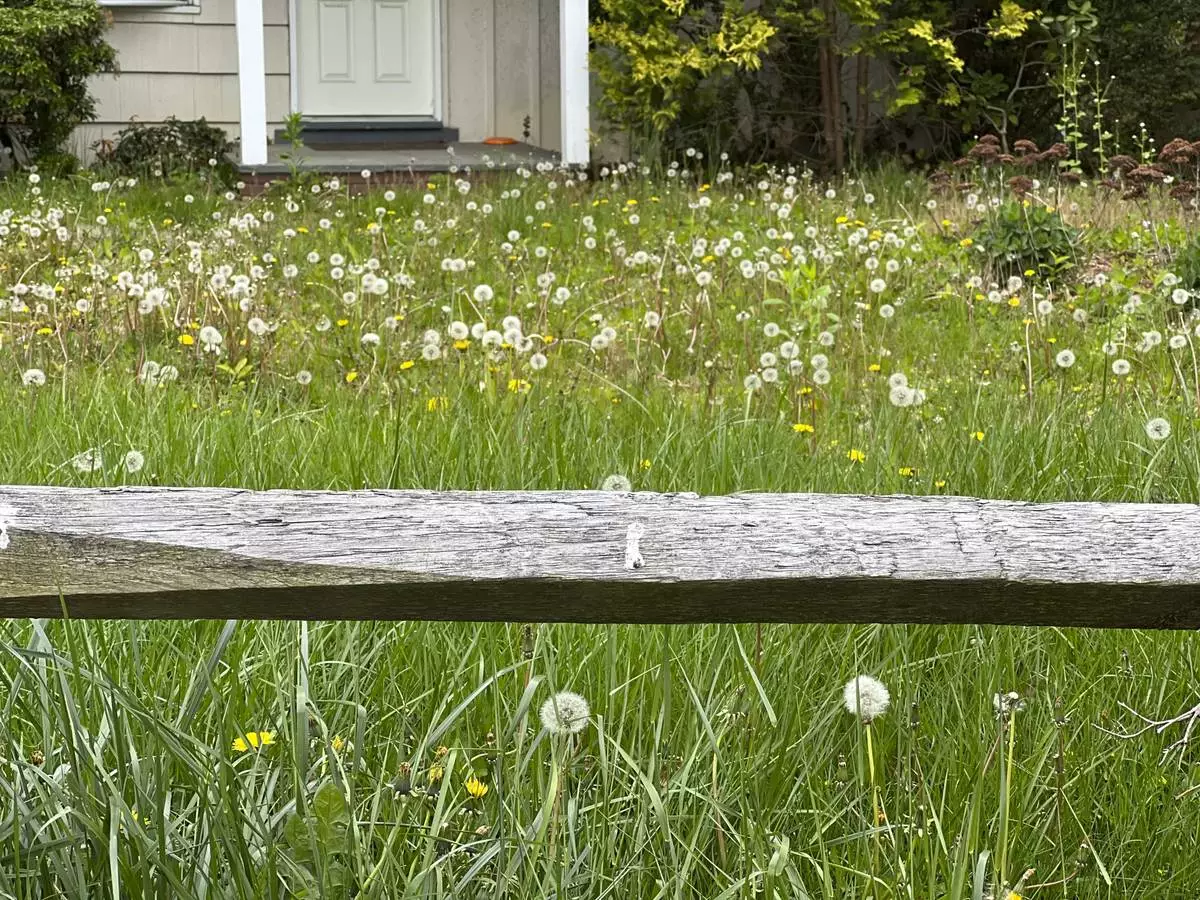
This May 2023 image provided by Jessica Damiano shows a neglected, overgrown property on Long Island, New York. A step-by-step approach is the best strategy for reigning in such gardens. (Jessica Damiano via AP)

This May 2023 image provided by Jessica Damiano shows a neglected, overgrown property on Long Island, New York. A step-by-step approach is the best strategy for reigning in such gardens. (Jessica Damiano via AP)

This May 2023 image provided by Jessica Damiano shows a neglected, overgrown property on Long Island, New York. A step-by-step approach is the best strategy for reigning in such gardens. (Jessica Damiano via AP)
This May 2023 image provided by Jessica Damiano shows a neglected, overgrown property on Long Island, New York. A step-by-step approach is the best strategy for reigning in such gardens. (Jessica Damiano via AP)

STATESVILLE, N.C. (AP) — Federal investigators sifting through the wreckage of a business jet that crashed in North Carolina and killed retired NASCAR driver Greg Biffle, his family, and three others are trying to figure out who was flying the plane and what caused it to return to the airport soon after takeoff.

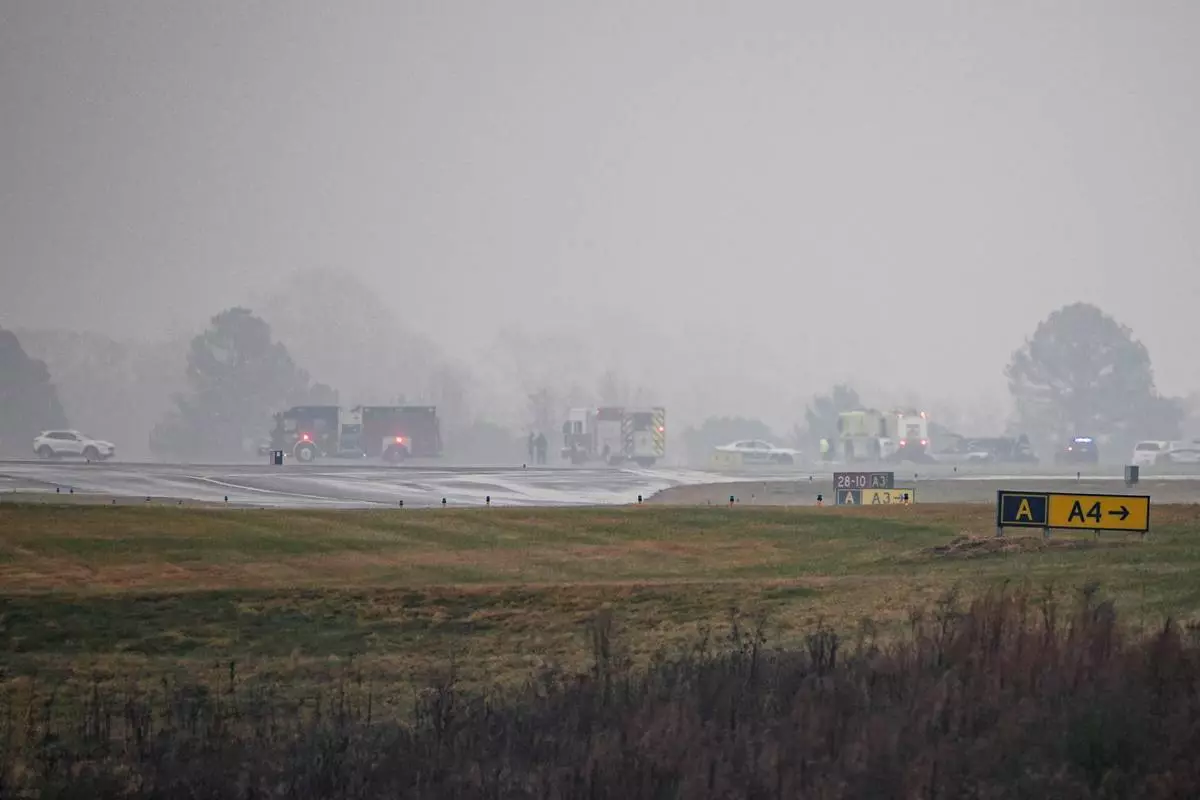
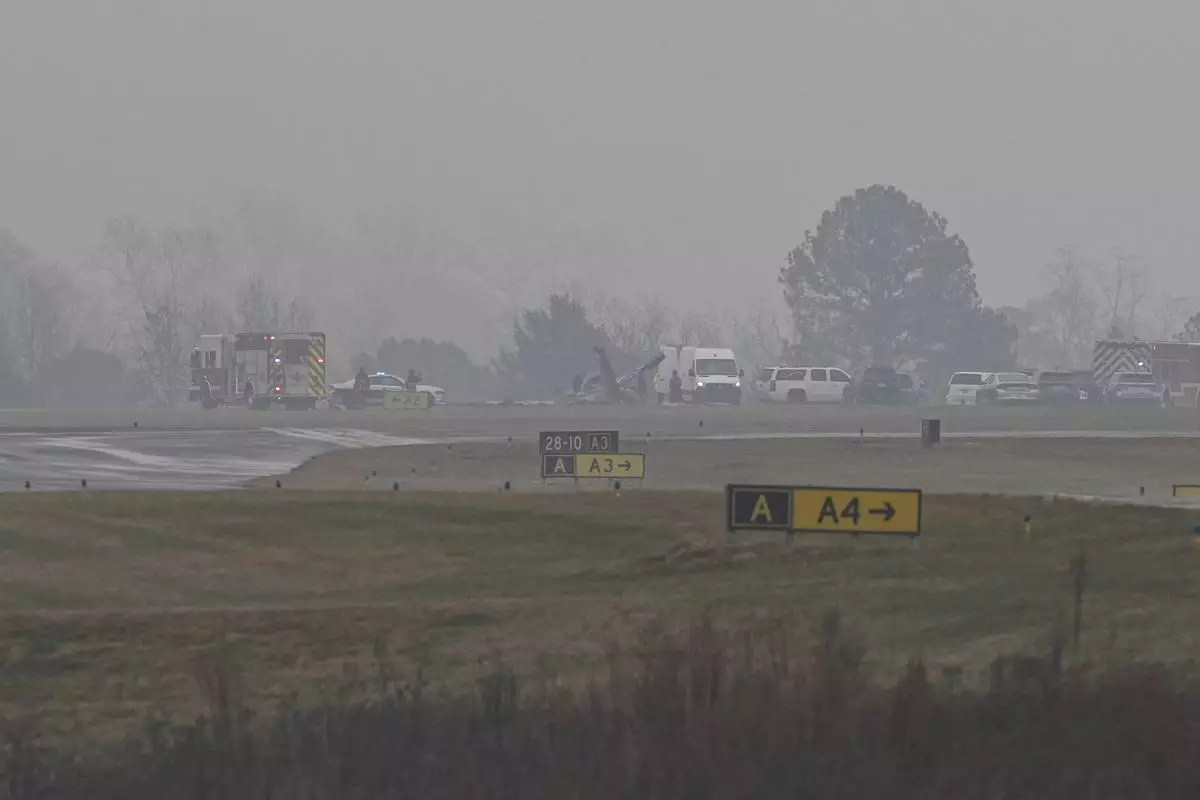
The Cessna C550 erupted into a large fire when it hit the ground Thursday, about a third of a mile (550 meters) from the airport's runway, killing all seven on board.

It had departed Statesville Regional Airport, about 45 miles (72 kilometers) north of Charlotte, but crashed less than 10 minutes later while trying to return and land, authorities said.

Flight records show the plane was registered to a company run by Biffle. Investigators from the National Transportation Safety Board were at the airport, attempting to determine the cause of the crash and why the plane had returned to the airport in drizzle and cloudy conditions.

Investigators recovered the cockpit voice recorder. They were not aware of any emergency calls from the jet, NTSB member Michael Graham said at a Friday news conference.

There were three pilots on board. Federal Aviation Administration records show Biffle was rated to fly helicopters, and single- and multi-engine planes. Also on board was pilot Dennis Dutton, Dutton's son, Jack — who had a private pilot’s license for single-engine planes — and Biffle's friend Craig Wadsworth.

Biffle's wife, Cristina, and children Ryder, 5, and Emma, 14, were also killed in the crash, the North Carolina State Highway Patrol said.

“Each of them meant everything to us, and their absence leaves an immeasurable void in our lives,” the joint family statement said.

Cristina Biffle's mother told People magazine that her daughter sent her a text message saying, “We’re in trouble," before she didn't hear from her again.

Greg Biffle, 55, won more than 50 races across NASCAR’s three circuits, including 19 at the Cup Series level. He also won the Trucks Series championship in 2000 and the Xfinity Series title in 2002.

NASCAR called Biffle “a beloved member of the NASCAR community, a fierce competitor, and a friend to so many.”

“His passion for racing, his integrity, and his commitment to fans and fellow competitors alike made a lasting impact on the sport," NASCAR said.

A memorial with flowers sprouted up Friday by Biffle's marble star in his hometown of Mooresville, honoring him as a member of the North Carolina Auto Racing Hall of Fame.

In 2024, Biffle was honored for his humanitarian efforts after Hurricane Helene struck the U.S., even using his personal helicopter to deliver aid to flooded, remote western North Carolina.

“The last time I spoke with Cristina, just a couple of weeks ago, she reached out to ask how she could help with relief efforts in Jamaica. That’s who the Biffles were," U.S. Rep. Richard Hudson, a Republican from North Carolina, said.

Wadsworth was Biffle's friend and helped him with odd jobs, including delivering supplies to places hit by Hurricane Helene, roommate Benito Howell said.

“He didn’t know how to say no,” Howell said of Wadsworth, who had worked for several NASCAR teams. “He loved everybody. He always tried to help everybody.”

The joint family statement also spoke about Dutton and his son Jack, saying they were “deeply loved as well, and their loss is felt by all who knew them.”

The Statesville airport remained closed Friday while the NTSB performed its investigation, a city spokesperson said.

Associated Press writers Allen G. Breed; Jenna Fryer in Charlotte, North Carolina; Josh Funk in Omaha, Nebraska; Jeffrey Collins in Columbia, South Carolina; Ed White in Detroit; and Hallie Golden in Seattle contributed to this story.

FILE - Former driver Greg Biffle waves to fans prior to a NASCAR Cup Series auto race at Darlington Raceway, Aug. 31, 2025, in Darlington, S.C. (AP Photo/Matt Kelley, File)

FILE - Former driver Greg Biffle waves to fans prior to a NASCAR Cup Series auto race at Darlington Raceway, Aug. 31, 2025, in Darlington, S.C. (AP Photo/Matt Kelley, File)

First responders tend to the scene of a reported plane crash at a regional airport in Statesville, N.C., Thursday, Dec. 18, 2025. (AP Photo/Matt Kelley)

First responders tend to the scene of a reported plane crash at a regional airport in Statesville, N.C., Thursday, Dec. 18, 2025. (AP Photo/Matt Kelley)

FILE - Greg Biffle celebrates in victory lane after winning the NASCAR Sprint Cup Series auto race at Kansas Speedway on Sunday, Oct. 3, 2010, in Kansas City, Kan. (AP Photo/Orlin Wagner, File)

FILE - Greg Biffle celebrates in victory lane after winning the NASCAR Sprint Cup Series auto race at Kansas Speedway on Sunday, Oct. 3, 2010, in Kansas City, Kan. (AP Photo/Orlin Wagner, File)

First responders tend to the scene of a reported plane crash at a regional airport in Statesville, N.C., Thursday, Dec. 18, 2025. (AP Photo/Matt Kelley)

First responders tend to the scene of a reported plane crash at a regional airport in Statesville, N.C., Thursday, Dec. 18, 2025. (AP Photo/Matt Kelley)

FILE - Greg Biffle smiles along pit row during qualifying for Sunday's NASCAR Sprint Cup Series auto race at Atlanta Motor Speedway, Friday, Aug. 31, 2012, in Hampton, Ga. (AP Photo/David Tulis, File)

FILE - Greg Biffle smiles along pit row during qualifying for Sunday's NASCAR Sprint Cup Series auto race at Atlanta Motor Speedway, Friday, Aug. 31, 2012, in Hampton, Ga. (AP Photo/David Tulis, File)

Recommended Articles