
SAO PAULO (AP) — For decades, they have scrounged for food on streets across the country — undesired, abandoned and overlooked.
But today, the caramel-colored mutts of Brazil are having a major moment. The “vira-lata caramelo” (literally: caramel trashcan-tipper) is being exalted in memes, videos, petitions, an upcoming Netflix film, a Carnival parade and draft legislation to honor it as part of Brazilian culture. Caramelos' newfound cachet speaks to the value of resilience in Brazil — a melting pot of 213 million people known for weathering hard knocks with a smile — and inverts its supposed “mongrel complex.”
Click to Gallery
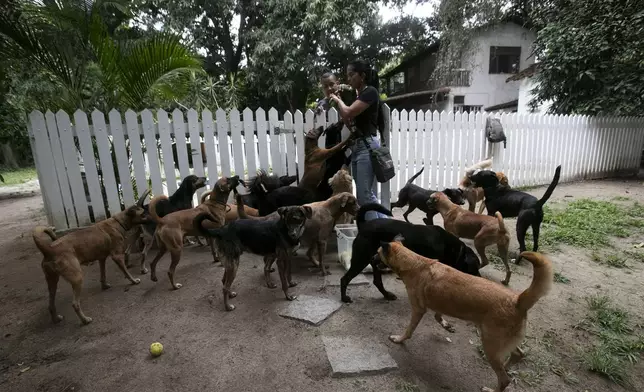
Caramelo dogs and others play at the Indefesos dog rescue shelter in Rio de Janeiro, Thursday, Dec. 12, 2024. (AP Photo/Bruna Prado)
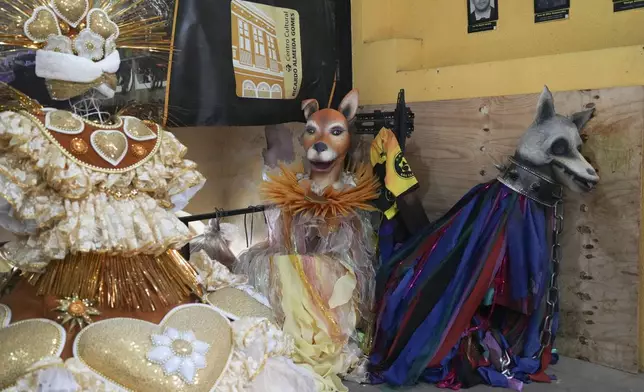
Carnival costumes sit at the Sao Clemente samba school, whose theme for 2025 is animal abuse and abandonment, in Rio de Janeiro, Thursday, Nov. 28, 2024. (AP Photo/Silvia Izquierdo)

Lina the caramelo dog lies on a table at Indefesos dog rescue shelter in Rio de Janeiro, Thursday, Dec. 12, 2024. (AP Photo/Bruna Prado)

Crew members work on the set of the Netflix film "Caramelo," in Sao Paulo, Tuesday, Oct. 29, 2024. (AP Photo/Andre Penner)

A caramelo dog pokes its nose through a fence at the Indefesos dog rescue shelter in Rio de Janeiro, Thursday, Dec. 12, 2024. (AP Photo/Bruna Prado)

Dog trainer Luis Estrela plays with a caramelo dog on the set of Netflix film "Caramelo" in Sao Paulo, Tuesday, Oct. 29, 2024. (AP Photo/Andre Penner)

Lt. Col. Sidnei Robson Pazini stands next to an exhibition of Bruto, a caramelo dog-turned-national hero from a war in Paraguay, at the Military Police Museum in Rio de Janeiro, Thursday, Nov. 28, 2024. (AP Photo/Silvia Izquierdo)
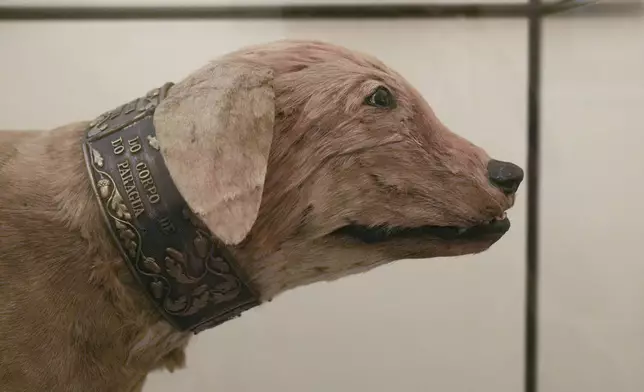
Bruto, a caramelo dog-turned-national hero from a war in Paraguay, is on display in the Military Police Museum in Rio de Janeiro, Thursday, Nov. 28, 2024. (AP Photo/Silvia Izquierdo)

Sao Clemente samba school workers make costumes for Carnival, in Rio de Janeiro, Thursday, Nov. 28, 2024. (AP Photo/Silvia Izquierdo)
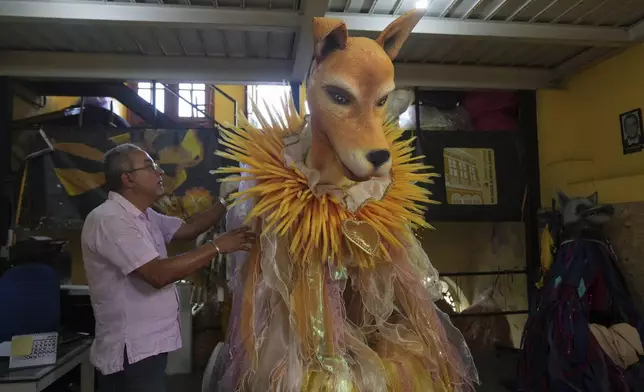
Workshop director Roberto Gomes inspects a caramelo dog costume at the Sao Clemente samba school, whose 2025 Carnival theme is animal abuse and abandonment, in Rio de Janeiro, Thursday, Nov. 28, 2024. (AP Photo/Silvia Izquierdo)

Sao Clemente samba school seamstresses make costumes for Carnival, in Rio de Janeiro, Thursday, Nov. 28, 2024. (AP Photo/Silvia Izquierdo)

Director Diego Freitas plays with caramelo dogs on the set of the Netflix film "Caramelo" in Sao Paulo, Tuesday, Oct. 29, 2024. (AP Photo/Andre Penner)
A scene from Netflix's “Caramelo” shot in October featured a beige puppy sitting beside a river in Sao Paulo watching picture-perfect families pass with their impeccable purebreds — a golden retriever, a miniature collie and a Doberman. At the director of photography’s signal, a delivery boy cycled past and the plucky mutt gave chase, following the scent of pizza and seeking a way to get by.
“The caramelo ended up becoming the great symbol of Brazil, a symbol for the people,” Diego Freitas, the film's director and co-writer, said after the day's shooting. “Netflix was sensitive to what’s happening with the zeitgeist. The caramelo is the spirit of our time.”
The caramelo craze started online around 2019. People posted the tongue-in-cheek phrase, “This represents Brazil more than soccer or samba,” along with photos of distinctively Brazilian phenomena, including caramelos galore. Social media accounts paid tribute to the caramelos' antics: One invaded a dance show and relieved itself on stage; another played dead while receiving chest compressions for a CPR training video. Online retailers started hawking caramelo-shaped throw pillows.
A petition to replace the macaw on Brazil’s 10-reais ($1.65) bill garnered 50,000 signatures in 2019.
“The caramelo has established itself as a landmark of the Brazilian people, being well loved and received in all states of the country, being an excellent representative of our culture,” it proclaimed. “Therefore it deserves mention on our currency.”
The next year, another petition to emblazon the medium-sized dog on the 200-reais note received triple the support.
Many cite kindness as the caramelos' secret charm, but more often say it's that they're savvy survivors.
Case in point is a caramelo in the northeastern city Joao Pessoa. Last year, Khelson Silva, 59, left the gym with a friend and found the stray waiting. It took Silva's friend’s finger gingerly between its teeth and led them for three blocks.
“He got to my building, walked straight into the garage, went up the elevator and right into the house,” said Silva, who learned this caramelo, now named Persistent José, had attempted similar gambits before. “It was him who chose us. He knew where we lived.”
Writer Nelson Rodrigues coined the now-infamous term “mongrel complex” after the national soccer team’s humiliating World Cup defeat in 1950, aiming to encapsulate what he perceived as Brazil’s sense of inferiority compared to other nations. Today, many see Brazil’s diverse roots — immigrants, enslaved Africans and Indigenous people — as a source of pride.
Tina Castro, an English teacher in Rio de Janeiro, equates owning a caramelo with loving the “crazy mixture" of Brazil and its people.
“It comes from a marginal place, like Brazil. It has a history of survival and marginalization," said Castro, 32. "We value the caramelo in the way we value our country, as it is.”
“Caramelos will dominate the world!” has become a jokey rallying cry online, and foreign allies are lending a hand. After touring Brazil in November, singer Bruno Mars posed with a caramelo in his viral farewell video. Staff of the British mission to Brazil overwhelmingly voted in July to christen their new digital mascot, a Welsh Corgi, “Lord Caramelo.”
The budget for Netflix's “Caramelo” is part of 1 billion reais ($164 million) spent from 2023-24 on Brazilian productions to capture eyeballs in one of the world’s biggest video streaming markets. Netflix hasn’t set a release date.
"The movie is a big bet for Netflix, a superproduction,” Netflix Brasil's press office told The Associated Press. “It’s the first Brazilian film with a dog as a protagonist, and it couldn’t be any other than the caramelo, a national icon.”
Others catapulting the caramelo into the spotlight include Rio's Sao Clemente samba school. At its three-story workshop downtown on Nov. 28, seamstresses churned out strips of sheer yellow fabric for dozens of towering caramelo costumes. Each will feature a giant foam head in the school’s 2025 Carnival parade, whose theme is animal abandonment and abuse.
“It’s our starlet,” gushed workshop director Roberto Gomes. “The caramelo is the beautiful, likeable little dog — not the purebred. It’s the cutie, that dog that’s always funny, always in our hearts.”
A few blocks away, Lt. Col. Sidnei Robson Pazini says Brazilians are merely rediscovering long-lost devotion. He directs the Rio military police's museum and archive, and says the “most iconic, most emblematic” piece — more than the muskets, cannon or painting worth almost $1 million — is a taxidermied caramelo that's about 150 years old.
The dog often visited a Rio police battalion for food — earning the name Bruto — then joined officers shipping off to war in Paraguay, despite efforts to stop him boarding. Bruto alerted troops to approaching enemies, signaled where soldiers needed rescue and, after surviving a gunshot, returned to Rio a hero. When he died, police took up a collection to have him stuffed, with a silver collar bearing the words “Constancy, Love and Fidelity.”
Street dogs still find succor inside police battalions. One in Rio adopted a caramelo in 2018 and gave him the rank of corporal. At a ceremony in July, he was promoted to sergeant.
Amid this caramelo hype, one might think Brazilians would be jostling to adopt their own. But volunteers at two shelters told the AP they still get passed over for smaller, fluffier or whiter dogs.
The Indefesos shelter in Rio had 217 dogs on Dec. 12 — about half caramelos. One clambers over a 6-foot wall to welcome visitors, his favorite ball in his mouth.
Whenever Indefesos receives a litter with caramelos, volunteers scramble to post Instagram photos. Caramelo puppies are inevitably picked last.
“It's absurd. We rush because we know that animal, when it grows up, will never have the chance for a home,” said Rosana Guerra, the nonprofit’s president. “They end up staying, waiting for adoption that never comes.”
In the Netflix film, the stray scampers into the hectic life of a career-driven chef and helps him find meaning in the present. Freitas, the director, said he aims for it to touch Brazilians’ hearts and transform caramelo affinity into action.
The puppy that pursued the delivery boy that gray October day had been found in a box beside a highway with its nine siblings. Four play the young version of the film's 1-year-old star that was also a stray. Since filming wrapped Nov. 26, six of the film's once-homeless canines were adopted by crew members and others.
“It’s a story that I hope is worthy of the dogs, because they are incredible,” Freitas said, with his own caramelo — the film’s inspiration — at his feet. “They change our lives.”

Caramelo dogs and others play at the Indefesos dog rescue shelter in Rio de Janeiro, Thursday, Dec. 12, 2024. (AP Photo/Bruna Prado)
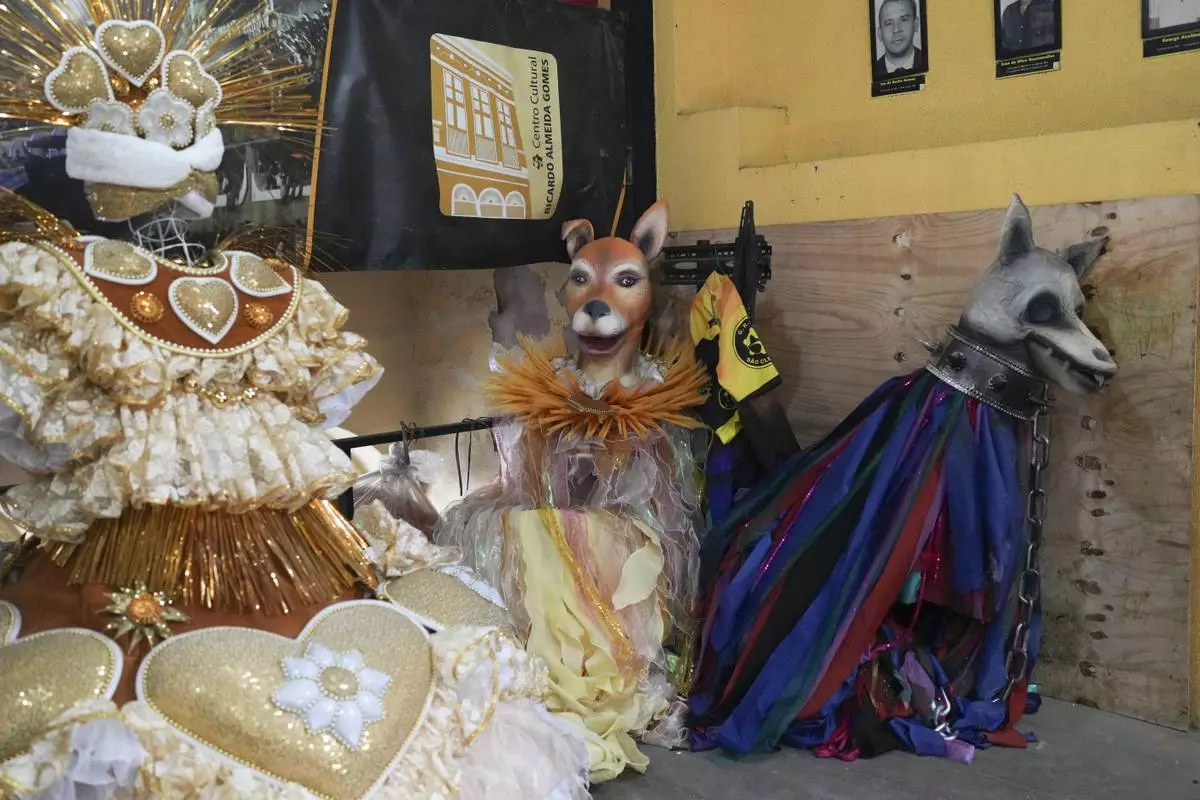
Carnival costumes sit at the Sao Clemente samba school, whose theme for 2025 is animal abuse and abandonment, in Rio de Janeiro, Thursday, Nov. 28, 2024. (AP Photo/Silvia Izquierdo)

Lina the caramelo dog lies on a table at Indefesos dog rescue shelter in Rio de Janeiro, Thursday, Dec. 12, 2024. (AP Photo/Bruna Prado)

Crew members work on the set of the Netflix film "Caramelo," in Sao Paulo, Tuesday, Oct. 29, 2024. (AP Photo/Andre Penner)

A caramelo dog pokes its nose through a fence at the Indefesos dog rescue shelter in Rio de Janeiro, Thursday, Dec. 12, 2024. (AP Photo/Bruna Prado)

Dog trainer Luis Estrela plays with a caramelo dog on the set of Netflix film "Caramelo" in Sao Paulo, Tuesday, Oct. 29, 2024. (AP Photo/Andre Penner)

Lt. Col. Sidnei Robson Pazini stands next to an exhibition of Bruto, a caramelo dog-turned-national hero from a war in Paraguay, at the Military Police Museum in Rio de Janeiro, Thursday, Nov. 28, 2024. (AP Photo/Silvia Izquierdo)
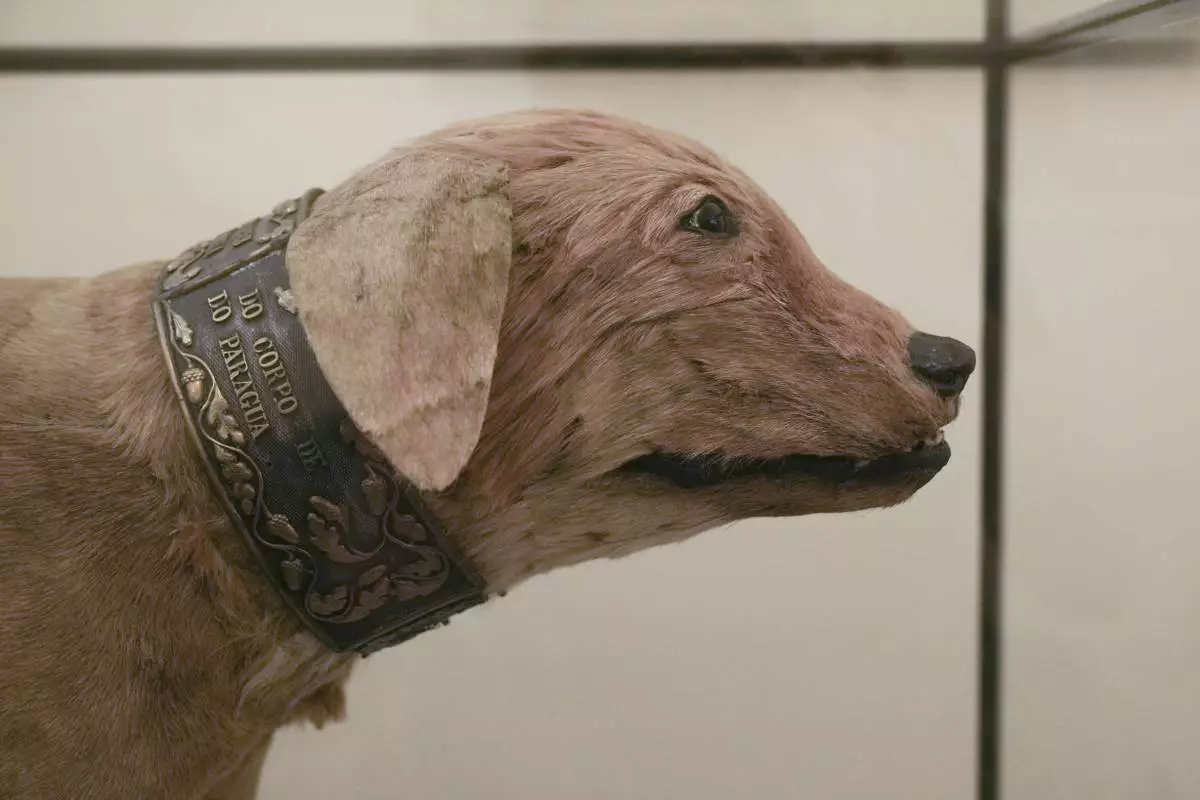
Bruto, a caramelo dog-turned-national hero from a war in Paraguay, is on display in the Military Police Museum in Rio de Janeiro, Thursday, Nov. 28, 2024. (AP Photo/Silvia Izquierdo)

Sao Clemente samba school workers make costumes for Carnival, in Rio de Janeiro, Thursday, Nov. 28, 2024. (AP Photo/Silvia Izquierdo)
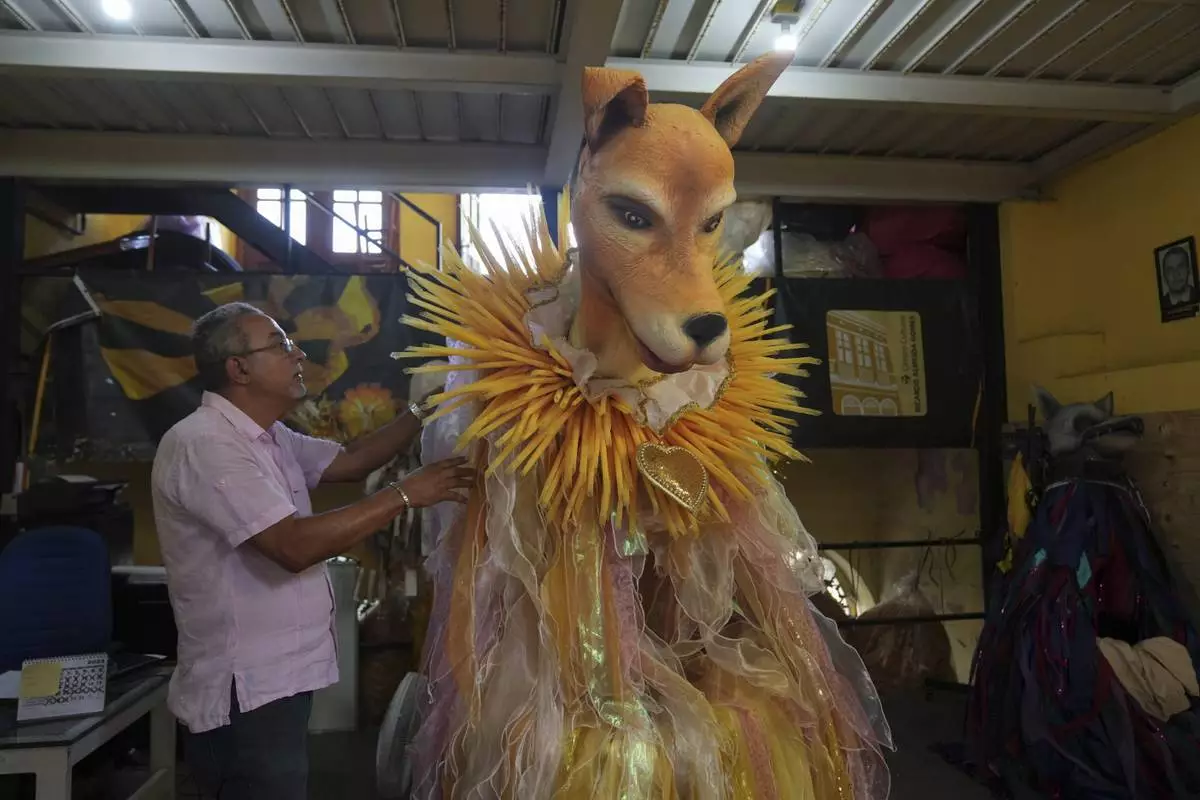
Workshop director Roberto Gomes inspects a caramelo dog costume at the Sao Clemente samba school, whose 2025 Carnival theme is animal abuse and abandonment, in Rio de Janeiro, Thursday, Nov. 28, 2024. (AP Photo/Silvia Izquierdo)

Sao Clemente samba school seamstresses make costumes for Carnival, in Rio de Janeiro, Thursday, Nov. 28, 2024. (AP Photo/Silvia Izquierdo)

Director Diego Freitas plays with caramelo dogs on the set of the Netflix film "Caramelo" in Sao Paulo, Tuesday, Oct. 29, 2024. (AP Photo/Andre Penner)