Hundreds of Syrians have crossed back into their home country since the border gates reopened earlier this month, sparking mixed reactions among Turkish residents over the economic and social effects of their departures.
At the peak of the Syrian conflict, approximately 3.7 million Syrians sought refuge in Türkiye. Currently, it is estimated that around 3 million remain. Many are now preparing to return to their homeland following the sudden collapse of former Syrian President Bashar al-Assad's government.
Al-Assad has reportedly resigned and arrived in Russia for asylum as his government collapsed on Sunday following a sweeping offensive by militant groups.
In the district of Reyhanli, situated in the Turkish border city of Hatay, Syrian refugees now constitute a larger population than the local residents. Over time, they have become integrated into the community, establishing businesses, opening stores, and contributing significantly to the local economy.
Since the onset of the Syrian conflict, Türkiye has extended its hospitality to Syrian refugees. However, in recent years, rising anti-migrant sentiment, driven by economic challenges and surging inflation, has grown more pronounced.
"The city will be more comfortable, it will breathe, and the unemployed will find jobs if we look at the reality of the situation. Most people here are unemployed, but if the Syrians leave, there will be a gap, and the unemployed here will get jobs," said a local resident.
Others pointed out that Syrian migrants have brought economic benefits, particularly for homeowners and business owners in Reyhanli.
"About 80 percent of Reyhanli's people rely on Syrians. Reyhanli's people have benefited greatly from Syrians in every way," said a local resident.
"There will be no workers left here. For example, agricultural workers in the fields, those in workshops, restaurants—there will be problems everywhere. There are agricultural workers in the fields, workers in workshops and factories, for instance, construction workers. Syrians work for cheap. But our Turkish workers have become a little arrogant. They don't work for low wages," said Huseyin Yumusak, local head of the Baglar neighborhood.
However, he said, the departure of Syrians could ease overcrowding in schools.
"Each class has 40 to 60 students. If there were no Syrians, classes would have only 10 to 15 students. In that case, teachers would work more comfortably, principals would work more comfortably, and students would study more comfortably," Yumusak said.
Although the return of Syrian refugees has commenced, the numbers remain negligible compared to the millions still residing in Türkiye. For those eager to repatriate, the process will require time. The broader economic and social impacts of this development are expected to become more apparent in the months and years ahead.
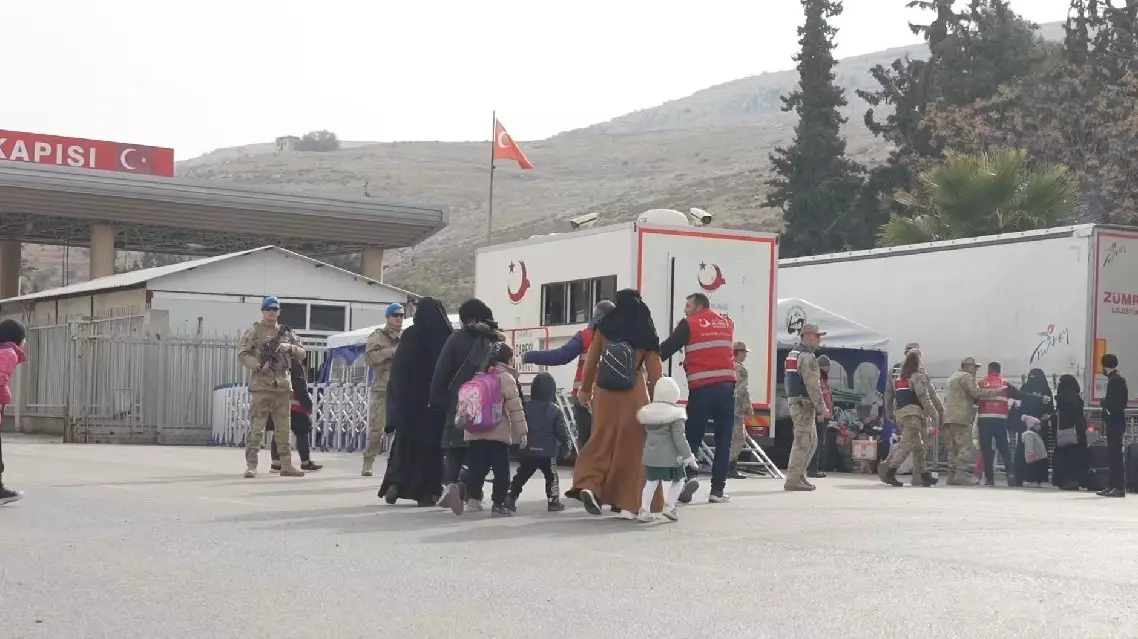
Reopening of border gates sparks mixed reactions in Türkiye as Syrians plan their return
China's push toward a greener future is once again in the spotlight at this year's annual political "two sessions", as lawmakers are reviewing a draft ecological environment code, a significant step toward establishing a comprehensive legal framework for ecological protection.
The draft code was submitted on March 5 to the ongoing fourth session of the 14th National People's Congress (NPC), China's top legislature, for deliberation.
Once adopted, it will become China's second formal statutory code, after the Civil Code, which was adopted in 2020.
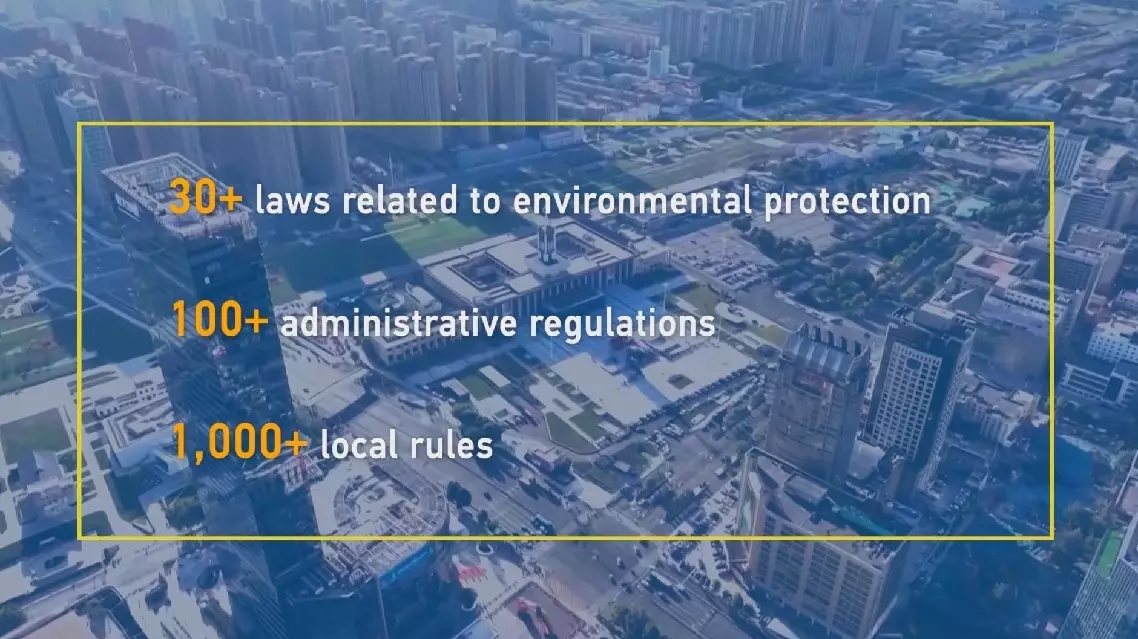
The rule of law has been continuously strengthened to support the country's green progress. China already has more than 30 laws related to environmental protection, along with over 100 sets of administrative regulations and more than 1,000 sets of local rules.
The latest legislative move comes amid China's historic gains in ecological conservation over the past decade or so. Championing green development, the country has recorded the world's fastest growth in forest resources and afforestation, led globally in renewable energy development, and achieved one of the fastest national reductions in energy intensity worldwide.
The 1,242-article draft has five chapters, covering areas including pollution control, ecological protection, and green and low-carbon development.
Scholars involved in drafting the legislation say the code goes beyond broad legal principles. It is also designed to address environmental issues that affect people's daily lives.
"Electric vehicles are becoming very common in China. My family has one. We all think it environment-friendly. But have you ever thought about this question: how do we deal with the first generation of EV batteries after they expire a few years later? The same goes for wind turbine blades and solar panels," said Ding Lin, assistant professor of the Renmin University of China.
China's environmental progress has drawn global attention in recent years, from improving air quality to expanding renewable energy. Yet amid geopolitical tensions and economic uncertainty, some observers have questioned whether the country will maintain the same pace of green transition.
"Last year during the COP30, even some friends who are very familiar with China asked me whether China will continue its green development path. I told them we have gradually worked out new policies. We have a very clear direction and goal. In a world full of uncertainties, we are providing the most certainty," said Wang Yi, an NPC deputy from east China's Zhejiang Province and professor of the Chinese Academy of Sciences.
In a country pursuing modernization, taking the time to codify environmental laws sends a clear message: economic growth and environmental protection are not a trade-off to be managed, but a commitment to be upheld. For China, a beautiful environment is not a luxury for the future, it is a right for the present, and a responsibility to the next generation.
"This code reflects China's vision of harmonious coexistence between humanity and nature. It shows how development and environmental protection can move forward together," said Lyu Zhongmei, vice chair of the NPC Environmental Protection and Resources Conservation Committee.
China will accelerate the green transition across the board and cut carbon dioxide emissions per unit of the GDP by a total of 17 percent in the 2026-2030 period, according to a draft outline of the 15th Five-Year Plan (2026-30) for national economic and social development submitted to the NPC for deliberation on March 5.
Chinese lawmakers review draft ecological environment code in major green legislative push